Pam Webb
a writer's journey as a reader

Archive for the category “humor”

How Cliché: The “B” List
The “B” section is booming with cliché phrases. All these are from Christine Ammer’s Have a Nice Day–No Problem: A Dictionary of Clichés.

Backseat driver: unwanted advice.
In the 1920’s, those who could afford to do so, engaged a chauffer to drive them. The chauffer sat up front and the passenger or employer sat in the back and gave their driver instructions. Today the term applies to someone giving what they perceive as helpful advice, usually to the chagrin to the person doing the task. Other applicable phrases are Armchair General and Monday-Morning Quarterback.
Back to square one: back to the beginning
Though it sounds like a math problem, thoughts on this one are related to games where the start is a square, as in hopscotch or in a number of board games. Putting in hard work only to start over is frustrating and this term goes with back to the drawing board when the blueprints don’t pan out.
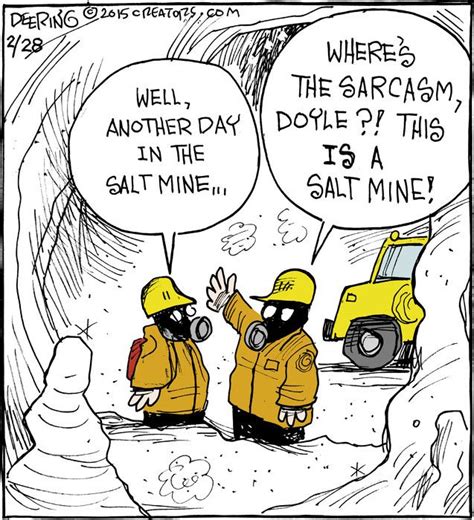
Back to the salt mines: returning to work
At one point in history, Russian prisoners during communist times were sent to work in the Siberian salt mines. While coming off of break can be tough, it probably is easier going that chipping away at rocks.
(The) ball is in your court: take your turn
A current expression from sports, which is attributed in the mid 20th century which is said when one person is a)being polite b)pushing the other person to take their turn c)a strategy to get the other person to reveal their intentions through action or words.
Bald face or barefaced liar/lie: an obvious, if not bold untruth.
Bare could be brazen, but it is likely is related to “beardless” which connects to only the young (not old enough to grow a beard yet) could so unashamedly tell such outrageous lies.
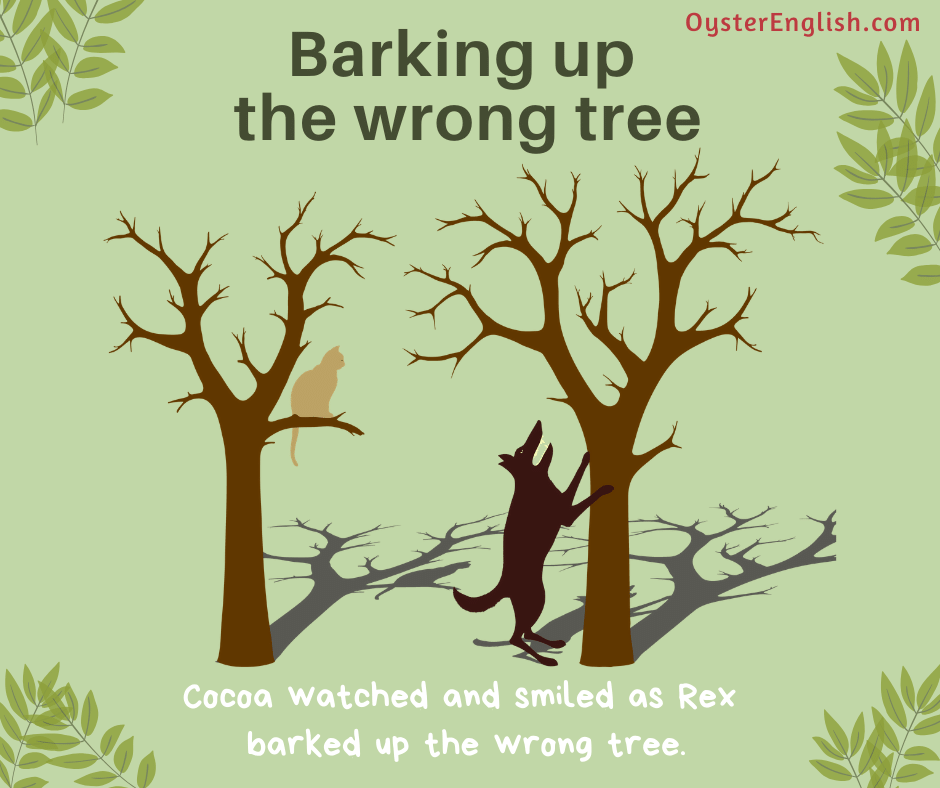
(To) bark up the wrong tree: waste time or effort going in the wrong direction
Once when hunting racoons with dogs was prevalent, sometimes dogs, so pleased with themselves, would bound up to a tree so sure they had caught the varmint, would bark to their owners their success. Raccoons, being the clever creatures that they are often led the dogs astray by jumping to another tree or applying some other witty escape strategy. For those out there thinking they have solved the problem through what seems to be a long and productive chase, they might find themselves baying at empty branches and must go back to square one.
(To have) bats in one’s belfry: deemed slightly crazy
Bats in flight fly in a more irregular than regular pattern. At one time people watching bat flight thought the irregular flight reflected how bats thought–erratically. Since then it has been proven bats have a sophisticated flying system that employs sonar which keeps them from bumping into obstacles. While belfrys are not much in current use, one might be considered batty if their thoughts or speaking seems random, which might at first seem like an insult, yet it’s actually a compliment since bats are considered sophisticated creatures.
(To) beard the lion: to take a risk
If you haven’t heard this term recently, that makes two of us. Considered cliché for over a century, this phrase has Biblical roots coming from when David related how by grabbing a lion by its beard he slew him. Facing danger and vanquishing it is one thing, grabbing lions is quite another. Granted, David showed his bravery. Look how this lion’s beard–that’s up close and personal.
Beat (scare) the living daylights out of: to punish or scare someone tremendously
A 19th century American colloquialism for a person’s internal organs was “daylights.” To punish or scare someone so severely that there innards would fall out is indeed severe.
Bed or roses: an implied place of comfort
Metaphorically, lying in a bed of roses sounds pleasant, being surrounded by the fragrant petals. However, there are thorns to consider. And a literal bed of roses demands constant care, so this phrase implies the opposite, as in the situation is not comfortable.
Word Nerd: November

Thanksgiving comes around in November and getting together with friends and family can be emotional for some. Needing a few choice words to express feelings might be handy.
verklempt: overly emotional and unable to speak.
velleity: a mere wish, unaccompanied by an effort to obtain it.
stultify: to render absurdly or wholly futile or ineffectual, especially by degrading or frustrating means
thrawn: contrary; peevish; stubborn
longanimity: patient endurance of hardship, injuries, or offense; forbearance
foofaraw: a great fuss or disturbance about something very insignificant
megillah: a lengthy, detailed explanation or account
brabble: to argue stubbornly about trifles; wrangle
fustigate: to criticize harshly; castigate
gasconade: extravagant boasting; boastful talk
nescience: lack of knowledge; ignorance
frumious: very angry
snollygoster: a clever, unscrupulous person
beamish: bright, cheerful, and optimistic
Let’s hope if someone should start a megillah at the table no one will fustigate or brabble should it lead to gasconade. Instead, the gathering be one that is beamish.
UPDATE: Read about a picture book that features delightful words here: https://kathytemean.wordpress.com/2021/11/14/book-giveaway-hornswoggled-a-wacky-words-whodunit-by-josh-crute/
It’s the Great Pumpkin
While not a fan of Halloween, I am a fan of pumpkin. While not a fan how pumpkin spice seems to rule the season, I am a fan of guinea pigs. So here is a share that should please those who love pumpkin spice and adore guinea pigs. Let’s see how long it takes for Mike Allegra to say he inspired this post.
It’s a bit squirrelly lately…
Not sure if we have adopted a squirrel or if she has adopted us.
It began with me spotting a medium grey squirrel bounding across the lawn. A somewhat unusual sight. Deer are more frequent visitors. Squirrel activity diminished with dogs moving into the neighborhood.
Or so we thought.
Upon spotting the bounding squirrel I mustered up my squirrel call. You know the one, that high-pitched ch-ch-ch the do. Yeah. She was impressed and came leaping right over to me. She look fairly surprised to find me instead of a swaggering grey suited critter of interest.
Since then she has shown little fear of hanging out in the yard with us. Costco is making a tidy profit from the bags of peanuts the hubs buys for her.
She will cautiously approach us and grab a peanut from our fingers. Rolling and measuring its worth in her mouth she will then deposit it in some part of the yard. Digging like a little terrier she pats it in place with dainty satisfaction and traipses over for more. I split them open because once open she tastes that peanuttyness and snacks right on the spot, inches from where I sit on the bench. Syringa, does truly work for peanuts.
Now we have a couple of new additions. A tiny sable squirrel who discovered the neighbor’s squirrel proof bird feeder could not deter him. He used our fence as a diner freeway until trashing the bird feeder in less than two weeks. He has moved on the freebie peanuts laid out for Syringa. She’s having none of it.
Their tussles and chitterings range across the lawn and through the lily leaves. Entertaining turf wars at its best. We call this little guy Skitter, since he moves as fast as a drop of water on the pancake skillet. He’s too fast to snap a photo.
And a third squirrel has appeared. Yet, this one is a puzzlement. I notice it is small with characteristic squirrel gray coloring yet its eye rings are white like a chipmunk and so is its tummy. The legs are brownish. A hybrid squirrel? We’ve dubbed this one Buddy, as in “Hey, Buddy—what are you?”
The birds are beginning to vacate the area for warmer climates so there is less action at the feeder. On the other hand, the colder weather is ramping up squirrel activity as they gather nuts and bury them all over the yard. I find peanuts in my plant containers, in flower beds, and all over the lawn. How will they find them all?


Cow Appreciation Day!
For those who follow my postings, you know I appreciate cows. Today is their day. Yup, July 13 is National Cow Appreciation Day.
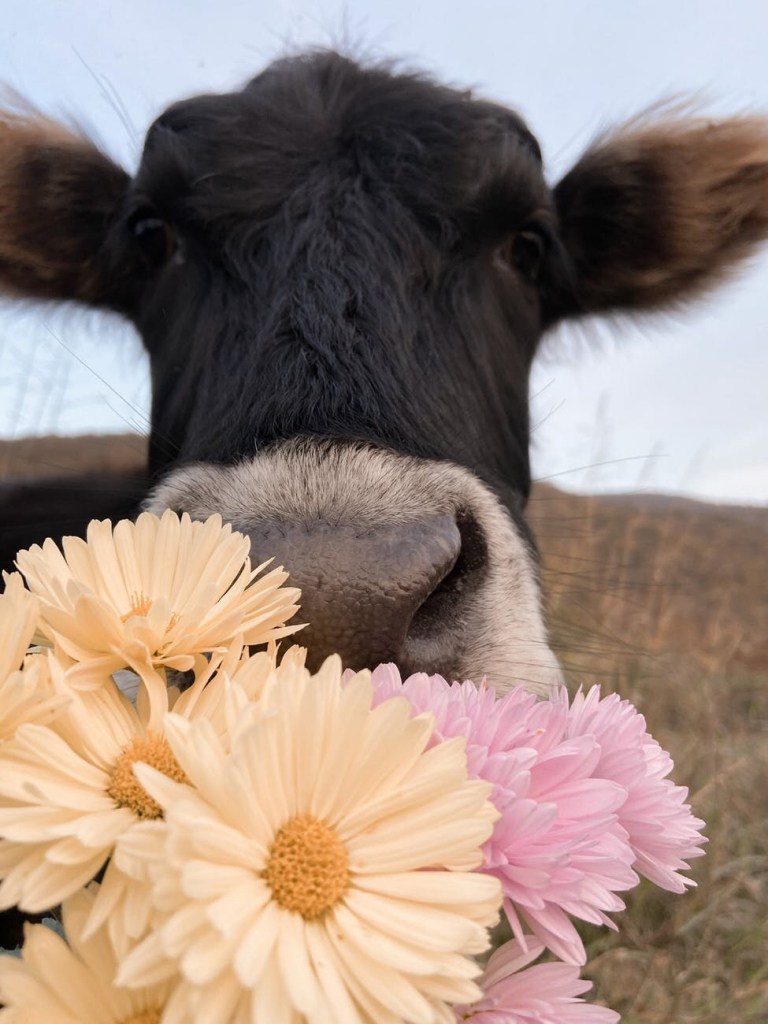
To celebrate the cow here are a few facts:
DID YOU KNOW?
- There are around 200,000 glasses of milk in a cow? That’s a lifetime estimate.
- A mature cow weighs about 1,400 lbs, and stands about 5 feet tall.
- A calf can walk within one hour of being born.
- A Holstein cow’s spots are unique. No two cows have the same pattern.
- Cows don’t sweat. They need to live in cool weather.
- By hand you can milk about six cows in an hour or you can milk sixty cows with one person and fourteen machines.
- Cows get really thirsty during the day. They drink close to thirty gallons worth of water, which is about a bathtub’s worth.
- Cows can eat a lot as well. On a typical day a single cow can eat nine pounds of hay and thirty-five pounds of mixed grasses and grains. They also consume over twenty pounds of mixed grains, salt, vitamins, and minerals throughout the day. No wonder they need so much water!
- Cows are boney. There are two hundred and seven bones in one cow. Humans have about the same amount of bones. Hmmm…
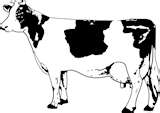
Bonus! Here are some cow jokes:
- What’s green and black and white all over?
A field with cows.
- What did Old MacDonald say when the cow stepped on his foot?
“Ee-ii-ee-ii-ouch.”
- What did Old MacDonald say when the cows began to stampede?
“Aaugh, I’m having a herd attack!”
- What did he say after the stampede?
“Cows should be seen and not herd.”
* How did the farmer divide up his herd of cows?
He decided between the calves and the calve-nots.
* What did the farmer say to the old cow?
“It’s time you retired. You’re pasture your prime.”
So today when you reach for that glass of milk or spoon up your yogurt or nibble a cheese slice or revel into your ice cream confectionery, salute the cow. The world would not be the same without this udderly marvelous animal.
Bard Bits: Overcoming Shakespism
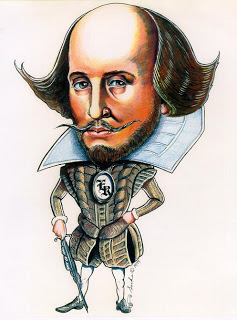
Up until teaching Shakespeare to my high school English students, my exposure and awareness of Stratford Upon Avon’s poet/playwright had been limited to the usual reference of Romeo and Juliet being a play about two teenagers who have a tragic romance. I saw it as a film in junior high. It was rated “M” for mature audiences (being a 13 year old counted as mature then). Certain scenes were embarrassing and I doubt we were mature enough to handle the morning after flesh flash of Leonard Whiting and Olivia Hussey. Plus, I had a really difficult time understanding what they were saying—were they speaking English?
That was then and this is now. At present I’m the resident Bardinator at school, being the advisor of the Students for Shakespeare Club and being known for my Shakespeare zeal. We’ve brought Shakesperience to the high school several times, I’ve helped with our own drama club’s version of Romeo and Juliet, designing sets and watching my son contribute his thespian skills, and I do my best to engage and interest students to embrace Shakespeare, nudging past groans when studying his works. My appreciation for Shakespeare has nudged me to leave my usual homebody mode to travel cross country to Washington DC to attend Folger’s week long Hamlet academy. I’ve gone beyond the usual Romeo and Juliet, Julius Caesar school curriculum offerings and have introduced students to Othello, Taming of the Shrew, Much Ado About Nothing, Merchant of Venice, Twelfth Night, and provided background Bard Bits.
How and why did I go from a Shakespeare illiterate to Shakespeare informed?
First of all, I had to overcome the language barrier. Reading Shakespeare wasn’t working so well. Watching well-produced film adaptations, such as Kenneth Branagh’s Henry IV helped tremendously. Shakespeare is meant to be performed, not read.
Secondly, the more I taught Shakespeare (teaching the same material year after year does have an upside), the more I understood what I was teaching. And if I understand what I’m teaching I can teach the material better to my students.
Beyond teaching the plays, I began reading about the man who wrote them. Since there is so little solid biographical information about Shakespeare, I began researching and became more and more intrigued. Who was this guy and did he really write all these plays and what was theatre like in Renaissance England led to other aspects such as learning more about Queen Elizabeth I and other aspects of that time period.
And I branched out to other plays, learning all about one play before committing to another. The benefit being that Shakespeare’s language was no longer puzzling to my ear, it had become a melody of written expression.
My dream curriculum is to teach a course that is all Shakespeare. We would of course study selected plays and sonnets, but also play Bard Bingo (it’s fun, really), create Flash Mob scenes for the community (field trip!), stage fight (sword fights and Hamlet are a natural), and put on a Shakespeare night for the school—best scenes talent show. I think I would call the course, “Shakespeare Then and Now” or maybe “Shakespeare—the Undiscovered Country.” At least a dozen students would need to sign up to make it a go, then again it could become so popular two sections (or more) would be required as Shakespism transforms into Shakesthusiasm.
I can hope.
Do you suffer from Shakespism or are you a Bardinator or maybe somewhere in between.
Why We Say: from Villain to Windfall
Villains are the bad guys, right? During medieval times when manor houses were kept by feudal lords villains referred to “one attached to the villa” or the manor house. Now a lord, the one who owns the manor house would or should be considered a good guy, right? Wealthy, taking part in civic responsibilities, watching over the land, helping the poor and needy. Apparently not all lords were good guys and villain took on the meaning of bad guy.

Go to a library and there will be volumes of books just waiting to be read. By why call them volumes? In ancient times books were written on sheets of paper and then rolled up, much like a window shade is rolled up. Ah–“volume” is derived from the Latin volvere meaning “to roll up.” Next time you are feeling the need to read roll up with a volume in your favorite reading spot.

Feeling the last attempt to succeed was a wash out? Thank the nineteenth century British soldiers for this term alluding to failure. As the soldiers practiced their marksmanship by shooting at targets, bad shots were erased by painting over the targets with whitewash. A “wash out” took on the meaning of failure or disappointment.

No one wants to be the wet blanket, especially at a party. But why a wet blanket? Well, a wet blanket puts out a fire and a person who is not into the fun zone essentially puts out the good times at a gathering.

Ever go on a wild goose chase? There is no real winner, but it was once considered a game. Riders would follow the lead rider with all the riders following like geese in flight. The leader set the pace and each rider had to follow and repeat the rider’s actions accurately. The game was a chase with no winner which ends up as a wild run with no true outcome.

Villains, wash outs, wild goose chases–time for a positive saying. How about receiving an unexpected bit of good fortune, such as a windfall? In Old English days people were required to leave the forest timber for the Royal Navy; however, if any trees were felled by the wind they could gather up the storm’s leavings. There you go–bad weather can bring good tidings.

Which sayings were a surprise to you in their original form?
Pam Webb aka Cricket Muse
A writer's journey as a reader
Recent Award

Children’s Insider

Society for Children’s Writers and Illustrators