ELI5: abbreviation. explain like I’m five (used to ask for a straightforward and simple explanation of a complex topic or concept).
padawan: noun. an inexperienced person, particularly one being taught by someone more experienced.
greenhushing:noun. the practice of a company not reporting its sustainability efforts, often in order to avoid scrutiny.
glow-up: noun. a positive transformation, generally in appearance but often also in confidence, social capital, or ability.
How Does a Word Get Into the Dictionary? According to Dictionary.com a word gets entered into the dictionary after there is evidence that it has been in use for some time by lots of people. Thus, a word “suddenly” found in the dictionary may not be a newly coined word, being one that has found its way into everyday use already.
Check out the entries here. What words did you discover?
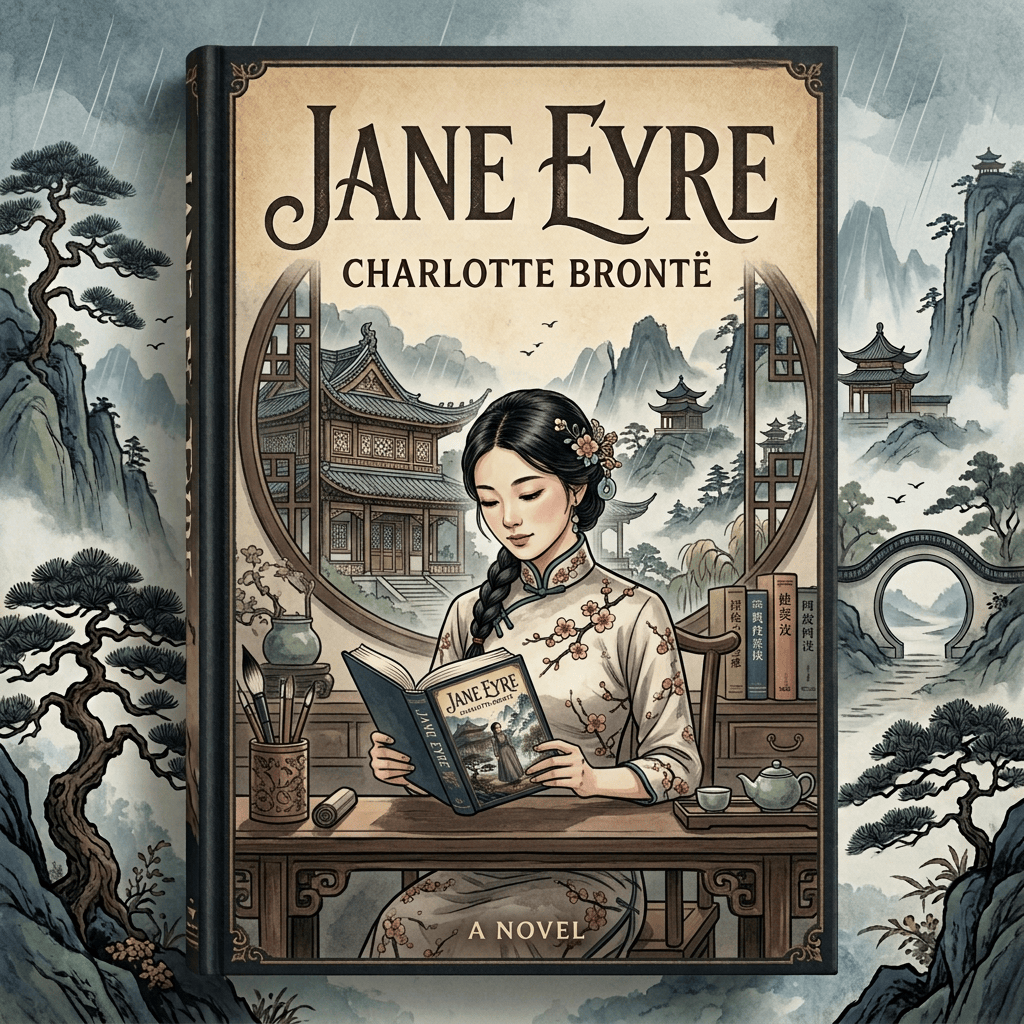
I’m very wary of China in many ways, and yet I might have to award a slight nod to their recognition of the importance of Charlotte Bronte’s classic novel Jane Eyre.
Jetpack Image Editor
According to a recent New York Times article, Jane Eyre is now required reading for teens. Why a story about a feisty, impoverished Victorian woman would qualify as a Chinese curriculum must is surprising. Apparently this British classic has long captured the interest of Chinese readers for many years, and had been recommended reading for schoolchildren, yet it is now required reading for ninth graders.
Jane Eyre is definitely a favorite of mine, and I included it in my Senior AP Literature curriculum. Most students embraced it, guys included, although I had one male student who exuded such dislike for it, not even willing to give it a try, that parental conferencing took place.
Onward.
Quick summary: Jane Eyre is an orphan in 1800s England. Her aunt has agreed to raise her but treats her badly. Jane is sent away to school, receives an education, and sets out to earn her way in life as a governess. She becomes the employee of Rochester, a cynical man with deep secrets. Strangely attracted to each other yet separated by their social status, Jane and Rochester have many impediments to overcome, including a tragic secret that Rochester hides from the world.
Why this plot intrigues Chinese readers intrigues me. Since its publication Bronte’s novel has been translated many times, especially as stage and screen adaptations. In 1925, a Chinese translation hit the shelves, finding its way into the hands of the general population.
But why require 13 or 14 year olds to read about Jane and her epic journey. While Campbell might disagree with me, I believe Jane’s journey from bullied orphan to independent, wealthy woman is indeed epic. She has much to overcome and with the help of mentors and relying on her own resources she succeeds in vanquishing those elements that nearly did her in. Jane is quite amazing.
Ping Zhu, a literature professor at the University of California, San Diego, known for researching Chinese feminism (is that even possible?) and literature, believes Jane Eyre complements the Chinese government’s vision of women’s equality in that it promotes how a woman can be independent yet exemplify the traditional gender role found in the traditional heterosexual nuclear family. That makes sense. Jane has no family, and her initial prospects of marriage are not favorable, being plain and poor, and even when given the opportunity to be loved by Rochester she spurns his suggestion to be his mistress due to his unfortunate marriage to an insane woman. She ends up independently wealthy and marries Rochester once he is no longer attached to his wife. She even has a child.
Chinese moral (seems to be): You can be an independent woman, be a wife, and be a mother. Not sure about the wealthy bit, how that fits in.
One reason Jane Eyre is being promoted in schools at the impressionable age of 14 is that there is a decline in the general population and China wants women to get married and have children. If Jane can do so, then Chinese female readers should be so encouraged.
Whatever the reason, JE is a great read and I miss teaching it.
I am tempted to write my own version of Jane Eyre, but then, when it has been done so well why try to duplicate?
“Shut the door! Shut the door!” became the ongoing admonition for two weeks.
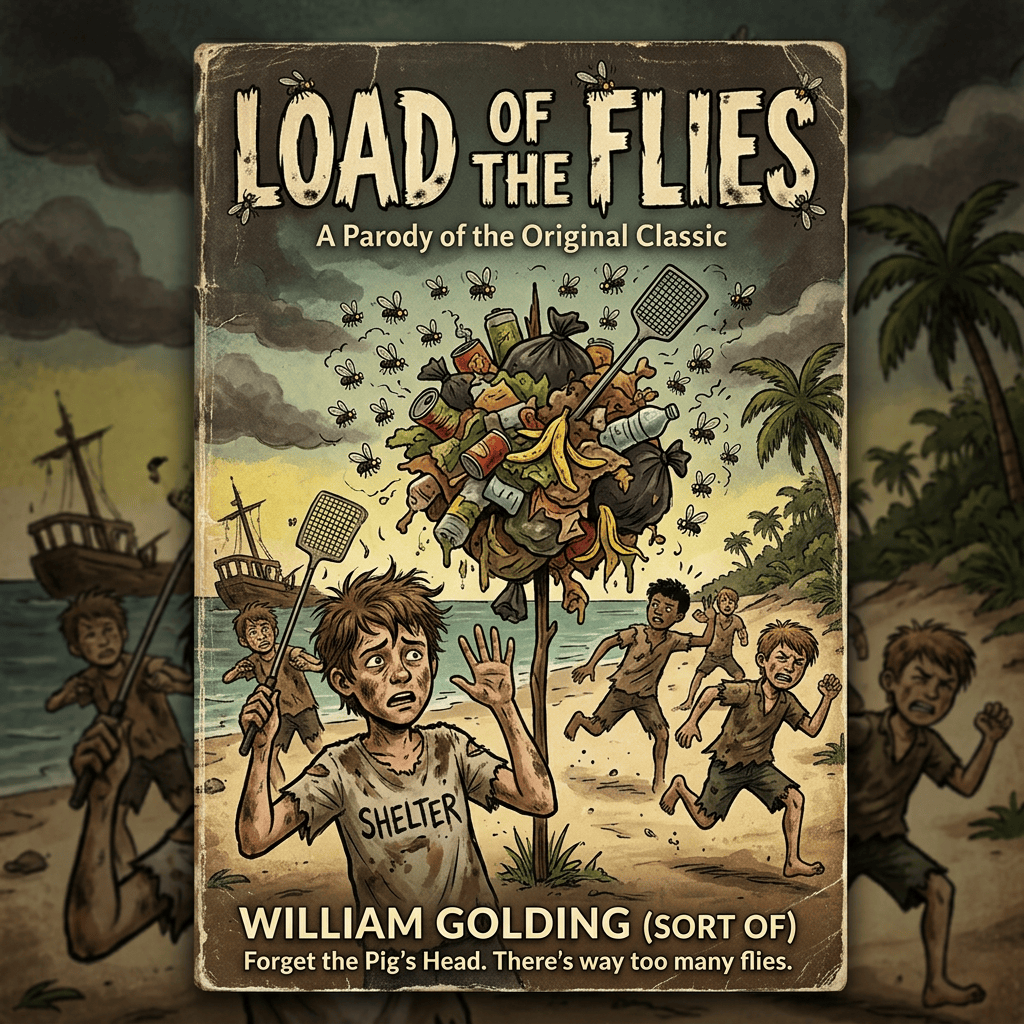
I’m talking about Load of the Flies.
Jetpack Image Editor
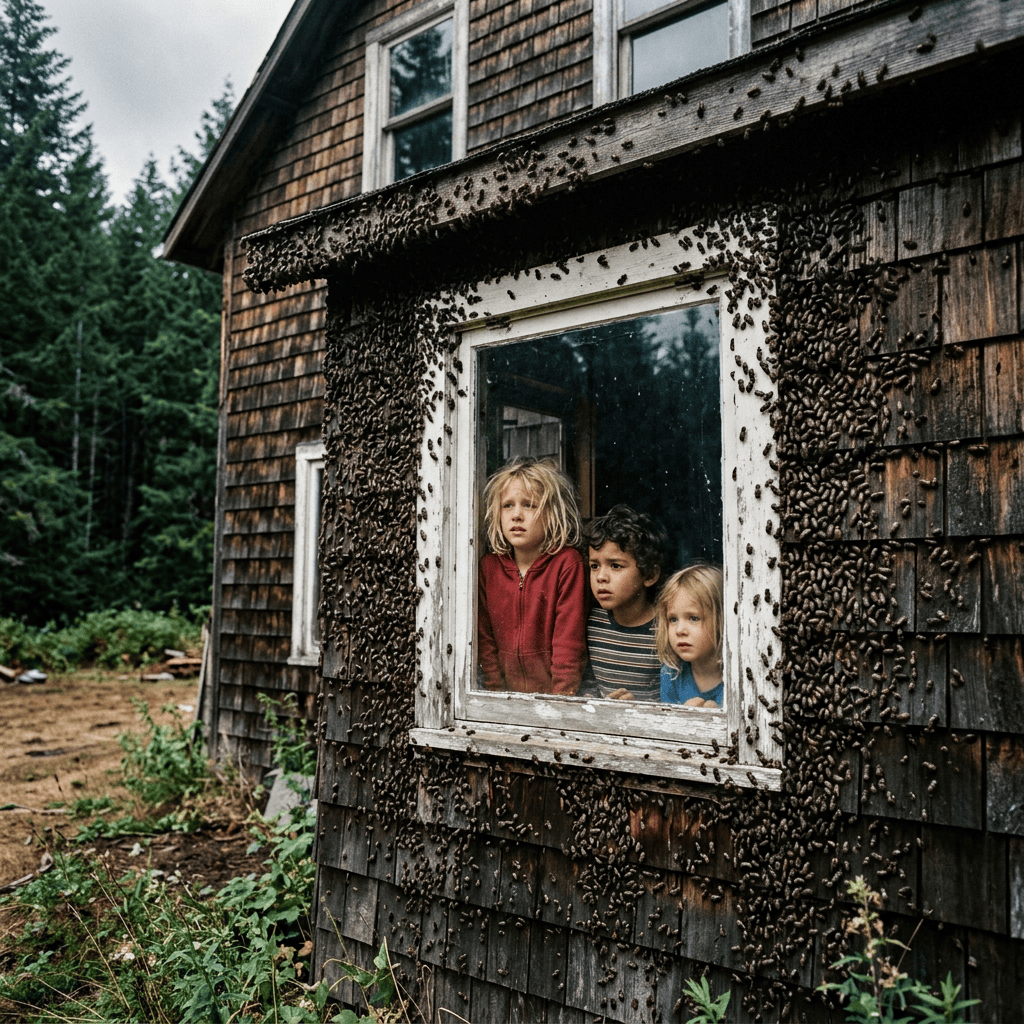
For some reason a load of those tiny black flies descended upon our house to the point where we banned the use of our door leading to the garage since flies hung out there like delinquents waiting to stir up mischief. They would zip in and loop-the-loop through the rooms, pester us while we quietly sat down to meals, and flitted around windows. The extra fly strips helped but did not deter them.
They would coat the south-facing walls outside, sunbathing, which was their privilege. That is, until I would sit down and try to read a book. They all wanted to hang out with me then. That did not do. Not at all.
Wondering what might have brought on this particular buggy problem, we realized the nearby county fair had recently ended. Supposition: the flies were homeless without the animals and our house seemed handy enough.
I do not like flies. Do not. Do not. Do not.
Once the night temps dropped to the mid thirties the flies packed up and left. However, the onslaught of bark beetles began.
I dislike almost as much as bark beetles. While these beetles have no bite and rarely make a sound (unless trying to land in one’s hair–ewickch), they are still incredibly annoying.
Okay, a slight exaggeration. (Jetpack Image Editor)
We were unaccustomed to these critters until we moved to the Inland Northwest. Our first house lay in twelve acres of a pine forest and these insects revel in chewing up the bark of said trees. Granted, we landed in the middle of their feasting ground, but they absolutely freaked out my kids. They called them dinosaur bugs and would not venture outside. Here they had scads of forestry playground before them and cowered inside afraid that dinosaur bugs would get them. They did finally get over their fear, although they harbored a resentment towards them. Always. Especially when discovered at the bottom of the glass of milk just finished–ewickch.
Cutting these bugs some lack, they are only harmful to trees (as far as I know); however, they earn their nickname of “stink bug” with good reason. When threatened they raise a pungent smell that lingers. So, squashing them is not advised. They also get into everything: cupboards, drawers, boxes. And milk glasses. Often they are not found until after they are dead. Desiccated little critters that faintly reek. Really not pleasant. Especially discovering one afterwards. At the bottom of your glass. Ewickch.
I’m told they are trying to find a cozy place to live as it gets colder. I’m hoping for they will succumb to the season’s first frost.
It almost makes me thankful for winter. Almost.
Anyone else dealing with autumn’s deluge of insects?
What? Today is the equinox? Difficult to believe since I spent yesterday hanging out in the backyard basking in 76 degrees. Then again, the front yard is depositing its first layer of leaves and the burning bush is glowing red. Yes, fall has arrived once again.
Fall in my region is a dichotomy of indecision. Mornings require a quick warmup with the heater and a spritz of air conditioner by noon. By evening the decision to have the fuzzy blanket nearby is made since nights plunge down to the forties.
Cold, hot, cold run the days until early October then its preparation for winter, which runs cold all the time.
Today, though, I will celebrate the last bits of summer with a nod to fall by sharing Emily Dickinson’s “Autumn.”
The morns are meeker than they were,
The nuts are getting brown;
The berry’s cheek is plumper,
The rose is out of town.

The maple wears a gayer scarf,
The field a scarlet gown.
Lest I should be old-fashioned,
I’ll put a trinket on.
Instead of a trinket I will lounge out back in the hammock with another book.
The National Calendar says it is Talk Like a Pirate Day on September 19th.
Even before Jack Sparrow and his crew, pirates held sway with many a landlubber, pirates have captured audience appeal through books, film, and even an operetta.
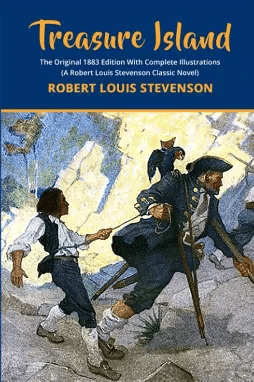
Treasure Island by Robert Louis Stevenson introduced the world to the conundrum of a likable rogue through Long John Silver.
A host of pirate films hit the silver screen starting in the 1900s with Douglas Fairbanks as the memorable swashbuckling Black Pirate, which set the standard for action-adventure for films to come.
Avast me hearties, there was clamoring for more pirates, so MGM delivered their version of Treasure Island in 1934, starring Lionel Barrymore, Jackie Cooper, and Wallace Berry. Its black and white production produced a thrill for audiences and is a faithful adaptation of Stevenson’s classic, becoming a classic itself.
All sorts of pirate movies sailed through cinema after TI, ranging from Seahawk with Errol Flynn, who added romance to his adventures sailing on to Disney’s contribution to Long John Silver (this version probably started that distinctive pirate diction).
Then there the films that feature the British Navy battling pirates such as Gregory Peck in the 1950’s Horatio Hornblower. Even Davy Crockett dabbled with pirates on the Mississippi River. Lest we not forget Julius Caesar had his own adventure with Mediterranean pirates.
There were also cinematic women pirates. And lots of Hollywood stars got the pirate itch: Yul Brynner, Ricardo Montalban, Rod Taylor, Frank Sinatra, Kirk Douglas, Tommy Lee Jones, Robert Duvall, Dustin Hoffman, Geena Davis, even the Muppets, and that barely tickles the barrel of pirate wannabes. It’s as if having at least one pirate films on the resume was a requirement for Hollywood acceptance.
I’m not forgetting Pirates of the Caribbean, but those films have received their due contribution and consideration.
How about revisiting Gilbert and Sullivan’s 1879 comic opera, The Pirates of Penzance? This is definitely an early, early introduction to pirates being likable, and even entertaining. Did you catch the film version with Kevin Kline (spoiler: this clip is the bang up finale) and Linda Ronstadt?
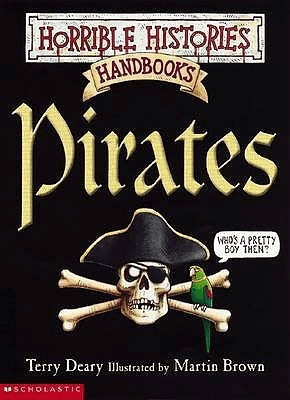
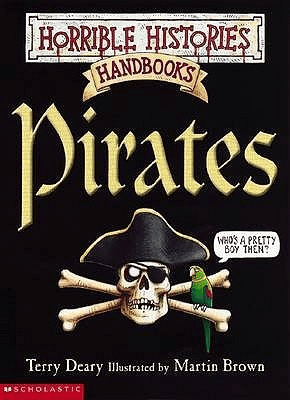
Of course, real pirates were bloodthirsty, morally bankrupt lot. My pirate book says so.
But we still celebrate pirates. We still read the books (like Mike Allegra’s wonderful Pirates and Penguins). We still watch the films and we still Talk Like a Pirate. Even my mother was a pirate for a short time (but that’s a different story).
Shiver me timbers, beware of false doubloons and all that sort of stuff on this piratey day.
Question: What is the appeal of pirates? Hey, Mike Allegra–if you are out there this is your opportunity to make a public appearance and promote your pirate books…
Once August ends summer ends. At least that what it feels like in my part of the world. A week ago Saturday, the last day of the county fair, I sat in the library booth, sweltering with 92 degree weather. The next day the temperature registered 65 degrees, and our pastor announced to the congregation: “Welcome to fall.” The weather remains gently warm since that Saturday.
Despite the temperature change, and no matter that school is ramping up to start, I am still clinging on to that summer feeling since I don’t have to go back to school (reflecting on Alice Cooper lyrics). Instead, I can keep hanging out in my hammock, as long as the weather holds, and soak up the sun while immersing myself in some good/great reads.
I didn’t realize there was a Summer Reading Challenge besides the one Goodreads puts out, until I came across the 746books post about reading 20 books over the summer. I decided to go through my Goodreads book list to see if I had read at least that many. Umm, I read 60 books. This is almost embarrassing.
Anyway–
Not wanting to deluge you with my summer reading list, here are my top reads from July and August:
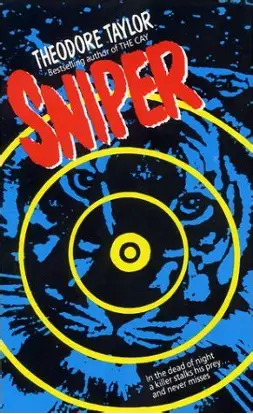
This arrived as a donation to the library and while the cover and title didn’t entice me, I remembered reading Taylor’s The Cay and was impressed with his story of Philip, a boy who is marooned with Timothy, a West Indian. Taylor’s story is once again about a young teen who is placed in a difficult survival situation where he has to rely on others than his own culture in order to survive. A sensitive and thrilling novel that I enjoyed while hanging out at the beach.
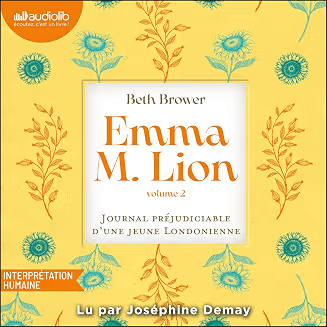
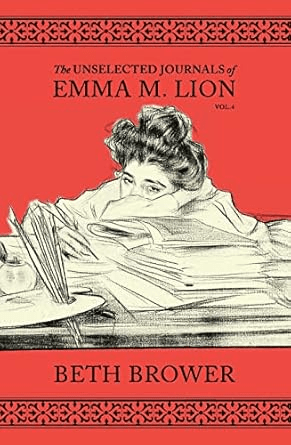
I have been rereading the Emma Lion journal series by Beth Brower via the audiobook. This makes for the third time enjoying the exploits of Emma as she comes into her majority as an orphan in Victorian times. She is a plucky heroine, bordering on shockingly sassy, as she survives crochety aunts, irascible cousins, balances her budget, as she navigates friendships and a blossoming romance. Brower is adept at humorous dialogue, witty repartee, while presenting subtle satire on social manners. This is Jane Austen with minimal restraint.
Christy is a traveller, an Irish pavee. The life of the open road, of having no settled roots is the only life he’s known. Yet, he questions about his mother’s death. He feels that the story she died in childbirth doesn’t ring true and he wants answers.
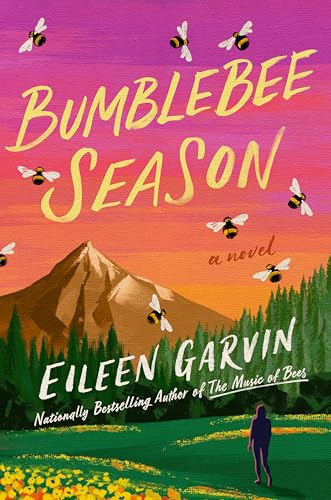
In this sequel to her first book, The Music of Bees, Garvin tackles heavy issues while juggling three character stories, and does so with aplomb. I’ve a penchant for bee books. Hmm, maybe a need to do a bee book review post…
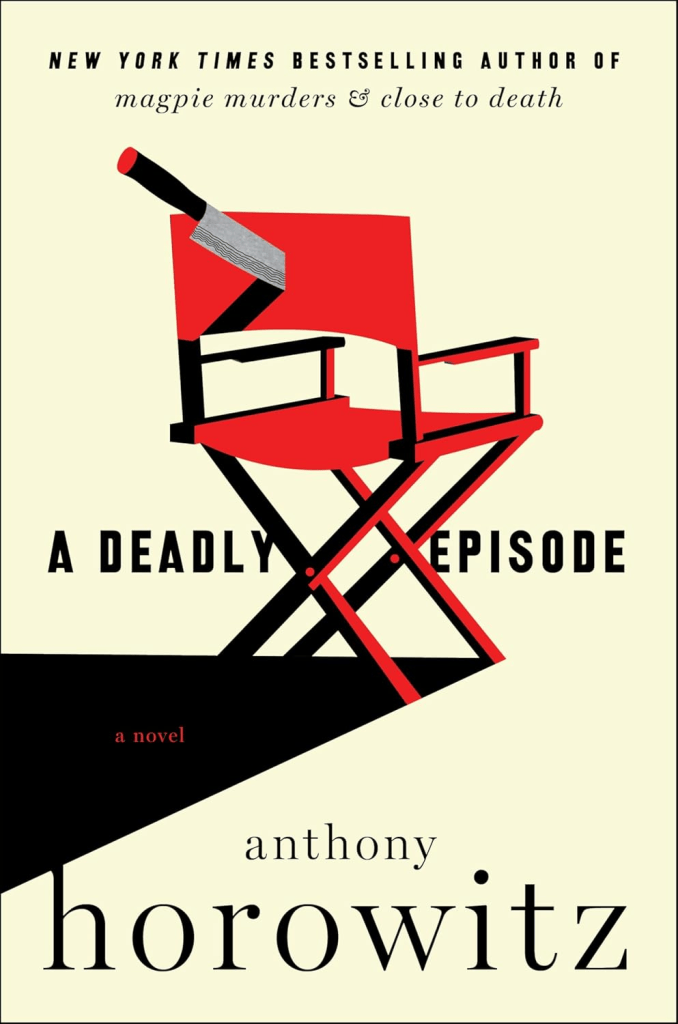
Hawthorne and Horowitz: #6 A Deadly Episode by Anthony Horowitz
The sixth installment of H and H receives a reluctant five star rating, going from a three (the initial mystery of the murdered prima donna actor—rather cliche), to the Foss Hall murder becoming a four (much more interesting and more like a Susan Ryeland setup), and the denouement pub scene sliding the rating up to five due to the Horowitz clever factor kicking in.
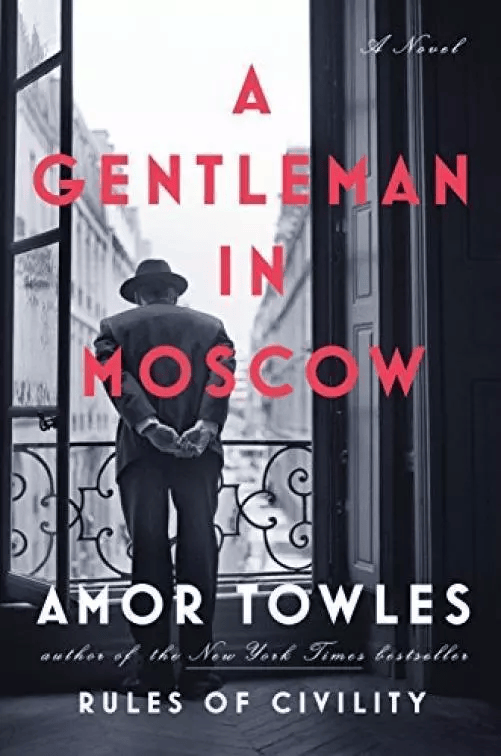
A third rereading for the library book club, and it was still enjoyable. Count Rostov’s house arrest in the posh Russian hotel reads like a fairy tale in many ways. He suffers, yet also has many privileges compared to those living outside the walls of the hotel. The DVD series captures the heart of the story and Ewan McGregor’s version of the count is charming.
The first go round didn’t go well. Not wanting to read a book that contained the musings (rants) of an old woman, the book found its way back to the library.
Months later, this book kept popping up as a must read, and due to the sincere encouragement of a friend the book was requested. Being put on a hold list with 21 other patrons secured the pressing concern that it had to be that good to have to wait so long.
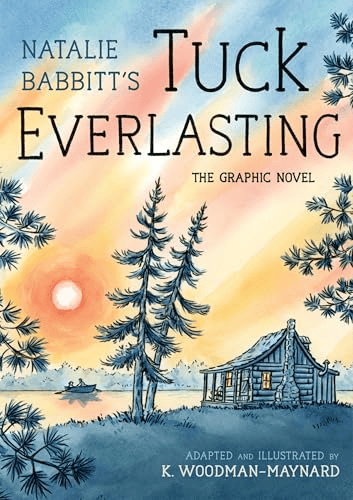
A fine tribute to Natalie Babbitt’s enduring tale of the Tucks. A story that continues to impact readers generation after generation.
Woodman-Maynard’s graphic novel captures the essence of the story both visually and textually, adding in her own insights without diminishing Babbitt’s.
It’s raining as I complete this post and rain is forecasted for the next week. The upside to this inglorious conclusion to summer weather fun is that the rain is welcome due to all the fires in our area. Another upside to a rainy day is how it simply invites a person to grab some cocoa and cozy into my chair and fall into a good read.
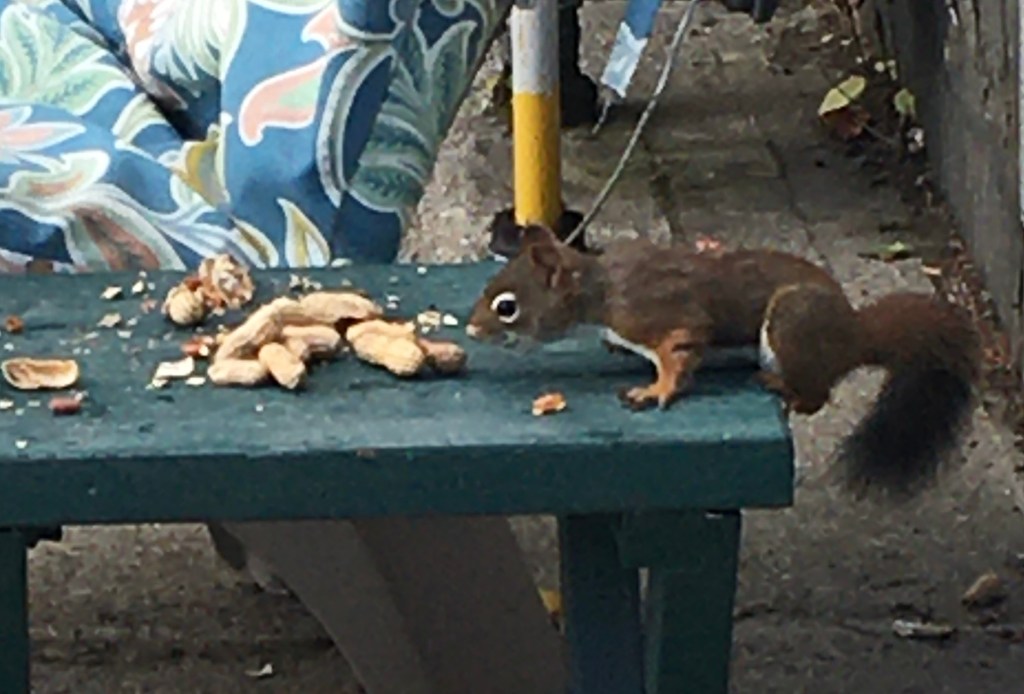
Oh, those squirrels. I have a grudging appreciation for them since they are fairly entertaining and liven up our window side theatre.
Once I learned how to (mostly) thwart their attempts to raid our bird feeders we settled into an amicable relationship: we provide peanuts and they provide a show.
That is, until recently.
Our primary squirrel residents are fox squirrels, the large ones with gray coats and orange tummies. They are curious, personable, and definitely comical. For over 20+ years they were constant in our yard. We even had one squirrel, Syringa, who would come bounding up to us and sit on our leg while she cracked open peanuts. She would never allow us to pet her though. She lasted a couple of seasons, as a squirrel’s life is a short one, unfortunately.
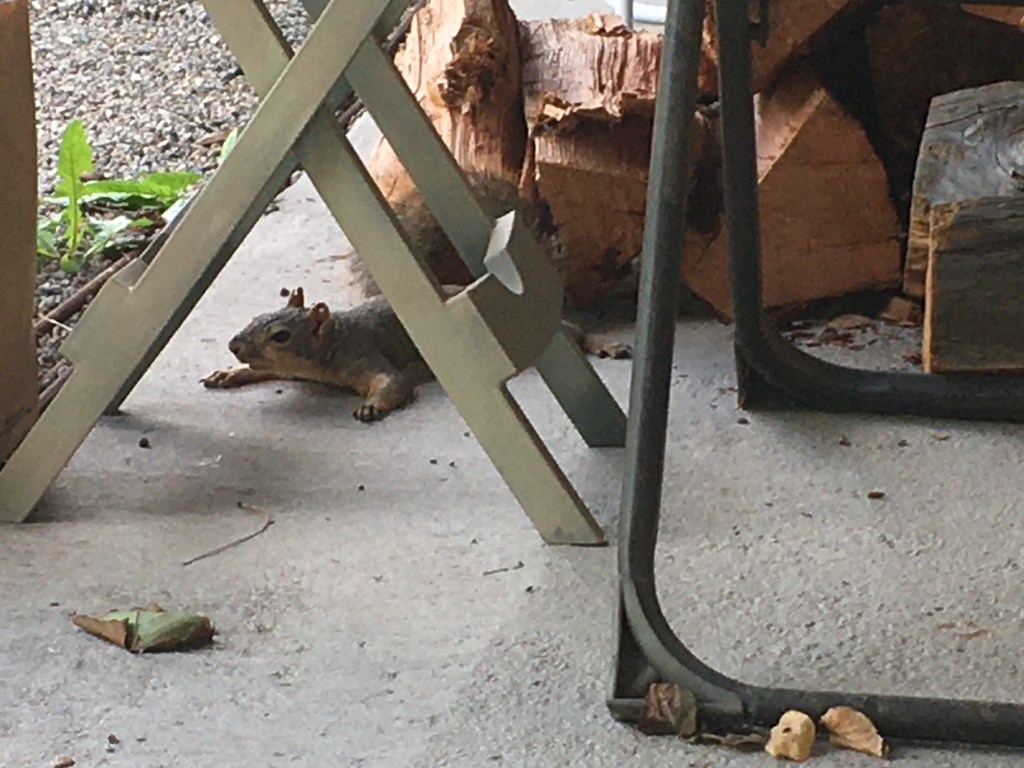
Syringa would hang out with us. On hot days she resorted to “splooting” — stretching out on the cool concrete patio
In the last couple of years our squirrel population increased with the addition of a couple of red squirrels.
These are odd little critters. Tiny, just a bit bigger than a chipmunk, about half the size of a fox squirrel, these little guys are frenetic compared to their foxy cousins. They zip and dash about gathering up seeds and nuts, burying with the determination of a terrier hiding bones in the backyard. They resemble little terriers as well, the way they bound about with purpose. They are not personable. They are caffeinated. They rarely stay in one place long enough to be watchable. Their main purpose in life to claim as much food as possible and as quickly as possible.
They have also chased away all our fox squirrels. I wondered what happened to them, thinking it strange how we went from several cavorting around the yard to none.
It became clear to me one day as I glanced out the window. I spied JB (short for Jitter Bug), the alpha red squirrel, suddenly zip out from the day lilies and take on a juvenile fox squirrel, who, though young, was twice the size of JB.
JB tussled with that foxy intruder (an interloper in his mind) like a tiny tornado. Foxy, being a squirrel, being food-motivated, did not give up, and kept attempting a raid on the birdfeeder gleanings. Although after the third time of being trounced soundly by JB he is gone.
I did spy a couple of fox squirrels crossing the driveway, migrating to our neighbor’s yard. I see them frolicking together, living the squirrel dream.
We are now a one-squirrel yard. We have reluctantly accepted the fact we harbor a bully squirrel. This presents a problem, as we like our backyard to be a haven for wildlife, with the idea that feathers and fur can safely come and go in peace.
Somehow growing up it was instilled in me not to quit. Maybe it’s a Boomer thing. The idea of finishing something once started is ingrained in how I approach much in life. As a kid I ate what was on my plate. As a teen I stuck with summer school. As an adult I hung in there with that book that just never seemed to go anywhere. That is until recently.
Since retirement, with more time to read, the nudge to read as many books as possible seems like a Sisyphus task. The more I read, the more I want to read.
“So many books”
This need to read means I’ve developed a discernment about which books are selected and are carried home from the library in my trusty book bag. The situation is that there are so many good reads available to check out; however, sometimes I’m on the prowl for a great read. I prefer discerning reader over picky reader, thank you.
There are times I start reading a book only to get that Deja Vu of “have I read this before?” A quick peek on Goodreads confirms that I often have. Yet, a real problem occurred when I began reading a book, getting that oh-so-familiar feeling and it wasn’t tallied on my account. I don’t review a book unless I’ve read the book and feel uncomfortable giving a book a 1 or a 2 star because I didn’t finish it.
Apparently, I am not the only one who also faces the Did Not Finish conundrum. I don’t want to pick up a book that I have previously picked up, only to put down, but forgot that I had picked it up in the first place. Not read, no review (see above)
Goodreads listened and now has a Did Not Finish shelf. Yay!
Readers have the ability to create their own shelves beyond “Want to Read” “Read” and the new “Did Not Finish” tags. I had created my own DNF tag, except a quick scan on my account wouldn’t indicate it was a DNF in the status bubble. Well, now it does and I am chuffed.
Lest it’s thought this reader doth protest too much about finishing a book, it’s clearly a big deal if the New York Times gets involved. This week I’ve read two articles in the NYT about the DNF issue. Thinking I might be chastised I felt vindicated that it is considered okay not to finish a book (these days).
If it’s okay, then what do I do with the residue guilt when I DNF a book? After all, I don’t suffer guilt if I don’t finish that overcooked batch of broccolini or decide there is too much murder in the murder mystery show I’m watching, or get maxxed out on my bike ride and want to go home. That’s not quitting, those are wise decisions.
So I tell myself.
I still feel some guilt with my DNF designation. Why, oh why? Is it because as an author I commiserate with the effort it takes to produce a book and hope everyone who reads my writing enjoys it? Is it because books are an integral expression of human creativity and social commentary?
One of joys of writing for children is researching different topics. I’ve gained greatly from my need to provide verisimilitude to my stories such as life as a homesteader during Idaho’s gold rush days, habits of nocturnal animals, the life and times of dragonflies. My favorite research is for my recent project. I concocted a premise combining a short mystery with simple household science experiments. One of those experiments involves bubbles. I am a huge fan of bubbles.
Whenever I visited my granddaughter, I always brought along bubbles. I included that aspect in my picture book Someday We Will and illustrator Wendy Leach caught the joy of bubble blowing quite well.
Store bought bubbles are handy and dandy, but I have heard of tales that super-duper bubbles are possible. This was undoubtedly going to take some research.
I explored a variety of recipes on a multitude of sites. I discovered there is a definite camp of adding glycerin over sugar to obtain longer-lasting bubbles. I don’t keep glycerin on hand, but enough sugar (for my hummingbird nectar recipe) to concoct a batch of my own super-duper bubbles. While the debate goes on about glycerin versus sugar as an additive, it is fairly much decided that Dawn Dish Soap is the best base for the bubble potion. Not sure why, but it’s our brand of choice for dishes, so that saved a trip to the store.
The results?
Wow!
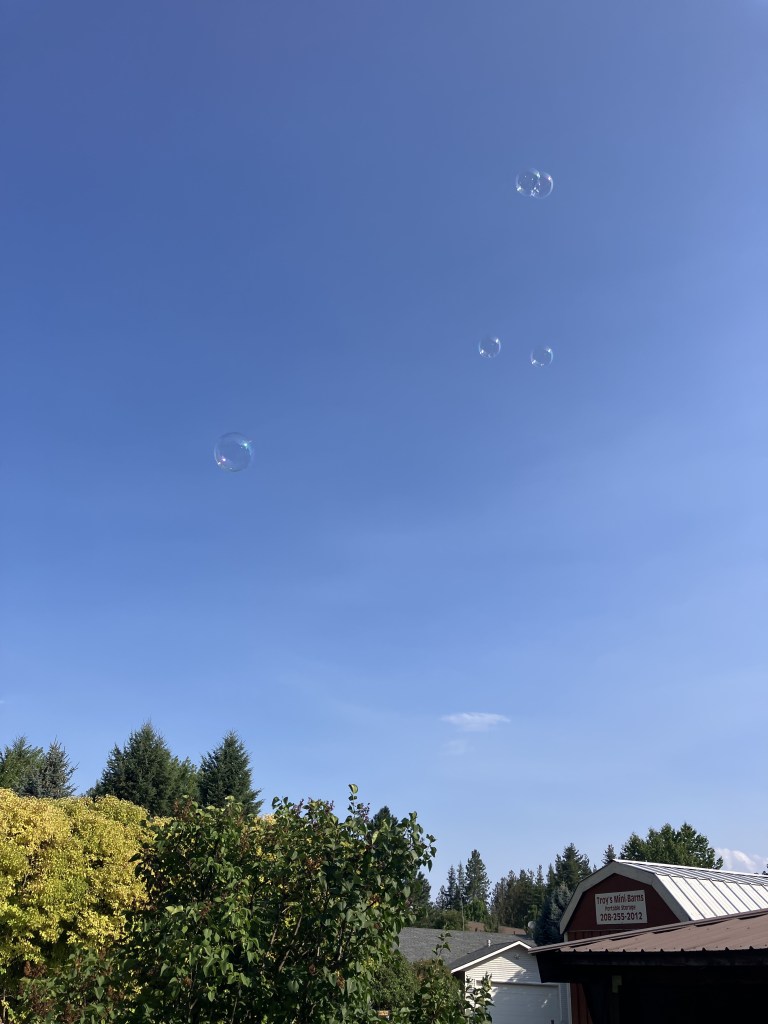
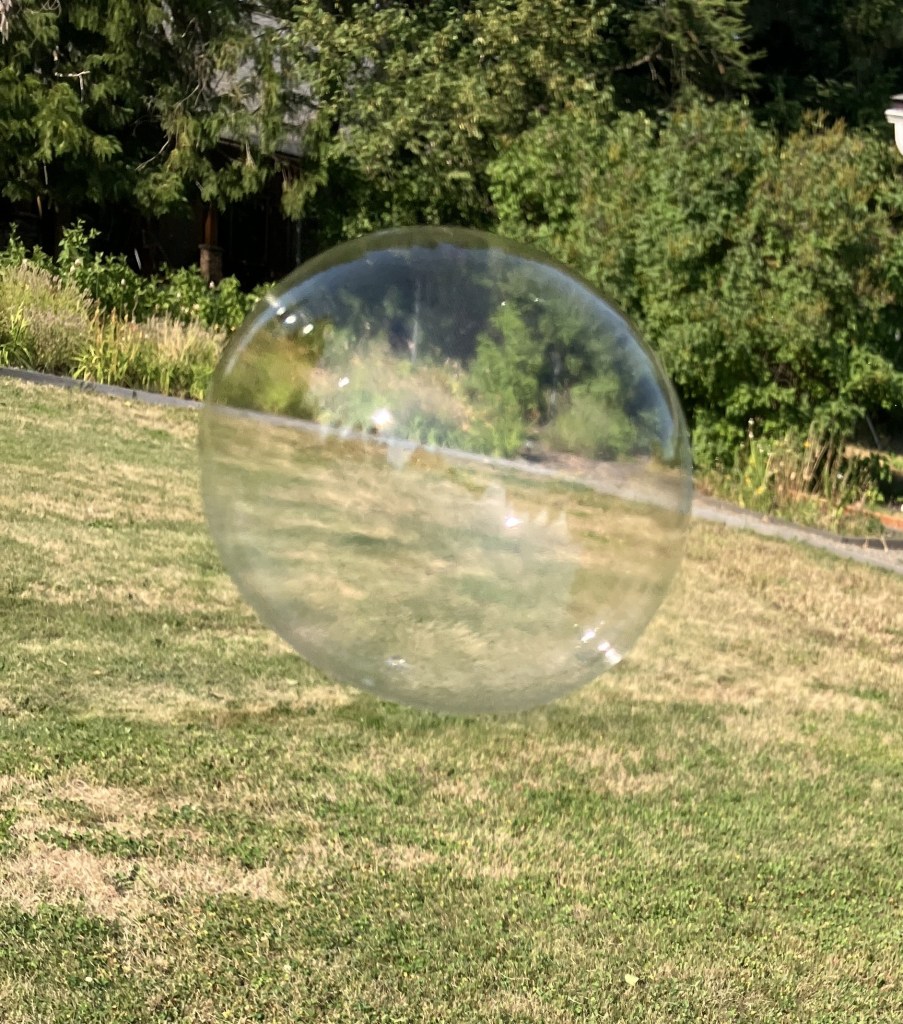
The bubbles truly do last longer. They are also shinier with an iridescent rainbow sheen.
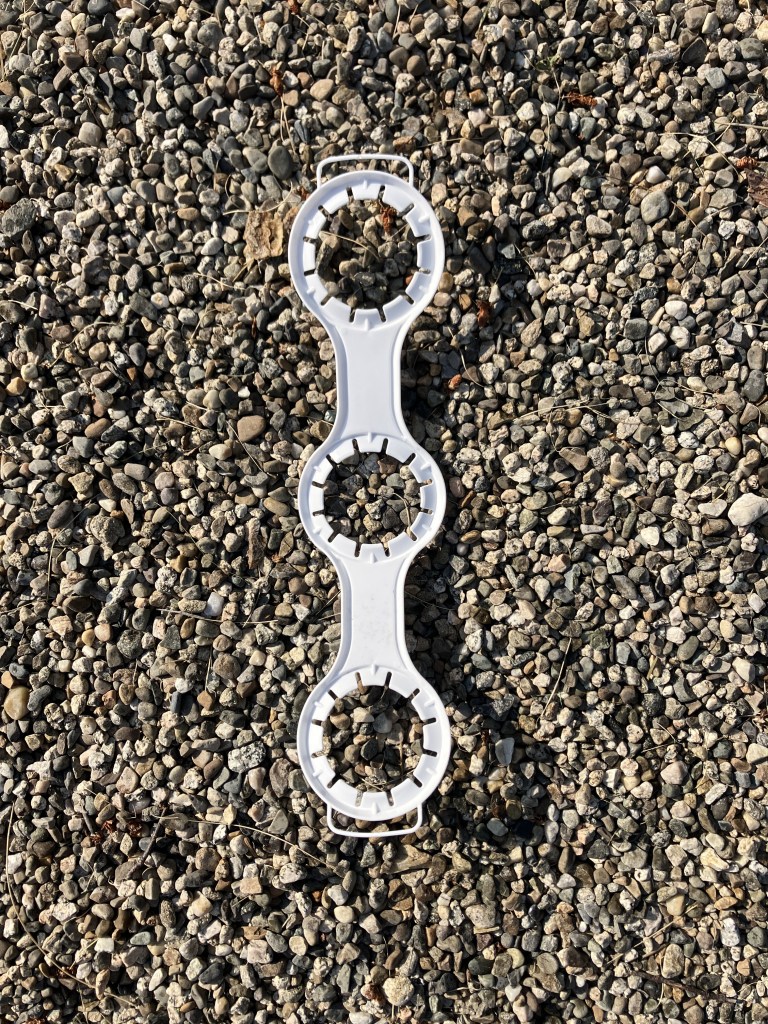
When I need a quick break from typing up stories, I often go in the backyard and take a bubble break. I’ve tried out a few different wands and my favorite at the moment is the rings off of my bulk mouthwash. It’s a three-ringer and two of the rings fit in my bubble bucket, with the third as a handle. Plump bubbles are a result.
IIIItIMy science sleuth wants to know why bubbles blow out round, even when the wand is a different shape, such as a square. I had to research for that answer as well.
Do you know why? Hint: there is a connection to water bugs.
Hope you find some bubble time. You are never too old to enjoy a bubble session.
I used to panic a bit when August rolled around since it meant in a couple of weeks I would be knee deep in meetings and lesson plans getting ready for the new school year.
Fourth year into retirement I now say, “School supplies? Is it that time already?” and pick up more books from the library.
For this month’s Reader Roundup, I’m borrowing an idea from who Nicole over at Sorry I’m Booked who did her own checkpoint (do pop over and look).
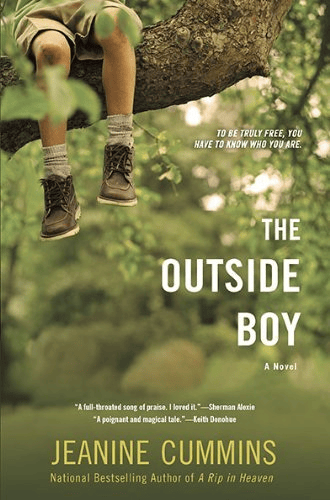
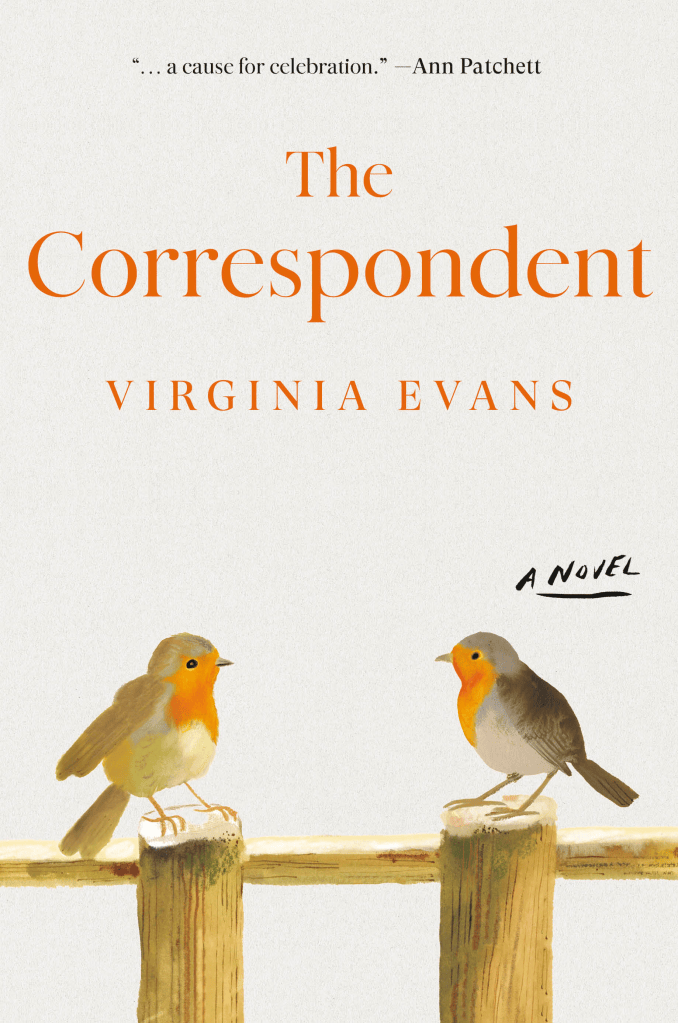
Best book(s) you’ve read so far in 2026: The Outside Boy by Jeanine Cummins, A Gentleman in Moscow by Amor Towles, The Correspondent by Virginia Evans, Tuck Everlasting: The Graphic Novel by K. Woodman-Maynard, The Mouse by Stephanie Shulman, Jella Lepman and Her Library of Dreams by Katherine Paterson, Sally Deng, H is for Hawk by Helen Macdonald–and these are just a few.
Best sequel you’ve read so far in 2026: I am absolutely smitten with Beth Brower’s Journals of Emma M. Lion series, both the written and the audiotape.
New release you haven’t read yet but want to: Sunrise by Tea Obreht, which sounds intriguing with its plot resonating a Twilight Zone vibe.
Biggest disappointment(s): I waited a long time for Ann Patchett’s Whistler. The book jacket summary was misleading. It could have been a heart-warming family story, but it took a turn. The Frozen River by Ariel Lawhon also took an unexpected turn. The Calamity Club by Kathryn Stockwell was also a long hold list wait. Too long and so many troubling issues held back true enjoyment.
Biggest surprise: My Friend Flicka by Mary O-Hara. Having ignored this kid classic all these years (thinking it would be a sad animal story, like The Red Fern), it was surprising how well-written, how emotionally deep it was, to the point that I think it is best savored and appreciated by adults, not that kids can’t appreciate a really good read. The movie version with Roddy McDowell downgraded its literary value by putting a Disney spin on the story.
Favorite new author (debut or new to you): Beth Brower, most definitely.
New favorite character: Emma M. Lion–spunky, witty, determined (yes, she does sound like Elizabeth Bennett, doesn’t she?)
Book(s) that made you cry: oh gosh, too easily that little chokey tear thing happens these days. Books that make me happy, like The Journals of Emma M. Lion, poignant moments found in books like H is for Hawk by Helen Macdonald and The Correspondent by Virginia Evans.
Book(s) that made you happy; clever writing always brightens my reading time. Anthony Horowitz’s Marble Hall Murders, A Gentleman in Moscow by Amor Towles, The Eyes & the Impossible by Dave Eggers
Most beautiful book you’ve checked out so far this year: The Big Book of Birds by Yuval Zommer and Barabara Taylor has georgous illustrations.
What books do you need to read by the end of the year? Oh. So. Many.
Reading Challenge Progress: It’s been an amazing year. My reading challenge was set for 101 and I am now at 134 with four months left to check off more “Want to Read” titles.