
How Cliché: Well, Well, “W”
Well, the end of the cliché alphabet consortium of phrases is nearing the end. Here are a few “w” clichés to consider.
Walk on eggs (shells): not easily done, of course, and this hyperbole emphasizes that one must tread very, very carefully around a person or situation to avoid certain consequences. The expression goes back as far as the sixteenth century when Robert Burton used it in his Anatomy of Melancholy, when he wrote: “Going as if he trod upon eggs.”
Walk on water: referring to performing a miracle or to be divinely perfect which refers to one of Jesus’s miracles in which he walked upon the sea to reach the disciples in a boat (Matthew 14:25 and Mark 6:48).
Walk the plank: to be forced against one’s will to do something, usually in reference to a dire outcome. Apparently seventeenth-century pirates would attach a plank to the side of the ship and force the accused, usually a prisoner or someone out of favor with the captain and crew and have them walk off the plank into the sea. This has been disputed by some as fictional, but it does make for a dramatically tense scene in a story or film. Just as Johnny Depp.

A watched pot never boils: anxious hovering doesn’t help matters and if you have ever stood over a pot waiting for the water to boil, this old adage makes perfect sense.
Wearing one’s heart upon one’s sleeve: showing one’s emotions openly is derived from the days when a knight would wear a favor, such as a ribbon, to show reverence or attachment. Seeing that ribbon fluttering in the breeze let everyone know what was up in the favorites department. It meant being vulnerable. Just ask Othello when he stated “But I will wear my heart upon my sleeve for daws (ravens) to peck at.”
Weighed and found wanting: tested and considered and proved to fall short stems from the Bible when Daniel pointed out to King Belshazzar in Daniel 5:27 that the king wasn’t up to snuff and he would suffer the consequences. I personally like the example from Knight’s Tale when Rufus Sewell’s character was dismounted by Heath Ledger and is lying on his back facing Team Sir Ulrich.
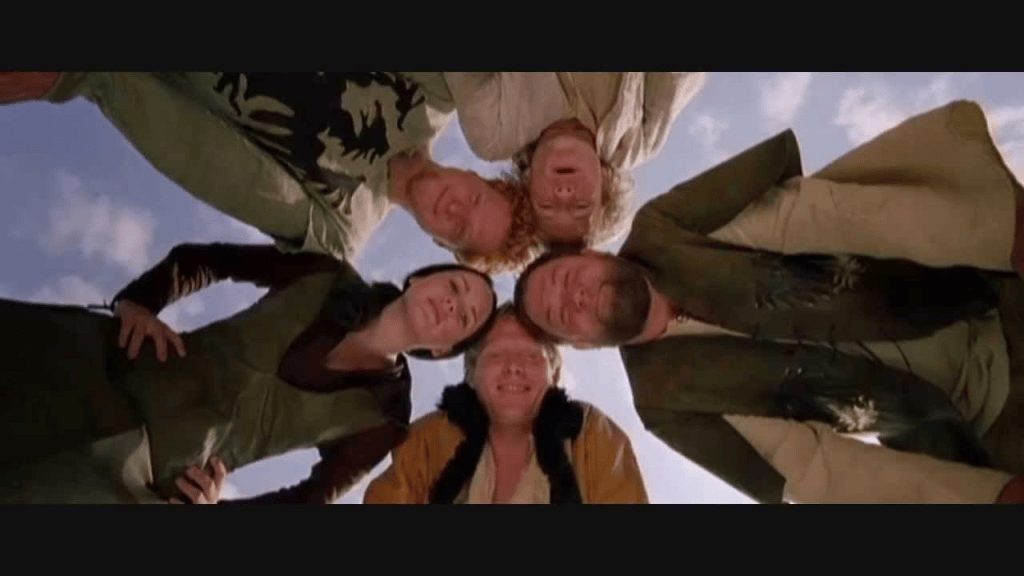
Wet one’s whistle: it’s difficult to whistle when one’s mouth is dry, so the solution is to have a drink. Personal preference is noted. Chaucer applied the saying in his Canterbury Tales in “The Reeve’s Tale” when he wrote, “So was her joly whistle wel y-wet.” Of course, we all remember that children’s party game when we had to chew up a cracker and then try to whistle. Pass the lemonade, please.
What you see is what you get: nothing hidden; it’s all out in the open, and Flip Wilson also comes to mind with this saying, as he sassed, “Honey, what you see is what you get.

When in Rome (do as the Romans do): following what is the custom or the expected procedure is often advised and is thought to be the answer St. Augustine received when he asked if he should fast on Saturday. “When I am in (Milan) I do not fast Saturday, when I am in Rome, I fast on Saturday.” Best be advised to refer to the Fodor’s travel guide for local customs.
The whole shebang: noting the entirety is a phrase traced back to mid-nineteenth century America, and is also related to “the whole shooting match” or “kit and caboodle.”
Wild horse couldn’t drag me: this refers to the stubbornness of not being persuaded to do something, which possibly stems from a medieval form of torture when a person would be tied to a horse and the horse spooked to take off, dragging the person behind. That much conviction receives a certain amount of consideration.
With strings attached (and alternately) No strings attached: it’s all about whether there are conditions that come with the situation. Consider these two examples: Sandra Brown wrote in her 1999 novel Alibi, “his fantasy evening with the most exciting woman he had ever met not only came with strings attached, but those strings were probably going to form a noose that would ultimately hang him.” Compared with “Come in and help yourself to whatever you see at the buffet table, no strings attached.”
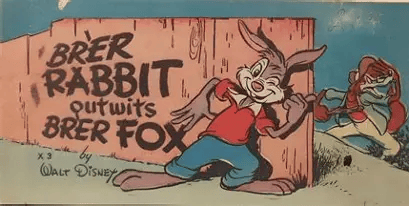
Worn to a frazzle: if a person becomes reduced to frayed nerves, then they are worn to a state of being frazzled. Think about the chase between a fox and a rabbit as in Joel Chandler Haris’s 1800 Uncle Remus stories. “Brer Fox dun know Ber Rabbit uv ole, en he know dat sorter game done wo’ ter a frazzle.” I’m not sure if it is Brer Fox or Brer Rabbit who is the most frazzled–the one chasing, or the one escaping.
image: DeviantArt
Wreak havoc: during medieval times invading troops would conquer or plunder a village, taking all it could, both lives and treasure. The word “havoc” was a medieval term for “plunder.” Shakespeare made use of this term in Julius Caesar when Brutus said, “Cry havoc, and let slip the dogs of war,” in Act 3. Today the term still carries an aspect of damage, but less emphasis on killing and looting and more on mess, such as “The puppies will wreak havoc in the living room if the door isn’t shut properly.”
For more W clichés check out Christine Ammer’s The Facts on File Dictionary of Clichés.






“Wake up and smell the coffee” is one I find myself saying.
Other ones I can think of off the top of my head are “Work your tail off, he/she wears the trousers in this family, and wet behind the ears.”