Pam Webb

a writer's journey as a reader

Archive for the category “writers”

The Book I Would Like to Write


Sometimes the rumblings of hunger manage to induce some amazing culinary renderings on my behalf.

“Let’s see–some rice, a dollop of pesto, assorted veggies, ooh a garnish of nuts, oh yeah there is that leftover sautéed chicken breast.”

Yes, it was tasty. No, didn’t snap a photo.

I wish I could do that with my writing. Here are the ingredients that are rumbling around in my writerly mixing bowl:
-an irrepressible protagonist who transcends time
-address a political issue in a manner that is neither knee jerk, condescending, nor didactic
-scatter in memorable minor characters who majorly affect the plot
-set the story in a picturesque small town of yesteryear
-provide a handful of quotes that will resonate long after the book has been reviewed, shelved, studied, and reread
-have one maybe two iconic symbols that shift paradigms
-explore old thoughts in a new way
-create a subculture that spans time, culture, and political decorum

Wait a minute…
This book is already available, attainable, and darn right delicious.

Harper Lee’s classic remains my ideal of perfect novel.  I have too many ideas rumbling around to only write one book, but oh what a book to have written as the one-claim-to-fame.
Do you have a ONE book that you feast on as a reader?  Or is there one special book that inspires your writer creativity towards boil, simmer, and serve?

Captives Review


Jill Williamson provides a  dystopian premise in her YA  novel Captives. The story takes place in the not too distant future of 2088 and reflects many of the same concerns facing our own world: a pandemic brought on by casual sex, increased government surveillance, technology replacing genuine relationships, and the emphasis of outer versus inner beauty.

The action takes place in the walled domain called Safe Lands, which is ironically a place where the citizens are far from being safe, due to their hedonistic lifestyles, which result in early deaths. With the inability to sustain their dwindling population, the Safe Lands government travels outside of its boundaries and kidnaps outlanders. As the new captives adapt to their new environment the story focuses on who will resist the temptations of Safe Lands and who will be overcome.

The mature topics within the story are handled well, with only a small tendency towards preachiness. The plot is divided into several viewpoints, which tends to give it a somewhat choppy flow. For those who are dystopian novel fans there are many recognizable tropes: hedonism, children martyrs, overbearing governmental control, and situational ethics.
At the end of the book there is a desire to know the rest of the story and the reader looks forward to the next installment of the Safe Lands series.

This book was provided by BookSneeze  in exchange for a fair review.

Doodle-Doo, A Contest for You


image:mikeallegra.com

The above is Mike Allegra and he is a children’s writer.  Yes, he is a wild and crazy guy.  Kind of Steve Martin and kind of Billy Crystal– entertaining ,witty and the author of :

 Which is about how one lady, namely Sarah Hale, got Thanksgiving on the calendar as a national holiday.  Even if you aren’t into picture books, you should stop by and say “hi” to Mike. For one, he is very friendly and will say “hi” back.  For another, he tells great stories–they are hilarious more times than not.  And the best reason is right now he is offering a free personal doodle for some lucky winner.  Check out the details here.

for YOU

Eyre of Distinction


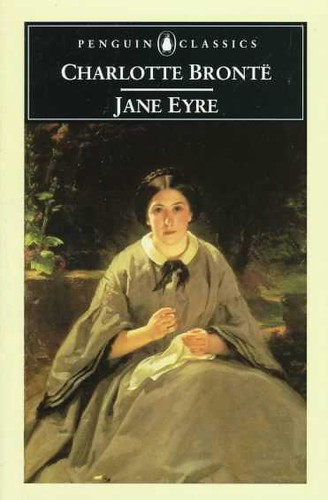
Soon we start our AP novel unit, Jane Eyre. Charlotte Bronte’s novel is one of my favorites, which means I will infuse as much of my appreciation for it as I do for my other favorite classics like Hamlet.  While many wax profoundly about Jane Austen, I think Miss Bronte gets overlooked. Jane Eyre has the distinction of being one of those novels that set things of literature memes, tropes, and motifs in motion by becoming a template for other stories. Consider:

  • she is plain in looks, but beautiful in spirit
  • her intelligence is valued by others, at a time when women were not widely educated
  • she values family over fortune
  • she easily speaks her mind
  • she is independent and finds a way to survive
  • outwardly she is calm, yet ripples with passion underneath her facade of restraint
  • she is perservering, sourceful, and a woman of strong morals
  • she stands up for herself–no doormat dame here

My opinion: Jane rocks. Over the years there have been several film adaptations of the novel.  I binged on JE films over the weekend and came up with my ratings:

1971: Starring George C. Scott and Susannah York
Verdict: skip.

George, too familiar with his Patton role, brought it to his interpretation of Rochester.  He railed and ranted in a very American accent and I gave up after he meets with Jane after their encounter on the road. Besides York’s Jane being too old and much too pretty I couldn’t sit through the poor film quality. The video transfer was so muddied I felt as if I were watching the movie through an unwashed glass.

image: eleganceof fashion. blogspot

1983: Timothy Dalton and Zelah Clarke
Verdict: one of the most faithful and watchable versions

Being a BBC production, I had initial trust it would be a quality adaptation, after all these are the folk who brought us Colin Firth as Mister Darcy. The sets, the important scenes, those inscrutable nuances of the original story are all contained in this mini-series. Timothy Dalton definitely understands the Byronic hero that Rochester embodies and has even said in interviews Rochester is one of his best roles. Clarke, while a bit older than the required 18 year old fresh from her Lowood imprisonment, captures the Quakerish passivity and ethereal nature of Jane Eyre.  The scenes between Dalton and Clarke are melt-in-the-mouth truffle satisfying.  Their version is what comes to mind most often when I return for a refresher novel read. I really did believe a heartstring developed between them. The agony of Dalton’s Rochester when he realized his Jane was leaving him forever kept the tissue box occupied.

1996: William Hurt and Charlotte Gainsbourg director: Franco Zefferilli
Verdict: passable, but strayed terribly from the novel

William Hurt seemed on the verge of understanding Rochester, but kept the bitterness too diminished, too washed out. Charlotte G as Jane got her part right. The plain, passionate young actress  imbued the paradoxical spirit of Jane Eyre. Sadly, there existed no believable passion, that needed kindred heart-string spark, between Gainsbourg’s Jane and Hurt’s Rochester. This spark is the very core of the novel. Without that essential core the movie floundered about like a fish hoping to get back into the water to have a proper swim. The director who brought us Romeo and JulietTaming of the Shrew, Hamlet, and other great stories of passion missed the mark with this adaptation by rushing the story and taking way too many liberties with the plot.

2006: Toby Stephens and Ruth Wilson
Verdict: enjoyable, even if a bit too contemporary in approach

image: writingbar.com

Admittedly, I had started watching this version years ago when it first came out, but found myself so disenchanted with the cutaway flashbacks, I couldn’t get past the Lowood scenes and it wasn’t until recently I returned to another viewing.  I did like the lead actors portrayals, and yes, there was a definite spark between them. I thought Toby Stephens got off easy with his fire wounds, unlike Hurt and Dalton. His rugged looks only appeared rather marred, instead of being ruined. The rolling around, ankle rubbing bit at the end seemed a bit too lenient for true Bronte style. Then again, there are leniences throughout this adaptation I willingly overlooked since the production quality proved so high.

2011: MiaWaikowska and Michael Fassbender Director: Cary Fukunaga
Verdict: Admirable

The first scene makes a diehard JE fan sit bolt upright and ask, “What? Wait–did the movie skip! because the opening scene is starting right off with Jane making her mad dash from Thornfield, which usually means the film is winding up to the grand finale.  Instead Fukunaga gets a bit artsy and dips in and out of Jane’s childhood days in flashbacks, with a quick glance at times at her more recent history.  Artfully done, but a bit disconcerting for those who prefer the linear progression.  Fassbender and Waikowska do provide a sumptuous Rochester and Jane.  Looks, mannerisms, nuances, smoldering passions–it’s all there.  That’s why it the ending is so absolutely frustrating.  I could not understand the need to transform Rochester into a Tom Hanks Castaway lookalike.  Maybe trading out the maimed hand for a beard was a contract compromise. Also, there should have been another 20 minutes of wrap up, yet we are whisked away much too soon.  It’s like being served the most savory dessert and having it taken away after a couple a bites–“Yo, I wasn’t finished.” Apparently Fukunaga thought the audience needed no more indulging and wanted us to move away from the table.

Overall: If a dedicated JE fan go to one of the series adaptations, such as the 1983 or the 2006.  It appears that only when given the proper amount of time (3-4 hours) can Jane’s story be told sufficiently. However, if thinking “book or movie first?” and movie wins out–get the 2011 version.

Further notation: I thought about finding the Ciarin Hinds version, especially after watching him in Austen’s Persuasion with Amanda Root.  Our library no longer has it and after reading the widely mixed reviews of loving it and hating it, I thought I will stick with my picks of 1983, 2011, and 2006 for classroom clips.

Any readers have their own picks of fave JE adaptations?

Life Long Loving of the Library of Congress


Main Library of Congress building at the start...

Main Library of Congress building at the start of the 20th century (Photo credit: Wikipedia)

And yet another reason I continue my praises of the Library of Congress. In recent Internet research sleuthing I stumbled across their Festival Author Booklist. Yippee! I love bookish gatherings, especially when I don’t have to do much traveling to enjoy it.  If you do want to travel, then get your arrangements made for Washington D.C. because that’s the happening spot. Last year the festival ran the weekend of September 21 and 22.  For more information: National Book Festival

Author and Reading Celebration

Since 2001,  authors, illustrators and poets make presentations on the National Mall in various pavilions. In 2013 over a 100 authors represented  Teens & Children, Fiction & Mystery, History & Biography, Contemporary Life, Poetry & Prose, Graphic Novels & Science Fiction and Special Programs.

Library of Congress Pavilion

If a person has longing to know all about the Library of Congress, then a visit to their LOC Pavilion is in order. There is so much moAt the Library of Congress Pavilion than books.

Wait!

There is more bookish good stuff from the LOC. Want handy access to classic reads? Then you need to click on the Read.gov link and start enjoying a range of reading from the John Carter series to Aesop Fables and what lies in between.

Contest!

Are you a teacher, a parent? If books are an important part of your education input, you will want to perk up and take time to read the guidelines about the LOC contest Letters About Literature.  Prizes too! I look forward to introducing this to my students.

Stay tuned for more love notes about the nation’s library.

Fifty Shades of Greatness


The particulars: 1,311 voters. 1,200 suggested books. The result: the top 50 books which reflect great reads, great choices–nothing shady about good taste (BookRiot). Though I didn’t vote in the first round I shall add in my votes.

  1. To Kill A Mockingbird by Harper Lee (126 votes)
  2. Pride and Prejudice by Jane Austen
  3. Jane Eyre by Charlotte Bronte
  4. The Harry Potter series by J.K. Rowling
  5. The Great Gatsby by F. Scott Fitzgerald
  6. The Lord of the Rings series by J.R.R. Tolkien
  7. Gone With the Wind by Margaret Mitchell
  8. Wuthering Heights by Emily Bronte
  9. The Book Thief by Markus Zusak
  10. The Catcher in the Rye by J.D. Salinger
  11. One Hundred Years of Solitude by Gabriel Garcia Marquez
  12. The Secret History by Donna Tartt
  13. Catch-22 by Joseph Heller
  14. A Tree Grows in Brooklyn by Betty Smith
  15. Slaughterhouse-Five by Kurt Vonnegut
  16. A Prayer for Owen Meany by John Irving
  17. The Stand by Stephen King
  18. The Hobbit by J.R.R. Tolkien
  19. Anna Karenina by Leo Tolstoy
  20. Infinite Jest by David Foster Wallace
  21. Persuasion by Jane Austen
  22. The Picture of Dorian Gray by Oscar Wilde
  23. The Brothers Karamozov by Fyodor Dostoevsky
  24. The Outlander series by Diana Gabaldon
  25. East of Eden by John Steinbeck
  26. The Shadow of the Wind by Carlos Ruiz Zafon
  27. The Time Traveler’s Wife by Audrey Niffenegger
  28. American Gods by Neil Gaiman
  29. The Count of Monte Cristo by Alexandre Dumas
  30. Fahrenheit 451 by Ray Bradbury
  31. 1984 by George Orwell
  32. Crime and Punishment by Fyodor Dostoevsky
  33. Little Women by Louisa May Alcott
  34. Moby-Dick by Herman Melville
  35. The Grapes of Wrath by John Steinbeck
  36. The Handmaid’s Tale by Margaret Atwood
  37. The Hitchhiker’s Guide to the Galaxy series by Douglas Adams
  38. Lolita by Vladimir Nabokov
  39. Rebecca by Daphne du Maurier
  40. Ulysses by James Joyce
  41. Cloud Atlas by David Mitchell
  42. The Perks of Being a Wallflower by Stephen Chbosky
  43. Ender’s Game by Orson Scott Card
  44. Middlesex by Jeffrey Eugenides
  45. The Amazing Adventures of Kavalier and Clay by Michael Chabon
  46. Dune by Frank Herbert
  47. Gilead by Marilynne Robinson
  48. Les Miserables by Victor Hugo
  49. The Night Circus by Erin Morgenstern
  50. The Poisonwood Bible by Barbara Kingsolver (13 votes)

I would have put in votes for The Alchemist and a few of Shakespeare’s plays, like Hamlet, Much Ado About Nothing, Othello. Come to think of it I’ve yet to come across a Greats list for plays.

Now, your turn. What votes would you cast off the 50 Greats?  And then–what plays would you vote for? Because aren’t plays stories to be acted out?

Rating the Underrated


Thank you for tuning in for another round of lists. This one again comes from BookRiot, being posted by Rebecca Joines Schinsky. She shares the results of reader poll for underrated books from the 576 who decided to voice their opinion. Usually I find these findings rather dubious.  Stanford and Gallup were not involved so how do we really know how legit the findings are?  Since you are here take a look at the list.  Any surprises?  I am only familiar with a couple of the votes. Sigh, my illiteracy is showing again, I suppose.

       Posted by   Rebecca Joines Schinsky     

Are These the 13 Most Underrated Books?

<!—->
  1. I Capture the Castle by Dodie Smith (9 votes)
  2. The Shadow of the Wind by Carlos Ruiz Zafon (6)
  3. Shantaram by Gregory David Roberts (6)
  4. The Sparrow by Mary Doria Russell (5)
  5. Stoner by John Williams (5)
  6. The Fionavar Tapestry Trilogy by Guy Gavriel Kay (4)
  7. if on a winter’s night a traveler by Italo Calvino (4)
  8. Lamb by Christopher Moore (4)
  9. North and South by Elizabeth Gaskell (4)
  10. Pale Fire by Vladimir Nabokov (4)
  11. The Phantom Tollbooth by Norton Juster (4)
  12. The Princess Bride by William Goldman (4)
  13. The Neverending Story by Michael Ende (4)

I adored The Phantom Tollbooth in elementary school, grooved on The Princess Bride in college, and skipped The Neverending Story, both the book and the movie. Nothing else on the list rings a bell. I’m not seeing how Tollbooth or Princess Bride could be underrated since both became film adaptations.

Anyone read any of these? Are they underrated?

Check out other Riot polls:

The 25 Most-Hated Books (by Book Riot Readers)

19 Books You’ve Been Meaning to Read FOREVER

20 Books You Pretend to Have Read

Top 10 Books You’re Embarrassed to Admit You’ve Read

20 Most-Loved Literary Characters

_________________________

Quantcast

Publisher’s Weekly 2013 List


Cover of November 6, 2006.

Cover of November 6, 2006. (Photo credit: Wikipedia)


A bit behind in getting out the best of the year posties, but my procrastination has a purpose: now it’s a reminder instead of a glut of wrap up info. Good old fashioned method-in-my-madness stuff going on here.


I am always curious as to what is popular in book reads. The New York Times is one popular measuring tool, and another one is Publisher’s Weekly. These are excerpts from their yearly best 20 books of the year. I found some head-scratching “Really, that was popular?” selections to “Well, that’s no surprise” entries. Here are some pull outs with their summaries. One thing I noticed is that I haven’t heard any of these titles. I’ve not even seen them on the new book offerings shelves at the library.  Is this something I should be concerned about?  Also, most of these titles are not very cheery, interesting, yes–cheery no.  Somehow, I am not as concerned about that issue.  After all, people tend to flock towards the sad and mad instead of the glad. Or is that just my view?


The People in the Trees by Hanya Yanagihara (Doubleday)


Add Norton Perina to the pantheon of literature’s best unreliable narrators. Perina is a scientist who, after graduating Harvard medical school in the 1940s, travels to a remote Pacific island chain where he may or may not have stumbled upon the key to immortality. The book is composed of his memoirs, which he is writing from prison in the U.S. after being convicted of a heinous crime. The truth behind Perina’s story is both riveting and chilling.


Miss Anne in Harlem: The White Women of the Black Renaissance by
Carla Kaplan (Harper)


In this beautifully written, empathetic, and valuable addition to the history of the Harlem Renaissance, scholar Kaplan (Zora Neale Hurston: A Life in Letters) presents the untold story of six notable white women (including Fannie Hurst and Nancy Cunard, members of a larger group known collectively as “Miss Anne”) who embraced black culture—and life—in Harlem in the 1920s and ’30s, serving as hostesses, patrons, activists, comrades, lovers, writers, and editors.


Sea of Hooks by Lindsay Hill (McPherson & Co.)


On a small scale, Hill, a onetime banker and now a poet with six published books, has written a fragmented portrait of a man’s troubled childhood and lost adulthood—a spiritual biography that’s both tragic and comic, and provides moments of pure reading pleasure on every single page, not to mention a wallop of pathos. On a larger scale, it’s a moving and unforgettable novel.


DISCLAIMER: covers and summaries are from the Publisher Weekly site. For the entire tamale go to: 2013 Publisher’s Weekly List


Lit One-Liners


BookRiot became another 2013 discovery, and I am hooked. How could I resist posts delivered free to my mailbox which concern all things books? I definitely found this one by Rachel Cordasco a saver. It will be incorporated into my AP warm-ups where I have students create micro-précis  statements as a ready-set-go for the May exam. Here are some pull-outs from Cardasco’s post:

    Posted by   Rachel Cordasco   from BookRiot            

30 One-Sentence Lessons from Literature

1. Hamlet by William Shakespeare: Just make up your mind already, dude.

2. Anything by Stephen Crane: It doesn’t matter what you do- the Universe still thinks you’re super lame.

3. Don Quixote by Miguel de Cervantes: You can never read too many novels…oh wait, maybe you can…

4. Sister Carrie by Theodore Dreiser: Cluelessness is not something you want to broadcast when you’re a young woman in strange new city, for you’ll just become a skeevy-guy magnet.

5. Dracula by Bram Stoker: If you have a choice between Count Dracula’s castle and the Holiday Inn, stay at the Holiday Inn.

6. Frankenstein by Mary Shelley: If you absolutely must create a freakish monster thing, be sure to make a girlfriend for it, cause if you don’t, he’ll be really, really mad.

7. The Metamorphosis by Franz Kafka: Sucks to be a bug.

8. Macbeth by William Shakespeare: You should treat your guests well by, you know, not murdering them in their beds.

9. Huckleberry Finn by Mark Twain: When you travel around in a boat with a friend, away from human civilization, when you do run in to people you realize just how crazy they all are.

10. Sense and Sensibility by Jane Austen: When it comes down to choosing between the hot guy who treats you like crap and the not-as- hot guy who treats you like a queen, it’s really not a choice at all.

11. Heart of Darkness by Joseph Conrad: Don’t frighten the natives.

12. The War of the Worlds by H. G. Wells: When the freaky alien things come swooping down on Earth and shooting lasers or whatever at everyone, run as fast as you can cause those aliens are mean.

13. The Great Gatsby by F. Scott Fitzgerald: Yeah, yeah, money can’t buy happiness- check.

14. Anything by e. e. cummings:

capital

letters

are for

losers.

15. King Lear by William Shakespeare: Don’t bother arguing with your parents. Or your children. Just don’t bother.

_________________________

My own contributions:

Beowulf by John Gardner: growing up in a cave with a fiendish mother definitely changes your perspective

Daisy Miller by Henry James: It’s true, when in Rome, or at least in Italy, as a single American girl, who should do as the Romans–Italians do–then again, maybe not.

Room with a View by E.M. Forester: what is about Italy and young women anyway?

“The Lovesong of Alfred J. Prufrock” T.S. Eliot: What if, What if, What if Hamlet hadn’t been your poster boy of decision-making?

The Strange Case of Dr. Jekyll and Mr. Hyde by Robert Louis Stevenson: getting in touch with your inner feelings definitely deserves a second thought

Revisits and Rereads


Cover of "To Kill a Mockingbird: 50th Ann...

Cover via Amazon

It’s 5:45 a.m. and I’ve just finished re-reading Mockingjay. I checked it out a couple of days ago partly because I was surprised to see not one, but two copies on the shelf. I cancelled my hold request for Catching Fire as I reached the last chapter of the last book in this series.. How could I return to the middle after witnessing the end of Katniss’s journey?
I usually don’t reread books unless a long interval takes place–at least five years or more. To Kill a Mockingbird is the exception–then again, I teach that one and is less of a re-read than a re-visit at this point.

But let us turn from Mockingbirds back to Mockingjays:

As I eased the last page over and closed the book and suffer from that post traumatic feeling of “book done” I’m glad I’ve reread Mockingjay. The first time through was a done in a frenzy of page turning, and I missed so much. This time I have faces for the characters having watched the movies and the tangled relationships of Katniss take on a deeper meaning now.

It’s much the same when I revisit Scout —Mary Badham‘s freckled pageboy face is superimposed upon Harper Lee’s Scout, as she bildungsromans her way through childhood and racial injustice, let alone Southern discomforts of the 193os.

Someday I will return once again and reread the third and final adventure of Katniss. Although I definitely appreciated the Hunger Games trilogy, I doubt I will actually become as familiar with it as I have with To Kill a Mockingbird. Hmmm, I wonder if there is a connection between my fondness for these two lit ladies, one a Mockingbird and the other a Mockingjay.

Yes, there is: it’s called A Good Story.

So, Book Boosters–while you are dialed in–any novels or books you reread? Or perhaps revisit?

Post Navigation