Pam Webb

a writer's journey as a reader

Archive for the category “reflections”

Dash It All


I have come upon the realization I lean towards dashes instead of semi-colons–really, I do. My students upon the first introduction to Emily Dickinson notice her use of those extra big hyphens. Hey–if it’s good enough for Em–dash it all, it can’t be all wrong.

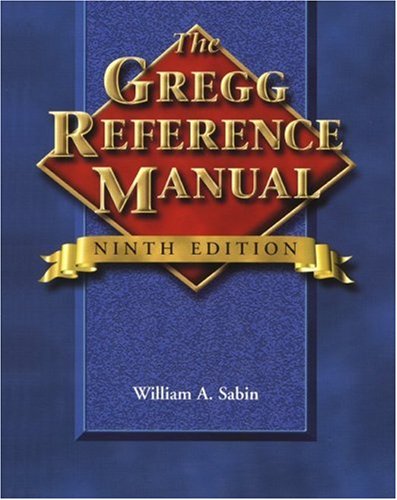
On reflection, perhaps I overindulge in my penchant for dashes–or maybe not? In my desire to correctly use them, I turned to the Internet and found my favorite grammar guru–Ben Yagoda. A writer for The New York Times, professor, teacher, and I would say humorist, he provided everything I needed to know about the dash–and then some. Check out his fabulous writing guide How Not to Write Bad (really–that’s the title).

cartoon by Peter Arkle

An excerpt from his column points out how effective the dash can be:

To get a sense of some of the things a dash can do, take a look at these pairs of quotes.

F. Scott Fitzgerald’s “The Great Gatsby”:

Thirty: the promise of a decade of loneliness, a thinning list of single men to know, a thinning briefcase of enthusiasm, thinning hair.

Thirty—the promise of a decade of loneliness, a thinning list of single men to know, a thinning briefcase of enthusiasm, thinning hair.

Henry James, referring to Henry David Thoreau:

He was worse than a provincial, he was parochial.

He was worse than a provincial—he was parochial.

Mark Twain in “Autobiography”:

…life does not consist mainly (or even largely) of facts and happenings. It consists mainly of the storm of thoughts that is forever blowing through one’s head.

…life does not consist mainly—or even largely—of facts and happenings. It consists mainly of the storm of thoughts that is forever blowing through one’s head.

Twain’s “Pudd’nhead Wilson’s New Calendar”:

Each person is born to one possession which outvalues all his others: his last breath.

Each person is born to one possession which outvalues all his others—his last breath.

In all cases, both versions make sense and are grammatically correct. But the ones with the dash (the ones the authors actually wrote) seem to live and breathe, while the others just lie there on the page. Like hitting the right combination of buttons in a computer game, typing two hyphens on the keyboard — and thereby making a dash — can give your prose a burst of energy, as if by magic. 

Emily, Twain, F. Scott, and Henry J.–I’m in good company.

The Fiction of Common Core


  • image: Pinterest.com

Common Core State Standards may or may not rock your world, but it has affected you in someway if you are any of the following:

  • Educator
  • Parent
  • Writer

As an educator it has already affected your world. I’m not going there at this time. I feel your pain, and rejoice in your triumphs as we plod our way through this new-to-us (for the most part) curriculum.

As a parent it will affect your kidz education. In a good way. For the most part. Trust me, the CCSS is not as bad as you’ve heard. The main aspect of Common Core is getting our students to understand their world better through the development of critical thinking skills. A very good thing.

As a writer, I’m not sure how it will affect you. That depends if you write fiction or non-fiction. Non-fiction is getting the big focus in the CCSS makeover. If you think about it, most of what we read is non-fiction, ranging from the back of the Cheerios box to the science textbook to the summons to appear in traffic court. Learning how to break down the text, to synthesize it, paraphrase it, and process the information is indeed an important skill, one needed to be successful in this crazy info-laden world of ours. And yet And yet, we need to feed our minds with the language of fiction as well.  That’s where you come in as a writer of fiction.

You might have heard the doomsayers extolling the death of fiction by the hands of those horrible, terrible, no-good eduniks who dreamt up the CCSS curriculum. Meh. Don’t let them worry you. Keep writing about neverlands, tomorrows, pasts, and todays.  Here’s why: there are specific standard built around students reading fiction, specifically stories, fables, folktales, and myths from diverse cultures (ELA Standard RL 3.2) Common Core comes down to caring about  how students develop their critical thinking skills, instead of focusing on the content. Teachers can switch up the reading offerings as long as the material meets the standards–at least that’s what we are doing in our district.

  • image: teacherscount.wordpress.com

In fact, to be fair, much of the past English reading/language curriculums dwelt heavily on fiction selections. As in most paradigm shifts, we are now swinging towards the other direction. Non-fiction is now going to be more in the spotlight as  a result. It will all balance out, but give a couple of years at least. After all, skirts have risen and fallen with the times, and so shall reading content in the classroom.

The Book I Would Like to Write


Sometimes the rumblings of hunger manage to induce some amazing culinary renderings on my behalf.

“Let’s see–some rice, a dollop of pesto, assorted veggies, ooh a garnish of nuts, oh yeah there is that leftover sautéed chicken breast.”

Yes, it was tasty. No, didn’t snap a photo.

I wish I could do that with my writing. Here are the ingredients that are rumbling around in my writerly mixing bowl:
-an irrepressible protagonist who transcends time
-address a political issue in a manner that is neither knee jerk, condescending, nor didactic
-scatter in memorable minor characters who majorly affect the plot
-set the story in a picturesque small town of yesteryear
-provide a handful of quotes that will resonate long after the book has been reviewed, shelved, studied, and reread
-have one maybe two iconic symbols that shift paradigms
-explore old thoughts in a new way
-create a subculture that spans time, culture, and political decorum

Wait a minute…
This book is already available, attainable, and darn right delicious.

Harper Lee’s classic remains my ideal of perfect novel.  I have too many ideas rumbling around to only write one book, but oh what a book to have written as the one-claim-to-fame.
Do you have a ONE book that you feast on as a reader?  Or is there one special book that inspires your writer creativity towards boil, simmer, and serve?

Jane Austen: Smart Reading


If you are here it’s because the Jane Austen in the title tweaked your interest, right? Well, beyond being one of THE best writers in the literary canonical group of authors listed in the universal TBR list, she is actually a teacher. Actually, Stanford neurobiologists and English professor Natalie Phillips picked her book Mansfield Park to determine a connection between critical reading and brain activation patterns. (source: Luminosity)

Cover of "Mansfield Park (1999)"

Cover of Mansfield Park (1999)

The procedure went like this: an MRI scanned the brains of 18 participants as they read MP. These weren’t ordinary students, no struggling juniors or seniors assigned Janey as an honors read; no, these were PhD candidates. The reason being the researchers wanted to make sure close reading, the reading for analysis, was properly done. Going for a doctorate would probably ensure smarter reading practices. Participants read for “fun,” that is, casually read and then they were asked to close read.

Results: critical reading increased bloodflow throughout the brain, especially to the prefrontal cortex, which is considered to be the center of thoughts and actions and our social behavior.

Implications: close reading, the method of critically studying a text, indicates a connection between shaping and shifting cognition

My Understanding: Sheesh! I’ve been doing this for years. “Hey kids, read this and let’s figure out what it means.” Oh yea, this is what Common Core State Standards is all about–we give students higher level reading material and ask them to think about what they are reading. Like I said *I’ve been doing this for years*.

Okay, do I get my honorary PhD now?

Biblio-profiled


Books

Gotta HaveBooks! (Photo credit: henry…)


Book Boosters. That’s my term for those of us that love books, love reading, love to promote reading and books.  Reading–rhymes with breathing.  Can’t go through life without either.  Actually, make that a day.  Something as wonderful as reading books tends to get knocked about: Bookworm, Get Outside, You’re Reading Another Book. You know the gamut.

Apparently we bibliophiles (very different from being a bibliomaniac) are profiled as being loners, hoarders, idolizers of authors, browsers–I shall not continue. An article in the Huffington Post entitled “These Stereotypes About Book Lovers Are Absolutely True, and That’s a Good Thing” lists 31 stereotypes. I’ve pulled the Top Ten I’ll admit to:

1. I never leave home without a book (I count the one I got going on my iPhone)

2. I don’t loan out books for fear of having them returned in a shabby condition (do not dog ear, please oh please)

3. I give books as presents (even if they would rather have a Red Robin gift card).

4. I would actually collect author trading cards (I’ll trade you my Vonnegut for your Whitman).

Various trading cards

Author trading cards available? (Photo credit: Wikipedia)

5. Yes, I do read about how famous authors became so well-loved because I do believe myself to be a page away from writing the Great American Novel (okay, I’ll amend that to Novel)

6. Bad movie adaptations can crease my day (perhaps not my whole summer, just a couple of weeks worth)

7. Finding a typo is irritating (though I live in a glass house, I’m afraid)

8. Yes, I do have strong, unwavering opinions about e-books (never mind what I said in #1)

9. Being located near a library is more important than other aspects of moving (Libraries rate over Starbucks proximity)

10. Audio books are marvelous road trip companions (Will it bother you if I plug in my book?)

Then in a December 2013 post, BookRiot blogger Dr.B  busted a move and dispelled some very important points: not caring about dog earing books *gasp* or cracking spines *be still my heart*; rarely giving books as gifts *but, but, they would like this one–I’m sure they would*; not caring about bad adaptations *oh, to have such strength*; typos? no big deal *again, to have such a cavalier attitude*.

Jester reading a book

Just another fool reading a book (Photo credit: Wikipedia)

What leanings do you have towards your profiling? Are you the Huffington style of traditional or more of the forgiving Dr. B?

Eyre of Distinction


Soon we start our AP novel unit, Jane Eyre. Charlotte Bronte’s novel is one of my favorites, which means I will infuse as much of my appreciation for it as I do for my other favorite classics like Hamlet.  While many wax profoundly about Jane Austen, I think Miss Bronte gets overlooked. Jane Eyre has the distinction of being one of those novels that set things of literature memes, tropes, and motifs in motion by becoming a template for other stories. Consider:

  • she is plain in looks, but beautiful in spirit
  • her intelligence is valued by others, at a time when women were not widely educated
  • she values family over fortune
  • she easily speaks her mind
  • she is independent and finds a way to survive
  • outwardly she is calm, yet ripples with passion underneath her facade of restraint
  • she is perservering, sourceful, and a woman of strong morals
  • she stands up for herself–no doormat dame here

My opinion: Jane rocks. Over the years there have been several film adaptations of the novel.  I binged on JE films over the weekend and came up with my ratings:

1971: Starring George C. Scott and Susannah York
Verdict: skip.

George, too familiar with his Patton role, brought it to his interpretation of Rochester.  He railed and ranted in a very American accent and I gave up after he meets with Jane after their encounter on the road. Besides York’s Jane being too old and much too pretty I couldn’t sit through the poor film quality. The video transfer was so muddied I felt as if I were watching the movie through an unwashed glass.

image: eleganceof fashion. blogspot

1983: Timothy Dalton and Zelah Clarke
Verdict: one of the most faithful and watchable versions

Being a BBC production, I had initial trust it would be a quality adaptation, after all these are the folk who brought us Colin Firth as Mister Darcy. The sets, the important scenes, those inscrutable nuances of the original story are all contained in this mini-series. Timothy Dalton definitely understands the Byronic hero that Rochester embodies and has even said in interviews Rochester is one of his best roles. Clarke, while a bit older than the required 18 year old fresh from her Lowood imprisonment, captures the Quakerish passivity and ethereal nature of Jane Eyre.  The scenes between Dalton and Clarke are melt-in-the-mouth truffle satisfying.  Their version is what comes to mind most often when I return for a refresher novel read. I really did believe a heartstring developed between them. The agony of Dalton’s Rochester when he realized his Jane was leaving him forever kept the tissue box occupied.

1996: William Hurt and Charlotte Gainsbourg director: Franco Zefferilli
Verdict: passable, but strayed terribly from the novel

William Hurt seemed on the verge of understanding Rochester, but kept the bitterness too diminished, too washed out. Charlotte G as Jane got her part right. The plain, passionate young actress  imbued the paradoxical spirit of Jane Eyre. Sadly, there existed no believable passion, that needed kindred heart-string spark, between Gainsbourg’s Jane and Hurt’s Rochester. This spark is the very core of the novel. Without that essential core the movie floundered about like a fish hoping to get back into the water to have a proper swim. The director who brought us Romeo and JulietTaming of the Shrew, Hamlet, and other great stories of passion missed the mark with this adaptation by rushing the story and taking way too many liberties with the plot.

2006: Toby Stephens and Ruth Wilson
Verdict: enjoyable, even if a bit too contemporary in approach

image: writingbar.com

Admittedly, I had started watching this version years ago when it first came out, but found myself so disenchanted with the cutaway flashbacks, I couldn’t get past the Lowood scenes and it wasn’t until recently I returned to another viewing.  I did like the lead actors portrayals, and yes, there was a definite spark between them. I thought Toby Stephens got off easy with his fire wounds, unlike Hurt and Dalton. His rugged looks only appeared rather marred, instead of being ruined. The rolling around, ankle rubbing bit at the end seemed a bit too lenient for true Bronte style. Then again, there are leniences throughout this adaptation I willingly overlooked since the production quality proved so high.

2011: MiaWaikowska and Michael Fassbender Director: Cary Fukunaga
Verdict: Admirable

The first scene makes a diehard JE fan sit bolt upright and ask, “What? Wait–did the movie skip! because the opening scene is starting right off with Jane making her mad dash from Thornfield, which usually means the film is winding up to the grand finale.  Instead Fukunaga gets a bit artsy and dips in and out of Jane’s childhood days in flashbacks, with a quick glance at times at her more recent history.  Artfully done, but a bit disconcerting for those who prefer the linear progression.  Fassbender and Waikowska do provide a sumptuous Rochester and Jane.  Looks, mannerisms, nuances, smoldering passions–it’s all there.  That’s why it the ending is so absolutely frustrating.  I could not understand the need to transform Rochester into a Tom Hanks Castaway lookalike.  Maybe trading out the maimed hand for a beard was a contract compromise. Also, there should have been another 20 minutes of wrap up, yet we are whisked away much too soon.  It’s like being served the most savory dessert and having it taken away after a couple a bites–“Yo, I wasn’t finished.” Apparently Fukunaga thought the audience needed no more indulging and wanted us to move away from the table.

Overall: If a dedicated JE fan go to one of the series adaptations, such as the 1983 or the 2006.  It appears that only when given the proper amount of time (3-4 hours) can Jane’s story be told sufficiently. However, if thinking “book or movie first?” and movie wins out–get the 2011 version.

Further notation: I thought about finding the Ciarin Hinds version, especially after watching him in Austen’s Persuasion with Amanda Root.  Our library no longer has it and after reading the widely mixed reviews of loving it and hating it, I thought I will stick with my picks of 1983, 2011, and 2006 for classroom clips.

Any readers have their own picks of fave JE adaptations?

Happy Sites for Smiles


Eagle Eyed Editor recently posted some thoughts on social media and it poked my brain into reflect mode. While there are many things I don’t like about the influx of social media–decline of manners (I’m here to watch the movie, aren’t you?); bullying (mean girls rule the airwaves); meaningless blurbs about mundane aspects of everybody’s life (celebrity haircuts make the banner-really?); and the instant shock news (the ceaseless exploitation of tragedy is morbid, not informing). HOwEvER—— Some people have figured out that social media platforms are amazing ways to promote happy thoughts, to interject some meaning to our day, to enlighten and amuse. Some are simply fun. Here are a couple of favorite finds: Puppet Guy at Vine Puppet Guy is a little yellow fellow with a big heart, a smallish brain, an a beguiling personality. His clips ranges from his rendition of Kermit singing to the “Rainbow Song” to being scared of virtual fish tanks to claiming Bill Cosby is his dad.  These short looping clips are mesmerizing.  Whenever I need a quick laugh I click hoping for a new adventure.  I guess I never outgrew the Muppet Show. You’ve probably discovered Kid President on your own.  My students begged me to play one of his episodes as our icebreaker.  I’m hooked. This kid reminds me of Gary Coleman (remember him?). Maybe even a much younger Erkle. Not only are his messages inspirational, but his life is inspirational. Robby Novak, aka Kid President, is a TED speaker, and has interviewed President  Obama, Beyoncé, and others. His winsome personality and impromptu dance moves and off-the-cuff remarks spell G-E-N-U-I-N-E.

What are your favorite upbeat sites that add a smile to your day?  I’m always looking for icebreakers for my students, so keep those suggestions family friendly, if you please.

YAy for Dystopian


Once upon time when writers wrote about the world going wrong and trying to make a go of it in the aftermath the novels usually found its way on the college reading list. Ruined landscapes, fragmented governments, odd creatures mucking about, abundance of shortages and the like just wasn’t fit for kiddos. Think about the titles: Brave New World, 1984, Time Machine, Fahrenheit 451, A Clockwork Orange. Right. Yes. Some of them do end up on high school lists, but not when they first came out. There is a reason for that.

Lately, the shelves are full of dystopian novels and those shelves are usually in the YA section.  There is a reason for that too.

Back in the once upon a time, the world wasn’t that scary, even with the Cold War, we still had a pretty good idea of feeling on top of the world, so we could poke a bit around the edges of the “what ifs.” Then the world did get scary. AIDS, a couple of wars in a few out-of-the-way places, recession, terrorists, weather disasters, recalls–dystopian became popular among YA because the future is not looking so bright anymore. I’m just saying.

In fact, the adults are now reading the YA list (even though some don’t admit it): The Giver, Hunger Games, Maze Runner, Divergent are some names that pop to the surface.

Is Dystopian bad for teens? I don’t think so.  I didn’t get ruined from reading Brave New World in college, although 1984 and Clockwork Orange had me thinking hard at times. 

What do you think? Is there a difference between YA dystopian fiction and adult dystopian? Or is a bad world after the fact good reading for both adults and teens?


Brr–It’s a Bit Drafty In Here


According to a recent bookbaby article by George Burgett I have been writing my drafts all wrong.  Then again, there is a disclaimer that his advice addresses non-fiction primarily.  Hmm, writing is writing, isn’t it?

Here are His pointers offset by my comments.

Write the first draft as quickly as possible. I tend to review the previous day’s work to get a feel for what framework I was in prior, and I do dibble dabble as I read. Best tweak now when the muse is dancing than when the muse can’t remember the steps.

Most of the words will never see light. Wait–throw them out? There’s some really good stuff on the pages. If I tossed it all out why write at all?  I do, of course, edit, weed, and revise.  That’s why I have a critique group. And thick skin.

Look at the purpose statement. I agree. Now and then I should reassess where I started on this path and if I’m still moving in the right direction.

Divided the chapter into logical points. That makes sense too. Chapters should flow naturally to a spot where the reader wants more.

Don’t edit as you write. Guilty. Guilty. Guilty.

Do research after the first draft. Umm, I need that research now in order to continue.

Don’t share your first draft. I do share because I get great feedback from the MEPA. Working in that garret gets a bit dismal without input.

Looking over the list I have to concede I need to reassess my writing habits of editing. And yes, I could tighten up on my research rabbit trails. Okay, I learned a couple of things. How about you?  Any nuggets to place in your basket?

Children’s Books for Forever


I don’t think I will ever outgrow my liking of children’s books. At one point I began collecting them as I came across them in yard sales, thrift stores, and the cast offs from the public library. I probably would have done better to start my collection after I had done my college moving days. Carting crates of books during a year of several moves created in me to appreciate children’s books in a different fashion. I no longer have my collection, and I don’t terribly regret the decision to dissemble it. I still am a confirmed reader, promoter, and writer of children’s stories. They remain my fave.  Here’s a hint–if you are feeling somewhat blue about the edges, go grab a kid’s book and read it. Better yet, grab a kid and a book and read the book to the kid. No more blues.

With all that being said it gives me great smiles to present the New York Public Libraries first ever 100 Top Children’s Books of the Last 100 Years. First posted on School Library Journal’s site September 30, 2013 (I am a bit behind in my inbox readings).


100YearsChildBks strip1 NYPL Unveils 100 Top Children’s Books of the Last 100 YearsIn alphabetical order by title, this list is as follows:

Alexander and the Terrible, Horrible, No Good, Very Bad Day. Judith Viorst. Illus. by Ray Cruz. (1972)
All-of-a-Kind Family. Sydney Taylor, illustrated by Helen John. (1951)
Amelia Bedelia. Peggy Parish, illustrated by Fritz Siebel. (1963)
The Arrival. Shaun Tan. (2007) Bark, George. Jules Feiffer. (1999)
Because of Winn-Dixie. Kate DiCamillo. (2000)
Ben’s Trumpet. Rachel Isadora. (1979)
Big Red Lollipop. Rukhsana Khan. Illus. by Sophie Blackall. (2010)
The Birchbark House. Louise Erdrich. (1999)
The Book of Three. Lloyd Alexander. (1964)
The Borrowers. Mary Norton. Illus. by Beth Krush and Joe Krush. (1953)
El Gallo De Bodas: A Traditional Cuban Folktale. Lucía M. González. Illus. by Lulu Delacre. (1994)
Bread and Jam for Frances.
Russell Hoban. illustrated by Lillian Hoban. (1964)
Bridge to Terabithia. Katherine Paterson. (1977)
Brown Bear, Brown Bear, What Do You See? Bill Martin, Jr. Illus. by Eric Carle. (1967)
Caps for Sale. Esphyr Slobodkina. (1938)
The Cat in the Hat. Dr. Seuss. (1957)
Chains. Laurie Halse Anderson. (2008)
A Chair For My Mother. Vera B. Williams. (1982)
Charlotte’s Web. E.B. White. Illus. by Garth Williams. (1952)
Chato’s Kitchen. Gary Soto. Illus. by Susan Guevara. (1995)
Chicka Chicka Boom Boom. Bill Martin, Jr. and John Archambault. Illus. by Lois Ehlert. (1989)
Corduroy. Don Freeman. (1976) Curious George. H.A. Rey. (1941)
D’Aulaires’ Book of Greek Myths. Ingri D’Aulaire and Edgar Parin D’Aulaire. (1962)
Don’t Let the Pigeon Drive the Bus! Mo Willems. (2003)
Esperanza Rising. Pam Muñoz Ryan. (2000)
Freight Train. Donald Crews. (1978)
Frog and Toad Are Friends. Arnold Lobel. (1970)
From the Mixed-Up Files of Mrs. Basil E. Frankweiler. E.L. Konigsburg. (1967)
George and Martha. James Marshall. (1972)
The Giver. Lois Lowry. (1993)
Go, Dog. Go! P.D. Eastman. (1961)
Goodnight Moon. Margaret Wise Brown. Illus. by Clement Hurd. (1947)
Grandfather’s Journey. Allen Say. (1993)
The Graveyard Book. Neil Gaiman. Illus. by Dave McKean. (2008)
Green Eggs and Ham. Dr. Seuss. (1960)
Harold and the Purple Crayon. Crockett Johnson. (1955)
Harriet the Spy. Louise Fitzhugh. (1964)
Harry Potter and the Sorcerer’s Stone. J.K. Rowling. (1998)
Hatchet. Gary Paulsen. (1989)
The Hobbit. J.R.R. Tolkien. (1937)
Holes. Louis Sachar. (1998)
The Invention of Hugo Cabret. Brian Selznick. (2007)
Joseph Had a Little Overcoat. Simms Taback. (1999)
Jumanji.
 Chris Van Allsburg. (1981)
Just a Minute: A Trickster Tale and Counting Book. Yuyi Morales. (2003)
Lilly’s Purple Plastic Purse. Kevin Henkes. (1996)
The Lion and the Mouse.
Jerry Pinkney. (2009)
The Lion, the Witch and the Wardrobe. C.S. Lewis. (1950)
The Little House. Virginia Lee Burton. (1942)
The Little Prince. Antoine de Saint-Exupéry. (1943)
Locomotion. Jacqueline Woodson. (2003)
Lon Po Po: A Red-Riding Hood Story From China. Ed Young. (1989) 100YearsChildBks strip2 NYPL Unveils 100 Top Children’s Books of the Last 100 YearsMadeline. Ludwig Bemelmans. (1939)
Make Way for Ducklings. Robert McCloskey. (1941)
Matilda. Roald Dahl. Illus. by Quentin Blake. (1988)
Meet Danitra Brown. Nikki Grimes. Illus. by Floyd Cooper. (1994)
Millions of Cats. Wanda Gág. (1928)
Miss Nelson is Missing!
Harry Allard. Illus. by James Marshall. (1977)
Mr. Popper’s Penguins.
Richard and Florence Atwater. Illus. by Robert Lawson. (1938)
Mrs. Frisby and the Rats of NIMH.
Robert C. O’Brien. (1971)
Mufaro’s Beautiful Daughters: An African Tale.
John Steptoe. (1987)
My Father’s Dragon.
 Ruth Stiles Gannett. Illus. by Ruth Chrisman Gannett (1948)
My Name is Yoon.
 Helen Recorvits. Illus. by Gabi Swiatkowska. (2003)
Olivia.
Ian Falconer. (2000)
One Crazy Summer
. Rita Williams-Garcia. (2010)
The People Could Fly: American Black Folktales.
Virginia Hamilton. Illus. by Leo/Diane Dillon. (1985)
The Phantom Tollbooth. Norton Juster. Illus. by Jules Feiffer. (1961)
Pierre: A Cautionary Tale in Five Chapters and a Prologue. Maurice Sendak. (1962)
Pink and Say. Patricia Polacco.  (1994)
Pippi Longstocking. Astrid Lindgren. (1950)
Ramona the Pest. Beverly Cleary. (1968)
Rickshaw Girl. Mitali Perkins. Illus. by Jamie Hogan. (2007)
Roll of Thunder, Hear My Cry. Mildred D. Taylor. (1976)
Rumpelstiltskin. Paul O. Zelinsky. (1986)
A Sick Day for Amos MCGee. Philip Stead. Illus. by Erin E. Stead. (2010)
The Snowy Day. Ezra Jack Keats. (1962)
Starry River of the Sky. Grace Lin. (2012)
The Stories Julian Tells. Ann Cameron. Illus. by Ann Strugnell. (1981)
The Story of Ferdinand. Munro Leaf. Illus. by Robert Lawson. (1936)
Strega Nona. Tomie dePaola. (1975)
Swimmy. Leo Lionni. (1963)
Sylvester and the Magic Pebble.
William Steig. (1969)
Tales of a Fourth Grade Nothing. Judy Blume. (1972)
The Tales of Uncle Remus: The Adventures of Brer Rabbit. Julius Lester. Illus. by Jerry Pinkney. (1987)
Tar Beach. Faith Ringgold. (1991)
Ten, Nine, Eight. Molly Bang. (1983)
Tomie dePaola’s Mother Goose. Tomie dePaola. (1985)
The True Story of the Three Little Pigs. Jon Scieszka. Illus. by Lane Smith. (1989)
Tuesday. David Wiesner. (1991)
The Very Hungry Caterpillar. Eric Carle. (1969)
The Watsons Go to Birmingham—1963. Christopher Paul Curtis. (1995)
The Westing Game. Ellen Raskin. (1978)
When You Reach Me. Rebecca Stead. (2009)
Where Is the Green Sheep? Mem Fox. Illus. by Judy Horacek. (2004)
Where the Wild Things Are. Maurice Sendak. (1963)
Why Mosquitoes Buzz in People’s Ears. Verna Aardema. Illus. by Leo/Diane Dillon. (1975)
Winnie-the-Pooh. A.A. Milne. Illus. by Ernest H. Shepard. (1926)
A Wrinkle in Time. Madeleine L’Engle. (1962)

So many wonderful friends. I love a great list filled with great books. I hope you found some good old friends as well.

Post Navigation