Pam Webb

a writer's journey as a reader

Archive for the category “reflections”

How Cliché: The “D” List


dark horse: an unexpected winner or a surprise outcome
An obscure origin, yet its use can be traced to the nineteenth century and horse racing. When a horse’s background or ancestry is unknown the term “dark” is used. The term is also associated with the practice of some owners who would dye their horse to disguise its appearance and change the betting odds. “Dark horse” eventually moved from racing to politics. A “dark horse” now means a political candidate who has unexpectedly won, such as James Polk, who won the 1844 Democratic nomination and became the US 11th president.

image: nuttyhistory.com

diamond in the rough: an individual with potential
An raw, unpolished diamond is not impressive since it resembles a dull worthless rock. However, once processed it is both stunning and valuable. The idea of an uncultivated person becoming polished in manners or appearance is found in various literary and film references.

image: AZ quotes

dime a dozen: readily available to the point of not having much value
In 1786 Congress designated the ten cent coin as a dime, which is derived from the French dime meaning “tithe” or one-tenth. This makes sense or cents since it takes ten dimes to make a dollar. Early in the twentieth century a single dime could buy a paperback novel, a cup of coffee, or a doughnut. The Great Depression created the plea of “Can you spare a dime?” which at the time had more buying power. Today the dime doesn’t go very far in buying power, but the idea of being able to buy much with a coin of little denomination stays on in usage.

image: wonderopolis.com

dot the “i’s” and cross the “t’s”: to be thorough and precise
Sloppy penmanship can create confusing results, so students learning to write were admonished to become more aware of finishing their writing with exactness. That was back when cursive writing was part of the educational menu. Today? Keyboards take care of those “i’s” and “t’s.”

image: gyaniq.com

dressed to the nines: well-attired
This American saying is first credited to E.G. Paige’s Dow’s Patent Sermons of 1849 with the passage “A gentleman tiptoeing along Broadway, with a lady wiggle-waggling by his side, and both dressed to kill.” Dressed to kill signified a conquest, and being dressed to the nines are similar in that they both mean achieving perfection since “nine” is considered to be a number that is associated with the best (being the highest single digit).

image: thesourus.com


dull as dishwater: boring, oh so boring
The original saying was “dull as ditchwater” which referred to the muddy murk found in roadside ditches. In Oliver Twist by Charles Dickens the sentence uttered by Fanny Cleaver is found: “He’d be sharper than a serpent’s tooth, if he wasn’t as dull as ditchwater.” Probably due to incorrect or sloppy pronunciation “ditchwater” became “dishwater.”

images: AZ quotes

This was condensed list of “D” sayings–if I missed one or two let me know!

Ya Dah!


Monday marked the closure of my teaching career. A rounded off twenty years of teaching: 19 in the classroom with 1 year as the credit recovery coordinator.

Our school holds a retirement breakfast and each principal or supervisor says a few words about their retiring staff member before handing over a handsome plaque. My principal did say a few nice words then stumped me with an obscure Shakespeare quote. With a reputation as the resident Bardinator he must have thought I would be able to quote what play it hailed from. If I had known there was going to be a pop quiz I would have studied the night before.

WHEREOF WHAT’S PAST IS PROLOGUE; WHAT TO COME, IN YOURS AND MY DISCHARGE. —The Tempest, 2.1 (missed this one, so distracted by Ariel and Caliban)

Our vice-principal, who handles most of the disciplinary issues, decided a mild roasting was in order. He declared me the most prolific behavior referral writer among the staff, keeping him busy (isn’t this called job security?) and handed me “Webb’s Greatest Hits”—a thirteen page document of all my discipline referrals over my classroom tenure. (Isn’t this just doing my job with dedicated zeal for behavior modification?)

Post breakfast meant turning in my phone, keys, and final farewells. Being homeless, since another teacher was moving into room with gusto, I left. Basically my teaching career ended before 10 am. That’s a ponderful thought: you can take away a teacher’s room but there is always room for teachers.

I spent the rest of the day reading, napping, finding a place to put away my accumulation of classroom stuff acquired over 20 years. That’s a very different post.

Over the past week people kept asking how it felt to be retiring. I had a different reply depending on the day. After all, it wasn’t over until my grades and keys were turned in. On this last day, the reality of leaving the career I inadvertently was herded into washed over me when a former student, now our study hall supervisor found me after the breakfast and said, “I’m sad you’re leaving. I’m happy for your retirement, but sad you’re leaving.” Yes, that’s exactly how I feel as well.

As how to spend the first day of retirement? It’s my birthday—so I’ll do whatever I want. It’s Flag Day to boot!

Happy retirement! Happy Birthday! Happy Flag Day!

This is an extra special birthday
Happy Flag Day!

Reader Roundup: May


May proved to be a busy reading month with ten books added to the Reading Challenge. Usually spring weather has settled into spates of rain with mostly sunny days by May. This year April’s rainy days stayed and stayed well into May. Reading became a means of passing the time while waiting for those momentary sunny moments to burst through enough for a walk or try to mitigate the host of weeds cropping up in the yard.

A discovery of new authors and new series is always welcome. These are all 4 and 5 star reads.

Who said libraries are dull?

There’s no body in the library in this mystery just a mystery within a mystery within a mystery. The first mystery is where is the library’s newly purchased prized acquisition? The second mystery being is it stolen or misplaced? And finally, is there a connection between the missing librarian and the missing acquisition?
There are other mysteries such as the secrets that each of librarians harbor. In the center of all of these major and minor mysteries is Liesl Weiss temporarily filling in the enormous shoes of the library director who has suffered a debilitating stroke.
A quirky, refreshing debut that will certainly resonate with bibliophiles.

A history with some mystery

Mystery historical fiction with a memorable heroine is not for everyone, as the reviews indicate. But for those who can see beyond the tropish plot and embrace yet another plucky female sleuth who is resourceful, intelligent, personable, and of course, beautiful, then Maisie Dobbs is a suggested read.
For fans of Mrs. Pollifax and even Nancy Drew.

An adventure of merit

Think graphic novel without the graphics. A conglomeration of characters, situations, and settings with much mystery, adventure, and a touch of romance with splashes of humor.
Warning: a cliffhanger ending (best have the sequel on hand).
For those looking for The Princess Bride or The Invention of Hugo Cabret type of read.

Food and Friends–a great combo

Friendship and food—if this combination appeals to you then do check it out and be prepared for a surprise or two.
Starting out in the usual epistolary novel manner of strangers exchanging letters until a friendship firmly forms, the authors segues into personal, social, political issues representing the sixties that drift into today’s views.
Not being a foodie, the interpersonal aspect of two women different in age, background, and experiences proved quite satisfying.
Recommended for those who enjoyed the Guernsey Literary Sweet Potato Pie book.

Looking forward to end of school and the beginning of summer and all the books yet to read.

Have you read any on this list?

Countdown!


5,4,3,2,1

This is the last week of school and the beginning of my countdown commences for I am retiring from teaching after nearly 20 years of teaching high school English.

It’s a weird feeling indeed.

One of only a couple of teachers retiring this year and the only teacher readily available since the other retiree teaches in an a remote portable, staff continually asks me a variation of the following: “I bet you can’t wait, can you?”

It took me by surprise at first. I like teaching, so I’m a bit saddened to be leaving a profession I enjoy—mostly. There are factors of influence…but onward.

Then, as more people add in with short timer comments, I realize they are desiring they are the ones to be retiring. Vicariously they are projecting their hopes to vamoose onto me.

Rule of 90 prevents many teachers from vacating their classroom. It’s a formula that takes years of service plus age to equal 90. I didn’t start teaching until I was 45, due to my first 15 years being a librarian. I’ll hit what they call “service retirement” first. Sounds a bit like trading out the old refrigerator.

Not feeling quite this despairing, at least most days

More on the countdown later…

Word Nerd: People


Terms of endearment, character labels, designations of gathering are all part of this month’s offering.

avuncular: acting like an uncle, as in being kind, patient, generous, etc., especially to younger people. Is there an auntie version? avauntcular?

macushla: darling

this would have been handy back in February

bibliophile: a bookseller, especially a dealer in rare or used books.

vicinage: a particular neighborhood or district, or the people belonging to it.

nebbish: a pitifully ineffectual, luckless, and timid person.

kith: acquaintances, friends, neighbors, or the like; persons living in the same general locality and forming a more or less cohesive group.

contumacious: stubbornly perverse or rebellious; willfully and obstinately disobedient.

Questions to ponder:

Is is possible to be a nebbish kith?

Have you known a contumacious bibliophile?

Are there any avuncular folk in your speed dial?

Reader Round Up: April


Oh, April–your fickle weather kept me indoors reading instead of being outside weeding. Not necessarily a complaint. Here are the five star reads of the month that kickstarts the beginnings of spring.

Going down the same path of mitigating various dramas in Mitford, this seventh installment touches on a topic not usually addressed: depression among clerics. Father Tim has blown his diabetic diet once again, and this time there are dire consequences.
As always, Karon provides humor in serious situations along with valuable life lessons.

Well-written, and though aimed at middle readers, Grisham presents a plausible story that veers towards drubbing those kids who stray from the straight and narrow. He does bring home the importance of how one wrong choice can have huge consequences. Seventh and perhaps the best in the series, Grisham takes on the bail bond system when one of Theo’s fellow Scouts and classmates becomes inadvertently an accomplice to armed robbery. Basically, Grisham wants his readers to know how flawed the legal system can be at times. The storyline includes the inevitable animal court where Theodore shines as a burgeoning lawyer. The case this time is a flatulent bunny who terrorizes the neighborhood canines.

With a nod to Agatha Christie and more than a couple of winks to the murder mystery industry, Horowitz provides a clever meta fiction that features his ability at creating an engaging storyline.
A plot about a murder mystery that is the core to a story about an actual murder is clever meta fiction indeed.

While it seems as if readers are reading an homage to Agatha Christie they are in truth reading about how a book editor has become a detective trying to solve the murder of the murder mystery writer. Lots of winking going on here.

Horowitz brazenly nods to several mystery writers and even trots out Agatha Christie’s grandson for extra measure. If it weren’t all so obvious it would be irritating to have a murder mystery interrupted at the denouement to become a murder mystery.

Horowitz was obviously having fun.

So much fun that he shamelessly promotes his Midsomer Murders and Foyle’s War series. He even takes the time to insert a mild diatribe how real murders aren’t as common or convoluted as novels present them to be.

A reluctant five because it is difficult to ignore that Horowitz is a talented and clever writer and has produced an engaging whodunnit, despite all the winking and nodding going on.
For those who enjoyed Knives Out.

A four plus star

While many readers have expressed negative views of Thomas‘s Sherlock Holmes pastiche, a deeper appreciation of the cavalcade of historical detail can be summoned. Thomas captures the voice of Watson well, Sherlock somewhat. Of the five stories “Peter the Painter” provides as much action and intrigue as “The Hound of Baskerville.”

Read any good books lately? Do tell. Do share.

For all the other books read and reviewed be sure to check out my Good Reads reading challenge.

Bard Bits: Belated Birthday


I was fully aware of Shakespeare’s birthday last Saturday. In fact, I duly noted the event by checking out the Globe Theater’s production of Julius Caesar.

2015 version at the New Globe

I also noted that the library has added to its collection a variety of Shakespeare productions. A present of presentations.

In May my sophomore students will begin their unit in studying Shakespeare’s Julius Caesar. My teaching approach is to include a bit of historical background in order for them to understand why:

a)Shakespeare wrote the play (Queen Elizabeth I had no named heir and the kingdom could be thrown into chaos)
b)the main character dies in the third act (is Caesar the main character?)

Prior to the Globe’s 2015 production the only available version was Charlton Heston’s epic film where Jason Robards plays an overly stoic Brutus. Even I dreaded the Julius Caesar unit having to show this verson

Then along came the Globe’s filmed HD production. Whew! Students were able to experience watching the play as a live audience watched the play. Seeing the audience participation absolutely helps students in better understanding Shakespeare’s lines. Until the Globe’s production, it was difficult for students to understand that the tragedy of Julius Caesar was imbued with humor. My students realized that they could laugh even though tragedy was prevalent and Shakespeare intended his audience to laugh to break the tension. He knew how to sell tickets. His plays have plenty of the mainstays found in Elizabethan life: life/death, love/hate, food/sexual repartee and humor in the face of the tragic.

The Globe’s version has the traditional opening of Marcellus and Flavius chastising the plebeians for celebrating Julius Caesar’s triumph and the actors play up the punnery and rivalry between the classes quite well by interacting with the audience. Billy Bard would no doubt be pleased.

From the lively opening the play revolves around the conspiracy towards Caesar. And this Caesar has a bit of acerbic wit. He knows how to lance his speech with tone when presenting his lines.

This Caesar knows how to roll out the wit when needed

The usually dour Brutus even gets a laugh when reading the fake news that Cassius slips into his windowsill.

Nothing breaks the tension like a clog tapping poet when Cassius and Brutus are at odds while camped at Sardis.

What’s really noteworthy about this production is that the actors were Elizabethan garb under their togas. This provides more authenticity as they are dressed more in the style found in Shakespeare’s day.

Bromance squabbles are awkward

Overall, a thumbs up production.

Happy belated birthday, Shakespeare.

Book Birthday Two


Two Years Today!

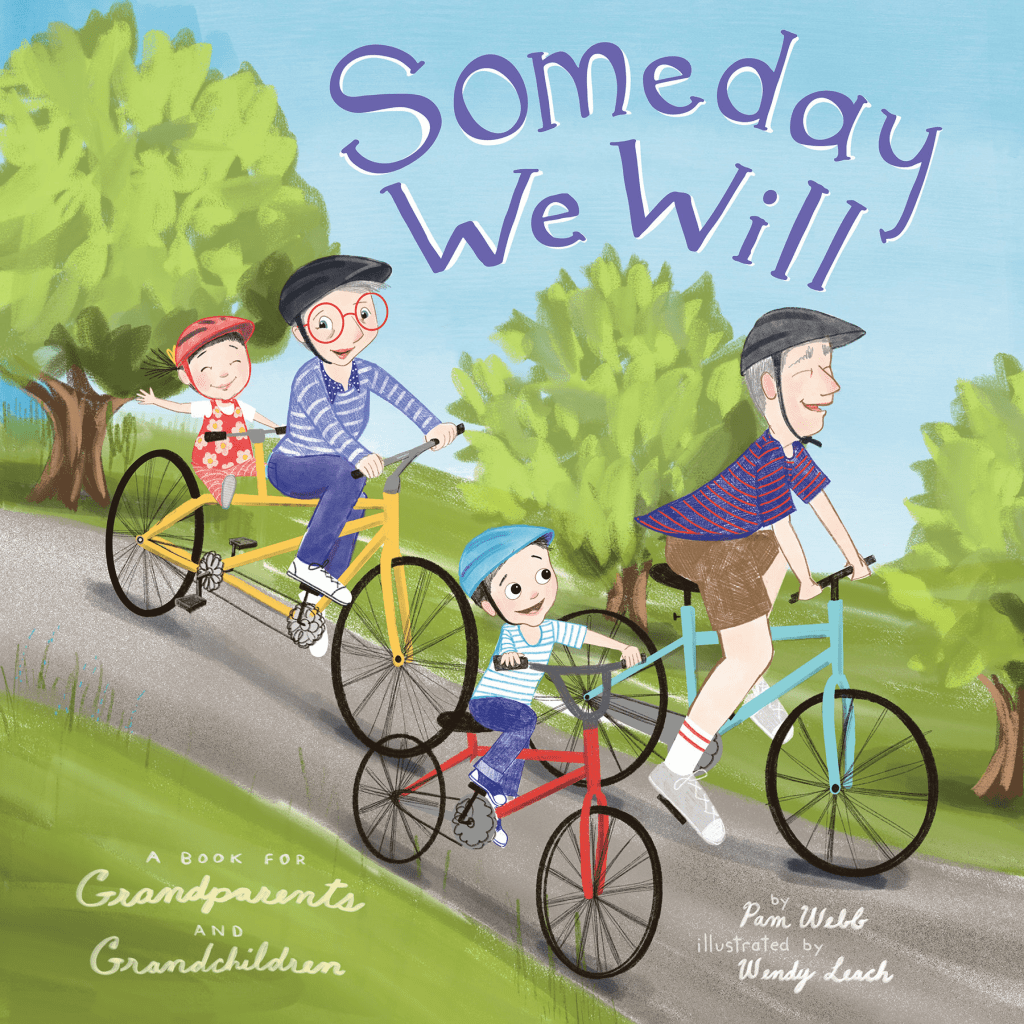
Two years ago on April 7th, Someday We Will debuted ready to greet the world with its message of the joy that comes with anticipating a visit with those we love, especially visits with grandparents.

Two years ago was also the start of the pandemic. Schools, businesses, transportation, borders, so much shut down as the world learned how to cope with Covid.

Not the most advantageous time to promote a debut picture book. Ironically enough (although one librarian deemed it prescient) the book’s focus is on the joy of coming together after being separated.

Covid was not on my mind when I submitted the book for publication to Beaming Books two years earlier.My thoughts were on the joy experienced whenever I visit my granddaughter.

Separation has taken on deeper meaning with Covid. There is more involved, more considerations when planning a visit. “Someday we will…”and “Someday is here!” has more personal meaning these days.

With libraries and bookstores open once again to in-person events, I look forward to making the rounds and promoting Someday We Will.

In these past two years have you had your someday turn into today? I hope so! That moment of being reunited with a loved one is not just for grandparents and grandchildren.

In the meantime I’ve been busy writing and submitting other stories and look forward to sharing more book birthdays with you.

Looking to order the book?

Looking for reviews? Goodreads

Word Nerd: Places


Oh, the places you’ll go or at least get to know with this batch of terms.

firth: a long, narrow indentation of the seacoast.

wynd: a narrow street or alley.

Wind your way down a wynd

peregrinate: to walk or travel by foot; journey.

saltigrade: move by leaping.

Nothing like saltigrade by the sea

natant: swimming.

wampish: to wave about or flop to and fro.

estivate: to spend the summer, as at a specific place or in a certain activity.

Natant, wampish, estivate: water wonderful words

Bard Bits: Shakespeare Is For Everyone? (That is the question…)


As an AP English teacher, Shakespeare is naturally part of the curriculum and it’s expected my students adore the Avon man as much as I do. Not usually the case. As for my regular sophomores? The groans when we approach Julius Caesar can discouraging. Yet, it is often in how Shakespeare is taught that makes a difference. This is a separate topic. The main topic is the assumption that Shakespeare is for everyone and they are going to like it. That’s like saying exercising is for everyone. It should be, but face it, not everyone embraces a push-up or a run around the block. Some like the idea of exercising and others have tried it, and many let others revel in it. So it goes with Shakespeare.

AUSTIN TICHENOR is the creator of The Shakespereance; co-artistic director of the Reduced Shakespeare Company. He contributed a thought-provoking article about Shakespeare. Here is the gist of his rhetorical stance:

Is Shakespeare for everyone? Of course he is! Absolutely!

I just wish people would stop saying it.

In Shakespeare’s day, his plays — and plays by others, and theater generally — really were for everyone. All levels of society congregated to see and hear plays in performance, to share gossip and news, and to rub literal and metaphorical elbows. Not just a source for entertainment, Shakespeare’s theater was the internet of its day.

But beginning in the 19th century, theater (and opera and symphonies) became co-opted by the upper class who wanted to keep socially — often meaning ethnically and economically — “unacceptable” people out of the theater, turning what was originally popular culture into “high” culture and using the arts as a tool of status and exclusion.

Worse, as a by-product of imperialism, Shakespeare was imposed on non-English speakers in different countries, held up as the best playwright in the world with the understanding that only by learning his plays and accepting his greatness — and, by extension, the greatness of the English language and Anglo-European culture — could one become truly civilized.

So I get it: “Shakespeare is for everyone” is an important correction, a reminder that Shakespeare’s plays were written to be popular entertainments, designed to appeal to everyone from the groundlings to the nobility.

But I worry that “Shakespeare is for everyone” nowadays feels less like a promise and more like a threat; the implication being that if you don’t like him, there’s something wrong with you..

Because the truth is, Shakespeare isn’t for everyone, and it’s disingenuous to suggest that it is. Nothing is for everyone: Personally, I don’t like opera, American football, or horror movies, yet these are popular entertainment choices. You know, to each their own. And in London, at the turn of the 17th century, there were tens of thousands of people who undoubtedly preferred to skip another one of Shakespeare’s epics and head to the bear-baiting pits instead.

So what’s the alternative? I prefer saying “Shakespeare is for anyone who wants him.” For many reasons (i.e., the comedies aren’t funny, the language is incomprehensible, the kings and their nobles are confusing, the references archaic), Shakespeare is demonstrably not for everyone. And that’s okay. But I’ll argue till my dying day that he can and should be made available to anyone who wants him, with many different entry points for people of all levels and interests, whether they be live productions, fascinating lectures, compelling museum exhibitions, excellent films and videos, or even, dare I suggest, pop-up books. One of the first steps in appreciating Shakespeare, it seems to me, is being honest about his output, for we can only truly appreciate his greatness by being discerning enough to recognize the parts that don’t measure up, and understanding that no matter what we do, he still won’t be everyone’s cup of tea.

Post Navigation