Pam Webb

a writer's journey as a reader

Archive for the category “Writing”

A Brief Interruption to Our Scheduled Poetry Programming


One of my goals for Spring Break is to knuckle down and really get productive on my own writing.  I have been more reader than writer of late and I need to reverse that status. However, here it is Friday and school starts again Monday. Never fear, I still have great hopes of revising and sending out more manuscripts. I have to remind myself to keep working, even though that little voice  in the background keeps sniveling: “But I’m on vacation!”

Fortunately I found some needed motivation in Writing Like Crazy’s post for the day.

Writer’s Digest, who always has the best writer’s advice, also runs fabulous contests.  Currently offered is their 15th Free Lucky Agent Contest.

Three  winners  will be awarded the following:

1) A critique of the first 10 double-spaced pages of their work, by the agent judge

2) A free one-year subscription to WritersMarket.com

The focus of this particular agent contest is Young Adult.  The agent is Andrea Somberg, a literary agent with close to fifteen years experience, and represents various fiction and non-fiction projects including those aimed at young adult and middle grade audiences.

I plan to spend the next couple of days fine-tuning my YA manuscripts and submitting them before the deadline which is  Wednesday, April 9th. For more details on the contest go to this link

Poetry Workshop: Getting in Shape with Concrete Poetry


First the grammar lesson, and then the poetry workshop lesson.

Nouns

A common noun is a noun referring to a person, place, or thing in a general sense. There are many types of nouns: common, proper, possessive, singular, abstract and concrete.

Concrete Nouns

A concrete noun names animate and inanimate things  that can be perceived through the five senses: touch, sight, taste, hearing, or smell. Examples are: cats, doors, waffles, teachers. A concrete noun is the opposite of an abstract noun such as concepts like: love, liberty, courage.


With the basic noun lesson understood, let’s move on to the Poetry Workshop: Concrete Poetry.

Concrete Poetry: aka Shape Poetry aka Visual Poetry

Poetry in which the overall effect is influenced through visual means by forming or arranging the words in a pattern that reflects the subject or meaning.

The concrete aspect comes from basing the poem on tangible nouns, ones in which employ the senses, as opposed to abstract nouns.  For instance, I can write about how cats see us, but are often invisible as they hide in plain view or I can emphasize the cat aspect by shaping the words around this concrete noun:

image: laurelgarver.BlogSpot.com

Sometimes the poem and its shape is humorous:


image: gardendigest.com

And sometimes it is more art than actual words:

image: prn.bc.ca


Other times there is a message within the message that turns out to be abstract after all:


concrete poem by jennifer Phillips

For the most part, concrete poetry is a visual blending of text and shape.  It’s an interactive expression, a melding and mixing of art, thought, feeling. Get into poetry by getting into shape.

Explore more with forming!


The Peace and Quiet Found in Chicken Soup


Yes, I do hope you look inside.  Especially if you are a mom, know a mom, have a mom, know someone who will someday become a mom–that covers just about all of it, doesn’t it?
Moms.  Busy people. The “M” in “Mom” stands for “multi-tasking.” Let’s see: answer homework questions while checking the meatloaf in the oven after asking the table to be set amid soothing a sibling squabble–this all takes place in the span of heartbeat for many moms.  Yup, been there, done that.
This is why I submitted an essay to the Chicken Soup folk when they announced they were putting together a new book about moms and multi-tasking.  Like most submissions, I forgot about it as the months rolled by.  So–it was quite a pleasant surprise to receive the news my essay “A Little Piece of Quiet” (#10 in the TOC) had been accepted and would be included in the forthcoming book.
This is not my first publishing credit–and yet this one is extra-special since most people recognize the Chicken Soup series. What I especially like is being able to walk into a Barnes and Noble and find the book on the shelf. Even though my story is one of many, I still get that “YAY!” moment seeing my book keeping company with other ready-to-purchase selections.
This is a great mom present and Mother’s Day will be here before you know it.  On the other hand, this is a great gift for showing appreciation to any mom anytime of the year.
Although my kiddos are all grown up and out of the house now, I do remember those days when my longing for peace and quiet was turned around when I realized the blessing of having a little piece of quiet.
Hope you pick up the book for the certain mom-person in your life, and I hope you find your way to reading my contribution.
Blue Skies,
Cricket Muse

Dash It All


I have come upon the realization I lean towards dashes instead of semi-colons–really, I do. My students upon the first introduction to Emily Dickinson notice her use of those extra big hyphens. Hey–if it’s good enough for Em–dash it all, it can’t be all wrong.

On reflection, perhaps I overindulge in my penchant for dashes–or maybe not? In my desire to correctly use them, I turned to the Internet and found my favorite grammar guru–Ben Yagoda. A writer for The New York Times, professor, teacher, and I would say humorist, he provided everything I needed to know about the dash–and then some. Check out his fabulous writing guide How Not to Write Bad (really–that’s the title).

cartoon by Peter Arkle

An excerpt from his column points out how effective the dash can be:

To get a sense of some of the things a dash can do, take a look at these pairs of quotes.

F. Scott Fitzgerald’s “The Great Gatsby”:

Thirty: the promise of a decade of loneliness, a thinning list of single men to know, a thinning briefcase of enthusiasm, thinning hair.

Thirty—the promise of a decade of loneliness, a thinning list of single men to know, a thinning briefcase of enthusiasm, thinning hair.

Henry James, referring to Henry David Thoreau:

He was worse than a provincial, he was parochial.

He was worse than a provincial—he was parochial.

Mark Twain in “Autobiography”:

…life does not consist mainly (or even largely) of facts and happenings. It consists mainly of the storm of thoughts that is forever blowing through one’s head.

…life does not consist mainly—or even largely—of facts and happenings. It consists mainly of the storm of thoughts that is forever blowing through one’s head.

Twain’s “Pudd’nhead Wilson’s New Calendar”:

Each person is born to one possession which outvalues all his others: his last breath.

Each person is born to one possession which outvalues all his others—his last breath.

In all cases, both versions make sense and are grammatically correct. But the ones with the dash (the ones the authors actually wrote) seem to live and breathe, while the others just lie there on the page. Like hitting the right combination of buttons in a computer game, typing two hyphens on the keyboard — and thereby making a dash — can give your prose a burst of energy, as if by magic. 

Emily, Twain, F. Scott, and Henry J.–I’m in good company.

The Book I Would Like to Write


Sometimes the rumblings of hunger manage to induce some amazing culinary renderings on my behalf.

“Let’s see–some rice, a dollop of pesto, assorted veggies, ooh a garnish of nuts, oh yeah there is that leftover sautéed chicken breast.”

Yes, it was tasty. No, didn’t snap a photo.

I wish I could do that with my writing. Here are the ingredients that are rumbling around in my writerly mixing bowl:
-an irrepressible protagonist who transcends time
-address a political issue in a manner that is neither knee jerk, condescending, nor didactic
-scatter in memorable minor characters who majorly affect the plot
-set the story in a picturesque small town of yesteryear
-provide a handful of quotes that will resonate long after the book has been reviewed, shelved, studied, and reread
-have one maybe two iconic symbols that shift paradigms
-explore old thoughts in a new way
-create a subculture that spans time, culture, and political decorum

Wait a minute…
This book is already available, attainable, and darn right delicious.

Harper Lee’s classic remains my ideal of perfect novel.  I have too many ideas rumbling around to only write one book, but oh what a book to have written as the one-claim-to-fame.
Do you have a ONE book that you feast on as a reader?  Or is there one special book that inspires your writer creativity towards boil, simmer, and serve?

Eyre of Distinction


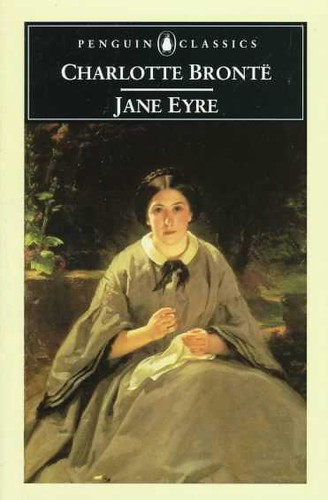
Soon we start our AP novel unit, Jane Eyre. Charlotte Bronte’s novel is one of my favorites, which means I will infuse as much of my appreciation for it as I do for my other favorite classics like Hamlet.  While many wax profoundly about Jane Austen, I think Miss Bronte gets overlooked. Jane Eyre has the distinction of being one of those novels that set things of literature memes, tropes, and motifs in motion by becoming a template for other stories. Consider:

  • she is plain in looks, but beautiful in spirit
  • her intelligence is valued by others, at a time when women were not widely educated
  • she values family over fortune
  • she easily speaks her mind
  • she is independent and finds a way to survive
  • outwardly she is calm, yet ripples with passion underneath her facade of restraint
  • she is perservering, sourceful, and a woman of strong morals
  • she stands up for herself–no doormat dame here

My opinion: Jane rocks. Over the years there have been several film adaptations of the novel.  I binged on JE films over the weekend and came up with my ratings:

1971: Starring George C. Scott and Susannah York
Verdict: skip.

George, too familiar with his Patton role, brought it to his interpretation of Rochester.  He railed and ranted in a very American accent and I gave up after he meets with Jane after their encounter on the road. Besides York’s Jane being too old and much too pretty I couldn’t sit through the poor film quality. The video transfer was so muddied I felt as if I were watching the movie through an unwashed glass.

image: eleganceof fashion. blogspot

1983: Timothy Dalton and Zelah Clarke
Verdict: one of the most faithful and watchable versions

Being a BBC production, I had initial trust it would be a quality adaptation, after all these are the folk who brought us Colin Firth as Mister Darcy. The sets, the important scenes, those inscrutable nuances of the original story are all contained in this mini-series. Timothy Dalton definitely understands the Byronic hero that Rochester embodies and has even said in interviews Rochester is one of his best roles. Clarke, while a bit older than the required 18 year old fresh from her Lowood imprisonment, captures the Quakerish passivity and ethereal nature of Jane Eyre.  The scenes between Dalton and Clarke are melt-in-the-mouth truffle satisfying.  Their version is what comes to mind most often when I return for a refresher novel read. I really did believe a heartstring developed between them. The agony of Dalton’s Rochester when he realized his Jane was leaving him forever kept the tissue box occupied.

1996: William Hurt and Charlotte Gainsbourg director: Franco Zefferilli
Verdict: passable, but strayed terribly from the novel

William Hurt seemed on the verge of understanding Rochester, but kept the bitterness too diminished, too washed out. Charlotte G as Jane got her part right. The plain, passionate young actress  imbued the paradoxical spirit of Jane Eyre. Sadly, there existed no believable passion, that needed kindred heart-string spark, between Gainsbourg’s Jane and Hurt’s Rochester. This spark is the very core of the novel. Without that essential core the movie floundered about like a fish hoping to get back into the water to have a proper swim. The director who brought us Romeo and JulietTaming of the Shrew, Hamlet, and other great stories of passion missed the mark with this adaptation by rushing the story and taking way too many liberties with the plot.

2006: Toby Stephens and Ruth Wilson
Verdict: enjoyable, even if a bit too contemporary in approach

image: writingbar.com

Admittedly, I had started watching this version years ago when it first came out, but found myself so disenchanted with the cutaway flashbacks, I couldn’t get past the Lowood scenes and it wasn’t until recently I returned to another viewing.  I did like the lead actors portrayals, and yes, there was a definite spark between them. I thought Toby Stephens got off easy with his fire wounds, unlike Hurt and Dalton. His rugged looks only appeared rather marred, instead of being ruined. The rolling around, ankle rubbing bit at the end seemed a bit too lenient for true Bronte style. Then again, there are leniences throughout this adaptation I willingly overlooked since the production quality proved so high.

2011: MiaWaikowska and Michael Fassbender Director: Cary Fukunaga
Verdict: Admirable

The first scene makes a diehard JE fan sit bolt upright and ask, “What? Wait–did the movie skip! because the opening scene is starting right off with Jane making her mad dash from Thornfield, which usually means the film is winding up to the grand finale.  Instead Fukunaga gets a bit artsy and dips in and out of Jane’s childhood days in flashbacks, with a quick glance at times at her more recent history.  Artfully done, but a bit disconcerting for those who prefer the linear progression.  Fassbender and Waikowska do provide a sumptuous Rochester and Jane.  Looks, mannerisms, nuances, smoldering passions–it’s all there.  That’s why it the ending is so absolutely frustrating.  I could not understand the need to transform Rochester into a Tom Hanks Castaway lookalike.  Maybe trading out the maimed hand for a beard was a contract compromise. Also, there should have been another 20 minutes of wrap up, yet we are whisked away much too soon.  It’s like being served the most savory dessert and having it taken away after a couple a bites–“Yo, I wasn’t finished.” Apparently Fukunaga thought the audience needed no more indulging and wanted us to move away from the table.

Overall: If a dedicated JE fan go to one of the series adaptations, such as the 1983 or the 2006.  It appears that only when given the proper amount of time (3-4 hours) can Jane’s story be told sufficiently. However, if thinking “book or movie first?” and movie wins out–get the 2011 version.

Further notation: I thought about finding the Ciarin Hinds version, especially after watching him in Austen’s Persuasion with Amanda Root.  Our library no longer has it and after reading the widely mixed reviews of loving it and hating it, I thought I will stick with my picks of 1983, 2011, and 2006 for classroom clips.

Any readers have their own picks of fave JE adaptations?

Life Long Loving of the Library of Congress


Main Library of Congress building at the start...

Main Library of Congress building at the start of the 20th century (Photo credit: Wikipedia)

And yet another reason I continue my praises of the Library of Congress. In recent Internet research sleuthing I stumbled across their Festival Author Booklist. Yippee! I love bookish gatherings, especially when I don’t have to do much traveling to enjoy it.  If you do want to travel, then get your arrangements made for Washington D.C. because that’s the happening spot. Last year the festival ran the weekend of September 21 and 22.  For more information: National Book Festival

Author and Reading Celebration

Since 2001,  authors, illustrators and poets make presentations on the National Mall in various pavilions. In 2013 over a 100 authors represented  Teens & Children, Fiction & Mystery, History & Biography, Contemporary Life, Poetry & Prose, Graphic Novels & Science Fiction and Special Programs.

Library of Congress Pavilion

If a person has longing to know all about the Library of Congress, then a visit to their LOC Pavilion is in order. There is so much moAt the Library of Congress Pavilion than books.

Wait!

There is more bookish good stuff from the LOC. Want handy access to classic reads? Then you need to click on the Read.gov link and start enjoying a range of reading from the John Carter series to Aesop Fables and what lies in between.

Contest!

Are you a teacher, a parent? If books are an important part of your education input, you will want to perk up and take time to read the guidelines about the LOC contest Letters About Literature.  Prizes too! I look forward to introducing this to my students.

Stay tuned for more love notes about the nation’s library.

YAy for Dystopian


Once upon time when writers wrote about the world going wrong and trying to make a go of it in the aftermath the novels usually found its way on the college reading list. Ruined landscapes, fragmented governments, odd creatures mucking about, abundance of shortages and the like just wasn’t fit for kiddos. Think about the titles: Brave New World, 1984, Time Machine, Fahrenheit 451, A Clockwork Orange. Right. Yes. Some of them do end up on high school lists, but not when they first came out. There is a reason for that.

Lately, the shelves are full of dystopian novels and those shelves are usually in the YA section.  There is a reason for that too.

Back in the once upon a time, the world wasn’t that scary, even with the Cold War, we still had a pretty good idea of feeling on top of the world, so we could poke a bit around the edges of the “what ifs.” Then the world did get scary. AIDS, a couple of wars in a few out-of-the-way places, recession, terrorists, weather disasters, recalls–dystopian became popular among YA because the future is not looking so bright anymore. I’m just saying.

In fact, the adults are now reading the YA list (even though some don’t admit it): The Giver, Hunger Games, Maze Runner, Divergent are some names that pop to the surface.

Is Dystopian bad for teens? I don’t think so.  I didn’t get ruined from reading Brave New World in college, although 1984 and Clockwork Orange had me thinking hard at times. 

What do you think? Is there a difference between YA dystopian fiction and adult dystopian? Or is a bad world after the fact good reading for both adults and teens?


Brr–It’s a Bit Drafty In Here


According to a recent bookbaby article by George Burgett I have been writing my drafts all wrong.  Then again, there is a disclaimer that his advice addresses non-fiction primarily.  Hmm, writing is writing, isn’t it?

Here are His pointers offset by my comments.

Write the first draft as quickly as possible. I tend to review the previous day’s work to get a feel for what framework I was in prior, and I do dibble dabble as I read. Best tweak now when the muse is dancing than when the muse can’t remember the steps.

Most of the words will never see light. Wait–throw them out? There’s some really good stuff on the pages. If I tossed it all out why write at all?  I do, of course, edit, weed, and revise.  That’s why I have a critique group. And thick skin.

Look at the purpose statement. I agree. Now and then I should reassess where I started on this path and if I’m still moving in the right direction.

Divided the chapter into logical points. That makes sense too. Chapters should flow naturally to a spot where the reader wants more.

Don’t edit as you write. Guilty. Guilty. Guilty.

Do research after the first draft. Umm, I need that research now in order to continue.

Don’t share your first draft. I do share because I get great feedback from the MEPA. Working in that garret gets a bit dismal without input.

Looking over the list I have to concede I need to reassess my writing habits of editing. And yes, I could tighten up on my research rabbit trails. Okay, I learned a couple of things. How about you?  Any nuggets to place in your basket?

The People Factor


Relationships. They seem to make or break our happiness. Van Moody, a pastor serving the Worship Center in Birmingham, Alabama, understands the importance of relationships and provides a compact guide with his The People Factor.

The People Factor addresses the vertical (our relationship with God) and the horizontal (our relationship with others) aspects of relational skills. As a pastor he found a lack in ready resources when he counseled people. “There was nothing to put in the hands of people who left my office after sharing their deep pain over a relationship that would teach them beyond-the-basics lessons that could help them in highly practical ways.”

In each chapter, Pastor Moody weaves sound advice around his provided relatable examples, ending with “Relationship Reminders” and “Raising Your Relational IQ” which serve as personal checkpoints or could be used as discussion points in a group study.

The book is filled with points of reflection:

“We must realize that discrepancies between words and actions are serious warning signs.” (p.7)

“In relationships, commitment to integrity must take precedence over mutual comfort or shared enjoyment because integrity is the foundation of a person’s life.” (p. 47)

“You cannot erase your past. It will alwys be part of your personal history, but it does not have to define you.” (p.75)

Divided into three sections, the book explores the dynamics of relationship.

Part One: The Critical Laws of Relationships delves into the essentials of relationship such as agreement, understanding how the past influences relationships of today, and the importance of loyalty.

Part Two: How to Make the Most Difficult Choices, investigates unhealthy relationships–how to cope with them and how to let go of them.

Part Three: Essentials of Great Relationships promotes the understanding of the process of how healthy relationships work.

Finding happiness can come by losing weight, redecorating the house, or changing up the wardrobe, and there are plenty of books that help a person towards that measure of happiness. Yet, finding joy in relationships, that supercedes any temporal happiness.

The People Factor provides sound advice to promote sound relationships.

Post Navigation