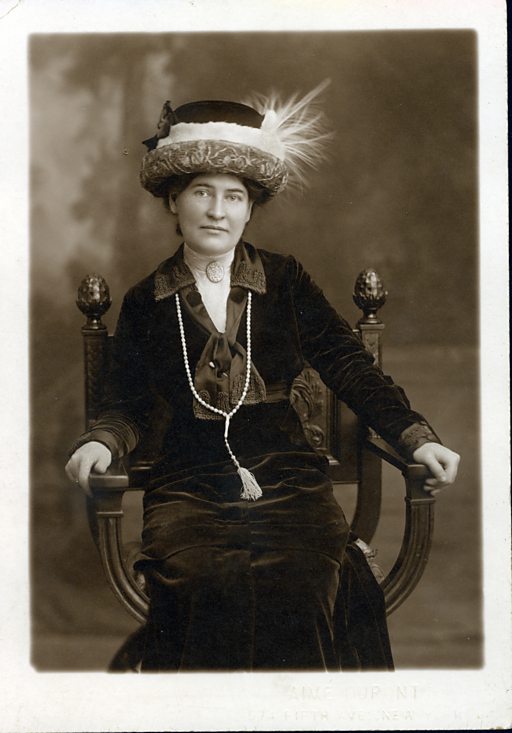
Pam Webb

a writer's journey as a reader

Archive for the category “reviews”

Ain’t Is Too in the Dictionary.


image: nytimes.com

The Story of Ain’t by David Skinner isn’t so much about the word itself, rather it’s more about the dictionary that elevated its use from barely tolerated to denounced celebrity status.  It’s difficult to believe that a dictionary could rock the nation, but Merriam-Webster’s Third Edition achieved that claim back in 1961.

Why care about a dictionary? Simple. As writers, words are what define us.  Pun very much intended.  Before technology made referencing a simple thumb click or flip check, a person had to physically grab a dictionary off the shelf and flip through the pages and ease down the page for the answer.  A somewhat time-consuming process, yet it proved oh so satisfying when the answer yielded the “See, I knew it!” answer.  There was also the resounding “thwack” of the cover-to-cover closure vent of being caught wrong.

On-line access has made dictionary referencing such a ready convenience that reading about the controversy about a dictionary that has been out for over fifty years seems inconsequential.  Yet, writers are wordsmiths and learning about lexicographical history is as revealing as reading up on the Wright brother to perfect piloting skills.

Noah Webster, long associated with the dictionary, left his legacy in the hearts, hands, and minds of capable descendants who continued the craft of prescribing proper word usage for all, that is until the 1961 Third Edition came out. A couple of wars, some cultural changes, and a few major historical events like the Depression not only changed the world, the language had noticeably been impacted.

Enter Philip Gove, the new editor who rattled the paradigm with the new (disturbing) descriptive instead of prescriptive format.  Merriam-Webster had to make room for all the new entries which meant remodeling the model so long held up in esteem.  No longer would it be the go-to reference for correctness of letter writing, titles, names, and places and other encyclopedic information; it would settle down and become a tome of how a word is used versus how it should be used.  More or less a Joe Friday approach, “just the facts, m’am.”

While at times digressive, Streeter nevertheless leads readers along his winding path of explanation as to why the Third Edition alienated newspapers, associations, and academics, irked the public and changed the manner of dictionary presentation forever.  The Story of Ain’t may not be a first pick read in terms of how-to’s and polishing writing skills; however, knowing how this particular dictionary came to be and the absolute furor it caused somehow causes pause, especially since plans for the fourth edition were announced in 2009.  Who knows how long, what, or if, any impact will be made once it hits the bookstores, since there are less and less bookstores to sell it in, now that users frequent screens instead of paper for their lexicon needs.  Now–ain’t that a shame?

Notable quotes:

Page 7:

And Merriam was very much in the business of authority.  In its own pages, Webster’s Second was “the Dictionary,” with a capital D and the definite article as if no other existed.

 Page 11:

The press release quoted Dr. Gove saying that the English language had become less formal since 1934. For an example the PR hands chose the new dictionary’s surprisingly tolerant, though oddly worded, entry for ain’t, which said ain’t was “used orally in most parts of the U.S. by cultivated speakers.”

image: sparklepony.blogspot.com

Page 30:

In those days the National Council of Teachers of English still observed Good Grammar Week, when children were called on to go seven full days without splitting an infinitive. As a reward they were treated to entertaining skits in which Mr. Dictionary vanquished the villain Ain’t. At home, however, as radios in the 1920s went from being a rare possession to a basic appliance, children might hear “Ain’t We Got Fun,” a popular foxtrot, “Ain’t Misbehavin’,” a Fats Waller song, or perhaps even “Ain’t She Sweet,” another hit song of the time.

image: yesterhair.wordpress.com

Page 49:

In the 1920s, Shall I? was still a common usage, but it would not be for long.  A few years after Fries’s study [Charles Carpenter Fries] was released, Bell Telephone allowed a researcher to listen in and count words spoken in the phone conversations of its customers. In the course of 1,900 conversations, will as an auxiliary term was used 1,305 times. Shall  appeared only six times. The long-term trend was obvious.  Twenty-five years hence, Alfred Hitchcock fans would leave the theater with the voice of a very proper Doris Day singing in their heads, using will in the first person to ask, “Will I be rich? Will I be pretty?”

Page 175:

In one instance, he said [Gove], the Webster’s Second board had spent at least an hour discussing whether hot dog should be in the dictionary. (In the end hot dog had won admission: “a heated wienerwurst or Frankfurter, esp. one placed in a split roll;–used interjectionally to express surprise or approval. Slang.”) 

Page 191:

Racy was often used to describe American English: H. L. Menchken more than once called it that. Webster’s Second defined racy as “manifestating the quality of a thing in its native, original, genuine, most characteristic state,” citing a weirdly fitting phrase from the Victorian thinker Walter Pater: “racy morsels of the vernacular.”

Page 213:

The comedian Fred Allen said, “Television is called a new medium, and I have discovered why they call it medium—because it is neither rare nor well done.” Yet its presence in the living room continued to redirect household activity, setting the table for TV dinner, dated 1954 in the Merriam-Webster files.  But one year later, another phrase was making the rounds: idiot box.

image: xk9.com

Page 230:

Said Gove: “Five basic concepts set forth in the English Language Arts supply a starting point.” Then he listed them:

1. Language changes constantly

2. Change is normal

3. Spoken language is the language

4. Correctness rests upon usage

5. All usage is relative

The concepts had been endorsed by the National Council of Teachers of English, Gove noted, “but they still come up against the attitude of several generations of American educators who have labored devotedly to teach that there is only one standard which is correct.”

image: lili.org

Page 241:

The dictionary [Merriam’s Third] weighed thirteen and a half pounds and featured 100,000 new words and senses, a massive amount of new language that Merriam called “the greatest vocabulary explosion in history,” While new words were being added, a quarter million entries were subtracted, and all remaining entries were revised.  “Every line of it is new,” Gove wrote in the preface.  With 450,000 total entries, the new dictionary contained 100,000 quotations from more than 14,000 authors. The foundation for Merriam-Webster’s lexicography comprised some 10 million citations, and the new edition had cost $3.5 million to make.

Page 266:

[James] Parton quoted the dictionary’s critics, the Washington Star calling it “literary anarchy”; the Library Journal calling it “deplorable”;  the New York Times saying, “a new start is needed”; the American Bar Association complaining that Webster’s Third was “of no use to us”; Wilson Follett, in the Atlantic, calling it “sabotage,” a “scandal,” a “calamity,” a “disaster”; a recent Times article calling it a “gigantic flop.”

Page 272:

[Bergen] Evans’s broadest point was his most persuasive: that the language itself had changed profoundly since 1934. “It has had to adapt to extraordinary cultural and technological changes, two world wars, unparalleled changes in transportation and communication, and unprecedented movements of populations.” And, he continued, “more subtly, but pervasively, it has changed under the influence of mass education and the growth of democracy.” Whatever its faults might be, Evans argued, Webster’s Third was an enormous effort to capture and describe, in sufficient detail and without undue prejudice, this great shifting thing called contemporary standard American English.

image: nytimes.com

Personae:

□       Asa Baker: president of G & C Merriam Company

□       Bergen Evans: television host and co-author of a significant dictionary of usage

□       Wilson Follett: professor of English and author of a guide to modern usage—most furious critic of third edition.

□       Charles Carpenter Fries: scourge of old-fashioned grammar and evangelistic scholar who sought to bring American English teachers around to the scientific view of language.

□       Philip Gove: editor of Webster’s Third

□       H.L. Mencken: famed newspaper columnist and magazine editor

□       Robert Munroe: successor to Asa Baker and uncomfortable with Gove’s plans for Webster’s Third.

□       James Parton: journalist and president of American Heritage publishing company who sought to use the controversy over Webster’s Third to take control of G. &C. Merriam Company.

The Merriam-Webster logo.

The Merriam-Webster logo. (Photo credit: Wikipedia)

Willa You Let Me Read Your Letters?


intr.v. snoopedsnoop·ingsnoops

To pry into the private affairs of others, especially by prowling about.

Looking where we shouldn’t seems to becoming more and more acceptable or at least it’s becoming more prevalent. I don’t know about you, but I got in BiG trouble if I got caught snooping. Parents, siblings, friends, even strangers don’t appreciate having their hidden stuff exposed. And face it, we all have stuff we want to remain hidden.

This is why I am having such difficulty with my latest selected tome of erudition.

image: Oprah.com

Right there. It says it right there. Willa Cather’s letters were hidden.  She didn’t want them hanging out in the public eye.  In fact, it’s taken about seventy years after her death to get these letters out.  Why?  Cather expressly stated in her will that she did not want her correspondence bandied about. Aren’t last wishes significant? Apparently not. If the agenda and credentials are proper enough it is deemed in everyone’s best interest to snoop and reveal.* No shame attached. In fact, no contrite apologies. Furthermore, the editors, Andrew Jewell and Janis Stout, justify their snooping in the book’s introduction:

Before Willa Cather died, she did what she could to prevent this book from ever existing. She made a will that clearly forbade all publication of her letters, in full or in part. And now we flagrantly defy Cather’s will in the belief that her decision, made in the last, dark years of her life and honored for more than half a century, is outweighed by the value of making these letters available to readers all over the world. [highlights are mine]

Hmm, “forbade” means to me “don’t do that.”  What about “flagrantly defy”? Do I hear a little self-righteousness bragging, as in “I know it’s wrong, but I’m going to be proud out loud anyway”? Tsk.

As interested as I am in Willa Cather, I feel it’s wrong to snoop her letters.  Just because they are published by a reputable and respected publisher doesn’t mean it’s ethical. Literary vultures waited until the will expired in 2011 and swooped down for the feast.  Here is a paradox: if these two editors so respect Willa Cather, why aren’t they respecting her last wishes? Don’t get me started about trotting out King Tut’s burial goods for the paying public.  I guess celebrities are open season dead or alive.

Granted, the letters represent only 20% of the entire collection, and none are present that might tarnish or stain Cather, (says  the editors). I still feel mighty uncomfortable reading her private correspondence. There are family matters, personal matters, circumstances and situations that  reveal too much of a peek behind the privacy curtain.

As much I appreciate learning about Cather’s background, which helps provide more depth to enjoying and understanding her prairie trilogy (Song of the Lark, O Pioneers, My Antonia), I have  shut the book after about 200 pages, right about the third section, about when she left her editor position at McClure’s to pursue writing full time. The best is yet to come, yet sorry, I’m gonna pass. I respect Willa as an author too much to rummage around in her personal life.

Maybe, it’s me. Snooping for the cause of erudition is still snooping.

What do you think, readers?  Should Willa Cather’s wishes been respected? Should her letters have been left alone, should they not have been dusted off and printed up, even if it’s in the quest  harkening the light of “literary illumination”?

Willa is not amused.

*This could easily segway into a Snowden blog,, couldn’t it?

A Woolf in Read’s Clothing


photo: imdb.com

My first vague acquaintance with Virginia Woolf is associated with Elizabeth Taylor. Both are pivotal influences in their chosen professions.  As a last wave baby boomer cI recall a bit of a fuss when the movie Who’s Afraid of Virginia Woolf? came out.  Not being a Disney-generated flick my parents did not take me to see it.  In my childhood bliss of perceptual naiveté I believed Elizabeth Taylor to be Virginia Woolf and from the TV trailers she appeared to be a daunting person.  I could see why some might be afraid of her.

image: aroom.org

My second encounter with Virginia Woolf came way later when I began teaching high school English. Woolf’s essay “A Room of Her Own” was part of the senior lit curriculum, a prelude to a brief study in feminist writing.  Still getting my bearings about Shakespeare, I discovered through Woolf’s essay Shakespeare had a sister! I thought him to be like Atlantis, known but unknown, shrouded in mystery, waiting to be actually proven.  A sister?  It sent me scurrying to dedicated research and though Woolf got it all wrong about Willie’s sis, I now know much more about the Bard.

image: etsy.com

The third encounter came way of Meryl Streep.  She’s a fave, so I couldn’t resist picking up The Hours at the library.  Fascinating film (I admit some parts tweaked my comfort zone and my daughter squeaked, “you watched The Hours!”–my prudery is too well-pegged by family members). What truly fascinated me was Nicole Kidman as Virginia Woolf.  No wonder she received the Academy Award for her performance. A tortured artist always leaves me wondering  the why/what behind the reason of taking his or her  life instead of living it.

image: notreciinema.com

Finding Virginia a bit overwhelming I didn’t do my usual research and read on her. To be honest, although she intrigued me,she also made me nervous, much like James Joyce.  So much, almost too much in their writing for me to comprehend and absorb.  I felt unprepared to read her works.

At present I am a tiny bit more confident having an AP Institute training and one year of AP Senior Lit and Comp seated firmly on the resume.  I thought, “Okay, Ginny, let’s give it a whirl.”  I pulled down Orlando off the shelf and settled in for my summer chaise in the shade read.

Sigh.

I wonder if her writing would have been published if her husband had not set up Hogarth Press expressly for that purpose? Her writing is amazing, this is true. It’s rich, masterful, and paradigm pushing. Deemed ahead of its time, both Virginia and her writing nevertheless appeared to be respected and applauded.  Overall, I will have to pass on Virginia Woolf and her modernist approach to literature.  She and James Joyce are just enough of a different cup of tea to not be on my reread list.

I followed through on my research since I did not do my read on her.  I will definitely include her in my overviews on modernists. Virginia Woolf  may not be among my chosen authors; however, I do acknowledge her place in the literary hall of fame.

image: standrewsrarebooks.wordpress.com

Prairie Love


image: oceanliteracy.org

Growing up with the ocean ever present in my life, I couldn’t  fathom living  without it. The salty tang of the air, the lullaby rhythm of the waves, the restoring sandy walks–I couldn’t imagine or even desire living apart from its presence.

And yet, for the past twenty years I have done so. I traded the ocean for trees and mountains. The ocean is still a part of me, though we are now parted. There are aspects of my adopted environment that have also become woven into my person. I call this the sense of setting.

image: wallstickeroutlet.com

Because of my familiarity and connection with the ocean, forests, and mountains, I find myself drawn to reading about unfamiliar landscapes, and for some reason my list of setting interests includes an abundance of stories about the prairie.

Initially, I don’t think I could bear the flatness, the unyielding run to the horizon from end to end, nor bear the extremes of seasons and the monotony of view. This is where the marksmanship and craft of writing happens. Writers, poets, authors portray the prairie in such a way I find myself surrounded by the grass, the wind, and witness vicariously the openness and beauty through another’s eyes. The sense of place.

Recently two writers have presented their sense of place, their love of the prairie so profoundly, my paradigm has shifted. I now understand the fullness of this unique setting, and respect it and perhaps even admire it, which replaces my former disdain. True writing,  the skill of a wordsmith can do this.

While I have read many prairie pioneer books in my life, Laura Ingalls Wilder being the first, my most recent read is Willa Cather. She provided readers with a portrait of the midwest through her trilogy Oh Pioneers, My Antonia, and Song of the Lark. A memorable passage from My Antonia:

Presently we saw a curious thing: There were no clouds, the sun was going down in a limpid, gold-washed sky. Just as the lower edge of the red disc rested on the high fields against the horizon, a great black figure suddenly appeared on the face of the sun. We sprang to our feet, straining our eyes toward it. In a moment we realized what it was. On some upland farm, a plough had been left standing in the field. The sun was sinking just behind it. Magnified across the distance by the horizontal light, it stood out against the sun, was exactly contained within the circle of the disk; the handles, the tongue, the share—black against the molten red. There it was, heroic in size, a picture writing on the sun.
Even while we whispered about it, our vision disappeared; the ball dropped and dropped until the red tip went beneath the earth. The fields below us were dark, the sky was growing pale, and that forgotten plough had sunk back to its own littleness somewhere on the prairie.
Cover of "My Ántonia (Dover Thrift Editio...

Cover of My Ántonia (Dover Thrift Editions)

Cather presents both the starkness of the prairie and the greatness. The plough represents the solitary efforts of those who tried to tame the vastness of that flat, grassy expanse, and while the abandoned plough could have been viewed as sad or even tragic in its loneliness, Cather displays it as heroic.  And this is the view I now have of the prairie. It is like the ocean in its vastness, its grasses the tide upon the land. Those who worked it by tilling the land, navigating its immensity with their ploughs, horses, and tractors are much like those who navigated the ocean with their own crafts of boat, steamers, and ships. Both land and sea represent the need to explore the unknown and forge a living  from it.

Another view comes from today’s Poem-a-Day offering:

Poppies on the Wheat
by Helen Hunt Jackson
Along Ancona’s hills the shimmering heat,
A tropic tide of air with ebb and flow
Bathes all the fields of wheat until they glow
Like flashing seas of green, which toss and beat
Around the vines. The poppies lithe and fleet
Seem running, fiery torchmen, to and fro
To mark the shore.
The farmer does not know
That they are there. He walks with heavy feet,
Counting the bread and wine by autumn’s gain,
But I,–I smile to think that days remain
Perhaps to me in which, though bread be sweet
No more, and red wine warm my blood in vain,
I shall be glad remembering how the fleet,
Lithe poppies ran like torchmen with the wheat.
English: , located on west side of just north ...

English: , located on west side of just north of the Nebraska-Kansas border in southern . (Photo credit: Wikipedia)

I smile, too, grasping the juxtaposition of frivolity of the simple flower merged the purpose of the land.

I may never go to Kansas or Nebraska, but I can say I have traveled to their prairies.


Dandelion Summer


It’s always a pleasure to discover a new author, especially one who is prolific. Such is the case with my discovery of Lisa Wingate and her novel, Dandelion Summer.

Set in contemporary Texas, this is a character-rich story  with two polar opposites.  Imagine Henry Fonda from his role in On Golden Pond and a teenage Queen Latifah, you then would have Norman Alvord and Epiphany Jones, better known as J. Norm and Epie. Thrown together against their will, they reluctantly form a truce of temperaments as they launch out on a journey of discovery together.

One of the more delightful aspects of the novel is how Wingate swings the viewpoint from J.Norm’s to Epie’s, allowing the reader to fully realize the entire picture. Norman is a recent widower, ailing not only in health, but in regrets.  He is at odds with his only child, Deborah, a resentful professional woman who believes her efforts to run her father’s life is merely a way to honor her promise to her deceased, beloved mother. Epiphany is a troubled biracial sixteen year old who has it tough at home and at school. Both Epie and J. Norm want to break free of their circumstances and solve the mystery of who they really are.  The varying viewpoints provides the balance of age and youth, and it isn’t long before it’s clear that no matter a person’s age, status, or experience the basic need of family is foremost.  Epie and J. Norm form a family bond of sorts and what could have become oversweet in outcome turns into a realistic story of two hurting individuals who learn to rely on someone they least suspect of being a means of help to their situation.

My biggest takeaway from the novel is Norman’s letter to his daughter, Deborah.  He knows he wasn’t there for her when she was growing up and his letter is an apology, yet it is also an instructive that all fathers can learn from.  I plan on slipping this to my sons someday (never mind there aren’t married, or even have serious girlfriends yet), and maybe I can convince my pastor to read it for next Father’s Day. Here is an excerpt:

Dear Deborah,
Words do not come easily for so many men. We are taught to be strong, to provide, to put away our emotions. A father can work his way through his days and never see that his years are going by. If I could go back in time, I would say some things to that young father as he holds, somewhat uncertainly, his daughter for the very first time. These are the things I would say:
When you hear the first whimper in the nights, go to the nursery and leave your wife sleeping. Rock in a chair, walk the floor, sing a lullaby so that she will know a man can be gentle.
When Mother is away for the evening, come home from work, do the babysitting. Learn to cook a hotdog or a pot of spaghetti, so that your daughter will know a man can serve another’s needs.

The letter continues with sound advice and lyrical admonition to be all a man can be by being the best father a daughter can have and remember.  I read this to my writing compadres and the “oohs” and “aahs” circled around the table.

Dandelion Summer is definitely a book for perfect for the summer read list, yet  its warmth resonates long after the last word is read.

Seafaring Tales


Robinson crusoe rescues friday-1868

Robinson crusoe rescues friday-1868 (Photo credit: Wikipedia)

One thing about recovering from walking pneumonia is the down time I need to rest and recuperate.  I can’t complain too much about having to take it slow these days since it means I’m getting caught up on my classics list.


I’m not sure why, but I seem to be on a sea theme binge.


First I read Captains Courageous, and then I moved on to Life of Pi, and finally finished up Billy Budd. I’m slogging through an abridged version of Robinson Crusoe. Maybe someone out there has a clue why I am so drawn to the ocean.  Maybe having a fever made me want to be cool and refreshed by ocean breezes and be buoyed in my troubled time? Since I am on a roll, I am up for any ocean going suggestions for reads.


I teach my AP students the art of micro-precis, which means they have to summarize the plot in one sentence.  Let’s see if I can practice what I teach:


Captains Courageous: rich brat gets fished out of the ocean and learns how to be a decent human being by hook and not crook via a Troop of fine men sailing on the We’re Here.


Life of Pi: A boy finds himself a reluctant Noah as he endeavors to survive an epic journey with a tiger.


LIFE OF PI | Ang Lee | 35th Mill Valley Film F...

LIFE OF PI | Ang Lee | 35th Mill Valley Film Festival (Photo credit: diginmag)

Billy Budd: Handsome sailor “Baby” Budd hits upon the wrong way to get promoted and leaves the readers hanging as to the unfairness of the justice system.


English: Book Jacket for the novel Billy Budd

English: Book Jacket for the novel Billy Budd (Photo credit: Wikipedia)

Robinson Crusoe: TGIF takes on a whole new meaning as one man figures out Dad might have been right about remaining at home and not be so anxious about seeing the sea


Okay, they’re bad, but then I didn’t plan on turning these in for a grade.


Oh, and please don’t suggest Moby Dick. Once is more than enough for that whale of  a tale.


A Slice of Pi


Too often I realize I am a book snob. Certain subjects, authors, or just because it is crazy popular will place me in snub mode. My shame, especially since I am a professed Book Booster. Isn’t confession supposed to be part of the cure?
This is why I am even more embarrassed I have put off reading Life of Pi for so long.

image from videostoresnearspringfield.com

When it first came out I did my huffy verisimilitude snort and bypassed it. “Oh, please, really? A boy and a tiger on the ocean in a boat and he lives to tell about?” I had no problem with C.S. Lewis creating a horse and a boy as pals, let alone a lion mentoring three British children? I really must get my veracity meter checked one of these days.

With Pi I broke THE rule and saw the movie first–home version, sans Blu-Ray or 3D glasses. My review? Magical.
And that’s it. You don’t need yet another review among the surfeit of Pi commentaries. The movie motivated me to read the book.. Fortunately, our school librarian, in the midst of checking in end-of- the year materials, hasn’t had time to shelve new books and she allowed me to take it home over the weekend. There’s nothing like a long weekend and a mesmerizing novel.
I will say this–I appreciate the novel so much more having experienced the film (possible even in plain everyday vanilla DVD fashion). Frankly, parts of the plot were a bit hard to visualize, such as the raft and the meerkat island, without the aid of movie inserts. It’s not that my imagination station is broke it’s just that Ang Lee created such a wondrous palette of preprogrammed living color the plot danced more as the movie played in my head. Then there is Richard Parker; I couldn’t have imagined him as well as his CGI counterpart. He is such a handsome tiger. Of course,  meerkats by the thousands is visually is much more impressive via the wide-screen than by my mental viewing station.

The novel contains much more detail (I, uh, flipped past some of the more colorful aspects of oceanic survival); however, aspects of the movie were better, such as the family dynamics.

The most important takeaway of both stories is this quote:

“And so it is with God.”

This quote absolutely resonates with me. The ambiguity of the story’s ending reminds me so much of Inception, allowing us the intelligence of denouement possibilities.

I wonder if there is a correlation between my initially snubbing Life of Pi because I did not grow up with pie–seriously, I don’t remember my mom serving up chocolate cake, apple pie, or cookies (I have compensated and I taught myself the art of pie making and make a mean apple custard pie complimented by “my goodness!” flaky crust). Pie didn’t interest me until I reached adulthood.

And so it is with this Pi, of which I will ask for another slice.

Cover of "Life of Pi"

Cover of Life of Pi

How to Not Write Bad [sic]


Oh, I know.  Nails on a chalk board.  Who could resist a writing book that so deliberately breaks the rules?  I picked this one while checking out of the library about a month ago.  Am I a writing geek or what?  I’m an absolute pushover for author biography books, writing books, or etymology books.  Raise your hand proudly if you’re geeking out in the 808 to 811 section along with me.  Yeah, I see that hand.


So, Ben Yagoda pulls a fast one and gets me to slip, yet another, writing how-to book onto my TBR pile.  His book is economically designed, meaning a person goes, “Hmmm, not even 200 pages.  I’ll flip through it.” And before you know it that mystery you’ve set aside for nightly browsing or weekend reading is on top of the TBR pile.  Yagoda reeled me in.  I wonder if he ever studied marketing…


It’s hard to resist an author whose other titles include:


Cover of "When You Catch an Adjective, Ki...

Cover via Amazon


I tend to sticky-tab as I read.  ET would not like me to annotate the library’s books, would you, dear?  Here is my collection of tabs:


page 17:


The writer Malcolm Gladwell has popularized the notion that, in order to become an outstanding practitioner in any discipline, you need to devote to it roughly 10,000 hours of practice   I’ll accept that in terms of reading.  If you put in two hours a day, that works out to about thirteen and a half years.  If you start when you’re eight, you’ll be done by college graduation.


page 44:


a. The best fruit of all is a ripe juicy flavorful peach.


b. The best fruit of all is a ripe, juicy, flavorful peach.


Why is wrong and right, and how can you decide whether to use commas in these situations? The rule I learned in junior high school still holds. Anytime you can insert the word and between adjectives and it still sounds fine, use a comma. If not, don’t.


page 52:


My initial thought is to limit this entry to one sentence: “If you feel like using a semicolon, lie down until the urge goes away.”


page 82:


2. Skunked


As with words, certain grammatical constructions are considered okay by some or most authorities but retain an offensive odor for many readers (and, crucially, teachers and editors), and should be avoided. This shouldn’t present a problem, since they’re usually not difficult to replace with the correct form.


e. Ly-less Adverbs


[This was a real nice clambake.]


[Think different.]


[He didn’t do so bad.]


[That car sure drives smooth.]


page 124:


Until Microsoft Word comes up with cliche-check to go along with spell-check, you’ll never be able to get rid of every single one.  The best you can hope for is to manage them.


page 172:


Ultimately, as with so much else, it’s a mama bear, and baby bear kind of thing: you’re the one who has to decide what’s just right. 


Yagoda’s style is conversant, punchy, and essential.  I would go as far as to say he is the Strunk and White with a side of wit.  Hey, he writes for the New Yorker, I would expect nothing less.


If you are a writers and don’t want to write badly. I suggest pursuing Yagoda’s book to learn how to avoid the most common writing problems. Writing right is not a bad idea.


Poem Flow


From the “About Poem Flow”:

Poem Flow is a poem-of-the day application on the Apple app platform.

Each day a new poem flows to thousands of screens around the world. Everyone receives the same poem on the same day creating an instant, invisible community of simultaneous readers. The poems are from a mix of the greatest poems in English. Turned in your hand, each poem dissolves in a gentle reading animation. Turned back, the original poem returns.

 Poem Flow is mesmerizing in how it presents a poem. Instead of the poem being present in all its form, Poem Flow segments the words so that they words appear in digestible bits of anticipation.  The poem collection is a mix of contemporary and classics; receiving a new poem every day is like receiving a daily dose of serendipity.

You can check out the site: www.poemflow.com and experiment for yourself the wonder of a poem flowing gently across your screen.

feature 1

The Epicness of Poetry


Beowulf, The Iliad, and The Odyssey.  How could you get through public education and not have to study at least one of these? (Actually, I did–but that’s a different post). In our hurry-up world t’s not often we sit down and commit to reading 3,000 plus lines.  Welcome to Epic Poetry 101.

We tend to think of these triads of classic adventures as stories or myths.  Actually they are all poems.  Really long poems.  This is what makes them epic.

A brief pause…

Understanding Epic.

Today’s meaning:

image: suilynn.wordpress.com

Actual Meaning: (thanks Dictionary.com)

ep·ic

/ˈepik/

Noun
A long poem, typically derived from oral tradition, narrating the deeds and adventures of heroic or legendary figures or the history of…
Adjective
Of, relating to, or characteristic of an epic or epics.
Synonyms
noun. epos – epopee
adjective. heroic – epical

Back to our blog post…

Now that epic real definition versus epic contemporary understanding is out of the way, moving on to epic poetry will make much more sense. Epic poetry is epic because it is BIG. It’s big in scope, deed, theme, length–it’s just, well, epic (dude). Plus, it’s so big that it is italicized (or underlined or bolded) instead of the usually “quotes around poems” bit of mechanics.  Yup, this poetry is so big that it gets to change the punctuation rules.

Although technically I should address Homer’s Iliad and Odyssey first, I’m going with Beowulf, not so much because it’s considered the foundation of English literature and it introduces the dragon slayer archetype as well as mix pagan and Christian thematic elements–I choose it first because of Gerard Butler made Beowulf come to life for me.

image: tumblr.com

If you’ve never studied Beowulf, you should–don’t believe the Angelina Jolie version is Beowulf.  Nope. T’snt at all. Gerard Butler’s version isn’t either. So heads up Hollywood, we need a REAL version of this monumentally important epic poem.  Here’s to get you started…

Beowulf Key Facts ala Sparknotes:

full title  ·  Beowulf

author  · Unknown

type of work  · Poem

genre  · Alliterative verse; elegy; resembles heroic epic, though smaller in scope than most classical epics

language  · Anglo-Saxon (also called Old English)

time and place written  · Estimates of the date of composition range between 700 and 1000 a.d.; written in England

date of first publication  · The only manuscript in which Beowulf is preserved is thought to have been written around 1000 a.d.

publisher  · The original poem exists only in manuscript form.

narrator  · A Christian narrator telling a story of pagan times

point of view  · The narrator recounts the story in the third person, from a generally objective standpoint—detailing the action that occurs. The narrator does, however, have access to every character’s depths. We see into the minds of most of the characters (even Grendel) at one point or another, and the narrative also moves forward and backward in time with considerable freedom.

tone  · The poet is generally enthusiastic about Beowulf’s feats, but he often surrounds the events he narrates with a sense of doom.

tense  · Past, but with digressions into the distant past and predictions of the future

setting (time)  · The main action of the story is set around 500 a.d.; the narrative also recounts historical events that happened much earlier.

setting (place)  · Denmark and Geatland (a region in what is now southern Sweden)

protagonist  · Beowulf

major conflict  · The poem essentially consists of three parts. There are three central conflicts: Grendel’s domination of Heorot Hall; the vengeance of Grendel’s mother after Grendel is slain; and the rage of the dragon after a thief steals a treasure that it has been guarding. The poem’s overarching conflict is between close-knit warrior societies and the various menaces that threaten their boundaries.

rising action  · Grendel’s attack on Heorot, Beowulf’s defeat of Grendel, and Grendel’s mother’s vengeful killing of Aeschere lead to the climactic encounter between Beowulf and Grendel’s mother.

climax  · Beowulf’s encounter with Grendel’s mother constitutes the moment at which good and evil are in greatest tension.

falling action  · Beowulf’s glorious victory over Grendel’s mother leads King Hrothgar to praise him as a worthy hero and to advise him about becoming king. It also helps Beowulf to transform from a brazen warrior into a reliable king.

themes  · The importance of establishing identity; tensions between the heroic code and other value systems; the difference between a good warrior and a good king

motifs  · Monsters; the oral tradition; the mead-hall

symbols  · The golden torque; the banquet

foreshadowing  · The funeral of Shield Sheafson, with which the poem opens, foreshadows Beowulf’s funeral at the poem’s end; the story of Sigemund told by the scop, or bard, foreshadows Beowulf’s fight with the dragon; the story of King Heremod foreshadows Beowulf’s eventual ascendancy to kingship.

If you are up for reading the poem:

Gutenberg Project

If you want an entertaining analysis:

Shmoop

If you want to skip Beowulf and go to The Iliad and The Odyssey

New Post

Post Navigation