Pam Webb

a writer's journey as a reader

Archive for the category “reflections”

Winter Reset Terms


Valentine’s Day reset winter by delivering eight inches of snow. I would have preferred a FDT delivery of daffodils.

I am in need of spring, that event that is a long time in finally appearing, where greenery festoons the landscape instead of mutations of whiteness. Snow is no longer pretty after three months, after it’s been shoveled, blowed, and pushed about.

February’s snow tends to be fickle. It doesn’t quite have the tenacity of January’s snow days. It’s vacillating between being fiercely winter and nicely spring. It’s as if it is acknowledging March is on the move and will definitely arrive with a spring in its step. Forget about that woodchuck and his shadowy ideas about how long we have to wait for spring. Keep him sleeping, thanks.

Last week’s unexpected snow day led me to build my annual snow guy. My students liked my snowman show and tell photo, and one class named him Perceval–Percy among his friends. 

As the snow continues to fall, and continues to hamper greener days from arriving, I thought it appropriate to dust off my snow terms list:

▪ lookitsnow:  first snow of the season–Nov/Dec

▪ itzsnowing: comment of the day until mid-January

▪ ucksnow:  bridge between Jan/Feb when people begin getting weary of shoveling, scraping, and slipping around in the stuff

▪ snizzle: the on off dance of snow and rain found in late February

▪ snain: a more serious form of snizzle

▪ smush: slushy snow of Feb/Mar

▪ smud: ground showing with snow patches, squashy walking usually around early March

▪ ohnosnow: snow when daffs coming up and flakes coming down in March/April

▪ nomohsnow: snowfall and meltaway tease of April/May

(some days there is the occasional variety to the landscape)

Val Day Reset Blick


Between the rain and the uptick in warmer temperatures the landscape had shed its blanket of winter white. I was thrilled.

Snow is fine as long as it stays in the mountains. Let the skiers rejoice. Unfortunately, snow is pervasive and usually hangs around for four months, barely leaving until the daffodils give hint of their arrival in April.

Valentine’s day provided a mixed blick. A reset button of eight inches of snow created a snow day from school (yay!), but winter is back (blick!).

On the positive side I was able to rest and read and grade and beat back yet another round of getting sick. And when life hands you snowyou make a snowman.

Hope your Valentine’s day was delightful, and I hope your winter is going well.

Reader Round Up: January


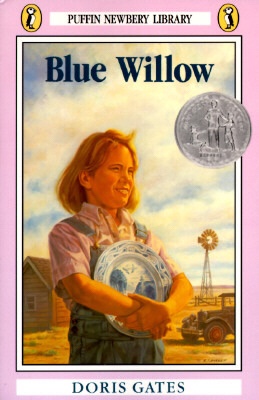
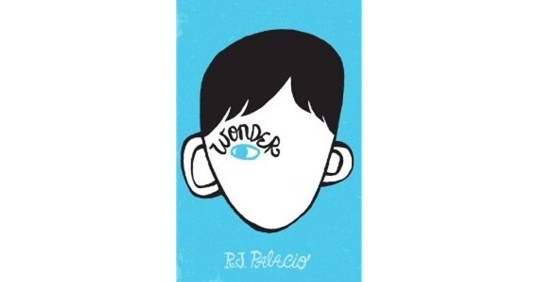
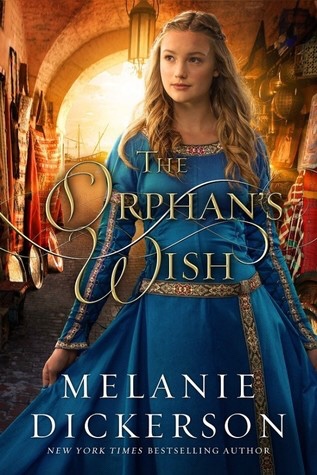
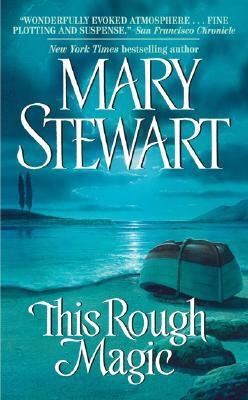
January ranks 12th out of the 12 calendar months in my personal poll. Snow has turned grey and crunchy. The sky is unfriendly and uncompromising. Walking is tricky without snowshoes or cleats. And June seems so far away. Moping and complaining is an option worth pursuing, yet it is annoying to others. I turn to books as my medicinal reprieve. By the end of January the Good Read gnomes noted I was four books ahead of schedule, meaning I read around 12 novels during that bleak month when my usual goal is about 8. Books are my happy light in winter. Here are the top picks:

all images from Good Reads

The Girl Who Fell From the Sky by Heidi Durrow

Fresh and original come to mind, even though they are trite descriptors for this mesmerizing story of Rachel, who tries to find her identity in world that wants her to choose between being black or being white. She just wants to be herself.

Durrow writes from her own biracial personal experience, which is why Rachel’s voice has so much authenticity. The interweaving of the other characters to fill out Rachel’s story, of how she alone survives a family tragedy, provides greater depth and understanding of who Rachel was and is trying to become.

The story ends somewhat unfinished; there is a lack of resolve of whether Rachel stays or runs. And yet, there are no guarantees of true happy endings in life, as Rachel discovers.

The Gravity of Birds by Tracy Guzeman

A genuine surprise. A story within a story that interweaves upon itself, building momentum until it intersects with a delicious denouement.

Two sisters, one artist, at least three mysteries to solve—missing persons, missing paintings, and relationship conundrums create a book that grabs ahold of the reader. It’s array of flawed, yet compelling characters is sometimes confusing, yet overall the plot is so intriguing it is difficult to resist. I delayed my travel departure in order to finish the book. Yes, it’s that amazing.

This would have been a definite five except for a couple of niggling little plot points that I needed tying up that didn’t happen. I give it a sound 4.5.

Blindsided by Priscilla Cummings

Amazingly I found this book right when I needed to do research about what is was like to go blind, especially as a teenager.

An engaging story of a girl who has slowly been going blind and how she learns to cope with her eventual blindness. Natalie resents having to prepare for her eventual blindness by going to a special school. It’s there that she learns a few tough lessons about how other teens cope with their abilities and disabilities. The story is a page-turner and only slightly pep-talky about handling expected and even unexpected situations in life.

As with the other Cummings books I’ve read, this one has realistic dialogue, believable characters, and amazing researched details.

I purchased this title for myself, yet decided it would be appreciated by my students for SSR. One student, usually shy, and not too positive about school, grabbed the book after my suggested picks talk and at the beginning of every class she wants to talk about it. She told me the other day she is reading it so much that her parents told her to put it down and do something else. Oh how my librarian’s heart went pitty-pat upon hearing that wonderful unexpectedness. How often does a kid get in trouble for reading a well-written, engaging book in these thumbswipe days?

The Eyre Affair by Jasper Fforde

Like a bowl of Mycroft’s bookworms feasting on a thesaurus, I find myself exhaling superlatives: “genius,” “delightful,” “clever,” “witty.”

It’s stupendously incredible that 76 publishers turned down the opportunity to publish this wonderful homage to literature and the literary world.

Combine the whirlwind zany adventures of Dr Who and the secret agent literary skills of The Librarian, and Thursday Next comes into being.

The first of several books involving the intrepid literature agent, I consider it the best of the lot for the main reason it features Rochester of Jane Eyre fame.

Found this copy at the local Goodwill and had to add it to my SSR bookshelf, mainly for my AP Lit students. Years ago I was introduced to Fforde and when I came across this title I knew I had to take it home, to rescue from its bland bookshelf neighbors.

With January past I am looking forward to February, of hearts, Presidents, a long weekend, a short month, and a batch of hold books to arrive at the local library.

How are you holding up in this month between winter and spring?

In Between Aah Weekend


As I sit in my lounger recuperating from a week of giving finals, grading essays, posting grades, and planning next quarter’s lesson, I take a moment to breathe an “Aah.”

The weekend in between semesters is rather delectable. Finally–no papers to read and grade and no last minute adjustments to lesson plans. I embrace the leisurely weekend ahead. A good book to indulge in. A nice nap to appreciate. Maybe some shopping. No guilt. I am in between semesters and there is that hint of June frisking in the distance, even as snow falls.

Any other teachers out there feeling that in between “aah”?

Or maybe you’re a student feeling the same way.

Hoping you all have some “aah” time before Monday.

Why We Say: #33–“V”


This month we explore vaccinations, vagabonds, and villains.

Pintrest: “You want me to volunteer for what?”

VACCINES
Cows are the hero in this exploration of vaccinations. Way back when, smallpox was a dreaded disease that disfigured and could be fatal. Interestingly enough, doctors, particularly Dr. Jenner, noticed cows suffered only a mild case of the pox. Someone decided, “You know, by taking a bit of blood from a cow infected with the virus and injecting it into a person, that would probably give that person just a mild case of cowpox.” And because there must have been another astute doctor on this way back when research time, the additional reply might have been:

“Yeah–so if a person gets cowpox, he wouldn’t get smallpox, right? All we need is a volunteer.”

Did they found a willing volunteer or did they do a best Two out of three round of rock-paper-scissors?

By the way the “vacca” in vaccination means cow in Spanish. Consider mooing your thanks to a cow for their contribution to medical science.

VAGABONDS

well-dressed vagabonds

image: britishshakespeare.co.k

 
Before permanent theaters were established in Shakespeare’s time, actors traveled the countryside performing wherever they could. Taking the cue from the Latin “vagaries” meaning “to wander,” these wanderers became known as vagabonds. Eventually the term attached itself to anyone without a fixed home.

VILLAIN


image: fanpop.com “Don’t have a cow, Loki. You are a villain.”

Oh those evil people that cause our heroes so many problems: Snidely Whiplash, the Joker, Loki, just to drop a couple of names. Yet, originally there was no evil in the word; in fact, the Latin “villanus” means one who lives on a villa, which was often a farm. A villain was applied to one who worked on a villa or farm. And because these workers were usually poor or of low birth, the wealthy thought these villains to be evil (naturally, right?).


Maybe one villain test could be if the bad guy knows how to milk a cow–wait, Loki wears cow horns. Maybe there is something to this after all.

Yearly Stats: a Good Reads bit of this and a bit of that


I really like this time of year. It’s not because of all the tinsel, lights, and cute kid Christmas programs (you should have seen the cow costumes–I even threatened to be annoying and hold up my iPhone and film the little critters singing away around the manger). I do appreciate and cherish the Reason for the Season. That’s an absolute. But I’m not “gotta go see the newest batch of Hollywood mega-movies” or a “hit the slopes!” warrior. Nope, I like all the pretties the various web sites I subscribe to send me, my stats for this year. At the top is Good Reads.

The tidbit I’m setting down here does not do their full display justice. They make it look like I’ve really contributed something spectacular by reading. Like reading is as special as I think it is.

TOTALS as 12/12/17–I do wish they would do a grand sum picture, but then I guess those little Good Reads elves need time off to go help out the jolly guy up North.

I read 32,438 pages across 112 books

Will's Words: How William Shakespeare Changed the Way You Talk

Good Reads images (for all)

SHORTEST BOOK

40 pages
Will’s Words: How William Shakespeare Changed the Way You Talk
by Jane Sutcliffe
One of those wonderful picture books that are just so amazing in illustrations and textual info that I can’t help but boldly go where adults usually don’t–the kiddos need to learn to share, right?
The Story of Edgar Sawtelle
LONGEST BOOK
566 pages
The Story of Edgar Sawtelle
by David Wroblewski
Another Shakespeare book. This is a contemporary retelling of Hamlet. Quite astute in following the plot, yet it is definitely it’s own story. It deserves the praise it has received.
The Great Gatsby by F. Scott Fitzgerald
MOST POPULAR
3,781,416

people also read

The Great Gatsby
by F. Scott Fitzgerald
LEAST POPULAR
2

people also read

Edward Lear: Selected Letters
by Edward Lear
Poor Edward, he didn’t even rate a cover image. The man who brought us all those pithy limericks and nonsense poems like “The Owl and the Pussycat” actually lived a fascinately dull life. Explore that paradox by reading this collection.
The Great Good Thing by Andrew Klavan
HIGHEST RATED ON GOODREADS and First Review of the Year
The Great Good Thing: A Secular Jew Comes to Faith in Christ
by Andrew Klavan
4.48 average
An autobiography of sorts of how a secular Jew came to his belief in Jesus. This is not an easy journey for someone to leave their cultural traditions because it causes such strong rifts in the family as well. Told well, as Klavan is an engaging writer.
Overall? It was a fabulous year of reading. I tried out new-to-me books, recommends, reread old favorites, and surpassed my goal of 101 books two years in a row. This shocks most of my students since many struggle to get one book read in a quarter for their book report. And yet, when they see me reading right along with them during our 10 minute SSR, I am hoping they see that I am reading different types of books, a variety of books of length and subject, and that I like reading books. Maybe they can find their way out of social media for a while and get lost in a book.
One someday goal is to be posterized along with all those notable folk, like Sean Connery, who smile down from the library walls holding up theirs book of choice. There I will be, holding up that someday bestseller cow joke book, the caption will read. “Cricket Muse is out standing in the field of reading.”

Quora: a questionable hobby


I don’t know how I got involved in Quora. I’m not a fan of collecting social media apps. I do like looking up information, as well as answering questions. Must be that librarian/teacher thing I got going on.

This year I tussled with Quora. In the backlash of extra security measures they weren’t accepting that my nom de plume of Cricket Muse was allowed. Right. Like I’m hiding something? Plotting something? After a terse exchange and proof that Cricket Muse was being used professionally (book reviews, and author signify in a Chicken Soup), they relented and I dusted off my time out and returned to avoiding obvious homework inquires: “What are the literary elements found in chapter 8 of To Kill a Mockingbird?” and trying my best to answer uniquely interesting and entertaining questions: “What books are recommended for starting up a conversation?”


Your 2017 Highlights
202 1 27
ANSWERS QUESTION NEW FOLLOWERS

People enjoy your answers.
You ask insightful questions–(aw, thanks)
Your answers were helpful and earned:

138 upvotes
24.1k views
Additionally:
78 of the answers you wrote this year were featured in a Quora Digest


I admit I do not maintain my Quora profile, or do not even check my stats (I don’t check my WordPress stats much either. I just like writing). I do occasionally experience time loss as I get involved in writing an answer. Sometimes a dialogue ensues and the same person keeps asking questions. Umm, then it seems weird and I retreat from Quora for awhile. So drop in to Quora sometime and ask me something. No, not about quantum physics, but I’m fairly adept at Shakespeare stuff and cows. No one asks about cows though. I don’t understand why.

Reading Round Up: November


One of the good things that came out of breaking my wrist this summer was the extra downtime for reading. I ended reading around 20 books in August as I iced and tried to occupy myself since bowling, ziplining, tennis, biking, playing the cello and other activities were momentarily ignored. Then again, learning the cello is only a wishful retirement idea. I hope I can still attempt some lessons. The Piano Guys suggested it. As a result I easily hit my goal of 101 books (again) for this year, and I am plugging along. Maybe I’ll go for 150 books before the year is out!

Here’s my congratulations:

And here are some of my November highlights:

34020184

goodreads image

Sarah Loudin Thomas has the knack for creating characters that are both memorable and inspirational, while providing a captivating storyline. In The Sound of Rain she explores loss, and the need for direction through mountain man, Judd Markley and the vivacious Larkin Heyward, who has grown up in comfort and privilege. Judd is running away from the mountains of West Virginia after surviving a mining cave in, and Larkin hopes to trade her life of comfort of living in a beach town and serve the people of Appalachia. Judd’s strength is his integrity and work ethic, while Larkin bubbles with vitality and life, bringing joy to anyone who spends time with her. Adding into the story is the contrast of Myrtle Beach and Appalachia, which echoes the differences between Judd and Larkin. Historical fiction with a romance storyline is proving to be consistent with Loudin Thomas.

I was quick to grab this title off the Bethany House review list since I’ve become acquainted with Sarah through our WordPress blogging. Check out her blog, and her books–she’s an inspirational author and an inspiration to me as a writer.

Wanda Gág by Deborah Kogan Ray

goodreads image

As I research more writers who loved cats, I came across Wanda Gag. One of the most enlightening ways to quickly learn about someone is through a picture book biography. This is the case for Wanda Gag: The Girl Who Lived to Draw. Artist/author Deborah Kogan Ray provides a colorful presentation of the woman who wrote Millions of Cats. Gag (rhymes with “jog” not “bag”) is a Cinderella story of poverty to world famous recognition. She never lost her desire and dream to draw, even while supporting her sisters and brother.

20390

goodreads image

Another cat author is Edward Lear, Known for his comical limericks, and the classic nonsense song “The Owl and the Pussycat,” Edward Lear was actually an accomplished landscape artist whose tragic life shaped him to find solace in the company of friends and entertaining children with lively verses. Noakes provides an in-depth portrait of a man who masked his pain with mirth.

Review Round Up: October


With November nearly done I best get my October book reports turned in. I’m two weeks late in doing so. Do I get half credit? Do good intentions count? Am I sounding like my students?

Uniquely entertaining and informative is how I am defining Robin Sloan’s style and approach to writing. If you read his first novel, Mr Penumbra’s 24 Hour Bookstore, you will not be disappointed. He has once again taken his readers into parts of San Francisco most living outside the city are completely unaware exists. Blending technology with food this time, Sloan explores the world of sourdough, robotics, and farmer markets. Along with a side of cultural history. He makes it work. I smiled and outright laughed most of the time. Alas, some of the techno-terms became babbling at certain points and my reading interest waned, so no five, but a firm 4.75 is in order.

There are so many positive aspects to this book: the seemingly impossible chance of a little dog finding a new friend in such an unexpected place as the Gobi desert, the dedication of Dion towards Gobi, Gobi’s absolute adoration of Dion, the support of friends, family, and strangers to reuniting Dion and Gobi. Plus, Gobi is absolutely packed with personality. A person doesn’t have to love dogs to enjoy this story.

This is a retold version of Dion’s longer autobiographical story, adapted for younger readers. The interjection of Gobi’s perspective now and then into the story is especially appealing for young readers. This is a great book for emphasizing how faith and love can often make the impossible happen.

The review copy was provided by the publisher and I am under no obligation.

An engaging story that provides a cast of memorable characters along with settings and situations rich with imagery and hints of realism. I say hints because there are times when characters aren’t realistic. Could a woman become so jaded she would not invite her beloved brother’s daughter into her house upon first meeting her? Would a young woman truly remain so unscathed, retain so much innocence after knocking around by herself during the vulnerable years between 16-20?

While the story is engaging, it’s also fragmentary in its leaps in time sequencing. All of a sudden it’s three weeks later or they are suddenly back home from a monumental road trip. Transitions are not gentle–they are jarring. Yet, I liked my first visit with the author and will look up her other books as I favor character-driven plots that provide a balance of faith with everyday living.

Rarely do I suggest watching the film before reading the book. The Queen of Katwe is an exception. To fully grasp the level of poverty Phiona contends with, it must visually be explored. And being a Disney film it will be a modified version. It’s still shocking.

Tim Carothers expands upon the magazine article about Phiona and provides a fairly full account of how a girl from the slums of an Ugandan slum could learn chess well enough to compete, and win, on a national level and compete internationally.

At times the book seems to stray from its focus on Phiona, but in retrospect the backstories provide a complete portrait of who Phiona is and how the people surrounding her have contributed to her success.

It will be interesting to follow up on Phiona as she continues her dream of becoming a Grand Master. As an update, she is now attending a university in Washington State.

Katherine Reay has found her niche in writing intersections of Austen and contemporary times and the proof of this is her latest novel, The Austen Escape.

There are layers of plot lines roaming through this story: besties becoming stale, a start up creative factory in transition, complicated family histories needing mending, PTSD manifested, a misunderstood hero trying to woo the heroine. And an Austen escape vacation to satisfy most Janeites.

There are a couple of considerations. One is the focus of the Austen escape. It seemed a contrived way for Isabel to get lost in Austen, and all the Austen name-dropping got a bit confusing, even for this reader who is familiar with the stories.

Speaking of confusing—the label of Christian fiction needs to be addressed. While most of the characters espouse admirable moral standards, there are only a few off hand mentions of guiding spiritual beliefs, which is difficult to process when the crew spends their Friday nights are at the local watering hole ending their weekend with a beer or cocktail and consider possible date picks from the bar.

No swearing, light kissing, so a bit of drinking and innuendo is okay for a Christian romance? There is a mixed message. However, I appreciate Reay’s books for their intriguing, well-written plots and look forward to the next one.

I received this book from the publisher, via BookLook Bloggers. All opinions and thoughts are my own.

October was packed with enjoyable reads which helped me navigate the stress load of grading assignments in time for the first quarter report card. Nothing like escaping into the pages of a good read. Almost beats out dark chocolate.

All images from Amazon or Goodreads.

PADding About with Poetry


Teaching poetry to a class of teens is almost intimidating as being the student learning the language of metaphors and similes and alliteration and such.

For one thing there is the DWA

factor–Dead White Authors.

Occasionally I detect a certain resentment of having to study the antiquated language and suspect ideas of people who lived in times current adolescents have a difficult time relating to, especially when many of these authors were among the 1% of their day. Understanding that religion revolved around one belief and not a myriad seems wrong to some of many students.

Getting students to remove their 21st century hats in order to not be hindered by Frost using “queer” when describing how the speaker’s horse thinks it’s strange to stop in the middle of the woods is a little challenging but not insurmountable.

Another challenge is getting students to embrace poetry as a necessity. Actually, for that concern I have a ready reply:

If you can figure the meaning of a poem and explain it in such a way it is comprehensible to others, you will no doubt succeed in other endeavors in life, such as presenting a new scientific concept to your co-workers or even putting together that bike in a box for your kid some day.

I do sympathize with my students about the saturation of 18th and 19th century poems we tend to study, especially in AP Literature. This is why I subscribe to services that provide a poem everyday. It’s like those word a day subscriptions except more words and they sometimes rhyme.

Over the past few years I have amassed quite a collection. Now what? Aha! I pulled together a monthly menu and created a PPT what I call the PAD–Poem A Day. While I take attendance, students read the poem on the projector screen and then discuss some aspect. Most of these poems are contemporary and the topics, as well as formats, tend to be more relatable for my students.

The other day we covered Robert Bly’s moon poem. I then had students find three objects in the room and describe them in a new way. The best one involved calling our box fan a meditation counselor since it had the ability to provide a cooling off whenever we were heated up. Nice.

I remember Robert Frost and his puzzled horse in fifth grade and I have taught it to my tenth graders and seniors. I’m hoping once we have chatted about meaning and metaphor they will think poetry is lovely as they move through life. My hope is they’ll carry a verse in their pocket or be able to pop out a ready line to fit any occasion.

Post Navigation