As much as I appreciate Shakespeare, I’m not keen on his historical plays. Maybe one has to be British to embrace the life and times of former sovereigns. Then again I’m not favored towards American leaders foregoing productions about George Washington, Thomas Jefferson and the crew. Lincoln, I would probably watch.
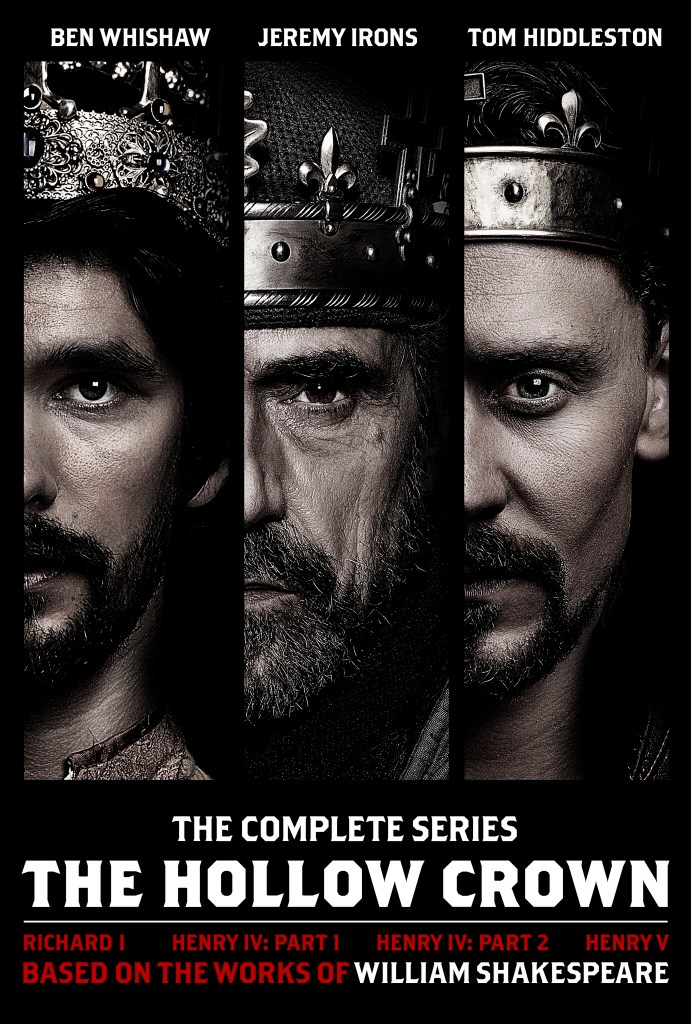
And so, hearing there is a contemporary production of the Richards and the Henrys featuring favorite actors ranging from David Suchet to Jeremy Irons to Tom Huddleston to Ben Whishaw, I am intrigued and ready to binge some Bard.
These Three Kings…Wow
Richard II features Ben Whishaw and he cavorts with the style and aplomb of a rock star. Production notes indicate Michael Jackson was suggested inspiration. Whishaw deservedly earned his accolades for his performance as he drifts between petulance and dedicated sovereignty. The cinematography rivals that of big screen artistry, bringing a dimension to the play that a stage production never could. An absolutely riveting introduction to the series.
Next up is Prince Hal played by Tom Hiddleston, around the time he began his Avengers role as Loki. Hiddleston brings the winsome bad boy pluck that he channels in Loki to the role of heir apparent. He cavorts in taverns with thieves and prostitutes instead of winning fame and glory on the battlefield. Hal gives his dad King Henry IV, played exceedingly well by Jeremy Irons, ulcers of shame.
Part One focuses on how Prince Hal is slumming around with Falstaff, one of Shakespeare’s more endearing anti-heroes played with vamp and veer by Simon Russell Beal. A notoriously likable scoundrel, Falstaff nearly ruins Prince Hal, who fortunately realizes he needs to shed the scalawag before he becomes king.
Part Two witnesses the coming of age of a wayward son into prince realizing his duties to crown and country. Stellar performances from all. Tom Hiddleston’s rejection of Falstaff is especially noteworthy as he coldly belays the sly knight’s claim upon him, breaking the old man’s heart, while stepping up to the role of honor required of him.
Henry V fortunately continues with Tom Hiddleston as king. Viewers see his growth as an impetuous swaggering tavern trawler to a victorious warrior whose Crispin Day speech incites tears as it is lovingly and personally delivered to individual soldiers under his command. This king can shout when he has to but can also project tenderness and caring to a peasant conscripted to fighting a war he does not comprehend. His death as a ruler came much too soon.
Each segment features a different director which brings a freshness and varying perspective to each play. The only hindrance is the lack of continuity of actors from part one to part two since Rory Kinnear is very different from Jeremy Irons in looks and acting style, as king, as are the other characters. It was indeed a bonus to have Hiddleston continue as Henry V.
Once again it is proven that Shakespeare is not of an age but for all time as this production proves the Bard is far from boring.
Settling into a corset series, one of those lavish PBS costume dramas based on a historical figure or event, has been a go to strategy for dreary winter evenings, long before stay home/stay safe became a mainstay.
The truth is in the telling
Watching people come to life in all their period finery, re-enacting events that shaped history is both enlightening and entertaining. Although show runners tend to lean more towards the entertaining, rather than the enlightenment aspect when presenting their slice of history.
Victoria, now in its third season, is quite guilty of drifting towards a soap opera since its attention to accurately portraying events leans more towards hysteria than historical.
Major considerations:
Victoria constantly refers to her miserable childhood at Kensington, especially being an only child. While it’s true life at Kensington was abominable in many ways, Victoria was not an only child, a lament she emphasizes. In actuality she had the company of her much older half-sister Feodora until she was eight years old and they had a close relationship through correspondence, although actual visits to London were rare. The scheming frenemy relationship portrayed is all for show.
Skerretelli: ah, the romance of the head cook and the queen’s dresser is so endearing, so captivating—so untrue. Charles Francatelli never married the Queen’s Head Dresser. Nancy, whose real name was Marianne Skerrett, served the queen for twenty-five years (and was 44 years old when she came to the palace to serve the 18 year old monarch). She spoke several languages, came from a well-connected family, and had considerable responsibilities. Francatelli did not work long at the palace, and there is no record of he and Skerrett being together. Skerrett was married to her job. So much for that romance.
Another false romance is that of Ernest and Harriet. In real life, Ernest was married at that time, and so was Harriett, plus, she was twelve years older than him. Oh, she eventually had eleven children, while Ernest did not have any with his wife. He did have that problem referred to throughout the episodes—thanks to his dear Papa who introduced him to brothels. Albert declined, of course that initiation.
Albert’s parentage remains a historical titillation since Leopold happened to be visiting when Albert’s mother conceived. Even historians tend towards questionable conclusions.
And yes, there were several assassination attempts on Victoria.
As for Lord M…much ado about nothing. Lord Melbourne did indeed have a huge influence as her prime minister, yet he acted as a mentor for the young queen, advising and guiding her first years as a monarch. He was more of a father figure, although it might be conceivable Victoria had a crush on Lord M, although being 40 years older creates doubt.
Other points of detouring from fact include the Duchess of Bucceouth being in her spritely 30s instead of the curmudgeonly older woman Diana Riggs brought to the role.
The duchess and the footman romance is loosely based on Caroline Norton’s sad experience (accused of adultery with Lord M), and being denied access to her children. She was able to change the law so women had more rights—now that would make for an excellent episode. Instead we get trysts and time outs.
Although Queen Victoria is not one of my British monarch faves, costume dramas, BBC style, are so colorful and elaborate, such a visual feast, such an escape, especially in winter when evenings start at 4 pm.
I do wonder why the writers feel the necessity to tinker with the historical truths. Actual events were plentiful and interesting enough in their own without elaboration or bending.
So, an open request to BBC showrunners: Really, we can handle history as it happened. If we want dramatized history we can turn to Shakespeare.
That reminds me—maybe it’s time to revisit The Hollow Crown since I’ve gone through All Creatures Great and Small, Sanditon, Wolf Hall, and even a revisit of Dr Who’s second season.
Binging is becoming a bit of a habit in my determination to stay home and be safe mode. And I am not sure if it’s a problem or simply a by product of the current situation.
It would be too easy to fall into binging on comfort food like chocolate chip oatmeal cookies, yet even thinking about such caloric delights becomes a weighty problem requires exercising discretion.
Instead, I am trying more constructive avenues of occupying myself in my downtime.
Puzzles are a bit of mainstay in our household. Hours are spent putting chaos in order, except I quickly lose interest if the remaining section is all sky or water.
A piece at a time can be peaceful
Books. So easy to get lost reading a batch of novels. I’ve read six novels so far this year. It’s finding a stack to keep on the ready being the problem. I’m finding the fifty page rule is invoked more often than not these days—it has to pass muster by fifty pages or back in the bag. This is vexing when it takes ever so long to select to scout out book bag candidates at the library.
Booking an appointment for a good read
Oh, and now it’s at the true moment of binging confession: PBS series. I gave myself a Christmas present of PBS Passport which allows me to unlock episodes prior to their actual release. I have already zipped through the first season of All Creatures Great and Small and Miss Scarlett and the Duke and picked through Nature seasons. I rewatched Wolf Hall.It’s akin to a viewing buffet. Hours swish by.
Tuning in, Tuning Out
And I will quickly move past that I had an Angry Bird Bubble Pop phase replaced by Wordscapes. No worries, by apps deleted. I’m back to the infrequent checkers game as a boredom buster.
So—is binging good, bad, or indifferent? Is it avoidance, escape, therapeutic? Has it increased during our increased home time?
To binge or not to binge?
Now there is an interesting binge—a Hamlet fest.
Maybe instead of binging I can call it researching and do away with any guilt feelings of excessiveness.
Some say (including the hubs) “nerd” is derogatory. I’m of the opinion a nerd is less of an insult and more of an endearment, or at least an acknowledgement of pursuing a passion with zeal, that others might not embrace. For instance, the movie The Nutty Professor, had the singular inventor trying to prove his “flubber” invention. Deemed eccentric, the professor for all his nerdy qualities became a hero. All those computer geniuses (now CEOs and billionaires) were no doubt shuffled into the nerd nomenclature in their tinkering phase. I see “nerd” as an alternate spelling of “clever,” besides the assonance of “Word Nerd” is cool sounding.
Onward to this month’s batch of words—although if you want to jump in with your thoughts about nerds, I am much interested.
1. bight: a bend in the river or the shore of the sea.
2. limb: to portray with words; describe.
3. comity: mutual courtesy; civility
4. sobriquet: nickname
5. epizeuxis: a literary or rhetorical device that appeals to or invokes the reader’s or listener’s emotions through the repetition of words in quick succession. An example:
“Jane, Jane, Jane—you are my favorite epizeuxis.”
6. inanition: lack of vigor, lethargy
7. juberous: uncertain; undecided;dubious
8. aroint: begone as in “Aroint thy, scalawag!”
9. legerity: physical or mental quickness; agility
10. doddle: something easily done. Fixing the flat tire wasn’t a problem at all—it was a doddle.
11. blatherskite: someone given to empty talk.
12. spang: directly; exactly
13. butyraceous: containing or resembling butter.
14. cachinnate: to laugh loudly or immoderately.
15. illation: an inference; a conclusion
16. totis viribus: with all one’s might
17. ambivert: a person between an extrovert and an introvert*
18. caduceus: dropping off early as in The leaves were noticed to have a caduceus departure this autumn.
19. mardy: grumpy, sulky
20. clement: mild in disposition; compassionate
*this word, ambivert, solves the puzzle of designation. A few within my circle have often contemplated how to most accurately describe our situation of being known as social, even boisterous, yet reluctant at joining large gatherings. Suggestions have included “high-functioning introvert” or “gregarious hermit.” The classification of “ambivert” seems acceptable, although the desire to write with either my left of right hand suddenly becomes immediate.
What words leapt out at you as keepers this month?
May I get personal? An ambivert perhaps you are? (Yoda syntax is less intrusive)
As a fan of All Creatures Great and Small, both the books and the original television series, I have mixed feelings about the recently released update to Herriot’s classic.
New faces for an old favorite
On one hand, I’m thrilled to see an updated version since the old version’s filming style was not very creative, just basic camera angles and editing.
Then again, an update might focus too much on making the series “pretty” through extra scenery shots which takes away from how the books focused on the dynamics of the people, as well as the wonderful animals.
On one hand, I look forward to seeing new faces in old roles.
Then again, how can anyone expect to replace the absolutely marvelous cast led by Robert Hardy?
So—last night I tuned in my PBS Passport (best ever Christmas present to myself) and watched the first two episodes of the first season.
Verdict:
It is a pretty update, with its sweeping shots of Yorkshire, and there is plenty attention on building dynamics within the cast. We’ll make that a positive.
As for the cast itself. Samuel West brings credit to the inexplicably frustrating, insufferable, yet charming Siegfried Farnon. The other cast members are unknowns, and hold their own. I am puzzled by Mrs. Hall, the housekeeper. I remember her being much older in the books, and in this update she appears to be Siegfried’s age, and their inevitable clashes come off more as married couple bantering than the respected nemesis that the original Mrs. Hall appeared to be. This is a marring point, because Mrs. Hall apparently has a wayward son by the name of Edward, but she doesn’t appear old enough to have a son able to be out and about living independently. Sadly, this is a sticking point for me. Mrs. Hall wasn’t that prominent of a character, yet here she is quite entrenched in the household.
Overall verdict:
To be fair, I will have to put aside my strong allegiance to the old series and view this new series on its own merits.
What are your thoughts on the updated All Creatures Great and Small?
December found me coasting into an attempt to best my best Goodreads challenge by scooting into the finish line of 165 books for 2020. Woo Hoo! My previous best was 140 last year. That is the upside about staying close to home: more time to read.
With Christmas Break comes two weeks of no school, which means nothing to plan and nothing to grade. The weather was not conducive to walking much and my library provided most of my inter-library loan requests. Recliner, book stack, open schedule—reader bliss. Here are December’s highlights:
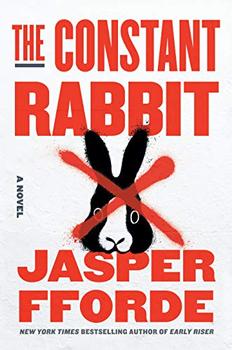
The Constant Rabbit by Jasper Fforde ⭐️ ⭐️ ⭐️ ⭐️ ⭐️
What is Jasper Fforde’s genre? Erudite Absurdism? He is indeed unique in his style. This is a amusing read, if one can get past any hidden or unconfessed squeamishness towards talking rabbits. Jimmy Stewart’s Harvey made me a wee bit uncomfortable and I can’t claim to be a Beatrix Potter fan. Perhaps if C.S. Lewis had ennobled the rabbit in Narnia I would be more at ease with Fforde’s tale of talking rabbits. However, my feelings aside, Fforde’s writing is oh so clever. He takes on issues ranging from reality TV to politics to human behavior and even jabs at his own double consonant last name. Having embraced Thursday Next, I was ever so happy that Mr. Fforde has not lost his way with wit and wordplay.
Esperanza Rising by Pam Munoz Ryan ⭐️ ⭐️ ⭐️ ⭐️ ⭐️
Considering this book was written twenty years ago, it still resonates so much. Esperanza lives a privileged life in Mexico until her father dies. Consequently she and her mother immigrate to California to find work on the farms picking produce. Life is vastly different for Esperanza living in the rough conditions of the camps. She must endure and live in hope that times will become better. Well-written and containing thought-provoking ideas of perspective, especially when it comes to the issues of immigration. The story is based on the author’s grandmother’s life providing a richer understanding of the harshness of prejudice and the sorrow of loss. Yet, there is a sense of possibility and hope in the story that is appealing and creates a sense of hope.
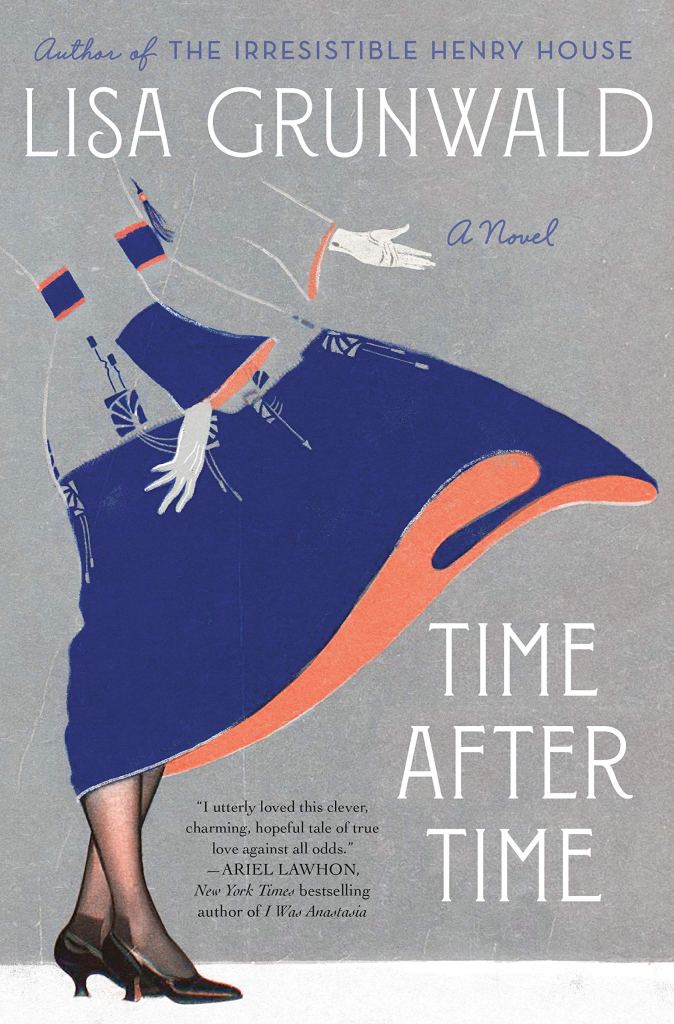
Time After Time by Lisa Grunwald ⭐️ ⭐️ ⭐️ ⭐️ ⭐️
When a story makes me cry that’s the litmus test for a memorable novel.Where to start? First off, a unique plot device involving Grand Central Station and a fairytale of an impossible romance. Next, full characterization of all characters, be they the lost and found clerk to the MCs. I came away knowing these people and became genuinely, emotionally involved in their story. If you appreciated The idea behind The Time Traveler’s Wife Grunwald’s book is suggested. Then there is the plethora of historical detail that is presented as a tribute to the various eras of New York from flappers to returning WWII soldiers to a city rebuilding and reshaping itself. But the double-punch ending is the real wow of Grunwald’s story of love found, lost, and found again.
Oh, if there is a movie? I nominate Paul Rudd for Joe.
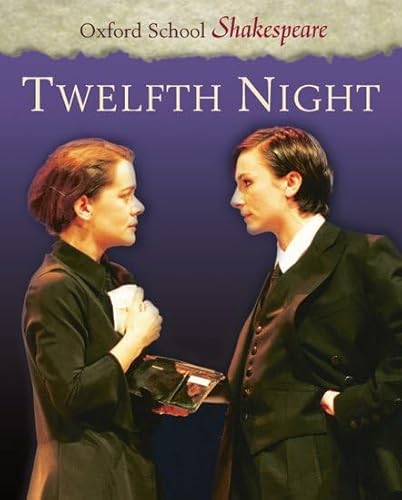
Twelfth Night by William Shakespeare, Roma Gill ⭐️ ⭐️ ⭐️ ⭐️ ⭐️
Twelfth Night, one of Shakespeare’s most popular comedies, is presented in an accessible student edition by Roma Gill, that provides thorough side notes to this lively play. The ancillary includes discussion questions and other useful classroom study aides. A slim, yet efficient textbook for better understanding the play.
I Am Malala by Malala Yousafazi, Christina Lamb ⭐️ ⭐️ ⭐️ ⭐️ ⭐️
Even without all the attention Malala received after the Taliban’s bullet nearly ended her life, this well-spoken young woman from Pakistan would still be a notable person. Her zeal for education and desire for peace are notable and admired. Her voice is clearly heard around the world and she has taken on the UN, American presidents, and the Taliban expressing her beliefs. A book that combines her story, her beliefs, and her country’s history makes for illuminating reading.
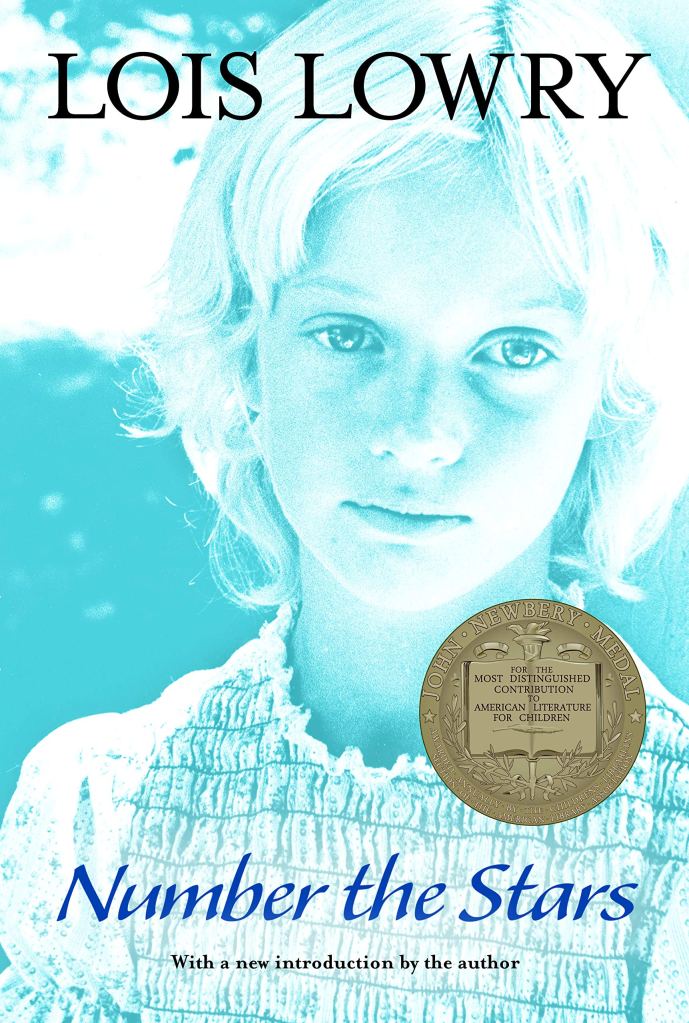
It’s Like This, Cat by Emily Neville ⭐️ ⭐️ ⭐️ ⭐️ ⭐️
I remember this book from my child and it was a welcome reread in my personal challenge to read all Newbery award winners during this past year.
This is a true tribute to sixties NYC. Neville creates a likable narrator in Davey, a fourteen year old who is starting to figure out life. He realizes he doesn’t have to argue with his father all the time and he can be choosy about his friends. He can also chose a pet and he adopts Cat from Kate, the neighborhood cat lady. Even though it was written in the sixties the story still holds relevance since many of the issues in the book remain the same: family dynamics, friendship flurries, the search for identity. Just the prices have changed and no iPhones are in sight. I like to think of this as a positive Catcher in the Rye.
I won’t have as much time in January with school starting back up, but I have some fabulous reads lined up. Did you have some memorable reads last month or are you looking forward to some new ones coming your way?
Nine years ago I decided to give blogging a try after attending a writer conference where we were encouraged to create a presence on the internet. Not caring for Facebook (even back then), I stumbled upon WordPress, and it’s been a good fit. I’ve enjoyed meeting new people during my blogging journey, and like many situations, some people have moved on, and some people? I wonder where they have gone. A quick check indicates most blogs last around two years, some not even that long. Good intentions? Lack of perseverance?
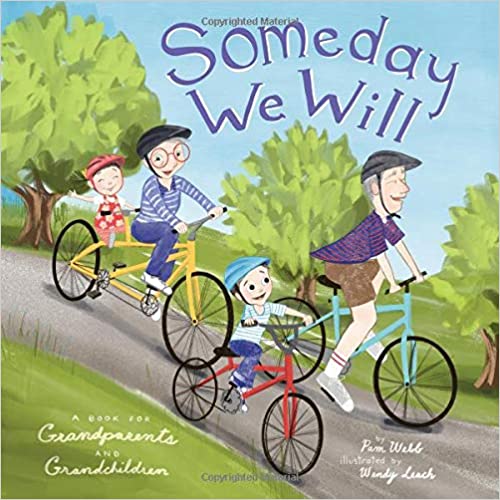
My theme is “A Writer’s Journey as a Reader,” and I have definitely read more books than written them. Although this year I did manage to debut with my picture book Someday We Will, a book that is appropriately about separation and the anticipation of being together again. The pandemic was not in sight when I first signed the contract two years ago. It has become a book of encouragement and hope for many people.
Someday We Will Be Together Again Has Taken On A New Meaning
I try to post at least once a week. Here are my regular features:
Reader Roundup: I highlight books read during the month with links to full reviews on my Goodreads page.
Why We Say: Those quirky expressions used in everyday like “Spitting image” or “Steal one’s thunder” often have surprising beginnings.
Word Nerds: What can I say? I relish words and like to post them in batches. If you are a word lover then look for this post around the start of the month.
Bard Bits: Bardolator. Shakespeare aficionado. Ever since I was assigned to teach Romeo and Juliet nearly twenty years, I realized I had been missing out (somehow Shakespeare was never on my public school agenda). I’m making up for lost time by diving into the world of Shakespeare and sharing my finds.
























 Pam Webb