Pam Webb

a writer's journey as a reader

Archive for the category “reflections”

The Writer Life: Nope, but thanks


The writer life for me started back in the early eighties when I began submitting stories to various publications. The process back then was tedious compared to today. With no online presence (because of no Internet) finding sources usually came through newsletters or thumbing through the Writer’s Digest annual publication guide. Not much up-to-the-minute information.

Finding a market meant typing out the manuscript, accompanied by a query/cover letter on my Smith-Corona electric (no computers and no laptops yet). Then making a copy involving going to Kinko’s and standing in line at the copier (no computer, meant no home printers). After that came labeling the envelope and enclosing a SASE (self-addressed stamp envelope–do we even do that anymore?) and standing in line at the post office, doling out appropriate postage. After that came the wait.

A good day meant receiving an acceptance letter and a contract in the mail (no cell phones so no text or email notification)
A bad day meant getting not getting my manuscript returned with a form rejection letter.
A tolerable day meant getting my manuscript returned with a personal rejection turn down letter.

Zip up to the present and most of the process is streamlined. My laptop and printer and cut down considerable typing and copying time. Email expedites submissions (most publishers/agents/editors only accept electronic submissions) and rarely do I visit the post office, except to send out a book to a fortunate raffle winner from a book signing. BTW: I wholeheartedly support my post office–please stick around.

As for those form rejection letters. The electronic age has made them land in my email box with ease and alacrity, which is both good and bad news. Agents and publishers all have their stock, polite pass replies, or what I call the “Nope, this doesn’t work/isn’t what I’m looking for, but thanks for thinking of me.”

I used to keep the paper rejection turn down letters from my former days, and then decided “What’s the point?” It’s not like I’m an Austen or a Bradbury and some university would be delighted to have my correspondence for their library. Big bonfire later, my files are thinner and I have a sense of moving forward. I did appreciate some of the personal letters, or at least the form ones that had a fast handwritten line or two of encouragement. Those bolstered my Eeyore days of mild complaint of why write, what’s the use?

Yesterday, I sat down for a goodly portion of the day and sent out queries to several agents. Most agents use Query Tracker which is super because it is efficient and easy to use. I keep track of the turn down replies and store them in an email folder. Once again, I thought to myself, “What’s the point?” and began deleting them. I began to notice a wide range of styles. Some are abrupt, some are encouraging, but most are obviously a template with no personal touch. I understand that. Some agents get smacked with submissions and don’t have time to personally reply. Some don’t even reply at all. Here are some examples of how the electronic age has evolved in so nicely and politely turning down a manuscript:

Thank you for the opportunity to review your picture book texts. While I appreciate being considered to represent you and your work, unfortunately, I will be passing on this. I have to be very selective in taking on new clients, and though your work has many merits, it’s not a fit for my list at this time.

I actually felt good about being turned down, even though I knew it was 98% form letter.

We appreciate your thinking of [publishing company], but this story isn’t right for our very small list.

Not a fan of the short, succinct.

Thank you for your submission. I appreciate the opportunity consider [project]. After careful review, I will be stepping aside. I wish you the best of luck in your publishing endeavors.

This is a step up from the first example because my project is mentioned, and with the phrase “stepping aside” I feel like the agent is allowing someone else the opportunity to take on the project. And it’s always appreciated to have a bit of exclamatory encouragement.

This next email arrived this morning (I had queried yesterday–that was fast). It is the first personal turn down I have received in ever so long. This is a new agent and perhaps they haven’t been hammered by a deluge of submissions yet, so they have time to be more personable. Or they are just considerate. I’m going more with the latter.

Unfortunately, [project] isn’t what I’m looking for right now, so I’ll be passing with regrets. (You’ve got a nice YA voice, but the opening pages didn’t jump into a scene as quickly as I would have liked. I also worry that this concept won’t stand out in a crowded market.) Thank you for considering me, and very best of luck with your other queries.

This combines a form letter with a personal, constructive statement, which provides me more insight on what this agent is looking for and definitely takes some of the sting of getting yet another turn down. I can work with this and will absolutely query this agent with another project, one more in line of their interest.

So-

I’m curious. To you other writers out there:

What are your thoughts on receiving turn down letters? Do you have some stand outs to share?

Bard Bits: Dusting off Bill


Yup, I’m a Shakespeare fan. I even reference my appreciation as a Bardinator, meaning I’ll be back for more in a determined manner (sans the accent).

Some use the term Bardolator, but I can’t say I idealize Shakespeare. I’m still learning about him, hence my given term, since I keep coming back for more.

Really real or not so real—that used to be my question

But I used to think WS was a phoney baloney.

*Gasp*

I know.

I fault my public education’s failure to introduce me to Shakespeare. Nothing in elementary or middle school and just a squeak of a mention in high school. Okay, I did watch Zefferelli’s R&J in the theater and was caught up in the drama, although understanding the dialogue was challenging. That Renaissance English floated over my adolescent head.

I didn’t fully understand Shakespeare beyond I knew he wrote some famous plays and had some poetry creds.

Then I got my teaching gig and realizing Romeo and Juliet was in the curriculum I quickly got myself up to speed.

Long story short I became known as the Shakespeare Lady at school. And over the years have had a fine time getting to know more about the Bard of Avon.

I even visited the Folger Library, which brings me to the important point: even though Shakespeare is such an incredible influence why is there so little known about him?

That niggling doubt of “Was Bill for real?” pops up. Which brings me to the discovery of this article.

It makes sense doesn’t it? Why haven’t historians done the CSI thing sooner and dust for prints or his DNA before?

To think a bit of William might be found cozied in books he could have read is fairly cool. It makes me rethink how much of me is left behind in all those books I’ve read.

I’m with David Tennant on the question of whether or not of Bill. I don’t really care. I simply enjoy his works. And I’ll be back for more.

So far, So good


January proved to be a five star month. Most of my choices became memorable reads, whetting my appetite to search out more good great reads for my 2026 Good Reads reading challenge. I almost hit my wishful thinking number of 200 books last year. January’s five star reads:

The Book of Lost Hours by Hayley Gelfuso

sci-fi/magical/romance/adventure

The Unselected Journals of Emma M. Lion (4 out of 8 read and now waiting patiently for the others to get returned)

Witty, captivating, and addictive

Time and Again by Jack Finney

cult classic time travel set in 1970s/1882 New York

The Song of Hartgrove Hall by Natasha Solomon’s

Think Downton Abbey with emphasis on music

How is your reading challenge coming along?

Celebrating Winter‘s Drink of (my) Choice


While frosty beverage choices abound in summer, there are only a few a couple worth mentioning when discussing a warm up in winter.

To clarify—this discussion concerns itself with non-alcoholic options. Oh, and I don’t do coffee. So, that leaves—

hot cider not mulling about life

Hot cider immediately brings to mind homemade donuts. Sleigh rides somewhere hovering with that thought.

Over the years I’ve shied away from hot cider, probably because most of my experiences are from gatherings where packets of the stuff sit in the basket next to tea packets. The water from the big silver urn is always scalding hot making the first sip excruciating and by the time I think it’s cool enough to drink the hot cider is now tepid cider and has lost its appeal.

Hot Mulled Cider Day is celebrated on September 30–much too early, and seems to hasten the end of fall and evoke the arrival of winter.

And what’s mulled got to do with cider? Hot cider is simply heating up apple cider whereas mulled cider is simmering apple cider with cinnamon and spices along with oranges bits or even cranberries.

If they could package that up I might think more kindly about hot cider.

cocoa or hot chocolate?

The next choice is my go-to-winter warm up. I confess I drink it throughout the year (especially on rainy days).

There is a difference between cocoa and hot chocolate though. Hot cocoa is sweeter and lighter—think Swiss Miss packets, while hot chocolate (real hot chocolate) is melted chocolate mixed with cream creating a rich, almost decadent drink.

I sipped and savored several menu offerings as part of my research for an article about where to find cocoa/hot chocolate locally in my fair town. Ah—the perks of being a freelancer.

Inspired, I dabbled and have created my own mix trying to find that middle ground between easy and savory. A mug of my mix sometimes suffices as supper it is so filling and satisfying.

The wonder of hot cocoa/chocolate is how amenable it is to additions–flavors ranging from raspberry to hazelnut and then there is whipped cream, marshmallows. So much versatility *Yum*

If you missed Hot Cocoa Day on December 13th, you can celebrate Hot Chocolate Day January 31. That’s right, it’s time to fill your mug and settle in and enjoy the perfect warm up.

I hope to take advantage of my Panera $2 off coupon to honor the day. I’ll also buy a treat. And enjoy both by their fireplace. I wonder if I can reserve it…
Reading Roundup: 2025 December


Last year proved a banner year for my Good Reads reading challenge having far surpassed my usual 101 books with 191 books. Will 2026 be the year of 200? 201?

December ended on a high note of 5 five star reads—a mixture of kid lit to popular requests.

City Spies by James Ponti

image: Goodreads

The usual trope of orphaned children with exceptional skills being recruited as M16 operatives has been popularized by books such as Horowitz’s Alex Rider series making it difficult to provide something unique to the middle grade genre. And yet Ponti does add enough twists to create a creative read.

The Unselected Journals of Emma M. Lion by Beth Brouwer

image: Goodreads

Understated humor, Victorian culture, British class/historical fiction, with a smidge of mystery all come together for a charming read that is less journal entry and more novel in approach.

No wonder the library can’t keep them on the shelf.

The Bitter End Birding Society by Amanda Cox

image: Amazon

A story how birds, one of God’s most precious creations, can help restore faith in oneself and in others.This reader gladly endured the hold list wait as it was a lovely read.

Marshmallow and Jordan by Alina Chau

image: Amazon

An uplifting graphic novel that features Jordan, a middle-school girl in a wheelchair who used to be a basketball star. She befriends a stray baby elephant and they become inseparable, naming him Marshmallow. Marshmallow helps Jordan boost her swimming skills enough to join the school’s water polo team.

Your Inner Hedgehog by Alexander McCall Smith

image: Goodreads

This fifth entry into the series captures the subtle wit and charming irony McCall-Smith is known for. As he continues his gentle poke at academia the story takes on the sublime found in books by Jasper Fforde and Douglas Adams.

Reading books continues to be the fundamental enjoyment of retirement. It even rates higher than dark chocolate.

The Summing of Numbers


Well into the new year I am now reflecting on past accomplishments of last year. While I could ruminate on aspects of my writing life I will instead gloss over the fact I did not attain my goal of securing an agent or getting another manuscript accepted by a publisher. I did, however, get several articles published in Sandpoint Magazine, a regional publication that emphasizes Sandpoint and the amazing surrounding area. You can check it out here.

Instead, I will gladly share my reading accomplishments (much more impressive). For the past few years I have set a reading goal of 101 books. I have managed to meet and surpass that number and thought, “Why not go for 200 books?”

I managed 191. Close. So close.

Goodreads puts together a dandy graphic summary and here are a couple of highlights:

That is a lot of books!
I wonder why October was busier?
There were some really good reads last year.

How about you? Did you hit your reading goal?

Comfort Flicks


A realization (perhaps a confession): Less daylight hours results in a tendency to lean towards comfort flicks. Some might seek comfort foods; however, winter means less walking opps and that means weight gain. Hence, I pop in a flick instead of flicking chips.

During the day I easily hunker down by the window and read, read read, but reading by lamplight is not as fulfilling, and now that it’s dark by four o’clock the need to pass the long evening is often remedied with screen time.

While always game for a riveting new series or film, there is a penchant for seeking an old favorite to relieve the ennui of winter. Here is a random list of some faves. Any on your own list?

Antman

Bride and Prejudice

The Big Country

The Chalk Garden

Charade

Emperor’s New Groove

Galaxy Quest

Holes

Hunger Games

The Incredibles

Jane Eyre (Timothy Dalton version)

Maltese Falcon

Megamind

Monsters Inc.

My Man Godfrey

Penguin Town

Sabrina

Sahara 

Thin Man (the series)

To Kill a Mockingbird 

Sneakers

Stranger than Fiction

The Thursday Murder Club (newly added)

What makes favorites? Any of the following elements;

  • Great acting (To Kill a Mockingbird)
  • Exceptional, creative story (Emperors New Groove, Stranger Than Fiction, Hunger Games)
  • Makes me laugh out loud (Galaxy Quest, Antman)
  • Escapism (Sahara, Bride and Prejudice)
  • Ensemble cast (Sneakers, Thursday Murder Club)
  • Classic (My Man Godfrey, Sabrina, Charade, Maltese Falcon, My Man Godfrey, Big Country, Jane Eyre, Chalk Garden)
  • Speaks to the kid in me (Incredibles, Megamind, Holes)
  • Just Because (Penguin Town–I can’t resist penguins)

What’s your go to for getting through the long months of winter?

Word Nerd: Bodily Lexicon


It’s amazing how we can go in life not realizing there are specific words for everyday aspects. For instance, there are succinct terms for certain body parts that we might be totally oblivious even exist.

So–how many do you know?

1. philtrum: that little dip above your upper lip underneath your nose

    2. lunula: the half moon at the bottom of your nail

    3. glabella: the space between your eyes

    4. canthus: the place where your upper and lower eyelids touch

    5. columella: the strip of skin between your nostrils

    6. purlicue: the skin fold between your thumb and index finger

    7. tragus: the bump that is near your ear opening

    8. uvula: the part that hangs at the back of your throat

    9. gnathion: the point of the chin

    10. nasion: the dip between the eyes above the nose

    11. axilla: the term for armpit

    12. sternum: the bone in the middle of your chest

    13. zygoma: the term for your cheekbone

    14. hallux: the term for your big toe

    15. pinna: the outer shell of your ear

    How did you do? Maybe you did better than me.

    I knew “philtrum” from my university days of studying speech therapy as a possible career (which I did not pursue), “uvula”–same class, and “sternum” from taking CPR.

    Now how does one work these into a conversation without sounding like a med student?

    Perhaps:

    “The wind blew fiercely across her zygoma and nipped her pinna, causing her to long for the cheery fireside awaiting her at home.”

    Or:

    “Already late for his appointment, Phillip angrily kicked the flat tire of his Mazda pickup truck immediately rendering a pain to his hallux.”

    Doubtful:

    “Watching the 747 taxi down the runaway, Alice closed her eyes at this final farewell, with a tear barely contained within her canthus.”

    Reading Roundup: 2025 November


    November is the month that a warm sunny day is an unexpected gift. Reading outside becomes a rare treat, even with sunny skies since the breeze is quite unfriendly. It is also the month that I wonder how much more reading I can accomplish as December looms ahead as well as my hopes to best last year’s reading accomplishment. In the past few years I have surpassed my yearly Goodreads Challenge goal of 101 books. This year though, I wonder can I beat my all time record of 173 and possibly get to 200 books?

    Here are the five star reads of November:

    The Place of Tides by James Rebanks

    “I am only the storyteller. She is the story.” This the essence of the book. The author, seeking to change the manic pace he had created in his life, seeks out Anna, having made her acquaintance years ago when she is tending the ducks nesting on a remote Norwegian island.

    He commits to spending the nesting season with her and the book is his account of that time. Part journal, part autobiography, Rebanks relates the season as it unfolds, the cadence of the work and how the pace of the work impacts him as he learns more about Anna’s chosen role as a “duck woman.”

    Rebanks unfolds the story in sequence similar to a rolling wave, how it drifts forward and then curls back, only to repeat, with an occasional stormy sequence. Two thirds of the book revolves around the preparation of the nests, the tedious rebuilding and checking, as they awaited the arrival of the ducks. The last part is a reflection of life beyond tending the nests.

    The book, like life on the island, unfolds on its own terms, setting a pace that needs to be unhurried. Rebanks describes the simple and stunning environment he is immersed in with often profound prose, allowing the reader to share in his appreciation of the island and its remote beauty.

    This book is companionable with, Raising Hare, another journal-oriented book, as both books emphasize how the pace of life is bettered when it slows down to enjoy nature, especially its wild creatures.

    Words on Fire by Jennifer Nielsen

    The historical fiction intended for middle grade readers opens with Cossacks arresting Audra’s parents for being book smugglers and Audra running for her life to hide in the Lithuanian forests.

    Words on Fire recounts vividly the struggle Lithuanian people faced to keep their culture alive once Russia invaded their land and subjugation began. Audra, though young, eventually becomes a book smuggler herself through the help of Lukas, Ben, and Milda and others willing to risk their lives to keep their culture alive through obtaining books written in their own language.

    Full of adventure with vivid descriptions the story is both engaging and encouraging. The message how important it is to preserve books as a means of preserving a culture is well-presented.

    Tom Lake by Ann Patchett

    Tom Lake. One of those books I’m sure I must have read but as I start reading this story that is gently set during the early days of the pandemic, the realization is I have been intending to read the novel but have put it off. And now I can see why Ann Patchett is such a big deal as an author.

    Lara, once upon a time, had been born Laura. She discovered she was also born to play Emily in the play Our Town, so she did. From there she was discovered, made a movie, starred in summer stock, became the momentary girlfriend of a movie star, before he became a movie star, and then married a cherry farmer.

    This is the story she tells her three daughters as they pick cherries, at least most of it. There are parts only we readers get to know.

    Tom Lake is funny, poignant, often brilliant, and is difficult to set aside, because, after all, work does not stop, even for a good read.

    Onto to find another Ann Patchett title and try not to chastise myself for not reading her sooner.

    Lost Stories by Dashiel Hammett

    Hammett may be most remembered for The Maltese Falcon and his private detective Sam Spade, but it took him several years, and much personal travail before he became regarded as the inventor of the hard-boiled (such a cliche now) detective.

    Small Things Like These by Claire Keegan

    In my reading experience stories set in Ireland tend to have a sadness threaded through them which creates a resonance long after the last page is turned.

    Such is the case for Keegan’s novella which centers around Bill Furlough, a decent man who loves his wife and daughters, yet is haunted by his past. Unlike many, if not most, of those living near the convent Bill does something about the injustice he witnesses when he drops off a load of coal.

    As the story ends, it hints at another story, one that may never be told, yet for Bill he is willing to take on the challenge of care that needed doing. The story is made much more riveting knowing Cillian Murphy plays Bill in the film version.

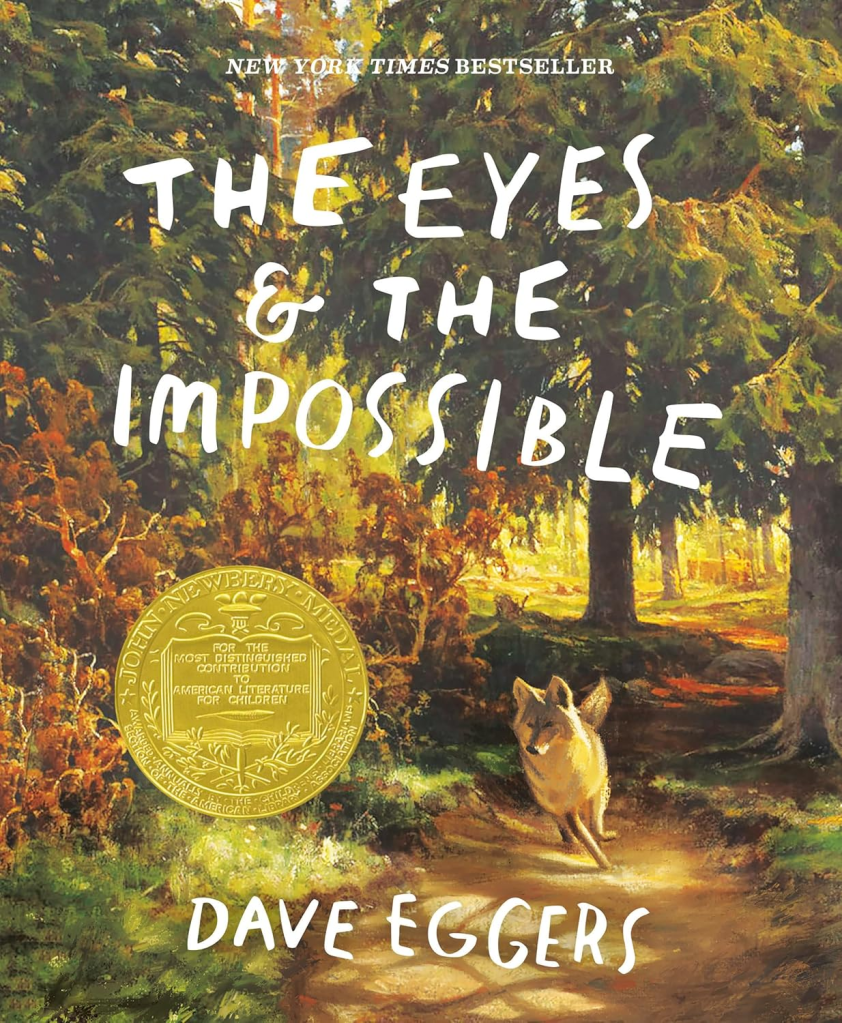
    The Impossible Fortune (The Thursday Murder Club #5) by Richard Osman

    There have been some definite changes since the Thursday Murder Club gang last met. For one, they moved from the more formal setting puzzle room into the therapy pool aka hot tub for their meetings creating a chummier consultation session. Secondly, the recognition of their capabilities has primed them to be sought out by all manner of people with a problem. Thirdly, and quite profoundly, Connie, the hardened criminal mastermind, has shed tears and offered up a sincere and appropriate apology when it mattered.

    With sophisticated wit and clever plotting this fifth series entry is all the more fun to read since Netflix provided an excellent movie version. Elizabeth’s tart remarks are spoken with Helen Mirren’s brisk delivery and so it goes with each of the characters. The in joke about Pierce Bronsan and Bond was delightful.

    Looking forward to the further adventures of the TMC crew whether in film or in print.

    How is your reading challenge going?

    Bard Bits: ‘Tis Time of Thanks


    Of course there are no Thanksgiving scenes in any of Shakespeare’s works since that holiday was not on his creative road map. However, he did have several worthwhile lines about giving thanks. Feel free to share as you gather round your table on Thursday.

    • “O Lord that lends me life, lend me a heart replete with thankfulness!” — 2 Henry VI
    • “Small cheer and great welcome makes a merry feast.” — The Winter’s Tale
    • “Thanks, sir, all the rest is mute.” — All’s Well That Ends Well
    • “For this relief much thanks.” — Measure for Measure
    • “You great benefactors, sprinkle our society with thankfulness.” — Timon of Athens
    • “Thanks to men. Of noble minds, is honorable meed.” — Troilus and Cressida
    • “For your own gifts, make yourselves praised.” — Timon of Athens
    • “Only I have left to say, More is thy due than more than all can pay.” — Cymbeline 

    As for my favorite thanks quote I offer up:

    “I can no other answer make but thanks, and thanks, and ever thanks.” — Twelfth Night

    Post Navigation