Pam Webb

a writer's journey as a reader

Archive for the category “Books”

Read Me a Story


One of my favorite classes in college involved learning how to read picture books out loud to children. Yes, and we did get credit for doing so. This class gave me real life skills. For true.

I learned there is a proper way to hold the book when facing the audience.

  • First of all, sitting down facing your audience, you hold the book’s bottom spine stretched out on your forearm.

*By the way if you are looking for a dazzling, scintillating meme-worthy Prezi, it ain’t happening*

  • You then read sidewise, yet facing your audience because eye contact is quite important. This is easier than it sounds because picture books usually have more illustration than words.
  • It is then important to properly turn the page. This is done by reaching over and across the top of the book, sliding the first two fingers done the present page and the next, and pulling the page over for the next spread. NOTE: though commonly practiced, it is not in the best interest in the book’s wear to turn from the middle bottom, especially towards the inside spine. Rippage and tearage can occur in doing so.
  • Proceed throughout the entire book in the proscribed method.
  • It is also important to use appropriate voices for characters, and it can be highly desirable to create separate voices for each given character. NOTE: characterization voices are best done by those who can do so without creating havoc among the audience. For example: if your Cockney mouse is such a smash hit your audience might laugh to the point of interfering with the story’s progress.
  • Body language is  also important. Leaning in to emphasize special junctures, or pausing for same can add a delightful amount of drama and dimension to the story.

I believe the course to be quite edifying and suggest signing up should the adult education flyer come through the mail. Today I utilize those skills reading to the grandkiddo, although I use my snuggle reading skills instead. I have read stories to my high school students. Yes, that is one reason I am known as the weird English teacher.

Then again, there are those who possess natural skill at reading and technique does not actually matter. Case in point is our boy Sherlock.

Have you a favorite technique for reading stories?  Or better yet–any famous readers you’ve come across? One of my most favorites is Meryl Streep’s audio book reading of Jeremy Fisher by Beatrix Potter.


Blog Spotlight: Book to the Future


My latest spotlight is on another blogger whom I’ve exchanged commentaries since the beginning of my blogging foray.

In his own words:

Everyone calls me Ste J.
I am an obsessive book creature, in fact I spend more time between the (book) covers (I read in bed as well though) than I do with ‘real’ people.
Which means I probably spend more time with you guys than anyone else. Feel privileged.

Ste J is a bona fide bibliophiliac. He loves books. That’s a bonafide fact. Proof: he once read 100 books in 362 days, just to see if he could do it.  His blog is neatly organized into genre and with a mere click, a person can investigate reviews and titles. His tastes are eclectic, his insights meaningful, and his replies clever.

For a sampling of his classics page, click here.

Lately, his posts have wandered a bit off the original track of being primarily bookish in content and he writes on whim. I can relate.  I too have strayed from my original intent of providing astute book reviews that would dazzle and benefit bookdom and have taken to writing as serendipity taps the muse.

So, I hope you will check out Book to the Future and meet the intrepid Ste J, where as his banner states “more book than a mad ‘orse.”

A Little Birdie Told Me


One aspect of blogging that is a definite benefit is finding new titles to read. Goldfinch by Donna Tarrt is one of those titles. Considering it received the Pulitzer and had so many varied reviews–Loved it!” “Hated it!” I had to decide for myself. I will never truly know how I might have liked it. It’s been relegated to my rare “didn’t finish” designation on my Goodreads tab.  Why?  Admittedly, it takes quite a bit for me to *gasp* abandon reading a book.

image: nytimes.com


Here are my impressions:

  • Plot interesting although contrived. I work with teenagers and I have yet to come across any who talk like they are fourteen going on thirty-four.  I know. I know. It’s a novel and there are liberties called artistic license.
  • I’ve read BIG books; however, the story needs to justify the length. Melville or Dickens, this is not. Instead, I found myself getting more and more irritated as  Theo, the protagonist, reveled in TMI (too much information). It’s like being caught in a conversation with someone who keeps adding on instead of continuing on with their story.  I didn’t find all the extra detail to be that significant to moving the plot along.
  • I also found the stereotypes disappointing: the out-of-touch adults trying to counsel Theo; the genius, yet nerdy friend; the dysfunctional wealthy family; the unconventional adult who becomes Theo’s island of solace.
  • Here is the real clincher. I could have continued with the reading. There is enough intrigue and character investment that I had a desire to keep giving it a go, then the dreaded birdie kept flipping up unexpectedly. The boid, the random explosion of f-bombs finally annoyed me enough to say “done” and moving on. I understand profanity adds a certain aspect of verisimilitude; however, certain words remind me of pepper–sprinkle too much on and it actually hinders the flavor instead of enhancing.  The random f-bomb turned into a regular blasting zone and I began to wince. Here’s the deal: “Hey, Theo–you’re a nice enough kid, and you have a great vocabulary, so why the potty  mouth?”
  • I also wondered if this wasn’t  really a dressed out YA. A large portion of the book centers on Theo’s teen years. Then again, I didn’t mind reading Hunger Games; on the other hand, that IS considered YA.

Overall, I would have kept going to read the 700+ pages. It takes several elements for me to finally pull my bookmark and move on. I have way too many books I want to read to keep going with one that wears on me.

Twofold commentary requests here:

1. Anyone agree or disagree with my Goldfinch assessment?

2. How do you handle books that don’t live up to your expectations?  Do you continue or do you move on?

Remaining the Orphaned Narrator


It is always exciting to discover a new-to-me author. In this case it’s Kazuo Ishiguro. I know, I know. I’m a bit late in my discovering; however, better late than never in finding an author of mesmerizing style.


I knew the movie Remains of the Day, before finding the novel and didn’t realize the movie was the adaptation.
How could I possibly pass up a film starring Anthony Hopkins and Emma Thompson?
Flash forward five years later and I’m perusing the AP Literature list (“read that one, will never read this one, not reading this one again”), when I recognized the title Remains of the Day and connected it to the movie. Then I read the author’s name and I must admit I expected something like Adrian Smythe or Winston Greene, not Kazuo Ishiguro. After all, the novel is about a very proper English butler and his reflections of what it takes to become the best of English butlers. Wouldn’t one need to be English to understand that sort of nationalistic pride? I’m not getting points here for narrow-minded thinking, am I?

It turns out Ishiguro is quite well-suited to the task of writing about the English since he moved to England when he was around six years old. This gives him the ability to have an insider’s view with a somewhat detached perspective. The result is  basically a stream-of-consciousness narrative concerning the tunnel vision of a man’s quest for the unattainable. Trying to live a life that is beyond reproach, to achieve a status of perfection, requires sacrifice. Can sacrifice be made without regret? This is the hidden truth Stevens, the butler is searching for, except he does not realize it.
A quest novel of notice did not go unnoticed, for Ishiguro’s debut garnered him the Man Booker Prize and set a bar. Would he be a one shot wonder or would this be the first work of a noteworthy word smith?

image: goodreads.com This cover indicates the layers found within the story.

My literary taste buds curious for more, I trotted down to the library. Grabbing any title of his that caught my eye on the  shelf, I opened up his fifth novel When We Were Orphans. I immersed myself in reading it to the point the MEPA queried, “Still a good book?” Yes, thank you. Prognosis? After reading two novels, indications are Ishiguro is wordsmithing wonder.

Here are some bio facts and  stats:

  • Two novels have been adapted to the screen, Remains of the Day, and the more recent Never Let Me Go. Both have been received well, considering Ishiguro’s stories are mainly first person narratives, making them difficult to translate into a cinematic plot.
  • His novels are historical in nature, with attention to detail.
  • The stylistic viewpoint is that of the unreliable first-person narrator, one who is flawed in outlook.
  • Although born in Japan, he did not return until thirty years later.
  • He has received four Man Booker Prize nominations
  • The Times ranked him 32 on the list of the 50 most influential British writers since 1945.

As for an actual review of When We Were Orphans, I leave it to the more qualified:
New York Times
 review:

I plan on continuing my course of exploring Ishiguro’s work and look forward to introducing a contemporary author to my APters, who, I’m sure, would like a break from dead white folk now and then.

Any thoughts on Ishiguro’s writing? Any suggestions for the next title I should read of his?

Wrap Up or Fall Flat


After five years of stop and go writing on my historical novel I’m nearing the end chapters. It’s rather intimidating. The ending involves the reuniting of a homestead mother with her family. The way I have presented the conflict is that there is some ambiguity of whether the mother left the family due to the grind of daily life as a pioneer women or if she wandered away due to fever delirium.
Here’s what I need to figure out:
-Is the husband readily accepting her leaving the family and not returning once she was better? (He’s a good guy overall, but was left with six children ages 3-15 to raise in her absence)
-How will the daughter (her POV) feel about her mama at this point? Anger, relief? This girl took on the task of raising her three ornery brothers and packed up her petticoats and put on pants to do so in order up keep up with them.

The right grab really counts… image: bodyresults.com


Reaching the end chapters is a lot like rock climbing. A cadence is developed in both–the reach and pull up towards progress. Just when the top is in sight, flat is sometimes hit, meaning no handholds and no way to go up. Finding a new path is sometimes the only direction left. Then again a risky move can be tried and what a sensation of exhilaration when it leads to success and pulling over the top.

Write now? I’m at that looking for a move that will pull me over the top.

So, writers–what do you do when you hit flat when the top ledge is in sight? Do you press on or look for a new route?

Bargain Bin Book Bonazas


At a local warehouse clothing sale I unexpectedly found a tier of gift books.  At a couple of dollars a piece I grabbed up a few.  It proved a difficult choice as they ranged from the secret lives of cats to how to dress cool instead of never cool (I kid you not).  There were also cutesy books like how to enjoy incense and candles.  I passed on those.  A match is all I need to understand those two.  Okay, maybe there are a couple of things I could learn, but when I came across these I couldn’t resist:

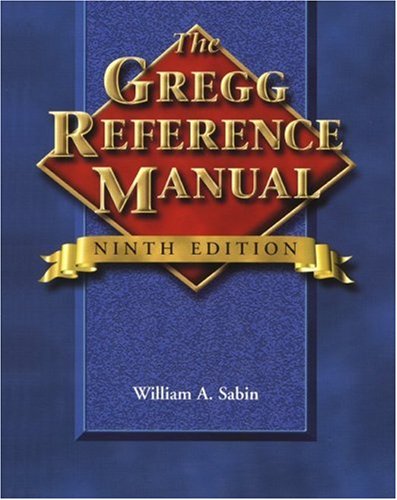
1. The Gregg Reference Manual (ninth edition) by William A. Sabin
Of course I already have my Strunk and White, How to Not Write Bad, and various college textbooks sitting on my shelf, yet who can resist a grammar handboook. I can’t. And because I don’t need it I decide to give it to my youngest progeny who admittedly wants to get his there, its, and yours figured out once and for all.

2. Leadership Courage by David Cottrell and Eric Harvey
Definitely a gift book for the youngest because he is into building up a business and is always talking about all these amazing leadership books he’s reading, so he most certainly needs another one.

3. Shakespeare’s Sonnets by William Shakespeare
For  the oldest son, I couldn’t pass up this slim volume of the Bard’s best.  I bought it because every young man who is looking for the perfect soul mate should have at least a couple of sonnets up his sleeve.  He received it graciously, if not warily. I  was amused to overhear him say the line, “Hey, I have a sonnet and I know how to use, so back off.”  I’m pretty sure he was kidding.  A loaded sonnet is nothing to mess with.  I have cautioned him on the power of verse.

4.  How to Say It Style Guide by Rosalie Maggio
Yes, another reference book. With two boyos in business they each need their handy dandy grammer guide.


Finding books on sale is always a bonus.  And being able to give them away is the best bonus.  Have any of you found any bin bonuses lately?

Oh, all images are from amazon.com.

Rainy Days of May


I know this isn’t the case for everyone, but we are having a spate of rainy May days in my part of the world. I personally don’t mind rainy days, at least not too much.  I enjoy the greenery it brings and all those flowers.  The rain also provides the excuse to stay inside and get caught up on my writing and reading because if it is sunny out I tend to feel guilt for not being outside reveling in the warmth and blue skies.  We have long winters here.  I’m trying to figure out a way to store up those sunny summer days in a jar to dispel those dismal days of December, January, February, and most of March.

When the progeny were kidlits I made sure rain did not stop their fun.  One of my helpers in this regard was a fabulous book called Rainy Days & Saturdays by Linda Hetzer. Inside our over 150 activities and ideas for chasing away the drizzle doldrums.

image: amazon.com

Check it some of our past favorites:

  • camping out inside–the old blanket over the table works, but we filled the entire living room with elaborate blanket and sheet configurations
  • bean bag throws–easy to make and hours of entertainment
  • sock puppets–old socks, buttons, felt and it’s showtime
  • finger painting–shaving cream mixed with food coloring in muffin pans equals pruny rainbow kids
  • tissue paper stained glass–an old jar, watered down white glue, a paintbrush, torn tissue paper, and stick in a candle
  • balloon volleyball–clear out the breakables and have at it
  • tornado tubes–toy stores have the contraption to join two liter bottles together to create the swirly fun
  • cooking–popovers, quesadillas, no bake cookies, homemade pizza
  • clay ornaments

I’m keeping this one for the grandkiddos coming over.  I can’t wait to build a fort again!

image: wikipedia.org


How about you?  Do have some rainy day ideas that work well for your bunch?

Costco: Warehouse Candy for Book Boosters


Recently we gifted the youngest progeny with a Costco membership and instead of being thrilled with loading up on cheap eats, he headed for the book aisle, practically leaving a trail of slavering as he beelined over to the miles of titles.

“Mum, look at all these!” he gushed. Looking over from my own browsing I could see him transfixed by a display of author works, the ones with the fancy covers and decorative texts.  The librarian teacher that I am can only smile and hum like llama in my happiness.  It’s so wonderful to have hatched a reader amongst the brood.* Especially since he was a late bloomer in the reading arena.

While I prefer to keep my frequent flyer status at our local library, our youngest dreams of houseplans that include a generous library. “And, of course, I will have you come organize my collection, Mum.” Aah, these are retirement plans in the making.

*the other kiddos are readers too, how could they not be with an English teacher librarian for a Mum? However, this particular kiddo gets as excited about the whole sensory aspect of reading as I do. Is there a book geek gene?

Anyone else hit the book aisle first before launching out to fill their Costco cart? Even before snarfing the vendor snackies?

Updated Momisms


Mother’s Day has taken on new meaning having become an Empty Nester. The kiddos have flown the coop, starting their own lives, and while I’m still, and will always be their Mum, I don’t expect or need a big flautin’ tootin’ acknowledgement of being their mother.  Thanks, but not needed, Hallmark.  Another calendar guilt day.  Whoa–wait–stop–I didn’t mean to go in this quasi-negative direction. Of course, getting a card or phone call or even flowers is sweet and appreciated, but everyday I’m reminded that it is so cool I’m a mom of three very lovely children who have become adult just that fast. The youngest turned 21 in March and the oldest will be turning the *yikes* 29 in June.  How’d that happen?  Wasn’t it moments ago I was telling them:

  • Hey! I’m your mother not the maid. Pick up your stuff!
  • Don’t make me come back there!
  • Just try one bite–
  • It’s your brother’s turn to pick the movie.
  • No, I don’t have money for candy.
  • You can have one–I said one.
  • Not before dinner.

Now that they are adults, I find the following conversationals happening:

  • How’s work going?
  • Is this a “friend” or a friend?
  • Do you need gas money?
  • What are you doing for the holidays?
  • Is it okay if Pops and I come over?
  • Do you want to meet at the restaurant?

Yes, I notice they tend to be questions rather than statements?  Why is that? Maybe it’s because I can’t really tell my kids to get a haircut, or that they should tidy up their apartment anymore.  But I guess I do. *Sigh* I really can’t stop being a mother so easily.  There is not switch off once the kinder become A-dults.  That Mom drive just keeps going.

So, this post is dedicated to my children.  You make Mother’s Day happen everyday–not only some designated May Sunday.

And this is why I wrote that essay that got in Chicken Soup for the Soul: The Multitasking Mom’s Survival Guide. 

Now that you have all moved out and have your own lives I finally do have “A Little Piece of Quiet.”

Loves and Hugs, Mum

Chicken Soup Cover

Image: Amazon Inspiration: My Very Own Progeny (psst…story #10)


Poetry Workshop: Sestina


I thought there has been enough recovery time since the last workshop, which focused on the villanelle.  So, let’s move on to the sestina.


The image above intimates that the sestina can be neatly labeled.  Hmm, perhaps not.  Below is a famous example by Elizabeth Bishop.  I do like her work, if I haven’t mentioned that before.  This offering is simply called, “Sestina.”

September rain falls on the house.
In the failing light, the old grandmother
sits in the kitchen with the child
beside the Little Marvel Stove,
reading the jokes from the almanac,
laughing and talking to hide her tears.

She thinks that her equinoctial tears
and the rain that beats on the roof of the house
were both foretold by the almanac,
but only known to a grandmother.
The iron kettle sings on the stove.
She cuts some bread and says to the child,

It’s time for tea now; but the child
is watching the teakettle’s small hard tears
dance like mad on the hot black stove,
the way the rain must dance on the house.
Tidying up, the old grandmother
hangs up the clever almanac

on its string. Birdlike, the almanac
hovers half open above the child,
hovers above the old grandmother
and her teacup full of dark brown tears.
She shivers and says she thinks the house
feels chilly, and puts more wood in the stove.

It was to be, says the Marvel Stove.
I know what I know, says the almanac.
With crayons the child draws a rigid house
and a winding pathway. Then the child
puts in a man with buttons like tears
and shows it proudly to the grandmother.

But secretly, while the grandmother
busies herself about the stove,
the little moons fall down like tears
from between the pages of the almanac
into the flower bed the child
has carefully placed in the front of the house.

Time to plant tears, says the almanac.
The grandmother sings to the marvelous stove
and the child draws another inscrutable house

Anything standout? Anything noticeable?  Yes, there are repeating words. Six of them. Nicely done. Sestina–six: yup, there is a definite connection.

A sestina according to the Bing dictionary:

  1. Definition of sestina (n)

    Bing Dictionary
    • ses·ti·na
    • [ se stéenə ]
    1. form of poem: a poem of six six-line stanzas and a three-line envoy or, with the last words of the first six lines repeated, in different order, at the ends of the other lines

Using Bishop’s model, let’s explore how that really works.

Oh, by the way–if you are one of those who groove on numbers more than poetry, you will really like sestinas, because it’s all about patterns.

Okay. Here we go:

The structure of a sestina, in this case, Bishop’s “Sestina,” is six stanzas of six lines with a three line envoy (the conclusion of the literary work). The pattern is: 123456; 615243; 364125; 532614; 451362; 246531 with the envoy as 531 or 135.  Return to the poem and decide which six words repeat throughout the poem.

If you really want to see how a sestina works without all the extra word wading go check out “Six Words” by Lloyd Schwartz. Very, very clever.


Well, that wraps up another National Poetry Month. Thanks for stopping by. I hope you learned a bit along the way, and appreciated new-to-you poets and their poetry.


Post Navigation