Pam Webb

a writer's journey as a reader

Archive for the category “Blogging”

A Brief Interruption to Our Scheduled Poetry Programming


One of my goals for Spring Break is to knuckle down and really get productive on my own writing.  I have been more reader than writer of late and I need to reverse that status. However, here it is Friday and school starts again Monday. Never fear, I still have great hopes of revising and sending out more manuscripts. I have to remind myself to keep working, even though that little voice  in the background keeps sniveling: “But I’m on vacation!”

Fortunately I found some needed motivation in Writing Like Crazy’s post for the day.

Writer’s Digest, who always has the best writer’s advice, also runs fabulous contests.  Currently offered is their 15th Free Lucky Agent Contest.

Three  winners  will be awarded the following:

1) A critique of the first 10 double-spaced pages of their work, by the agent judge

2) A free one-year subscription to WritersMarket.com

The focus of this particular agent contest is Young Adult.  The agent is Andrea Somberg, a literary agent with close to fifteen years experience, and represents various fiction and non-fiction projects including those aimed at young adult and middle grade audiences.

I plan to spend the next couple of days fine-tuning my YA manuscripts and submitting them before the deadline which is  Wednesday, April 9th. For more details on the contest go to this link

Marching into April’s Muse


It’s lovely that spring has basically sprung. There is no subtlety of seasons in my neck of the States.  One weekend eight inches floated down with the grace of a freight train, causing school to shut down (oh goodness was I bummed). The next the rain came in, melting all that amassed snowflakiness and suddenly I’m owner of lakefront property. I hope the assessor doesn’t drive by.

One of the nicer aspects of March of how it promenades in so roaringly, only to meekly usher in April and all her flowers.  Mixed in flowers are sunny days, longer days, taxes *cough*, and while these are sporadic occurrences of sweet sorrow (unless you like taxes), it’s an celebrating poetry.

Yes, this is a heads up that April is National Poetry Month.  This year I arranged a guest poet to appear about every other post. In between the celebrity verse readings there will be poetical bits like forms, clips, and images.  Ooh, I can’t wait. I’ve been working on April since last December.

Until April and the official start-up, here are some links to help you prepare:

Got questions about National Poetry Month?

Looking for ways to celebrate NPP?

Poet-to-Poet Project

And one of my absolute favorites: Poem-in-your-Pocket Day

Walt Whitman graces the poster this year. Find absolutely tons of great poetry info at http://www.poets.org.

See you around the corner!

Dash It All


I have come upon the realization I lean towards dashes instead of semi-colons–really, I do. My students upon the first introduction to Emily Dickinson notice her use of those extra big hyphens. Hey–if it’s good enough for Em–dash it all, it can’t be all wrong.

On reflection, perhaps I overindulge in my penchant for dashes–or maybe not? In my desire to correctly use them, I turned to the Internet and found my favorite grammar guru–Ben Yagoda. A writer for The New York Times, professor, teacher, and I would say humorist, he provided everything I needed to know about the dash–and then some. Check out his fabulous writing guide How Not to Write Bad (really–that’s the title).

cartoon by Peter Arkle

An excerpt from his column points out how effective the dash can be:

To get a sense of some of the things a dash can do, take a look at these pairs of quotes.

F. Scott Fitzgerald’s “The Great Gatsby”:

Thirty: the promise of a decade of loneliness, a thinning list of single men to know, a thinning briefcase of enthusiasm, thinning hair.

Thirty—the promise of a decade of loneliness, a thinning list of single men to know, a thinning briefcase of enthusiasm, thinning hair.

Henry James, referring to Henry David Thoreau:

He was worse than a provincial, he was parochial.

He was worse than a provincial—he was parochial.

Mark Twain in “Autobiography”:

…life does not consist mainly (or even largely) of facts and happenings. It consists mainly of the storm of thoughts that is forever blowing through one’s head.

…life does not consist mainly—or even largely—of facts and happenings. It consists mainly of the storm of thoughts that is forever blowing through one’s head.

Twain’s “Pudd’nhead Wilson’s New Calendar”:

Each person is born to one possession which outvalues all his others: his last breath.

Each person is born to one possession which outvalues all his others—his last breath.

In all cases, both versions make sense and are grammatically correct. But the ones with the dash (the ones the authors actually wrote) seem to live and breathe, while the others just lie there on the page. Like hitting the right combination of buttons in a computer game, typing two hyphens on the keyboard — and thereby making a dash — can give your prose a burst of energy, as if by magic. 

Emily, Twain, F. Scott, and Henry J.–I’m in good company.

The Fiction of Common Core


  • image: Pinterest.com

Common Core State Standards may or may not rock your world, but it has affected you in someway if you are any of the following:

  • Educator
  • Parent
  • Writer

As an educator it has already affected your world. I’m not going there at this time. I feel your pain, and rejoice in your triumphs as we plod our way through this new-to-us (for the most part) curriculum.

As a parent it will affect your kidz education. In a good way. For the most part. Trust me, the CCSS is not as bad as you’ve heard. The main aspect of Common Core is getting our students to understand their world better through the development of critical thinking skills. A very good thing.

As a writer, I’m not sure how it will affect you. That depends if you write fiction or non-fiction. Non-fiction is getting the big focus in the CCSS makeover. If you think about it, most of what we read is non-fiction, ranging from the back of the Cheerios box to the science textbook to the summons to appear in traffic court. Learning how to break down the text, to synthesize it, paraphrase it, and process the information is indeed an important skill, one needed to be successful in this crazy info-laden world of ours. And yet And yet, we need to feed our minds with the language of fiction as well.  That’s where you come in as a writer of fiction.

You might have heard the doomsayers extolling the death of fiction by the hands of those horrible, terrible, no-good eduniks who dreamt up the CCSS curriculum. Meh. Don’t let them worry you. Keep writing about neverlands, tomorrows, pasts, and todays.  Here’s why: there are specific standard built around students reading fiction, specifically stories, fables, folktales, and myths from diverse cultures (ELA Standard RL 3.2) Common Core comes down to caring about  how students develop their critical thinking skills, instead of focusing on the content. Teachers can switch up the reading offerings as long as the material meets the standards–at least that’s what we are doing in our district.

  • image: teacherscount.wordpress.com

In fact, to be fair, much of the past English reading/language curriculums dwelt heavily on fiction selections. As in most paradigm shifts, we are now swinging towards the other direction. Non-fiction is now going to be more in the spotlight as  a result. It will all balance out, but give a couple of years at least. After all, skirts have risen and fallen with the times, and so shall reading content in the classroom.

The Book I Would Like to Write


Sometimes the rumblings of hunger manage to induce some amazing culinary renderings on my behalf.

“Let’s see–some rice, a dollop of pesto, assorted veggies, ooh a garnish of nuts, oh yeah there is that leftover sautéed chicken breast.”

Yes, it was tasty. No, didn’t snap a photo.

I wish I could do that with my writing. Here are the ingredients that are rumbling around in my writerly mixing bowl:
-an irrepressible protagonist who transcends time
-address a political issue in a manner that is neither knee jerk, condescending, nor didactic
-scatter in memorable minor characters who majorly affect the plot
-set the story in a picturesque small town of yesteryear
-provide a handful of quotes that will resonate long after the book has been reviewed, shelved, studied, and reread
-have one maybe two iconic symbols that shift paradigms
-explore old thoughts in a new way
-create a subculture that spans time, culture, and political decorum

Wait a minute…
This book is already available, attainable, and darn right delicious.

Harper Lee’s classic remains my ideal of perfect novel.  I have too many ideas rumbling around to only write one book, but oh what a book to have written as the one-claim-to-fame.
Do you have a ONE book that you feast on as a reader?  Or is there one special book that inspires your writer creativity towards boil, simmer, and serve?

Jane Austen: Smart Reading


If you are here it’s because the Jane Austen in the title tweaked your interest, right? Well, beyond being one of THE best writers in the literary canonical group of authors listed in the universal TBR list, she is actually a teacher. Actually, Stanford neurobiologists and English professor Natalie Phillips picked her book Mansfield Park to determine a connection between critical reading and brain activation patterns. (source: Luminosity)

Cover of "Mansfield Park (1999)"

Cover of Mansfield Park (1999)

The procedure went like this: an MRI scanned the brains of 18 participants as they read MP. These weren’t ordinary students, no struggling juniors or seniors assigned Janey as an honors read; no, these were PhD candidates. The reason being the researchers wanted to make sure close reading, the reading for analysis, was properly done. Going for a doctorate would probably ensure smarter reading practices. Participants read for “fun,” that is, casually read and then they were asked to close read.

Results: critical reading increased bloodflow throughout the brain, especially to the prefrontal cortex, which is considered to be the center of thoughts and actions and our social behavior.

Implications: close reading, the method of critically studying a text, indicates a connection between shaping and shifting cognition

My Understanding: Sheesh! I’ve been doing this for years. “Hey kids, read this and let’s figure out what it means.” Oh yea, this is what Common Core State Standards is all about–we give students higher level reading material and ask them to think about what they are reading. Like I said *I’ve been doing this for years*.

Okay, do I get my honorary PhD now?

Biblio-profiled


Books

Gotta HaveBooks! (Photo credit: henry…)


Book Boosters. That’s my term for those of us that love books, love reading, love to promote reading and books.  Reading–rhymes with breathing.  Can’t go through life without either.  Actually, make that a day.  Something as wonderful as reading books tends to get knocked about: Bookworm, Get Outside, You’re Reading Another Book. You know the gamut.

Apparently we bibliophiles (very different from being a bibliomaniac) are profiled as being loners, hoarders, idolizers of authors, browsers–I shall not continue. An article in the Huffington Post entitled “These Stereotypes About Book Lovers Are Absolutely True, and That’s a Good Thing” lists 31 stereotypes. I’ve pulled the Top Ten I’ll admit to:

1. I never leave home without a book (I count the one I got going on my iPhone)

2. I don’t loan out books for fear of having them returned in a shabby condition (do not dog ear, please oh please)

3. I give books as presents (even if they would rather have a Red Robin gift card).

4. I would actually collect author trading cards (I’ll trade you my Vonnegut for your Whitman).

Various trading cards

Author trading cards available? (Photo credit: Wikipedia)

5. Yes, I do read about how famous authors became so well-loved because I do believe myself to be a page away from writing the Great American Novel (okay, I’ll amend that to Novel)

6. Bad movie adaptations can crease my day (perhaps not my whole summer, just a couple of weeks worth)

7. Finding a typo is irritating (though I live in a glass house, I’m afraid)

8. Yes, I do have strong, unwavering opinions about e-books (never mind what I said in #1)

9. Being located near a library is more important than other aspects of moving (Libraries rate over Starbucks proximity)

10. Audio books are marvelous road trip companions (Will it bother you if I plug in my book?)

Then in a December 2013 post, BookRiot blogger Dr.B  busted a move and dispelled some very important points: not caring about dog earing books *gasp* or cracking spines *be still my heart*; rarely giving books as gifts *but, but, they would like this one–I’m sure they would*; not caring about bad adaptations *oh, to have such strength*; typos? no big deal *again, to have such a cavalier attitude*.

Jester reading a book

Just another fool reading a book (Photo credit: Wikipedia)

What leanings do you have towards your profiling? Are you the Huffington style of traditional or more of the forgiving Dr. B?

Doodle-Doo, A Contest for You


image:mikeallegra.com

The above is Mike Allegra and he is a children’s writer.  Yes, he is a wild and crazy guy.  Kind of Steve Martin and kind of Billy Crystal– entertaining ,witty and the author of :

 Which is about how one lady, namely Sarah Hale, got Thanksgiving on the calendar as a national holiday.  Even if you aren’t into picture books, you should stop by and say “hi” to Mike. For one, he is very friendly and will say “hi” back.  For another, he tells great stories–they are hilarious more times than not.  And the best reason is right now he is offering a free personal doodle for some lucky winner.  Check out the details here.

for YOU

Eyre of Distinction


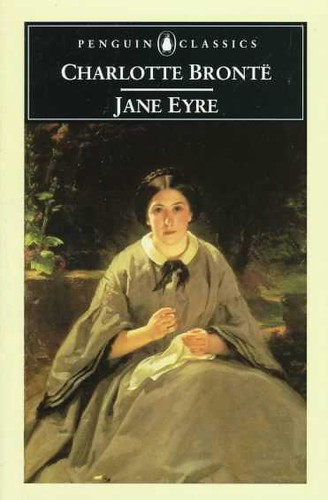
Soon we start our AP novel unit, Jane Eyre. Charlotte Bronte’s novel is one of my favorites, which means I will infuse as much of my appreciation for it as I do for my other favorite classics like Hamlet.  While many wax profoundly about Jane Austen, I think Miss Bronte gets overlooked. Jane Eyre has the distinction of being one of those novels that set things of literature memes, tropes, and motifs in motion by becoming a template for other stories. Consider:

  • she is plain in looks, but beautiful in spirit
  • her intelligence is valued by others, at a time when women were not widely educated
  • she values family over fortune
  • she easily speaks her mind
  • she is independent and finds a way to survive
  • outwardly she is calm, yet ripples with passion underneath her facade of restraint
  • she is perservering, sourceful, and a woman of strong morals
  • she stands up for herself–no doormat dame here

My opinion: Jane rocks. Over the years there have been several film adaptations of the novel.  I binged on JE films over the weekend and came up with my ratings:

1971: Starring George C. Scott and Susannah York
Verdict: skip.

George, too familiar with his Patton role, brought it to his interpretation of Rochester.  He railed and ranted in a very American accent and I gave up after he meets with Jane after their encounter on the road. Besides York’s Jane being too old and much too pretty I couldn’t sit through the poor film quality. The video transfer was so muddied I felt as if I were watching the movie through an unwashed glass.

image: eleganceof fashion. blogspot

1983: Timothy Dalton and Zelah Clarke
Verdict: one of the most faithful and watchable versions

Being a BBC production, I had initial trust it would be a quality adaptation, after all these are the folk who brought us Colin Firth as Mister Darcy. The sets, the important scenes, those inscrutable nuances of the original story are all contained in this mini-series. Timothy Dalton definitely understands the Byronic hero that Rochester embodies and has even said in interviews Rochester is one of his best roles. Clarke, while a bit older than the required 18 year old fresh from her Lowood imprisonment, captures the Quakerish passivity and ethereal nature of Jane Eyre.  The scenes between Dalton and Clarke are melt-in-the-mouth truffle satisfying.  Their version is what comes to mind most often when I return for a refresher novel read. I really did believe a heartstring developed between them. The agony of Dalton’s Rochester when he realized his Jane was leaving him forever kept the tissue box occupied.

1996: William Hurt and Charlotte Gainsbourg director: Franco Zefferilli
Verdict: passable, but strayed terribly from the novel

William Hurt seemed on the verge of understanding Rochester, but kept the bitterness too diminished, too washed out. Charlotte G as Jane got her part right. The plain, passionate young actress  imbued the paradoxical spirit of Jane Eyre. Sadly, there existed no believable passion, that needed kindred heart-string spark, between Gainsbourg’s Jane and Hurt’s Rochester. This spark is the very core of the novel. Without that essential core the movie floundered about like a fish hoping to get back into the water to have a proper swim. The director who brought us Romeo and JulietTaming of the Shrew, Hamlet, and other great stories of passion missed the mark with this adaptation by rushing the story and taking way too many liberties with the plot.

2006: Toby Stephens and Ruth Wilson
Verdict: enjoyable, even if a bit too contemporary in approach

image: writingbar.com

Admittedly, I had started watching this version years ago when it first came out, but found myself so disenchanted with the cutaway flashbacks, I couldn’t get past the Lowood scenes and it wasn’t until recently I returned to another viewing.  I did like the lead actors portrayals, and yes, there was a definite spark between them. I thought Toby Stephens got off easy with his fire wounds, unlike Hurt and Dalton. His rugged looks only appeared rather marred, instead of being ruined. The rolling around, ankle rubbing bit at the end seemed a bit too lenient for true Bronte style. Then again, there are leniences throughout this adaptation I willingly overlooked since the production quality proved so high.

2011: MiaWaikowska and Michael Fassbender Director: Cary Fukunaga
Verdict: Admirable

The first scene makes a diehard JE fan sit bolt upright and ask, “What? Wait–did the movie skip! because the opening scene is starting right off with Jane making her mad dash from Thornfield, which usually means the film is winding up to the grand finale.  Instead Fukunaga gets a bit artsy and dips in and out of Jane’s childhood days in flashbacks, with a quick glance at times at her more recent history.  Artfully done, but a bit disconcerting for those who prefer the linear progression.  Fassbender and Waikowska do provide a sumptuous Rochester and Jane.  Looks, mannerisms, nuances, smoldering passions–it’s all there.  That’s why it the ending is so absolutely frustrating.  I could not understand the need to transform Rochester into a Tom Hanks Castaway lookalike.  Maybe trading out the maimed hand for a beard was a contract compromise. Also, there should have been another 20 minutes of wrap up, yet we are whisked away much too soon.  It’s like being served the most savory dessert and having it taken away after a couple a bites–“Yo, I wasn’t finished.” Apparently Fukunaga thought the audience needed no more indulging and wanted us to move away from the table.

Overall: If a dedicated JE fan go to one of the series adaptations, such as the 1983 or the 2006.  It appears that only when given the proper amount of time (3-4 hours) can Jane’s story be told sufficiently. However, if thinking “book or movie first?” and movie wins out–get the 2011 version.

Further notation: I thought about finding the Ciarin Hinds version, especially after watching him in Austen’s Persuasion with Amanda Root.  Our library no longer has it and after reading the widely mixed reviews of loving it and hating it, I thought I will stick with my picks of 1983, 2011, and 2006 for classroom clips.

Any readers have their own picks of fave JE adaptations?

Happy Sites for Smiles


Eagle Eyed Editor recently posted some thoughts on social media and it poked my brain into reflect mode. While there are many things I don’t like about the influx of social media–decline of manners (I’m here to watch the movie, aren’t you?); bullying (mean girls rule the airwaves); meaningless blurbs about mundane aspects of everybody’s life (celebrity haircuts make the banner-really?); and the instant shock news (the ceaseless exploitation of tragedy is morbid, not informing). HOwEvER—— Some people have figured out that social media platforms are amazing ways to promote happy thoughts, to interject some meaning to our day, to enlighten and amuse. Some are simply fun. Here are a couple of favorite finds: Puppet Guy at Vine Puppet Guy is a little yellow fellow with a big heart, a smallish brain, an a beguiling personality. His clips ranges from his rendition of Kermit singing to the “Rainbow Song” to being scared of virtual fish tanks to claiming Bill Cosby is his dad.  These short looping clips are mesmerizing.  Whenever I need a quick laugh I click hoping for a new adventure.  I guess I never outgrew the Muppet Show. You’ve probably discovered Kid President on your own.  My students begged me to play one of his episodes as our icebreaker.  I’m hooked. This kid reminds me of Gary Coleman (remember him?). Maybe even a much younger Erkle. Not only are his messages inspirational, but his life is inspirational. Robby Novak, aka Kid President, is a TED speaker, and has interviewed President  Obama, Beyoncé, and others. His winsome personality and impromptu dance moves and off-the-cuff remarks spell G-E-N-U-I-N-E.

What are your favorite upbeat sites that add a smile to your day?  I’m always looking for icebreakers for my students, so keep those suggestions family friendly, if you please.

Post Navigation