Pam Webb

a writer's journey as a reader

Archive for the category “Writing”

A Murdered Austin


As a confessed Jane Austin fan, I find myself searching for more of her books. Yes, I know that isn’t happening. I doubt Cassandra had a “lost” manuscript squirreled away in the family bank vault like sister Alice did for Nelle.

But one does hope for finding at least a satisfying pastiche.

I have tried a few, and quite frankly, I find them annoying. There are liberties taken with the characters that simply aren’t at all Janish, in either style or intent. If one doesn’t live in the time period, trying to write it and pull it off successfully is about as satisfying as a diet Dove bar. Exactly. They don’t exist because what would be the point?

Sigh. I do keep trying though.

I’d heard PD James had tried her hand at Austin with the Death Comes to Pemberley. Not having read any of her mysteries, I still decided to add the title to my TBR list, because James is a respected author and who can resist a mystery attached to the P&P gang?

I should have resisted.

But it looked so promising… image: BBC


Spying the DVD adaptation on the new release shelf I snagged it quickly. I don’t know why I sequestered it away under my arm. Perhaps I envisioned some maddened JA fan descending upon me screeching “I saw it first!” Decorum before drama. This became the byword as I settled down for an evening of what I hoped to be a lost in Austen evening, for drama versus decorum permeated Pemberley. Yes, death indeed came to Pemberley, but it wasn’t the murder in the woods that was so terrible. So much more damage had been rendered.

I had a prepared list of all that I found oh so wrong with this BBC rendering. Taking the a Thumper path of reviewing practice instead, I will say this one nice thing: At least they used the Pemberley estate from the Kiera Knightley version.

I now need to read James’ novel and see how badly they adapted it, because surely a respected author couldn’t have committed so many travesties to Elizabeth and crew, especially if she is the devotee she is supposed to be. The Amazon reviews aren’t promising. Any thoughts on James and her pastiche of Pemberley? Are there any decent Austin homages out there at all?

Why We Say: #15


Watercooler chatter: “That new CEO doesn’t do much, does he?”
“Yeah, bit of figurehead, I figure.”

Today’s lesson involves some sailing knowledge. First, it’s important to know the front, the bow, from the back, the stern. The bow would be decorated with some sort of figure which actually is fairly interesting (go on–have a peek). They didn’t serve any real purpose, but they sure made the ships look imposing, important, regal, at times intimidating. There is also the thought that a figurehead, as in politics and business, can be controlled by other forces, much like the figurehead on the ship is controlled by the sails or other power. Hmm, is there a connection between these two figures in terms of being figureheads?

KONICA MINOLTA DIGITAL CAMERA  Elizabeth II greets NASA GSFC employees, May 8, 2007 edit.jpg (I think highly of the Queen, BtW)

Any Laurel and Hardy fans out there? You might recognize this saying, “This is a fine kettle of fish you’ve gotten us into.” If you recall, this was flustered out by Oliver Hardy to Stan Laurel after some frustrating incident. But why a kettle of fish? Maybe Ollie had some Scottishishness about him and was recalling how fishermen thought they could coax the best flavor out of the fish by cooking them right on the spot in a large kettle. They must have known the secret of cooking up a fine kettle of fish, since no one else could replicate it. Hence, from then on “a fine kettle of fish” is actually referring to a mess instead of success.


Singing in the Rain is a personal favorite, especially all those great song and dance numbers by Gene Kelly and Donald O’Connor. How about this one:

Why “fit as a fiddle?” Kelly and O’Connor might not have realized they were referring to boxers, the fighters (not the dogs) in their ditty. Apparently the original expression was “fit as a fiddler” because boxers had to be in top condition in order to go a few rounds in the ring. Wait, a minute, Gene and Donald must have known that to be “fit as a fiddle and ready for love” they would have to be ready to fight for their love. Makes sense…


(images from Morguefiles and Wikipedia)


ReReReReally Rejected


Starting the month of March with four rejections shadowing me from the last week of February prompts a bit of reflection.

1. Perhaps I should check my email more often. This would prevent rejections from multiplying if left unattended.
2. One rejection is par for the course, two rejections is irritating, three rejections is laughable, four rejections is laughably ridiculous.
3. Repeating “It’s not me being rejected, it’s my writing,” is great only in theory because me I wrote it, right?
4. I’d rather have one big punch than several smacks. A bruise is a bruise.
5. Cheery demeanor: “Well, at least I know now and can move on to submit the piece elsewhere.”
6. Bad attitude: actually I don’t have one–rejections are part of the landscape of writing.
7. Overall takeaway: just one more story I get to store up for when I am keynote speaker at my award acceptance banquet.

Okay–back to updating my submission ledger…

Blog Spotlight: Mustardseed


An encouraging word. A bright spot. A story of motivation and encouragement. All this and more is found by following MustardSeedBudget. Pastor Mike Ashcraft provides faith memes and positive messages on his blog. He will also regale readers with his appreciation for soccer. And he especially likes to pass on to others his special love for the church he left behind in Guatemala.

I look forward to his frequent postings and I appreciate how he takes time to visit my blog. I can’t really say how I found his blog, but I’m ever so glad I did. I must be in good company because he has over 4,500 followers. I must not be the only one who knows that something as small as a mustard seed has a way into growing into something big.

Thanks, Pastor Mike for your words of faith.

Overbooked


I have become a victim of over booking, and I have only myself to blame. No, I didn’t get postponed at the airport, or delayed at the restaurant. Actually, it’s all my fault I got caught in this dilemma. Life just happens sometimes, you know?

For the first time since fifth grade I am conscious of how many books I am reading this year. In fifth grade Mr. C, my fifth grade teacher, challenged us to read over the summer and bring him the list in fall. I think I read a 100 books–memory tends to fade the accuracy of details. I do recall the look of surprise when I trucked in my list on my way to sixth grade next door. I’d like to think I was the only one who took up his challenge. I would have read all summer anyway. Too bad I didn’t keep the list. It would be fun to revisit what I was interested in reading at eleven years old.

This year I have taken up the GoodReads Challenge and I am diligently marking off my books with reviews. My goal is 50 books, because I think I can manage that amount. I now realize how idealistic that amount might actually be. Therefore, my dilemma. I calculated I will need to read at least 4 books a month to hit my goal. And for honesty sake (former Campfire Girl) I will double or triple up on children’s books because they are so much shorter. Then again, does a 400 page plus book count as double? War and Peace count as triple? I’ll figure it out.

This is why I am currently reading 4 books 3 books (just finished the newest this morning).

  • In the car I’m listening to Lois Lowry’s Silent Boy, a mesmerizing story of a young girl, Kate, remembering back to the time she befriended Jacob, who everyone in town referred to as “touched.”
  • On the living room side table is Will in the World by Stephen Greenblatt. I have been gnawing away at this one for a while because it is so fabulously rich in content. I should just buy it, since I put a sticky marker in every other page. If you are interested in the texture of Shakespeare and his times, this is THE book to read. Probably explains why it earned National Book Award Finalist.
    • By the bed, and in the bookbag, and at school it’s a rereading Jane Eyre. As long as I teach it, I tend to read it. JE is one of favorite heroines, so it’s a pleasure, not a chore. In fact, there are times that I miss my Jane time because I get so busy I can’t sit down and relish her story. I am involved with this novel. I’m studying it, analyzing it, researching it, and most of all enjoying it. Again.
    • Back to four books. Make that five. Both holds came in: Way of the Peaceful Warrior (saw the movie and I’m curious) and The Song of Achilles by Madeline Miller–a recommendation from one of my many book review blogs.
    • Actually six–I picked up Number the Stars by Lois Lowry as a reread.

Sigh. Anyone else overbooked this week?

The movie definitely got my attention… image: amazon.com

Will I be able to NOT think Brad Pitt as I read this? image: GoodReads

I have to read a Lois Lowry I haven’t liked image: Wikipedia


Good Taste, Good Reading


Is YA too angst driven? image: The Scream by Edvard Munch/wikipedia.org


In my stack of reading material I came across a 2013 Imprimis, a publication of Hillsdale College, entitled “The Case for Good Taste in Children’s Books” by Meghan Cox Gurdon, Children’s Book Reviewer for The Wall Street Journal. The MEPA had flipped it my way, and I thought it would be interesting enough for reading, later. Later has arrived, a year and a half later. Does anyone else have an overwhelming TBR stack?

The article is a speech delivered at Hillsdale College on March 12, 2013, and Gurdon hits upon a sensitive issue: the dark topics found in current YA titles. She starts her speech by mentioning the two hot topics on Twitter on June 4, 2011 were the Anthony Weiner scandal and her article “Darkness Too Visible.” Her article discussed how in the four decades that YA has existed as a separate genre, it has become increasingly “lurid, grotesque, profane, sexual, and ugly.”

Books show us the world, and in that sense, too many books for adolescents act like funhouse mirrors, reflecting hideously distorted portrayals of life. Those of us who have grown up understand that the teen years can be fraught and turbulent–and for some kids, very unhappy–but at the same time we know that in the arc of human life, these years are brief. Today, too many novels for teenagers are long on the turbulence and short on a sense of perspective.

Gurdon continues to express her concern over how the first person perspective is the narrative choice, which means the immediacy of “I” and “now” is present in YA novels and keeps readers in “the turmoil of the moment,” creating a sense of wearing blinders to the current hormone-laden environment in which they live. To this I agree, to an extent.

Many YA novels focus on the immediacy of choices, or lack of them, the trauma and drama that teens live in. However, it is momentary. I recently switched from teaching ninth grade English to instructing seniors–talk about paradigm shifts. I had to almost reinvent my style of teaching because there is very little drama with 17 and 18 year olds compared to the 14 year olds I’m used to dealing with. And so it goes with what they read. Everything is so much more to a fourteen year old because so much less is happening: they don’t drive yet, don’t hold a job, barely have started dating, maybe barely have started puberty. Less is more. The books I hear them talk about, and see on their desks, reflect their need to read about the amplication of their feelings.

Gurdon related how she was charged by YA book writers JudyBlume and Libba Bray of “giving comfort to book-banners.” However, Gurdon argues that she doesn’t want books to be banned or instill fear into writers; she only wishes there would be an exercise in discretion.

What I do wish is that people in the book business would exercise better taste; that adult authors would not simply validate every spasm of the teen experience; and that our culture was not marching toward ever-greater explicitness in depictions of sex and violence.

In the remainder of the article, Gurdon provides examples of lurid YA content, and the results of recent studies conducted at Virginia Tech. Her point is well-taken how media, particularly books, can establish a norm. Federal researchers, Gurdon pointed out, remained puzzled about the anti-drug/tobacco campaigns directed at elementary and middle schools and the actual use of the substances by the students. Apparently the conclusion is that the children were learning a paradox: adults must think you are using if they are telling you the dangers of doing so. Does this same logic apply to novel content?

Gurdon points out that “problem novels” normalize and validate the horrendous experiences of teenagers. She affirms this idea with Emily Bazelon’s book on about bullying, how schools are beginning to use a method that promotes the idea that cruelty isn’t the norm. The idea becomes estabished that there isn’t as much bullying going on as everyone says there is. The proclivity to be cruel isn’t justified, simply because it isn’t as big of deal as everyone is making it to be.

There is the tendency to gravitate towards the sensational. The gruesome, shocking, and disgusting make viral headlines and get repeated enough to establish an acceptance that if it’s in the news it must be what’s happening. Gurdon obviously riled a few people with her plea for discretion–authors, librarians, readers all reacted as if they were being vilified. And it is here that I feel Gurdon’s frustration.

I don’t hear her banning books or rebuking YA content; instead I hear her dismay. She emphasizes that she doesn’t believe that the vast majority of 12 to 18 year olds are living abject, miserable lives, and she doesn’t understand the purpose of providing material that emphasizes that life for those who are. She encourages the book world to seek out books that embrace wisdom and beauty, those books that provide answers to hard questions found in life. Perhaps that is the distinctive between what is today’s bestseller and tomorrow’s classic.

Gurdon closes her article with St. Paul’s words found in Philippians 4:8:

Whatever is true, whatever is noble, whatever is right, whatever is pure, whatever is lovely, whatever is admirable–if anything is excellent or praiseworthy–think about such things.

She then asks the audience to think upon those words when shopping for books for children.

As I sign off, I am given pause about promoting more of the lovely, excellent, and praiseworthy when I provide literature choices to my students. As William Wordsworth once wrote:

What we have loved
others will love, and we will teach them how.


Button, Button


My usual adage of “The original source is always better” went out the window after watching The Curious Case of Benjamin Button.
When the movie came out in 2008, I promptly avoided it. I thought the premise strange, that a baby would experience life backwards–going from old and decrepit to incapacitated infant. It especially seemed odd, even a bit creepy, since a romance was part of the plot.

Aging backwards. Not a new concept, apparently backwards aging is not a truly new trope. After all, Shakespeare hinted at our returning to our infancy state in his “Seven Ages” poem.

I also was a bit leery of Brad Pitt at the time. Fight Club isn’t exactly my type of genre. The male progeny tried to interest me (who can resist bonding with their sons via a movie?) but after a few minutes of gruesome artsy cinema, I deferred. However, since Fight Club Pitt has appeared in movies I do like, such as the Oceans triple, and Mr and Mrs Smith. Into the library basket went Benjamin Button as I gathered movies for the week. I didn’t realize I was committing to two and a half hours.

A sick day, and no energy for reading and in popped the movie. I sat spellbound. I even cried at the end. And was a bit indignant that Brad Pitt got passed over for an Academy Award. This trailer captures the heart of the movie well:

The most interesting part for me is that the movie is based on a F. Scott Fitzgerald short story. The fantasy genre intrigued me because I didn’t peg FSF for writing anything but brooding rebellious characters from the Roaring Twenties. The story’s biting satirical tone is very much Twain, and I learned that Fitz was indeed influenced by MT, who had made a comment about what a shame we don’t experience the best years, our older years, first. Interestingly enough, the only thing the movie and short story have in common is the title and premise. Here is the story link:


Any of you been surprised by the film being actually better than the written work?

Not Quite Titles


Though my current vocation is English teacher, I am really a librarian at heart. My principal knows this and understands I am awaiting the day the district figures out the funding to put a certified librarian back into the school library (“pick me, pick me”). I also have visions of retiring from teaching and hiding out in the local community college library working on mends and discards, like I did in my yesteryear life. Until those designated times happen, I live vicariously through other librarians’ lives. Knowing that background–how could I resist this title when I saw it propped up on the “last chance” rack at my local library?

I Work at a Public Library: A Collection of Crazy Stories from the Racks

Gina Sheridan, does indeed work at a public library, and her library must be crazier than the ones I have worked in. She even has a blog dedicated to daily oddities that happen there. If you think libraries are calm, quiet, and bland places to work in, you really need to check out her postings.

I had fun reading her book, and could definitely relate to some of the odd conversations she had either overheard and participated in. One of my favorite sections was her Chapter 3: 028.9 Reading Interests and Habits where she shared some of the “not quite titles” her patrons asked for. Ever hear of these?

  • Catcher in the Wind
  • Gullible’s Travels
  • Fifty Shades of Grey’s Anatomy
  • How to Kill a Mockingbird
  • The Diary of Aunt Frank
  • The Hungry Games

Do you have any interesting tales from the library? Can you top my story of the fifty dollar bill left in a book as a bookmark? Or the guy who checked out an armload of expensive art books who tried to sell them at one of the bookstores down the street ten minutes later?

1/50: Bonhoeffer Abridged


It’s January and the month for resolutions, except I’m more for goals than resolutions. They just seem more positive in purpose (“I will get an agent in 2015”). Resolving to do something sounds like I really don’t want to do it, but might as well give it a try (“I resolve to go through the long, painful process of sending out manuscripts and query letters in my search for representation”). Maybe it’s just semantics.

So–one goal I have this year is to keep track of how many books I actually read in a year. Blogger Bud Valerie Lawson got me looking into it on my Good Reads account and I set up my challenge of 50 books. I roughly hit that last year after going through and counting my GR reviews.

image: amazon.com


As I attempt this challenge I’ll keep track of my numbers as I periodically share some of my reads. Most of my reviews are on my Good Reads account found on the right hand side of the blog. For instance, my first read of the year is by Eric Metaxas. His Bonhoeffer Abridged provides a fascinating overview about the man who did not back down from his beliefs and openly challenged Hitler and the Nazi regime. A more detailed review is found amongst my GR review collection.

Anyone out there up for taking on the Good Reads challenge? How many books do you think you can take on this year?

The Giver et al


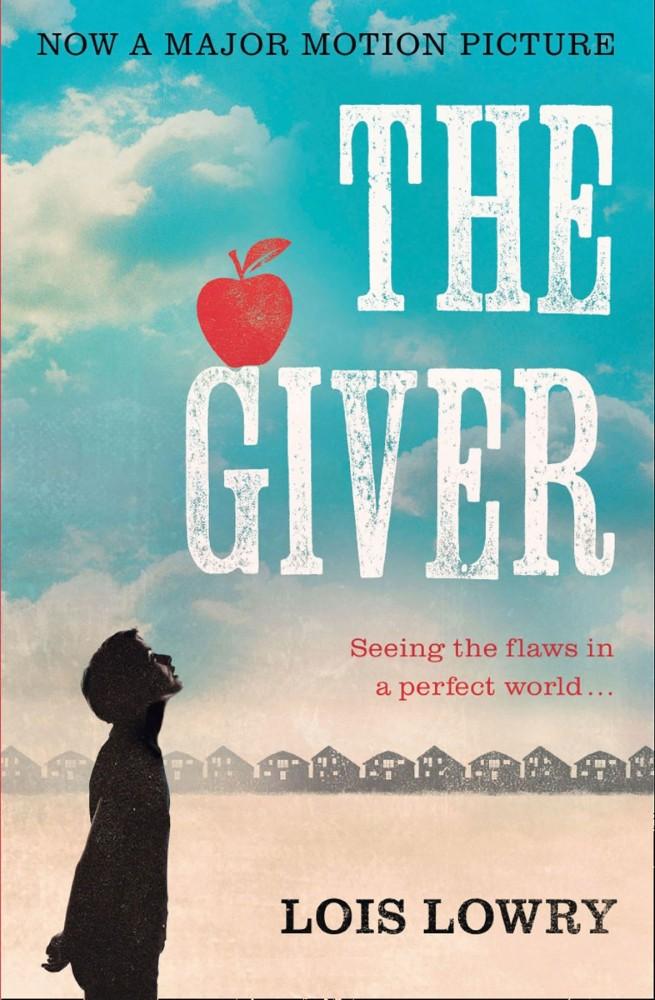
I have rediscovered The Giver. 

the-giver

sometimes the movie reminds the reader the greatness of the book image: bookopia.com.au

When it arrived on the scene in 1993 I was not an impressionable YA reader. No, I was a thirtysomething wife/mom/librarian and read books no matter what age they were intended for. Hmm. the only thing that’s changed is my age and the fact that I’m a librarian at heart while teaching English.

Like most readers, I felt a bit cheated at the ending. It was not neatly wrapped up and presented as a conclusion of satisfaction. Ambiguity can be quite frustrating, yet that’s one reason why The Giver is so memorable. We all want to know what happened to Jonas. Having rediscovered The Giver through watching the 2014 film led me to discover the other books in the series: Gathering Blue, Messenger, and Son. And here I thought all these years that the story ended with that famous sled ride.

Apparently it took twenty years for the book to become adapted to the screen. Jeff Bridges bought the rights and had originally wanted his father Lloyd to play the part of Giver. It didn’t happen, but viewers can watch a family reading of The Giver as one of the special features selections on the released DVD. Having finished reading the entire quartet I am smitten with the entire story. I hope there is a continuation of the series since each adds to the overall understanding of Jonas’s world.

An added bonus to rediscovering The Giver was reading the latest edition which contains author Lois Lowry’s twenty year reflection of The Giver’s impact.

A goal for this year: revisiting novels, particularly juvenile and YA novels, to gain a different perspective and insight.

Anyone interested in doing the same?


Post Navigation