Pam Webb

a writer's journey as a reader

Archive for the category “Words”

Why We Say: D-zone


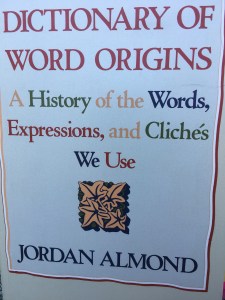
Continuing on with the exploration of everyday words and phrases that may baffle, irritate, or even amaze us, is a selection from the “D” chapter of Dictionary of Word Origins by Jordan Almond.

Dessert

We save the last course of a meal as “dessert” which comes from the French word desservir: to clear the table. The practice was to remove the table cloth to serve the last course. Today we remove the dinner plates to make room for that sweet end to a good meal.

Desserts spelled backward is stressed. Don’t stress out about eating desserts.

Dirt Cheap

No surprise here–dirt is cheap because it’s free. That is, unless you decide to have it delivered from one of the schmancy garden places.

Dog Days of Summer

Those really hot searing days that pop up during summer? The ones where being outside is misery? The Romans blamed those toasty times on the stars–Siriusly. That would be Sirius, the Dog Star. It was thought that Sirius got a bit hotter due to its rising with the sun. Those hot dog days were called cuniculares dies.

Double-Cross

I think of Jimmy Cagney when I hear “double-cross.” Actually I think of Bugs Bunny imitating Jimmy Cagney saying “you dirty double-crossing rat.” Then again. Monty Python gets it right as well:

https://getyarn.io/yarn-clip/f3d22bb5-e73e-472c-ba98-4e17f1b0c418

What’s it mean? In prize fighting, if a fighter intentionally lost a fight he “crosses up” both the spectators and those who bet on him. If he wins after the cross up he affects his manager and those who bet on him to lose. The two cross ups make for the “double cross.” Why Jimmy Cagney says it is a bit perplexing, although one could argue he is a bit of a fighter.

Down a Peg

The British Navy had a custom in which the ship’s colors were raised to recognize visiting dignitaries–the higher the colors, the greater the honor. Taking the colors down a peg indicated a decrease in honor.

Dressed to the Nines

Old English is responsible for this one. Someone who was “dressed to the eyne” was dressed “to the eyes” which is basically being dressed “up to the ears” something we just don’t say, even though logically we basically are.

Dressing Down

Having dressed up (to the ears) it makes sense that taking off clothes would be “dressing down.” Not so. A butcher preparing beef for market will slice the animal’s carcass. In the same manner, a person who receives a tongue lashing full of cutting remarks is getting a “dressing down.”

This…

Not this…

Dude

One of the most obsequious words going. This word stems from dudde, the Middle English word meaning “to dress.” Later down the road, an Easterner who went West in a fancy outfit discerned an attitude by the Westerners. Basically “dude” is a smash up of “dud” and “attitude.” Somehow that works for the Simpsons.

Tune in next month for more explanations, descriptions, and epiphanies.

Word Nerd Confessions: June


Still sweeping out the collection of words drifting about in the corners of my word collecting bag.
Speaking of bags:

1. musette: a small leather or canvas bag with a shoulder strap, used for carrying personal belongings, food, etc.

2. saggitate: shaped like an arrowhead

3. literam: letter for letter; literally

4. gerontocracy: a government in which old people rule (I’m not making this up!)

5.  dundrearies: long full sideburns or muttonchop whiskers

6. bedizen: to dress in a showy or tasteless manner.

7. suspiration: a long deep sigh (a favorite–note the italic–but how to use it in a sentence?)

8.  quodlibet: subtle or elaborate argument or point of debate, usually on a theological  or scholastic subject.

9. instauration: renewal; restoration; renovation

10. fenestrated: having windows (this is such a cool word–I get extra nerdy upon hearing “fensteration” or “fenestrated” in a sentence).

11.  epistemic: of or relating to knowledge or the conditions for acquiring it.

12. oblivescence: the process of forgetting (more and more my life is this word)

13. crump: to make a crunching sound, as in walking over snow, or as snow when trodden on (I fully intend on finding a way to apply “crump” in a story–it’s too amazing of a word to leave sitting on the bench waiting for wordplay).

14. fiddle-footed: restlessly wandering

15. objurgate: to reproach or denounce vehemently; upbraid harshly; berate sharply (sounds close to regurgitate–throwing up angry words?)

And that’s May’s edition of Word Nerd.

May no one objurgate upon your quest towards epistemic persistence as you crump along the path of knowledge which could render a suspiration of frustration (not to be confused with fenestration, although not finding an open window when needed can be frustrating) upon finding yourself stuck in a gerontocracy in which the leaders tend towards bedizen attire evidenced by their dundrearies. Ignore the proclivity towards quodlibets with these politicians and pack up your musette and go on a fiddle-foot tour of nature to achieve instauration from worldly concerns. Celebrate oblivescence of worldly matters. Celebrate the little joys such as the finding of  sagittate treasures upon nature’s path. The literatim of life does not have to be dreary–crump on to finding contentment!

Crump twice–Word Nerd points…
Why We Say: Old Words, New Meaning


Immersed in the study of Hamlet, I currently have to pause in our scrutiny of the emo Dane to explain an old word that Shakespeare uses that now has new context. Elizabethan slang is a study in itself. “Get thee to a nunnery” and “You are a fishmonger” as well as “Are you honest?” have a subtext if their own.

Moving to the present–

There are some words that used to mean one thing, however, due to current usage have evolved differently in connotation and denotation. These are standouts from an article by the Mirror:

ADDICT

In Roman times addicts were broke folk given as slaves to the people they owed money to. 

It comes from the Latin addictus, which meant “a debtor awarded as a slave to his creditor”.

In the 1600s it was used in the sense of giving yourself to someone or some practice.

AWFUL

In the 1300s it originally meant “inspiring wonder” and was a short version of “full of awe”. But now the word has purely negative connotations.

BROADCAST

It may now be the way the BBC spreads the news, but in 1767 “broadcast” meant sowing seeds with a sweeping movement of the hand or a “broad cast”. Its media use began with radio in 1922.

CUTE

Cute was a shortened form of acute, meaning “keenly perceptive and shrewd” in the 1730s. 

But by the 1830s it was part of American student slang, meaning “pretty, charming and dainty”. 

And, bizarrely, the original sense of “dainty” was “worthy and substantial”.

FANTASTIC

If you’re thinking of telling your beloved how fantastic they look today, think again.

Unless, that is, they look like a Hobbit or an Avatar (whatever floats your boat).

The 14th century meaning is “existing only in imagination”, from the old French term “fantastique”.

It was not until 1938 that the word was first used to mean “wonderful or marvelous”.

MATRIX

You may be thinking of Keanu Reeves in his 1999 hit sci-fi movie. But in reality “matrix” comes from the 14th century French word meaning “pregnant animal”.

It went on to mean “womb or source”. Eventually in 1555 it was adapted to mean “a place where something is developed”.

NERVOUS

In the 1400s a nervous person was actually “sinewy and vigorous” – as the Latin word nervus applied to both sinews and nerves.

By 1665 nerves were better understood and by 1734 the term meant “suffering a disorder of the nervous system”.

By 1740 it meant “restless, agitated, lacking nerve” and it then became a widespread euphemism for mental illness – forcing the medical community to coin “neurological” to replace it in the older sense.

“Nervous wreck” was first used in 1899.

NICE

Derived from the Latin nescius meaning “ignorant”, the word began life in the 14th century as a term for “foolish” or “silly”.

It soon embraced bad qualities, such as wantonness, extravagance, cowardice and sloth.

In the Middle Ages it took on the more neutral attributes of shyness and reserve.

Society’s admiration of such qualities in the 18th century brought on the more positively charged meanings of “nice” we know today.

I won’t even address how “literally” is so wrongly used today. Some pet peeves are best kept quiet.

Word Nerd Confessions: February


Reader’s Digest is a fave to browse while in the numbing hold pattern of doctor office waiting or gym treadmill walking. I came across an article by Bill Bouldon, that cheered my lexiconal heart, one that involved new words that fit the times.

athlelargy: when the call of the recliner wins over the call of treadmill

blamestorming: the process of trying to pinpoint who is the reason for failure

cellfish: that person who make public their private phone conversations to all within listening range

destinesia: when you forget where you were going

ephinot: while it seemed like a bright idea it truly is not

fauxpology: the fake apology

illiteration: the mistaken knowledge of rhetorical devices

metox: taking a break from updating on social media

nonversation: meaningless chatter

pregret: knowing full well the course of action you are about to take is going to one of regret–but do so anyway

*sonergy: the energy that suddenly bursts from within upon seeing the sun after a period of gloomy weather

textpectation: the waiting for a text reply

*uberjoyed: getting a ride with a driver who gets you to your destination with expediency and courtesy

*my contribution

What new words can you think up that fill the bill for our changing times?

Word Nerd Confessions: January


I really like the time around New Year’s. Turning the calendar page, fresh start, anticipating what’s ahead, knowing that the midpoint of the school year has arrived and I’m ready to return for second semester.

It’s also a time I feel the need to tidy up: closets, projects, pantry, and my email gets a sound once over. This month’s feature of Word Nerd gets an extra dose of cleaning up. Some of these words have been lingering in the queue for over two years. Time to dust them off and send them out in the bright new year of 2019.

*This became the word one year in my AP Lit class. It found its way merrily into many an essay.

*I do so like this one. However, I feel a bit snooty when I insert it in a sentence.

*A personal favorite. I do so cringe when people say “a small, little”–it’s small or little. And don’t say “very unique” around me either. Yes, real estate blurbs are the worst offenders.

*footle and gleek must be pals

*As a child I remember a comic strip called “The Katzenjammer Kid’s”–they were naughty little trouble makers. Ah, they obviously caused their parents distress.

This word is supposedly obsolete, yet I think it could catch on once again. Bumper sticker stuff: Experience Esperance.

Well, my word closet is a bit less crowded. I hope you picked up a couple or a few new words to carry you into the new year.

Any favorites from the list? As for the usual challenge of creating a sentence with all the words (20!)? Only if you are up for it.

Word Nerd Confessions: December


[somewhat hummed to Tannenbaum]

December. Oh, December. How colorful, your days are bright. With evergreen and flashy lights, your lengthy nights are cozy bright. December. Oh, December. Your passing will soon bring June.

Don’t get me wrong. December is fairly pleasant, considering all the snow that must be dealt with. Decorations, festivities, Christmas, New Year’s Eve, Christmas Break. I like December much more than January. But that is next month. This month let’s focus on the bright, brilliant, and happy of the Christmas month.

And this last word is to bring in the new year…
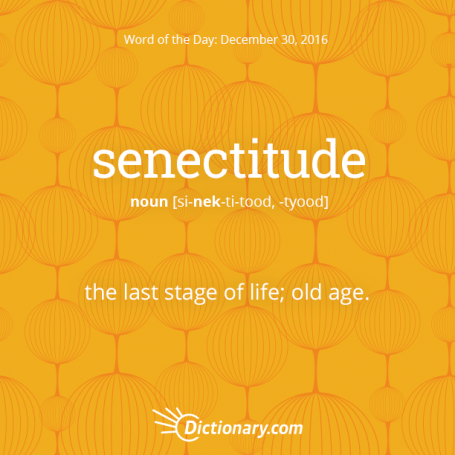
Word Nerd Confessions: November


Fall has officially set up its presence. The aspen, birch, and maple trees disrobed within a week’s span with the help of couple of brisk windstorms. Temperatures hover around freezing, and the sun offers minimal light with little warmth and disappears shortly around 4 pm. The preparation for winter is underway. The Hubs threatens to put on the snow tires since black ice is fact of life not to be ignored. I understand his concern, but snow tires seems to invite or acknowledge snow. We already had a flurry of snow that had the grace to be embarrassed enough by its early arrival and leave by the next afternoon.

This month’s words reflect my ambivalence towards fall: do I mourn the passing of summer or prepare for winter with my usual reluctance? Or do I just accept it knowing spring is not that far away?

So–how do you feel about fall?

DOWO: The “C” List


Onward we travel into the Dictionary of Word Origins, adventuring in the land of “C.”

What is the phrase “carte blanche” all about?

It once was the custom for officials, or personage of importance, to provide a trusted subordinate with blank paper with their signature. These signed documents could then be used as necessary. “White paper” doesn’t quite sound as impressive as the French translation carte blanche. “Just sign here,” takes on another meaning.


Why is the feline in Alice in Wonderland known as a Cheshire cat?

Alice probably didn’t realize that the cat she came to know in her dreamy adventure was sporting a grin that emulated the cheeses sold in the Irish Cheshire Country. These cheeses were molded to look like cats with very wide grins. Hmm, think there is a connection between Cheshire cats and why we say “cheese” tight before our picture is taken?

Image: pngmart.com

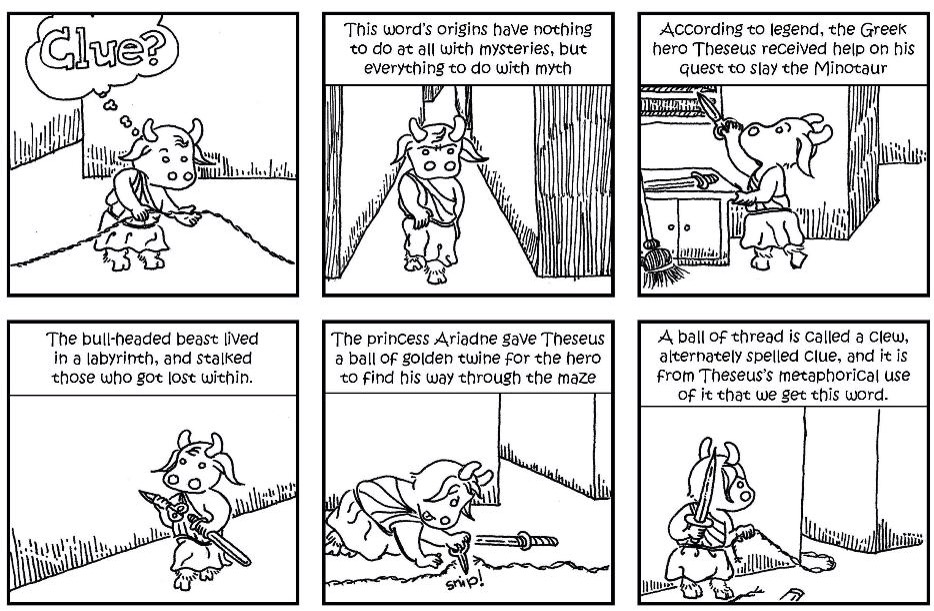
Why is something that is a hint called a “clue?”

In middle English a ball of thread was known as a “clew” or “clue” and when applied to the story of Theseus, the way out of the maze was how he followed an unrolled ball of thread. Hint, hint the thread of logic is quite clear here in this story of how he unraveled his escape plan. Then again, what if the Minotaur was smarter?

babblecomics.blogspot.com

How is a disappointed person “crestfallen?”

Roosters carry into a fight their bright red coxcomb or crests upright, signaling their readiness and awareness The losing rooster runs from the fight with a drooping crest. Not having seen a rooster fight (or having a desire to do so) I remain a wee bit skeptical on this one.

wordsdontfailme.tumblr.com

What is meant to “curry favor?”

In Middle English “horse ” is  favel, and to “curry” a horse is to groom it with a special comb. The results are usually a sleek looking horse. The idea here is for someone who hopes to makes a impression will do something noticeable like a groom hoping to catch his master’s attention might curry the favel. Sometimes the attempt is quite obvious.

johnhartstudio.com

The Challenge: Can you create a sentence with the above sayings? Give it a try…Or at least one saying:

Word Nerd Confessions: October


No sooner than I share out some of my treasured lexicon than they multiple whilst my back is turned. Scamperous little verbiage. Well, let’s shake out their nest and see what we can find:

bravura

When we jump out and wildly applaud the artist shouldn’t we be shouting “bravura” instead of “bravo”? Hmm, needs investigating…

plantigrade

I didn’t realize we had this in common with bears.

pellucid

Okay, next excellent essay I grade shall have the distinction of “pellucid”–that should rock the writer…

turophile

Cheese, Grommit.

stanchless

Oh, yes. This perfectly describes the high school hallway conversations between classes.

scrutator

I can see why this one is not in popular use.

sennight

Nope. Never heard of this one. Fortnight, yes. Sennight nope. Does the senate meet in a sennight?


DOWOs: the “B” list


If new to DOWO, it stands for Dictionary of Word Origins by Jordan Almond, which is a new source for exploring all those words, expressions, idioms, and clichés that abound in our language having thoroughly explored our previous source Why We Say.

If you were here last month around the fifteenth, you know we have already covered the “A” list. We are now off exploring the “B” list:

Why is the four year degree called a “bachelor’s” degree?

Originally a bachelor was a soldier, a man neither old enough or wealthy enough to lead into battle under his own banner, and was considered to be inferior in status. When colleges became more popular, to distinguish between the levels of study and awarded degrees, “bachelor” was the indicated inferior to that of “doctor.”

No mention of how “master” came to be, and it is of note that a “master” is lower than a”doctor” designation, yet “master” does carry more significance than a “mister” status.

How did “taking the back seat” come to mean taking a lesser position?

British Parliment dictates that those members of the majority part take the front seats while those in minority are relegated to the back, or are told to do so. In case you are wondering if it is “back seat” or “backseat” here is the discussion:

Where did the term “bankrupt”come from?

In Italy money-changers placed money available to loan on a banca or bench. If unable to continue in business, the bench would be broken or banca  rotta. The broken bench became synonymous with the broken money lender and both were banca rotta or “bankrupt.”

What is a “bare-face lie?”


To tell a lie without having show your face is much easier than having to face someone and tell a lie, as in trying to keep a straight face while communicating a big fat fib.

Why is an airship called a “blimp?”

It was almost called “A-limp.” In 1914 England began testing airships, and of the two designs the “B-limp” rose to usage. Why “limp?” It was non-rigid–but you guessed that right?

What is meant by “once in a blue moon?”


Blue moons supposedly never happen, which was the original saying. However, moons can appear blue when seen through volcanic explosion ash, so maybe, just maybe a blue can be seen–but just barely. They are fairly rare and their appearance may only happen once in a person’s lifetime.

Why does a person “bone up” for exams?

The Bohn publishing printed up study aids for students which were referred to as a “Bohn up” later becoming a “bone up” as a play on “bonehead” meaning a person who wasn’t smart (because you must have a thick skull and no brains if you need extra help studying).

What is meant by “getting down to brass tacks?”

In early England draper shops the draper placed brass tacks along the counter to aid in measuring off material. When a customer was ready to purchase cloth the draper would get the desired stock down to the brass tacks to measure off and complete the transaction.

Where did the term “bus boy” come from?


The Latin term omnibus means “for all.” An “omnibus boy” was a lad who did a bit of everything, and it became shortened to “bus boy.”

Which saying totally made your day, tweaked your paradigm, or prompted you to immediately want to run out and share with someone?

Post Navigation