Pam Webb

a writer's journey as a reader

Archive for the category “reviews”

Classic Movie Nights


Daytime in the summer is mainly working on my writing projects, wslking, yard work, and of course, reading, reading, and more reading.

Around seven o’clock the hubs looks at me and asks: “So what do you want to do tonight?”

There aren’t many options in a town of 6,000. It usually comes down to watching a movie. 

Our smalltown boasts one theater. It’s not fancy. It’s not AMC. The seats tip back because the springs are stressed. The floors are s bit sticky. The rows are offside instead of center screen. We have to really, really want to see a movie and not be willing to drive an hour away to the mega-complex to go.

There is also the fact if we wait a couple of months the movie comes out on DVD. Then we rent it for a buck fifty at the grocery store instead of paying box office prices. We start the movie when we want, pause it, subtitle it, enjoy it in our kickback loungers. We even sleep through the boring parts. I can catch up on my phone stuff. Or play another level of Candy Mania.

Why wouldn’t we choose to watch movies at home? 

Another option is that our local library has a HUGE movie section complete with TV series. I’m ever so patiently waiting for The Hollow Crown. We aren’t hooked up to commercial channels. The TV is basically a movie screen. That’s a whole  different post.

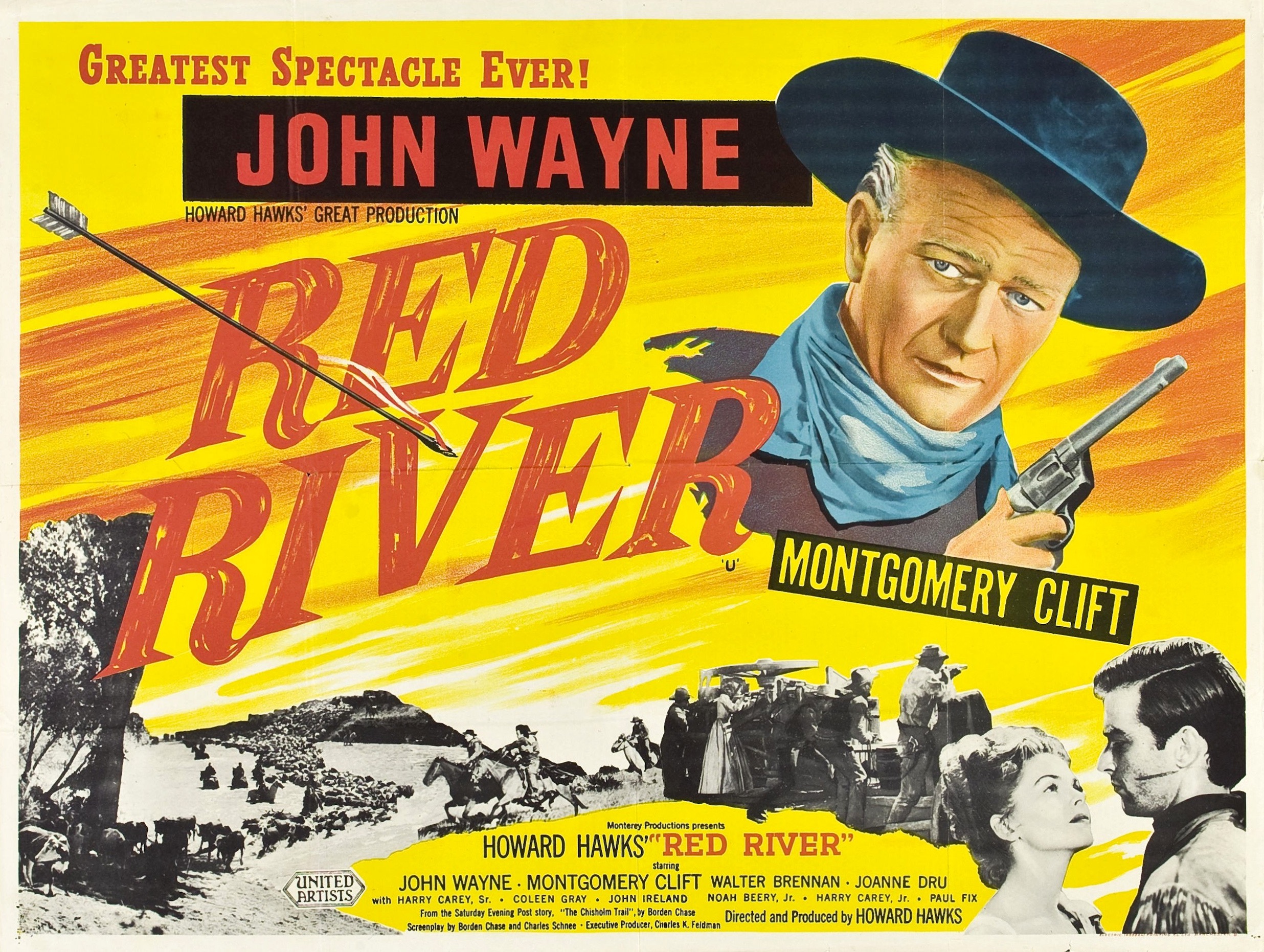
Being Baby Boomers, the hubs and I are partial to films where actors versus CGI is the primary billing.This means we tend to watch a lot of  classics. It’s like visiting with old, favorite friends when  we settle in to watch Cary Grant, Hepburns Audrey/Katherine, John Wayne and the rest of the screen star crew.

Some favorites this summer we’ve revisted:

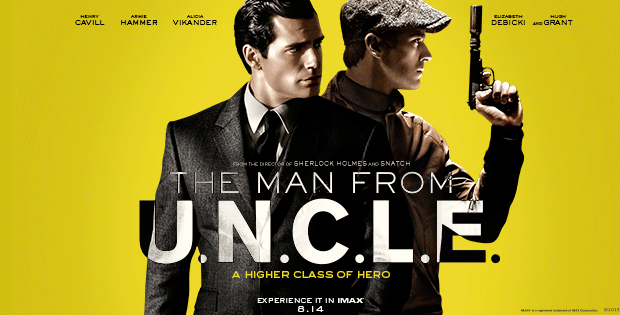
Now and then a new movie comes along that’s based on an old classic. From some reason, we were won over by: 


mainly because we grew up with:

Guy Ritchie got it right. The light-hearted, comically serious tone, the Bondian flavor, the sixties style. Henry totally got Robert Vaughn and Hammer did his own Ilya. How come the critics didn’t get it? Then again, if I paid attention to the critics I wouldn’t watch movies at all. They either love something I don’t get or, like above, they pan what I deem brillaint. And that’s another post as well.

So–a couple of questions, if I may:

1. Do you prefer classics to new?

2. Do you prefer DVD to big screen?

3. Any new  films  you think might become classics?

A Frosty Choice


Two roads diverged in a wood, and I

And I took the one less traveled by,

And that has made all the difference.

Ah, Frost’s famous lines that celebrate and embrace individualism. The encouragement to go against the grain, to strive beyond mediocrity, to go where few have bothered to travel. It’s the stuff of graduation speeches, self-help tomes, greeting cards, posters, coffee mugs, t-shirts, and it even helps to sell cars.
According to David Orr in his literary/biography/analysis, The Road Not Taken, we have got it all wrong. The subtitle clues us in: Finding America in the Poem Loves and Almost Everyone Gets Wrong. 

Surprise Reading*

In Orr’s introduction he asserts and emphasizes that the roads are equally traveled, that the two roads are interchangeable. The speaker admits the other road “just as fair” and “the passing there/Had worn them really about the same…” The speaker further notes: “And both that morning equally lay/In leaves no step had trodden black.”

To me it’s all saying: “Hey, which way should I go? I have no idea. They look both the same.”

David Orr would tell us this is perhaps right, then again maybe not. After all, poetry is a matter of perspective. He states that the poem “is a literary oddity and a philosophical puzzle, but more than anything else it’s a way of framing the paradoxical and massively influential culture in which it both begins and ends.”

Maybe Orr is the only one who does get it right because after reading his illuminating, worthwhile, and fascinating treatise on Frost’s poem, I still think it’s all about making choices and living out the decisions we’ve made–no regrets.

Then again, Frost might be having the last laugh. Apparently the poem is his gentle poke at how his good friend, Edward Thomas, a British poet, had considerable difficulties selecting which way to go when he and Frost would ramble around the English countryside together. Thomas would lament how the other direction had just as many lovely sights to see. In other words, they were both good choices, yet Thomas always felt a bit of regret for not having gone the other way. It seems Frost’s poem gently chides his friend to be happy with the choice made, to be satisfied.

Frost’s poem is perhaps not so much a celebration of marching boldly through the tangled bracken of life, tripping over logs of distraction and despair, rather it’s a quiet reflection of accepting the road that is taken, and not lamenting over the one that was not taken.

Overall, for such a slim volume (weighing in less than 200 pages), it is filled with solid bits of reflective insights:

  • Frost originally titled the poem “Two Roads”–that changes things, a bit.
  • He specifically used roads, not paths and emphatically noted the difference upon hearing someone begin a recitation replacing “paths” for “roads.”
  • This is very much an American poem, written by an American poet extolling the ponderation of choice, something Americans have historically and culturally embraced, yet the poem is based upon a time when Frost resided in England.
  • Frost admitted that he did not always consciously make  decisions: “I never know what is going to happen next because I don’t dare to let myself formulate a foolish hope.”
  • I learned about “confabulation”–the concept about artful lying (my interpretation).
  • The big question Orr asks is this: if we don’t know why we made the decision, is the choice made a meaningful one?
  • Frost liked being a bit of a mystery to his public and biographers, which is reflected in his poetry.
  • The poem might also have its foundation upon an actual incident where Frost was walking upon a road and met a man coming in the other diection. Frost felt this man to be his mirror image and should they converge and intersect he would grow stronger in his last part of his journey home.
  • The poem, its twenty or so lines, is considered one of the most popular pieces of literature written by an American–Google search stats tells us so.

It’s said that while William Wordsworth desired his poetry to be of a man speaking to men, wanting to speak lyrically from experience, from the heart, Robert Frost, asserts Orr, wanted to speak with men. Frost included the reader in his metered musings by having a conversation with us. I think Frost wanted to assert a warmth in poems by including us into his writing, which he achieved with his casual conversational tone and second person pronoun usage. His writings remain popular because they are so relatable. He includes us, wanting us to share in his experience.

If allowed, I would like to celebrate and propose this thought: combine two of Fost’s popular poems. Take  the individualism “The Road Not Taken” inspires and the idea of sharing the decision of choice with the reader, and add in the joy of  discovery found in “The Pasture,” so that the universality of realizing we are all on a journey together is made more readily apparent.

Two roads diverged in a wood, and I

And I took the one less traveled by,

And that has made all the difference–you come, too.


*BtW: am I the only one who realizes YouTube videos can’t be uploaded unless I upgrade my plan?  Huh? When did that happen?

Ka-Powell’s


For years I’ve heard about Portland’s Powell’s Bookstore. And people were amazed I hadn’t been or even knew of it’s existence. 

I can now say I’ve been Ka-Powelled after today. Ka-pow like being knocked out. Being booked up takes on new meaning. 

Doing my Pacific Northwest summer tour usually includes a dabble into Portland, but not too deeply since I am long out of practice of navigating city blocks and rush hour traffic.

Today I jumped in, with Siri’s help, and found my way into the heart of Portland. With my bag of books I and a three block walk, because city parking is a grab-it-when-you -see-a-spot, I wandered into the used book line.

And waited. There were four buyers, with seven sellers ahead of me (one guy had SIX boxes on a handtruck!?!), and more lining up behind me. Who says people don’t read anymore? 

After obtaining my store credit voucher I went shopping. The store was amazingly flush with customers. This place is like a Disneyland for bibliophiles. If you have yet to visit or are perhaps wondering–here are some Powell’s facts courtesy of Wikipedia (as with image):

  • Considered to be the world’s largest independent bookstore
  •  Buys around 3,000 used books a day
  • The building takes up a full city block.
  • The business started with a Powell and is still under ownership of a Powell.
  • Founded in 1971.
  • Five locations in Oregon.
  • Two million book inventory.
  • Employer of 530+ people.
  • Considered to be one of Portland’s top attractions.

Okay–reality factor. How many cities  can name a bookstore as a tourist attraction?

Feeling rather overwhelmed with all the choices, people,and sheer amazingness of it all, I finally    managed to use most of my store credit and stagger out an hour and a half later with five books in hand. I barely explored the offerings since there was too much to see. My brain froze at the totality of it all. Books, books, books. It was ever so lovely.

Anyone else been Powelled? 

Reader Round Up


As I prime for lots of unfettered summer reading I’ve been able to start my freed-from-grading daze with a few truly amazing books, an eclectic mix of non-fiction and novels.


First up is an Audrey book. I’m not much for reading full-blown biographies because they often reveal aspects of the person which might change my comfortable opinion. So when I spied this petite photo biography about Audrey Hepburn and her style relationship with Givenchy, how could I refuse when it practically hopped into my library book bag? If you are an Audrey fan, this is a must read.


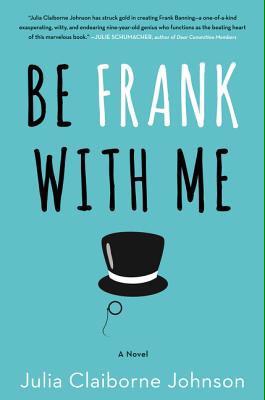
This title was circled as a “want to read” selection in my Book Page circular. Be Frank with Me almost falls into “seen this before” trope of precocious kid, odd famous parent, and the Mary Poppins who is hired to bring order to chaos. Surprisingly, I ended up really enjoying this fast read. One reason is it has that forties comedy film feel to it with its madcap, impossible hijinks, situations, and characters. I simply accepted the break in versimilitude and let the show roll.


Yet another DE Stevenson. My list of her forty or so published titles is rapidly approaching completed unless her granddaughter finds more manuscripts in the attic. This one is post-war Britain and has Young Mrs Savage dealing with widowhood and four children all under the age of eight, and she’s not even thirty yet. There’s mystery, a variety of suitors, and delightful Scottish pluck and scenery. There is even a snarky set of villianesses to boo at.  I also adore the old school cover art.


Another non-fiction involved a flashback to my past, all the way to 1962 and the Seattle World’s Fair. Being a young thing then, the memories are a bit sketchy, so I definitely added this coffee-table photo historical to my checkouts.I reveled in forgotten exhibits, vendors, and magic moments of the fair. There is also that behind-the-scenes info the feeds my  craving for trivia snacking. Seattle remains a top fave for favorite cities, in case anyone is doing a poll. It’s such a unique, iconic landmark and I have some of the best family memories involving that futuristic trademark of the Emerald City. 

As of Monday afternoon I shall be released from the classroom and will gladly kick into summer vacation mode. Woo hoo!

Any other teachers out there ready to get their summer on?

Review Roundup


I catch up on my blogs through my iPhone reader which means I miss any goodies that enhance that web page. And that means people miss my little extras as well, such as my Good Reads update feed. So, a new addition to my line up of features shall step forth: the Review Roundup in which I lasso a couple of books from my Completed Reads Corral and trot them out for all to admire. I’m in the midst of Cormac’s All the Pretty Horses, so horsing around is a given.

Last year I thought 50 books to be a good goal and I nearly doubled it by reaching 92 reads. This year I decided to go for 101. So far, so good as I read 11 books in January. Here’s my top three picks of January:

Pop Sonnets: Shakespearean Spins on Your Favorite Songs

Fair is the song that remains in the heart,
That soothes the savage scorns that love inflicts,
Or brings joy to our lips as does the lark,
Causing fingers to snap and heels to click.Songs. Sonnets. Put them together, as has the very clever and talented Erik Didriksen, and you have a collection that is memorable and marvelous. His book started out as a weekly sonnet post on Tumblr which grew a following and garnered him a publishing contract. Ooh, I love those kind of success stories.

There is indeed something for everyone, from The Beatles to Cyndi Lauper to Frank Sinatra–sing the praises of Pop Sonnets.

I am in the middle of my “chase-down-every-D.E. Stevenson-book-I-can-find” adventure. I may owe our public library’s inter-library loan department some compensation once I reach my goal of finding all 40 plus novels. I am a professed Dessie. Stevenson’s books are old-fashioned, yet hold up well for story-telling. A big bonus is that many take place in Scotland, the land of my ancestors. I do like her plucky heroines. Here is a new fave:
Kate Hardy buys a country house unseen and makes her move from London to the dull quiet life so she can continue writing her popular hero-action books. Yet, life in the country is far from dull. Strange letters, neighborhood dramas, tangled romances, along with irritating relatives visiting, interrupt Kate’s solitude. And she doesn’t mind one iota.
A thoroughly likable plot and heroine, the book would have garnered five stars except for the ending. DES is terrible about her loose endings. Everything comes crashing to a big finale but she tends to leave loose bits trailing in the breeze. My hope is that Kate Hardy continues on in another book.
The Renaissance is an age like no other. There were so many accomplishments in so many areas of the humanities and sciences, it merits study to better appreciate the genius behind the works. One area of accomplishment, one that still leaves the world in appreciative awe is the art and artists of the Renaissance.
Barter’s reference book provides background and insights on several of the prominent artists of the time such as Michelangelo, da Vinci, and Raphael. Surprisingly, Botticelli is not part of the group; however, the artists featured provide a satisfying study into some of the most influential talent of that time period. A great reference for students, or for those looking for a quick, in-depth study.
Have you read any of these? Better yet, what was your favorite January read?
 

A Good Year for Reading


January is a month of reflection. This is probably due to January being the default month since it is between Christmas past and Valentine’s Day to be. While working off Christmas treats in order to succumb to anticipated chocolate hearts I have decided to give my 2015 year of reading a closer examination. Actually, I probably wouldn’t have done much more than said “Cool. I met and surpassed my Goodreads Reading Challenge.” Since they took the time and trouble to send me such an attractive report, I shall share the highlights with you all. If the pontification of accomplishments is not within your scheduled viewing, I am absolutely not offended if you drift off to the next blog in your reader. However, I am hoping you will stick around.

First Off:
Books Read: 91
I set my Reading Challenge at 50 books, thinking “Hmm, that’s about one per week–that’s doable.” With so many great recommendations from so many dedicated Book Boosters like Heather and The Paperback Princess, I kept adding to my “To-Read” list and kept reading. I still have about 73 books on my TBR list. *Sigh* I have need to read issues.

Secondly:
The Short and Long of It
Shortest book: 96 pages

The Rabbit Who Wants to Fall Asleep

by Carl-Johan Forssén Ehrlin

Reading books to kids at bedtime is a lovely routine, a cozy bonding time, and a way to pass on the joy of words to children. I anticipated this sort of connection when I requested Ehrlin’s The Rabbit Who Wants To Fall Asleep and was sorely disappointed when I discovered the text to be a form a hypnosis-inducing sleep tool. The purposely scripted story is almost a little scary in its intent. Instead of waving a golden watch and chanting, “You are growing sleepy” a fuzzy bunny becomes the stuff dreams are made of.

While some may like a lab technique to put kids asleep, I’ll go for the classic lullaby of cuddle and lulling words.

                                                             LONGEST BOOK
                                                                  624 pages
                                                                   Jane Eyre
                                                         by Charlotte Brontë

Average Page Length: 305 pages

Most Popular Book:

4,019,963

people also read

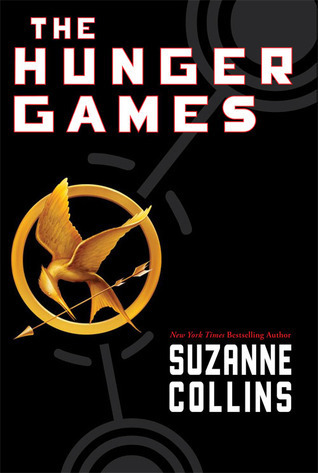
The Hunger Games
by Suzanne Collins
I decided to reread the entire series in one dedicated weekend as a preparation for the last installment of the film adaptation. I do think JLaw IS Katniss.

Least Read Book:

2

people also read

Sky Blue Pink
by Pam Lippi 
This is a self-published fictional memoir and it is a fun little read about two seventeen year old girls who travel around Europe after graduating from high school. This was back in the days of the seventies when bell-bottoms and adventures were part of the culture.

Benediction:

Completed square

You read 86 out of 50 books. [I actually snuck in 5 more after this]
172%
Congratulations! You’re really good at reading, and probably a lot of other things, too!
Not a bad year for my Goodreads [a litotes, if there ever was]
Okay–your turn…
How was your 2015 year of reading?
Favorite book?
Definitely won’t be recommending?

Fantastical Realms 


I shall always harbor a bit of fascination for worlds of make believe; however, my reading choices sometimes perplexes my family. It’s as if I’m not willing to accept this present planet, or my head is in the clouds, or maybe I just refuse to grow up. Most of my reading is solid enough with my Austen-like tendencies towards classics.  I do like a dip into fantasy from time to time. 

Though it’s been awhile, I do relish a really fun fantasy, one without the usual overindulgence in magic, drugs, sex, and rock n roll. Yes, I am that discerning. Picky is acceptable, but I prefer discerning.

C.S. Lewis and his Narnia series remains a favorite, and I look forward to passing my Lion, Witch, and the Wardrobe on to the grandkiddo when the appropriate time arrives. I was introduced to the series in high school and found Perelanda in college.

One childhood remembrance is Wrinkle in Time, although I really need to finish the series because I recently discovered there was more beyond the first one, just as I realized there was more to The Giver. These two fall more closely into science fiction. Lately, I haven’t find a (grown up)novel that features a world that is relatively different enough for my particular tastes in fantasy.

My search for fantastical realms is hit or miss. I have developed a penchant for Jasper Fforde and his Thursday Next series, but didn’t care much for his Nursery Crimes books. His Last Dragonslayer series is quite engaging, and I am patiently awaiting the sequel to his Grey series (*amended title do to that other “gray” book out there–one of the prodigy was duly shocked upon seeing the cover thinking I had grievously lapsed in my usual conservative reading selection).

  image: amazon.com


image: wikipedia

I haven’t been too impressed with Terry Pratchett’s Disc World, although I understand it’s a matter of finding the right one. I did enjoy the Going Postal film adaptation.

I have yet to really give Douglas Adams and his Hitchhiker series a dedicated run. I might have to be satisfied with the movie instead.

Just recently I gave Walter Boer a try. Not knowing exactly where to start I began with The City of Dreaming Books, which turns out to be #4 in the series, but it actually stood well on its own. His books, from what other reviewers are saying, tend to  be large in scope, pagewise and content. I had a difficult time warming up to a lizardish dinosaur for a protagonist, though there were moments of appreciation for a creature desirous of becoming a great author.

image: amazon

Any other fantasical readers out there? What am I missing that I should look up?

Getting a Handle on Hamlet


Now that there is a little distance between my journey to DC for Hamlet Academy, I am in a very good place to reflect upon just how I will present the play to my students.

I have discovered exploring scenes through various reading techniques, paired with a cinematic clip, helps with clarity. But which film version to use? There is such a range.

For instance, when we study Hamlet’s quintessential  “To Be” speech, I can show the minimal setting of the stage with either Richard Burton or Kevin Kline. Then again, I might show it as the singular contemporary soliloquy of Ethan Hawke as he internalizes his inaction while walking through the action movie aisles of Blockbuster. There is also Branagh’s stylized mirrored reflection which contrasts with David Tennant’s sedate approach. I primarily feature Mel Gibson’s version because of its Renaissance setting. I am patiently waiting for Jude Law’s Broadway version to come out as a DVD. And then there is Benedict C’s London stage version, which I anticipate to be more than marvelous and hope it makes it onto DVD in the future. Because taking my students to London to see it, well–that would be an involved field trip request. For fun, I show Ahnold delivering the lines with swagger and CGI.

Yet with all these versions to select from, each has its own set of considerations when it comes which one to showcase in its entirety. Sir Larry’s is BW and my students aren’t keen on arcane classic. Tennant is clever, yet the juxtaposition of modern setting and classic Bard doesn’t always find favor. Ethan Hawk’s has a couple of awkward-in-the-classroom scenes. Branagh’s is way too long, and that leaves Mel, the popular choice, but with that problematic mother and son chat in her closet.

Every year I wrestle with the “which one” question. This year there is one more option. I recently discovered an amazing version I had no idea existed. A big thanks to LoMo, super Hamlet Academy mentor teacher, for the heads up on this new-to-me Hamlet.

Campbell Scott, son of George C. Scott, of Patton fame, might not be on everyone’s radar of well-known actors, but he definitely should be. I am looking into his other films, as I was quite impressed with his performance. In his version of Hamlet, which he co-directed, he sets the play in an Edwardian era that could either be east coast upper crust or Reconstruction South. This Hamlet family is one of tradition, power, wealth, and of course, one that has definite family issues.

There are many pluses to this version. For one, Scott’s Hamlet is of the appropriate age, many Hamlets are often pushing the 40 mark, which about 10 years older than the play age. The setting also lends credibility with the historical grandeur complementing the eloquence of the Bard’s language. Scott plays his Hamlet with intelligence without having to be eccentric, although there are moments that oddities pop up, such as wearing his mourning band as head band. His introspective interpretation helps the audience to feel the pain of indecision, as he flirts with madness, as he works out the conundrum of his avenge task: how crazy should crazy go?

Here’s a clip. What are your thoughts on Scott’s version? And while we are at it, which Hamlet version is your favorite?

It’s Howdy Doodle Time


I finally possess a Mike Allegra doodle. It’s a dandy doodle. I’ve been working on a cow joke book (for heifer and heifer, it seems), and figured the best way to get it published is to have it illustrated. I almost had a publisher, but part of the package was providing an illustrator. Well, that opportunity evaporated, so I am still trying to market my herd of cow jokes. Possibilities are looking better since I now have a sample doodle and a willing illustrator–now I need to find a willing publisher.

Kids love jokes and riddles. I know. I have an eight year grand kiddo who loves telling me the same knock knock banana/orange jokes (you know the one). If banana jokes are funny, cow jokes are dairy funny, it’s finding an editor or agent who thinks so as well. Now that I am equipped with my doodle I feel more confident venturing forth in my quest for publication, and feel it won’t be udder folly this next go round.

I claim the joke. Mike Allegra claims the artwork. You decide who is the more talented.

What do you call a cow who is a thief?
A Hamburglar!

Okay, maybe the doodle is better than the joke. Now that I have Mike’s doodle to accompany my submission I am feeling this book will become a published winner–it might just become outstanding in its field.

Yes, you too, can gain this confidence with your very own Allegra Doodle. I suggest you secure one sooner than later. Since I have yet to win one through his ever popular doodle contests, I have sought other avenues, and if you are unable to get your entry slip drawn, and need an Allegra doodle in your life, then I suggest you contact him.  And, yes, his talent goes beyond cows.

BONUS: there is dairy funny pun-off happening between Sarah W and I. Mike wants to know who the winner will be. It would behoove you to take a look at our witticisms–look in the comments section.

Reading Challenge #37: Bird by Bird


Reading Anne Lamott’s Bird by Bird is a bit like listening to a marathon of Billy Crystal’s SNL routines as the complainer character: “Don’t you just hate it when…” His character’s kvetching is both comical and annoying, at least to me. And that’s where I stand with Lamott’s book on her approach to writing. Granted, she has reached a measure  of success, yet, the process seems to be so painful for her I wonder if she should try another line of work, one that doesn’t require copious amounts of emotional disarray and therapy. Then again, maybe she likes the worry, grief, angst, and drama that occurs when writing. Actually, if she didn’t have anything to complain about she wouldn’t have anything to write about. 

image: Amazon.com The story behind the title is a life lesson of taking a big task bit by bit.

For me the introduction resonated the best. The rest of the book was more of the same sardonic humor and illuminating bits of epiphanies. I did stick with the entirety and did find several take aways, ones that resonated with me in how I approach writing:

  • “I understood immediately the thrill of seeing oneself in print. It provides some sort of primal verification: you are in print; therefore you exist.” (introduction xiv))
  • “The act of writing turns out to be its own reward.”(intro xxvi)
  • This one really got to me since I am a bovine believer: “Writing…is a little like milking a cow: the milk is so rich and delicious, ad the the cow is so glad you did it.” (intro xxxi)
  • “…putting an octopus to bed [is like the final draft]. You get a bunch of the octopus’s arms neatly tucked under the covers–that is, you’ve come up with a plot, resolved the conflict between the two main characters, gotten the tone down pat–but two arms are still flailing around…you finally get those arms under the sheets, too, and are about to turn off the lights when another long sucking arm breaks free.” (p. 94)
  • “The writer is a person who is standing apart, like the cheese in “The Farmer in the Dell” standing there alone but deciding to take a few notes.” (p. 97)
  • “Writers are like vacuum cleaners, sucking up all that we can see and hear and read and think and feel and articulate, and everything that everyone else within earshot can hear and see and think and feel.” (p. 177)

I do feel like the cheese sometimes. I notice stuff other people don’t and when I point these observations out to them they usually respond with that patronizing smile, you know, the one that indicates that you’re cute or crazy or annoying for noticing what seems mundane.* I also feel like a vacuum cleaner, sucking up sensory matters. Anne missed one analogy though–writers storing all that information are like the back room of an understaffed post office. The information is there but stored in a box, bag, or slot waiting patiently to be delivered.

One chapter I especially related to was “Calling Around.” For her it was tracking down the name of the wire thingy that is part of the champagne bottle. Wire thingy wasn’t working for her and she couldn’t move on in the story until she discovered the name. After calling around she learned it’s simply referred to as a metal hood. Kind of takes the romance out of the champagne experience. For me, I needed to know the name of the clothing ancient Chinese warriors wore. Should be an easy search–right? No. And no again. I wanted to show the character in my story that pants haven’t always been part of fighting garb (who can forget Mel in his Braveheart kilt?). After some searching around I came up with a possibility. I’m still confirming it. It’s not even that crucial to the story, yet I couldn’t move on either until I had put that flailing octopus to rest.

Overall, I was entertained while learning that writing and writers are definitely the cheesiest people around. We are on the outside, capturing how everyone feels on the inside. And that’s a good thing. It makes us a bit crazy but crazy is the new sane. Heigh ho, the dairy-oh….

*NOTE: A spider busily working its weaving web wonder is significant because it is oblivious that its achievement is going to be seen not as a marvel but as a mess needing to be swept away. My mind goes scampering towards metaphors and greater analysis. It’s not just a spider. Maybe that’s the title of a book I need to write about how writers write.

Post Navigation