Pam Webb

a writer's journey as a reader

Archive for the category “reflections”

Desert Is Not Dessert


Out of necessity I am in Arizona this week.

Most times mentioning Arizona as a destination brings up that “Oh–” that is a followed by congratulatory commentary with a dash of envy.

That “Oh–” takes on tones of surprise, commiseration, and even pity when Arizona is mentioned as a travel stop this time of year.

The last three days have been rising to triple digits. Today is expected to be 114 degrees. I should add an exclamation point. Make that two.

People who live in Arizona must be okay with this cruelty. Why would someone purposefully punish themselves unless by choice? There are sooo many other places to live.

These are the reasons I hear from residents as they try to excuse the heat:

“Air conditioning. You go from the car to the store. It’s not bad.” That’s what they said about my root canal. “The pain and discomfort is minimal.” Pain is pain and the shock of heat blasting off the asphalt parking lot even for the two minutes of the dash from car to store is still excruciating.

“It cools down at night.” Umm, 80 degrees at 1 am is not cool. It’s not even pleasant.

“Hang out at the pool.” Great idea in theory; however, the sun has been heating up that water until it becomes lukewarm. Not remotely refreshing is the time spent floating in tepid waters.

And the weather announcer pull-it-out-every-time excuse: “But it’s a dry heat.” Dry it is. Because heat is hot and hot is not comfortable.

I’m sure Arizona is lovely other parts of the year. Flocks of snowbirds descending and settling down in the desert for winter have proven this to be statement of fact. Unfortunately I care not for the desert. It is not my idea of a dessert vacation.

114? Really?!?

Reader Round Up: May


May was a month of escapism as different stresses cropped up and reading is my escape goto having learned that finding frozen yogurt in the local groceries is frustrating and futile.

An eclectic batch indeed:

David and Goliath by Malcolm Gladwell⭐️⭐️⭐️

Malcolm Gladwell has proven his ability to combine an intriguing premise with research data, anecdotal examples, and an engaging style of bringing it all together. This method worked well for Blink, The Tipping Point, and Outliers. Not so much for David and Goliath.

One problem is how the premise is not fully defined, or tends to flex and morph into something a bit different as the book progresses.

True to Form by Elizabeth Berg

⭐️ ⭐️ ⭐️ ⭐️

True to Form continues the story of Katie Nash, a 13 year old girl who has both little and everything going on in her life. With only one friend and a summer filled with jobs arranged by her emotionally distant father, Katie is fairly sure her summer of 1961 is going to be dreary.

While Katie’s summer is far different than she anticipated, she discovers new friendships, experiences new opportunities, and finds out making choices can be very serious—and can drastically change a person’s life.

Engaging and charismatic, Katie’s voice borders on being a bit too precocious for a young teen girl, yet there is much truth to Katie’s observations. This can be read as a stand alone.

Whose Waves These Are by Amanda Dykes

⭐️ ⭐️ ⭐️ ⭐️

A small town in Maine is the setting for a novel that interconnects various stories of coping with loss. Switching from WWII and its aftermath, to present day, the author explores how people cope with losing someone they love, exploring emotions from guilt and sorrow to regret and restored faith, Dyke weaves in humor and poignant human drama to create an engaging inspirational romance with historical insight.

Jackaroo by Cynthia Voigt

⭐️ ⭐️ ⭐️ ⭐️ ⭐️

One aspect of rereading books from long ago is rediscovering and reconnecting with the story. I only vaguely remembered the incident of finding Jackaroo’s costume, all else was like reading a new novel.

And what a wonderful story! Adventure, Middle Ages setting with villages, earls, and plenty of Robin Hood trope. Voigt crafts her story with full characters and descriptive imagery that rounds out a story not easily put down once started.

There are enough twists in the plot to prevent the usual stale tale script from forming, and the ending is definitely satisfying.

It will be a happy mission hunting down the other books in the series.

The Little Prince by Antoine de Exupery

⭐️ ⭐️ ⭐️ ⭐️ ⭐️

The Little Prince is of those mesmerizing books containing a deep message as it twinkles and beguiles readers with its captivating prose and quaint renderings. For children it’s the magical tale of a prince who rules a planet and journeys to other worlds. For adults it’s an allegory of despondency–how life is not always as it seems to be, for we get caught up in our world of being grown up for having peeked behind the curtain, we sadly realize the truth behind the magic.

June and summer vaycay is welcome anticipation. What titles are you looking to read? I wouldn’t mind plumping up my “want-to-read” list now that it’s under a 100.

Word Nerd Confessions: June


Still sweeping out the collection of words drifting about in the corners of my word collecting bag.

Speaking of bags:

1. musette: a small leather or canvas bag with a shoulder strap, used for carrying personal belongings, food, etc.

2. saggitate: shaped like an arrowhead

3. literam: letter for letter; literally

4. gerontocracy: a government in which old people rule (I’m not making this up!)

5.  dundrearies: long full sideburns or muttonchop whiskers

6. bedizen: to dress in a showy or tasteless manner.

7. suspiration: a long deep sigh (a favorite–note the italic–but how to use it in a sentence?)

8.  quodlibet: subtle or elaborate argument or point of debate, usually on a theological  or scholastic subject.

9. instauration: renewal; restoration; renovation

10. fenestrated: having windows (this is such a cool word–I get extra nerdy upon hearing “fensteration” or “fenestrated” in a sentence).

11.  epistemic: of or relating to knowledge or the conditions for acquiring it.

12. oblivescence: the process of forgetting (more and more my life is this word)

13. crump: to make a crunching sound, as in walking over snow, or as snow when trodden on (I fully intend on finding a way to apply “crump” in a story–it’s too amazing of a word to leave sitting on the bench waiting for wordplay).

14. fiddle-footed: restlessly wandering

15. objurgate: to reproach or denounce vehemently; upbraid harshly; berate sharply (sounds close to regurgitate–throwing up angry words?)

And that’s May’s edition of Word Nerd.

May no one objurgate upon your quest towards epistemic persistence as you crump along the path of knowledge which could render a suspiration of frustration (not to be confused with fenestration, although not finding an open window when needed can be frustrating) upon finding yourself stuck in a gerontocracy in which the leaders tend towards bedizen attire evidenced by their dundrearies. Ignore the proclivity towards quodlibets with these politicians and pack up your musette and go on a fiddle-foot tour of nature to achieve instauration from worldly concerns. Celebrate oblivescence of worldly matters. Celebrate the little joys such as the finding of  sagittate treasures upon nature’s path. The literatim of life does not have to be dreary–crump on to finding contentment!

Crump twice–Word Nerd points…

Why We Say: Spam—the case of canned mail


SPAM* in my day was not a Monty Python skit nor a designation in my email. Mom would fry it up and slab it between two pieces of mayoed toast. What do kids know about cuisine?

*SPAM is the official designation by Hormel.

8 billion cans can’t be wrong (image: Smithsonianmag.com)

The product SPAM is a meat product by Hormel and is a derivation of “spiced ham.” It became a popular food item around WWII, as its canned qualities meant it could be stored, shipped, and shopped easily. The US troops benefited from its convenience and it gave them something to joke about. There are odes about SPAM floating around.

On the other hand–

Spam is that annoying clutter that fills email boxes. It is electronic junk mail. It is not pretty and should not be glimpsed.

Unfortunately, one of my forwards was not appearing in my recognized mail box which meant I went searching. I took the plunge and went dumpster diving in my electronic trash. I found:

  • Keto ads
  • Loan enticements
  • Wine information
  • Online dating
  • Concealed weapon ads
  • Tinnitus info

And I found my lost forward. It looked a bit stunned and wasn’t worse for wear from the company it found itself in. I dusted it off and sent it correctly on its way.

As for SPAM…

Hormel originally objected being associated with the practice of unsolicited electronic mail. At one point it took legal action. Wired has an entertaining and informative article on the matter.

The real reason SPAM became spam was due to Monty Python. That explains it, doesn’t it? They created a skit where Vikings sitting in a tea shop would drown out any sort of decent conversation with shouts of “spam spam spam spam –wonderful spam”

Perhaps best seen to understand:

Monty Python “Spam”

Then apparently a blogger decided unsolicited electronic email was a sort of drowning out productive communication (like Vikings shouting in a tea shop), and the term “spam” arrived, which really hasn’t much to do with SPAM except Monty Python decided it was funny fodder for a skit.

There it is. From ham in a can to mail that gets a backhand to a one step above trash.

I’ll let you decide about the evolution of this product.

The -ing of things


Spates of good weather have beckoned me out into the backyard where much needed work is required: weeding, thinning, raking, mulching. All those -ing type of tasks that result in another set of -ings such as lower back spasm-ing.

However–

There was one surprise -ing:

I planted some bulbs last year in my patio container and “whoa!” I exulted upon this sudden blooming. No weeding, mulching, raking required. Just appreciating.

Now, that’s my kind of garden-ing.

Bookish Thoughts: Skimming versus Deep Reading


In addition to my monthly posts of Word Nerd Confessions, Reader Round Ups, Why We Say, and Debatables, I’ve decided to chime in thoughts about book issues. This month deals with how electronic text has created the dilemma of skimming.

This is not a post so much about being pro or con towards e-readers, although I always request paper instead of electronic when request a review copy. From that you can surmise my stance.

Dog gone it—my attention span is in the dog house

Instead, I’m more concerned with how electronic reading has transformed overall reading habits. I’m not the only one either.

Maryanne Wolf , the Director of the Center for Dyslexia, Diverse Learners, and Social Justice at UCLA, is the author of Reader, Come Home: The Reading Brain in a Digital World. In an article from The Guardian (8/25/18), Wolf discusses research findings that indicate how the essential skill of “deep reading” might become jeopardized as electronic reading becomes more of the normal. Basically, if we don’t use it, we lose it.

Further studies indicate the increasing reluctance of university students to dive in and tackle older texts due to impatience with sifting through older syntax style and stiff vocabulary of authors from yesteryear. It takes work to read older books. True that. It’s just like losing the ability to climb three flights of stairs if one always takes the elevator.

Wolf‘s research also indicates that the damage to reading deeply can begin as early as fourth grade. This interprets as soon as students begin to read they are at an disadvantage due to the push to put electronics into their hands. Not having the ability to develop an appreciation or skill for deep reading means future readers have the potential of never gaining insights into more complicated texts such as Emerson, Proust, Bronte and a larger cadre of other pre-info bite writers.

Scary.

What is happening is a style of reading known as “skimming” which is scanning sections of texts in a pattern, such as a Z, to absorb information. I’m thinking of the Evelyn Wood Reading Dynamics course I had to take in summer school once upon a junior high year. Speed reading is what it went by in most circles. It admittedly came in handy. Skimming seems to be the rebrand.

Skimming does not sound like something Wolf promotes. She admits her attention span for reading complicated texts has diminished. With some personal introspection I realize I rarely sit and study a text or read a book like I used to. I still read a lot of books but solidly with deep satisfying comprehension? Not so much. This blog is an example. I put aside a really great book to write up these thoughts. Why?

I think issue of distractable reading has evolved as a deplorable habit. I bounce in and out of newsfeeds and sound bite updates and have lost sustainable attention span.

Solution?

For one, I will become more conscious of how long I read and keep my phone across the room. Reading and texting are not companionable. Distracted reading is not life threatening but it is concerning.

Skimming. Anyone else found this to be an issue in their reading habits?

Why We Say: A Twist on Past Words


Language is fluid. It can start out with one meaning and morph into another definition over time. Here’s a batch of words that have come into their own meaning through the advent of social media:

Tagging, traffic, fan, wall, hacking, search, viral, link, ping, feed, alert, tweet, are just a few. Here are a few others that have changed:

Troll

Past: a large nasty creature who hung out under bridges. Sometimes a word used with fishing.

Now: Someone who pokes around online and stirs up responses.

Spam

Past: pinkish spongy mystery meat squished into a can.

Now: Unwanted, annoying messages that arrive through email or even as texts.

Friend

Past: a chosen companion who shared common interests.

Now: a button-click indicating a degree of superficial commitment.

Like

Past: a preference signifying a degree of indication of favor.

Now: a click response of rating that operates as a indicator of popularity.

Post

Past: to send a written communication through the postal service

Now: a written communication sent through social media most likely as a blog (a neoplasm and a separate post).

What words have you seen come into existence or change due to the influence of social media?

Reader Round Up: April


I don’t know if this is embarrassing or if it is something of an accomplishment to crow about–here it is:

I have read 57 books of my 101 goal. And it’s not even halfway through the year.

What does that mean?

Have I surreptitiously slipped from bibliophile, merely a person loves books, into a bibliomaniac, being crazy about books?

‘Tis a ponderment.

If I were to submit to a consultation, as if there is real concern about reading too much, (is that even feasible?) What would be revealed about my reading habits?

Today we will look in on the eminent Reader Analyzer, known for her insightful understanding of reading habits. The following is a session excerpt with Cricket Muse, known for her monthly Reader Round Ups and efforts as a chirpy Book Booster.

RA: Cricket, I appreciate your willingness to share your views about reading.

CM: Well, isn’t this really about whether I’ve drifted from casual reading into habitual reading?

RA: No one here is judging. We are here to celebrate your accomplishments. You do like to read, don’t you? <smile>

CM: Somewhat of an understatement. You’ve read my rap sheet: three years in a row of surpassing my Goodreads goal of 101 books? Reading 57 books before May 5 hit the calendar? I read 4 books in one week! <lowers voice> Is that even normal?

RA: Normal is subjective. Some say “normal” is a setting on the dryer.

CM: It is? Mine says “dry or more dry.” What type of dryer you own? A Kenmore? I think my mother had an old dryer that had that setting.

RA: Back to books and the normal reading standard. Who is to say what the new normal is? Reading isn’t what it used to be is it?

CM: That’s true. Some of my students wouldn’t ever pick up a book if I didn’t require SSR, silent sustained reading. I don’t know many adults who are avid readers either.

RA: Not being surrounded by readers, what influences you to read?

CM: Getting right down to it, aren’t we? Well, I read because at the end of the day I suffer from screen scream. When I’m not teaching up front and personal, my time is at the computer grading and creating lesson plans. My brain is buzzy from all that screen activity. My solution is to grab a book and knock back a couple of chapters, letting my brain settle down. Holding a book in my hands, feeling that paper between my fingers, hearing that crisp swish of pages turning is very therapeutic.

RA: Not judging <smile> but you said four books in one week? Teaching must be stressful.

CM: It can be. That four book week was not a teaching week. I was in a situation that resulted in a combination of weather conditions, downtime, and the need to de-stress.

RA: Sounds like reading is your go to for relaxing. Do you read for other reasons?

CM: Of course! I read out of curiosity–what’s the big hype about The Martian, for instance (I actually liked the movie better, but reading the book helped enjoy the movie more)? I read because as a writer I need to know what is current on the market–what are others reading and what are others writing? And yeah, I read for pleasure. A cup of cocoa, my cozy chair, a crackling fire, a good book or glass of lemonade, my hammock, a soft backyard breeze, a paperback of choice–yup, these are a few of my favorite things.

RA: Enjoying a book, for whatever reason, could be addictive. Do you just read?

CM: I see what you’re doing <wink/finger point> I have a full life that includes books; it doesn’t revolve around books: teaching, working out at the gym, volunteering at the library, writing, putzing about in the yard–books are frosting, not the cake.

RA: Sounds like a good balance. I can’t resist–what good books have you read lately?

CM: Here’s a few titles from last month and a couple of recommends. So–am I crazy about books or am I crazy?

RA: Not here to judge, remember–but it is crazy wonderful how much you enjoy reading. I’d say keep on reading on. Thanks for revealing your thoughts about reading.

CM: See you around, and I hope you find a good book to read this week.

April Read Highlights:

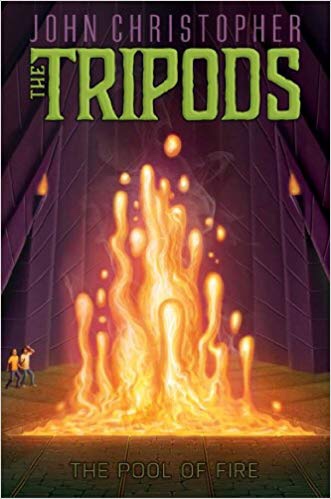
The City of Gold and Lead by John Christopher ⭐️ ⭐️ ⭐️ ⭐️ sequel to The White Mountains–classic science fiction and ignore that it’s in the juvie section because it’s a great plot and writing

King of Shadows by Susan Cooper ⭐️ ⭐️ ⭐️ ⭐️ ⭐️ Another juvie–yet appropriate for adults, especially for Bardalators and Bardinators as it is a time transfer back to the Renaissance Globe theatre when A Midsummer Night’s Dream played. Lots of marvelous historical detail and the plot is intriguing as well.

The Martian by Andy Weir ⭐️ ⭐️ ⭐️ ⭐️ finally got around to reading this and it was a bit better than okayall the science detail proved a bit daunting, but the Castaway on Mars with Mark proved a decent story.

For more reviews check out my Goodreads links on the right (on full site) or look me up on Goodreads as I have plenty to say about all those books I read.

Until the next Reader Round Up…

Word Nerd Confessions: May


It is the month of Maying. Flowers blooming, warm weather, longer days, one month until summer break. Yes, there is much to like about May. Since May is full of color, warmth, and anticipatory of summer, I thought a smorgasbord of words would be appreciated for this month’s Word Nerd Confessions:

1. ergate: worker ant

2. dorp: village

3. paladin: defender of a noble cause

4. kibitzer: giver of unwanted advice

5. ululate: to complain loudly; to howl as a dog might

6. banausic: to serve a mechanical or practical purpose only

7. incogitant: thoughtless; inconsiderate

8. antinome: something that is contradictory

9.polyhistor: someone of great and varied learning

10. tittle: a small mark in punctuation as in the dot over the “i”

11. aggiornamento: bringing something up to date for current needs

12. thimblerig: the sleight of hand game to fool someone as in the pea under the cups

13. nocent: harmful; injurious

14. cruciverbalist: a designer or aficionado of crossword puzzles

15. hypogeal: underground; subterranean


What three words caught your fancy this month?
I’m partial to antinome. I’m gonna throw that one at Mike during a Debatable. Ssh, don’t tell him. Nocent and paladin could also be appropriate for a Debatable.

What two words did you not realize that there existed such a word of explanation?
Didn’t know a cruciverbalist is what you call people who create crossword puzzles. I just thought they had more time and talent than me. Worker ants are ergates–I had no idea.

Image result for worker ant

What word do you simply like because of the way it sounds?
Tittle, of course. It tickles the tongue and makes me want to laugh. That little dot is a tittle. Tee hee.

Shakespeare Celeb:As You May Like It


As this tribute to Shakespeare winds up, I’m wondering how Shakespeare best fits in your life. Yes, your life. You are either reading this post because you are interested in Shakespeare or because you are a Cricket Muse follower and are tolerating these  incessant Bard posts because they automatically pop up in your feed. Or perhaps it’s what Star Lord said:

Image result for guardians of the galaxy a bit of both

How do you like your Shakespeare?

Plays? These come in the variety of Globe traditional, high school productions, professional troupes, creative adventuresome adaptations:

Image result for globe theatre Image result for high school shakespeare

Image result for royal shakespeare company           Image result for creative shakespeare play adaptations

Film adaptations? These appear in Branagh style with polish and high production value, or campy or modernized or foreign or really, really so bad, or really, really so good.

shakespeare adaptations

No comments on what I consider to be the good, bad, or ugly. Everyone has their own tastes in film.

How about reading the play? Shakespeare didn’t publish his plays to be read. He didn’t even have scripts for his players,* for fear of having his plays stolen and presented elsewhere (no copyright laws then). Today we have the opportunity to study Shakespeare through a vast choice of quick online summaries that make Shakespeare almost painless to understand (though the music of his language is definitely stilled by transposing it to modern comprehensibility). There are scholarly publications, first hand discovery accounts, guided tours for students. Even graphic novels.

No fear Shakespeare is available online and in book form at barnesandnoble.com.

Image result for shakespeare bloom critiques Image result for shakespeare saved my life

Image result for shakespeare for students  Graphic Shakespeare

Do you perhaps browse the internet looking for enlightening approaches to Shakespeare?

If you are still thinking Shakespeare is “meh” then maybe David Tennant can convince you otherwise:

*Historical interjection: they were called “players” because they were “playing” the part, usually a young boy playing the part of a girl, which stems from Greek theatre when men played females. This also go with the line from As You Like It when Jacques says in his speech “all the world’s a stage and the men and women are merely players.” It would have been different if he had said “actors” wouldn’t it?

I hope this month of dedicated Shakespeare has enlightened you to his amazingness, that it has at least entertained you, or has swayed you to joining the ranks of becoming a Bardinator. Adieu, adieu, for now until next month…

Post Navigation