Pam Webb

a writer's journey as a reader

Archive for the category “Reflections”

How Cliché: The “E” List


The Early Bird Catches the Worm: the first one there enjoys success. In 1605 William Camden included this phrase in his book of proverbs and it’s become a standard.

Yummy for those who like their early worms

Easier Said Than Done: talking is sometimes more readily done than action. The phrase is also known as sooner or better said than done. The earlier expression appears in the Vulgate Bible and the latter in the 1546 proverbs of John Heywood.

Easy As Rolling Off a Log: not much effort required. Mark Twain gets the credit for this expression from his A Connecticut Yankee at King Arthur’s Court published in 1889. The expression is similar to Easy as Pie.

James makes log rolling easy

Eat One’s Cake and Have It Too: to have it both ways. Once again John Heywood has this in his collection of proverbs. There is something about how we want to eat our cake but to hang on to it as well. Insert something besides “cake” and it still makes sense.

Every Man for Himself: looking out for oneself. Chaucer coined this expression in The Knight’s Tale indicating if a person didn’t watch out for himself no one else would.

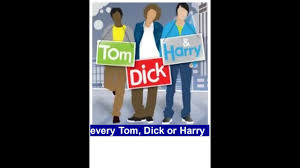
Every Tom, Dick, and Harry: Everyone, especially those in the lower classes. Shakespeare used Tom, Dick, and Francis in Henry IV. The expression can be found in the 1815 Farmer’s Almanac. Even John Adams tried it out in 1818, saying “Tom, Dick, and Harry were not to censure them.”

An uncommonly common trio

What “E” clichés can you add to the list?

Cowabunga! It’s July 12th and Cow Appreciation Day!


Cows are beyond cool. They are bovine.

One moovelous animal

I admit to being a cow aficionado. I grew up mucking about on our neighbor’s farm. Later in life I lived across from a dairy farm for twelve years. I udderly came to appreciate the wonder of this animal. To chew green grass and deliver creamy milk is marvelous.

The close proximity of cows inspired me to create a book that celebrates the cow with over 100 cow jokes with some stuff and nonsense thrown in. No publishers yet are interested. I remain hopeful that they will eventually realize my book, while not Pulitzer Prize material, is outstanding in its field.

To celebrate the cow here are some riddles to help you appreciate the cow:

1.What’s green and black and white all over?

A field with cows.

  1. What did Old MacDonald say when the cow stepped on his foot?

“Ee-ii-ee-ii-ouch.”

  1. What did Old MacDonald say when the cows began to stampede?

“Aaugh, I’m having a herd attack!”

  1. What did he say after the stampede?

“Cows should be seen and not herd.”

  1. How did the farmer divide up his herd of cows? 

He decided between the calves and the calve-nots.

  1. What did the farmer say to the old cow?

“It’s time you retired. You’re pasture your prime.”

7. Why do you call a pregnant cow?

Calfenaited.

8. What do you call a cow that isn’t pregnant?

Decaf.

9. Why did the cow jump over the moon?

The farmer had cold hands.

10. Why did the farmer install bee hives in his pasture?

He wanted to live in the land of milk and honey.

Celebrate the cow today. If a hug isn’t possible, then an ice cream cone is acceptable.

Have you thanked a cow lately?

Word Nerds: There’s a Word for That?


saccade:
the series of small, jerky movements of the eyes when changing focus from one point to another.

sciamachy: an act or instance of fighting a shadow or an imaginary enemy.

Shadow boxing with a twist

eggcorn: a word or phrase that is a seemingly logical alteration of another word or phrase that sounds similar and has been misheard or misinterpreted.

Does someone pass muster or mustard during an inspection?

ambisinsister: clumsy or unskillful with both hands

flump: to suddenly flop down

diegetic: happening within or being the created world of a story.

borborygmi:rumbling or gurgling sounds caused by the movement of gas in the intestines.

lucubrate: to work, write, or study laboriously, especially at night.

Some serious lucrubate ambiance

Once I retire I look forward to not having to lucrubate lesson plans or needing to grade essays which often contributes to my stress-induced borborygmi.

Summer Reading Bliss


B*I*N*G*O


I admit to being a bit jealous of kids when it comes to summer reading. Libraries promote cool programs to encourage young readers to grab a book and read to earn rewards and prizes.

I read for the enjoyment of reading, yet even a sticker on my bookmark would be that much more fun.

Our local library must have heard my inner child for they are running a summer reading program for the kiddos and adults as well.

BOOK BINGO

Fabulous options! Summer Reading began June 11th and out of the four books I’ve read so far I don’t quite complete a BINGO.

Contenders:

read for 20 minutes (that was easy) read a book outside (gotta get that selfie) recommend a book to someone you know (the hubs eagerly awaits for my recent reads) read a book by a new to you author (another easy) read while listening to ocean sounds (at night while read we drift off to sleep to gentle ocean waves from sleep app) share this BINGO with someone you know (the hubs might play) check out a book by a local author (why—that would be me…) read a book that became a movie or TV series (it might take me all summer to read Lorna Doone)

Wait—

If I check out and listen to a music album I’ll have a BINGO!

Be right back…

How well would you do with a BINGO card? What can you mark off so far?

Age of Aquarius (kind of)


Bard Bits: The Beatles and the Bard


Three months after The Beatles rocked the world on The Ed Sullivan Show in 1964, The Fab Four taped a show called Around the Beatles. The Liverpool songsters performed an abbreviated version of “Pyramus and Thisbe” from Shakespeare’s A Midsummer Night’s Dream.

image: mcartney.com

Of course it was done with the panache that only John, Paul, Ringo, and George could bring to the 400 years old play. First Ringo enters in period dress, bearing a program flag and firing a cannon. Then silhouetted trumpeters appear who are none other than John, Paul, and George. They are a hit before the play begins which is confirmed by the screaming fans situated in the audience.

Decked out in period attire, Paul and John play the star-crossed lovers Pyramus and Thisbe. Paul as Pyramus hams it up well to the camera, with his winks and smiles. John, as Thisbe, with expected mischief, sports a blacked-out tooth, and wild blonde Pippi Longstocking braids. George becomes the Moon and leads out his “doggy woggy”, while Ringo roars out his part as the Lion. As for the wall? Not sure at all.

While the foursome stay mostly to Shakespeare’s penned lines, they, naturally, add in their own unique style. Ninny’s Tomb as the suggested meeting place for the lovers becomes a referenced club: “Ninny’s tomb—is that still open?” And when the Lion is to reassure the audience that he is only an actor, Ringo switches out the lines of—“Then know that I, as Snug the joiner, am / A lion fell”—for: “Then know that I one Ringo the drummer am.” He also reminds the audience that he wouldn’t be making so much money if he really was a lion. Finally, at the end when Pyramus “dies, dies, dies”, Paul comforts the distraught fans with a reassuring: “It’s all right, it’s all right.”  

The performance represents the high/low snubbing typical of the sixties with its counter-culture approach towards tradition. The mixture of the current most famous band performing the world’s long-regarded most famous playwright’s work is a tribute to how versatile Shakespeare’s can be. The overlap that The Beatles are “rude mechanicals”, that is working class fellows, is amplified by planted hecklers in the audience who shout out good-natured jibes, such as “Roll over, Shakespeare.” This could refer to Chuck Berry’s, “Roll Over, Beethoven,” or that Shakespeare might roll over in his grave if he knew about their performance. Personally, I think William S. would be amused, being a bit of a culture-breaker himself.

The Beatles comical performance once again shows how well Shakespeare transfers across the ages and the stages of time. As Ben Jonson once stated about Shakespeare, “He was not of an age, but for all time!”

How Cliché: The “D” List


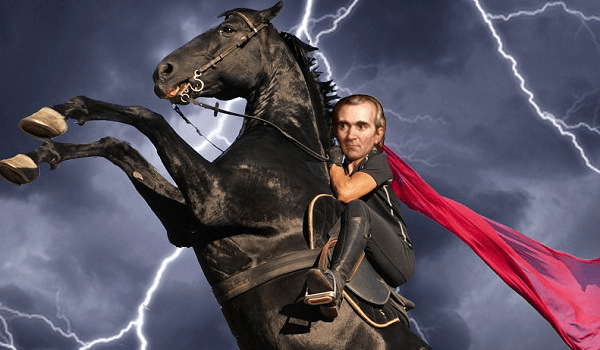
dark horse: an unexpected winner or a surprise outcome
An obscure origin, yet its use can be traced to the nineteenth century and horse racing. When a horse’s background or ancestry is unknown the term “dark” is used. The term is also associated with the practice of some owners who would dye their horse to disguise its appearance and change the betting odds. “Dark horse” eventually moved from racing to politics. A “dark horse” now means a political candidate who has unexpectedly won, such as James Polk, who won the 1844 Democratic nomination and became the US 11th president.

image: nuttyhistory.com

diamond in the rough: an individual with potential
An raw, unpolished diamond is not impressive since it resembles a dull worthless rock. However, once processed it is both stunning and valuable. The idea of an uncultivated person becoming polished in manners or appearance is found in various literary and film references.

image: AZ quotes

dime a dozen: readily available to the point of not having much value
In 1786 Congress designated the ten cent coin as a dime, which is derived from the French dime meaning “tithe” or one-tenth. This makes sense or cents since it takes ten dimes to make a dollar. Early in the twentieth century a single dime could buy a paperback novel, a cup of coffee, or a doughnut. The Great Depression created the plea of “Can you spare a dime?” which at the time had more buying power. Today the dime doesn’t go very far in buying power, but the idea of being able to buy much with a coin of little denomination stays on in usage.

image: wonderopolis.com

dot the “i’s” and cross the “t’s”: to be thorough and precise
Sloppy penmanship can create confusing results, so students learning to write were admonished to become more aware of finishing their writing with exactness. That was back when cursive writing was part of the educational menu. Today? Keyboards take care of those “i’s” and “t’s.”

image: gyaniq.com

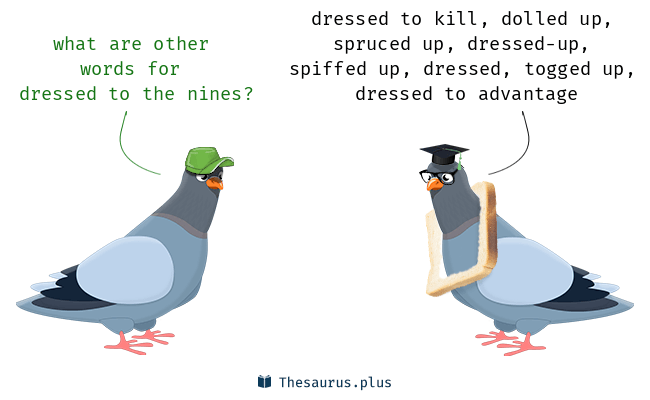
dressed to the nines: well-attired
This American saying is first credited to E.G. Paige’s Dow’s Patent Sermons of 1849 with the passage “A gentleman tiptoeing along Broadway, with a lady wiggle-waggling by his side, and both dressed to kill.” Dressed to kill signified a conquest, and being dressed to the nines are similar in that they both mean achieving perfection since “nine” is considered to be a number that is associated with the best (being the highest single digit).

image: thesourus.com


dull as dishwater: boring, oh so boring
The original saying was “dull as ditchwater” which referred to the muddy murk found in roadside ditches. In Oliver Twist by Charles Dickens the sentence uttered by Fanny Cleaver is found: “He’d be sharper than a serpent’s tooth, if he wasn’t as dull as ditchwater.” Probably due to incorrect or sloppy pronunciation “ditchwater” became “dishwater.”

images: AZ quotes

This was condensed list of “D” sayings–if I missed one or two let me know!

Ya Dah!


Monday marked the closure of my teaching career. A rounded off twenty years of teaching: 19 in the classroom with 1 year as the credit recovery coordinator.

Our school holds a retirement breakfast and each principal or supervisor says a few words about their retiring staff member before handing over a handsome plaque. My principal did say a few nice words then stumped me with an obscure Shakespeare quote. With a reputation as the resident Bardinator he must have thought I would be able to quote what play it hailed from. If I had known there was going to be a pop quiz I would have studied the night before.

WHEREOF WHAT’S PAST IS PROLOGUE; WHAT TO COME, IN YOURS AND MY DISCHARGE. —The Tempest, 2.1 (missed this one, so distracted by Ariel and Caliban)

Our vice-principal, who handles most of the disciplinary issues, decided a mild roasting was in order. He declared me the most prolific behavior referral writer among the staff, keeping him busy (isn’t this called job security?) and handed me “Webb’s Greatest Hits”—a thirteen page document of all my discipline referrals over my classroom tenure. (Isn’t this just doing my job with dedicated zeal for behavior modification?)

Post breakfast meant turning in my phone, keys, and final farewells. Being homeless, since another teacher was moving into room with gusto, I left. Basically my teaching career ended before 10 am. That’s a ponderful thought: you can take away a teacher’s room but there is always room for teachers.

I spent the rest of the day reading, napping, finding a place to put away my accumulation of classroom stuff acquired over 20 years. That’s a very different post.

Over the past week people kept asking how it felt to be retiring. I had a different reply depending on the day. After all, it wasn’t over until my grades and keys were turned in. On this last day, the reality of leaving the career I inadvertently was herded into washed over me when a former student, now our study hall supervisor found me after the breakfast and said, “I’m sad you’re leaving. I’m happy for your retirement, but sad you’re leaving.” Yes, that’s exactly how I feel as well.

As how to spend the first day of retirement? It’s my birthday—so I’ll do whatever I want. It’s Flag Day to boot!

Happy retirement! Happy Birthday! Happy Flag Day!

This is an extra special birthday
Happy Flag Day!

Reader Roundup: May


May proved to be a busy reading month with ten books added to the Reading Challenge. Usually spring weather has settled into spates of rain with mostly sunny days by May. This year April’s rainy days stayed and stayed well into May. Reading became a means of passing the time while waiting for those momentary sunny moments to burst through enough for a walk or try to mitigate the host of weeds cropping up in the yard.

A discovery of new authors and new series is always welcome. These are all 4 and 5 star reads.

Who said libraries are dull?

There’s no body in the library in this mystery just a mystery within a mystery within a mystery. The first mystery is where is the library’s newly purchased prized acquisition? The second mystery being is it stolen or misplaced? And finally, is there a connection between the missing librarian and the missing acquisition?
There are other mysteries such as the secrets that each of librarians harbor. In the center of all of these major and minor mysteries is Liesl Weiss temporarily filling in the enormous shoes of the library director who has suffered a debilitating stroke.
A quirky, refreshing debut that will certainly resonate with bibliophiles.

A history with some mystery

Mystery historical fiction with a memorable heroine is not for everyone, as the reviews indicate. But for those who can see beyond the tropish plot and embrace yet another plucky female sleuth who is resourceful, intelligent, personable, and of course, beautiful, then Maisie Dobbs is a suggested read.
For fans of Mrs. Pollifax and even Nancy Drew.

An adventure of merit

Think graphic novel without the graphics. A conglomeration of characters, situations, and settings with much mystery, adventure, and a touch of romance with splashes of humor.
Warning: a cliffhanger ending (best have the sequel on hand).
For those looking for The Princess Bride or The Invention of Hugo Cabret type of read.

Food and Friends–a great combo

Friendship and food—if this combination appeals to you then do check it out and be prepared for a surprise or two.
Starting out in the usual epistolary novel manner of strangers exchanging letters until a friendship firmly forms, the authors segues into personal, social, political issues representing the sixties that drift into today’s views.
Not being a foodie, the interpersonal aspect of two women different in age, background, and experiences proved quite satisfying.
Recommended for those who enjoyed the Guernsey Literary Sweet Potato Pie book.

Looking forward to end of school and the beginning of summer and all the books yet to read.

Have you read any on this list?

Post Navigation