Pam Webb

a writer's journey as a reader

Archive for the category “Reflections”

Comfort Flicks


A realization (perhaps a confession): Less daylight hours results in a tendency to lean towards comfort flicks. Some might seek comfort foods; however, winter means less walking opps and that means weight gain. Hence, I pop in a flick instead of flicking chips.

During the day I easily hunker down by the window and read, read read, but reading by lamplight is not as fulfilling, and now that it’s dark by four o’clock the need to pass the long evening is often remedied with screen time.

While always game for a riveting new series or film, there is a penchant for seeking an old favorite to relieve the ennui of winter. Here is a random list of some faves. Any on your own list?

Antman

Bride and Prejudice

The Big Country

The Chalk Garden

Charade

Emperor’s New Groove

Galaxy Quest

Holes

Hunger Games

The Incredibles

Jane Eyre (Timothy Dalton version)

Maltese Falcon

Megamind

Monsters Inc.

My Man Godfrey

Penguin Town

Sabrina

Sahara 

Thin Man (the series)

To Kill a Mockingbird 

Sneakers

Stranger than Fiction

The Thursday Murder Club (newly added)

What makes favorites? Any of the following elements;

  • Great acting (To Kill a Mockingbird)
  • Exceptional, creative story (Emperors New Groove, Stranger Than Fiction, Hunger Games)
  • Makes me laugh out loud (Galaxy Quest, Antman)
  • Escapism (Sahara, Bride and Prejudice)
  • Ensemble cast (Sneakers, Thursday Murder Club)
  • Classic (My Man Godfrey, Sabrina, Charade, Maltese Falcon, My Man Godfrey, Big Country, Jane Eyre, Chalk Garden)
  • Speaks to the kid in me (Incredibles, Megamind, Holes)
  • Just Because (Penguin Town–I can’t resist penguins)

What’s your go to for getting through the long months of winter?

Word Nerd: Bodily Lexicon


It’s amazing how we can go in life not realizing there are specific words for everyday aspects. For instance, there are succinct terms for certain body parts that we might be totally oblivious even exist.

So–how many do you know?

1. philtrum: that little dip above your upper lip underneath your nose

    2. lunula: the half moon at the bottom of your nail

    3. glabella: the space between your eyes

    4. canthus: the place where your upper and lower eyelids touch

    5. columella: the strip of skin between your nostrils

    6. purlicue: the skin fold between your thumb and index finger

    7. tragus: the bump that is near your ear opening

    8. uvula: the part that hangs at the back of your throat

    9. gnathion: the point of the chin

    10. nasion: the dip between the eyes above the nose

    11. axilla: the term for armpit

    12. sternum: the bone in the middle of your chest

    13. zygoma: the term for your cheekbone

    14. hallux: the term for your big toe

    15. pinna: the outer shell of your ear

    How did you do? Maybe you did better than me.

    I knew “philtrum” from my university days of studying speech therapy as a possible career (which I did not pursue), “uvula”–same class, and “sternum” from taking CPR.

    Now how does one work these into a conversation without sounding like a med student?

    Perhaps:

    “The wind blew fiercely across her zygoma and nipped her pinna, causing her to long for the cheery fireside awaiting her at home.”

    Or:

    “Already late for his appointment, Phillip angrily kicked the flat tire of his Mazda pickup truck immediately rendering a pain to his hallux.”

    Doubtful:

    “Watching the 747 taxi down the runaway, Alice closed her eyes at this final farewell, with a tear barely contained within her canthus.”

    Reading Roundup: 2025 November


    November is the month that a warm sunny day is an unexpected gift. Reading outside becomes a rare treat, even with sunny skies since the breeze is quite unfriendly. It is also the month that I wonder how much more reading I can accomplish as December looms ahead as well as my hopes to best last year’s reading accomplishment. In the past few years I have surpassed my yearly Goodreads Challenge goal of 101 books. This year though, I wonder can I beat my all time record of 173 and possibly get to 200 books?

    Here are the five star reads of November:

    The Place of Tides by James Rebanks

    “I am only the storyteller. She is the story.” This the essence of the book. The author, seeking to change the manic pace he had created in his life, seeks out Anna, having made her acquaintance years ago when she is tending the ducks nesting on a remote Norwegian island.

    He commits to spending the nesting season with her and the book is his account of that time. Part journal, part autobiography, Rebanks relates the season as it unfolds, the cadence of the work and how the pace of the work impacts him as he learns more about Anna’s chosen role as a “duck woman.”

    Rebanks unfolds the story in sequence similar to a rolling wave, how it drifts forward and then curls back, only to repeat, with an occasional stormy sequence. Two thirds of the book revolves around the preparation of the nests, the tedious rebuilding and checking, as they awaited the arrival of the ducks. The last part is a reflection of life beyond tending the nests.

    The book, like life on the island, unfolds on its own terms, setting a pace that needs to be unhurried. Rebanks describes the simple and stunning environment he is immersed in with often profound prose, allowing the reader to share in his appreciation of the island and its remote beauty.

    This book is companionable with, Raising Hare, another journal-oriented book, as both books emphasize how the pace of life is bettered when it slows down to enjoy nature, especially its wild creatures.

    Words on Fire by Jennifer Nielsen

    The historical fiction intended for middle grade readers opens with Cossacks arresting Audra’s parents for being book smugglers and Audra running for her life to hide in the Lithuanian forests.

    Words on Fire recounts vividly the struggle Lithuanian people faced to keep their culture alive once Russia invaded their land and subjugation began. Audra, though young, eventually becomes a book smuggler herself through the help of Lukas, Ben, and Milda and others willing to risk their lives to keep their culture alive through obtaining books written in their own language.

    Full of adventure with vivid descriptions the story is both engaging and encouraging. The message how important it is to preserve books as a means of preserving a culture is well-presented.

    Tom Lake by Ann Patchett

    Tom Lake. One of those books I’m sure I must have read but as I start reading this story that is gently set during the early days of the pandemic, the realization is I have been intending to read the novel but have put it off. And now I can see why Ann Patchett is such a big deal as an author.

    Lara, once upon a time, had been born Laura. She discovered she was also born to play Emily in the play Our Town, so she did. From there she was discovered, made a movie, starred in summer stock, became the momentary girlfriend of a movie star, before he became a movie star, and then married a cherry farmer.

    This is the story she tells her three daughters as they pick cherries, at least most of it. There are parts only we readers get to know.

    Tom Lake is funny, poignant, often brilliant, and is difficult to set aside, because, after all, work does not stop, even for a good read.

    Onto to find another Ann Patchett title and try not to chastise myself for not reading her sooner.

    Lost Stories by Dashiel Hammett

    Hammett may be most remembered for The Maltese Falcon and his private detective Sam Spade, but it took him several years, and much personal travail before he became regarded as the inventor of the hard-boiled (such a cliche now) detective.

    Small Things Like These by Claire Keegan

    In my reading experience stories set in Ireland tend to have a sadness threaded through them which creates a resonance long after the last page is turned.

    Such is the case for Keegan’s novella which centers around Bill Furlough, a decent man who loves his wife and daughters, yet is haunted by his past. Unlike many, if not most, of those living near the convent Bill does something about the injustice he witnesses when he drops off a load of coal.

    As the story ends, it hints at another story, one that may never be told, yet for Bill he is willing to take on the challenge of care that needed doing. The story is made much more riveting knowing Cillian Murphy plays Bill in the film version.

    The Impossible Fortune (The Thursday Murder Club #5) by Richard Osman

    There have been some definite changes since the Thursday Murder Club gang last met. For one, they moved from the more formal setting puzzle room into the therapy pool aka hot tub for their meetings creating a chummier consultation session. Secondly, the recognition of their capabilities has primed them to be sought out by all manner of people with a problem. Thirdly, and quite profoundly, Connie, the hardened criminal mastermind, has shed tears and offered up a sincere and appropriate apology when it mattered.

    With sophisticated wit and clever plotting this fifth series entry is all the more fun to read since Netflix provided an excellent movie version. Elizabeth’s tart remarks are spoken with Helen Mirren’s brisk delivery and so it goes with each of the characters. The in joke about Pierce Bronsan and Bond was delightful.

    Looking forward to the further adventures of the TMC crew whether in film or in print.

    How is your reading challenge going?

    Bard Bits: ‘Tis Time of Thanks


    Of course there are no Thanksgiving scenes in any of Shakespeare’s works since that holiday was not on his creative road map. However, he did have several worthwhile lines about giving thanks. Feel free to share as you gather round your table on Thursday.

    • “O Lord that lends me life, lend me a heart replete with thankfulness!” — 2 Henry VI
    • “Small cheer and great welcome makes a merry feast.” — The Winter’s Tale
    • “Thanks, sir, all the rest is mute.” — All’s Well That Ends Well
    • “For this relief much thanks.” — Measure for Measure
    • “You great benefactors, sprinkle our society with thankfulness.” — Timon of Athens
    • “Thanks to men. Of noble minds, is honorable meed.” — Troilus and Cressida
    • “For your own gifts, make yourselves praised.” — Timon of Athens
    • “Only I have left to say, More is thy due than more than all can pay.” — Cymbeline 

    As for my favorite thanks quote I offer up:

    “I can no other answer make but thanks, and thanks, and ever thanks.” — Twelfth Night

    BMW Moments


    Have you lately experienced any of the following?

    a. At the store you see one aisle over that person from (fill in the blank) and want to say “Hi” but forgot their name, so you avoid their aisle and suddenly become interested in something to avoid meeting up with them.

    b. You are watching a movie and an actor steps into the scene, you know who they are, and can even recall all the other movies you’ve seen them in, but their name is just out of reach.

    c. You’re out in the garage looking for that one tool needed for your project and can’t locate it so you ask if anyone has seen it but right then you’ve lost the actual name of it so you invent a close facsimile like “air blower” for the “leaf blower.”

    Any of these ring true for you?

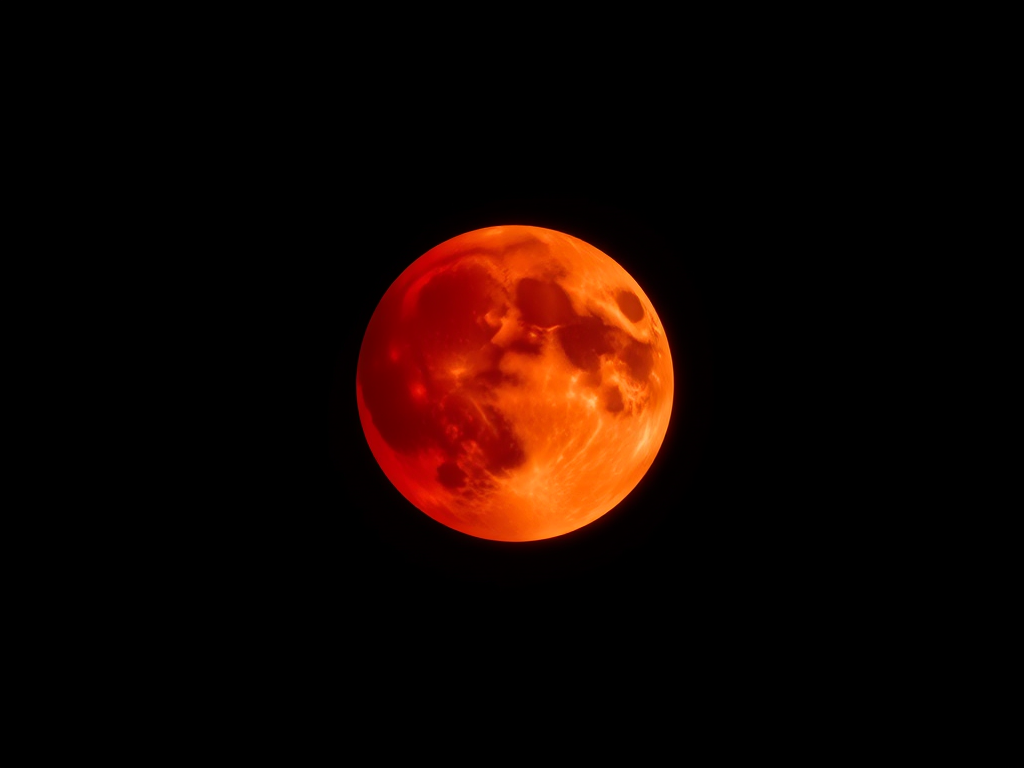
    I call them BMW moments. Not to be confused with this:

    Not the BMW for now

    It’s more like this:

    Yeah, definitely

    A BMW moment is what I have come to call “Brief Missing Word” moments. It’s where for a nanosecond (or sometimes longer) the name or term, that needed word that is hovering just out of reach cannot be reeled in by those little grey cells (Poirot no doubt had those brain glitches now and then).

    In my younger days, about ten plus years ago, I noticed this would happen when I was teaching. I’d merrily be explaining something to my students and suddenly the word I needed evaporated right when I needed it. Most perplexing and vastly irritating.

    My hubs eased my concern saying my brain is a computer and like a computer its memory files just needed some defragmentation. Plus being tired no doubt also affected my memory recall.

    I bought it and learned to adjust becoming adept at word switching or talking around the missing word through descriptive embellishments.

    Once retired, I thought with my mind less filled with lesson planning, grading, evaluation demands, etc. my brain files would have more space. And sleeping in, along with naps, meant being less tired. Right?

    Nope, BMW moments were becoming more of a regular feature of my life. So, I naturally think dementia and go to my doctor. He gives the test.

    I pass.

    His comment is that I shouldn’t worry about those missing word moments unless I start forgetting the names of my children or husband or start putting my car keys in the refrigerator.

    Okay. I can accept that. I’m learning to live with those brief missing moments.

    Now as soon as I find my keys I can go to that one store so get that thing. Maybe what’s his face has seen my keys.

    Word Nerds: It’s About Time


    tick tock once again changed the clock

    I’m almost adjusted to the annual switcheroo, although that shock and surprise of darkness descending at 4:30 pm and waking up at 6 am and thinking it must be the middle of the night because it is so depressingly dark never has become something I’ve grown used to over my lifetime of turning the clocks back one hour in the fall.

    Whew-a paragraph of quiet rant. Thank you for allowing that. I do feel better.

    With time on my mind, I thought I would dedicate this month’s Word Nerd post to words that reflect time. Ready?

    At least one full page!

    How are you coping with the time change. You are excused if you are from Hawaii or Arizona.

    Reader Roundup: October 2025


    I reluctantly packed up my hammocks at the end of October which means entering into the long season of more indoor reading time. Reading by lamplight is not as fulfilling as reading by sunlight. My reading stats will definitely decrease. *Sigh*

    Isola by Allegra Goodman

    image: Penguin Books

    Marguerite, a young French girl born into privilege, is betrayed by her protector, Roberval, who has mortgaged her wealth and lands to finance his travels to make a name for himself.

    As an orphan, a a woman living in the misogynistic times of the Middle Ages, she has no choice but to obey her patron. When he demands she accompany him on his ship to colonize New France she and her maid reluctantly board, apprehensive of their future.

    In a scheme to ensure her death, Roberval, in order to inherit her remaining assets, declares treachery against Marguerite and his secretary and abandons them on a wretched island.

    The novel is based on a snippet of historical interest and is expanded into a tale of transformation and spiritual journey. Marguerite’s voice is stilted, representing the subservient attitude women had to adopt during that time period, yet she projects the independent attitude of a contemporary woman, angry at the injustice dealt her.

    The Singular Life of Aria Patel by Samira Ahmed

    image: Amazon

    Definitely not the usual YA read as it mixes together quantum theory with a coming-of-age romance along with a mystery plot, all based on a poem inspired by Shakespeare’s Hamlet.

    At this point you are either in or out.

    Fans of John Green and Dr. Who will appreciate the intelligent chaos that is interpersed with Aria’s humor.

    Only 2 books rated five stars out of the 20 read in October. Some were, as Maxwell Smart used to say: “Missed it by that much.”

    Some books are so close to being
    🌟🌟🌟🌟🌟

    Do you read more during summer or during winter?

    How Cliché: “U” Know It


    There’s a guy I know, laid back, long hair, beard, comfy clothes, a man of few words—yeah, kind of that hippie vibe—and when you greet him he says, “You know it” with a smile. Yup, Charlie is pretty chill.

    So with the vibe of relaxed, here are some chill “u” clichés”:

    Under her/his thumb: subservient (beware of a boss who is considered all thumbs)

    image:BBC Learning English

    Under a microscope: close scrutiny (nothing like being pinned between glass slides with an eyeball staring at you)

    Under the table:receiving payment without notifying the IRS as income (I don’t know what you are talking about)

    Up for grabs: available (it is polite to ask first, I would think)

    Ugly as a mud fence: very unattractive (can’t imagine such a fence making the pages of Better Homes and Gardens)

    image: Citizen Times

    Up in the air: no decision made (it’s up in the air whether it’s more popular to say up in the clouds instead)

    Until the cows come home: waiting expectantly (cows are time conscious and will return to the barn when they are ready)

    Up in arms: to become upset (referring to when soldiers when prepare for a fight by grabbing their weapons)

    Up the ante: increase the odds or compensation

    Up the creek without a paddle: to be in trouble or in possible peril

    image: Tumblr

    What cliché is meaning?

    October 29th: The Cat’s Meow


    Two favorite calendar days are back to back this month: Chocolate Day was October 28th (I celebrated with Dove Bites—how about you?)

    And today is National Cat Day! To celebrate here are cat tidbits to enjoy:

    Cats and Author Laps
    Through time cats and writers have formed a purrfect team. A few authors who have preferred the company of cats are:

    • Neil Gaiman (he used to write a blog about his cats)
    • Mark Twain (he would rent kittens when he went on a writing vacation since he had to leave his cats behind at home)
    • Ernest Hemingway (he built a cat tower for his brood of over 30 cats when he lived in Cuba)
    • Alice Walker (she developed a deep relationship with her cat)
    • L.M. Montgomery (she claimed grey cats were perfect and adored her cat “Lucky.”
    • James Herriot (while he loved dogs, he had a special place in his heart and writing for cats)
    • Edgar Allen Poe (he bonded with his “Catterina” who would sit on his shoulder while he wrote)

      Cat Facts
    • cats can vocalize at least 100 sounds
    • cats were referred in ancient Egypt
    • cats can jump six times their body length
    • cats are known to sleep 12 to 15 hours a day
    • cats can run up to 30 mph
    • cat brains are 90% similar to human brains

      Cat Poetry
      Authors through the centuries have eloquently expressed their appreciation for cats through verse. Here are some worthy poems to consider:

      Emily Dickinson
      She sights a Bird—she chuckles—
      She flattens—then she crawls—
      She runs without the look of feet—
      Her eyes increase to Balls …


      Edward Lear
      The Owl and the Pussy-cat went to sea
      In a beautiful pea-green boat,
      They took some honey, and plenty of money,
      Wrapped up in a five-pound note.
      The Owl looked up to the stars above,
      And sang to a small guitar…


      Carl Sandburg
      The fog comes
      on little cat feet.
      It sits looking 
      over harbor and city
      on silent haunches
      and then moves on


      Famous Cats
    • Puss in Boots: good things come to those who trust a cat in stylish boots
    • Cheshire Cat: Alice learned how talking cats add sanity in a world crazy
    • Grumpy Cat: aka Tardar, who appeared less than impressed with aspects of life
    • Garfield: cousin to Grumpy cat
    • Sylvester: Suffering Succotash not the brightest feline in the basket
    • Morris: Discerning, not finicky, thank you
    • Cat in the Hat: such a troublemaker
    • Felix: the wonderful, wonderful cat

    And there are some notable cat proverbs:
    Nigerian: “When the mouse laughs at the cat a hole is nearby.”
    Italian: “Happy is the home with at least one cat.”
    French: “The dog might be wonderful prose but the cat is wonderful poetry.”
    Irish: “Beware of people who dislike cats.”

    Of course there is the “Dogs drool, cats rule.”

    So Happy Cat Day to you and yours.

    Bard Bits: Time Traveler Report


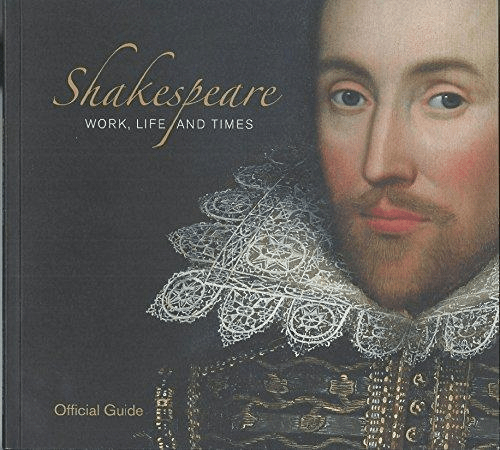
    As much fun as it is to read Shakespeare, sometimes it’s easy to get sidetracked and read about Shakespeare, specifically about his life and times. Then again, since not much is known about his life, more is discovered about his times: Elizabethan England.

    As the time period suggests, this is during primarily during the time of Elizabeth I, and of her life there is much written, with plenty of cinema bio treats ranging from Bette Davis to Helen Mirren. If needing a bit of a history refresher, the EETP (Elizabethan England time period) was from 1558-1603, basically her reign which is also known as the Golden Age.

    However, all was not golden during that age. Even though that particular era ushered in much modernity into the world, it harbored some fairly ruthless aspects including torture, class divisions, lack of hygiene, illness, amidst other important considerations.

    Ian Mortimer, a well-regarded historian, wrote a couple of books presented in a guide format as if the reader were dropped into a particular time period and needed some help navigating everyday life. Since information about William Shakespeare is roughly 20% fact and 80% supposition (my opinion) reading about the times he lived in starts to create a fuller portrait of the man.

    Picking up Mortimer’s The Time Traveler’s Guide to Elizabethan England (as a time traveler interested in learning more about Shakespeare), I decide to investigate what a man might wear during EETP because we all know the expression “Clothes make the man” can be very true and applicable.

    Did you know?

    • Both boys and girls wear skirts in infancy? Boys don’t get “breeched” (a type of hose) until they are around 6 years of age about the time boys head off to school. Girls don’t get to go to school and unless their family can afford a tutor girls are relegated to housewifery lessons. You would think having such an accomplished woman monarch would have inspired the nation to provide to equal education rights.
    • The thigh-length shirt a man wears to bed is tucked into his breeches and worn throughout the day. With its slit sides the shirt can be tucked inside the legs to act as drawers (boxers aren’t available yet).
    • I hear that question–only the well-off have the affordability to have extra shirts on hand, and bathing wasn’t an everyday occurrence (in fact, bathing was rather a not happening part of EETP), so yes, the times beget rather a distinctive ripeness amidst the population.
    • Men wore waistcoats, doublets, cloaks, hats, shoes/boots, and those ridiculous ruffs, those odd scalloped collars that remind a person of the cone-of-shame a dog or cat endures while healing from procedure. And let’s not forget pumpkin pants.
    • Both men and women wore ruffs, which encircled the neck being sewn out of cambric or linen, and were originally a small adornment but eventually grew in size to become status symbols requiring a servant to starch and maintain its shape.
    A jaunty EETP gentleman sporting a double ruff (hoity-toity)

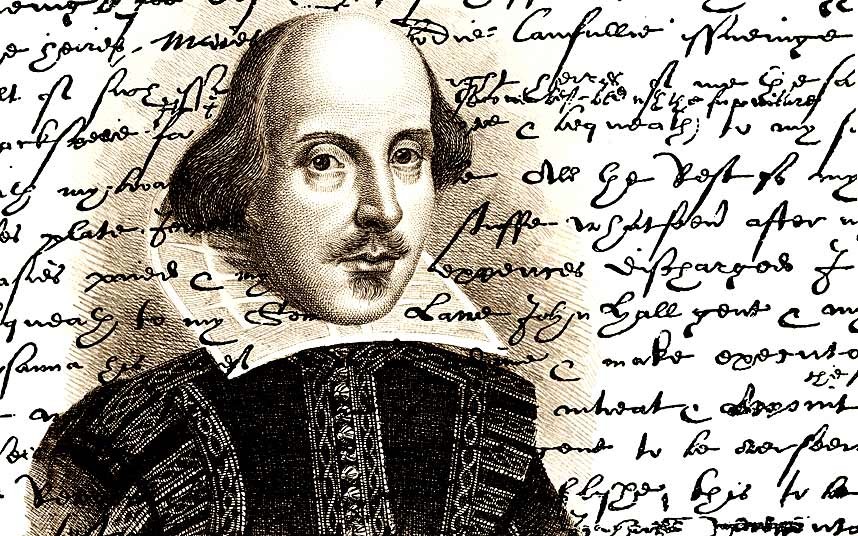
    Most portraits indicate Shakespeare was balding and wore his sides long, while choosing to have a fashionably trimmed beard. Men could go to the barber or have a home visit. A comb was one of the essential items a man carried, along with a knife (for all sorts of purposes, including eating–no forks yet). The comb had wide teeth at one end (for detangling) and narrow teeth at the other end (for removing nits–now you will never look at your comb quite the same way). Beard style ranged from the pointed to full to goatee to mustache to a combination. Of course, clean-shaven was also an option. Today’s current trend of the ubiquitous five o’clock shadow would be not well-accepted: either beard up fully or shave in Shakespeare’s day. Sorry Jason Statham.

    Sorry, Jason, the tuxedo does not replace the fact you need to shave, particularly for an evening’s entertainment at QEI’s court.

    Shakespeare, if following the fashions of his time, would complete with his ensemble with accessories. The comb and knife being mentioned, another item is the purse. This was more of a small leather bag for coins and was attached to the belt. One had to watch out for cutpurses, who did just that. Working as an individual (children were just the right height to snatch and run) or as a gang, purses were cut quickly from belts and the culprit(s)ran off into the crowd. This should have cautioned wealthier individuals from showing off their jewelry; however, one had to show off status. Women weren’t the only ones who liked bling. Men wore gold chains with pendants, or rings, and there is that portrait of Shakespeare wearing a gold earring, although ear piercing among EETP males wasn’t prevalent. A proper gentleman would also carry a sword.

    Not only were swords or the thinner rapier, handy for defense, they were also status symbols.

    So–
    There may not be a plethora of descriptive passages of what Shakespeare wore, although Mortimer provides a fair idea of what he might have worn. Not being a country farmer, nor of royalty, and having achieved some fame and success in the theater, Shakespeare could have attempted to dress in a way that reflected his growing status. He might have looked something like this:

    Yes, you can rent this from Boston Costume for a mere $105.00

    Post Navigation