Pam Webb

a writer's journey as a reader

Archive for the category “Literature”

Poet Appreciation #3: Robert Penn Warren


Better known as a novelist, and perhaps as a scholar, Robert Penn Warren did provide some formidable poetry to ponder. You might be more familiar with his All the King’s Men, which garnered him the Pulitzer Prize in 1947, then his Pulitzer Prize collection Now and Then: Poems, 1976-1978. In all, he was awarded three Pulitzer Prizes, two being for poetry.  His southern background influenced his writing, particularly leaning towards the agrarian appreciation of the land. Receiving accolades and honors throughout his career, Warren left a rich legacy of both prose and poetry.

Image of U.S. Poet Laureate Robert Penn Warren

Image of U.S. Poet Laureate Robert Penn Warren (Photo credit: Wikipedia)

Vision
by Robert Penn Warren

I shall build me a house shall build me a house where the larkspur blooms
In a narrow glade in an alder wood,

Where the sunset shadows make violet glooms,
And a whip-poor-will calls in eerie mood.

 
I shall lie on a bed of river sedge,
And listen to the glassy dark,
With a guttered light on my window ledge,
While an owl stares in at me white and stark.
I shall burn my house with the rising dawn,
And leave but the ashes and smoke behind,
And again give the glade to the owl and the fawn,
When the grey wood smoke drifts away with the wind.

Like Cather’s poetry about the prairie, Warren provides a strong connection to nature. His diction is amazing the way it influences the imagery: “violet glooms,” “guttered light,” “glassy dark”. I don’t even notice the rhyme, it’s so fluid. Whether they poem is taken for its metaphorical meaning or literal, it doesn’t matter to me–I simply want to savor it, rather than analyze it. Good writing is like a good sunset in that words aren’t always sufficient to explain why the beauty is so moving.

Poetry Workshop: The Villanelle


The villanelle is one of those poem forms that when rendered well looks so effortless it’s surprising to learn how difficult they really are to write.


What is a villanelle?

This is a rather strenuous poem in that it contains nineteen lines, which amounts to five stanzas of three lines and one stanza of four lines containing four lines with two rhymes and two refrains.

Now if that isn’t complicated enough, keep this in mind: the first, and then the third lines alternate as the last lines of stanzas 2, 3, and 4, with stanza 5 ending in a couplet.  Oh, yes–the villanelle is usually written in a tetrameter, which is four feet or perhaps a pentameter, constituting of five feet

It’s best to see how a villanelle is wired together. If curious, or willing to try a villanelle with the example by Edward Arlington Robinson found at WikiHow

If you’re thinking, “Well, bosh and bother, I think I’ll pass on the villanelle,” I will leave you some well-known villanelles to contemplate.  Look for those repeating lines.  Like I mentioned earlier, a well-rendered villanelle won’t even appear to be trying so hard.  These poets make it seem rather effortless, don’t they?

Dylan Thomas’ “Do Not Go Gentle into That Good Night”  is one of the most famous villanelles. To demonstrate how the villanelle works the repetition is boldface and italics. A deeper discussion can be found at this link

Do not go gentle into that good night,
Old age should burn and rave at close of day;
Rage, rage against the dying of the light.

Though wise men at their end know dark is right,
Because their words had forked no lightning they
Do not go gentle into that good night,

Good men, the last wave by, crying how bright
Their frail deeds might have danced in a green bay,
Rage, rage against the dying of the light.

Wild men who caught and sang the sun in flight,
And learn, too late, they grieved it on its way,
Do not go gentle into that good night,

Grave men, near death, who see with blinding sight
Blind eyes could blaze like meteors and be gay,
Rage, rage against the dying of the light.

And you, my father, there on the sad height,
Curse, bless, me now with your fierce tears, I pray.
Do not go gentle into that good night,
Rage, rage against the dying of the light.


Another villanelle example:

When I saw you last, Rose,
You were only so high;—
How fast the time goes!

Like a bud ere it blows,
You just peeped at the sky,
When I saw you last, Rose!

Now your petals unclose,
Now your May-time is nigh;—
How fast the time goes!

And a life,—how it grows!
You were scarcely so shy
When I saw you last, Rose!

In your bosom it shows
There’s a guest on the sly;
How fast the time goes!

Is it Cupid? Who knows!
Yet you used not to sigh,
When I saw you last, Rose;—
How fast the time goes!

                            –Austin Dobson

You probably found those repeating lines all on your own, didn’t you?

Here’s a more contemporary villanelle.  Do check out more of Elizabeth Bishop’s poetry. She’s amazing.

One Art
Elizabeth Bishop (1911-1979)

The art of losing isn’t hard to master;
 so many things seem filled with the intent
to be lost that their loss is no disaster.Lose something every day. Accept the fluster
of lost door keys, the hour badly spent.
The art of losing isn’t hard to master.Then practice losing farther, losing faster:
places, and names, and where it was you meant
to travel. None of these will bring disaster.

I lost my mother’s watch. And look! my last, or
next-to-last, of three loved houses went.
The art of losing isn’t hard to master.

I lost two cities, lovely ones. And, vaster,
some realms I owned, two rivers, a continent.
I miss them, but it wasn’t a disaster.

–Even losing you (the joking voice, a gesture
I love) I shan’t have lied. It’s evident
the art of losing’s not too hard to master
though it may look like (Write it!) like disaster

If you haven’t filled up on villanelles yet, I suggest clicking here and reading on a rather nice collection.

Thanks for stopping in for the workshop.  I do hope you will give the villanelle a try, and even if you don’t, I hope you’ve gain an appreciation for a fascinating poem form.


Poet Appreciation #2: Edwin Arlington Robinson


English: Portrait of Edwin Arlington Robinson

Portrait of Edwin Arlington Robinson (Photo credit: Wikipedia)

I vaguely recall reading one or two of Edwin Arlington Robinson’s poetry as I dug through my AP selections. Needless to say, he is not a poet that I am familiar with; however, this gem dropped in my box as a my daily poem offering and it immediately reverberated within me: don’t we all wonder about that abandoned house?

Robinson took his poetry seriously, despite being unable to make a living from it, he persevered. Twice awarded the Pulitzer Prize he still remains relatively unknown, at least I can’t place him in the category of tip-of-the-tongue knowns, like Frost, Dickinson, and Whitman.  Have you heard of him or am I showing my poetry illiteracy once again?

The House on the Hill
by Edwin Arlington Robinson

They are all gone away,      
The House is shut and still,    
There is nothing more to say.

Through broken walls and gray      
The winds blow bleak and shrill:    
They are all gone away.

Nor is there one to-day      
To speak them good or ill:    
There is nothing more to say.

Why is it then we stray      
Around that sunken sill?    
They are all gone away.

And our poor fancy-play      
For them is wasted skill:    
There is nothing more to say.

There is ruin and decay      
In the House on the Hill:    
They are all gone away,
There is nothing more to say.

For a broader perspective of the poem follow this link

I personally am always curious about abandoned houses, or those that seem empty. Yet, there  isn’t a true emptiness, is there as long as houses remain standing, so do the memories. I like how Robinson intimates that though there may be memories, without the people inhabiting the house, there can be no conversations. An empty house is a voiceless house and a house without words is indeed empty.

English: abandoned house

abandoned house (Photo credit: Wikipedia)

Poet Appreciate #1: Willa Cather


English: grass at , located on west side of ju...

Nebraska-Kansas prairie (Photo credit: Wikipedia)

Most recognize Willa Cather as a writer of prairie prose; however, before O Pioneers! came out in 1913, she had published a book of poems entitled April Twilights in 1903. The following poem from that book of poetry served as the prologue to O Pioneers!

Prairie Spring
by Willa Cather

Evening and the flat land,
Rich and sombre and always silent;
The miles of fresh-plowed soil,
Heavy and black, full of strength and harshness;
The growing wheat, the growing weeds,
The toiling horses, the tired men;
The long empty roads,
Sullen fires of sunset, fading,
The eternal, unresponsive sky.
Against all this, Youth,
Flaming like the wild roses,
Singing like the larks over the plowed fields,
Flashing like a star out of the twilight;
Youth with its insupportable sweetness,
Its fierce necessity,
Its sharp desire,
Singing and singing,
Out of the lips of silence,
Out of the earthy dusk.

Cather announces the coming of spring through abounding sensory imagery and metaphors. This poem encapsulates her mastery of description and exemplifies her love of the prairie. Where she found poetry in a land, many only found hardship and heartaches as they tried to subdue tangled, tawny grasses under their plow.

Portrait of Willa Cather

Portrait of Willa Cather (Photo credit: Wikipedia)

Neil Gaiman: Why We Need Libraries


  • image: greenbaywriters.wordpress.com

Neil Gaiman is one of those buzzword authors. Unfortunately, I have not harkened to becoming a reader of his works. I have tried, really I have. However, I do perk up when it comes to successful authors speaking up about reading, particularly about libraries. Last year, Gaiman spoke eloquently about the need for libraries and the lecture,  “Why Our Future Depends on Libraries, Reading and Daydreaming” was reprinted in The Guardian.  

Excerpt:

The simplest way to make sure that we raise literate children is to teach them to read, and to show them that reading is a pleasurable activity. And that means, at its simplest, finding books that they enjoy, giving them access to those books, and letting them read them.

Another excerpt:

Libraries are places that people go to for information. Books are only the tip of the information iceberg: they are there, and libraries can provide you freely and legally with books. More children are borrowing books from libraries than ever before – books of all kinds: paper and digital and audio. But libraries are also, for example, places that people, who may not have computers, who may not have internet connections, can go online without paying anything: hugely important when the way you find out about jobs, apply for jobs or apply for benefits is increasingly migrating exclusively online. Librarians can help these people navigate that world.

  • image: pinterest.com

Check out the lecture. You will be cheering by the end of reading it. You might even feel like running down to your library and say to it, “Thanks for being here.” Don’t forget to hug and a librarian and say the same.

Shakespeare Goes to the Movies


David Garrick in Hamlet, I, 4

David Garrick in Hamlet, I, 4  Is he as surprised the Bard inspired moving and shaking found in film?(Photo credit: Wikipedia)

Shakespeare would no doubt be uber-wealthy from selling screen rights had he lived so long to see all his plays adapted to the screen.  In fact, I wonder how many students realize that all those adaptations have a primary source in the form of stage?  Shakespeare was indeed a playwright and not a screenwriter, yet it is difficult to realize that fact with so many adaptations running around in the cinemas. It’s fairly safe to say that a Shakespeare-driven plot comes out at least once during the year.

With that all out of the way, you can imagine my delight when I came across a website devoted to all the film versions of Shakespeare. It groups them by play and 176 pages you get the idea how much influence old Billy the Bard on Hollywood.  The Hamlet section only is nearly 20 pages!

Oh yeah–this is another Library of Congress find. Have I gushed enough about how the Library of Congress so absolutely rocks?

This treasury of Shakespeare is not just films.  It includes the serious to the silly. Having just finished our AP rundown of Hamlet and Co, I found some select entries for our favorite Prince of Denmark:

HAMLET (Icon Productions/Warner Bros., 1990). Dir Franco Zeffirelli. Wrt Christopher De Vore,
Zeffirelli. With Mel Gibson (Hamlet), Glenn Close (Gertrude), Alan Bates (Claudius), Paul Scofield (The Ghost), Ian Holm (Polonius), Helena Bonham-Carter (Ophelia).
1 videodisc of 1 (laser), ca. 135 min, sd, color, 12 in. LC Purchase Collection. DAA 3087.

HAMLET–CLAUDIUS (ACTOR, A Center for Theatre, Education, and Research, University of California, Santa Barbara/Barr Films, 1991). Series: Shakespeare Explorations with Patrick Stewart. Artistic Director: Patrick Stewart. Technical Director/Editor: Ray Tracy.
1 videocassette of 1 (VHS), 25 min, sd, color, 1/2 in. Copyright Collection. VAD 3701.
Produced for educational use (college level). Patrick Stewart discusses and acts selected parts of the play portraying the character of King Claudius. (VHS)

TALES FROM THE CRYPT. TOP BILLING (Tales From the Crypt Holdings/HBO, 6/26/1991). Dir Todd Holland. Wrt Myles Berkowitz. With Jon Lovitz, Bruce Boxleitner, John Astin, Louise Fletcher, Kimmy Robertson.
1 videocassette of 1, 28 min, sd, color, 3/4 in. Copyright Collection. VBI 9816.
Episode from the 3rd season of the horror anthology series based on the comic books published by
William Gaines in the 1950’s. A failed actor (Lovitz), who cannot get work because he doesn’t have “the look,” answers a casting call for Hamlet only to find himself chosen for the part of Yorick’s skull in a staging of the play by inmates of an insane asylum. (DVD – on Tales from the Crypt–The Complete Third Season)

GREEN EGGS AND HAMLET (Rock’s Eye Productions, 1995). Dir Mike O’Neal. Wrt O’Neal, Chris
Springfield. With Allen Corcorran (Hamlet), Ronald H. Cohen (The King), Richard “Humus” Doherty (The Queen), Josh “Coppertone” Powlesson (Laertes), Robert A. Knop, Jr. (Polonius), Siobhán F. Jess (Ophelia), David Seal (Rosencrantz & Guildenstern), Richard James Mason Horatio).
1 videocassette of 1 (VHS), ca. 77 min, sd, color, 1/2 in. Copyright Collection. VAE 6461.

Got a hankering for a Titus or a Midsummer Night’s Dream?  Check it out Shakespeare on Film

English: banner Shakespeare

Shakespeare (Photo credit: Wikipedia)

The Book I Would Like to Write


Sometimes the rumblings of hunger manage to induce some amazing culinary renderings on my behalf.

“Let’s see–some rice, a dollop of pesto, assorted veggies, ooh a garnish of nuts, oh yeah there is that leftover sautéed chicken breast.”

Yes, it was tasty. No, didn’t snap a photo.

I wish I could do that with my writing. Here are the ingredients that are rumbling around in my writerly mixing bowl:
-an irrepressible protagonist who transcends time
-address a political issue in a manner that is neither knee jerk, condescending, nor didactic
-scatter in memorable minor characters who majorly affect the plot
-set the story in a picturesque small town of yesteryear
-provide a handful of quotes that will resonate long after the book has been reviewed, shelved, studied, and reread
-have one maybe two iconic symbols that shift paradigms
-explore old thoughts in a new way
-create a subculture that spans time, culture, and political decorum

Wait a minute…
This book is already available, attainable, and darn right delicious.

Harper Lee’s classic remains my ideal of perfect novel.  I have too many ideas rumbling around to only write one book, but oh what a book to have written as the one-claim-to-fame.
Do you have a ONE book that you feast on as a reader?  Or is there one special book that inspires your writer creativity towards boil, simmer, and serve?

Jane Austen: Smart Reading


If you are here it’s because the Jane Austen in the title tweaked your interest, right? Well, beyond being one of THE best writers in the literary canonical group of authors listed in the universal TBR list, she is actually a teacher. Actually, Stanford neurobiologists and English professor Natalie Phillips picked her book Mansfield Park to determine a connection between critical reading and brain activation patterns. (source: Luminosity)

Cover of "Mansfield Park (1999)"

Cover of Mansfield Park (1999)

The procedure went like this: an MRI scanned the brains of 18 participants as they read MP. These weren’t ordinary students, no struggling juniors or seniors assigned Janey as an honors read; no, these were PhD candidates. The reason being the researchers wanted to make sure close reading, the reading for analysis, was properly done. Going for a doctorate would probably ensure smarter reading practices. Participants read for “fun,” that is, casually read and then they were asked to close read.

Results: critical reading increased bloodflow throughout the brain, especially to the prefrontal cortex, which is considered to be the center of thoughts and actions and our social behavior.

Implications: close reading, the method of critically studying a text, indicates a connection between shaping and shifting cognition

My Understanding: Sheesh! I’ve been doing this for years. “Hey kids, read this and let’s figure out what it means.” Oh yea, this is what Common Core State Standards is all about–we give students higher level reading material and ask them to think about what they are reading. Like I said *I’ve been doing this for years*.

Okay, do I get my honorary PhD now?

Eyre of Distinction


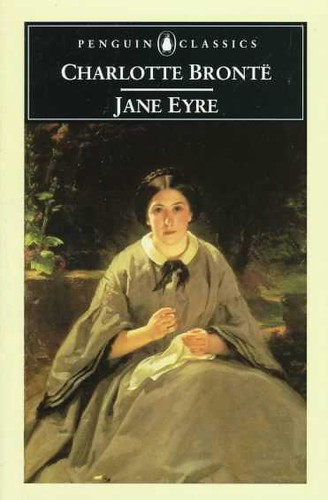
Soon we start our AP novel unit, Jane Eyre. Charlotte Bronte’s novel is one of my favorites, which means I will infuse as much of my appreciation for it as I do for my other favorite classics like Hamlet.  While many wax profoundly about Jane Austen, I think Miss Bronte gets overlooked. Jane Eyre has the distinction of being one of those novels that set things of literature memes, tropes, and motifs in motion by becoming a template for other stories. Consider:

  • she is plain in looks, but beautiful in spirit
  • her intelligence is valued by others, at a time when women were not widely educated
  • she values family over fortune
  • she easily speaks her mind
  • she is independent and finds a way to survive
  • outwardly she is calm, yet ripples with passion underneath her facade of restraint
  • she is perservering, sourceful, and a woman of strong morals
  • she stands up for herself–no doormat dame here

My opinion: Jane rocks. Over the years there have been several film adaptations of the novel.  I binged on JE films over the weekend and came up with my ratings:

1971: Starring George C. Scott and Susannah York
Verdict: skip.

George, too familiar with his Patton role, brought it to his interpretation of Rochester.  He railed and ranted in a very American accent and I gave up after he meets with Jane after their encounter on the road. Besides York’s Jane being too old and much too pretty I couldn’t sit through the poor film quality. The video transfer was so muddied I felt as if I were watching the movie through an unwashed glass.

image: eleganceof fashion. blogspot

1983: Timothy Dalton and Zelah Clarke
Verdict: one of the most faithful and watchable versions

Being a BBC production, I had initial trust it would be a quality adaptation, after all these are the folk who brought us Colin Firth as Mister Darcy. The sets, the important scenes, those inscrutable nuances of the original story are all contained in this mini-series. Timothy Dalton definitely understands the Byronic hero that Rochester embodies and has even said in interviews Rochester is one of his best roles. Clarke, while a bit older than the required 18 year old fresh from her Lowood imprisonment, captures the Quakerish passivity and ethereal nature of Jane Eyre.  The scenes between Dalton and Clarke are melt-in-the-mouth truffle satisfying.  Their version is what comes to mind most often when I return for a refresher novel read. I really did believe a heartstring developed between them. The agony of Dalton’s Rochester when he realized his Jane was leaving him forever kept the tissue box occupied.

1996: William Hurt and Charlotte Gainsbourg director: Franco Zefferilli
Verdict: passable, but strayed terribly from the novel

William Hurt seemed on the verge of understanding Rochester, but kept the bitterness too diminished, too washed out. Charlotte G as Jane got her part right. The plain, passionate young actress  imbued the paradoxical spirit of Jane Eyre. Sadly, there existed no believable passion, that needed kindred heart-string spark, between Gainsbourg’s Jane and Hurt’s Rochester. This spark is the very core of the novel. Without that essential core the movie floundered about like a fish hoping to get back into the water to have a proper swim. The director who brought us Romeo and JulietTaming of the Shrew, Hamlet, and other great stories of passion missed the mark with this adaptation by rushing the story and taking way too many liberties with the plot.

2006: Toby Stephens and Ruth Wilson
Verdict: enjoyable, even if a bit too contemporary in approach

image: writingbar.com

Admittedly, I had started watching this version years ago when it first came out, but found myself so disenchanted with the cutaway flashbacks, I couldn’t get past the Lowood scenes and it wasn’t until recently I returned to another viewing.  I did like the lead actors portrayals, and yes, there was a definite spark between them. I thought Toby Stephens got off easy with his fire wounds, unlike Hurt and Dalton. His rugged looks only appeared rather marred, instead of being ruined. The rolling around, ankle rubbing bit at the end seemed a bit too lenient for true Bronte style. Then again, there are leniences throughout this adaptation I willingly overlooked since the production quality proved so high.

2011: MiaWaikowska and Michael Fassbender Director: Cary Fukunaga
Verdict: Admirable

The first scene makes a diehard JE fan sit bolt upright and ask, “What? Wait–did the movie skip! because the opening scene is starting right off with Jane making her mad dash from Thornfield, which usually means the film is winding up to the grand finale.  Instead Fukunaga gets a bit artsy and dips in and out of Jane’s childhood days in flashbacks, with a quick glance at times at her more recent history.  Artfully done, but a bit disconcerting for those who prefer the linear progression.  Fassbender and Waikowska do provide a sumptuous Rochester and Jane.  Looks, mannerisms, nuances, smoldering passions–it’s all there.  That’s why it the ending is so absolutely frustrating.  I could not understand the need to transform Rochester into a Tom Hanks Castaway lookalike.  Maybe trading out the maimed hand for a beard was a contract compromise. Also, there should have been another 20 minutes of wrap up, yet we are whisked away much too soon.  It’s like being served the most savory dessert and having it taken away after a couple a bites–“Yo, I wasn’t finished.” Apparently Fukunaga thought the audience needed no more indulging and wanted us to move away from the table.

Overall: If a dedicated JE fan go to one of the series adaptations, such as the 1983 or the 2006.  It appears that only when given the proper amount of time (3-4 hours) can Jane’s story be told sufficiently. However, if thinking “book or movie first?” and movie wins out–get the 2011 version.

Further notation: I thought about finding the Ciarin Hinds version, especially after watching him in Austen’s Persuasion with Amanda Root.  Our library no longer has it and after reading the widely mixed reviews of loving it and hating it, I thought I will stick with my picks of 1983, 2011, and 2006 for classroom clips.

Any readers have their own picks of fave JE adaptations?

YAy for Dystopian


Once upon time when writers wrote about the world going wrong and trying to make a go of it in the aftermath the novels usually found its way on the college reading list. Ruined landscapes, fragmented governments, odd creatures mucking about, abundance of shortages and the like just wasn’t fit for kiddos. Think about the titles: Brave New World, 1984, Time Machine, Fahrenheit 451, A Clockwork Orange. Right. Yes. Some of them do end up on high school lists, but not when they first came out. There is a reason for that.

Lately, the shelves are full of dystopian novels and those shelves are usually in the YA section.  There is a reason for that too.

Back in the once upon a time, the world wasn’t that scary, even with the Cold War, we still had a pretty good idea of feeling on top of the world, so we could poke a bit around the edges of the “what ifs.” Then the world did get scary. AIDS, a couple of wars in a few out-of-the-way places, recession, terrorists, weather disasters, recalls–dystopian became popular among YA because the future is not looking so bright anymore. I’m just saying.

In fact, the adults are now reading the YA list (even though some don’t admit it): The Giver, Hunger Games, Maze Runner, Divergent are some names that pop to the surface.

Is Dystopian bad for teens? I don’t think so.  I didn’t get ruined from reading Brave New World in college, although 1984 and Clockwork Orange had me thinking hard at times. 

What do you think? Is there a difference between YA dystopian fiction and adult dystopian? Or is a bad world after the fact good reading for both adults and teens?


Post Navigation