Pam Webb

a writer's journey as a reader

Archive for the category “Books”

POM: April 13


There are natural and learned talents I secretly long to master. Juggling–well, I’m still working on that one. Playing the harmonica–got my harp and my CD ready to go (for the last six years), and hand shadows. Nothing much needed beyond a light and the flexing of one’s hands.

Today’s poem by Mary Cornish harkens to the magic and craft of hand shadows. And it goes well with one of my favorite vids.

Reader Round Up: TAB Syndrome


Upfront and personal: I am not a quitter.

I will gamely finish the less-than-savory pasta I paid for at the overrated restaurant, keep eating salad until the last of the holiday pounds melt away, and keep grading essays until my eyeballs roll around to the back of my head.

I stick to it. Just so you know.

That being said. I am struggling with my reading habits these days. I used to stick with a book, even if it took me days and weeks to soldier on, I would finish it, gritting teeth if necessary (Henry James’ The Portrait of a Lady comes to mind). Lately, I give a book approximately five chapters, roughly a hundred pages, before I judge and jury it back into the library bag for prompt return. My dilemma is this: Would a true Book Booster succumb to TAB Syndrome? Is it acceptable that I wontly and willingly set aside a chosen read and it becomes The Abandoned Book?

Maybe it’s because I realize there are so many books out there waiting for me. Why should I commit to reading something that I really don’t like? Frank Zappa, of all people, is credited with saying:

I have dismissed the following books in the last couple of months.

Starlight on Willow Lake by Susan Wiggs.


image: amazon.com

My mom recommended this author. Often. Frequently. *sigh* Trying to be the good daughter,  I gave it go. Mom and I have different tastes in reading. I toss out titles to her. She tries them and politely responds how the book didn’t quite work for her. This time she tossed out an author to me.  Apparently Susan Wiggs is a popular, best selling author of over 35 books. I had no idea. A whole shelf is dedicated to her novels at our library, or at least ones that haven’t been checked out.

This particular plot focuses on a mother embittered by life since she is now a quadriplegic from a skiing accident that also killed her husband. Her three children are all successful and have aptly provided for her–she is at odds with the oldest son who would rather send a check than visit with mumsy. Mums burns through caretakers like bees flit through a garden. This is where the underdog caretaker is hired. There is also the cold, yet efficient assistant/fiancee to said distant son. I knew where this was going after I read the blurb. I would have hung in there, as I don’t mind the romantic trope of jerk-son-gets-bested-and-turned-around-by-single-mother-with-a-heart-of-gold-who-has- two-extremely-needy-daughters plot. I’m not terribly prudish, yet when everyone starting dropping profanity as if the educated 10% do so because it must be oh-so-cool, I thought “Five chapters–I’m out of here.” Sorry, Mom.

Next up was an AP recommended author I’ve been putting off reading because his writing style is so Joycian. I don’t mind creativity, but I do like commas and other regular punctuation. Emily D is an exception–dash it all, I can handle her penchant for pause for something as short as her poetry. An entire novel of creative punctuation is too much for this English teacher.  So I got Cormac McCarthy’s All the Pretty Horses as an audio book. If I can’t see the punctuation misdemeanors I can simply focus on the story. Wrong.

I really like John Grady Cole. He reminds me a bit of a young Paul Newman in his cool, calm and collected approach to life. I even tolerated Lacey’s potty mouth because his colorful vernacular was such a part of who is. He probably couldn’t talk if a swear word wasn’t in there. Plus, the audio book reader was talented at creating distinctive characters. I hung with Horses until John Grady and Lacey get hired at the Mexican ranch. As soon as the boss’s daughter arrives on the scene I couldn’t bear the heartache of watching John go down as he fell for her. I became too attached. Maybe I’ll watch the movie. I can always fast forward Matt Damon’s pain.


 A student wanted to do David Mitchell’s Cloud Atlas for his Author Spotlight and I try to check out what my students are reading. I tried to get involved in the book, the premise sounds fascinating; however, I couldn’t get past the guy sifting the rocks for cannibal teeth so he could make dentures for a high society lady and then tell her that she was chewing with said teeth. Too gruesome for me. I might give it go sometime, someday because the switched storyline style intrigues me. There is also the movie.

I have abandoned other books. Not often, but I do. I don’t feel this guilt out ejecting a movie from the DVD player. Somehow setting aside a book is like walking away from a conversation. It feels rather rude. I’m working on casting off this guilt. There are, after all, so many other conversations waiting for me out there.

Anyone else struggle with TAB Syndrome?


POM: a bit of hope


January is a paradox for me. It’s both the longest month and shortest month. It seems long due to the dark and dreary everlasting winter days, yet short because of looming finals, grading papers, and preparing lessons for second semester. This is why I’m a fan of February. I could say it’s because February is the shortest month which means I’m that much closer to June and summer break. It could be because it’s the month of Valentine’s Day, and who doesn’t appreciate a holiday filled with love and chocolate?

I actually favor February because it’s a month that is filled with hope. Days are getting longer, snow is giving away to grassy patches, there is the sense of completing another school year as graduation day is nearer on the horizon. There is also the moment of pause to think, “This year will be even better than last year.”

To celebrate this feeling of hope, the Poem of the Month is “To Hope” by  Charlotte Smith

 Oh, Hope! thou soother sweet of human woes!

How shall I lure thee to my haunts forlorn!

For me wilt thou renew the wither’d rose,

And clear my painful path of pointed thorn?

Ah come, sweet nymph! in smiles and softness drest,

Like the young hours that lead the tender year,

Enchantress! come, and charm my cares to rest:—

Alas! the flatterer flies, and will not hear!

A prey to fear, anxiety, and pain,

Must I a sad existence still deplore?

Lo!—the flowers fade, but all the thorns remain, 

“For me the vernal garland blooms no more.”

Come then, “pale Misery’s love!” be thou my cure,

And I will bless thee, who, tho’ slow, art sure.

image: morguefile/lisasolonynko

Book Booster Spotlight


Around four years ago when I began this blog I set up a page dedicated to collecting Book Boosters.  The qualifications were fairly simple:

Do you love books?

Do you have favorites you read, recommend, and even re-read?

Are you a frequent flyer at the local library?

Are you an on-line regular of book sites, be they promoting to buy, review, or boast books?

Perchance you operate on a need to read basis–you have to have a book in hand, by the bed, stashed in the car, or have one nestled in the backpack.

You then, my friend, are a Book Booster. And you are in good company. Add your name to the list and welcome to the shelf of those who appreciate and advance the cause of books.

To date there are around 70 Book Boosters. There are no secret handshakes, no monthly meetings. I have considered t-shirts and bumper stickers.  As a thanks for taking the public step as a proclaimed bibliophile, I shall spotlight a random Book Booster.

This month’s BB Spotlight is:

Tish Farrell

Portland 6 (2)

In her own words:

Being a writer can be wretched. (What did Douglas Adams say about it: staring at the page until your eyes bleed?) So in an attempt to stop my eyes bleeding, or my brain exploding I thought I would use this blog to write about the place where I am now (Shropshire) and the places where I used to be (Kenya). Sometimes they get mixed up together. But that doesn’t matter. Anyway, the literary analysts tell us that creating a convincing setting, that telling sense of place through which the human action threads and is revealed is crucial to any story – non fiction or fiction. So these are my practice pieces, then; a fending off of writer’s block perhaps. Who knows? Other stories might spring from them.

Tish also provides amazing photos. I especially appreciate her Kenya shares, as I doubt I will ever make that journey.

Are you interested in proclaiming your love of books, your need to read? Leave your name and I will gladly add you to the growing list of Book Boosters, and who knows you too might find yourself as a featured BB Spotlight in the near future.


Review Roundup


I catch up on my blogs through my iPhone reader which means I miss any goodies that enhance that web page. And that means people miss my little extras as well, such as my Good Reads update feed. So, a new addition to my line up of features shall step forth: the Review Roundup in which I lasso a couple of books from my Completed Reads Corral and trot them out for all to admire. I’m in the midst of Cormac’s All the Pretty Horses, so horsing around is a given.

Last year I thought 50 books to be a good goal and I nearly doubled it by reaching 92 reads. This year I decided to go for 101. So far, so good as I read 11 books in January. Here’s my top three picks of January:

Pop Sonnets: Shakespearean Spins on Your Favorite Songs

Fair is the song that remains in the heart,
That soothes the savage scorns that love inflicts,
Or brings joy to our lips as does the lark,
Causing fingers to snap and heels to click.Songs. Sonnets. Put them together, as has the very clever and talented Erik Didriksen, and you have a collection that is memorable and marvelous. His book started out as a weekly sonnet post on Tumblr which grew a following and garnered him a publishing contract. Ooh, I love those kind of success stories.

There is indeed something for everyone, from The Beatles to Cyndi Lauper to Frank Sinatra–sing the praises of Pop Sonnets.

I am in the middle of my “chase-down-every-D.E. Stevenson-book-I-can-find” adventure. I may owe our public library’s inter-library loan department some compensation once I reach my goal of finding all 40 plus novels. I am a professed Dessie. Stevenson’s books are old-fashioned, yet hold up well for story-telling. A big bonus is that many take place in Scotland, the land of my ancestors. I do like her plucky heroines. Here is a new fave:
Kate Hardy buys a country house unseen and makes her move from London to the dull quiet life so she can continue writing her popular hero-action books. Yet, life in the country is far from dull. Strange letters, neighborhood dramas, tangled romances, along with irritating relatives visiting, interrupt Kate’s solitude. And she doesn’t mind one iota.
A thoroughly likable plot and heroine, the book would have garnered five stars except for the ending. DES is terrible about her loose endings. Everything comes crashing to a big finale but she tends to leave loose bits trailing in the breeze. My hope is that Kate Hardy continues on in another book.
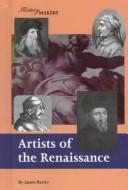
The Renaissance is an age like no other. There were so many accomplishments in so many areas of the humanities and sciences, it merits study to better appreciate the genius behind the works. One area of accomplishment, one that still leaves the world in appreciative awe is the art and artists of the Renaissance.
Barter’s reference book provides background and insights on several of the prominent artists of the time such as Michelangelo, da Vinci, and Raphael. Surprisingly, Botticelli is not part of the group; however, the artists featured provide a satisfying study into some of the most influential talent of that time period. A great reference for students, or for those looking for a quick, in-depth study.
Have you read any of these? Better yet, what was your favorite January read?
 

A Bit of Book Botherment


As much I proclaim to be a Book Bookster, I fear I’m not a proper one, for if I was,  wouldn’t I be scandalously boring about reminding everyone that September was National Get a Library Month (“get carded at your local library”) or that October was National Book Month? I’m not fully living up to my potential. I’m hoping it’s okay that I just read and blog about what I’m reading. Guilt does overtake me now and then that I should be organizing parties and perpetuating cute little cookies in the shapes of books or something. Perhaps I need one of those calendars that they tend to pin on the wall in the staff bathroom that spouts when it’s national Eat a Chili Pepper Day or National Hug Your Bank Teller Day. There must be a calendar app just for bibliophiles.

However-

In an attempt to make amends for not noticing October was National Book Month, I will reprint an article about books that have influenced a batch of Ted Educators. We do like our Ted Talkers.

If I were a Ted Educator and someone did ask me about a book which had influenced me, I would wholeheartedly reply: To Kill a Mockingbird for the reason that having read it I keep passing on my passion for it on to my students. It’s not just required reading. It’s required to read to understand our US country’s history better and how Jim Crow laws affect who we are today, and how walking around in someone else’s shoes should be a lifestyle commitment not just the answer to the question on the test of “name a famous Atticus quote.” I know the book makes a difference in my students’ lives because when they return to me three years later as seniors that unequivocally agree that TKAM  is “such a great book.”

As to the idea of books making a difference or creating an impact in live I provide for your entertainment and enlightenment John Green’s list of books he appreciates.


So, by the by–which book has changed your life? Or is there a book you want everyone to go and read right now?

Another Year of Interesting Words


Keeping track of words learned is becoming as much of a habit as keeping track of books read. Learning words definitely is result of reading books. I wonder if there is a cousin Good Reads tracker app for Good Words yet. No doubt there is. Or maybe the next dot com app millionaire is in the wings. There is a untapped market for word nerds.

My method is fairly Neanderthal. I’m basically in hunter gatherer mode as I set forth daily upon the plains of learning. That is a bit much, isn’t it? Actually, it’s more or less serendipity. When reading, and I come across words of interest, I type them into my phone in my notes under the file Vocabulary. And like the Guardians of the Galaxy Collector, I keep them there so I can view them.  Some are prettier than others, while some are rare and exotic, and some I take out of my collection and begin implementing, realizing their worth increases with continuous use.

Here are some live captures. For interest, I state where I captured the lexical little beastie.

 The Year of Lear by James Shapiro

  • recusant: a person who refuses to submit to an authority or to comply with a regulation. [Lots of Catholic/Protestant tussling going on in England around 1606]

The Victorian Life: Modern Adventures in Nineteenth Century Culture, Cooking, Fashion, and Technology by Sarah A. Chrisman

  • quotidian: of, or occurring every day; daily [a 21st century woman choosing a 19th century lifestyle would get used to the daily routine of repetive tasks such bread making]

Jane Eyre by Charlotte Bronte. NOTE: as long as keep teaching the novel I keep rereading it, and yet I still find new words. Fascinating.

  • deglutition: process of swallowing
  • celerity: swiftness of movement

Emma (The Austen Project #3) by Alexander McCall Smith

  • impedimenta: equipment for an activity or expedition, especially when considered as bulky or an encumbrance [this one I’m willing to trot out and air as in addressing my students, “Excuse me, your impedimenta is blocking the aisle.”]
  • canard: unproven rumor or story

This next batch mainly derive their existence and capture from the books of D.E. Stevenson. It is an on-going project to read her legacy of 40 novels (give or take a couple of Mrs. Tim’s). She’s primarily writing about Scottish and English life pre-WWII to 1975. It’s been interesting to see which words she favors and which words were in vogue during the span of her long career. She did favor the sprinkling of French.

  • ructions: a disturbance or quarrel [“ruckus” a relative?]
  • pourboire: a gratuity or tip
  • cavil: make petty or unnecessary objections
  • muckle: to cover inanimate objects in glitter in a vain attempt to make them appealing enough to buy [Mike Allegra dislikes muckley Christmas cards]
  • gaucherie: a tactless or awkward act
  • vaunted: highly praised
  • pied-a-terre: a temporary or second residence [very handy for the dismal months of winter glum]
  • arriviste: a social climber, a blunder

Do you collect words while reading? 

A Good Year for Reading


January is a month of reflection. This is probably due to January being the default month since it is between Christmas past and Valentine’s Day to be. While working off Christmas treats in order to succumb to anticipated chocolate hearts I have decided to give my 2015 year of reading a closer examination. Actually, I probably wouldn’t have done much more than said “Cool. I met and surpassed my Goodreads Reading Challenge.” Since they took the time and trouble to send me such an attractive report, I shall share the highlights with you all. If the pontification of accomplishments is not within your scheduled viewing, I am absolutely not offended if you drift off to the next blog in your reader. However, I am hoping you will stick around.

First Off:
Books Read: 91
I set my Reading Challenge at 50 books, thinking “Hmm, that’s about one per week–that’s doable.” With so many great recommendations from so many dedicated Book Boosters like Heather and The Paperback Princess, I kept adding to my “To-Read” list and kept reading. I still have about 73 books on my TBR list. *Sigh* I have need to read issues.

Secondly:
The Short and Long of It
Shortest book: 96 pages

The Rabbit Who Wants to Fall Asleep

by Carl-Johan Forssén Ehrlin

Reading books to kids at bedtime is a lovely routine, a cozy bonding time, and a way to pass on the joy of words to children. I anticipated this sort of connection when I requested Ehrlin’s The Rabbit Who Wants To Fall Asleep and was sorely disappointed when I discovered the text to be a form a hypnosis-inducing sleep tool. The purposely scripted story is almost a little scary in its intent. Instead of waving a golden watch and chanting, “You are growing sleepy” a fuzzy bunny becomes the stuff dreams are made of.

While some may like a lab technique to put kids asleep, I’ll go for the classic lullaby of cuddle and lulling words.

                                                             LONGEST BOOK
                                                                  624 pages
                                                                   Jane Eyre
                                                         by Charlotte Brontë

Average Page Length: 305 pages

Most Popular Book:

4,019,963

people also read

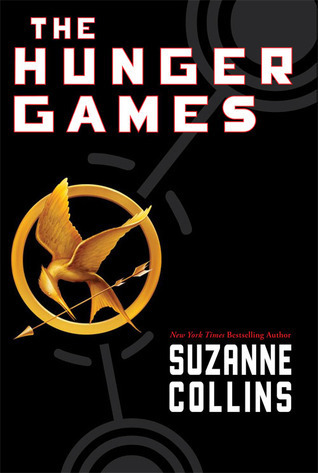
The Hunger Games
by Suzanne Collins
I decided to reread the entire series in one dedicated weekend as a preparation for the last installment of the film adaptation. I do think JLaw IS Katniss.

Least Read Book:

2

people also read

Sky Blue Pink
by Pam Lippi 
This is a self-published fictional memoir and it is a fun little read about two seventeen year old girls who travel around Europe after graduating from high school. This was back in the days of the seventies when bell-bottoms and adventures were part of the culture.

Benediction:

Completed square

You read 86 out of 50 books. [I actually snuck in 5 more after this]
172%
Congratulations! You’re really good at reading, and probably a lot of other things, too!
Not a bad year for my Goodreads [a litotes, if there ever was]
Okay–your turn…
How was your 2015 year of reading?
Favorite book?
Definitely won’t be recommending?

Still Crazy About Cows


If you’ve been following my blog for any length of time you will have noticed I have a thing for cows. I don’t know why, except I’ve been around them off and on for most of my life and as a result I’ve written a cow joke book, which, by the way, gets the nicest rejection letters. Mike Allegra has even pitched in and contributed a cow drawing. In my quest to come up with even more cow jokes for a sequel to the first cow joke book (thinking positive here) I came across a website that has 100 words related to cow.

My intent is to become inspired and come up with some original bovine blockbusting humor. Here is the site:

And here are a couple of udderly hopefuls:

#74: freshen–related to cow, as in coming in to her milk

Why did the cow take so long getting ready to leave the barn?

She had to freshen up first.

Okay–

How about this one then?

#45: kine–archaic plural of cow

Why are cows such a popular animal?

They are the best kine of animal on the farm.

Okay–

Maybe Cow Too will be a bit longer in the draft phase.

In the mean time, I keep sending out my udderly wonderful cow joke book to publishers and editors, as it will behoove me to get it published sooner than later as it cud drive you all crazy hearing me milk it for all its worth.

image: morguefile/jackse “All this bovine banter is making me have a cow–it’s driving me mad!”

Those Thrifty, Nifty Dover Classics


For those of us who splurge and buy books to hoard on our shelves so we always have a lovely bit of paged delight at our fingertips, probably don’t consider the paperback, easy-on-the-pocketbook editions of Dover as ones we trot out and buy. Yet, I imagine most of us Book Boosters, really and truly appreciate that Dover does provide under $6.00 editions of classics.  As a teacher on a tight budget, I’m thrilled I can get a class set of Hamlet for under $40.00.

What is Dover all about? Well, the good folks at School Library Journal took time to find out by interviewing their editor-in-chief,  M.C. Waldrep. One of the takeaways from the interview is that among the top four classics that sell are Frankenstein, Narrative of the Life of Frederick Douglass, and The Adventures of Huck Finn.  Shakespeare is right up there, of course.

For more Dover insights check out the interview.

BtW: Dover is more than providing classics for the economic minded. They have a ready collection of coloring books for that new trend (or old trend renewed). They have initiated the first National Coloring Book Day which you can anticipate by sharpening up your Crayolas when August 2 arrives. More on the coloring craze is found here.

What Dover classics are roaming your shelves, backpack, or are fondly remembered from your school days?

Better yet, which Dover classic would you slip in as a stocking stuffer?

28211-2_3D43215-7_3D

Post Navigation