Pam Webb

a writer's journey as a reader

Archive for the tag “Shakespeare”

Last Chance Rack Finds


When the progeny were young enough to tote to the grocery store I used to dread the inevitable trial of the checkstand gauntlet: the Last Chance Rack. You know, the racks of candy, toys, geegaws, magazines that all whimper at worn out consumers to be taken home. Their whimpering frequency is especially tuned to children’s ears. “Pluheeze, Mom?” I did have a stock phrase for surviving the ordeal which consisted of “Sorry, I don’t have money for (fill in the blank) today.” No arguing with that. And very true–I tended to stick to the budget because I had to back then.  Actually, I still should as an empty nester. Never mind that.

The Last Chance Rack I refer to today does not promote cavities or wasteful spending. This is a positively good rack in that it promotes reading. This is the LCR of the library. Our library has prominently planted two double-sided racks near the checkout area. They probably meant it as a way to display new titles as a greeting for patrons. On the flip side, the racks serve another purpose, one I think of more significance. While patrons await their turn to check out their basket of literary goodies they  find themselves next to the LCR and can’t help but browse titles.  I usually end up taking home an extra yummy or two.  Who can resist? The books are especially trained to Book Booster frequency.

This last week I went in for my one hold–akin to going in for that one quart of milk. I came out with two extra books.  No complaints about the extra calories needed to read my found treasures.  Thought I would share my finds:

image: amazon.com


As a Book Booster it’s difficult to pass up a book about making books. Like any conniseur, I appreciate the art and skill that goes into making something I so regularly consume. The books contained within this palm-sized tome focus on the artisans and their craft. Flipping through the pages and savoring the renderings of featured artists inspire me to try my hand at making my own book or two. There are handy directions included. Sounds like Christmas presents to me…

Another LCR item practically jumped into my arms as I passed the rack. This little goodie knew a Bardinator was in hailing distance. I need to subscribe to the NYT bestseller list. I always hear of these amazing books waaay after they’ve been out and then feel so silly when I find them and gush about them. No wonder I get those looks of–“That was so yesterday’s book.” or “You are just now hearing about that one?” I’m so glad the Book Booster Brigrade is disbanded. I might be in violation of section 31-A (best seller awareness).

Ready for this companion to the NYT bestseller? (just roll your eyes if you are already oh-so-aware of it):

How can you resist a book from a publisher called Quirk Books?(from which this image cometh)

Without slavering too much about how it’s so absolutely genius to mash-up Shakespeare with Star Wars, I will say Ian Doescher manages to pull off the feat of presenting *the best episode* of the Star Wars trilogy in iambic pentameter with dextrous aplomb. Not that I’m an expert at iambic pentameter, but I do appreciate how tough it is to write it. I teach it as the “heartbeat” meter and the students understand that. Shakespeare understood that writing his works in a meter close to the essence of being alive meant his words would be as easy to remember as breathing. Doescher gets that concept too, and understands the devotion of Stars Wars fans. Bringing Shakespeare into our century in a new and absolutely true and original way always gets a round of applause from me. What I really appreciated about Doescher’s mirthful approach is how he skillfully inserted references to the Bard’s other works. Here is my unabashed shopping list of “Where’s Willy?” finds:

  • Leia’s rant about Han’s ego is reminiscent of Beatrice
  • Hamlet’s “A hit! A very palpable hit!” uttered by Luke as they attack AT-ATs
  • C-3PO’s parts with sorrow from his loyal R2-D2 is so R&J
  • As Luke wings his way to learn the ways of the Jedi from Yoda he speaks of the affairs of mean
  • And Leia swoons upon discovering her nice scoundrel kisses by the book–that Han, he’s such a bad boy Romeo

The book trailer is as delightful as the book:


Anyone else have a library with a tempting Last Chance Rack?  Don’t resist the Force of a good book that needs to go home with you…

Bargain Bin Book Bonazas


At a local warehouse clothing sale I unexpectedly found a tier of gift books.  At a couple of dollars a piece I grabbed up a few.  It proved a difficult choice as they ranged from the secret lives of cats to how to dress cool instead of never cool (I kid you not).  There were also cutesy books like how to enjoy incense and candles.  I passed on those.  A match is all I need to understand those two.  Okay, maybe there are a couple of things I could learn, but when I came across these I couldn’t resist:

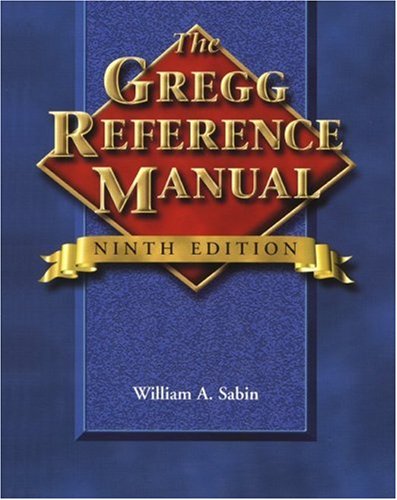
1. The Gregg Reference Manual (ninth edition) by William A. Sabin
Of course I already have my Strunk and White, How to Not Write Bad, and various college textbooks sitting on my shelf, yet who can resist a grammar handboook. I can’t. And because I don’t need it I decide to give it to my youngest progeny who admittedly wants to get his there, its, and yours figured out once and for all.

2. Leadership Courage by David Cottrell and Eric Harvey
Definitely a gift book for the youngest because he is into building up a business and is always talking about all these amazing leadership books he’s reading, so he most certainly needs another one.

3. Shakespeare’s Sonnets by William Shakespeare
For  the oldest son, I couldn’t pass up this slim volume of the Bard’s best.  I bought it because every young man who is looking for the perfect soul mate should have at least a couple of sonnets up his sleeve.  He received it graciously, if not warily. I  was amused to overhear him say the line, “Hey, I have a sonnet and I know how to use, so back off.”  I’m pretty sure he was kidding.  A loaded sonnet is nothing to mess with.  I have cautioned him on the power of verse.

4.  How to Say It Style Guide by Rosalie Maggio
Yes, another reference book. With two boyos in business they each need their handy dandy grammer guide.


Finding books on sale is always a bonus.  And being able to give them away is the best bonus.  Have any of you found any bin bonuses lately?

Oh, all images are from amazon.com.

Adieu, Adieu Sweet Month of Muse


national-poetry-month

I agree with Juliet, “Parting is such sweet sorrow.” April is a busy, busy month with its heralding of spring, removal of snow tires, paying of taxes, celebrating Billy Bard’s birthday, prepping for AP exams, and musing upon poems. I started loading my April blog calendar back in December as I discovered poems and poets I would pre-schedule them and now the days are spent and I am a bit bereft as I head into May. Whatever shall I fill my May days with?  It is ever so nice to have a theme for a month, like poetry for April. May will probably become my mish-mash month. I have several posties that I’ve been saving that don’t relate to anything except that I like them–sorta serendipity finds.

As I bid adieu to April I shall reflect:

  • Gathering poets for most of the year is akin to Saturday yard sale mornings as I scout for treasures to stuff in my bag
  • I appreciate poetry more and more as I become more and more involved with the reading of it
  • Having Billy Bard’s 450th birthday in the middle of National Poetry Month was absolute icing on the loveliest of cakes
  • Passing out poems to my students on April 24 for National Poem in Your Pocket Day is a blast–reactions range from excited anticipation of reading their poem to leaving them on the floor–which is about par for poetry (love it or leave it)
  • My school superintendent emailed me that I encouraged him to read a sonnet in my postscript to enjoy Shakespeare’s birthday
  • I decorated my hallway in recognition of Shakespeare’s birthday and convinced the journalism department to put it in the school’s daily video. Well, it’s not everyday a person is 450 years old…


Displaying photo.JPG


I look forward to May. School is winding down, weather is heating up, and the countdown to summer break begins.  Here is to May and all its blooming good days

24112-teacher_at_desk

Waiting out the days of May to slip into June

Poet Appreciation #8: William Shakespeare


*Gasp* Billy Bard is celebrating his 450th birthday on the 23rd. I advise those attending the birthday party to stick to the crumpets and steer clear of the kippers, as they didn’t do ol’ William any good at his own birthday din celeb.

Would William be surprised to know how many Bardinators there are coasting about due to his most marvelous ability with words, wit, and retrofitting old tales into something more appealing?  Probably.  Ben Jonson knew his contemporary, and somewhat rival was “a man for all time.”

What better way to say “Happy Birthday, Bill!” than with a couple of his sonnets.

First, the Mona Lisa of his career:

SONNET 18

Shall I compare thee to a summer’s day? 
Thou art more lovely and more temperate:
Rough winds do shake the darling buds of May,
And summer’s lease hath all too short a date: 
Sometime too hot the eye of heaven shines,
And often is his gold complexion dimm’d; 
And every fair from fair sometime declines,
By chance, or nature’s changing course, untrimm’d;
But thy eternal summer shall not fade
Nor lose possession of that fair thou ow’st;
Nor shall Death brag thou wander’st in his shade,
When in eternal lines to time thou grow’st; 
So long as men can breathe or eyes can see,
So long lives this, and this gives life to thee


Who hasn’t heard this lovely tribute of admiration? No matter how many years I’ve taught it to high school students they still “get it” and appreciate the trick ending of the couplet.  That’s what I like about Wm’s wit: it’s subtle and winking.  I think he’s winking right now as it’s being read. I’ll let Michael York recite it for you.  He gets it for sure, this is a loving tribute (don’t get shook up about it being for a man, like my freshmen do–this was supposedly to William S.’s patron, the guy who paid the bills so Wm could keep writing. Is that any different from dedicating a song or book to an agent, sibling, parent, or editor?)

Another tribute sonnet is perhaps not as complimentary, yet I think it showcases Shakespeare’s ability to take the accepted medium and poke fun at how poets tended to extol too vigorously the glories of a person, thus rendering him or her to be removed from humanity–it’s difficult to climb down off a pedestal that’s built too high. This particular sonnet at first sounds like a bash session; however, after a step back moment, it’s clear to see Shakespeare extols the real beauty of his love.  He loves this woman, warts–that is, frizzy hair, and all.

SONNET 130

My mistress’ eyes are nothing like the sun;
Coral is far more red than her lips’ red;
If snow be white, why then her breasts are dun;
If hairs be wires, black wires grow on her head.
I have seen roses damask’d, red and white,
But no such roses see I in her cheeks; 
And in some perfumes is there more delight
Than in the breath that from my mistress reeks.
I love to hear her speak, yet well I know
That music hath a far more pleasing sound;
I grant I never saw a goddess go;
My mistress, when she walks, treads on the ground:
   And yet, by heaven, I think my love as rare
   As any she belied with false compare.

This video captures the satire of those mushy sonnets while intones the general attitude of love.  Alan Rickman and typography mash up at its best.  Wouldn’t you want Alan Rickman reciting a sonnet to you?  Check yes.


These are only a drop in the sonnet bucket.  Wills wrote 150 sonnets, far more than the 38 plays we know to be roaming about.  So why do we mostly associate him with being a playwright than a poet?  According to many historical sources, he considered himself to be more of a poet than a playwriter. Hmm, it’s easier to turn a play into a film than a sonnet, I suppose.

Once again, Happy Birthday, William!

image: facebook.com


A Bit of Bard for the Kidlits


List of titles of works based on Shakespearean...

How well do your kids know this guy? (Photo credit: Wikipedia)

Shakespeare. He probably isn’t on most parental to-do lists when it comes to childhood enrichment items. Then again–why not? We trot our kiddos to soccer practice, piano lessons, and the library to enrich their lives, why not foster the love of the Bard at an early age?
Acclaimed playwright Ken Ludwig believes infusing the Bard into our children’s lives is an essential, endearing adventure to undertake. His How to Teach Your Children Shakespeare is both inspirational and inventive in its approach. Although I no longer have kidlits at home since my progeny are now building their own nests, I can still adapt Ludwig’s methods by amending them to classroom instruction, especially since the ninth grade Common Core curriculum has a Romeo and Juliet section.

Teaching Shakespeare to our children is a notable endeavour. Ludwig states a few of his goals as to why he taught Shakespeare to his children on page 11:

  • giving them tools to read Shakespeare’s works with intelligence for the rest of their lives
  • enriching their lives
  • exposing them to literature to inspire them toward achieving great lives as they grow
  • providing meaningful shared experiences

Cool. Those are pretty much my intentions when I teach Shakespeare to my classroom kiddos.
Ludwig hits all the essential values of the “why” of Shakespeare:
1. The richness of imagery
2. The lilt of rhythm
3. The nuances and playfulness of language
4. The importance of memorizing and tucking away forever a few exceptional passages to pull out and nibble on throughout life
5. The joy of exploring character

Shakespeare’s plays showcase poetry at its best. Why wait until the kinder are all grownup before relishing the richness of English language? I am always amazed when I get a ninth grader who states, “Shakespeare? Who’s Shakespeare?” Admittedly that confession is rare. Unfortunately, the only Shakespeare most students know is Romeo and Juliet. On the other hand, by the time they leave high school they will become acquainted with at least three plays and a a handful of sonnets.  Sadly, I didn’t have any Shakesperience until I began teaching it.  That’s nearly thirty years of being Bardless.  Shocking, I know.  Now I’m a professed Bardinator and hope to put my acquired knowledge to page, one of these days.  We’ll see.  I have too many books in want of writing as it is.

For now, I am thrilled to introduce Shakespeare to my freshmen and strive to induce appreciation for his words and wit.

Mass-produced colour photolithography on paper...

Anyone out there have the Bard on their parent list? Is it squeezed in with ballet and soccer?

The many faces of Juliet


image: fanpop.com

  •  I’m not quite in countdown mode, nonetheless, I am very much anticipating the new version of Romeo and Juliet which is FINALLY being released in the US.  I have been following its progress for the past two years, waiting, watching for news, photo releases, projected film dates. And finally, yes finally, the new Romeo and Juliet will be out in theaters in the fall. First they said February, then it was July, and then I heard September, and unless they’ve changed it again, it should be coming out about the time school is back in full swing.  Field trip, anyone?
  • image: thewallmachine.com

    • image:gnomeoandjuliet.wiki.org

    • Another reason I’m so excited about a new version of Romeo and Juliet is because it’s overdue for a freshening up. The 1968 version with Olivia Hussey had its moments, and although it didn’t follow the play exactly, it does give students a fairly good idea of the tragedy of the star-crossed lovers.  West Side Story is the classic sixties adaptation, and once again, it is not the true play. The 1990s version with Leonardo D. and Claire strays too far from the actual play to count as a true teachable film version. Interestingly enough, my ninth graders either love it or despise it, due to its style. Of course, they all adore Gnomeo and Juliet, which is cute, yet again, strays so far from the play I only serve it up as an inducement,provided they get all their R&J assignments in by the end of the quarter.

      Other reasons I’m looking forward to the new version:

      1. Hailee Steinfeld as Juliet.  She owned the part of Mattie in True Grit, and held her own against Jeff Bridges and Matt Damon, who were also impressed with her. I can’t wait to see what she does with Juliet.
      2. Updated cinematography. 1968 to 2013 means improvements in the quality of production.
      3. I’m really tired of the 1968 Zeferelli movie. I have taught ninth grade for 10 plus years with three to four sections each year, which means I’ve watched the film, oh about 40 times. Yeah, I’m ready for a new version.
      4. Paul Giametti as Friar Lawrence. I’m a Paul G fan, for sure.
      5. Julian Fellowes adapted the play, (Downton Abbey), and that in itself is a huge reason my anticipation factor is revving up.
      Anyone else anticipating a new Juliet with her Romeo?

A Woolf in Read’s Clothing


photo: imdb.com

My first vague acquaintance with Virginia Woolf is associated with Elizabeth Taylor. Both are pivotal influences in their chosen professions.  As a last wave baby boomer cI recall a bit of a fuss when the movie Who’s Afraid of Virginia Woolf? came out.  Not being a Disney-generated flick my parents did not take me to see it.  In my childhood bliss of perceptual naiveté I believed Elizabeth Taylor to be Virginia Woolf and from the TV trailers she appeared to be a daunting person.  I could see why some might be afraid of her.

image: aroom.org

My second encounter with Virginia Woolf came way later when I began teaching high school English. Woolf’s essay “A Room of Her Own” was part of the senior lit curriculum, a prelude to a brief study in feminist writing.  Still getting my bearings about Shakespeare, I discovered through Woolf’s essay Shakespeare had a sister! I thought him to be like Atlantis, known but unknown, shrouded in mystery, waiting to be actually proven.  A sister?  It sent me scurrying to dedicated research and though Woolf got it all wrong about Willie’s sis, I now know much more about the Bard.

image: etsy.com

The third encounter came way of Meryl Streep.  She’s a fave, so I couldn’t resist picking up The Hours at the library.  Fascinating film (I admit some parts tweaked my comfort zone and my daughter squeaked, “you watched The Hours!”–my prudery is too well-pegged by family members). What truly fascinated me was Nicole Kidman as Virginia Woolf.  No wonder she received the Academy Award for her performance. A tortured artist always leaves me wondering  the why/what behind the reason of taking his or her  life instead of living it.

image: notreciinema.com

Finding Virginia a bit overwhelming I didn’t do my usual research and read on her. To be honest, although she intrigued me,she also made me nervous, much like James Joyce.  So much, almost too much in their writing for me to comprehend and absorb.  I felt unprepared to read her works.

At present I am a tiny bit more confident having an AP Institute training and one year of AP Senior Lit and Comp seated firmly on the resume.  I thought, “Okay, Ginny, let’s give it a whirl.”  I pulled down Orlando off the shelf and settled in for my summer chaise in the shade read.

Sigh.

I wonder if her writing would have been published if her husband had not set up Hogarth Press expressly for that purpose? Her writing is amazing, this is true. It’s rich, masterful, and paradigm pushing. Deemed ahead of its time, both Virginia and her writing nevertheless appeared to be respected and applauded.  Overall, I will have to pass on Virginia Woolf and her modernist approach to literature.  She and James Joyce are just enough of a different cup of tea to not be on my reread list.

I followed through on my research since I did not do my read on her.  I will definitely include her in my overviews on modernists. Virginia Woolf  may not be among my chosen authors; however, I do acknowledge her place in the literary hall of fame.

image: standrewsrarebooks.wordpress.com

Those Tough Lit Chicks


I can’t resist those tough chicks of our favorite classic lit reads.

What are the qualifications for a tough chick of lit? Well, how about capable, quick of wit, common sense, a set of skills, determination, fudging the lines of feminine acceptability for the time period, and not necessarily physically a beauty contestant in looks but going for lots of personality?

Here is a grocery list of chicks of lit likables: (all images from GoodReads)

Pippi Longstocking

Scout Finch

To Kill a Mockingbird

Jo March

Little Women

Laura Ingalls

Little House on the Prairie (Little House, #2)

Jane Eyre

Jane Eyre

Elizabeth Bennett

Pride and Prejudice

Janie Crawford

Their Eyes Were Watching God

Shakespeare’s Beatrice and Kate

Much Ado About NothingThe Taming of the Shrew

Lucy Honeychurch

A Room with a View / Howards End

Thursday Next

The Eyre Affair (Thursday Next #1)

Katniss Everdeen

The Hunger Games (The Hunger Games #1)

The Heart is a Lonely Hunter

Mick Kelly

Francie Nolan

A Tree Grows in Brooklyn

That’s just a start. I’m working on round two. Any nominations? Who is on your list for literature’s tough chicks?

R and R. Mmmhmmm


The "gravedigger scene" The Gravedig...

The “gravedigger scene” The Gravedigger Scene: Hamlet 5.1.1–205. (Artist: Eugène Delacroix 1839) (Photo credit: Wikipedia)


After a couple of tough weeks of school there is nothing like a weekend getaway.  Grabbed a few foodstuffs, a couple of changes of clothes, and of course, school work.  But hey, at least I’d be doing lesson plans in a change of scenery.


First thing I did was nap.  Then I grabbed my Hamlet homework and dug in.  Even though I’ve taught Hamlet for the last three years, and really, really like the play, I know I have to up my game since I am know teaching it ala AP.  Deeper, richer, more insights–get some questions (try to know the answers).  I was delighted to find that my iPhone internet connection functioned which meant I didn’t have to pay the WiFi fee.  Heck, I didn’t even use my laptop this weekend.


I all kinds of Hamlet helps on the Internet.  One especially helpful site was called Shakespeare Navigators.  I drained my iPhone battery working the site so much and had to drive around to charge it up.  Gave me an excuse to go down to the Safeway (a good 40 minute drive) to stock up on essentials like Peppermint Bark Haagen Daz.  You know Christmas is around the corner when the Peppermint Bark comes out.  Fortunately MEPA met up with me on Saturday and brought my charger.  Whew.  A good personal assistant is more valuable than all the Haagen Daz in the freezer.


I tried to NaNo while R and R-ing and managed to get the posts up.  I didn’t manage to update my word count until I got home and looking at my statistics and posting three days worth of word count bloated my chart slightly.


Your Average Per Day: 1,934
Words Written Today: 4,967
Total Words Written: 34,827
Words Remaining: 15,173
At This Rate You Will Finish On: November 25, 2012
Words Per Day To Finish On Time: 1,168
There is no truth to the stat I wrote nearly 5,000 today.  Nope, didn’t happen.  I do like seeing I might finish early.  That would call for more Peppermint Bark.


The Portrait of a Lady and Wandering off the TBR Trail


image: thebooksavenue.com

Henry James tends toward florid and superfluous narrative descriptions, at least so in The Portrait of a  Lady. I cannot fault him too severely since the novel appeared as a serial in a magazine, which meant he got paid for the word.  Today’s editors probably wouldn’t be so generous, being space is more valued than profundity in current publications. Nevertheless, Mr. James is in good company in terms of wordiness since much of Charles Dickens’ works appeared as monthly features as well. One problem with my current reading of TPOAL is after two or three chapters I have this urge to get up and read something that requires coasting instead of constant pedaling to get somewhere.  I have wandered off my TBR trail more than a couple of times, and I’m sure Robert Frost would have approved my trail wandering.  Although he might have been more in the manner of path resistance than not.

Here are a couple of easier reads I’ve slipped off and enjoyed.  DISCLAIMER: because the are labeled “easier” does not mean they are not of merit.  I’ve recommended them to other readers and I hope you will consider them if you are casting about for a coaster versus a peddled read.

image: amazon.com

I picked this one up off the freebie cart at our local library.  I needed a book for my four hour flight and it seemed the right size and the title intrigued me.  I thought the book would be a cheesy murder mystery and instead I was treated to a humorous, bordering on fantastical, character ensemble tale.

From Kirkus Reviews

By the author of the arresting Max Lakeman and the Beautiful Stranger (1990): a Marty-themed, whimsical novel with flashes of bright fantasy and high hilarity–all about two losing loners who find each other–and love. The story begins with the death of retired hardware-store owner Atlas Malone–no simple affair, involving as it does greetings, conversing with, and digging the message of a most familiar angel. Here, dying is a far from peaceful matter–whether in the Malone preserves, where live Atlas’s wife Gracie and horribly disfigured son Louis, or in the Intensive Care Unit of the local hospital, where toils short, squat, unlovely Iris. Take one long-term patient, the dying comatose Tube Man who will speak–one ghostly word at a time. Then there’s the town undertaker, who grabbed a gold ring after dying–for a reason having to do with an old dirty deed. Another wrongdoer will show up in the hospital, the ever-drunk Harvey, a link to Louis because Harvey had shared a transcendent moment with Louis 16 years before, when the teen-age and then handsome Louis had yet to be disfigured by the fire Harvey claims he set. Of course, Louis, a recluse these many years, always encased in a scarf and hat, and Iris the lowly and lonely, do get together–but it’s only after Louis’s plummet (or was it an ascension?) from a second-story window and a gathering of the world as represented by the neighbors who accompany him in a loud caravan to the hospital. Then, while Iris and Louis heed the incredible summons to love, Gracie and Iris’s tottery father also pair off. An attractive flight into romance’s more fabulous dimension- -but whether or not the fantastic palls, the ructions and crackings wise by the nurses laboring at incredible machines and patients are a fascination and delight. Cohen continues to bemuse and entertain. — Copyright ©1991, Kirkus Associates, LP. All rights reserved.

During the summer I attended an AP Conference and my brain fell into mush after a week of intensive how-to-teach-literature training. After a week of such intensity I wanted to relax with a book not from the 19th century and considered a classic in need of a lengthy analysis.   I found all that and then some in a new-to-me author Jetta Carleton and her book Claire de Lune.  Although initially elated I had found a new author I immediately wandered about in glumsville upon learning she only wrote two books before her  death. I thoroughly enjoyed her writing and only wonder what her writing career would have amounted to with subsequent offerings.

From Harper Collins:

The time: 1941, at the cusp of America’s entry into World War II. The place: southwest Missouri, on the edge of the Ozark Mountains. A young single woman named Allen Liles has taken a job as a junior college teacher in a small town, although she dreams of living in New York City, of dancing at recitals, of absorbing the bohemian delights of the Village. Then she encounters two young men: George, a lanky, carefree spirit, and Toby, a dark-haired, searching soul with a wary look in his eyes. Soon the three strike up an after-school friendship, bantering and debating over letters, ethics, and philosophy—innocently at first, but soon in giddy flirtation—until Allen and one of the young men push things too far, and the quiet happiness she has struggled so hard to discover is thrown into jeopardy.

Not knowing I was reading her undiscovered manuscript (it was thought to have been blown away in a tornado, but a friend had been safely keeping it and it was found something like 50 years after Carleton’s death) I immediately sought out her first book when I returned home.  There it was waiting for me on the shelf!

Again from Harper Collins:

On a farm in western Missouri during the first half of the twentieth century, Matthew and Callie Soames create a life for themselves and raise four headstrong daughters. Jessica will break their hearts. Leonie will fall in love with the wrong man. Mary Jo will escape to New York. And wild child Mathy’s fate will be the family’s greatest tragedy. Over the decades they will love, deceive, comfort, forgive—and, ultimately, they will come to cherish all the more fiercely the bonds of love that hold the family together.

A fourth diversion was not quite as enthralling, and I read it mainly for another slant on Shakespeare.  The concept proved more fascinating than the actual read and I found myself skip reading through it.

From the New York Times:

May 9, 1999

By ALLEN LINCOLN

image: amazon.com

I

f what we don’t know about the life of William Shakespeare could fill several books, Robert Nye’s entertainingly overstuffed novel bursts its bindings with gossip, rumors and outright fabrications about him. Its fictional author, Robert Reynolds, an actor who when young played female lead roles in many of Shakespeare’s premieres, is writing his version of his mentor’s life. Reynolds — or ”Pickleherring,” as he prefers to be called — possesses not only an excellent memory for trivia but a wide-ranging, wandering mind that makes rival biographers like John Aubery look like models of objectivity and concision. The few records and confirmed dates in Shakespeare’s life form the smallest part of Pickleherring’s red herring-stocked chronicle, which incorporates not only familiar rumors — for instance about Will’s lost years, which he possibly spent as a lawyer, or a sailor, or a deer poacher — but also folk tales, riddles, songs and a constant bombardment of allusions to works by and about Shakespeare. Among other true-to-life details, we learn about the four dozen different ways to spell his name; about his favorite oaths while playing tennis against the scholar John Florio; and about his interest in flowers and especially weeds. Engaging if overly discursive, Nye’s novel has more of the real Shakespeare in it than the souffle-light ”Shakespeare in Love.” 

True, it was fascinating learning so much about Shakespeare (although much I had already read elsewhere) and I did at first embrace Pickleherring’s loquaciousness; however, Pickleherring  did *ahem* have some personal issues that well, hmm, let’s just say that got in the way of reading.  If this had been a movie I would have fast forwarded some parts. Well, he was living in a brothel…

I did manage to finish The Portrait of a Lady and the second half had me breathless as I anticipated what Isabel would do about Ralph, her husband, and the continuing dedication of Caspar Goodwood.  I ordered the movie version primarily because Viggo Mortenson plays Caspar and all through the book knowing soon I would be watching Viggo kept me going when James’ snail pace bogged down (I try to read the book first before watching the movie)

The book’s ending is so perfectly rendered I will encourage my students to read it for AP.
“Go after her, Caspar,” I encouraged him, especially after that amazing kiss. I will always want to know if Caspar pursued Isabel to Rome.  Someone want to take on a sequel?

I am next on to Ellison’s Invisible Man, which is the most mentioned novel for AP exams (coming in a 26 times!).

Post Navigation