Pam Webb

a writer's journey as a reader

Archive for the tag “reviews”

Jane Eyrror


Disclaimer: my commentary (not to be confused with a diatribe) is by in no means a diss upon those authors who have achieved success in their ability to appease the hunger of a ready populace for further forays of their favorite literary characters. I applaud publication success, even though I may not applaud the content.

The Janes of my reading life have left me wanting.  Wanting more that is.  Having read through Jane Austen and desiring more of Jane Eyre, I have continued to found solace in the many continuations that are currently available.

As we all know, there truly is no satisfying replacement for the original.  However, when you crave a Godiva and only Hershey is available, sometimes there is a willingness to settle for less when the best is no longer available.  In my Search for More Jane (not a book title, but wouldn’t it be a fun one?) I have scoured my GoodReads lists to find plausible reads.  I attempted several titles and grew weary in my searches for a true Elizabeth B. and company.  Only JA knew Elizabeth best. Besieged by the plethora of Pride and Prejudice knock-offs, I have turned to other novels of classic inspiration.  Jane Eyre is one such hopeful.

I dutifully read Wide Saragossa Sea since it ranked a place on the AP Suggested Reading List. Touted as the prequel to Jane Eyre and hailed as a classic, I braved through the novel ever hopeful it would answer those nagging questions of how Edward Rochester became smitten and taken in by Bertha.  The novel turned out to be more of a stand alone than a companion read.

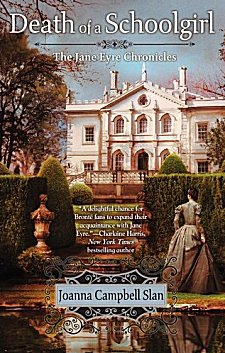
I then chanced upon Death of a Schoolgirl by Joanna Campbell Slan at my local library on the new releases shelf.  Seeing it featured Jane Eyre in her married state of Mrs. Rochester I quickly plunked it into by book bag.  Overall, I enjoyed this as a weekend read with its premise that Jane’s curiosity and tenacity makes her a rival to Miss Marple in sleuthing skills. A fun read, granted, it offered only a shadow in terms of the depth of Jane.

image: amazon.com


I then remembered reading a book review about a contemporary version of Jane Eyre.  Setting the intrepid ET upon the search, she found Jane by April Linder. I too checked it out.  Here is the catalog summary:

Forced to drop out of an esteemed East Coast college after the sudden death of her parents, Jane Moore takes a nanny job at Thornfield Park, the estate of Nico Rathburn, a world-famous rock star on the brink of a huge comeback. Practical and independent, Jane reluctantly becomes entranced by her magnetic and brooding employer and finds herself in the midst of a forbidden romance.

Book Jacket for: Jane
image: amazon.com
I read it anyway.

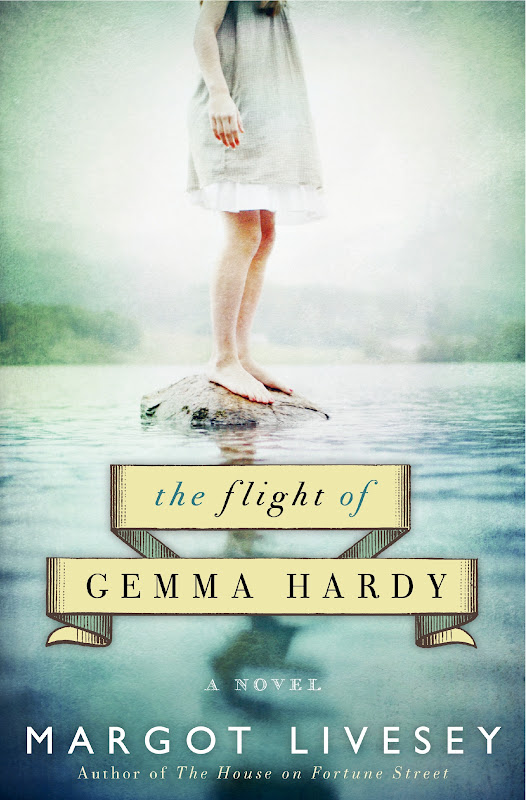
No, Jane had not been what I had originally been looking for, and fortunately I found the lost review buried under my get-to-it-someday stack.  The Flight of Gemma Hardy, proved a much better replacement crave read and definitely proved the glowing review it received.

image: amazon.com

Set in Iceland and Scotland in the fifties and sixties, Gemma Hardy’s life parallels that of Jane Eyre’s in travail and hardships.  Gemma is a young woman who becomes an au pair for the precocious niece of a Mr.Sinclair, who infrequently visits his Scottish home.  Gemma’s journey and subsequent flight adequately pays tribute to that of Jane Eyre’s, yet manages to be a distinctive and well-written plot twist of its own merit.  I reluctantly finished Livesey’s tribute novel, quite satisfied with having found a glimpse of Jane through Gemma.  I am looking forward to discovering her other works.

Sometimes the best way to find a continuation of a familiar voice is to discover a new acquaintance.

Conclusion: There is real no “eyrror” in finding replacement reads for Jane; it’s only a matter of discernment.


Life Imitating Art Imitating Life


Cover of "The Last Action Hero"

Cover of The Last Action Hero

Yesterday I thought I would be enjoying my extra day off, the perk for having worked two twelve hour days.  Instead , I was doing the porcelain hug–yup, the flu bug caught up to me and bit me rather nastily. Lipton soup, napping, and the wonderful ministrations of my MEPA (most excellent personal assistant) righted me from prone to errands.  I had to get my Saturday library run in–plus I expanded my horizons with a chocolate taste-testing lesson from ET, my librarian compatriot.

With a bag of AP Cyrano journals to grade I needed a movie to keep me company–my MEPA had a previous engagement with the roof. It’s an oldie but goodie: Last Action Hero. I checked it out again (third time watching it) because Ahnold plays Hamlet.  “Hey Claudius, you killed my fadder.  Big mistake.” I’m readying for Hamlet in AP and thought it would be appropriate to show how far Shakespeare’s influence reaches.

One reason I like LAH so much is the irony, paradox, parodies, and outright clichés. Here it is in a nutshell if you haven’t seen the movie: Arnold  is playing Jack Slater who is Arnold playing Jack Slater, who is the  quintessential action hero.  There are a bazillion inside jokes and cameos. Maybe this movie gave me the idea for my NaNo novel. Who could resist writing a novel about a girl writing a novel during National Novel Writing Month?  I couldn’t.

If you are writing your NaNo, hang tough, because this is the week people start to find the going tough and drop out of the word count race.  You can do it.  You can do it. You can do it.  Yes, you can.

See you on the other side of 50,000.  It’s one word at a time making each sentence reach into paragraphs into pages.

And with that,
Happy Pages
CM


Battleship and Black and Blue Reviews


Sometimes after a long week of teaching direct objects, nuances of symbolism, and grading ceaseless stacks of papers I need to unwind.  Discovering chocolate is a downfall to dieting, and being a longtime teetotaler,  I have succumbed to the ACTION movie for unwinding on Friday night.  We have a local grocery store that offers new releases for only a buck on the weekends.  Who can resist?

I am prone to choosing action movies with disasters or aliens, and I can’t resist the Navy.  So it was natural I selected Battleship. Expecting major cheese for ninety minutes I found myself rooting and hooting for the entire movie.  Being a movie trivia addict, I Googled up IMDb.  Glancing through the reviews I couldn’t help but wince at the meanness of many of the comments.

This brings me to the subject of Black and Blue Reviews.

These are reviews that involve slicing and dicing of the given subject, be it a book, a movie, restaurant or product.  Having been a reviewer for various journals over the past twelve years I have developed a philosophy: it is much easier to depreciate than it is to create.  We all know how much easier it is to diss and dismiss than it is to praise and raise. And being a published writer I tend to stem the critical ink flow when it comes to someone else’s creative effort because I know the stings of criticism do sting. As Thumper once said, “If you can’t say anything nice, don’t say anything at all.” Or least compromise and try to say two things for every bad.

Back to Battleship. Of course it wasn’t going for Academy Award status; it’s intent is action and it delivered.  How could you not like a movie that:

  • features Liam Neeson as a Navy admiral?
  • is filmed in Hawaii?
  • has aliens who wear helmet sunglasses and sport wicked porcupine goatees?
  • debuts Rihanna as a  sailor who holds her own with the big boys?
  • stars Taylor Kitsch and Alexander Skarsgård?
  • also has Japanese legendary actor Tadanobu Asano?
  • laughs at itself with borrowed kitsch from Jurassic Park and Transformers?

Instead I found most reviews were negative.  Here’s some samplings:

Of course, in the old B-movie tradition, our response to the alien visit is immediately military. There’s not one word of discussion about the aliens possibly just making a social call. We invite them, they come and we open fire. This despite the fact that they’re remarkably humanoid; when we finally remove the helmet from one alien’s spacesuit, he turns out to look alarmingly like James CarvilleRoger Ebert, Chicago-Sun Times

Alien invasion movies usually work based on three things: strong characters, cool aliens and a good idea. “Battleship” has boring characters, boring aliens and a couple of minor ideas stupid enough to elicit a temporary smile. Jeffrey Anderson, San Francisco Examiner

Those represent the pro-view.  Here are a couple of IMDb user review comments:

A simple way to describe Battleship, is that it’s basically a $200 million naval recruitment video that was made by a schizophrenic 8 year old who likes video games and things going Ka-Boom.

Turning a board game into a big-budget summer blockbuster was always going to be a stretch. But Hasbro the company behind the cinematic juggernaut Transformers series thought they had locked on to a winning formula for their adaptation of their best-selling board-game Battleship…namely ditch Michael Bay for the supremely talented Peter Berg, add aliens and throw shed-loads of money at the screen. And it almost works…

Ouch. What were this people expecting from a summer movie?  Hamlet on Mars? Sheesh…

These people totally missed how the film did something totally remarkable by:

  • having Japanese and American military forces  collaborate at Pearl Harbor, no less
  • featuring real life vets of the USS Missouri, some who had even served in WWII
  • showcasing real life active duty Army Colonel Gregory Gadson., who is the first bilateral amputee to serve as a Garrison Commander to any post in the United States Army. This man is a war hero.
  • honoring the military, particularly those from our past.

Sadly, I didn’t see anyone impressed with these positive attributes.  They were too busy complaining about how a movie could be made based off of a toy.  Oh yeah, it’s much better to make movies inspired off of a Disney ride.  Then it’ll be taken more seriously.

Don’t let the black and blue review sink your enjoyment of Battleship.  Besides, the chicken burrito scene is worth the watching all in itself.

image: guardian.co.uk

Just Another Gothic Girl


English: Gothic girl.

English: Gothic girl. (Photo credit: Wikipedia)

DISCLAIMER: THIS IS NOT THE GOTHIC TO WHICH I REFER

I have admittedly strayed from my AP book list and I am in the midst of coasting in my reading tastes: the gothic romance novel. oh yeah.

I’m not talking your acceptable-found-on-the-list novel like Frankenstein, Wuthering Heights, and Jane Eyre. Nope, I’m talking about the forgotten books by a forgotten author that needs rediscovering.  Maybe I will start a resurgence of Dorothy Eden readers. You  never know.

Intrigued by what constitutes a gothic romance novel I Googled to find a most excellent site called Virtual Salt, which is written by Robert Harris, former professor and general busy guy.  He’s got an exciting menu of topic choices on his website and it is a recommended stop by.  I chose “Element of the Gothic Novel” and will definitely be borrowing from and referring to his article once I get to Wuthering Heights and Jane Eyre in AP Lit.

Currently I’m cheat reading and have discovered amidst the buried “E”s when I was last shelf shopping,  Dorothy Eden, who had once upon a time a long writing career spanning from the 1940s into the 1980, being known primarily for writing these smashing gothic romances with heroines exhibiting contemporary tendencies.  I’m deep into my second one and these are exactly what I need,  having come off of a grading campaign of freshmen poetry notebooks.

Here is Gothic Romance Elements 101 in a Nutshell.  For in-depth article investigation I encourage you to investigate Robert Harris’s site.

A Gothic Romance needs to have the following:
1.  a castle
2. inexplicable events
3. suspense
4. a damsel in distress
5. overwrought emotions
6. metonymy of gloom and horror *

*refresher for metonymy: it’s a type of metaphor.  For instance, in movies to get some immediate gloom and horror tone going the script will throw in some approaching footsteps and of course you gotta have the sudden torrential downpoour complete with thunder and lightning.

Here’s what Dorothy Eden fare I’ve dined upon so far–the title alone, let alone the cover art, indicate a GR is within the grasp.

The Shadow WifeI couldn’t improve on Amazon:

There was something about the tall, dynamic Dane that disturbed Luise Amberley. But he was so attentive, so charming, that she silenced the small warning voice within her and yielded to his passionate persuasions. The wedding ceremony was hasty, almost furtive, but Luise was too wildly infatuated to care. Even his insistence that their marriage be kept a secret did not seem unreasonable. Otto Winther was, after all, a Count…a man whose ancestors were royalty in Denmark. Not until they left the small seaside resort where they had met and arrived at Maaneborg Castle did Luise become aware that something was wrong. It was not merely the coolmess of the welcome. There was an atmosphere of desperation and danger. They were hiding something. And Luise was determined to find out their secret, no matter what the risk. She did not want to remain a SHADOW WIFE.
It’s actually much better than the description. Considering the publishing date was 1967 I found myself surprised that the following being mentioned: a)computers b)open love affairs within a marriage c)abortion.  Plus Luise is no fainting Melba.  She does not easily whimper off or get locked up in a dungeon.  She reminds me a lot of Jane Eyre, one of my all time fave heroines.
I’m in the middle of Winterwood and once again I will let Amazon do the honors.
 WinterwoodSee the castle?  See the damsel in distress?  Gloom and suspense?  And you know that inexplicable event is about to happen.
Enough of the blogging.  I must return to my saga of the socialite forced by circumstance to become governess to the wealthy family consisting of handsome husband, aloof wife with a myriad of light illnesses, and two spoiled children.  I did mention the dying, extremely rich aunt, did I not?

oh, yes–please read me a story…


Over the past couple of years I’ve been fortunate to journey with some of the more elite and talented thespians of this age.  The likes of Jeremy Irons, Cherry Jones, Jessica Tandy, and Sissy Spacek have kept me company on my long travels and daily commute.  They have challenged me, enlightened me, and entertained me.  And I showed my appreciation by never interrupting them as they spoke.

“Read me a story.” These words are among the first requests we have as a child once we figure out language.  Somewhere between infancy and childhood the request to be read to drops to the wayside–maybe it’s seen as being rather babyish, since, after all we have learned to read books on our own. Yet, I never tire of having a book read to me.  I especially have learned that while I need to read, I’m not very good at juggling the reading of more than one book unless one of them is an audio book.  I am hooked on audio books.

Audiobook Collection

Audiobook Collection (Photo credit: C.O.D. Library)

I’ve been listening to audio books since they became available on cassettes all those years ago.  Sometimes the dratted tapes would fuss up and I’d lose part of the story. Aggravating. Then came CDs, (much better thank you–although occasional scratching causes blips and hiccups–so annoying).  Now there are websites, Ipods, and Playaways, where all that is needed are a set of headphones.

There is nothing like having a good story read out loud on a long, solitary car trip.  As I prepare for my trip I gleefully check out several audio books from my lovely neighborhood library and perch them on my passenger seat as my companions.  Most books play any from seven to fourteen hours. Great for those long hauls.  I’ve been known to stay in my car to listen to the last of the story even after arriving at my destination.

The downside to audio books is due to their very nature of interactive reading–once started as an audio book, it’s difficult to finish it by traditional eye-to-page.  I made that mistake with The Heart is a Lonely Hunter. Coming home I was about halfway through listening to the book and decided to finish reading it via my checked out library book. What better way to spend the remaining sunny summer afternoon?  However, as emotionally involved as I got with the story, due to the excellent voice of Cherry Jones, I couldn’t sufficiently feel the proper grief when * SPOILER ALERT* I read of Singer’s demise. It didn’t register at all.

Lately, I’ve taken to listening to audio books on my short commute to work.  It helps get more reading done, since I get tired of listening to music.  Except I have run into a bothersome problem. My last audio book still resonates with me and I am having a difficult time moving on to checking out my next selection.  How can I possibly find a better reading than what Jeremy Irons did in The Alchemist?  I may have to go back to listening to music for a while. I even tried to recapture the glorious reading by checking out both library copies which are wonderfully  illustrated.  Nope,  wasn’t the same thing as listening to Jeremy’s sonorous tones.  I may even be spoiled for the movie they keep saying will eventually be made.

What is your favorite audio book?  Is it just me, or is there really something about having someone read you a story?

When Chick Lit Goes Bad: BB Week #2 entry


Cover of "The Awakening: And Other Storie...

Cover via Amazon

While Lady Chatterly’s Lover made the Banned list, Kate Chopin‘s The Awakening did not.  Both miffed, shocked, and outraged many a reader upon its respective appearance; but only Lady Chatterly’s wanderings provoked the censors to add D.H. Lawrence’s offering on venturing outside the lines of socially acceptable behavior of women of the 19th century.  Here’s Lady Cha Cha’s rap sheet according to ALA.org:

Banned by U.S. Customs (1929). Banned in Ireland (1932), Poland (1932), Australia (1959), Japan (1959), India (1959). Banned in Canada (1960) until 1962. Dissemination of Lawrence’s novel has been stopped in China (1987) because the book “will corrupt the minds of young people and is also against the Chinese tradition.”

Admittedly, it did have some naughty language, even for today’s standards, and some rather risqué scenes, which explains its appearance in a 1959 obscenity trial.  The book went on to fame and fortune, appearing in various forms, even a BBC 1993 mini-series with Sean Bean and Joley Richardson. Bad girls don’t go away, they continue to spice up literary history,

However, a point to consider is that D.H. Lawrence wrote the book from a man’s point of view.  Perhaps he should have borrowed the POV Gun from Hitchhiker’s Guide to the Galaxy.  Lawrence is a writer of merit and his works have lasted the fickleness of time and reader tastes, so I can’t fault him for his chick lit bad girl book.  But honestly how can a man know what a woman’s feelings are?

Enter Kate Chopin.  She wrote The Awakening with a woman’s point of view in mind.  Like they say, “It takes one to know one.”  If not familiar with her 1899 novel, here is the micro precis:

Edna Pontellier awakens out of her expected role of wife and mother and goes against the tide of conventionality and is last seen swimming somewhat unhappily ever after into the sunset.

If Chopin had put in the naughtiness, her novel certainly would have made the BB list.  Instead it was censored for its open depiction of a female protagonist exploring her wild side.  This chafed against expected 1899 norms of decent behavior.

Reactions to her novel ranged from hostile condemnation (“We are well-satisfied when [Edna Pontellier] drowns herself,” “Poison”) to critical lambasting (“It was not necessary for a writer of so great refinement and poetic grace to enter the over-worked field of sex-fiction,” (Chicago Times Herald), to lukewarm chastisement (“”next time I hope that Miss Chopin will devote that flexible, iridescent style of hers to a better cause.”–Willa Cather).

Some compared The Awakening to Flaubert’s 1856 Madame Bovary (another BB list member).

So even though Chopin did not include the naughty stuff, she still received censure for writing about how a woman had become dissatisfied and wanted to flap her wings a bit.  That was considered bad form.

The moral is here that Chopin never wrote another novel.  In fact, she didn’t publish much after The Awakening‘s disappointing reception.  The irony is that Chopin ushered the advent of many a literary foray into a woman’s point of view, including Faulkner, Flannery O’Connor, Eudora Welty, Katherine Anne Porter, Henry James, and Tennessee Williams.

After recently finished Chopin’s novel I am saddened to not have the ability to continue reading more of her work.  The critics too well censored her without ever lifting their pen to add her name and novel to their list.

Enjoy a good book this week, even if others deem it bad–it’s all a matter of perspective, isn’t it?

English: First ed title pg

English: First ed title pg (Photo credit: Wikipedia)

Openers and Closers (and a bit in between)


As I was site flicking the other night I came upon Style (UK version) and their collection of “100 best” concerning books.  Couldn’t resist browsing and came back with a shopping bag full of great book lines.  Here are the picks of best openers, middlers, and closers from books (well, in my opinion, of course):

Awesome Openers:

“Call me Ishmael.” Moby-Dick, Herman Melville

“Ships at a distance have every man’s wish on board.”
Their Eyes Were Watching God, Zora Neale Hurston

“This is my favorite book in all the world, though I have never read it.”
The Princess Bride, William Goldman

image: wikipedia.org

It was a pleasure to burn.” Fahrenheit 451, Ray Bradbury

Middle Memorables

“She is tolerable; but not handsome enough to tempt me” Pride and Prejudice by Jane Austen

“Your hair wants cutting.” Alice in Wonderland by Lewis Carroll

“All morons hate it when you call them a moron.” Catcher in the Rye by J.D. Salinger

“I could get you strung up in a tree so easy it ain’t even funny.”
Of Mice and Men by John Steinbeck

“Fool: Cry you mercy, I took you for a join-stool” King Lear by William Shakespeare

Catchy Closers:

“He loved Big Brother.” 1984 George Orwell

“It’s funny. Don’t ever tell anybody anything. If you do, you start missing everybody.”
The Catcher in the Rye, J.D. Salinger

“It is a far, far better thing that I do, than I have ever done; it is a far, far better rest that I go to than I have ever known.” A  Tale of Two Cities, Charles Dickens

“Oh, my girls, however long you may live, I never can wish you a greater happiness than this.” Little Women, Louisa May Alcott

“‘From the Land of Oz,’ said Dorothy gravely. ‘And here is Toto, too. And oh, Aunt Em! I’m so glad to be at home again!'” The Wonderful Wizard of Oz by Frank L. Baum

“He was soon borne away 
by the waves and lost in darkness and distance.”
Frankenstein, Mary Shelley

“And the ashes blew towards us with the salt wind from the sea.” Rebecca, Daphne du Maurier

“He turned out the light and went into Jem’s room. He would be there all night, and he would be there when Jem waked up in the morning.” To Kill a Mockingbird, Harper Lee

What are you favorite lines?

Author Snapshot: Carson McCullers


Cover of "Heart Is A Lonely Hunter"

Cover of Heart Is A Lonely Hunter

As a writer and a reader I am curious about authors.  I like to poke, prod, and discover who they are to understand how they write. Some authors definitely have backgrounds which influence their writing.  One such author is Carson McCullers.

It was a bit of deja vu when I began reading The Heart is a Lonely Hunter. I then realized I had read it so long ago that I couldn’t really recall the story, so it was similar to revisiting a place attached with faded memories.  After reading the book I looked up Carson McCullers and immediately became fascinated by her background. Amazingly enough Heart was her debut novel–at 23.  The book registers such emotions and craftsmanship it is  unbelievable it came from the pen of a woman so young.

If you aren’t familiar with Carson McCullers here is a snapshot of an author who produced some fine writing despite the setbacks in her life.  Then again, maybe her writing is a result of the impediments she encountered.

McCuller’s style focuses on the loneliness and isolation of individuals of the South employing imagery which pinpoints an emotion, a moment which simple, yet breathtaking accuracy. Her writing has a sense of musicality, due no doubt to her interest in it.  The words flow and swirl much like notes in a recital piece.  In fact, she once described The Member of the Wedding as a fugue, and it actually reads much like a fugue would be played out.
What have I gained from reading Carson McCuller?  It is this: a realization that it is discovering a sense of beauty even when we are living out our imperfections, and that we often gain the most growth through adversity.  McCullers has a way of peeling back the façade and intensely scrutinizing the individual beneath. Once there, a realization occurs—other people have the same thoughts and feelings as I do.  Then again, do they?  This admission is daunting since her explorations tend to leave an undefined rawness, a discomfort, a vulnerability. And this can be uncomfortable.
Novels/Novella
The Member of the Wedding (1946)
 Other Works
The Square Root of Wonderful (1958), a play
Sweet as a Pickle and Clean as a Pig (1964), a collection of poems
The Mortgaged Heart (1972), a posthumous collection of writings, edited by her sister Rita
 Passage from The Member of the Wedding
Yesterday, and all the twelve years of her life, she had only been Frankie. She was an I person who had to walk around and do things by herself.  All other people had a we to claim, all other except her…Now all this was suddenly over with and changed.  There was her brother and the bride, and it was as though when first she saw them something she had known inside of her: They are the we of me.
A couple of noted facts:
  • First novel The Heart Is a Lonely Hunter at age 23
  • Planned to study piano at Julliard, but lost tuition and worked instead
  • Became invalid due to illness
  • Friends with Tennessee Williams
  • died at age 50

Her works have been adapted into plays and movies, and though she is no longer with us, her writing definitely  continues to influence the literary world. She is a stellar definition of the Southern gothic genre.

Honk If You Love Books


That’s right…Honk if you love Books!

Passing through a town I spotted this in a parking lot:

And what made it extra delightful was how a Goodwill store  was just one parking lot over, a bit of  a conceptual juxtaposition tickle to see a promotion to recycle used reads instead of used clothing and sundries, a new way of thinking against the standard. I looked up the site and discovered a few things from their FAQs:

Frequently Asked Questions

Who is Discover Books? Discover Books is a for-profit corporation with a social mission.  They are in the business of collecting used books from thrift stores, library discards, residential curbside pickups and collection boxes located throughout North America.  They sell used books online at discounted prices to be read again, or donate them to literacy-based or community service organizations greatly in need of free reading materials. When books cannot be sold or donated, they are recycled, diverting millions of pounds of books from landfills each year.
What will happen to the books placed in my hosted bin? The books placed in the collection boxes have always followed three pathways: they are resold to other readers, donated to children, families and literacy organizations in need, or responsibly recycled.  This has always been the case and will not change.  If you would like to talk to a Discover Books representative to learn more, please email us at info@discoverbooks.com or call us toll-free at 888-402-BOOK(2665).

All this brought to mind my original idea back in February when I began blogging how I wanted to gather a cavalcade of readers, those folks who promote books through voracious reading and reviewing.  Book Boosters was born and although I had hoped to have 500 BBs by June I can’t complain about having 35 so far.  Especially since I haven’t done any active promoting (I don’t Tweet, Face, Stumble, Link or such–old-fashioned, maybe–time deprived, very much so).

So if you are reading this and find you fit the Book Booster profile and don’t see your name on the list, please let me know and voila, you will be added. There are no dues, annoying ads, or newsletters.  I am working on a secret handshake.

Happy Pages,

CricketMuse

Are you a Book Booster?

  • Do you love books?
  • Do you have favorites you read, recommend, and even re-read?
  • Are you a frequent flyer at the local library?
  • Are you an on-line regular of book sites, be they promoting to buy, review, or boast books?
1001 Children's Books You Must Read Before You...
1001 Children’s Books You Must Read Before You Grow Up (Photo credit: Wikipedia)

Perchance you operate on a need to read basis–you have to have a book in hand, by the bed, stashed in the car, or have one nestled in the backpack.

You then, my friend, are a Book Booster.  And you are in good company.  Add your name to the list and welcome to the shelf of those who appreciate and advance the cause of books.

Join the continuing ranks of Book Boosters:

1.  www.BookWrites.wordpress.com

2.  www.eatsleeptelevision.wordpress.com (adambellotto)

3.  www.homeschoolhappymess.com

4.  www.carolinareti.wordpress.com

5.  www.opinionatedmama.wordpress.com

6.  www.jessileapringle.wordpress.com

7.  www.wcs53.wordpress.com

8.  www.spookymrsgreen.wordpress.com

9.  www.cecileswriters.wordpress.com (Samir)

10.  www.HannahBurke.wordpress.com

11.  www.thecoevas.wordpress.com

12.  www.Jayati.wordpress.com

13.  www.collecthemomentsonebyone.wordpress.com

14.  http://scriptorwrites.wordpress.com (scriptor obscura)

15. http://jinnyus.wordpress.com/

16.  http://1000novelsandme.wordpress.com/

17. http://literarytiger.wordpress.com/

18.  http://chicandpetite.wordpress.com/ (Bella)

19.  http://booksandbowelmovements.com/ (Cassie)

20. http://bookrave.wordpress.com/

21. http://fromagoraphobiatozen.wordpress.com/ (Marilyn Mendoza)

22.http://bibliophiliacs.wordpress.com/

23.  http://thoughtsonmybookshelf.wordpress.com/

24. http://shelovesreading.wordpress.com/

25.  http://ajjenner.com/

26.  http://artsandyouthlove.wordpress.com/

27. http://readingreviewingrambling.wordpress.com/

28. http://365amazingbooks.wordpress.com/

29.  http://beckysblogs.wordpress.com/

30.  http://bookpolygamist.wordpress.com/

31. http://aliciadevoursbooks.wordpress.com/

32. http://readinginterrupted.com/

33. http://bundleofbooks.org/

34. http://bitsnbooks.wordpress.com/

35. http://justonemonkeytyping.wordpress.com/

I hope your peruse the above blog sites, especially if you favor reading, and adore books.  And next time you are done with that read, consider donating it to the friendly little parking lot box.

The Portrait of a Lady and Wandering off the TBR Trail


image: thebooksavenue.com

Henry James tends toward florid and superfluous narrative descriptions, at least so in The Portrait of a  Lady. I cannot fault him too severely since the novel appeared as a serial in a magazine, which meant he got paid for the word.  Today’s editors probably wouldn’t be so generous, being space is more valued than profundity in current publications. Nevertheless, Mr. James is in good company in terms of wordiness since much of Charles Dickens’ works appeared as monthly features as well. One problem with my current reading of TPOAL is after two or three chapters I have this urge to get up and read something that requires coasting instead of constant pedaling to get somewhere.  I have wandered off my TBR trail more than a couple of times, and I’m sure Robert Frost would have approved my trail wandering.  Although he might have been more in the manner of path resistance than not.

Here are a couple of easier reads I’ve slipped off and enjoyed.  DISCLAIMER: because the are labeled “easier” does not mean they are not of merit.  I’ve recommended them to other readers and I hope you will consider them if you are casting about for a coaster versus a peddled read.

image: amazon.com

I picked this one up off the freebie cart at our local library.  I needed a book for my four hour flight and it seemed the right size and the title intrigued me.  I thought the book would be a cheesy murder mystery and instead I was treated to a humorous, bordering on fantastical, character ensemble tale.

From Kirkus Reviews

By the author of the arresting Max Lakeman and the Beautiful Stranger (1990): a Marty-themed, whimsical novel with flashes of bright fantasy and high hilarity–all about two losing loners who find each other–and love. The story begins with the death of retired hardware-store owner Atlas Malone–no simple affair, involving as it does greetings, conversing with, and digging the message of a most familiar angel. Here, dying is a far from peaceful matter–whether in the Malone preserves, where live Atlas’s wife Gracie and horribly disfigured son Louis, or in the Intensive Care Unit of the local hospital, where toils short, squat, unlovely Iris. Take one long-term patient, the dying comatose Tube Man who will speak–one ghostly word at a time. Then there’s the town undertaker, who grabbed a gold ring after dying–for a reason having to do with an old dirty deed. Another wrongdoer will show up in the hospital, the ever-drunk Harvey, a link to Louis because Harvey had shared a transcendent moment with Louis 16 years before, when the teen-age and then handsome Louis had yet to be disfigured by the fire Harvey claims he set. Of course, Louis, a recluse these many years, always encased in a scarf and hat, and Iris the lowly and lonely, do get together–but it’s only after Louis’s plummet (or was it an ascension?) from a second-story window and a gathering of the world as represented by the neighbors who accompany him in a loud caravan to the hospital. Then, while Iris and Louis heed the incredible summons to love, Gracie and Iris’s tottery father also pair off. An attractive flight into romance’s more fabulous dimension- -but whether or not the fantastic palls, the ructions and crackings wise by the nurses laboring at incredible machines and patients are a fascination and delight. Cohen continues to bemuse and entertain. — Copyright ©1991, Kirkus Associates, LP. All rights reserved.

During the summer I attended an AP Conference and my brain fell into mush after a week of intensive how-to-teach-literature training. After a week of such intensity I wanted to relax with a book not from the 19th century and considered a classic in need of a lengthy analysis.   I found all that and then some in a new-to-me author Jetta Carleton and her book Claire de Lune.  Although initially elated I had found a new author I immediately wandered about in glumsville upon learning she only wrote two books before her  death. I thoroughly enjoyed her writing and only wonder what her writing career would have amounted to with subsequent offerings.

From Harper Collins:

The time: 1941, at the cusp of America’s entry into World War II. The place: southwest Missouri, on the edge of the Ozark Mountains. A young single woman named Allen Liles has taken a job as a junior college teacher in a small town, although she dreams of living in New York City, of dancing at recitals, of absorbing the bohemian delights of the Village. Then she encounters two young men: George, a lanky, carefree spirit, and Toby, a dark-haired, searching soul with a wary look in his eyes. Soon the three strike up an after-school friendship, bantering and debating over letters, ethics, and philosophy—innocently at first, but soon in giddy flirtation—until Allen and one of the young men push things too far, and the quiet happiness she has struggled so hard to discover is thrown into jeopardy.

Not knowing I was reading her undiscovered manuscript (it was thought to have been blown away in a tornado, but a friend had been safely keeping it and it was found something like 50 years after Carleton’s death) I immediately sought out her first book when I returned home.  There it was waiting for me on the shelf!

Again from Harper Collins:

On a farm in western Missouri during the first half of the twentieth century, Matthew and Callie Soames create a life for themselves and raise four headstrong daughters. Jessica will break their hearts. Leonie will fall in love with the wrong man. Mary Jo will escape to New York. And wild child Mathy’s fate will be the family’s greatest tragedy. Over the decades they will love, deceive, comfort, forgive—and, ultimately, they will come to cherish all the more fiercely the bonds of love that hold the family together.

A fourth diversion was not quite as enthralling, and I read it mainly for another slant on Shakespeare.  The concept proved more fascinating than the actual read and I found myself skip reading through it.

From the New York Times:

May 9, 1999

By ALLEN LINCOLN

image: amazon.com

I

f what we don’t know about the life of William Shakespeare could fill several books, Robert Nye’s entertainingly overstuffed novel bursts its bindings with gossip, rumors and outright fabrications about him. Its fictional author, Robert Reynolds, an actor who when young played female lead roles in many of Shakespeare’s premieres, is writing his version of his mentor’s life. Reynolds — or ”Pickleherring,” as he prefers to be called — possesses not only an excellent memory for trivia but a wide-ranging, wandering mind that makes rival biographers like John Aubery look like models of objectivity and concision. The few records and confirmed dates in Shakespeare’s life form the smallest part of Pickleherring’s red herring-stocked chronicle, which incorporates not only familiar rumors — for instance about Will’s lost years, which he possibly spent as a lawyer, or a sailor, or a deer poacher — but also folk tales, riddles, songs and a constant bombardment of allusions to works by and about Shakespeare. Among other true-to-life details, we learn about the four dozen different ways to spell his name; about his favorite oaths while playing tennis against the scholar John Florio; and about his interest in flowers and especially weeds. Engaging if overly discursive, Nye’s novel has more of the real Shakespeare in it than the souffle-light ”Shakespeare in Love.” 

True, it was fascinating learning so much about Shakespeare (although much I had already read elsewhere) and I did at first embrace Pickleherring’s loquaciousness; however, Pickleherring  did *ahem* have some personal issues that well, hmm, let’s just say that got in the way of reading.  If this had been a movie I would have fast forwarded some parts. Well, he was living in a brothel…

I did manage to finish The Portrait of a Lady and the second half had me breathless as I anticipated what Isabel would do about Ralph, her husband, and the continuing dedication of Caspar Goodwood.  I ordered the movie version primarily because Viggo Mortenson plays Caspar and all through the book knowing soon I would be watching Viggo kept me going when James’ snail pace bogged down (I try to read the book first before watching the movie)

The book’s ending is so perfectly rendered I will encourage my students to read it for AP.
“Go after her, Caspar,” I encouraged him, especially after that amazing kiss. I will always want to know if Caspar pursued Isabel to Rome.  Someone want to take on a sequel?

I am next on to Ellison’s Invisible Man, which is the most mentioned novel for AP exams (coming in a 26 times!).

Post Navigation