
Jane Eyre(s) Her Importance in China
I’m very wary of China in many ways, and yet I might have to award a slight nod to their recognition of the importance of Charlotte Bronte’s classic novel Jane Eyre.
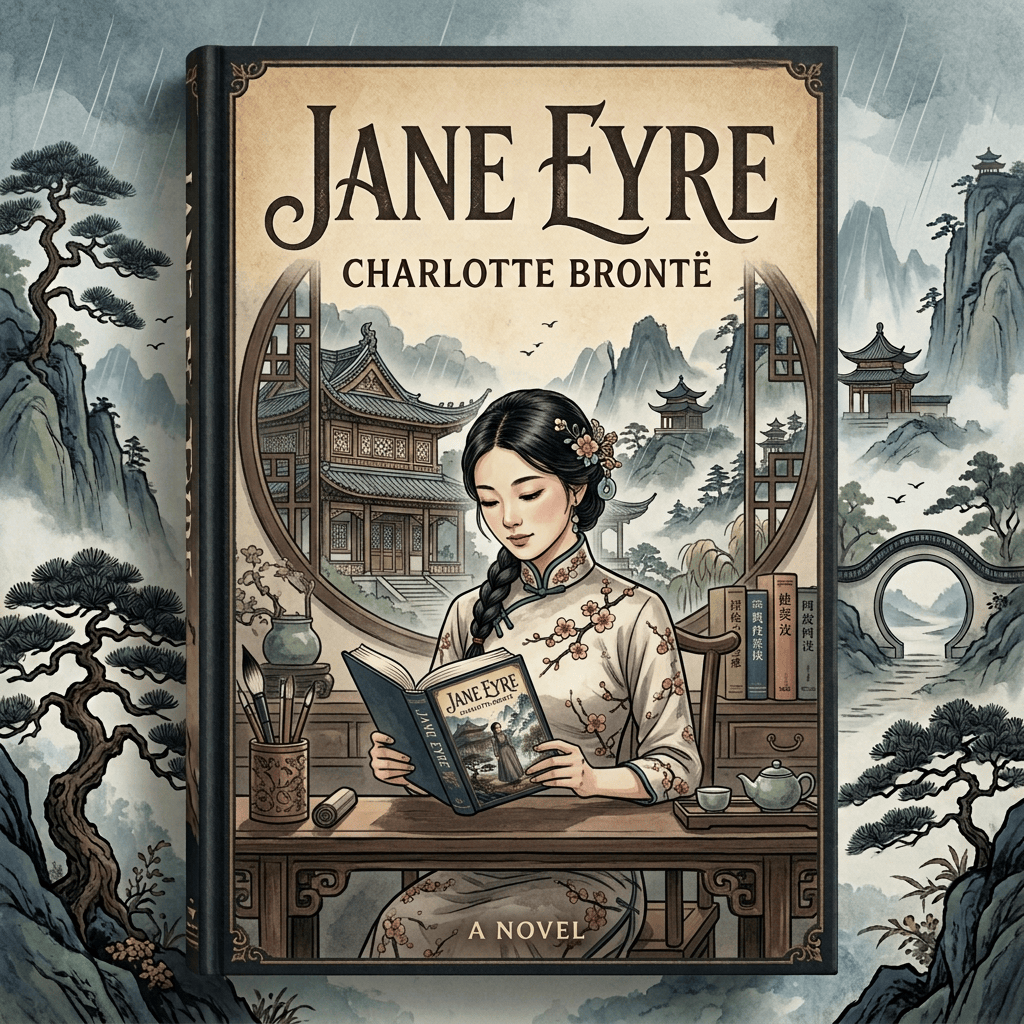
According to a recent New York Times article, Jane Eyre is now required reading for teens. Why a story about a feisty, impoverished Victorian woman would qualify as a Chinese curriculum must is surprising. Apparently this British classic has long captured the interest of Chinese readers for many years, and had been recommended reading for schoolchildren, yet it is now required reading for ninth graders.
Jane Eyre is definitely a favorite of mine, and I included it in my Senior AP Literature curriculum. Most students embraced it, guys included, although I had one male student who exuded such dislike for it, not even willing to give it a try, that parental conferencing took place.
Onward.
Quick summary:
Jane Eyre is an orphan in 1800s England. Her aunt has agreed to raise her but treats her badly. Jane is sent away to school, receives an education, and sets out to earn her way in life as a governess. She becomes the employee of Rochester, a cynical man with deep secrets. Strangely attracted to each other yet separated by their social status, Jane and Rochester have many impediments to overcome, including a tragic secret that Rochester hides from the world.
Why this plot intrigues Chinese readers intrigues me. Since its publication Bronte’s novel has been translated many times, especially as stage and screen adaptations. In 1925, a Chinese translation hit the shelves, finding its way into the hands of the general population.
But why require 13 or 14 year olds to read about Jane and her epic journey. While Campbell might disagree with me, I believe Jane’s journey from bullied orphan to independent, wealthy woman is indeed epic. She has much to overcome and with the help of mentors and relying on her own resources she succeeds in vanquishing those elements that nearly did her in. Jane is quite amazing.
Ping Zhu, a literature professor at the University of California, San Diego, known for researching Chinese feminism (is that even possible?) and literature, believes Jane Eyre complements the Chinese government’s vision of women’s equality in that it promotes how a woman can be independent yet exemplify the traditional gender role found in the traditional heterosexual nuclear family. That makes sense. Jane has no family, and her initial prospects of marriage are not favorable, being plain and poor, and even when given the opportunity to be loved by Rochester she spurns his suggestion to be his mistress due to his unfortunate marriage to an insane woman. She ends up independently wealthy and marries Rochester once he is no longer attached to his wife. She even has a child.
Chinese moral (seems to be): You can be an independent woman, be a wife, and be a mother. Not sure about the wealthy bit, how that fits in.
One reason Jane Eyre is being promoted in schools at the impressionable age of 14 is that there is a decline in the general population and China wants women to get married and have children. If Jane can do so, then Chinese female readers should be so encouraged.
Whatever the reason, JE is a great read and I miss teaching it.
I am tempted to write my own version of Jane Eyre, but then, when it has been done so well why try to duplicate?





I don’t think you want to duplicate the book. Perhaps you should think of your work as “being inspired by.” I remember reading Jane Eyre in 6th grade. I was way to young to appreciate it and should probably read it again now that I’m a “bit” more mature, LOL.
I read a couple of JE inspired books. It’s tricky getting around the wife in the attic aspect.