Pam Webb

a writer's journey as a reader

Archive for the tag “reading”

Eyre of Distinction


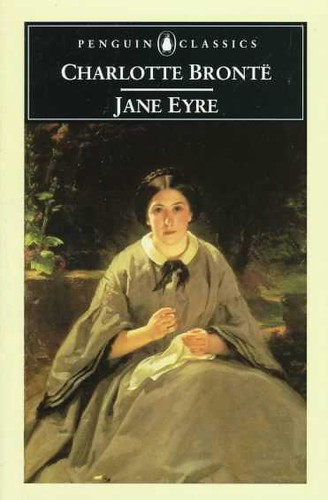
Soon we start our AP novel unit, Jane Eyre. Charlotte Bronte’s novel is one of my favorites, which means I will infuse as much of my appreciation for it as I do for my other favorite classics like Hamlet.  While many wax profoundly about Jane Austen, I think Miss Bronte gets overlooked. Jane Eyre has the distinction of being one of those novels that set things of literature memes, tropes, and motifs in motion by becoming a template for other stories. Consider:

  • she is plain in looks, but beautiful in spirit
  • her intelligence is valued by others, at a time when women were not widely educated
  • she values family over fortune
  • she easily speaks her mind
  • she is independent and finds a way to survive
  • outwardly she is calm, yet ripples with passion underneath her facade of restraint
  • she is perservering, sourceful, and a woman of strong morals
  • she stands up for herself–no doormat dame here

My opinion: Jane rocks. Over the years there have been several film adaptations of the novel.  I binged on JE films over the weekend and came up with my ratings:

1971: Starring George C. Scott and Susannah York
Verdict: skip.

George, too familiar with his Patton role, brought it to his interpretation of Rochester.  He railed and ranted in a very American accent and I gave up after he meets with Jane after their encounter on the road. Besides York’s Jane being too old and much too pretty I couldn’t sit through the poor film quality. The video transfer was so muddied I felt as if I were watching the movie through an unwashed glass.

image: eleganceof fashion. blogspot

1983: Timothy Dalton and Zelah Clarke
Verdict: one of the most faithful and watchable versions

Being a BBC production, I had initial trust it would be a quality adaptation, after all these are the folk who brought us Colin Firth as Mister Darcy. The sets, the important scenes, those inscrutable nuances of the original story are all contained in this mini-series. Timothy Dalton definitely understands the Byronic hero that Rochester embodies and has even said in interviews Rochester is one of his best roles. Clarke, while a bit older than the required 18 year old fresh from her Lowood imprisonment, captures the Quakerish passivity and ethereal nature of Jane Eyre.  The scenes between Dalton and Clarke are melt-in-the-mouth truffle satisfying.  Their version is what comes to mind most often when I return for a refresher novel read. I really did believe a heartstring developed between them. The agony of Dalton’s Rochester when he realized his Jane was leaving him forever kept the tissue box occupied.

1996: William Hurt and Charlotte Gainsbourg director: Franco Zefferilli
Verdict: passable, but strayed terribly from the novel

William Hurt seemed on the verge of understanding Rochester, but kept the bitterness too diminished, too washed out. Charlotte G as Jane got her part right. The plain, passionate young actress  imbued the paradoxical spirit of Jane Eyre. Sadly, there existed no believable passion, that needed kindred heart-string spark, between Gainsbourg’s Jane and Hurt’s Rochester. This spark is the very core of the novel. Without that essential core the movie floundered about like a fish hoping to get back into the water to have a proper swim. The director who brought us Romeo and JulietTaming of the Shrew, Hamlet, and other great stories of passion missed the mark with this adaptation by rushing the story and taking way too many liberties with the plot.

2006: Toby Stephens and Ruth Wilson
Verdict: enjoyable, even if a bit too contemporary in approach

image: writingbar.com

Admittedly, I had started watching this version years ago when it first came out, but found myself so disenchanted with the cutaway flashbacks, I couldn’t get past the Lowood scenes and it wasn’t until recently I returned to another viewing.  I did like the lead actors portrayals, and yes, there was a definite spark between them. I thought Toby Stephens got off easy with his fire wounds, unlike Hurt and Dalton. His rugged looks only appeared rather marred, instead of being ruined. The rolling around, ankle rubbing bit at the end seemed a bit too lenient for true Bronte style. Then again, there are leniences throughout this adaptation I willingly overlooked since the production quality proved so high.

2011: MiaWaikowska and Michael Fassbender Director: Cary Fukunaga
Verdict: Admirable

The first scene makes a diehard JE fan sit bolt upright and ask, “What? Wait–did the movie skip! because the opening scene is starting right off with Jane making her mad dash from Thornfield, which usually means the film is winding up to the grand finale.  Instead Fukunaga gets a bit artsy and dips in and out of Jane’s childhood days in flashbacks, with a quick glance at times at her more recent history.  Artfully done, but a bit disconcerting for those who prefer the linear progression.  Fassbender and Waikowska do provide a sumptuous Rochester and Jane.  Looks, mannerisms, nuances, smoldering passions–it’s all there.  That’s why it the ending is so absolutely frustrating.  I could not understand the need to transform Rochester into a Tom Hanks Castaway lookalike.  Maybe trading out the maimed hand for a beard was a contract compromise. Also, there should have been another 20 minutes of wrap up, yet we are whisked away much too soon.  It’s like being served the most savory dessert and having it taken away after a couple a bites–“Yo, I wasn’t finished.” Apparently Fukunaga thought the audience needed no more indulging and wanted us to move away from the table.

Overall: If a dedicated JE fan go to one of the series adaptations, such as the 1983 or the 2006.  It appears that only when given the proper amount of time (3-4 hours) can Jane’s story be told sufficiently. However, if thinking “book or movie first?” and movie wins out–get the 2011 version.

Further notation: I thought about finding the Ciarin Hinds version, especially after watching him in Austen’s Persuasion with Amanda Root.  Our library no longer has it and after reading the widely mixed reviews of loving it and hating it, I thought I will stick with my picks of 1983, 2011, and 2006 for classroom clips.

Any readers have their own picks of fave JE adaptations?

Life Long Loving of the Library of Congress


Main Library of Congress building at the start...

Main Library of Congress building at the start of the 20th century (Photo credit: Wikipedia)

And yet another reason I continue my praises of the Library of Congress. In recent Internet research sleuthing I stumbled across their Festival Author Booklist. Yippee! I love bookish gatherings, especially when I don’t have to do much traveling to enjoy it.  If you do want to travel, then get your arrangements made for Washington D.C. because that’s the happening spot. Last year the festival ran the weekend of September 21 and 22.  For more information: National Book Festival

Author and Reading Celebration

Since 2001,  authors, illustrators and poets make presentations on the National Mall in various pavilions. In 2013 over a 100 authors represented  Teens & Children, Fiction & Mystery, History & Biography, Contemporary Life, Poetry & Prose, Graphic Novels & Science Fiction and Special Programs.

Library of Congress Pavilion

If a person has longing to know all about the Library of Congress, then a visit to their LOC Pavilion is in order. There is so much moAt the Library of Congress Pavilion than books.

Wait!

There is more bookish good stuff from the LOC. Want handy access to classic reads? Then you need to click on the Read.gov link and start enjoying a range of reading from the John Carter series to Aesop Fables and what lies in between.

Contest!

Are you a teacher, a parent? If books are an important part of your education input, you will want to perk up and take time to read the guidelines about the LOC contest Letters About Literature.  Prizes too! I look forward to introducing this to my students.

Stay tuned for more love notes about the nation’s library.

YAy for Dystopian


Once upon time when writers wrote about the world going wrong and trying to make a go of it in the aftermath the novels usually found its way on the college reading list. Ruined landscapes, fragmented governments, odd creatures mucking about, abundance of shortages and the like just wasn’t fit for kiddos. Think about the titles: Brave New World, 1984, Time Machine, Fahrenheit 451, A Clockwork Orange. Right. Yes. Some of them do end up on high school lists, but not when they first came out. There is a reason for that.

Lately, the shelves are full of dystopian novels and those shelves are usually in the YA section.  There is a reason for that too.

Back in the once upon a time, the world wasn’t that scary, even with the Cold War, we still had a pretty good idea of feeling on top of the world, so we could poke a bit around the edges of the “what ifs.” Then the world did get scary. AIDS, a couple of wars in a few out-of-the-way places, recession, terrorists, weather disasters, recalls–dystopian became popular among YA because the future is not looking so bright anymore. I’m just saying.

In fact, the adults are now reading the YA list (even though some don’t admit it): The Giver, Hunger Games, Maze Runner, Divergent are some names that pop to the surface.

Is Dystopian bad for teens? I don’t think so.  I didn’t get ruined from reading Brave New World in college, although 1984 and Clockwork Orange had me thinking hard at times. 

What do you think? Is there a difference between YA dystopian fiction and adult dystopian? Or is a bad world after the fact good reading for both adults and teens?


Libraries All Over


Libraries. We think of them in terms of brick and glass with rows of shelves and some comfy chairs. Yet, they can appear in many places and in many forms.

A Works Progress Administration Bookmobile visits Bayou De Large, Louisiana. Photo from the New Deal Network.

Pack horse librarians pose in Hindman, Kentucky. From the University of Kentucky’s Goodman-Paxton Photographic Collection

A booketeria in a Nashville supermarket. Photo from the Nashville Public Library.

A vending machine library at a Bay Area school. Photo originally from Inside Bay Area.

A former Wal-Mart photo from the McAllen Public Library.

BiblioTreka transformed into the pop-up library.

Pop-Up Library known as the BiblioTreka (image: libraryasincubatorproject.com)

IKEA shelves. Bondi Beach. Books. Perfection. (image:PeaceandNoise.blogspot.com)

A true book is never phoney. (image: PeaceandNoise.blogspot.com)

This gives me hope books ae not on the wayse as technology encroaches on book-in-hand versus book on-screen. Any unusual libraries spottings?

Fifty Shades of Greatness


The particulars: 1,311 voters. 1,200 suggested books. The result: the top 50 books which reflect great reads, great choices–nothing shady about good taste (BookRiot). Though I didn’t vote in the first round I shall add in my votes.

  1. To Kill A Mockingbird by Harper Lee (126 votes)
  2. Pride and Prejudice by Jane Austen
  3. Jane Eyre by Charlotte Bronte
  4. The Harry Potter series by J.K. Rowling
  5. The Great Gatsby by F. Scott Fitzgerald
  6. The Lord of the Rings series by J.R.R. Tolkien
  7. Gone With the Wind by Margaret Mitchell
  8. Wuthering Heights by Emily Bronte
  9. The Book Thief by Markus Zusak
  10. The Catcher in the Rye by J.D. Salinger
  11. One Hundred Years of Solitude by Gabriel Garcia Marquez
  12. The Secret History by Donna Tartt
  13. Catch-22 by Joseph Heller
  14. A Tree Grows in Brooklyn by Betty Smith
  15. Slaughterhouse-Five by Kurt Vonnegut
  16. A Prayer for Owen Meany by John Irving
  17. The Stand by Stephen King
  18. The Hobbit by J.R.R. Tolkien
  19. Anna Karenina by Leo Tolstoy
  20. Infinite Jest by David Foster Wallace
  21. Persuasion by Jane Austen
  22. The Picture of Dorian Gray by Oscar Wilde
  23. The Brothers Karamozov by Fyodor Dostoevsky
  24. The Outlander series by Diana Gabaldon
  25. East of Eden by John Steinbeck
  26. The Shadow of the Wind by Carlos Ruiz Zafon
  27. The Time Traveler’s Wife by Audrey Niffenegger
  28. American Gods by Neil Gaiman
  29. The Count of Monte Cristo by Alexandre Dumas
  30. Fahrenheit 451 by Ray Bradbury
  31. 1984 by George Orwell
  32. Crime and Punishment by Fyodor Dostoevsky
  33. Little Women by Louisa May Alcott
  34. Moby-Dick by Herman Melville
  35. The Grapes of Wrath by John Steinbeck
  36. The Handmaid’s Tale by Margaret Atwood
  37. The Hitchhiker’s Guide to the Galaxy series by Douglas Adams
  38. Lolita by Vladimir Nabokov
  39. Rebecca by Daphne du Maurier
  40. Ulysses by James Joyce
  41. Cloud Atlas by David Mitchell
  42. The Perks of Being a Wallflower by Stephen Chbosky
  43. Ender’s Game by Orson Scott Card
  44. Middlesex by Jeffrey Eugenides
  45. The Amazing Adventures of Kavalier and Clay by Michael Chabon
  46. Dune by Frank Herbert
  47. Gilead by Marilynne Robinson
  48. Les Miserables by Victor Hugo
  49. The Night Circus by Erin Morgenstern
  50. The Poisonwood Bible by Barbara Kingsolver (13 votes)

I would have put in votes for The Alchemist and a few of Shakespeare’s plays, like Hamlet, Much Ado About Nothing, Othello. Come to think of it I’ve yet to come across a Greats list for plays.

Now, your turn. What votes would you cast off the 50 Greats?  And then–what plays would you vote for? Because aren’t plays stories to be acted out?

Children’s Books for Forever


I don’t think I will ever outgrow my liking of children’s books. At one point I began collecting them as I came across them in yard sales, thrift stores, and the cast offs from the public library. I probably would have done better to start my collection after I had done my college moving days. Carting crates of books during a year of several moves created in me to appreciate children’s books in a different fashion. I no longer have my collection, and I don’t terribly regret the decision to dissemble it. I still am a confirmed reader, promoter, and writer of children’s stories. They remain my fave.  Here’s a hint–if you are feeling somewhat blue about the edges, go grab a kid’s book and read it. Better yet, grab a kid and a book and read the book to the kid. No more blues.

With all that being said it gives me great smiles to present the New York Public Libraries first ever 100 Top Children’s Books of the Last 100 Years. First posted on School Library Journal’s site September 30, 2013 (I am a bit behind in my inbox readings).


100YearsChildBks strip1 NYPL Unveils 100 Top Children’s Books of the Last 100 YearsIn alphabetical order by title, this list is as follows:

Alexander and the Terrible, Horrible, No Good, Very Bad Day. Judith Viorst. Illus. by Ray Cruz. (1972)
All-of-a-Kind Family. Sydney Taylor, illustrated by Helen John. (1951)
Amelia Bedelia. Peggy Parish, illustrated by Fritz Siebel. (1963)
The Arrival. Shaun Tan. (2007) Bark, George. Jules Feiffer. (1999)
Because of Winn-Dixie. Kate DiCamillo. (2000)
Ben’s Trumpet. Rachel Isadora. (1979)
Big Red Lollipop. Rukhsana Khan. Illus. by Sophie Blackall. (2010)
The Birchbark House. Louise Erdrich. (1999)
The Book of Three. Lloyd Alexander. (1964)
The Borrowers. Mary Norton. Illus. by Beth Krush and Joe Krush. (1953)
El Gallo De Bodas: A Traditional Cuban Folktale. Lucía M. González. Illus. by Lulu Delacre. (1994)
Bread and Jam for Frances.
Russell Hoban. illustrated by Lillian Hoban. (1964)
Bridge to Terabithia. Katherine Paterson. (1977)
Brown Bear, Brown Bear, What Do You See? Bill Martin, Jr. Illus. by Eric Carle. (1967)
Caps for Sale. Esphyr Slobodkina. (1938)
The Cat in the Hat. Dr. Seuss. (1957)
Chains. Laurie Halse Anderson. (2008)
A Chair For My Mother. Vera B. Williams. (1982)
Charlotte’s Web. E.B. White. Illus. by Garth Williams. (1952)
Chato’s Kitchen. Gary Soto. Illus. by Susan Guevara. (1995)
Chicka Chicka Boom Boom. Bill Martin, Jr. and John Archambault. Illus. by Lois Ehlert. (1989)
Corduroy. Don Freeman. (1976) Curious George. H.A. Rey. (1941)
D’Aulaires’ Book of Greek Myths. Ingri D’Aulaire and Edgar Parin D’Aulaire. (1962)
Don’t Let the Pigeon Drive the Bus! Mo Willems. (2003)
Esperanza Rising. Pam Muñoz Ryan. (2000)
Freight Train. Donald Crews. (1978)
Frog and Toad Are Friends. Arnold Lobel. (1970)
From the Mixed-Up Files of Mrs. Basil E. Frankweiler. E.L. Konigsburg. (1967)
George and Martha. James Marshall. (1972)
The Giver. Lois Lowry. (1993)
Go, Dog. Go! P.D. Eastman. (1961)
Goodnight Moon. Margaret Wise Brown. Illus. by Clement Hurd. (1947)
Grandfather’s Journey. Allen Say. (1993)
The Graveyard Book. Neil Gaiman. Illus. by Dave McKean. (2008)
Green Eggs and Ham. Dr. Seuss. (1960)
Harold and the Purple Crayon. Crockett Johnson. (1955)
Harriet the Spy. Louise Fitzhugh. (1964)
Harry Potter and the Sorcerer’s Stone. J.K. Rowling. (1998)
Hatchet. Gary Paulsen. (1989)
The Hobbit. J.R.R. Tolkien. (1937)
Holes. Louis Sachar. (1998)
The Invention of Hugo Cabret. Brian Selznick. (2007)
Joseph Had a Little Overcoat. Simms Taback. (1999)
Jumanji.
 Chris Van Allsburg. (1981)
Just a Minute: A Trickster Tale and Counting Book. Yuyi Morales. (2003)
Lilly’s Purple Plastic Purse. Kevin Henkes. (1996)
The Lion and the Mouse.
Jerry Pinkney. (2009)
The Lion, the Witch and the Wardrobe. C.S. Lewis. (1950)
The Little House. Virginia Lee Burton. (1942)
The Little Prince. Antoine de Saint-Exupéry. (1943)
Locomotion. Jacqueline Woodson. (2003)
Lon Po Po: A Red-Riding Hood Story From China. Ed Young. (1989) 100YearsChildBks strip2 NYPL Unveils 100 Top Children’s Books of the Last 100 YearsMadeline. Ludwig Bemelmans. (1939)
Make Way for Ducklings. Robert McCloskey. (1941)
Matilda. Roald Dahl. Illus. by Quentin Blake. (1988)
Meet Danitra Brown. Nikki Grimes. Illus. by Floyd Cooper. (1994)
Millions of Cats. Wanda Gág. (1928)
Miss Nelson is Missing!
Harry Allard. Illus. by James Marshall. (1977)
Mr. Popper’s Penguins.
Richard and Florence Atwater. Illus. by Robert Lawson. (1938)
Mrs. Frisby and the Rats of NIMH.
Robert C. O’Brien. (1971)
Mufaro’s Beautiful Daughters: An African Tale.
John Steptoe. (1987)
My Father’s Dragon.
 Ruth Stiles Gannett. Illus. by Ruth Chrisman Gannett (1948)
My Name is Yoon.
 Helen Recorvits. Illus. by Gabi Swiatkowska. (2003)
Olivia.
Ian Falconer. (2000)
One Crazy Summer
. Rita Williams-Garcia. (2010)
The People Could Fly: American Black Folktales.
Virginia Hamilton. Illus. by Leo/Diane Dillon. (1985)
The Phantom Tollbooth. Norton Juster. Illus. by Jules Feiffer. (1961)
Pierre: A Cautionary Tale in Five Chapters and a Prologue. Maurice Sendak. (1962)
Pink and Say. Patricia Polacco.  (1994)
Pippi Longstocking. Astrid Lindgren. (1950)
Ramona the Pest. Beverly Cleary. (1968)
Rickshaw Girl. Mitali Perkins. Illus. by Jamie Hogan. (2007)
Roll of Thunder, Hear My Cry. Mildred D. Taylor. (1976)
Rumpelstiltskin. Paul O. Zelinsky. (1986)
A Sick Day for Amos MCGee. Philip Stead. Illus. by Erin E. Stead. (2010)
The Snowy Day. Ezra Jack Keats. (1962)
Starry River of the Sky. Grace Lin. (2012)
The Stories Julian Tells. Ann Cameron. Illus. by Ann Strugnell. (1981)
The Story of Ferdinand. Munro Leaf. Illus. by Robert Lawson. (1936)
Strega Nona. Tomie dePaola. (1975)
Swimmy. Leo Lionni. (1963)
Sylvester and the Magic Pebble.
William Steig. (1969)
Tales of a Fourth Grade Nothing. Judy Blume. (1972)
The Tales of Uncle Remus: The Adventures of Brer Rabbit. Julius Lester. Illus. by Jerry Pinkney. (1987)
Tar Beach. Faith Ringgold. (1991)
Ten, Nine, Eight. Molly Bang. (1983)
Tomie dePaola’s Mother Goose. Tomie dePaola. (1985)
The True Story of the Three Little Pigs. Jon Scieszka. Illus. by Lane Smith. (1989)
Tuesday. David Wiesner. (1991)
The Very Hungry Caterpillar. Eric Carle. (1969)
The Watsons Go to Birmingham—1963. Christopher Paul Curtis. (1995)
The Westing Game. Ellen Raskin. (1978)
When You Reach Me. Rebecca Stead. (2009)
Where Is the Green Sheep? Mem Fox. Illus. by Judy Horacek. (2004)
Where the Wild Things Are. Maurice Sendak. (1963)
Why Mosquitoes Buzz in People’s Ears. Verna Aardema. Illus. by Leo/Diane Dillon. (1975)
Winnie-the-Pooh. A.A. Milne. Illus. by Ernest H. Shepard. (1926)
A Wrinkle in Time. Madeleine L’Engle. (1962)

So many wonderful friends. I love a great list filled with great books. I hope you found some good old friends as well.

Continuing the Love for LOC


Cover of "The Legend of Sleepy Hollow (Pi...

Cover via Amazon

Visiting the Library of Congress is high on my BIG list, yet that one wish won’t be actualized until time and funding match up. For now I continue visiting it on-line for research and serendipity surprises. For instance, as I browsed for Idaho pioneer entries my screen popped up their Books that Shaped America entry. I’m thinking somewhere there is a book about pioneers in Idaho? It didn’t matter because I became lost through the eras as I browsed, read, and absorbed.  Fascinating, illuminating, and enlightening how the books reflected the times and influenced future reading. For the entire link go to Books That Shaped America.

Here are some titles to ponder:

Benjamin Franklin, Poor Richard Improved (1732) and The Way to Wealth (1785)

Washington Irving, The Legend of Sleepy Hollow (1820)

L. Frank Baum, The Wonderful Wizard of Oz (1900)

Upton Sinclair, The Jungle (1906)

Dale Carnegie, How to Win Friends and Influence People (1936)

Ralph Ellison, Invisible Man (1952)

Dr. Seuss, The Cat in the Hat (1957)

Harper Lee, To Kill a Mockingbird (1960)

Ralph Nader, Unsafe at Any Speed (1965)

César Chávez, The Words of César Chávez (2002)

I know, I know–I’m hearing the “what about _______!” I was surprised at what made the list and what didn’t. I hope you check it out and let me know what you think should have made it.

Interior Library of Congress, by G. D. Wakely

Interior Library of Congress, by G. D. Wakely (Photo credit: Wikipedia)

Monkeying Around


I usually don’t follow the trend, yet those monkeys got me smiling with their extra effort this year. Plus I wanted to do some shout outs to the main commenters throughout the year: LazyCoffees, Literary Tiger, Stehothej, Letizia, and Eagle-Eyed Editor. Thanks guys!
A couple of reflections–I had no idea concrete poetry was such a popular search item! Perhaps it’s time to boost ratings with another round. Also, Sparky Sweets continues to get hits. Hmmm, respark another post?
So, the tts are a bit of a report card. I’m not much for checking my stats, although I do get a kick from how those little monkeys put together the end of the year prez.
Off to another year–gee it would be grand to get Freshly Pressed this year (wee hint).
Happy New Year, One and All!
m

The WordPress.com stats helper monkeys prepared a 2013 annual report for this blog.

Here’s an excerpt:

The concert hall at the Sydney Opera House holds 2,700 people. This blog was viewed about 8,200 times in 2013. If it were a concert at Sydney Opera House, it would take about 3 sold-out performances for that many people to see it.

Click here to see the complete report.

Sippers, Dippers, and Flippers


Now that it’s back to the 5 to 9 world of teaching (yes, 5 am to 9 pm–hi, ho, hi, ho work is all I know), I’m reflecting a bit on my splurge of reading over the summer.  I ever so did try to balance my reading and writing, but I admittedly succumbed to reading way more than I intended [see Writing Goals *lol*].

My reading proved to be rather eclectic and I found myself segmenting my choices into three distinct categories:

Sippers: Books I tend to read at night before falling asleep. My mainstay sipper has been Da Vinci’s Notebook. Unfortunately this is an abridged version so it does not have any illustrations. However, it still captivates my attention and I find myself sticky flagging all sorts of amazing insights. This man’s genius is truly astounding. Quotes of note:

The natural desire of good men is knowledge.

I obey thee. O Lord, first because of the love which i ought reasonably to bear thee; secondly, because thou knowest how to shorten or prolong the lives of men.

Good literature proceeds from men of natural probity.

It is easier to resist at the beginning than at the end.

(And this is just 30 pages into the observations section. I need to read painting, anatomy, flight–and there’s more yet to explore! I may be sipping on this all year.

Dippers: These were titles I didn’t read cover-to-cover, only reading a page here, a section there, relishing a line or two, but not feeling the urge to sit down and absolutely, positively read it. This is the type of book to prop behind the cereal bowl, or lunch plate or pass the time with in the bookstore while waiting for the MEPA to finish selecting the perfect card for his sister. A fave dipper this summer:

and then we come to the major reads section, those books that I couldn’t put down, the ones where I meant to read a couple of chapters and return to writing. Uh huh.

Flippers: Flip. Flip. Flip. I’m flying through these books because–

A. The writing is soooo good I can’t stop reading

B. The storyline is amazingly riveting

C. I’m grooving on the combination of good read, soft breezes, comfy hammock

Titles that were so flipping wonderful:

These both claimed an afternoon each. And of course I had to read the sequel, and the other books in the series. And then write up my GoodReads reviews. Whoosh, there go those writing goals…

How was your summer reading? Did you also sip, dip, and flip?

Biblio-ing


This week seems to be biblio week.  I’ve read a couple of different posts about loving books, but then that doesn’t seem too unusual when most of my post follows involve following other book lovers. Additionally, this week marks the 60th member join for the Book Boosters.  Say a “Hey! and Yay!” for  Radical Hope. Not a Book Booster yet? Well, if you fit these stringent requirements you should consider signing up:

  • Do you love books?
  • Do you have favorites you read, recommend, and even re-read?
  • Are you a frequent flyer at the local library?
  • Are you an on-line regular of book sites, be they promoting to buy, review, or boast books?
  • Perchance you operate on a need to read basis–you have to have a book in hand, by the bed, stashed in the car, or have one nestled in the backpack.

You then, my friend, are a Book Booster. And you are in good company. Request for your name to the list and then welcome to the shelf of those who appreciate and advance the cause of books. No dues, no newsletters, but I am working on a secret handshake.

Continuing on the theme of celebrating biblio-ing, here are some borrows form other book-toting bloggers:

Here are some pithy comments from Geeky Book Snob concerning things that book lovers dislike hearing:

Click to visit the original post

And if you aren’t totally clear on what constitutes biblio-ing then take a look at Cassie’s list, and then check out the rest of her post, because it’s a stunner of stream-of-consciousness:

Types of bookishness...and anti-bookishness

Post Navigation