January proved to be a five star month. Most of my choices became memorable reads, whetting my appetite to search out more good great reads for my 2026 Good Reads reading challenge. I almost hit my wishful thinking number of 200 books last year. January’s five star reads:
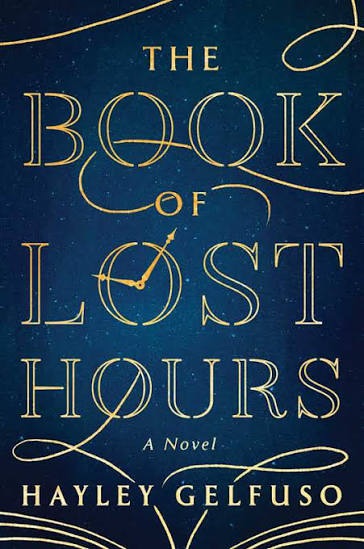
The Book of Lost Hours by Hayley Gelfuso
sci-fi/magical/romance/adventure
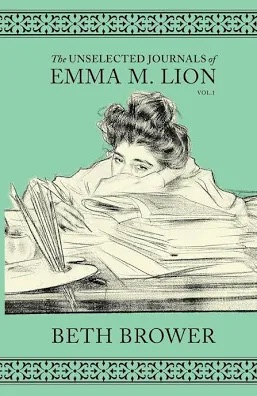
The Unselected Journals of Emma M. Lion (4 out of 8 read and now waiting patiently for the others to get returned)
Witty, captivating, and addictive
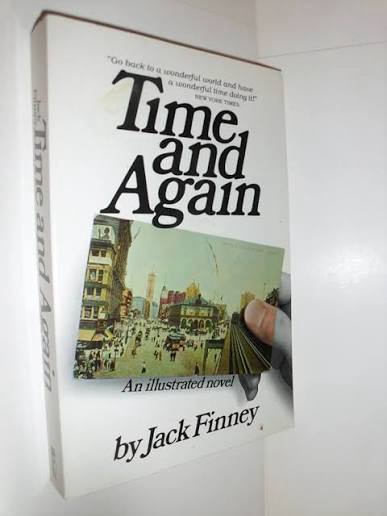
Time and Again by Jack Finney
cult classic time travel set in 1970s/1882 New York
Last year proved a banner year for my Good Reads reading challenge having far surpassed my usual 101 books with 191 books. Will 2026 be the year of 200? 201?
December ended on a high note of 5 five star reads—a mixture of kid lit to popular requests.
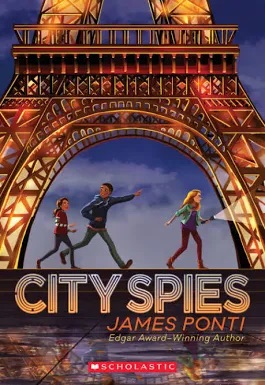
City Spies by James Ponti
image: Goodreads
The usual trope of orphaned children with exceptional skills being recruited as M16 operatives has been popularized by books such as Horowitz’s Alex Rider series making it difficult to provide something unique to the middle grade genre. And yet Ponti does add enough twists to create a creative read.
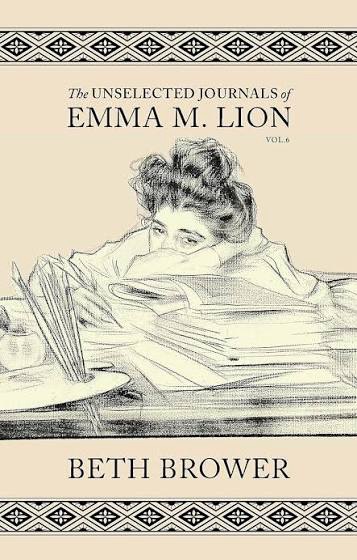
The Unselected Journalsof Emma M. Lion by Beth Brouwer
image: Goodreads
Understated humor, Victorian culture, British class/historical fiction, with a smidge of mystery all come together for a charming read that is less journal entry and more novel in approach.
No wonder the library can’t keep them on the shelf.
The Bitter End Birding Society by Amanda Cox
image: Amazon
A story how birds, one of God’s most precious creations, can help restore faith in oneself and in others.This reader gladly endured the hold list wait as it was a lovely read.
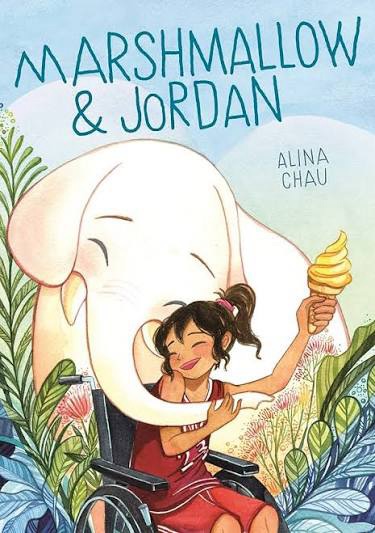
Marshmallow and Jordan by Alina Chau
image: Amazon
An uplifting graphic novel that features Jordan, a middle-school girl in a wheelchair who used to be a basketball star. She befriends a stray baby elephant and they become inseparable, naming him Marshmallow. Marshmallow helps Jordan boost her swimming skills enough to join the school’s water polo team.
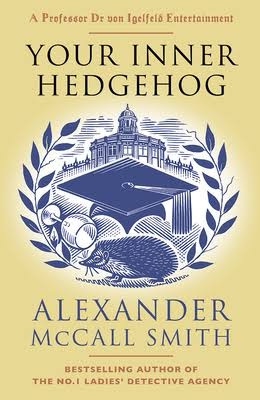
Your Inner Hedgehog by Alexander McCall Smith
image: Goodreads
This fifth entry into the series captures the subtle wit and charming irony McCall-Smith is known for. As he continues his gentle poke at academia the story takes on the sublime found in books by Jasper Fforde and Douglas Adams.
Reading books continues to be the fundamental enjoyment of retirement. It even rates higher than dark chocolate.
When the Montana Shakespeare Troupe arrives in August to our fair town, it is a generally accepted acknowledgement that summer is on the wane. Pleasant weather still lingers, although it is a bit chill in the early morn and evening. There remains the essence of summer.
And then the calendar chimes out its equinoxal announcement that summer is past and autumn is now upon us. I’m not quite ready to bring in the patio furniture yet.
Shakespeare eloquently presents a metaphorical passing of one’s age in his often quoted Sonnet 73:
That time of year thou mayst in me behold
When yellow leaves, or none, or few, do hang
Upon those boughs which shake against the cold,
Bare ruin’d choirs, where late the sweet birds sang.
In me thou see’st the twilight of such day
As after sunset fadeth in the west,
Which by and by black night doth take away,
Death’s second self, that seals up all in rest.
In me thou see’st the glowing of such fire
That on the ashes of his youth doth lie,
As the death-bed whereon it must expire,
Consum’d with that which it was nourish’d by.
This thou perceiv’st, which makes thy love more strong,
To love that well which thou must leave ere long.
Back when in my AP teaching days, this was a poem we studied for its rich imagery and underlying message of mortality. However, bypassing an analysis (I hear that sigh of relief), I do want to focus on the last two the lines, the ending couplet. In the previous lines the speaker has expressed his concern how he is aging to his lover (maybe even a child–oops, that’s analysis) and in the ending couplet we see the volta, or turn, that indicates a change of mood. Here the speaker interposes the thought that though he might be aging in his own eyes, and in perhaps his lover’s eyes, it is this very state of aging that should initiate an even deeper love for the narrator. In other words, though summer (his youthfulness) is diminishing and hints of winter are coming (touches of grey in hair), this season of in between, autumn, should be even more cherished as it is the in between time before winter is fully realized.
Yeah, what Shakespeare said.
I welcome spring, enjoy summer, and embrace fall. Fall or autumn still has the warmth of summer, yet it ushers in harvest and nature’s graceful transition into a foliage showcase of beauty. Since retirement I am taking advantage of the gentle warmth of September afternoons. Previously (20 years worth) I wouldn’t get home until after the shadows filled my backyard and I would mourn having missed out on the sunshine having been inside a building all day (okay, mourn is a bit extreme, but I really disliked having to wait until the weekend to enjoy the fall sunshine).
National Poetry Month is still among us for a few more days and I would be remiss not to mention Shakespeare and his sonnets. There–duly mentioned.
I am sorely tempted to give a brief lesson about the sonnet, something I miss teaching from my AP English Lit days. BUT (which is an indication of the turn in the sonnet mood or message known as the volta–see what I did there? Yes, I did squeeze in a brief lesson), I shall refrain and instead spotlight that other aspect of Shakespeare.
No–not him being a playwright. Did you know he started out writing sonnets and not plays? That he considered himself more poet that playwright and that he inserted many a sonnet into many of his plays? There are four sonnets in Romeo and Juliet alone. The prologue that introduces the play is a sonnet (watch for the volta–hint, hint “which” works as well as “but”):
Two households, both alike in dignity, In fair Verona, where we lay our scene, From ancient grudgeParenthesis break to new mutiny, Where civil blood makes civil hands unclean.
From forth the fatal loins of these two foes A pair of star-crossed lovers take their life
From forth the fatal loins of these two foes A pair of star-crossed lovers take their life; Whose misadventured piteous overthrows Doth with their death bury their parents’ strife. The fearful passage of their death-marked love, And the continuance of their parents’ rage, Which, but their children’s end, nought could remove, Is now the two hours’ traffic of our stage; The which if you with patient ears attend, What here shall miss, our toil shall strive to mend.
There I am talking about sonnets again. Well, it is National Poetry Month. And being such a famous, well-known poet it is difficult not to have spent at least a bit of time about how the Bard rocked sonnets.
Sonnets. Plays. He did write them supremely well. We still read them, watch them, recite them, discuss them and you know what? Just watch a master recite the master discussing April–very appropriate, wouldn’t you say?
The cat is a nice touch.
Here I meant to talk about the other aspect of Shakespeare, and sonnets distracted me. A worthy distraction, true that. Yet, (another word that works as a volta, since I am changing the direction of this focus), beyond the perfect prose and poetry Shakespeare is so admired for there is a darker, mmm, not quite the right word–ribald, yes, Shakespeare has a definite ribald side to him: his insults!
Throughout his plays his characters lob the cheekiest insults at one another. Keeping in mind the majority of those attending Shakespeare’s plays were of the down-to-earth crowd, known as “groundlings” because they pay a penny to watch the performance and stood for the entire time, often shouting out their commentary to the stage actors. Stands to reason then why Shakespeare inserted earthy lines into his plays. He knew how to play to the crowd.
Here are some examples. They start at mild and run the course from G to PG13.
“Neighbors, you are tedious. ” —Much Ado About Nothing, Act 3, Scene 5
“[You] peevish baggage.” —Pericles, Act 4, Scene 6
“[H]e has not so much brain as earwax.” —Troilus and Cressida, Act 5, Scene 1
“You are not worth another word; else I’d call you knave.” —All’s Well That Ends Well, Act 2, Scene 3
“Out of my sight! Thou dost infect mine eyes.” —Richard III, Act 1, Scene 2
Or you can create your own insults with this link. This is a classroom activity we used to do during our Shakespeare unit in English. It would culminate in an insult-off between a student and myself with the object of hurling such a created invective that the other person would cry–actually it usually ended up with everyone laughing.
So, a tribute to Shakespeare’s prowess with prose and poetry and a solid nod to his poison pen when it came to hurling insults.
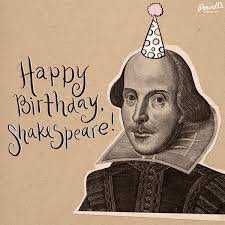
It’s here. The day you have been waiting for. Yes! It’s Talk Like Shakespeare Day, which happens to coincide with the day historians figure to be both William’s day of birth and day of death: April 23.
As an English teacher I had zero background in Shakespeare as somehow his works were never taught, presented, or discussed in my school days. And this took place in a modern school district!
This meant I came to the classroom on the same playing field as my students: zero knowledge and lacking comprehension. I dove right in and learned as much as I could in order to sound like I knew what I was talking about.
Something clicked because I am a professed Bardinator today and even attended Folger Library’s Hamlet Academy back in 2015. I am also adapting Shakespeare plays into reader’s theatre scripts and they are regular sellers on my Teachers Pays Teachers website.
All in all I’m quite pleased to have traveled the journey, transforming from Shakespeare zilch to Shakespeare rich over the years.
However, to talk like Shakespeare is a talent I am not quite conversant in yet. I did find this nifty website which takes randomly generated sentences and turns them into Shakespearean speech. I am having fun playing with it. Here are some examples:
Crouch before you jump or miss the mark. Our plans right now are hazy.
Becomes—
Crouch bef’re thee jumpeth ‘r misseth the marketh. Our plans even but now art hazy.
Or—
It was done before the boy could see it. Hop over the fence and plunge in.
Becomes—
T wast done bef’re the knave couldst seeth t. Hopeth ov’r the fenceth and plunge in.
February usually wants to relinquish its wintery self with more yard than snow pack showing allowing daffodil buds to shyly poke up from the ground. This year’s February started along those lines and then in a fickle moment gave way to snow once again. For three days. Back to a snowladen landscape. I imagine the daffodils are confused.
More snow calls for more reading. Here are the five star reads for February.
Magpie Murders by Anthony Horowitz
image: Amazon
Having read this fun twist on a murder mystery two years ago and having watched the adaptation (also written by Horowitz) twice, I gave the book another read, especially upon hearing the second Susan Ryeland editor/sleuth novel Moonflower Murders will be coming out in a filmed series. Horowitz’s humorous and clever approach to the mystery genre is a delightful change up and the fact that he can take his novel and make it even better as a filmed version is notable.
Children of the Gold Rush by Claire Rudolph Murphy
image: Amazon
Images of the gold rush era usually bring to mind bearded men hunched over a sluice box diligently working in less than ideal conditions in hopes of striking it rich. While that may be true, there were also women and children who experienced the gold rush in their own way as they accompanied their husbands and fathers. The book is filled with photographs and stories of children who endured and even thrived during their gold rush days. This book primarily centers on the Yukon gold rush. The information provides a greater perspective of this aspect of history.
The Dream Peddler by Martine Fournier Watson
image: Amazon
The title and premise is reminiscent of a Ray Bradbury story. A stranger comes to town selling dreams with the plot focused on the impact of these dreams. Yet, Watson takes a different turn with her story. The dream peddler arrives the same day a boy goes missing and it’s his ability to provide dreams that helps heal the ripples from this tragedy. Unfortunately, his presence stirs up agitation and misunderstanding and truths become veiled in ugly rumor. The author’s lovely, lyrical prose wraps itself around this unique tale of peddler offering dreams for a handful of coins.
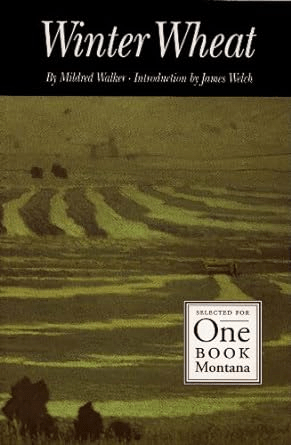
Winter Wheat by Mildred Walker
image: Amazon
Set in Montana as WWII starts, Ellen will leave the only life she’s known, that of a daughter of wheat farmers, to attend college in Minnesota. It is there she finds how different the world is from her isolated ranch life, and she finds love with Gil, a privileged young man. However, her eyes are now opened and she draws unsavory opinions about her parents and her Montana life as she sees her world through Gil’s eyes. In order to find peace once again Ellen will have to reconcile her views with the life she has chosen. Ellen’s quotidian life is flavored by her poignant insights and the author’s lyrical prose. A satisfying read in which nothing, but everything happens.
As I type up these reviews the sun is shining and the snow is slowly receding once again. No sign of daffodils yet. Time to go to the library.
August around my parts is a combination of 90+ heat and smoke saturation creating one to two weeks of limited outside adventures. Fortunately I had a stack of really good reads to pass the the time. These are ⭐️ ⭐️ ⭐️ ⭐️ ⭐️ reads.
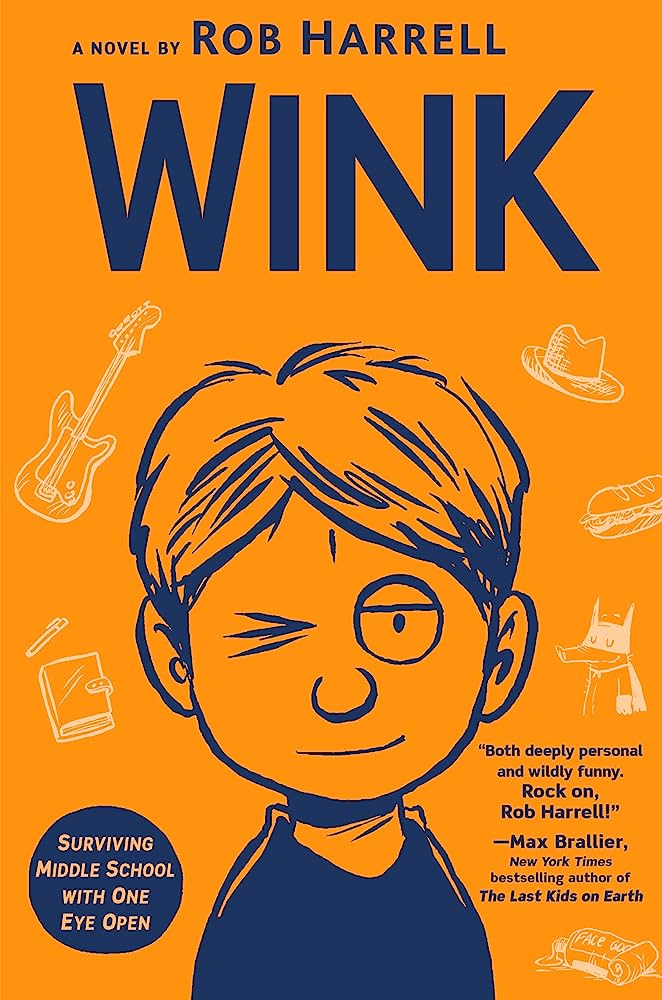
Wink by Rob Harrell
image: Amazon
Kid cancer stories. Usually maudlin, right? Not so with Wink. The author, basing Wink on his personal experience with eye cancer, creates an uplifting story of seventh grader Ross who must cope with not only dealing with all that goes with cancer treatments, but he also faces friendship schisms, bullying, crush disappointment, along with the usual angst of being a middle schooler.
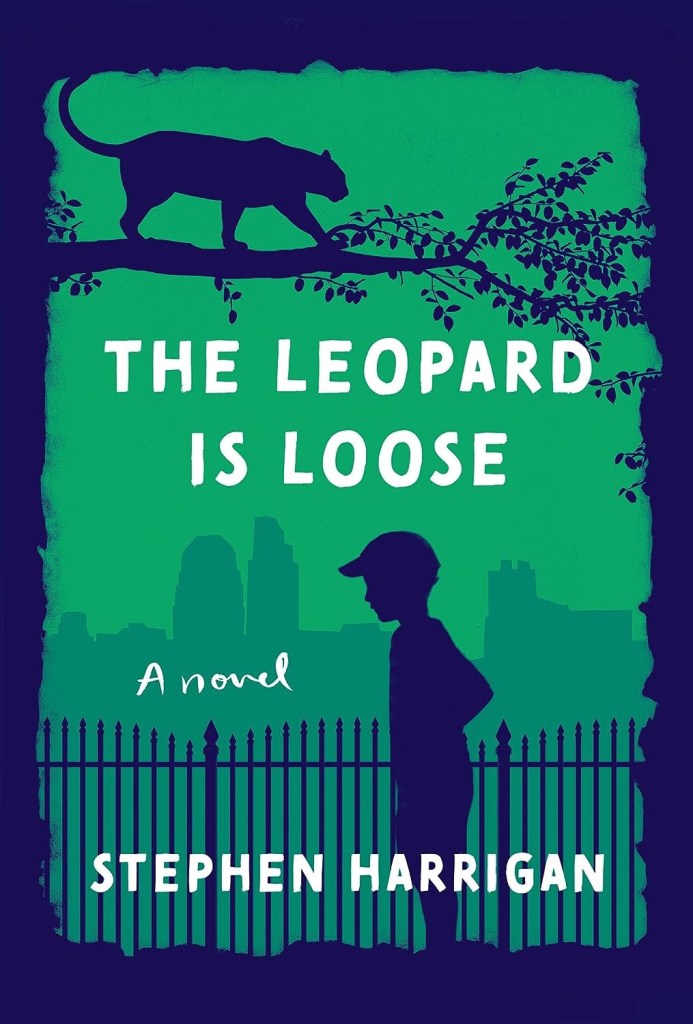
The Leopard is Loose by Stephen Harriman
image: Amazon
The Leopard Is Loose is a surprise read. The cover seems deceptively simple more suited to a juvenile read than a novel that reexamines a childhood trauma through the perception of an adult. The narrative is from a seventy year old man remembering the summer when as a five year old a leopard escaped from the town’s zoo. The loose leopard becomes a working metaphor as it represents a threat to the security to young Grady as does other aspects such as the volatile personality of his Uncle Frank who suffers from PTSD from his WWII experiences. Then there is the possibility of his widowed mother marrying which would mean moving away from all Grady has known. The author is deftly able to capture events and describe situations through the eyes of a five year old, yet embellish the unfolding with the perception of an adult looking back with gained knowledge and wisdom.
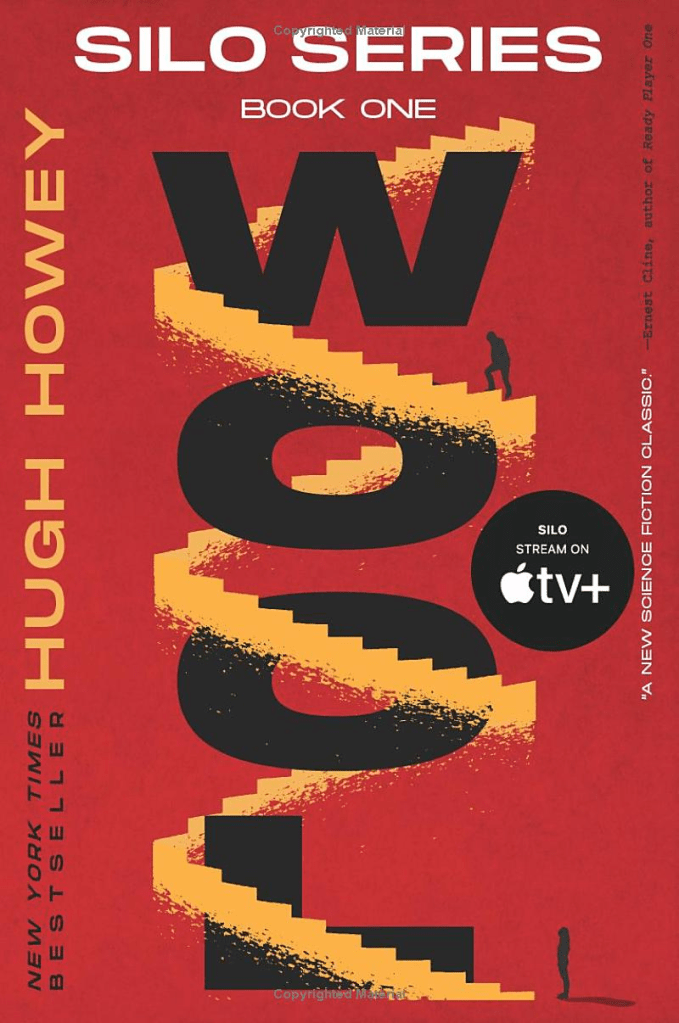
Wool by Hugh Howey
image: Amazon
A success story certainly deserves attention. Hugh Howey’s feat of shaking up the e-publish world with his short story and then the subsequent editions, proves ingenuity still survives. A unique dystopian idea where people live in underground silos as “seed” for better times definitely garners praise. While there are some plot holes as to how these people are able to successfully live from generation to generation as a self-functioning society, it’s the interpersonal connections that makes the long hike through the 500 page Omnibus so mesmerizing.
I read it eight years later after watching the Amazon series. After watching Rebecca Ferguson’s interpretation of Juliette I decided to reread the book. I wasn’t eager to revisit the story, remembering how it was difficult to fully get involved in the setting—a community living in a giant silo for how many generations? Yet, the story riveted me the second time because the series helped me visualize it this time around. Rebecca captured well Juliette’s plucky determination and most of the plot was covered.It’s a case of the book is the book and the movie is the movie.
I do suggest watching the series first and then reading the book. Shocking, I know. But it did change my rating from a four to a five.
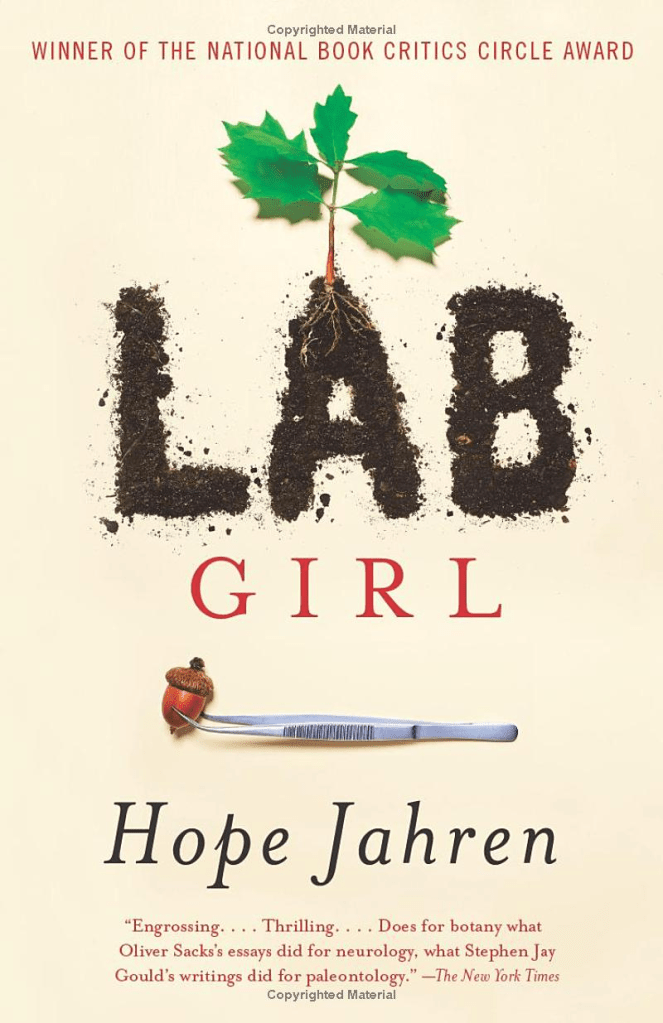
Lab Girl by Hope Jahren
image: Amazon
Lab Girl is a hybrid of a scientist’s insights about plant life and a revealing memoir that reveals the soul of poet who happens to be quite adept with the workings of a lab. She’s built three of them so it’s not surprising that Hope Jahren is recognized (by many, despite how she reckons women scientists don’t get all the credit due them) as a scientist of merit. Jahren’s intertwining vignettes, like the tree rings she fondly refers to, form her memoir, one that eloquently and at times is profoundly lyrical as she shares with her readers her unique perspective of seeing science through an English literature lens.
S by JJ Abrams and Doug Dorst
image: Amazon
With JJ Abrams listed as author I knew The Ship of Theseus would go where no book reader has gone before. Yes, his directorial credits of Star Trek and Lost are on full dial. However, Abrams is more of a show runner than author for this meta fiction wonderment. The writing credit goes to Doug Dorst, who may not be as well known yet proves he is a talented writer.
There are two novels. The first is The Ship of Theseus (SOT) which is an enigmatic tale of an amnesiac who sails kim with a gruesome crew and is tasked with ridding the world of a despotic autocrat. And our hero (antihero?) searches for the woman he deems as the key to his identity (as well as his heart).
The second novel consists of two college students. Jen has serious senioritis and Eric is an expunged grad student living in the shadows of the campus while he tries to complete research on VM Straka, the mysterious writer of SOT. These two tell their story through marginalia that first consists of their interactions and interpretations of SOT which leads to a friendship that blossoms into a relationship. As they trade ideas they reveal an undercurrent of espionage, intrigue, and conspiracy that is involved with Straka.
This not your usual read. While there is great effort to create a real book, library markings, aged pages, etc. it is all false. It is the illusion that there is a Straka, a conspiracy, two readers who literally get caught up in the book. It is very impressive and visually a treat. It is an experience and not merely another good read chalk mark on my Reading Challenge.
Oh, and the book contains over 20 inserts ranging from newspaper clippings to postcards to a decoder wheel. I enjoyed all the reviews, fan sites, and analysis about the book almost as much as reading it.
A false spring led to dashed hopes of winter’s end. Another round of snow, icy winds, and days to stay inside hit our area resulting in a dash to the library and stockpiling books. I blend my own special recipe of cocoa and so February was a month of mostly consisting of reading books and sipping cocoa in the easy chair.
Catherine’s War by Julia Billet ⭐️ ⭐️ ⭐️ ⭐️ ⭐️
Image: Amazon
Based on the novel of her mother’s experience in occupied France, the author presents readers with an award winning graphic novel that tells the story of a young Jewish French girl who must constantly move to avoid the Nazi round ups. Through expressed thoughts and photographs Rachel/Catherine’s story is told simply, yet elegantly.
The Wings of a Falcon by Cynthia Voigt ⭐️ ⭐️ ⭐️ ⭐️ ⭐️
Image: Amazon
This title can read as a standalone, even though it is the third book in Voigt’s Kingdom series. The adventures of Oriel and Griff are thrilling as they escape their imprisonment of the Damall’s rule to make their way to the eventual destination of The Kingdom. Voigt is an accomplished storyteller and this story rings of medieval times without resorting to fantasy. A memorable tale of devoted friendship.
The House on the Gulf by Margaret Peterson Haddix ⭐️ ⭐️ ⭐️ ⭐️ ⭐️
Image: Goodreads
Haddix weaves a mystery within a mystery and throws in a plot twist on top of a plot twist in this standalone coming of age story. Britt and her brother Bran are being raised by their single mother and are a tight little family facing hard times. Bran manages to get a house sitting job for the summer so his mother can attend college classes. It seems like a great situation, yet Britt notices he is acting strange, furtive even. When the truth comes out about who they are housesitting for, it is a shock and the outcome could have dire consequences for the family.
Silence in the Library by Katharine Schellman ⭐️ ⭐️ ⭐️ ⭐️ ⭐️
Image: Amazon
The second book in the Lily Adler series in which the recently widowed Mrs. Adler assists in solving a murder. Set in the Regency period the author captures the hierarchy of social class and the intricacies of class conversations. Her attention to historical research adds to the overall story and understated theme of class consciousness. The murder mystery has sufficient twists to make it an engaging read and with the added tensions of the various interpersonal relationships the series is well set up to keep readers interested. This title can read as a standalone. For fans of Miss Scarlett and the Duke PBS series.
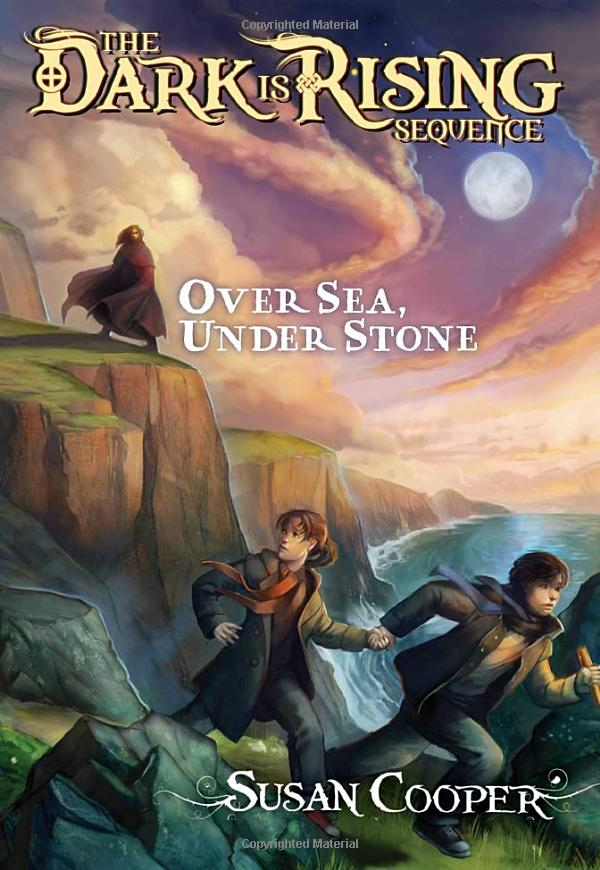
Over Sea, Under Stone by Susan Cooper ⭐️ ⭐️ ⭐️ ⭐️ ⭐️
Image: Amazon
Fans of Narnia will appreciate Cooper’s introduction to her Dark Is Rising series: Over Sea, Under Stone. Set in England, probably in the 1950s, the three Drew children are up for a splendid family holiday with their eccentric great-uncle Merry Lyon (which does sound like Merlin, doesn’t it?). Bored one rainy day, they explore the house and discover a map which leads them on quite an adventure. Beyond Cooper’s impressive wordsmithing, she presents children who on one hand act like siblings, calling each other names, being worried about getting in trouble with their mum and dad, and plunging into situations, and on the other end she also has these children imbued with reasonable rational thinking skills, able to accomplish much while realizing they can’t do everything on their own and do need adults to help them at times. An exciting story with hints of Arthurian adventure.
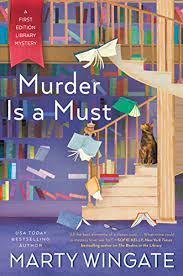
Murder is a Must by Marty Wingate ⭐️ ⭐️ ⭐️ ⭐️ ⭐️
Image: Amazon
In this second book in the series Hayley Burke is finally establishing herself as curator of Lady Fowling’s First Edition Library of Golden Age Mystery Writers. Her literary salons are a hit and now it’s on to something with more public fanfare: an exhibition paying homage to Lady Fowling. Plans go seriously awry when the events manager is found dead at the bottom of the stairs, mimicking the death of a character in one of Dorothy Sayer’s valuable first edition mystery novels—which happens to be missing. While still a lively read, this plot focused more on character actions. Not much sleuthing and the murderer was a fairly easy guess. Still a fun read and a pleasant way to spend an afternoon when the snow won’t stop falling.
My reading habits seem to be switching between mysteries and fantasy. Escapism at its best, I suppose. And I do want to escape winter’s kidnapping of spring. I’m feeling like I’m stuck in the Narnia chapter of continual winter. Where is a Pevensie child when needed to break winter’s spell?
I’m ever so glad I found Goodreads. Not only does it help in discovering books to read, it more importantly keeps track of the books I have read. Lately I am reading books I have read previously. Goodreads confirms this. I’m contemplating the implications of this reading overlap.
Never mind deep contemplations on my reading habits. Here are the brass facts: according to Goodreads I read 155 books by December 30th. I don’t log books that are DNF (did not finish), which are more than I want to acknowledge this year. Apparently I am becoming more discerning in my book selections.
Instead of the usual how many pages, most popular, least popular factums I thought I would give 746 books activity a try. Using this year’s book list I answered posed suppositions:
In high school I was Here and Now and Then (Mike Chen)
People might be surprised by The Ethan I Was Before (Ali Standish)
I will never be Maisie Dobbs (Jacqueline Winspear)
My life post-lockdown was Little Broken Things (Nicole Baart)
My fantasy job is The Finder of Forgotten Things (Sarah Loudin Thomas)
At the end of a long day I need The Maid (Nita Prose)
I hate being The Accused (John Grisham)
Wish Ihad The Cat Who Saved Books (Sosuke Natsukawa)
My family reunions areTo Disguise the Truth (Jen Turano)
At a party you’d find me with Birds of a Feather (Jacqueline Winspear)
I’ve never been toThe Last Bookshop in London (Madeline Martin)
A happy day includes The Ingredients of Love (Nicolas Barresu)
Motto I live by: The Art of Holding On and Letting Go (Kristin Lenz)
On my bucket list is The Island (Gary Paulsen)
Next year I want to have What the Fireflies Knew (Kai Harris)
That was fun and enlightening. Maybe my book choices reveal more about myself than I am aware of. Hope your year of books was enjoyable and here is to next year!
It’s obvious I’m a Book Booster. Reading, reviewing, writing. Celebrating access to books. Promoting reading. A book in hand whenever possible. Today’s national recognition is an everyday celebration for me.
I couldn’t fathom not having a book handy to read.
How about you? Is this a special day or an everyday note of recognition?











 Pam Webb