Pam Webb

a writer's journey as a reader

Archive for the category “Uncategorized”

Why We Say: #5


“I tell you, George, my daughter is the cutest little thing.  I come home and she runs up and jumps into my arms. She wraps herself around me, gives me a big smooch and says, ‘Daddy!’ Makes me swell up with sheer happiness. She’s a precious blessing–she is the apple of my eye.”

Image: Morguefile

History

According to my reference book, sometime around in the 9th century people began to realize apples were fairly tasty  and  valued them.  Eyes, being valued, somehow drew the same worth as apples, and so, when something was valued it became the “apple of the eye.”

Application

We have all kinds of expressions relaying our appreciation for things, such as”You’re the best!” “You’re one in a million!” Being the apple of someone’s eye? I guess that’s right up there with the “bees knees.”


My Thoughts

The book offers a really weak explanation. Apples have been a loooong time, and seeing as how they are fairly inexpensive and easy to obtain I’m having a tough time grasping that eyes and apples are on the same scale of value. I definitely think eyes are more precious than a Golden Delicous or even a Honey Crisp. However, I do see the connection between apples and eyes in that the pupil looks like an apple in shape.  I associate apples with knowledge (ahem, Eve) and seeing someone as being special means you have learned their value.

There must be a better explanation out there?  Anyone?

image: losemyaccent.com

What Price for Truth?


I am not prone to read books about the Holocaust. My mother, being German and having lived through the horrendous devastation of WWII, is my reminder of the harsh cruelties of war. I do though enjoy parallel plots and historical mysteries, and I picked up Sarah’s Key at the library for those two reasons, hoping its Holocaust story would not be too overwhelming. Unfortunately I found myself too much involved in the story before realizing the story would not have the happiest of endings.  So this serves as your SPOILER ALERT–if you can’t bear books of tragedy then I suggest finding another novel.  However, if you are attracted to the likes of The Kite Runner, The Boy in the Striped Pajamas, and The Life of Pi, that is a story where redemption is featured, then you might seek out Sarah’s Key.

While most Holocaust stories focus on German Jews, other countries also persecuted their Jewish countrymen. In France, in 1942, the Vel’ d’Hiv Roundup took place, where over 4,000 French Jews were taken to the Velodrome (an outdoor sports arena) and detained for days in inhumane conditions. They were eventually deported to the camps. So shameful became this event that is was not taught in schools, and no photographs remained.  Out of sight, out of mind. Yet, an event of such magnitude is not forgotten, and its truth resurfaced as Julia researches the event for the magazine she works for.

Sarah’s Key is twofold, a parallel plot: Julia’s and Sarah’s. Julia Jarmond is an American journalist who has married a Frenchman and embraces her life in France. She is assigned to write an article about the Vel’ d’Hiv as the 60th anniversary draws near. Sarah Starzynski is the parallel story taking place in 1942. She is ten when the police come for her family and she thinks to protect her younger brother by locking him in the cupboard. Her story is about returning for him. As Julia researches the article she focuses on Sarah and becomes obsessed with finding out what happened to her because Sarah did not die in the camp.

I stayed up all night reading this novel, something I am not in the habit of doing. Quite frankly, I abandoned Julia’s story and read Sarah’s instead, returning to Julia’s after completing Sarah’s. Her story is riveting. As much as I wanted her to have a happy ending, it did not end well, but her devotion to her brother is moving.  Her story stayed with me long after closing the book.

Recently, I discovered the film, and of course knowing the novel, I was a bit reluctant to watch it.  Fortunately, it was filmed with sensitivity and the actress playing Sarah is phenomenal. The weaving of the two stories, Julia’s and Sarah’s’ is handled much better in the film than it was in the novel. I actually suggest watching the film first, and then read the novel.

Sarah's Key

Sarah’s Key (Photo credit: Wikipedia)

Both the novel and the film explore the aspect of truth. How important is it? Is it necessary to reveal the truth? What is the ultimate price for realizing the truth? For a country, there came the reminder of a shameful historical past.  For Julia, it was the realization that her devotion lay stronger for her child than her husband.  And for Sarah–for Sarah the truth became unbearable.  At one point, Julia’s husband, angry at her obsession with researching about Sarah and her family, wonders about the value of truth. “Is anyone happier for it?”

Truth hurts. There is a price for truth. Sarah’s Key is a different slant on the Holocaust, but for me, it is a reminder that truth is what we seek, although its answers often wound.

Emily D painted this portrait of Truth:

I did mention the novel also addresses redemption. Sometimes discovering the truth or revealing it serves as a catharsis, and a person is relieved to have Truth’s brightness purge the darkness that can come by trying to hide it.

Ten Sites for Book Lovers


It’s time to contribute my own top ten list. Of course it’s related to books!

1. NY Times: what books are top sellers?

2. GoodReads: a community of like-minded bibliophiles where we share, compare, review, and discuss the books we read. I most appreciate the site for its book list feature.  I have been able to track down books I’ve read since childhood.  This has solved many of those “What was the name of that book?” questions.  Another feature I use is to bring up similar lists of interests when I am shopping for another read.

3.Wikipedia : ssh, don’t tell my students, but I refer to Wikipedia to get background information on authors and their works. I often get behind the scenes info and author history that helps me better understand and appreciate what I am reading, plus there are external links to adaptations (gotta see the flick after reading the book).

4. Book Crossing: this site proves the saying, “If you love something you will let it go.” The concept is to register a book with the site and then attach the registration marker in a book. And then…leave it.  The idea is someone will pick it up, go to the site, plug in the registration number, leave a few words about the book, and it’s hoped they will leave it for someone else. If you have ever come across the “Where’s George?” stamped on a dollar you have discovered the serendipty of the moment.  Who else has read this book? What travels has it seen?

5. Shmoop : looking for summary, theme, symbolism, the why-should-I-care factor for reading your book? This is the site.  Witty literary analysis provided by PhD students and other smarties, helps shed a flashlight on those hard to fathom passages.

6. Bookspot: what books have earned awards?

7. The Gutenberg Project: a  digital library with over 42,000 full texts of public domain books.

8. Amazon: buy your book right here. I often rely on it as a means for finding authors and their books, and similar subjects.

9. Overbooked: Overbooked’s mission is to provide timely information about  fiction (all genres) and readable nonfiction for ravenous and omnivorous readers (from the site).

10.  Bibliomania: reading and study guides galore and then some

Other recommendations:

Ellyssa Kroski created a worthwhile list of her own: 10 Websites for Book Lovers

Laura DeLeon provides a list of free book reads:  Web Reading 

Saratoga Springs Library:  Websites for Readers 

Just Swallow the Leader


Summer wouldn’t be the same without those plucky little backyard aereo acrobats–the swallow.

Although I have never been to San Juan Capistrano, I would surely like to be there when they make their yearly return.  The MEPA has related how spectacular the event is, and so it’s been placed on THE B.I.G. LIST. For now, I still thrill to seeing the few swallows that  swoop and dive and line twitter in our neighborhood. They are such cheeky little things with their bombing straifs if we get too close to their nest, and I always glance up upon hearing that endless parakeet chittering as they zip through the air on their bug runs.  Gosh, I just love ’em!

image: vickiesvintage.blogspot.com

Growing up, my dad had constructed a row of birdhouses, nailing them to the back of the house which faced the sidewalk leading to my playhouse and the garden. I had to pass in front of this airport of activity if I wanted to go to either of these favorite hangouts. The frantic commuter flights both enthralled and frightened me, and I distinctly remember the cacophony of the endless tweets and peeps of fledglings and parents.

Moving to Northern California for continued college, I can’t tell you how ecstatic I was to discover swallows galore. Maybe they got confused or liked the area better than San Juan Capistrano. These guys weren’t the shiny, futzy glossy white shirted swallows, these were the raucous barn swallows who much preferred making nests of mud in the most inconvenient places.  Whole apartment duplexes of them! As much as I loved them, I did not like the mess they made on the stairs which I had to use everyday.

image: pedestrian.com

Once we got settled in our own house I convinced, begged, and bothered the MEPA to install three birdhouses.  Great guy that he is he did so.  It’s taken almost four years for swallows to rent out one of the bungalows. The middle remained unoccupied and a family of chickadees moved into the other end house.

The chickadees have been long gone, but those swallows, my oh my, talk about failure to launch! They’ve been keeping mom and dad busy for these past few weeks. But today was the day they finally moved out.  Like most kids, they blew this small town and mom and dad must have fallen deep into empty nest syndrome, because they seem to have moved on as well.

The robins never returned from last year, and there just doesn’t seem to be as many birds at the feeder this year.  The progeny tease us how we’ve turned into old folksies with our bird books, binocs, and have our chaise chairs aimed towards the feeder.

“Look, hon, a chickadee–or is it a junco?”

“Ohmigosh, it’s an oriole. Lookitlookit.”

“Two o’clock. Nuthatch.”

I got birding love from my dad, and I now I got the MEPA hooked on birds. He’s taken it to a far higher level than me, however. He’s got a telescope trained on the feeder, has at least two bird books on hand for identification, and he talks and whistles to them.  He even gets them to land on him when he’s changing the feeder.

That’s a bit over the top for me and I get a little snippy with comments about nutty about nuthatches.  I kind of feel like Lucy when she catches Linus petting the birds on their heads and yells at him to knock it off.  Don’t know why it makes me crabby when he talks to the birds.  I best watch out. I wouldn’t want a Hitchcockian adventure in the backyard.

image: lecinemadreams.blogspot.com

My bird book of choice (from a college birding class I took):

image: amazon.com

Summer Rain


At this point it’s wishful thinking…is it me, or is this an especially warm summer?

SUMMER RAIN

 fat drops
sizzle steam
on sidewalk, parking lot–
glistening watered beads
cascading down windshields and windows
overflowing
gutters
generating puddles
drenching surprised picnickers,
dog walkers,
park bench people-watchers,
distracted paperback readers–
children frolic, gleefully pirouetting
on the grassy lawn.
I too frolic with them, safely at my distance
under a friendly tree

©C.Muse 2012

Related articles

Why We Say: #4


Animated sequence of a race horse galloping. P...

Animated sequence of a race horse galloping. Photos taken by Eadweard Muybridge (died 1904), first published in 1887 at Philadelphia (Animal Locomotion). (Photo credit: Wikipedia) This horse could not gallop so smoothly if it were all balled up.

“Calm down. Don’t yourself  all balled up.”

If this is not in your lexicon of sayings, then think about those situations when you get yourself so stressed out you can’t cope anymore. I definitely get there from time to time.

This round of Why We Say is #4:  Just what does it mean to get ” all balled up?”

History

Back in the day when people relied on horses for transportation there could be some real downsides. Never mind feeding them, grooming them, stabling them and such. One real problem was winter travel. Horses  had to be stopped now and then to attend to the ice that would form in their hooves. Balls of ice would gather in the hoof hollows and this would cause them to lose traction. Having your horse slip on an icy road is much like your car going into a skid–unexpected, unpleasant results could occur.

Story

“Poppa why are we stopping?”

“No worries, Sugar. I just gotta flick out them ice balls so old Thunder can get us on home through on this snow and such. He can’t go no further if he can’t keep his feet under him.”

“Do they hurt him?”

“Nah, but he can’t hardly get where he needs to ifn he’s all balled up.  Just snuggle under that quilt and we’ll be back home where your momma is waiting with a nice bowl of porcupine stew for us.”

Application

Getting yourself in a place where there is frustration, confusion, and some tough stuff which prevents you from getting where you’d like to go can get you all balled up. Now, to be honest, I wasn’t thinking horse hooves when I first  heard the expressions. I was thinking more about this critter:

We called them roly-polys when I was a kid because they rolled themselves up in a tight little ball when they got in a fret, looking a lot like little grey BBs. Now, to my shame, we kids liked to flick them to watch them roll. But they’re tough little guys and would wait out the perceived threat to eventually unfurl and go their merry buggy way. So when I hear all balled up I think about drawing myself inward to protect myself until the stress passes and then I go to my merry way.

My Thoughts

I think it ‘s a personal choice of wanting to approach life as a horse or a bug.

Treaured Tomes


bookbooster

While I tend to pass up most blog challenges, I couldn’t resist the one passed on by Reading Interrupted by another blogger: show us your bookshelves.

Last year I posted an entry about bookshelves and it really resonated with readers, and to date it ranks among my highest hits and responses posts.  What is it about peering at someone else’s bookshelves. Reading Interrupted believes it’s a way to look into our literary soul, which makes me nervous.  However, being a Book Booster, how can I not show off some of the books I own?

I have bookshelves all over the house: kitchen for the cookbooks, living room holds the eclectics ranging from Calvin and Hobbes to bird identification guides, the bedroom has my stack of bible references and current reads, the office is filled with review favorites (mostly children’s books) and tools of the trade, and the back bedroom is the MEPA’s storehouse of ruggedness, all those pursuits of fishing, hunting, politics and such. And then there are  my pretties, my treasures which are displayed on the table next to my inherited piano from my great aunt.  I was fortunate enough to receive her wonderful collection of books. My iPhone photo does not show the titles well, but you must admit they are gorgeous in binding.  They just about shout, “Open me, read me, all who enter these pages will be satiated.” I’ve been dipping into them over the years, savoring them for I do not want to go through them too quickly. Also, I confess, some are rather daunting.

bookshelf

For example, The Notebooks of Leonardo da Vinci, The Works of Tolstoi, a study on Ralph Waldo Emerson, selected works of Matthew Arnold.  There are also Ibsen plays, poem collections by Browning, Dickinson, and selected verse from Canadian poets, along with stories from Dumas.  As you can see if I were to consume too quickly such a rich collection I might go by way of gout.

My fave librarian, ET, knowing I am a Book Booster, surprised me one day with a gifting of more of these finely bound treasures. She passed on a blessing to me and I, of course, was thrilled with the serendipity of new friends. You must admit it is a handsome collection.  To think, this is how books used to be, all stately and elegant back when reading books was the prime entertainment and erudition pursuit of most people.

Although these aren’t personally selected favorites, they are indeed treasures.  I suppose I treat them more as my book museum as I respect them and the fragile condition they are in. Does anyone else have a treasure of books they have inherited or perhaps picked up along their travels in life?

Willa You Let Me Read Your Letters?


intr.v. snoopedsnoop·ingsnoops

To pry into the private affairs of others, especially by prowling about.

Looking where we shouldn’t seems to becoming more and more acceptable or at least it’s becoming more prevalent. I don’t know about you, but I got in BiG trouble if I got caught snooping. Parents, siblings, friends, even strangers don’t appreciate having their hidden stuff exposed. And face it, we all have stuff we want to remain hidden.

This is why I am having such difficulty with my latest selected tome of erudition.

image: Oprah.com

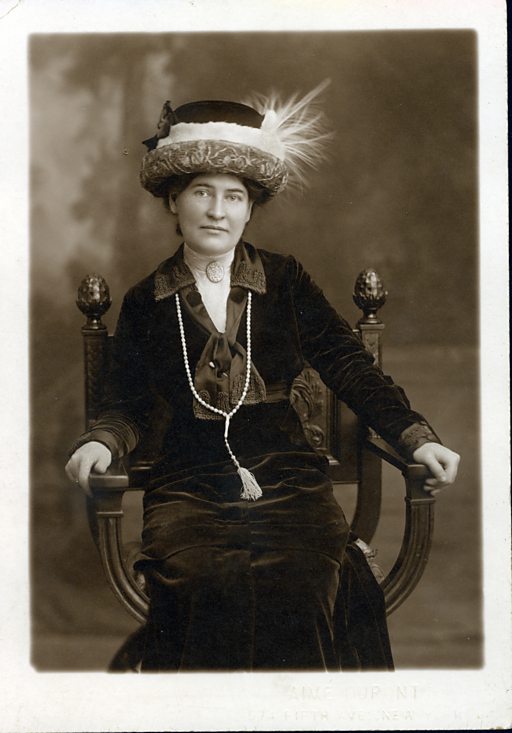
Right there. It says it right there. Willa Cather’s letters were hidden.  She didn’t want them hanging out in the public eye.  In fact, it’s taken about seventy years after her death to get these letters out.  Why?  Cather expressly stated in her will that she did not want her correspondence bandied about. Aren’t last wishes significant? Apparently not. If the agenda and credentials are proper enough it is deemed in everyone’s best interest to snoop and reveal.* No shame attached. In fact, no contrite apologies. Furthermore, the editors, Andrew Jewell and Janis Stout, justify their snooping in the book’s introduction:

Before Willa Cather died, she did what she could to prevent this book from ever existing. She made a will that clearly forbade all publication of her letters, in full or in part. And now we flagrantly defy Cather’s will in the belief that her decision, made in the last, dark years of her life and honored for more than half a century, is outweighed by the value of making these letters available to readers all over the world. [highlights are mine]

Hmm, “forbade” means to me “don’t do that.”  What about “flagrantly defy”? Do I hear a little self-righteousness bragging, as in “I know it’s wrong, but I’m going to be proud out loud anyway”? Tsk.

As interested as I am in Willa Cather, I feel it’s wrong to snoop her letters.  Just because they are published by a reputable and respected publisher doesn’t mean it’s ethical. Literary vultures waited until the will expired in 2011 and swooped down for the feast.  Here is a paradox: if these two editors so respect Willa Cather, why aren’t they respecting her last wishes? Don’t get me started about trotting out King Tut’s burial goods for the paying public.  I guess celebrities are open season dead or alive.

Granted, the letters represent only 20% of the entire collection, and none are present that might tarnish or stain Cather, (says  the editors). I still feel mighty uncomfortable reading her private correspondence. There are family matters, personal matters, circumstances and situations that  reveal too much of a peek behind the privacy curtain.

As much I appreciate learning about Cather’s background, which helps provide more depth to enjoying and understanding her prairie trilogy (Song of the Lark, O Pioneers, My Antonia), I have  shut the book after about 200 pages, right about the third section, about when she left her editor position at McClure’s to pursue writing full time. The best is yet to come, yet sorry, I’m gonna pass. I respect Willa as an author too much to rummage around in her personal life.

Maybe, it’s me. Snooping for the cause of erudition is still snooping.

What do you think, readers?  Should Willa Cather’s wishes been respected? Should her letters have been left alone, should they not have been dusted off and printed up, even if it’s in the quest  harkening the light of “literary illumination”?

Willa is not amused.

*This could easily segway into a Snowden blog,, couldn’t it?

A Woolf in Read’s Clothing


photo: imdb.com

My first vague acquaintance with Virginia Woolf is associated with Elizabeth Taylor. Both are pivotal influences in their chosen professions.  As a last wave baby boomer cI recall a bit of a fuss when the movie Who’s Afraid of Virginia Woolf? came out.  Not being a Disney-generated flick my parents did not take me to see it.  In my childhood bliss of perceptual naiveté I believed Elizabeth Taylor to be Virginia Woolf and from the TV trailers she appeared to be a daunting person.  I could see why some might be afraid of her.

image: aroom.org

My second encounter with Virginia Woolf came way later when I began teaching high school English. Woolf’s essay “A Room of Her Own” was part of the senior lit curriculum, a prelude to a brief study in feminist writing.  Still getting my bearings about Shakespeare, I discovered through Woolf’s essay Shakespeare had a sister! I thought him to be like Atlantis, known but unknown, shrouded in mystery, waiting to be actually proven.  A sister?  It sent me scurrying to dedicated research and though Woolf got it all wrong about Willie’s sis, I now know much more about the Bard.

image: etsy.com

The third encounter came way of Meryl Streep.  She’s a fave, so I couldn’t resist picking up The Hours at the library.  Fascinating film (I admit some parts tweaked my comfort zone and my daughter squeaked, “you watched The Hours!”–my prudery is too well-pegged by family members). What truly fascinated me was Nicole Kidman as Virginia Woolf.  No wonder she received the Academy Award for her performance. A tortured artist always leaves me wondering  the why/what behind the reason of taking his or her  life instead of living it.

image: notreciinema.com

Finding Virginia a bit overwhelming I didn’t do my usual research and read on her. To be honest, although she intrigued me,she also made me nervous, much like James Joyce.  So much, almost too much in their writing for me to comprehend and absorb.  I felt unprepared to read her works.

At present I am a tiny bit more confident having an AP Institute training and one year of AP Senior Lit and Comp seated firmly on the resume.  I thought, “Okay, Ginny, let’s give it a whirl.”  I pulled down Orlando off the shelf and settled in for my summer chaise in the shade read.

Sigh.

I wonder if her writing would have been published if her husband had not set up Hogarth Press expressly for that purpose? Her writing is amazing, this is true. It’s rich, masterful, and paradigm pushing. Deemed ahead of its time, both Virginia and her writing nevertheless appeared to be respected and applauded.  Overall, I will have to pass on Virginia Woolf and her modernist approach to literature.  She and James Joyce are just enough of a different cup of tea to not be on my reread list.

I followed through on my research since I did not do my read on her.  I will definitely include her in my overviews on modernists. Virginia Woolf  may not be among my chosen authors; however, I do acknowledge her place in the literary hall of fame.

image: standrewsrarebooks.wordpress.com

Summer Read n Eat Poetry


Food and summer.  Yup.

Besides barbecue, picnics, reunions, vacation binges, craft fair nibbling, beach concession splurges and the like, there is also food found in our reading.  Take poems, for example.

This is just to say by William Carlos Williams

Watermelons by Charles Simic

Peach Blossoms by Carl Sandburg

A Ballad of Nursery Rhyme by Robert Graves

Orchard by Hilda Doolittle

Plums, watermelons, berries, peaches, oh my. Time to browse the Farmer’s Market!

For more summer foodie poems try this delightful site: TasteArt

Post Navigation