Pam Webb

a writer's journey as a reader

Archive for the category “reviews”

Last Chance Rack Finds


When the progeny were young enough to tote to the grocery store I used to dread the inevitable trial of the checkstand gauntlet: the Last Chance Rack. You know, the racks of candy, toys, geegaws, magazines that all whimper at worn out consumers to be taken home. Their whimpering frequency is especially tuned to children’s ears. “Pluheeze, Mom?” I did have a stock phrase for surviving the ordeal which consisted of “Sorry, I don’t have money for (fill in the blank) today.” No arguing with that. And very true–I tended to stick to the budget because I had to back then.  Actually, I still should as an empty nester. Never mind that.

The Last Chance Rack I refer to today does not promote cavities or wasteful spending. This is a positively good rack in that it promotes reading. This is the LCR of the library. Our library has prominently planted two double-sided racks near the checkout area. They probably meant it as a way to display new titles as a greeting for patrons. On the flip side, the racks serve another purpose, one I think of more significance. While patrons await their turn to check out their basket of literary goodies they  find themselves next to the LCR and can’t help but browse titles.  I usually end up taking home an extra yummy or two.  Who can resist? The books are especially trained to Book Booster frequency.

This last week I went in for my one hold–akin to going in for that one quart of milk. I came out with two extra books.  No complaints about the extra calories needed to read my found treasures.  Thought I would share my finds:

image: amazon.com


As a Book Booster it’s difficult to pass up a book about making books. Like any conniseur, I appreciate the art and skill that goes into making something I so regularly consume. The books contained within this palm-sized tome focus on the artisans and their craft. Flipping through the pages and savoring the renderings of featured artists inspire me to try my hand at making my own book or two. There are handy directions included. Sounds like Christmas presents to me…

Another LCR item practically jumped into my arms as I passed the rack. This little goodie knew a Bardinator was in hailing distance. I need to subscribe to the NYT bestseller list. I always hear of these amazing books waaay after they’ve been out and then feel so silly when I find them and gush about them. No wonder I get those looks of–“That was so yesterday’s book.” or “You are just now hearing about that one?” I’m so glad the Book Booster Brigrade is disbanded. I might be in violation of section 31-A (best seller awareness).

Ready for this companion to the NYT bestseller? (just roll your eyes if you are already oh-so-aware of it):

How can you resist a book from a publisher called Quirk Books?(from which this image cometh)

Without slavering too much about how it’s so absolutely genius to mash-up Shakespeare with Star Wars, I will say Ian Doescher manages to pull off the feat of presenting *the best episode* of the Star Wars trilogy in iambic pentameter with dextrous aplomb. Not that I’m an expert at iambic pentameter, but I do appreciate how tough it is to write it. I teach it as the “heartbeat” meter and the students understand that. Shakespeare understood that writing his works in a meter close to the essence of being alive meant his words would be as easy to remember as breathing. Doescher gets that concept too, and understands the devotion of Stars Wars fans. Bringing Shakespeare into our century in a new and absolutely true and original way always gets a round of applause from me. What I really appreciated about Doescher’s mirthful approach is how he skillfully inserted references to the Bard’s other works. Here is my unabashed shopping list of “Where’s Willy?” finds:

  • Leia’s rant about Han’s ego is reminiscent of Beatrice
  • Hamlet’s “A hit! A very palpable hit!” uttered by Luke as they attack AT-ATs
  • C-3PO’s parts with sorrow from his loyal R2-D2 is so R&J
  • As Luke wings his way to learn the ways of the Jedi from Yoda he speaks of the affairs of mean
  • And Leia swoons upon discovering her nice scoundrel kisses by the book–that Han, he’s such a bad boy Romeo

The book trailer is as delightful as the book:


Anyone else have a library with a tempting Last Chance Rack?  Don’t resist the Force of a good book that needs to go home with you…
Summer Wonders


Returning school goes beyond getting back into a routine because it means I also have to make adjustments to my practicing for retirement. No more rolling over and going back to sleep, no more schlepping around in jammies, no more naps, no more odd eating hours, or meals for that matter. And worst of all, no more diving into books for an entire day and barely coming up for air. Responsible English teachers don’t partake in any of the above behaviors. At least not during the school year. Yet, summer vacation does allow me to practice the art of retirement and one of those skills is thoroughly enjoying a really good read. I was fortunate this year and enjoyed more than my usual share of good reads:

All the Light We Cannot See by Anthony Doerr

Breathtaking in its flow and style, I absolutely devoured Doerr’s novel about two lost children. Set in WWII, Doerr portrays the war in a way I’ve not encountered before. One perspective is through the blind eyes of Marie, a young French girl whose indomitable spirit carries her beyond the war’s cruelties. The other perspective is that of Werner, a German youth whose talents land him in the Hitler Youth. The parallel stories eventually telescope down to a satisfying denouement. Doerr, already an award-winning author, will do doubt increase his presence with this amazing tale of how the spirit can overcome its surroundings.

Mr. Penumbra’s 24 Hour Book Store by Robin Sloan

Sometimes I simply have to take a break from the pedantic pace of classics, or step away from serious literary excursions. Mr. Penumbra helped me to once again find the wit in wordsmithing. This foray into classic literature name dropping reminds me of Jasper Fford’s Thursday Next series, which is a delight in how it metafictionally pokes fun at how serious we tend to take our literature. Robin Sloan not only lovingly jabs at academia, he embraces our wanderings over to the dark side of technology via Google (those villains). Yet, bad guys (technology) aren’t so bad, once you understand them, and often they prove helpful overall because they are just misunderstood.

Remains of the Day by Kazuo Ishiguro

My first introduction to Ishiguro and of the three novels I read of his over the summer, this one is certainly the best in my opinion. The voice of nationalistic pride and misguided directive is so artfully penned in this memoir of a proper English butler. The bonus being how well the film adaptation captured the slow realization of how corrupted Steven’s outlook was after all.

The Mockingbird Next Door by Marja Mills

As a TKAM devotee I jumped on ordering Mills’s account of her time with Harper Lee faster than freckles popping out during a July heat wave. Lee has become such a recluse over the years it has been feared this national treasure will leave little behind in way of knowing who she really was. Fortunately Marja Mills went beyond her journalistic assignment and got to know Harper Lee as friend and neighbor allowing fans and readers a delightful glimpse into what Scout might have been like in the real.

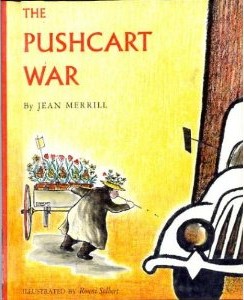
The Push Cart War by Jean Merrill

This cannot possibly be a kids’ book! The wit is droll in delivery and its lampooning so adroit I don’t see how children could appreciate it fully. Maybe I’m only bereft in my opinion since I missed this one growing up. I think I got sidelined by Encyclopedia Brown. Just like The Phantom Tollbooth or Alice in Wonderland is not strictly for children, neither is Merrill’s classic. I’m ever so glad I found it and I made up for lost time.

The_Pushcart_War_-_cover_image_1964

image: Wikipedia

One Whole and Perfect Day by Judith Clarke. A Printz Honor Award
YA reads are hit and miss for me. There tend to be riveting and noteworthy like Hunger Games and Divergent or fall into high school drama–been there done that and see it everyday. Now and then I do get to pick up a YA which should be in what I call the YA+ category, meaning it’s more towards literary then temporal contemporary (I think it has lasting merit, not trendy, and an adult shouldn’t be embarrassed reading it). Clarke’s novel concerning a girl’s desire to have one day where her family is not dysfunctional fills that YA+ bill. Set in Australia, Lily does indeed have an odd family and what is even more odd is Clarke’s approach to the Point of View–it’s omnipotent, which has fallen out of favor. With almost Dickensian flair for characters and situations, Clarke provides a plot that slowly builds to the becoming a whole and perfect story–pretty nearly.

What’s really the wonder of these summer reads is that they were all recommends found on blogs I perused. Following other Book Boosters definitely has its benefits and I no longer have to forlornly drift the stacks hoping to uncover the newest hot read or find a lost treasure.

How about you?  Any really good reads found and savored over the summer?  Any great recommends discovered while catching up on your blogs?

Reading Rainbow Redeux


I grew up with Reading Rainbow. Well, kinda sorta.  The MEPA and I were fairly strict about television (that and we didn’t want to pay for cable) and pretty much the only TV the kiddos watched came via PBS programming.  Reading Rainbow won out over Sesame Street and Mister Rogers. I didn’t want the television to be their babysitter so I would plunk myself down on the couch with them and we would relish our R&R time together.

image: geocaching.com “Take a look. It’s in a book. Reading Rainbow.”

The Grammy Award winning program aired from 1983 to 2009–that’s a lot of books! Levar Burton became as recognized and as trusted as Big Bird and Mr. Rogers in guiding children towards enrichment.

When Reading Rainbow went off the air, the world seemed a bit dimmer. Even though I hadn’t watched the show for years since the progeny grew up and moved to other entertainment *sniff* I still nurtured a soft spot for Levar’s brand of book boostering; if an episode aired and I happened to have the time I would watch it. With the passing of Reading Rainbow I thought “Well, there goes that wish.” You see, I harbored the secret wish of writing a book that might be selected as a Reading Rainbow feature read.

All is not lost, because Levar has fulfilled one of his secret wishes and has purchased the Reading Rainbow brand and is creating an app for this generation.  He initially hoped to raise one million dollars on Kickstarter–that amount was achieved in only one day.  He recently ended his campaign with a staggering amount of over five million dollars.

For more information go directly to the website. I’m looking forward to introducing Reading Rainbow to the grandkiddo.  Heck, I might download the app for myself.

Are you nostalgic for a little Reading Rainbow. Check this out:

Or maybe this one:

It’s easy to see Reading Rainbow made an impact on one generation.  I foresee its impact on this one.

But you don’t have to take my word for it.

Blog Spotlight: Book to the Future


My latest spotlight is on another blogger whom I’ve exchanged commentaries since the beginning of my blogging foray.

In his own words:

Everyone calls me Ste J.
I am an obsessive book creature, in fact I spend more time between the (book) covers (I read in bed as well though) than I do with ‘real’ people.
Which means I probably spend more time with you guys than anyone else. Feel privileged.

Ste J is a bona fide bibliophiliac. He loves books. That’s a bonafide fact. Proof: he once read 100 books in 362 days, just to see if he could do it.  His blog is neatly organized into genre and with a mere click, a person can investigate reviews and titles. His tastes are eclectic, his insights meaningful, and his replies clever.

For a sampling of his classics page, click here.

Lately, his posts have wandered a bit off the original track of being primarily bookish in content and he writes on whim. I can relate.  I too have strayed from my original intent of providing astute book reviews that would dazzle and benefit bookdom and have taken to writing as serendipity taps the muse.

So, I hope you will check out Book to the Future and meet the intrepid Ste J, where as his banner states “more book than a mad ‘orse.”

A Little Birdie Told Me


One aspect of blogging that is a definite benefit is finding new titles to read. Goldfinch by Donna Tarrt is one of those titles. Considering it received the Pulitzer and had so many varied reviews–Loved it!” “Hated it!” I had to decide for myself. I will never truly know how I might have liked it. It’s been relegated to my rare “didn’t finish” designation on my Goodreads tab.  Why?  Admittedly, it takes quite a bit for me to *gasp* abandon reading a book.

image: nytimes.com


Here are my impressions:

  • Plot interesting although contrived. I work with teenagers and I have yet to come across any who talk like they are fourteen going on thirty-four.  I know. I know. It’s a novel and there are liberties called artistic license.
  • I’ve read BIG books; however, the story needs to justify the length. Melville or Dickens, this is not. Instead, I found myself getting more and more irritated as  Theo, the protagonist, reveled in TMI (too much information). It’s like being caught in a conversation with someone who keeps adding on instead of continuing on with their story.  I didn’t find all the extra detail to be that significant to moving the plot along.
  • I also found the stereotypes disappointing: the out-of-touch adults trying to counsel Theo; the genius, yet nerdy friend; the dysfunctional wealthy family; the unconventional adult who becomes Theo’s island of solace.
  • Here is the real clincher. I could have continued with the reading. There is enough intrigue and character investment that I had a desire to keep giving it a go, then the dreaded birdie kept flipping up unexpectedly. The boid, the random explosion of f-bombs finally annoyed me enough to say “done” and moving on. I understand profanity adds a certain aspect of verisimilitude; however, certain words remind me of pepper–sprinkle too much on and it actually hinders the flavor instead of enhancing.  The random f-bomb turned into a regular blasting zone and I began to wince. Here’s the deal: “Hey, Theo–you’re a nice enough kid, and you have a great vocabulary, so why the potty  mouth?”
  • I also wondered if this wasn’t  really a dressed out YA. A large portion of the book centers on Theo’s teen years. Then again, I didn’t mind reading Hunger Games; on the other hand, that IS considered YA.

Overall, I would have kept going to read the 700+ pages. It takes several elements for me to finally pull my bookmark and move on. I have way too many books I want to read to keep going with one that wears on me.

Twofold commentary requests here:

1. Anyone agree or disagree with my Goldfinch assessment?

2. How do you handle books that don’t live up to your expectations?  Do you continue or do you move on?

Remaining the Orphaned Narrator


It is always exciting to discover a new-to-me author. In this case it’s Kazuo Ishiguro. I know, I know. I’m a bit late in my discovering; however, better late than never in finding an author of mesmerizing style.


I knew the movie Remains of the Day, before finding the novel and didn’t realize the movie was the adaptation.
How could I possibly pass up a film starring Anthony Hopkins and Emma Thompson?
Flash forward five years later and I’m perusing the AP Literature list (“read that one, will never read this one, not reading this one again”), when I recognized the title Remains of the Day and connected it to the movie. Then I read the author’s name and I must admit I expected something like Adrian Smythe or Winston Greene, not Kazuo Ishiguro. After all, the novel is about a very proper English butler and his reflections of what it takes to become the best of English butlers. Wouldn’t one need to be English to understand that sort of nationalistic pride? I’m not getting points here for narrow-minded thinking, am I?

It turns out Ishiguro is quite well-suited to the task of writing about the English since he moved to England when he was around six years old. This gives him the ability to have an insider’s view with a somewhat detached perspective. The result is  basically a stream-of-consciousness narrative concerning the tunnel vision of a man’s quest for the unattainable. Trying to live a life that is beyond reproach, to achieve a status of perfection, requires sacrifice. Can sacrifice be made without regret? This is the hidden truth Stevens, the butler is searching for, except he does not realize it.
A quest novel of notice did not go unnoticed, for Ishiguro’s debut garnered him the Man Booker Prize and set a bar. Would he be a one shot wonder or would this be the first work of a noteworthy word smith?

image: goodreads.com This cover indicates the layers found within the story.

My literary taste buds curious for more, I trotted down to the library. Grabbing any title of his that caught my eye on the  shelf, I opened up his fifth novel When We Were Orphans. I immersed myself in reading it to the point the MEPA queried, “Still a good book?” Yes, thank you. Prognosis? After reading two novels, indications are Ishiguro is wordsmithing wonder.

Here are some bio facts and  stats:

  • Two novels have been adapted to the screen, Remains of the Day, and the more recent Never Let Me Go. Both have been received well, considering Ishiguro’s stories are mainly first person narratives, making them difficult to translate into a cinematic plot.
  • His novels are historical in nature, with attention to detail.
  • The stylistic viewpoint is that of the unreliable first-person narrator, one who is flawed in outlook.
  • Although born in Japan, he did not return until thirty years later.
  • He has received four Man Booker Prize nominations
  • The Times ranked him 32 on the list of the 50 most influential British writers since 1945.

As for an actual review of When We Were Orphans, I leave it to the more qualified:
New York Times
 review:

I plan on continuing my course of exploring Ishiguro’s work and look forward to introducing a contemporary author to my APters, who, I’m sure, would like a break from dead white folk now and then.

Any thoughts on Ishiguro’s writing? Any suggestions for the next title I should read of his?

Bargain Bin Book Bonazas


At a local warehouse clothing sale I unexpectedly found a tier of gift books.  At a couple of dollars a piece I grabbed up a few.  It proved a difficult choice as they ranged from the secret lives of cats to how to dress cool instead of never cool (I kid you not).  There were also cutesy books like how to enjoy incense and candles.  I passed on those.  A match is all I need to understand those two.  Okay, maybe there are a couple of things I could learn, but when I came across these I couldn’t resist:

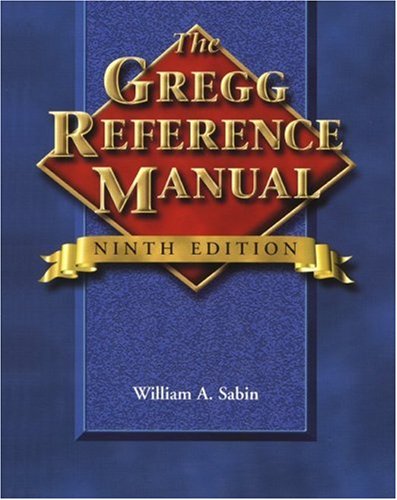
1. The Gregg Reference Manual (ninth edition) by William A. Sabin
Of course I already have my Strunk and White, How to Not Write Bad, and various college textbooks sitting on my shelf, yet who can resist a grammar handboook. I can’t. And because I don’t need it I decide to give it to my youngest progeny who admittedly wants to get his there, its, and yours figured out once and for all.

2. Leadership Courage by David Cottrell and Eric Harvey
Definitely a gift book for the youngest because he is into building up a business and is always talking about all these amazing leadership books he’s reading, so he most certainly needs another one.

3. Shakespeare’s Sonnets by William Shakespeare
For  the oldest son, I couldn’t pass up this slim volume of the Bard’s best.  I bought it because every young man who is looking for the perfect soul mate should have at least a couple of sonnets up his sleeve.  He received it graciously, if not warily. I  was amused to overhear him say the line, “Hey, I have a sonnet and I know how to use, so back off.”  I’m pretty sure he was kidding.  A loaded sonnet is nothing to mess with.  I have cautioned him on the power of verse.

4.  How to Say It Style Guide by Rosalie Maggio
Yes, another reference book. With two boyos in business they each need their handy dandy grammer guide.


Finding books on sale is always a bonus.  And being able to give them away is the best bonus.  Have any of you found any bin bonuses lately?

Oh, all images are from amazon.com.

Rainy Days of May


I know this isn’t the case for everyone, but we are having a spate of rainy May days in my part of the world. I personally don’t mind rainy days, at least not too much.  I enjoy the greenery it brings and all those flowers.  The rain also provides the excuse to stay inside and get caught up on my writing and reading because if it is sunny out I tend to feel guilt for not being outside reveling in the warmth and blue skies.  We have long winters here.  I’m trying to figure out a way to store up those sunny summer days in a jar to dispel those dismal days of December, January, February, and most of March.

When the progeny were kidlits I made sure rain did not stop their fun.  One of my helpers in this regard was a fabulous book called Rainy Days & Saturdays by Linda Hetzer. Inside our over 150 activities and ideas for chasing away the drizzle doldrums.

image: amazon.com

Check it some of our past favorites:

  • camping out inside–the old blanket over the table works, but we filled the entire living room with elaborate blanket and sheet configurations
  • bean bag throws–easy to make and hours of entertainment
  • sock puppets–old socks, buttons, felt and it’s showtime
  • finger painting–shaving cream mixed with food coloring in muffin pans equals pruny rainbow kids
  • tissue paper stained glass–an old jar, watered down white glue, a paintbrush, torn tissue paper, and stick in a candle
  • balloon volleyball–clear out the breakables and have at it
  • tornado tubes–toy stores have the contraption to join two liter bottles together to create the swirly fun
  • cooking–popovers, quesadillas, no bake cookies, homemade pizza
  • clay ornaments

I’m keeping this one for the grandkiddos coming over.  I can’t wait to build a fort again!

image: wikipedia.org


How about you?  Do have some rainy day ideas that work well for your bunch?

Shakespeare Goes to the Movies


David Garrick in Hamlet, I, 4

David Garrick in Hamlet, I, 4  Is he as surprised the Bard inspired moving and shaking found in film?(Photo credit: Wikipedia)

Shakespeare would no doubt be uber-wealthy from selling screen rights had he lived so long to see all his plays adapted to the screen.  In fact, I wonder how many students realize that all those adaptations have a primary source in the form of stage?  Shakespeare was indeed a playwright and not a screenwriter, yet it is difficult to realize that fact with so many adaptations running around in the cinemas. It’s fairly safe to say that a Shakespeare-driven plot comes out at least once during the year.

With that all out of the way, you can imagine my delight when I came across a website devoted to all the film versions of Shakespeare. It groups them by play and 176 pages you get the idea how much influence old Billy the Bard on Hollywood.  The Hamlet section only is nearly 20 pages!

Oh yeah–this is another Library of Congress find. Have I gushed enough about how the Library of Congress so absolutely rocks?

This treasury of Shakespeare is not just films.  It includes the serious to the silly. Having just finished our AP rundown of Hamlet and Co, I found some select entries for our favorite Prince of Denmark:

HAMLET (Icon Productions/Warner Bros., 1990). Dir Franco Zeffirelli. Wrt Christopher De Vore,
Zeffirelli. With Mel Gibson (Hamlet), Glenn Close (Gertrude), Alan Bates (Claudius), Paul Scofield (The Ghost), Ian Holm (Polonius), Helena Bonham-Carter (Ophelia).
1 videodisc of 1 (laser), ca. 135 min, sd, color, 12 in. LC Purchase Collection. DAA 3087.

HAMLET–CLAUDIUS (ACTOR, A Center for Theatre, Education, and Research, University of California, Santa Barbara/Barr Films, 1991). Series: Shakespeare Explorations with Patrick Stewart. Artistic Director: Patrick Stewart. Technical Director/Editor: Ray Tracy.
1 videocassette of 1 (VHS), 25 min, sd, color, 1/2 in. Copyright Collection. VAD 3701.
Produced for educational use (college level). Patrick Stewart discusses and acts selected parts of the play portraying the character of King Claudius. (VHS)

TALES FROM THE CRYPT. TOP BILLING (Tales From the Crypt Holdings/HBO, 6/26/1991). Dir Todd Holland. Wrt Myles Berkowitz. With Jon Lovitz, Bruce Boxleitner, John Astin, Louise Fletcher, Kimmy Robertson.
1 videocassette of 1, 28 min, sd, color, 3/4 in. Copyright Collection. VBI 9816.
Episode from the 3rd season of the horror anthology series based on the comic books published by
William Gaines in the 1950’s. A failed actor (Lovitz), who cannot get work because he doesn’t have “the look,” answers a casting call for Hamlet only to find himself chosen for the part of Yorick’s skull in a staging of the play by inmates of an insane asylum. (DVD – on Tales from the Crypt–The Complete Third Season)

GREEN EGGS AND HAMLET (Rock’s Eye Productions, 1995). Dir Mike O’Neal. Wrt O’Neal, Chris
Springfield. With Allen Corcorran (Hamlet), Ronald H. Cohen (The King), Richard “Humus” Doherty (The Queen), Josh “Coppertone” Powlesson (Laertes), Robert A. Knop, Jr. (Polonius), Siobhán F. Jess (Ophelia), David Seal (Rosencrantz & Guildenstern), Richard James Mason Horatio).
1 videocassette of 1 (VHS), ca. 77 min, sd, color, 1/2 in. Copyright Collection. VAE 6461.

Got a hankering for a Titus or a Midsummer Night’s Dream?  Check it out Shakespeare on Film

English: banner Shakespeare

Shakespeare (Photo credit: Wikipedia)

Eyre of Distinction


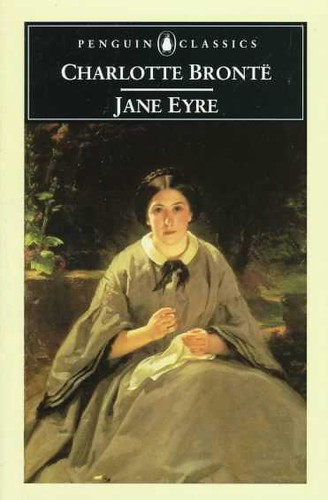
Soon we start our AP novel unit, Jane Eyre. Charlotte Bronte’s novel is one of my favorites, which means I will infuse as much of my appreciation for it as I do for my other favorite classics like Hamlet.  While many wax profoundly about Jane Austen, I think Miss Bronte gets overlooked. Jane Eyre has the distinction of being one of those novels that set things of literature memes, tropes, and motifs in motion by becoming a template for other stories. Consider:

  • she is plain in looks, but beautiful in spirit
  • her intelligence is valued by others, at a time when women were not widely educated
  • she values family over fortune
  • she easily speaks her mind
  • she is independent and finds a way to survive
  • outwardly she is calm, yet ripples with passion underneath her facade of restraint
  • she is perservering, sourceful, and a woman of strong morals
  • she stands up for herself–no doormat dame here

My opinion: Jane rocks. Over the years there have been several film adaptations of the novel.  I binged on JE films over the weekend and came up with my ratings:

1971: Starring George C. Scott and Susannah York
Verdict: skip.

George, too familiar with his Patton role, brought it to his interpretation of Rochester.  He railed and ranted in a very American accent and I gave up after he meets with Jane after their encounter on the road. Besides York’s Jane being too old and much too pretty I couldn’t sit through the poor film quality. The video transfer was so muddied I felt as if I were watching the movie through an unwashed glass.

image: eleganceof fashion. blogspot

1983: Timothy Dalton and Zelah Clarke
Verdict: one of the most faithful and watchable versions

Being a BBC production, I had initial trust it would be a quality adaptation, after all these are the folk who brought us Colin Firth as Mister Darcy. The sets, the important scenes, those inscrutable nuances of the original story are all contained in this mini-series. Timothy Dalton definitely understands the Byronic hero that Rochester embodies and has even said in interviews Rochester is one of his best roles. Clarke, while a bit older than the required 18 year old fresh from her Lowood imprisonment, captures the Quakerish passivity and ethereal nature of Jane Eyre.  The scenes between Dalton and Clarke are melt-in-the-mouth truffle satisfying.  Their version is what comes to mind most often when I return for a refresher novel read. I really did believe a heartstring developed between them. The agony of Dalton’s Rochester when he realized his Jane was leaving him forever kept the tissue box occupied.

1996: William Hurt and Charlotte Gainsbourg director: Franco Zefferilli
Verdict: passable, but strayed terribly from the novel

William Hurt seemed on the verge of understanding Rochester, but kept the bitterness too diminished, too washed out. Charlotte G as Jane got her part right. The plain, passionate young actress  imbued the paradoxical spirit of Jane Eyre. Sadly, there existed no believable passion, that needed kindred heart-string spark, between Gainsbourg’s Jane and Hurt’s Rochester. This spark is the very core of the novel. Without that essential core the movie floundered about like a fish hoping to get back into the water to have a proper swim. The director who brought us Romeo and JulietTaming of the Shrew, Hamlet, and other great stories of passion missed the mark with this adaptation by rushing the story and taking way too many liberties with the plot.

2006: Toby Stephens and Ruth Wilson
Verdict: enjoyable, even if a bit too contemporary in approach

image: writingbar.com

Admittedly, I had started watching this version years ago when it first came out, but found myself so disenchanted with the cutaway flashbacks, I couldn’t get past the Lowood scenes and it wasn’t until recently I returned to another viewing.  I did like the lead actors portrayals, and yes, there was a definite spark between them. I thought Toby Stephens got off easy with his fire wounds, unlike Hurt and Dalton. His rugged looks only appeared rather marred, instead of being ruined. The rolling around, ankle rubbing bit at the end seemed a bit too lenient for true Bronte style. Then again, there are leniences throughout this adaptation I willingly overlooked since the production quality proved so high.

2011: MiaWaikowska and Michael Fassbender Director: Cary Fukunaga
Verdict: Admirable

The first scene makes a diehard JE fan sit bolt upright and ask, “What? Wait–did the movie skip! because the opening scene is starting right off with Jane making her mad dash from Thornfield, which usually means the film is winding up to the grand finale.  Instead Fukunaga gets a bit artsy and dips in and out of Jane’s childhood days in flashbacks, with a quick glance at times at her more recent history.  Artfully done, but a bit disconcerting for those who prefer the linear progression.  Fassbender and Waikowska do provide a sumptuous Rochester and Jane.  Looks, mannerisms, nuances, smoldering passions–it’s all there.  That’s why it the ending is so absolutely frustrating.  I could not understand the need to transform Rochester into a Tom Hanks Castaway lookalike.  Maybe trading out the maimed hand for a beard was a contract compromise. Also, there should have been another 20 minutes of wrap up, yet we are whisked away much too soon.  It’s like being served the most savory dessert and having it taken away after a couple a bites–“Yo, I wasn’t finished.” Apparently Fukunaga thought the audience needed no more indulging and wanted us to move away from the table.

Overall: If a dedicated JE fan go to one of the series adaptations, such as the 1983 or the 2006.  It appears that only when given the proper amount of time (3-4 hours) can Jane’s story be told sufficiently. However, if thinking “book or movie first?” and movie wins out–get the 2011 version.

Further notation: I thought about finding the Ciarin Hinds version, especially after watching him in Austen’s Persuasion with Amanda Root.  Our library no longer has it and after reading the widely mixed reviews of loving it and hating it, I thought I will stick with my picks of 1983, 2011, and 2006 for classroom clips.

Any readers have their own picks of fave JE adaptations?

Post Navigation