Pam Webb

a writer's journey as a reader

Archive for the category “reviews”

Reading Challenge: #20–My Salinger Year


Joanna Rakoff has provided that rarity, a memoir that reads like a novel. She does admit she needed to fill in some gaps, which is totally understandable and quite forgivable. The point is that Ms. Rakoff allows her readers to peek behind the curtain where most plebeians are barred when it comes to the world of lit deals. We are given glimpses of when one of the old venerable literary agency’s began to roll out of the Stone Age of carbon copies and Dictaphones into the pacings of the WWW. This is the agency that represented J.D. Salinger. The title is both misleading and essential to understanding the book. Salinger plays his part in Rakoff’s memoir like he did in real life for so many: an enigma of reverberation. He left a lasting impression on Rakoff long after her encounters with him, and she is able to pass that enduring awe to her readers.

Front Cover

The following is a passage, which, for me, serves as the book’s metaphor. How so many freshly degreed lit majors hope to “make good” in NYC as an assistant  at a publishing house or agency and live beyond their means by believing in their facade, to almost succumb to disaster only to recover and continue in the momentum of living as a twenty-something.

 My shoe, with its narrow heel, caught on the thick carpet, and for a moment I thought–I knew, my heart beating faster–that I was going to trip and fall down that small flight of stairs, the world around me rotating, but then I simply laid my hand on the railing, steadied myself, and continued down. p.139

If you are looking at the reminiscent or retro view of the book world, a bit of Mad Men of the literary scene, then I urge you to find My Salinger Year. It’s a bit of The Devil Wears Prada peek of publishing. I wonder if Emily Blunt is busy for this one because I do see a film in the making. Heck, I could see Meryl Streep as an agency queen. Oh yeah–

Author Snapshot: Lois Lowry


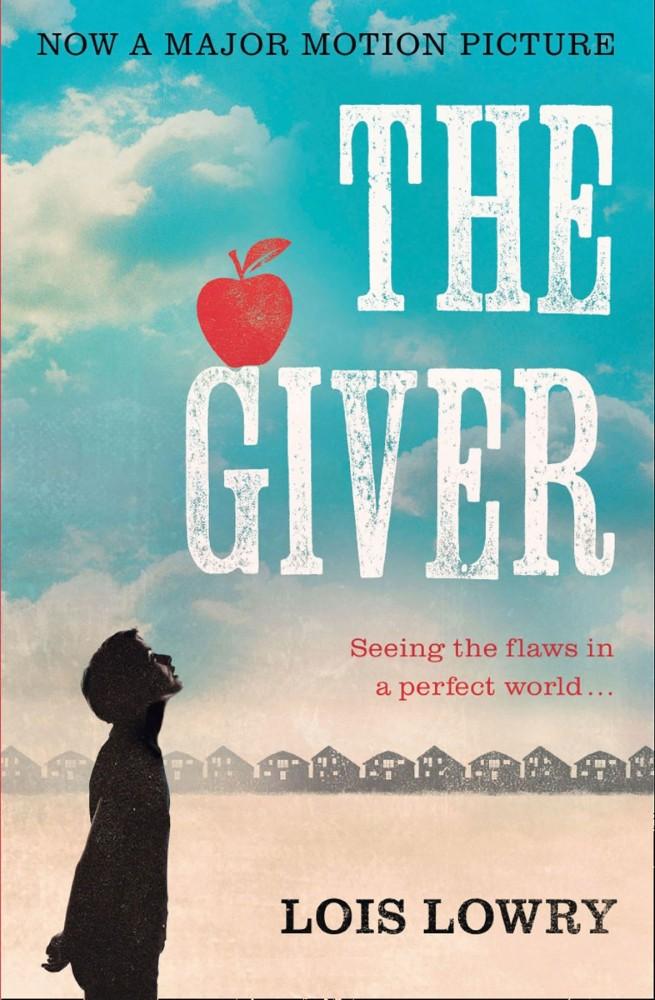
Sometimes a novel is similar to a wave in how its impact builds momentum, breaks, recedes, and begins the cycle all over again. The Giver by Lois Lowry is such a book. First published in 1993 it pushed societal paradigms, gathered a following, and is once again building another following due to the film adaptation. It’s still considered controversial some twenty years later. The story is deceptively simple, yet profound in its impact. There are so many issues presented: government control, euthanasia, loss of innocence, and dystopia versus utopia. Lowry presents these heavy issues with a light hand and leaves reader with hope in its ambiguous ending. It deservedly won the prestigious Newberry Award.

For many years The Giver remained a standalone title. And then Gathering Blue came out in 2000; however, it wasn’t a true continuation of The Giver and frustrated many readers looking for answers, because it teased a bit, alluding only slightly to Jonas’s world. Readers had to wait until 2004 for Messenger, which served as a bridge between The Giver and Gathering Blue. Alas, answers still weren’t totally available and finally in 2012 closure arrived with Son.

Having read The Giver when it first came out, I was impressed with its message, although a bit dissatisfied with its ambiguity at the end. “That’s it?!?” I felt like shaking the book to see if I could render out the last drop, maybe find the missing resolution or at least find a denouement of sorts. I wasn’t aware of the succeeding books that formed the quartet and had the distinctive pleasure of reading the quartet in succession after watching the 2014 film adaptation of The Giver. Due to the sizable waiting list for The Giver (could it be the movie stirred people to seek out the original?) I began reading the other three and saved The Giver for last. Glad I did so, because the library (love my library) bought the newest edition, which is a twenty year celebration of the novel, and it contains an introduction, a reflection, by Lois Lowry. Her humor and unique outlook is prevalent and added a dimension to the reading I wouldn’t have probably gained reading the standard paperback issue. A bonus section (special features?) included interviews of different actors from the movie including Taylor Swift.

Yet, there is more to Lois Lowry than The Giver. Her talent extends to comical middle reading found in the Krupnik series which is about the plucky Anastasia and her rascally brother Sam. Another notable book, her first Newberry Award, is Number the Stars, which covers the Danish Resistance in WWII. Lowry’s diversity is evident when scrolling through her impressive book list of thirty plus titles which range from picture books to historical fiction, and include young adult reads. I have been exploring other Lowry titles and I am amazed by her diversity. For instance, I just finished an audio reading of  Silent Boy, which reminds me of Scout from To Kill a Mockingbird recalling her childhood memories from an adult perspective. Another audio novel, The Willoughbys is radically different from any of her other works. This a parody of all those long ago old-fashioned tales starring orphans who make good after much travail. Think Lemony Snicket meets Pollyana. The reading was enhanced by the reading talents of Arte Johnson, best remembered by his Laugh In days. The humor varies between lampoon and subtle, the vocabulary rivals SAT prep exercises, and there is a constant anticipation of “What next?” right up there with “This is a kid’s book?”
Lowry is one of those authors who provides the reason why adults peruse the kids’ section when searching for a good read.

Interesting bits about Lois Lowry:

  • she’s been a contestant on Jeopardy
  • traveled to Antarctica
  • had The Giver turned into a play, opera, film, and musical
  • she’s been a clue in a New York Times crossword puzzle
  • has owned numerous dogs, cats, and horses
  • has a great little author website

A Murdered Austin


As a confessed Jane Austin fan, I find myself searching for more of her books. Yes, I know that isn’t happening. I doubt Cassandra had a “lost” manuscript squirreled away in the family bank vault like sister Alice did for Nelle.

But one does hope for finding at least a satisfying pastiche.

I have tried a few, and quite frankly, I find them annoying. There are liberties taken with the characters that simply aren’t at all Janish, in either style or intent. If one doesn’t live in the time period, trying to write it and pull it off successfully is about as satisfying as a diet Dove bar. Exactly. They don’t exist because what would be the point?

Sigh. I do keep trying though.

I’d heard PD James had tried her hand at Austin with the Death Comes to Pemberley. Not having read any of her mysteries, I still decided to add the title to my TBR list, because James is a respected author and who can resist a mystery attached to the P&P gang?

I should have resisted.

But it looked so promising… image: BBC


Spying the DVD adaptation on the new release shelf I snagged it quickly. I don’t know why I sequestered it away under my arm. Perhaps I envisioned some maddened JA fan descending upon me screeching “I saw it first!” Decorum before drama. This became the byword as I settled down for an evening of what I hoped to be a lost in Austen evening, for drama versus decorum permeated Pemberley. Yes, death indeed came to Pemberley, but it wasn’t the murder in the woods that was so terrible. So much more damage had been rendered.

I had a prepared list of all that I found oh so wrong with this BBC rendering. Taking the a Thumper path of reviewing practice instead, I will say this one nice thing: At least they used the Pemberley estate from the Kiera Knightley version.

I now need to read James’ novel and see how badly they adapted it, because surely a respected author couldn’t have committed so many travesties to Elizabeth and crew, especially if she is the devotee she is supposed to be. The Amazon reviews aren’t promising. Any thoughts on James and her pastiche of Pemberley? Are there any decent Austin homages out there at all?

Author Snapshot: Daphne du Mariuer


Last night I dreamt I went to Manderley again…


One of the more famous opening lines for a novel is Daphne Du Mariuer’s first sentence of the eponymous character recalling her days at Manderley. Rebecca, a gothic romance, if there ever was one. No wonder Hitchcock snapped it up. I’m not sure which is the bigger hit: the novel or the film. They are both memorable, eerie, and suspenseful. Whenever I reread the book, I immediately want to view the film again. The novel leaves a legacy found in a variety of mediums:

Literature

  • Stephen King alludes to Mrs. Danvers, the troubled housekeeper, several times in Bag of Bones, and again refers to her in “Father’s Day.”
  • Jasper Fforde creates an army of Mrs. Danvers clones in his  Thursday Next series.
  • Danielle Steel nods to the novel in her Vanished, since the plot is similar to Rebecca.

Film

  • The Man with Two Brains, a Steve Martin comedy, acknowledges the novel as his character consults the portrait of his deceased wife, Rebecca.

Television

  • Dark Shadows, the original 70s Gothic soap opera (not the Johnny Depp film) relied on Rebecca’s sinister setting to create its creepy plotline.
  • Carol Burnett lampooned the novel with her “Rebecky” skit.

And if Rebecca‘s Gothic romance plot line isn’t your cup of tea, perhaps you remember The Birds? It was a short story before Hitchcock got ahold of it and produced a movie that still freaks me out. I found her short story in an anthology of animal uprising stories including Animal Farm. Watch out for pigs and birds–they pack a punch when they take over the world.

While Daphne Du Mariuer might not be in vogue as much as she once was, she definitely left on impact on the literary world with her contributions of novels, plays, and non-fiction. She often wrote ahead of her time, as evidenced in her House on the Strand, which alluded to the mind-altering drugs used in the sixties. There is some controversy about plagiarism, which I choose not to dwell upon. And some aspersions about her personal life, which I won’t delve into either. What fascinates me is her diversity as a writer. Though labeled as a romantic novelist (a label she disliked), she proved she could write beyond what critics’ and the publics’ labels. She wrote historical biographies, chilling mysteries, science fantasy, and wrote them well.

Some trivia which isn’t trivial:

  • awarded the Dame Commander of the Order of the British Empire.
  • daughter of actor parents: Sir Gerald du Maurier and Muriel Beaumont; granddaughter of George du Maurier, Punch cartoonist.
  • cousin to the Llewelyn Davies boys, who were the inspiration for J.M.Barrie’s Peter Pan.

    Daphne du Maurier in her later years image: BBC news

2/50: Bloom’s BioCritiques–William Shakespeare


William Shakespeare  Frustrated Harold Bloom. image:meme.com

Harold Bloom knows a lot about literature. I think “intimidated” along with “impressed” are among my reactions to his introduction on William Shakespeare


2015 is going to be my Shakesyear, since I have set out a goal to gather research to write about Shakespeare. I’m not sure from what angle I’ll proceed, but I’m looking forward to the process. I do enjoy researching. It’s the doing something with it all that I struggle. I do know I have a daunting task ahead of me. Consider how little we know about him, I realize I’m probably going to be chasing about looking at the same old information presented by different people. Maybe I’ll be fortunate and find two needles in the info haystack…

The first book I’ve come across is a dandy. Harold Bloom, esteemed literary critic, takes on the task on presenting literary biographies of all sorts of famous authors. Although intended for juvenile readers, I found his vocabulary and syntax fairly challenging at times. For instance, what middle schooler would grasp this sentence easily: “I surmise that the egregious interventions by Vencentio and Iago displace the actor’s energies into a new kind of mischief-making, a fresh opening to a subtler playwriting-within-the-play.”

Bloom creates a portrait of Shakespeare through the observations of others including Samuel Johnson and Ralph Waldo Emerson. Considering this volume is under 200 pages, it’s packed with vital insights, including a chronology, works list, and a bibliography, to set me off along the trail in my search for Shakespeare.

Some new-to-me facts about the Bard:

  • he was “fostered” out to another family whose connections might have helped him rise above the failings of his father (which is quite the story in itself)
  • in 1587, when Shakespeare was 23, five theatrical companies visited Stratford and it wasn’t long after that Billy Boy went off to London
  • Hamlet, produced in 1601, was among the first plays the Lord Chamberlain’s Men performed at the Globe theater
  • Shakespeare’s company performed at least twelve plays every year for King James and his court
  • The purchase of the Blackfriars, another theatre, allowed Shakespeare’s acting troupe to perform year round since this was an enclosed theatre, unlike the Globe

I look forward to my discovering of William Shakespeare, and I hope you won’t become bored with my Bardinating over the course of the year.

Button, Button


My usual adage of “The original source is always better” went out the window after watching The Curious Case of Benjamin Button.
When the movie came out in 2008, I promptly avoided it. I thought the premise strange, that a baby would experience life backwards–going from old and decrepit to incapacitated infant. It especially seemed odd, even a bit creepy, since a romance was part of the plot.

Aging backwards. Not a new concept, apparently backwards aging is not a truly new trope. After all, Shakespeare hinted at our returning to our infancy state in his “Seven Ages” poem.

I also was a bit leery of Brad Pitt at the time. Fight Club isn’t exactly my type of genre. The male progeny tried to interest me (who can resist bonding with their sons via a movie?) but after a few minutes of gruesome artsy cinema, I deferred. However, since Fight Club Pitt has appeared in movies I do like, such as the Oceans triple, and Mr and Mrs Smith. Into the library basket went Benjamin Button as I gathered movies for the week. I didn’t realize I was committing to two and a half hours.

A sick day, and no energy for reading and in popped the movie. I sat spellbound. I even cried at the end. And was a bit indignant that Brad Pitt got passed over for an Academy Award. This trailer captures the heart of the movie well:

The most interesting part for me is that the movie is based on a F. Scott Fitzgerald short story. The fantasy genre intrigued me because I didn’t peg FSF for writing anything but brooding rebellious characters from the Roaring Twenties. The story’s biting satirical tone is very much Twain, and I learned that Fitz was indeed influenced by MT, who had made a comment about what a shame we don’t experience the best years, our older years, first. Interestingly enough, the only thing the movie and short story have in common is the title and premise. Here is the story link:


Any of you been surprised by the film being actually better than the written work?

Not Quite Titles


Though my current vocation is English teacher, I am really a librarian at heart. My principal knows this and understands I am awaiting the day the district figures out the funding to put a certified librarian back into the school library (“pick me, pick me”). I also have visions of retiring from teaching and hiding out in the local community college library working on mends and discards, like I did in my yesteryear life. Until those designated times happen, I live vicariously through other librarians’ lives. Knowing that background–how could I resist this title when I saw it propped up on the “last chance” rack at my local library?

I Work at a Public Library: A Collection of Crazy Stories from the Racks

Gina Sheridan, does indeed work at a public library, and her library must be crazier than the ones I have worked in. She even has a blog dedicated to daily oddities that happen there. If you think libraries are calm, quiet, and bland places to work in, you really need to check out her postings.

I had fun reading her book, and could definitely relate to some of the odd conversations she had either overheard and participated in. One of my favorite sections was her Chapter 3: 028.9 Reading Interests and Habits where she shared some of the “not quite titles” her patrons asked for. Ever hear of these?

  • Catcher in the Wind
  • Gullible’s Travels
  • Fifty Shades of Grey’s Anatomy
  • How to Kill a Mockingbird
  • The Diary of Aunt Frank
  • The Hungry Games

Do you have any interesting tales from the library? Can you top my story of the fifty dollar bill left in a book as a bookmark? Or the guy who checked out an armload of expensive art books who tried to sell them at one of the bookstores down the street ten minutes later?

Author Snapshot: Edward Rostand


You might not be familiar with Rostand as an author, yet if I said “Cyrano de Bergerac” I imagine a glimmer of recognition would spark. Cyrano or “I nose a hero with a flare for the ridiculous when I see one.” The guy on the left is thought to be the real Cyrano (really, there was a real Cyrano de Bergerac) and the actor on the right is Jose Ferrer, who presented an entertaining version in the 1950’s adaptation:

Do you nose these men? image: listal.com


When I inherited the AP English Literature program I had a gamut of material to select from to build my own signature curriculum. Although most literature programs focus on Shakespeare’s plays, I veer towards presenting breadth, along with my depth, and toss in Cyrano de Bergerac as a study in the comedic hero. And what a hero! We romp and frolic through this play reading scenes, discussing deeper moments, celebrating epiphanies, and watching clips. We end the unit with a French feast of bread, cheese, fruit, Martinelli’s, and chocolate while we watch Megamind. You did know Megamind is thinly veiled Cyrano, didn’t you? There’s even a Roxanne!

  The classic (image: Amazon.com)

And the retelling of the classic (image: Dreamwork.wikia.com)


Wait–you aren’t quite familiar with Cyrano, beyond knowing he was the guy with the big nose? Okay, quick recap:

In old time France, think Musketeers, Cyrano is a dashing soldier known for his flair (flare is nostril, of course) with his wit and sword. A fighting poet, making him a bit of a paradox. He has a major crush on his high society cousin Roxane (that’s when marrying your cousin didn’t weird people out). She doesn’t know this and thinks fondly of Cyrano as the brother she never had, putting him in that awkward friend zone, or brother/cousin zone. She confides she is in love with the new guy, who has great hair, face, etc, but she doesn’t know his name. You know what’s coming, don’t you? It turns out the mysterious new guy in town, Christian, also has a crush on her.

Jumping right into the action: Roxane extracts a promise from Cyrano to watch out for Christian since he will now be in Cyrano’s regiment. Cyrano takes the watchful friend idea a little too far by helping Christian woo Roxane through some amazing letters he writes under the guise of Christian. Roxane ends up falling in love with the letters (which is really Cyrano) and begins to become bored with Christian’s feeble attempts to woo her on his own. “I love you. I want to kiss your neck” doesn’t work for her.

As the plot unfolds, there is a villain by the name of Le Guiche, a war, a quick marriage, a revelation, secrets, and an unhappy/happy ending–depends on your point of view.

This play is a favorite and is responsible for introducing the word panache, which originally meant the feather(decoration) on the person’s hat , but has come to mean a person’s style or manner of expression.

Steve Martin introduced his own version of Cyrano as Roxanne, which is an 80’s comedy worth checking out.

Steve Martin plays CJ Bales, who crushes on the new astronomer in town. image: Amazon.com


Rostand also wrote a play about Chanticleer, the rooster who believed the sun needed his crowing in order to rise everyday. This was made into a clever little animated film called Rock-a-Doodle.

No matter the version you encounter, you will not forget Cyrano, a comedic hero worth getting to nose, umm, know.


The Giver et al


I have rediscovered The Giver. 

the-giver

sometimes the movie reminds the reader the greatness of the book image: bookopia.com.au

When it arrived on the scene in 1993 I was not an impressionable YA reader. No, I was a thirtysomething wife/mom/librarian and read books no matter what age they were intended for. Hmm. the only thing that’s changed is my age and the fact that I’m a librarian at heart while teaching English.

Like most readers, I felt a bit cheated at the ending. It was not neatly wrapped up and presented as a conclusion of satisfaction. Ambiguity can be quite frustrating, yet that’s one reason why The Giver is so memorable. We all want to know what happened to Jonas. Having rediscovered The Giver through watching the 2014 film led me to discover the other books in the series: Gathering Blue, Messenger, and Son. And here I thought all these years that the story ended with that famous sled ride.

Apparently it took twenty years for the book to become adapted to the screen. Jeff Bridges bought the rights and had originally wanted his father Lloyd to play the part of Giver. It didn’t happen, but viewers can watch a family reading of The Giver as one of the special features selections on the released DVD. Having finished reading the entire quartet I am smitten with the entire story. I hope there is a continuation of the series since each adds to the overall understanding of Jonas’s world.

An added bonus to rediscovering The Giver was reading the latest edition which contains author Lois Lowry’s twenty year reflection of The Giver’s impact.

A goal for this year: revisiting novels, particularly juvenile and YA novels, to gain a different perspective and insight.

Anyone interested in doing the same?


Blog Spotlight: Reading with Rhythm


As a professed Book Booster I have a definite soft spot for a blog that promotes books. The added bonus of Reading with Rhythm is that this is all about a dog dedicated to sharing the love of books with children through visits at schools and libraries. This gets double Shazam points!
Just who is Rhythm and why is this dog so besotted with books? Rhythm’s story is quite interesting. She first trained to become a guide dog, but like some first pick careers, things didn’t go according to plan. However, her second career is just as special and important, because she is enriching many lives now that she is a registered therapy canine. To read more about her career change, read this post.

Rhythm’s Mom Person keeps readers updated with books of note, along with keeping readers entertained with the various adventures she and Rhythm’s family and extended network of pals enjoy and experience.

Rhythm also is the star of her own book! Now that’s something to brag and wag about.

book

Image: Amazon Books

Rhythm and her Mom Person provide a lively and light-hearted perspective to life and life with books. Hoping you’ll stop by and extend your paw of approval for this lovable labrador’s love of reading.

Post Navigation