Pam Webb

a writer's journey as a reader

Archive for the category “reflections”

The Epicness of Poetry part two


Today we look at Homer.

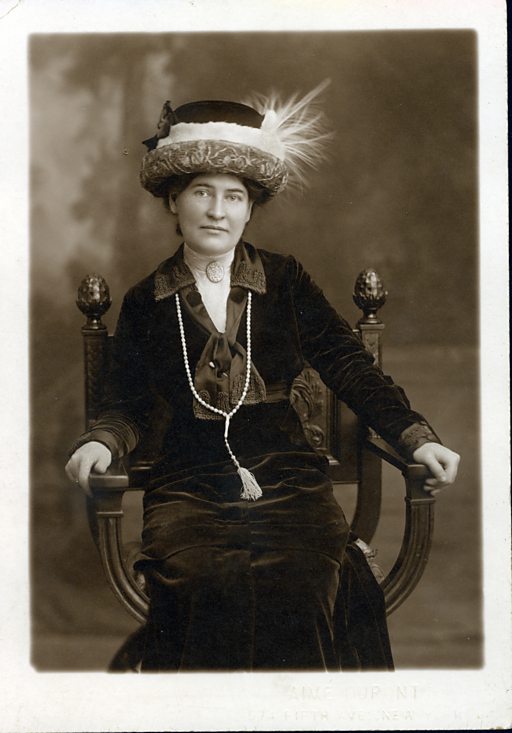
This one:

Not this one:

Homer wrote The Iliad and The Odyssey, but you knew that.

These are both considered epic poems and boy, oh boy are they epic in the sense of BIG.  They are big in size (The Iliad is nearly 16,000 lines and The Odyssey is about 12,000), big on adventure, and have big heroes as well.  These two poems have also made a big impact on literature, culture, and on Hollywood.

Quick rundown:
The Iliad is mainly about Achilles and his fighting in the Trojan War (yes, think Brad Pitt in Troy), while The Odyssey is mainly about Odysseus and his adventures trying to get home from the Trojan War.

Cover of "Troy - The Director's Cut [Blu-...

Cover of Troy – The Director’s Cut [Blu-ray]

Why should you care about these really, really old poems (besides them being so incredibly epic)?  I’ll let the PhD expert analysis people at Shmoop explain all that:

The Iliad
You want large scale clashing armies? You’ve come to the right place. Even matched duels or obviously unmatched duels? Check out the long one-on-one combat descriptions, or that crazy nonsense between Paris and Menelaus. Spy thriller? Odysseus’s nighttime raid totally fits the bill. Nail-biting special ops missions? The Trojan Horse ruse has your name written all over it. Swords-and-sorcerers magic adventure? Try anything with the gods busting in on the action, like, say, that whole Laocoon fiasco. Snakes—yikes. In short, anything exciting you’ve ever seen or heard or read started right here.But that’s not all. Not only does the Iliad put the act into action, but it puts the philosophy in there, too. This isn’t just a reductive Good Guys versus Bad Guys bit of disposable nothing. Instead, what’s behind all that fighting is a whole lot of thinking about what the fighting means.
The Odyssey
Do you like stories full of adventure, danger, and suspense? How about stories set in fantastic worlds full of strange creatures like Cyclopses, witches, sirens, and gods? If so, then you’re in luck, because Homer’s Odyssey is Western literature’s original adventure story, and its first foray into the fantasy genre. If you need any proof of how much Homer’s poem defined this genre, just consider the fact that we now use the word “odyssey” simply to mean adventure.

Beowulf, The Iliad, and The Odyssey are old, or classic, epic poems.  We now move on to contemporary, or considerably younger epic poems.

Next Post: Lost in Paradise is not the same thing as Paradise Lost

The Epicness of Poetry


Beowulf, The Iliad, and The Odyssey.  How could you get through public education and not have to study at least one of these? (Actually, I did–but that’s a different post). In our hurry-up world t’s not often we sit down and commit to reading 3,000 plus lines.  Welcome to Epic Poetry 101.

We tend to think of these triads of classic adventures as stories or myths.  Actually they are all poems.  Really long poems.  This is what makes them epic.

A brief pause…

Understanding Epic.

Today’s meaning:

image: suilynn.wordpress.com

Actual Meaning: (thanks Dictionary.com)

ep·ic

/ˈepik/

Noun
A long poem, typically derived from oral tradition, narrating the deeds and adventures of heroic or legendary figures or the history of…
Adjective
Of, relating to, or characteristic of an epic or epics.
Synonyms
noun. epos – epopee
adjective. heroic – epical

Back to our blog post…

Now that epic real definition versus epic contemporary understanding is out of the way, moving on to epic poetry will make much more sense. Epic poetry is epic because it is BIG. It’s big in scope, deed, theme, length–it’s just, well, epic (dude). Plus, it’s so big that it is italicized (or underlined or bolded) instead of the usually “quotes around poems” bit of mechanics.  Yup, this poetry is so big that it gets to change the punctuation rules.

Although technically I should address Homer’s Iliad and Odyssey first, I’m going with Beowulf, not so much because it’s considered the foundation of English literature and it introduces the dragon slayer archetype as well as mix pagan and Christian thematic elements–I choose it first because of Gerard Butler made Beowulf come to life for me.

image: tumblr.com

If you’ve never studied Beowulf, you should–don’t believe the Angelina Jolie version is Beowulf.  Nope. T’snt at all. Gerard Butler’s version isn’t either. So heads up Hollywood, we need a REAL version of this monumentally important epic poem.  Here’s to get you started…

Beowulf Key Facts ala Sparknotes:

full title  ·  Beowulf

author  · Unknown

type of work  · Poem

genre  · Alliterative verse; elegy; resembles heroic epic, though smaller in scope than most classical epics

language  · Anglo-Saxon (also called Old English)

time and place written  · Estimates of the date of composition range between 700 and 1000 a.d.; written in England

date of first publication  · The only manuscript in which Beowulf is preserved is thought to have been written around 1000 a.d.

publisher  · The original poem exists only in manuscript form.

narrator  · A Christian narrator telling a story of pagan times

point of view  · The narrator recounts the story in the third person, from a generally objective standpoint—detailing the action that occurs. The narrator does, however, have access to every character’s depths. We see into the minds of most of the characters (even Grendel) at one point or another, and the narrative also moves forward and backward in time with considerable freedom.

tone  · The poet is generally enthusiastic about Beowulf’s feats, but he often surrounds the events he narrates with a sense of doom.

tense  · Past, but with digressions into the distant past and predictions of the future

setting (time)  · The main action of the story is set around 500 a.d.; the narrative also recounts historical events that happened much earlier.

setting (place)  · Denmark and Geatland (a region in what is now southern Sweden)

protagonist  · Beowulf

major conflict  · The poem essentially consists of three parts. There are three central conflicts: Grendel’s domination of Heorot Hall; the vengeance of Grendel’s mother after Grendel is slain; and the rage of the dragon after a thief steals a treasure that it has been guarding. The poem’s overarching conflict is between close-knit warrior societies and the various menaces that threaten their boundaries.

rising action  · Grendel’s attack on Heorot, Beowulf’s defeat of Grendel, and Grendel’s mother’s vengeful killing of Aeschere lead to the climactic encounter between Beowulf and Grendel’s mother.

climax  · Beowulf’s encounter with Grendel’s mother constitutes the moment at which good and evil are in greatest tension.

falling action  · Beowulf’s glorious victory over Grendel’s mother leads King Hrothgar to praise him as a worthy hero and to advise him about becoming king. It also helps Beowulf to transform from a brazen warrior into a reliable king.

themes  · The importance of establishing identity; tensions between the heroic code and other value systems; the difference between a good warrior and a good king

motifs  · Monsters; the oral tradition; the mead-hall

symbols  · The golden torque; the banquet

foreshadowing  · The funeral of Shield Sheafson, with which the poem opens, foreshadows Beowulf’s funeral at the poem’s end; the story of Sigemund told by the scop, or bard, foreshadows Beowulf’s fight with the dragon; the story of King Heremod foreshadows Beowulf’s eventual ascendancy to kingship.

If you are up for reading the poem:

Gutenberg Project

If you want an entertaining analysis:

Shmoop

If you want to skip Beowulf and go to The Iliad and The Odyssey

New Post

American Rhyme and Reason


Walt Whitman's use of free verse became apprec...

Walt Whitman’s use of free verse became appreciated by composers seeking a more fluid approach to setting text. (Photo credit: Wikipedia)

In researching  material for upcoming National Poetry Month posts I came across an article which got me thinking on a couple of different levels.

First of all, how is it possible to narrow the immense possibilities to ten?

Secondly, the article is written from a British standpoint–is that observation, compliment, or review?

After perusing the list I find myself nodding to a couple of the choices, being perplexed at a one or two, and adding the others to my “must read.”

What are your votes and opinions?  Would you name these as “The 10 best American poems”? (click on “article” and read the reason and rhyme of each mentioned)

1.  “Song of Myself” by Walt Whitman

2.  “The Idea of Order at Key West” by Wallace Stevens

3.  “Because I could not stop for death” by Emily Dickinson

4. “Directive” by Robert Frost

5. “Middle Passage” by Robert Hayden

6. “The Dry Salvages” by T.S. Eliot

7. “One Art” by Elizabeth Bishop

8. “To My Dear and Loving Husband” by Ann Bradstreet

9. “Memories of West Street and Lepke” by Robert Lowell

10.  “And Ut Pictura Poesis Is Her Name” by John Ashberry

A Garden of Verses


image

As children we begin our acquaintance with poetry through nursery rhymes and catchy little verse books and move up to reading by way of Dr. Seuss. If the love of poetry takes hold. Then we discover there is a world of rhyme through the pens of such poets as Jack Prelutsky (shown happily proffering his poetry pencil). And of course, Shel Silverstein.

Robert Louis Stevenson and Lewis Carroll come to mind for when we are older. And then what? We are told “good” poetry shouldn’t rhyme and rhyming verse is childish. We then go deep into the likes of Robert Frost, Longfellow, and perhaps Langston Hughes when we get into school. This is not a bad thing. Not at all. Life gets more complicated as we get older and poetry can be that reflection.

I wonder if this is where we lose the initial love of poetry, when we have to work at understanding it through its symbolism, imagery, and meter. Cats and fiddles, Jacks and Jills no longer suffice as poetry thrills. Tis a shame.
My freshmen groan and revolt when I trot out the poetry unit. I wish I could say I have swayed their opinions or created new converts at the end of the designated nine weeks, yet that doesn’t happen as often as I’d like. Most do appreciate poetry a bit more. Sure, that works for me–I’ll take it.

I wonder how many of us would continue loving poetry if we could only be allowed more Jack Prelutsky when we are all grown up.
image

When

Frost Covered Spring


Robert Frost. My first meaningful encounter with poetry occurred in fifth grade when Mr. C (still my favorite teacher) had us memorize “Stopping By Woods” and then we chalked our impressions of the poem onto dark blue construction paper. These were then pinned all around the classroom as the border above the chalkboard. As I teach this poem to my students I learn more and more from it. Frost does that with his poetry. It appears so deceptively simple at first and then there is a realization of its depth. It can be almost embarrassing at times once the analytical epiphany hits.

But I can’t imagine Frost laughing at my denseness–no, he would probably only chuckle. I imagine he might even be amused at the fuss we make analyzing his commentaries on birches, walls, and the snowy woods.

Frost is one of my faves and thought it very appropriate to feature him first among the many poets I hope to spotlight this month.

Here are a smattering of favorite poems:
“Mending Walls”
“Acquainted With The Night”
“The Road Not Taken”
“Fire and Ice”
“Nothing Gold Can Stay”

What are your favorite Frost verses? For some reason whenever spring arrives I tend to think of Robert Frost. Maybe this is fitting–a bit of Frost helps us appreciate the warmth of spring. I think he realized that as well.

Happy Poetry Month!

20130401-215741.jpg

Playing Around with Words


The Script Frenzy logo

The Script Frenzy logo (Photo credit: Wikipedia)

Writing is what I do.  I teach it. I read it. I aspire to it.  I’ve tried all forms of writing: picture books, poetry, novels (middle readers, YA, adult), non-fiction (essays, informational, reviews), oh yeah–blogs.  My latest foray into wordsmithing is plays.  I gave up on screenplays since the format and competition didn’t work for me.  Then I switched to stage plays.  Oooh, I do very much like them.  NaNoWriMo used to run Script Frenzy, a spring version of novel writing in a month that involved writing a play in 30 days.  I tried it and definitely find a new niche.

Even though Script Frenzy retired, I got inspired. So far I have created a contemporary version of Julius Caesar and the school’s drama teacher showed interest in it, as did one of my students who called the role of Anthony.  I’ll keep you posted of the world premiere. I also morphed Hamlet and Alice in Wonderland, mixing in a bit Wizard of Oz. It’s definitely a work in progress, as they say.

Since screenplays didn’t pan out for me, I am converting them into stageplays.  I hope to dive into my languishing pile of manuscripts and toss them around in my Celtx program and see if they Presto! into plays.

Gosh! I  love writing!  There is such a variety and formats to try out and play with.  It’s like dress up with words.

Any of you try out a new writing form with success?

Pondering Poetry


1848 Daguerreotype of Edgar Allan Poe at 39, a...

1848 Daguerreotype of Edgar Allan Poe at 39, a year before his death (Photo credit: Wikipedia)

Poetry.  I sometimes hate to admit I love it.  It is misunderstood, mishandled, and would be missed should it ever be absent from our midst. As I teach AP I delve ever deeper in poetry and realize with some asperity I know nothing and have so much to learn.  Learning from the masters is a place to start.  May you also find solace and inspiration in these quotes found.

Poetry is serious business; literature is the apparatus through which the world tries to keep intact its important ideas and feelings.–Mary Oliver

I would define, in brief, the Poetry of words as the Rhythmical Creation of Beauty.
Its sole arbiter is Taste.
Edgar Allan Poe

A short poem need not be small.–Marvin Bell

A poem…begins as a lump in the throat, a sense of wrong, a home-sickness, a love-sickness…It finds the thought and the thought finds the words.–Robert Frost

Robert Frost NYWTS.jpg

image: Wikipedia.org


Genuine poetry can communicate before it is understood.–T.S. Eliot

For a man to become a poet…
he must be in love or miserable.
George Gordon, Lord Byron

I think like a poet, and behave like a poet.
Occasionally I need to sit in the corner for bad behavior.–Gary Soto

There is nothing wrong with a poetry that is entertaining and easy to understand.
Charles Bukowski

Poems reveal secrets when they are analyzed.
The poet’s pleasure in finding ingenious ways to enclose her secrets should be matched by the reader’s pleasure in unlocking and revealing secrets.
Diane Wakoski

Wives and Daughters


One of the final pages from the manuscript for...

One of the final pages from the manuscript for Wives and Daughters (The Works of Mrs. Gaskell, Knutsford Edition) (Photo credit: Wikipedia)

Have you ever eagerly brought a movie home only to discover you’ve watched it before?

When that happens I either slip it out and chastise myself for my negligent memory or shrug and go for it anyway.  Such was the case with BBC’s production of Gaskell’s Wives and Daughters.


Lovely.  I watched the whole thing in one sitting.  I would not do well with the weekly installment watch plan anymore.  I tend to eat all my Haagen-Daaz in one sitting too.

As for Wives and Daughters I think Gaskell should have actually named the series, The Doctor’s Daughter because it all centered on Molly, who was the doctor’s daughter.  I didn’t see much about wives and only a couple of daughters were the focus.  Maybe I will have to read the book.  And right now I am trying to do so.  It’s not working.

One problem I am finding out with watching really wonderful BBC adaptations is that they quench my desire to dig into the book.  I really should stick to my book first policy.


If you should hunger after a character driven historical plot that is reminiscent of Jane Austen’s complicated romance plots, then do look up Gaskell and her Wives and Daughters–watching or reading it is too personal of a decision for me to actually recommend. Umm-I did really like, really like the BBC more than I have Gaskell’s flowery writing.  But don’t let me influence you.

Pinning My Interests Away


I’m stuck.  I’m stuck on the how and why I am venturing out on the newest craze of “HeyLookAtMe” socializing: this week it’s Pintrest. It must be that hermit in me that is holding out on sticking up photos of couches, cupcakes, book covers, pets, and favorite movies. I don’t get the concept of pinning up photos.  But that’s a whole ‘nother post in itself.

English: Red Pinterest logo

English: Red Pinterest logo (Photo credit: Wikipedia)

I’ve been doing some pondering of late about the whole tizzifying concept of web presence.  If publishers, agents, editors, even fans (thinking someday potential) exonerate and extol the virtues and necessity of working The Web–well, then I guess it should be done.  I thought I was doing pretty well with a biweekly post to my blog.  Apparently that’s not enough.  I should have a Facebook account (I don’t).  I should also Tweet, Tumble, Stumble Upon, and be Linked In with others–I did try, but the bigger question came up: when exactly am I to find time to write if I’m busy telling everyone that I’m writing?  Here’s some more figuring, a step up from pondering:

It takes time to …

  • Sign up
  • Create a profile
  • Check messages
  • Answer messages, invitations, reply back
  • Update the profile page
  • Again
  • Redecorate the home page
  • Again
  • Create a post
  • Postdate my posts
  • Get lost visiting other blogger’s sites
  • Leave pithy comments
  • And on, and on

All this activity consumes my precious time needed to write.  I decided I found myself running around checking too many little fires instead of enjoying the warmth of the bigger one I had built.  That’s metaphor speak for all that time and energy linking, tweeting, facing, and pinning, and stumbling, and what other web verbage is out there, left no time for the actual purpose of kindling* those web fires in the first place: my real writing–picture books, YA novels, poetry, middler reader renderings.  My cow joke manuscript is languishing.  I should be pursuing that publisher tip I received last year at the SCBWI conference. Yes, there are publishers who looking for a cow joke book for their list.

Sigh. My writing languishes while I coax and blow on the embers of a handful of hopeful flames of recognition.  So I shall not be poking at smolderings any longer; I shall stick to the toasty warmth of WordPress.  Especially since I’ve discovered the scheduled post option.  I now have time to attend conferences, revise current projects, and reflect upon yet another rejection letter.

So, wonderful reader(s)–have you found that all those web verbage fires leave you a bit cold, considering all the effort it takes to get them going?

*kindle, Not Kindle–not an intentional pun

Blue Skies,
CM

Romeo and Juliet Stories


Mass-produced colour photolithography on paper...

Mass-produced colour photolithography on paper for Toy Theatre; Romeo and Juliet (background and surroundings removed) (Photo credit: Wikipedia)

Soon I will be introducing my students to Shakespeare through Romeo and Juliet.  It’s a timeless story repeated throughout literature and film.  Two lovers not meant to be together yet drawn to love one another regardless of their circumstances.  I didn’t realize how strong that story line ran until I watched Lorna Doone the other night.  And there it was right before me–John Ridd and his pure love for Lorna Doone.  Such a gorgeous love story.  I then began to think about all about the other Romeo and Juliet stories I’ve come across without realizing it.  Some end happily and others do not.  It’s the telling of the two hearts intertwined that makes the story so memorable. I do believe the world has been made a bit lovelier for the joy that comes from the sorrow that happens when two hearts are kept apart because it is so wonderful when those hearts do find their way to be together after all.

A handful of Romeo and Juliet themes:

Lorna Doone


The Summer of My German Soldier


Tristan and Isolde


Pyramus and Thisbe


West Side Story

I am looking forward to the upcoming release of Romeo and Juliet starring the lovely Hailee Steinfeld, nominated for her role in True Grit. There are many  Romeo and Juliet versions, yet I am hopeful this new version will be a standout. The depth Ms. Steinfeld brought to the role as Mattie Ross, she will, I hope, bring as Juliet, for a Romeo does need his inspiration.

Post Navigation