Pam Webb

a writer's journey as a reader

Archive for the category “reflections”

Why We Say


STUFFED SHIRT


“Oh, don’t pay any attention to him and his boastings. He’s just a stuffed shirt,” Laurie whispered to Ana about their linguistics professor.

For some reason I thought being a stuffed shirt meant being an old fuddy-duddy, someone who insists on doing things exactly and according to the rules with no wavering, to the point of being quite boring. The truth of the matter is:

An actor of the 1899 era, John Gates, was believed to pad his shirts to give himself a more impressive impression, a bit like shoe lifts or padded shoulders, except more applied to the front area to have an admirable physique. So in actuality, a stuffed shirt refers to someone who is pompous, who thinks himself more important than he really is. And those kind of people can be quite boring, when you think about it.

SWAN SONG

Image result for swan song

“That was her last performance,” the reviewer mentioned in her article of the famous actress. “Performing as Cleopatra was her swan song.”

When I hear the expression “swan song,” I think of it being the last effort of a person, the culminating moment of achievement or something that brings the downfall of a person. Not being terribly sure of its meaning, I’m cautious about how to use this expression.

Apparently, according to thoughts going back to Plato’s time, the swan not being able to sing like other birds would burst into one last song just before dying. In reality, while swans don’t sing, they do make a variety of noises. This is a case of “mything the mark.” Even Shakespeare got it wrong, when he has Portia say in the Merchant of Venice: 

Let music sound while he doth make his choice; then, if he lose, he makes a swan-like end, fading in music.

Being Shakespeare, we’ll let that one go.

SWAPPING HORSE IN MIDSTREAM
“Even though we don’t agree with some of the decisions of our new boss, it’s best not to swap horses in midstream,” Bart told the group, as they headed out to the parking lot.

This one makes sense, as it would be uncomfortable, awkward, maybe even unsafe to try to get on one horse while on another traversing the river. The few times I have traveled by horseback I think staying in one saddle is hard enough without having to try to switch to another horse and another saddle, let alone while trying to do so in a river.

Abraham Lincoln is credited with this saying. With his wry wit he made a speech during the Civil War that it best not to switch allegiance of presidents by swapping horses midstream. This was alluding to how many people were unhappy with his wartime politics and wanted new leadership.Fortunately, people took his advice and stayed put in their saddles.

Click Picture for Larger View

image: abelincoln.com

Why We Say: A monthly series that explores a variety of sayings and expression that are common or are interesting, based on the information found in Why We Say by Robert L. Morgan.

POM: February


Just a wee past Valentine’s Day, yet I thought I would let all the mush bucket poetry have its spotlight. I offer up Yeats for February:


Aedh Tells of the Perfect Beauty

W. B. Yeats, 18651939

O cloud-pale eyelids, dream-dimmed eyes,
The poets labouring all their days
To build a perfect beauty in rhyme
Are overthrown by a woman’s gaze
And by the unlabouring brood of the skies:
And therefore my heart will bow, when dew
Is dropping sleep, until God burn time,
Before the unlabouring stars and you.

Image result for Aedh Tells of the Perfect Beauty

Academy of American Poets image


This a love poem for poets. Yeats expresses well how poets work their words to exalt the beauty found in rhyme and rhythm. Not exactly Valentine’s Day–which is why I waited. This is a poem for lovers who love words. And that’s all year round for me.

“Dead for a Ducat!”


Valentine’s Day and a Shakespeare sonnet–right?  How about Shakespeare and the play I love to teach? 

You’re  probably wondering why I chose such an unlovely line for my Valentine’s Day post. Not the most romantic, I know, or even the most notable line of Hamlet–yet it does have a purpose. When Hamlet exults at his stabbing of the “rat” behind the curtain, the play changes. Hamlet changes. There is no turning back. 

By the time you read this post I will be well immersed in teaching Hamlet to my APsters and they will either be all in happily sailing with understanding and enthusiasm or they will have abandoned ship and rowed to shore. I have found either my students love, love, love the Danish doings of the undecided prince or are ready to move on and far away from Shakespeare. I have to remember my enthusiasm for Shakespeare isn’t always as contagious as I hope it to be.

I think I over prepare in hopes of dazzling my students with background facts, nuances, allusions, critical thinker questions, clips, trivia–oh my, I probably absolutely overwhelm them. I got lost on YouTube finding a clip for my class. It was a fun little side trip. Shakespeare hits the late night talk shows easily. It’s true what Ben J. said–Shakespeare is for all time. Especially late at night time. Take a look:

So happy Valentine’s Day and I hope that lovely sonnet pops up on someone else’s post.

(W)Hoopla


Sundays I look forward to my afternoon nappish time with a good book. During the week if I try to read I inevitably fall asleep due to the somnolent virtues of relaxing after a long day infusing enthusiasm for English with 75+ teens. Saturday is usually catch up on errands, laundry, bills, etc. So Sunday is my “aah” day.

The problem is that sometimes it becomes an “aww” day because I haven’t tried out my new book and if it doesn’t work out, I’m without a book. And yes, I usually do have a back up. Both pootered out. I did give them a decent trial, though. Honest.

This is when I haul out my iPad, plug in my headphones and Hoopla.A movie is not the best replacement for a good solid afternoon with a book. Not even. However, it’s fairly delicious when the selected movie is a quirky indie with a creative plot. Bonus when the acting is decent.

Let’s pause first. Hoopla? It’s a vendor through our local library. Free streaming movies. Granted, the movies are not first run features. They are a mix of fun oldies (a huge batch of 1950 era Disney family flicks) and some notables, The Giver, for instance. Some awful B- movies, lots of kid flicks, and a few films, make that lots of films, never even heard of. They’re free. I’m not complaining.

Dimensions Poster

IMdB image

Skimming through titles I noticed Dimensions: an indie film–time traveling theme set in the 1920’s. I’m prone towards indie films. A throwback to my university days when we visited all the small cinemas watching foreign films and artsy cinematic experiments. I was well pleased with my choice. The movie resonated with me after the end titles rolled up and away. That’s always a good sign. It won several film festival awards. Never made the box theatres, that I know of–yet, it’s still a good little film. Not great. Definitely worthwhile.  Hope I’ve interested you. If not, try the trailer.

I did manage to restock my reading selections. I look forward to next Sunday. At least I have a back up to my back up plan. Books first. Always.

Anyone else Hoopla and find a treasure?


Author Spotlight: Yann Martel


It’s encouraging to me as a writer when an author overcomes the odds and publishes a book of lasting impact. Yann Martel accomplished this with Life of Pi.


Admittedly, I ignored the book on the premise of the impossibility of plot–a tiger, a boy, a lifeboat, and survival. Nope, not plausible.

There lies the irony. 

Martel’s novel is built upon the premise of impossibility, of reading a story fraught with fantastical aspects, being given a more reasonable story, and making a decision which is the one to believe. Ambiguity can be a powerful tool in the hands of a skilled writer. That’s why stories such as Saki’s “The Interlopers” still intrigue us. And what about Inception’s ending? We want answers, yet answers in life aren’t always so easily found or understood.

The book’s ending is a stickler for those who want clean closure to their reading. Martel bumps that paradigm of tidiness and keeps his readers working. Wanting to know what the meaning of “And so it is with God” gets people scurrying to to Internet in hopes for answers: Sparknotes, Shmoop, and even Quora

I dabble in Quora and had forgotten I had written an answer to the request of “What does the ending mean?” *embarrassing*

There is purposeful ambiguity in the ending. We seek answers to life’s difficult questions, and one of the biggest questions people desire an answer for concerns faith. Does God exist? Why do bad things happen to good people? Why does God allow evil and illness to exist? These are some of the faith questions that people struggle with. The ending offers the only possible answer: it is our interpretation. The tiger story seems incredible, impossible, surreal even. The human story is brutal, shocking, more believable. Interestingly enough, the insurance investigators wanted a story they could take with them so they would not be considered fools, this would be the human story; however, the insurance report reveals the note of how Pi survived his ordeal with a Bengal tiger. The insurance investigators wanted facts, to hold on to reason, yet in the end they acknowledged the impossible. And so it is with God—we search for the truth, we want to see with our eyes, and will accept what we feel in our heart. All things are possible with God. I think this is the meaning of the ending: see with your eyes, believe with your heart.

I just recently re-watched the film adaptation and I am again mesmerized by the absolute art of its totality–the directing, editing, cinematography, pacing, acting, special effects. The film is an emotional experience. The ending line so much more poignant having experienced the visual ordeal of Pi’s experience. I reread the novel as a reminder the adaptation is the echo, a brilliant one, of the original story. 

I plan on reading Martel’s other novels as well. I’m especially intrigued with his letters to the Canadian prime minister, which revolves around Martel sending the governmental leader over a hundred books as a means of establishing the importance of creativity.

Conversation Point: What does the Life of Pi’s ending mean to you?

Why We Say: #27


Stoolies, stories, and horsies are on the agenda today.

STOOL PIGEONS

Unless you’re a fan of James Cagney movies the expression “Stool Pigeon” might not invoke much interest. However, should you tune in some night where a thug is about to give up one of his own you can better understand why Cagney is unhappy with the discovery of a “stoolie” in his midst.

Back in the day when wild pigeons were more on the hunter’s agenda, they used a tactic of tying a captured pigeon to a stool near a net. As it fluttered about in hopes of escape, it would catch the attention of other pigeons who then were lured into the nearby net. Thus, a stool pigeon is one who gives up his or her own after getting captured–usually by law enforcement, who are hunters, in a manner of speaking.


BUILDING STORIES

Buildings do tell stories, at least they did so more literally in long ago days of European design. Apparently murals or paintings were rendered on the different levels of the building, which often told a tale or story. Thus, each level of the building had its own story to tell.

I had always fancied the idea that buildings were like books and each level was its own chapter. So in actuality buildings would have to be anthologies instead of books of continuity if each floor were to be independently considered. Then again, when in the elevator, we go to the floor and not the story, although they are the same thing yet referred to differently. I think I have overthought this entry.
STRAIGHT UP HORSING AROUND

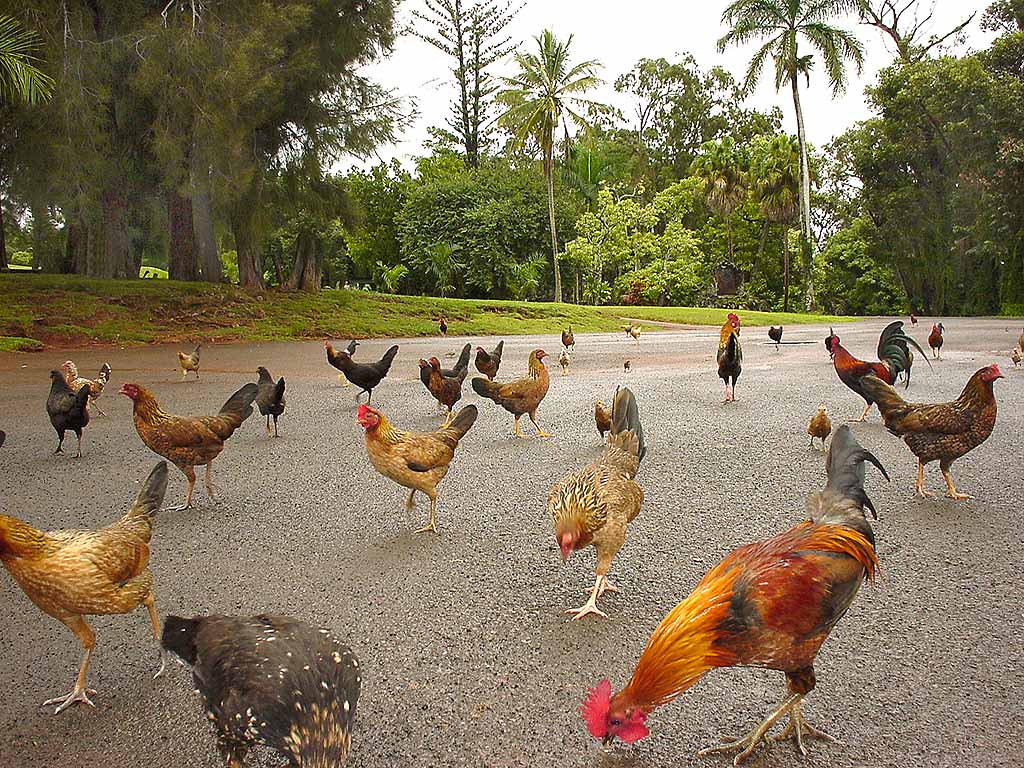
There are a few sayings involving horses. One is “straight from the horse’s mouth” and another is “never look a gift horse in the mouth.” Unless the horse is Mr. Ed, why be concerned?  Apparently, traders of shadowy practices, would “fix” up a horse to create the appearance of better condition–even a bit of paint might be part of the refurb process. However, a look in the horse’s mouth revealed the horse’s true age due to the wearing down of their teeth.

image:IMDB

Late Night: for Elizabeth Bishop


Teaching poetry to high school students often means becoming a student as I study to learn enough about the poem and the poet to actually teach it with clarity.

Most of our poems are pre-19th century, with a healthy scattering of 20th century. Among the modern poets I’ve come to appreciate is Elizabeth Bishop. My tribute to her:

Late at Night: for E. Bishop
2016 by C. Muse

The air lays warm
A sentry fan dutifully sways a rhythm 
Rising from bed to search for cool

Couch–second decision

Floor board creaks

Quick flick of kitchen light
Reveals nothing but mistaken thoughts

Drowsy wakefulness 
leads to
Scrolling searching somnolent advice

Suddenly a slice of darkness shades the window
Tension relaxes upon realization:

The local moose

Familiar with her fish and keys and even the Marvel of a stove
The moose ushers in sleep as it ambles across the road.


Check out Elizabeth Bishop and her poems here


First Folio Facts


2016 was a time of celebrating the 400 years since Shakespeare left us back in 1616. A plethora of celebratory activities and events transpired throughout the year–yet, his influence continues as we head into his 401st year of influence.

One of my highlights involved going to see the traveling First Folio show. Even though I had previously encountered a First Folio up close and very personal at my Folger Library Hamlet Academy adventure, I couldn’t resist being part of a greater event and traveled eight hours to experience the Folio hoopla with other Bard appreciators. Definitely worth the drive.

Lots of information abounded about the Bard, including this nifty fact sheet about the Folio provided by the Folger Shakespeare Library (www.folger.edu/ConnectED) They listed 21 facts; however, these are the top 7 in my eyes:

1.The First Folio was printed in 1623, seven years after Shakespeare’s death.

2. Shakespeare’s First Folio was the first folio ever published in England devoted exclusively to plays. Plays were not considered literature at that point in time.

3. The folio was put together by two of Shakespeare’s friends and acting colleagues–John Heminge and Henry Condell.

4. The First Folio contains 36 plays grouping them into comedies, histories, and tragedies.

5. Scholars generally believe that about 750 copies of the First Folio were printed in 1623.

6. A finished First Folio in a calfskin binding cost about one pound in 1623, which today roughly equals between $150-$200. In 2001, a First Folio sold at Christies for just over $6.1 million. The most recent sale was in 2006, when a First Folio sold at Sotheby’s for $5.2 million.

7. Since there haven’t been any manuscript copies of the plays written in Shakespeare’s handwriting, the First Folio is the closest thing we have to the plays as Shakespeare wrote them.

Image result for shakespeare images

“400 years?–Let every man be master of his time.”

image: biography.com

Review Round Up: December


December proved an excellent month for reading. Pushing to complete my Goodreads Challenge of 101 books for the year, I tried to finish off with books that had meaning and were enjoyable, which is actually what I try to do with all my reading. Here are my top picks for December:

The Tipping Point by Malcolm GladwellGladwell presents complicated sociological ideas in such a conversational manner that once the chapter is finished there is a satisfying acknowledgment of understanding what has been discussed. He presents the topic, performs a seemingly unrelated side excursion of information and then neatly links it back to the first topic. This explains his popularity. I’m looking forward to reading his other books as well.

The Girls' Book: How To Be The Best At EverythingA seriously fun book for 9-11 year olds who will enjoy the mixture of goofy and practical activities ranging from surviving being in a horror movie to making a friendship bracelet. Or it could be considered a present for thirty-something women who seriously have fun reading these nostalgia guides.

Raising an Original by Julie Lyles  Carr A mother of eight children, all who are featured prominently in the chapters, Carr weaves together advice, experience, anecdotes, scriptures, and a healthy dose of charming humor founded in likable reality. One aspect that is notably artful is her ability to take a metaphor, be it lace-making or her daddy’s signature blue dress shirt, and apply it to parenting techniques. Her book reads well. It’s engaging and thought-provoking.

You're the Cream in My Coffee by Jennifer Lamont LeoI knew Marjorie when she just a sweet little rough draft–so fun to come across her all grown up into a novel. Jenny’s novel took shape from idea to rough draft to publisher hunt to Hurrah! of acceptance in our writing group. I kind of feel like an aunt at a christening…
Marjorie is that small town girl who goes off to the city and makes changes. She changes her looks, her ambitions, her love interest. Chicago does that to the 1920’s kind of girl.
The humorous situations that Marjorie often finds herself in are reminiscent of a Shakespearean plot filled with misunderstandings, thwarted lovers, and secret identities. A well-researched novel that focuses on the alcohol issues related to Prohibition, WWI and PTSD, plus a look at the advent of the independent working girl, this is a “bees knees” of a debut read.


Happy Anniversary (to me)


Five years ago I jumped on the platform wagon upon the advice of an editor at a writing conference. Establishing a platform as a writer was, and seems to still be, advice that is to be embraced.

Five years ago, I thought it would be nanoseconds until my contract for my debut novel would be signed and my career launched.

As Shakespeare said:


image: Buzzfeed

I’m still dreaming and my dream of walking into a Barnes and Nobles and find my novel on the shelf (better yet–they are sold out). But I’m not asleep. I’m sending out manuscripts, still waiting for an editor, agent, publisher to sign me up, and my blog is now five years old. I’m okay with that. Okay, I’m fairly okay with that. I would rather have a novel published and celebrate that announcement on my five year old blog.

I’ve enjoyed writing a blog. I’m pleased that I’m keeping up with my posts and I haven’t had any lags of more than a week or so. The blog has changed, morphed, developed, and grown during its five years. If it were a child it would be potty trained, riding a bike, and getting ready for kindergarten. In dog years I think a five year old blog is roughly fifteen years old.

For fun, here is my first post. It’s been viewed a total of around 50 times since it’s debut in 2012, no likes, and 3 comments. I’m glad writing book reviews isn’t my day job. Since then I’ve decided writing about books is still my prime goal, but I’ve taken off the training wheels and I’m covering different topics as well, including the posting of my own writing such as poems, and short story tidbits.

I promised myself when I reached 1,000 followers I would sign up for the professional.com version of WordPress. I’ve surpassed that goal by a dozen or so. I just need to figure out what to name the professional launch. CricketMuse.com–hmm…

Post Navigation