Pam Webb

a writer's journey as a reader

Archive for the category “reflections”

Author Spotlight: Ezra Jack Keats


Back when I began college, I enrolled in the Early Childhood Education program because I could earn an AA after studying little kids for two years. One of my better education decisions.

One of the highlights of the program was Children’s Literature. No kidding. The class was all about reading books for children. Every children’s writer should take such a class. We learned all about what makes for a successful children’s book, read all kinds of books, even learned how to run a proper story time. There is an art to reading a book out loud. I am so ready for the day when my book gets published and the local librarian invites me in to read it to wiggling masses of kiddos. That day isn’t quite here, but my AA in ECE has me primed and ready.

One author I briefly remember studying was Ezra Jack Keats. Mike Allegra’s recent Debatable (and *sigh* win) about Peter in The Snowy Day got me reminiscing about my Keats encounters. He wrote several books about Peter, and I remember we studied what a trailblazer he was for his colorful collage style combined with simple, yet meaningful text. There was also the fact that back when Peter first appeared he was among the first picture book characters of cultural diversity. We noted it, but I don’t remember dwelling on it. We instead focused on the appeal of Peter as enjoyed a snowy day, discovering how to whistle, finding goggles–just enjoying being a nice kid growing up with friends and family in the city.

One thing we didn’t touch on was Ezra Jack Keats. Looking him up, yah, Mike got me curious. I was surprised. I had made assumptions, and Chef Boyardee did I learn a lot. This article presents Keats so much better than I can. He is definitely an author deserving a spotlight.

So–go enjoy your inner child and read all about Peter. He is Macy’s Parade balloon worthy–almost as much as Tigger.

Debatable Recap: Defeat


Macy’s Parade has come and gone along with the November issue of Debatable. This month’s topic was filled with more than the usual amount of hot air as Mike Allegra, that rascally writer fellow who is loved and adored by his thousands of followers, won the round with his pitch of nominating Peter of the Snowy Day as a future Macy Day Parade balloon.

Admittedly, it is s good choice, yet I still contend the parade is all about the lightness of being and Tigger certainly fits that description.

Personally, I think Tigger and Peter would enjoy a snowy day together. Who knows? Maybe they’ll both be balloons one day.

So, congratulations, Mike. For once all your glorious and uplifting promotional ballyhooing rose up to to even greater heights.

Stay tuned for December’s Debatable edition in which Mike and I contest our choices for seasonal specials.

Word Nerd Confessions: November


Fall has officially set up its presence. The aspen, birch, and maple trees disrobed within a week’s span with the help of couple of brisk windstorms. Temperatures hover around freezing, and the sun offers minimal light with little warmth and disappears shortly around 4 pm. The preparation for winter is underway. The Hubs threatens to put on the snow tires since black ice is fact of life not to be ignored. I understand his concern, but snow tires seems to invite or acknowledge snow. We already had a flurry of snow that had the grace to be embarrassed enough by its early arrival and leave by the next afternoon.

This month’s words reflect my ambivalence towards fall: do I mourn the passing of summer or prepare for winter with my usual reluctance? Or do I just accept it knowing spring is not that far away?

So–how do you feel about fall?

DOWO: The “C” List


Onward we travel into the Dictionary of Word Origins, adventuring in the land of “C.”

What is the phrase “carte blanche” all about?

It once was the custom for officials, or personage of importance, to provide a trusted subordinate with blank paper with their signature. These signed documents could then be used as necessary. “White paper” doesn’t quite sound as impressive as the French translation carte blanche. “Just sign here,” takes on another meaning.


Why is the feline in Alice in Wonderland known as a Cheshire cat?

Alice probably didn’t realize that the cat she came to know in her dreamy adventure was sporting a grin that emulated the cheeses sold in the Irish Cheshire Country. These cheeses were molded to look like cats with very wide grins. Hmm, think there is a connection between Cheshire cats and why we say “cheese” tight before our picture is taken?

Image: pngmart.com

Why is something that is a hint called a “clue?”

In middle English a ball of thread was known as a “clew” or “clue” and when applied to the story of Theseus, the way out of the maze was how he followed an unrolled ball of thread. Hint, hint the thread of logic is quite clear here in this story of how he unraveled his escape plan. Then again, what if the Minotaur was smarter?

babblecomics.blogspot.com

How is a disappointed person “crestfallen?”

Roosters carry into a fight their bright red coxcomb or crests upright, signaling their readiness and awareness The losing rooster runs from the fight with a drooping crest. Not having seen a rooster fight (or having a desire to do so) I remain a wee bit skeptical on this one.

wordsdontfailme.tumblr.com

What is meant to “curry favor?”

In Middle English “horse ” is  favel, and to “curry” a horse is to groom it with a special comb. The results are usually a sleek looking horse. The idea here is for someone who hopes to makes a impression will do something noticeable like a groom hoping to catch his master’s attention might curry the favel. Sometimes the attempt is quite obvious.

johnhartstudio.com

The Challenge: Can you create a sentence with the above sayings? Give it a try…Or at least one saying:

November Debatable: Hot Air Argument


With Thanksgiving ads beckoning us to ready for the annual rite of feasting with friends and family, it seemed appropriate to center our monthly debate on another annual tradition, Macy’s Parade.

More specifically, we take on which kid lit character should become the next parade balloon.

I’m going for Tigger.

It’s a natural choice–right?

Mike is going for Peter from The Snowy Day. Cute, but not as uplifting as Tigger.

So–make your way over to Mike Allegra’s site and weigh in your thoughts and send up your vote.

Reading Round Up: October


There is an unmitigated pleasure about fall sneak reading whilst propped in a backyard hammock. Bundling up against the wisp of autumnal breeze as it tries to nip at exposed flanks, the remaining warmth of the retiring sun definitely adds to the pleasure of a good read.

October marks the acknowledgment that summer reading as ended. By the time I get home from work the backyard is surrendering to shadows and I drag my hammock around on its reluctant stand trying to find patches of sun, reminiscent of a desperate sunflower. The lure of reading outdoors is different to suppress.

Here are October’s picks:

The Spectator Bird by Wallace Stegner

⭐️ ⭐️ ⭐️ ⭐️ ⭐️

It comes as a surprise I had not heard of Wallace Stegner until recently. I’m a bit embarrassed by that actually, especially when he is both a Pulitzer Prize and National Book Award winner.

So glad I made the effort. But my first book encounter ended up with three pages in and a return to the book bag.

Spectator Bird remained on my list and while waiting for it to arrive I read All the Live Little Things, the companion novel, which turned well since it helped to understand the back story referenced. Quite the drama, and The Spectator Bird makes all the more sense having read about Joe’s dilemmas with becoming older and living with regrets he can’t or won’t bury.

A definitive story on living the present based on the past.

Dear Mrs. Bird by A.J. Pearce

⭐️ ⭐️ ⭐️ ⭐️ ⭐️

Wonderful. Delightful. A novel that I found myself sneaking moments to read while trying to work. Dear Mrs. Bird is wartime drama that has provides lighter moments, providing a terrific balance of humor and stunning realism. WWII novels are thick upon the shelves, yet this debut novel is a stunner in how the details create a sense of being in the moment. Emmy and Bunty need a series, and it’s hoped this is a start.

Earth Abides by George R. Stewart

⭐️ ⭐️ ⭐️ ⭐️ ⭐️

Recommendations from librarians rarely fail. Knowing I appreciated dystopian genres one of local librarians suggested I find Earth Abides. No easy task. Even with its solid reviews and reputation, I could not land an ILL and ended up reading a free e-book that sorely tried my appreciation of Stewart’s novel due to the numerous transference typos.

Similar to the Omega Man, a pandemic dramatically eradicates the world’s population and one man emerges who will make a difference. This man is Ish. He becomes what he refers to as the last American.

An excellent story, made all the more interesting since the technology is centered on what is available in 1949, the publish date.

All the Live Little Things by Wallace Stegner

⭐️ ⭐️ ⭐️ ⭐️

Written during the pulsing sixties, Stegner writes of the various ideals that existed together with deft, insightful prose: older establishment meets with hippie youth who mingles with alternative, creative lifestyle who befriends optimistic outlook. It all makes for a memorable, even compelling dramatic story. Joe, a gruff, outspoken literary agent and his forebearing wife, Ruth, escape the hectic city and retire in the placid hills of California. Their peace is shattered by a interloper Peck who becomes the serpent in their garden, as he interacts with each of Joe’s neighbors and touches each of their lives in irrevocable ways.

Stegner’s prose is impressive. Not only does he relate a complicated story, he evokes such smooth passages of imagery that one cannot rush through the story without pausing to savor his craft.

“For a long time that evening we sat on the terrace, while the swallows and later the bats sewed the darkening air together over the oaks…” p. 226

Lovely.

The story tended to switch forward and back in time sequence as Joe related events, which created a somewhat uneven flow of continuity, yet it might have emulated how Joe’s mind switched from present to past as he attempted to reconcile events.

The Extraordinary Education of Nicholas Benedict by Trenton Stewart

⭐️ ⭐️ ⭐️ ⭐️

This prequel to the Mysterious Benedict Society answers much about the mysterious Mr. Benedict met in the first book of the popular series. While less engaging than the first book, due to a rather boggy middle, the ending once again shows the cleverness of Trenton Lee Stewart.

The Rule of Three by Eric Walters

⭐️ ⭐️ ⭐️ ⭐️

The world ends with a whimper, isn’t that what T. S. Eliot suggested? In Eric Walters novel, the first of a series, he explores how this present world might end once computers and other technology shuts off. Adam and his family, along with his neighborhood cope with the aftermath of what appears to be a global EMP strike. A bit bogged down in details, yet this supposition of how people would reaction in such a crisis situation creates an engaging read.

Smile by Raina Telegemeier

⭐️ ⭐️ ⭐️ ⭐️

This book was recommended to me by a young patron while I was shelving books at the local library. His enthusiasm and assurance that it was a “very good book” intrigued me enough to check it out.

A memoir of the author who suffered a traumatic ordeal with her teeth as a teen, in the format of a graphic novel, turned out surprisingly better that I anticipated.

My short tour with braces was nothing compared with her procedure! I think tweens going through all the drama of middle school will appreciate Smile as it explores so many other issues besides getting braces.

Mark of the Raven by Morgan L. Busse

⭐️ ⭐️ ⭐️ ⭐️

“To much is given, much is required” is aptly applied to this fantasy story where the gifts bestowed upon individuals can provide both life and death to others. Two recipients of these gifts, Selene, who can enter people’s dreams, and Damien, who is able to manipulate water, must determine how their gifts will best benefit the people of their land while they struggle to combat the threat of dark alliances that threaten the overall peace.

Engaging and fast-paced, with an intriguing allegorical theme of choosing darkness or the light, Morgan Busse’s The Ravenwood Saga promises readers a series to anticipate following.

This book was provided by the publisher, and all commentary is mine.

October Debatable Recap


It’s time to wrap up another round of Debatables. This month my partner in kibitzing in kid lit, the illustrious Mike Allegra, chose to back The Cat of Seuss’s The Cat in the Hat as his choice for the top villain found in children’s literature. Umm, I didn’t win with The Cat when I nominated him for the worst picture book category.

I went with Cruella de Vil of 101Dalmatian fame.

You read our arguments and made your decision. And it’s decided:

https://youtu.be/DbOAa7Tbil0

Yes, that fiendish puppy stealing devil, Cruella is pretty much a hands down decision.

There was some talk of Flying Monkeys and the Wicked Witch *shudder* no contest. She and her winged henchmen are way scary–they are in their own class of villains.

https://youtu.be/SESI19h4wDo

See you next month when we take on quite a buoyant topic of debate.

Word Nerd Confessions: October


No sooner than I share out some of my treasured lexicon than they multiple whilst my back is turned. Scamperous little verbiage. Well, let’s shake out their nest and see what we can find:

bravura

When we jump out and wildly applaud the artist shouldn’t we be shouting “bravura” instead of “bravo”? Hmm, needs investigating…

plantigrade

I didn’t realize we had this in common with bears.

pellucid

Okay, next excellent essay I grade shall have the distinction of “pellucid”–that should rock the writer…

turophile

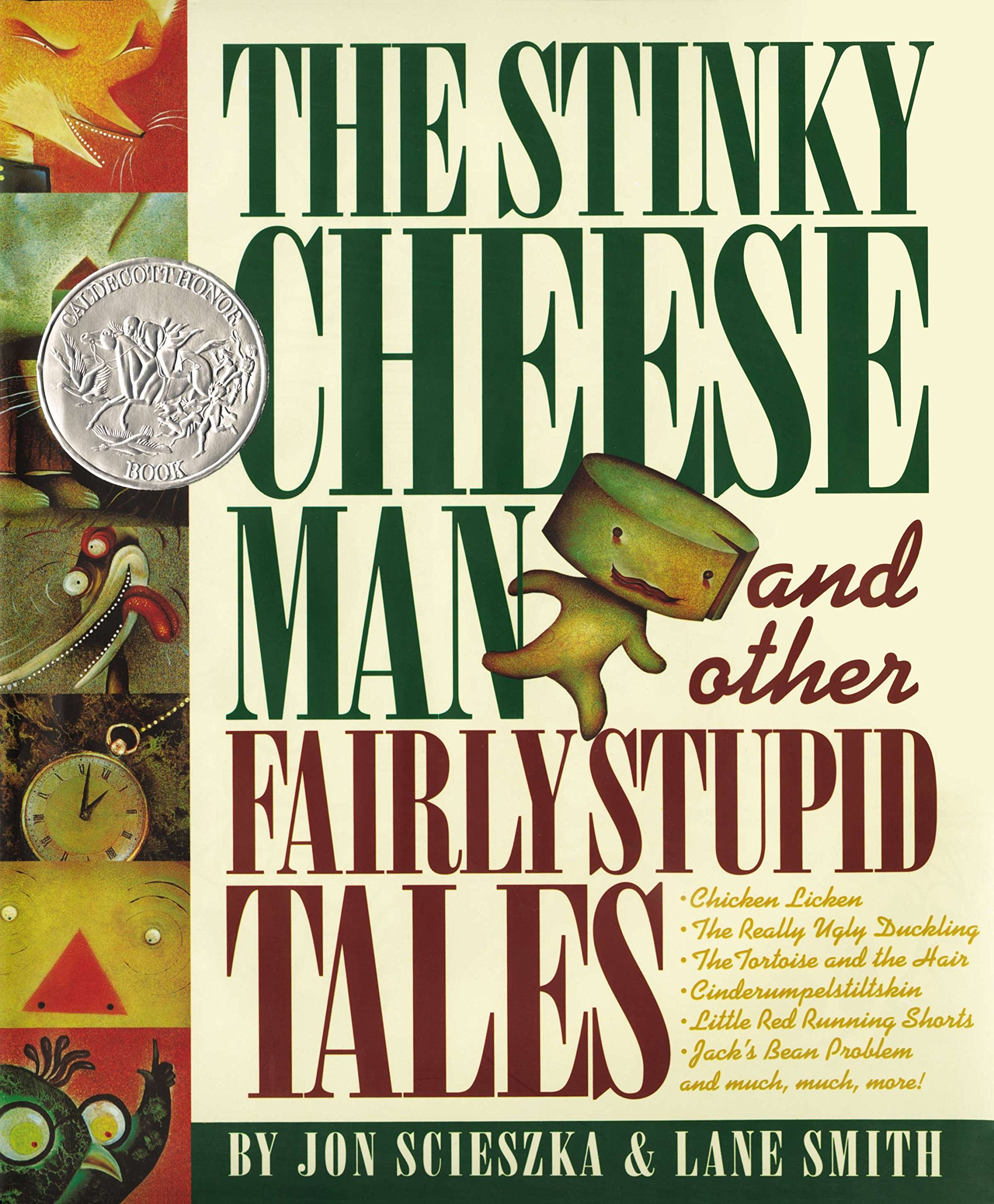
Cheese, Grommit.

stanchless

Oh, yes. This perfectly describes the high school hallway conversations between classes.

scrutator

I can see why this one is not in popular use.

sennight

Nope. Never heard of this one. Fortnight, yes. Sennight nope. Does the senate meet in a sennight?


Debatables: Scariest Villain


Hi all, and welcome to Debatables, a new semi-regular column where literary questions of sometimes deep,

and often frivolous nature, are mulled over, pursued with flair, and debated in a spirited manner with commentary from readers.

My cohost and regular debate opponent is the personable Mike Allegra. Well-known for regaling humorous

tales of family, as well as encounters with home repair, his other talents include editor, doodler, and writer.

His newest chapter book series is under the pseudonym of Roy L. Hinuss, aka Prince Not-So Charming.

Mike is really, really funny. Check out his blog and you’ll see why.


On to Debatables:

Here are the ground rules: Each Debater is allowed one brief argument (fewer than 300 words) on a
previously agreed-upon topic. These brief arguments will then be followed by a briefer rebuttal (fewer than

150 words).

Today’s Topic: Who is the scariest villain found in juvenile literature?

Cricket is nominating Cruella de Vil from Dodie Smith’s classic 101 Dalmatians.

Mike is suggesting: The cat from Dr. Seuss’s The Cat in the Hat (haven’t we been here before?)

Mike’s Argument

Many of the most evil villains in history have one trait in common: they pretend to serve the best interests
of others. Hitler was elected on a promise to lift Germany out of its economic crisis. Lenin and Stalin
promised to give more power to the Working Man. And The Cat in the Hat promised an innocent boy and
girl a little fun on a rainy day.


What the Germans, Russians, and Seuss Kids ended up with, however, was far different than what they
were promised.


Yet The Cat in the Hat is sneakier than the other villains mentioned above, for he has a talent for charm and
charisma—personality traits he uses to mask his villainy. The Cat is so skilled in this regard that many
readers fail to notice (or are happy to overlook) this felonious feline’s evil acts!

(Mike says Sally is being clotheslined–not exactly pictured)

“Oh, The Cat isn’t that bad,” some might say. “After all, he did clean up the house at the end of the book.
Shouldn’t that count for something?”


No, it shouldn’t. And here’s why.

In only 64 pages, that cat racks up a long list of terrible deeds. He breaks into a home, destroys property,
abuses an animal, abets assault and battery (via The Things), and endangers the welfare of two children.


He does it all with a smile on his face.

And he gets off scott free!

The Cat’s cleaning machine might erase the physical damage he created—but consider the psychological
damage. The Cat’s amoral actions would terrorize any child—and would almost certainly result in lasting—
perhaps lifelong—repercussions. His victims could end up suffering from recurring nightmares, anxiety,
trust issues, and clinical depression. That’s a lot of damage, and The Cat doesn’t have a machine to clean
that mess up, does he?

Cricket’s Argument

While I am amewsed Mike chose the Cat from Dr. Seuss’s The Cat in the Hat,villains are a serious business
and dog gone it, selecting the scariest villain in juvenile literature leads to the one and only Cruella de Vil.

Before Disney catapulted her to fame as the diabolical dalmatian-kidnapper, Cruella de Vil held her own
in Dodie Smith’s 1956 story of Pongo and his attempts to save his fifteen puppies from becoming Cruella’s
newest fur coat. Right there, the fact that this woman wants to slaughter puppies to wear as a fashion
statement should make you twitter up a rage post.

Villains are aptly named. Dodie gave her readers a big hint: Cruella de Vil? A spin off of “cruel devil.”
Although Disney’s portrayal of Cruella is transfixing, Dodie defined her pretty well in the novel. Here are
the facts:

  • eats everything with pepper and tastes like pepper (found out when nipped by a puppy)

  • drowned dozens of her Persian’s kittens

  • her family home is called Hell Hall

  • her fireplace fires are as hot as (see above)

  • her house interior is prone towards red

  • she drives a zebra-striped car with the loudest horn in England

  • expelled from school for drinking ink

  • her London flat was originally purchased by Count De Ville, an alias for Dracula

Here is an extra tidbit: ranked 39th on the AFI list of villains

A megalomaniacal tyrant with a streak of narcissism, she is a cruel devil of a woman who even
contemplated skinning the kidnapped puppies alive. Double yikes! This scary villain has found her way
into all sorts of popular culture, from song lyrics to movie lines to Lady Gaga’s choice costume. Puppy
stealer, kitten drowner, pepper eater, and related to Dracula–this is a way scary villain. Plus she is a terrible
driver. Lock up your puppies and stay off the roads if she is about.

Look at this illustration from the novel. Yikes!  

Check out this song:

https://youtu.be/R-YkJdYQzis

Mike’s Rebuttal

Cruella is evil. Very much so. But she wears her evil like a badge of honor, advertising it to everyone. Her
very existence is a harsh warning to stay away.


Now, if I may quote Kaiser Sose, “The greatest trick the devil ever pulled was convincing the world he
didn’t exist.”


The Cat is the devil we didn’t know existed. He can hide his evil behind false innocence and a perceived
eagerness to please. This is the M.O. of the most effective predators: the fellow in the park “looking for his
lost dog,” or the friendly stranger who kindly offers “to give you a lift home.”  


The Cat is cut from a similar cloth. Once he wins over his audience with a smile and a tip of his hat, he
becomes an agent of chaos. And, like The Joker from The Dark Knight, The Cat delights in the horror he
creates.

Cricket’s Rebuttal

Mike implies Cruella wants people to stay away from her and that she advertises her evil like a
well-deserved medal. This assumption would mean she cares about what people think of her. Truthfully?
She could care l
ess what people think of her. Her actions indicate she doesn’t care about anybody except
herself. All the havoc she creates from personal insults to animal abuse is because she is self-centered with
a hateful regard towards others. Her devilish behavior doesn’t require an audience like Seuss’s Cat.
Cruella’s evil deeds are not beguiling antics that are mischievous or even ambiguous in their intent.
Cruella is all about villainous, malodorous mayhem. She doesn’t care who she hurts and doesn’t try to be
charming—she is and will always be Cruella, Cruella de Vil.
If she doesn’t scare you then no evil thing will.

DOWOs: the “B” list


If new to DOWO, it stands for Dictionary of Word Origins by Jordan Almond, which is a new source for exploring all those words, expressions, idioms, and clichés that abound in our language having thoroughly explored our previous source Why We Say.

If you were here last month around the fifteenth, you know we have already covered the “A” list. We are now off exploring the “B” list:

Why is the four year degree called a “bachelor’s” degree?

Originally a bachelor was a soldier, a man neither old enough or wealthy enough to lead into battle under his own banner, and was considered to be inferior in status. When colleges became more popular, to distinguish between the levels of study and awarded degrees, “bachelor” was the indicated inferior to that of “doctor.”

No mention of how “master” came to be, and it is of note that a “master” is lower than a”doctor” designation, yet “master” does carry more significance than a “mister” status.

How did “taking the back seat” come to mean taking a lesser position?

British Parliment dictates that those members of the majority part take the front seats while those in minority are relegated to the back, or are told to do so. In case you are wondering if it is “back seat” or “backseat” here is the discussion:

Where did the term “bankrupt”come from?

In Italy money-changers placed money available to loan on a banca or bench. If unable to continue in business, the bench would be broken or banca  rotta. The broken bench became synonymous with the broken money lender and both were banca rotta or “bankrupt.”

What is a “bare-face lie?”


To tell a lie without having show your face is much easier than having to face someone and tell a lie, as in trying to keep a straight face while communicating a big fat fib.

Why is an airship called a “blimp?”

It was almost called “A-limp.” In 1914 England began testing airships, and of the two designs the “B-limp” rose to usage. Why “limp?” It was non-rigid–but you guessed that right?

What is meant by “once in a blue moon?”


Blue moons supposedly never happen, which was the original saying. However, moons can appear blue when seen through volcanic explosion ash, so maybe, just maybe a blue can be seen–but just barely. They are fairly rare and their appearance may only happen once in a person’s lifetime.

Why does a person “bone up” for exams?

The Bohn publishing printed up study aids for students which were referred to as a “Bohn up” later becoming a “bone up” as a play on “bonehead” meaning a person who wasn’t smart (because you must have a thick skull and no brains if you need extra help studying).

What is meant by “getting down to brass tacks?”

In early England draper shops the draper placed brass tacks along the counter to aid in measuring off material. When a customer was ready to purchase cloth the draper would get the desired stock down to the brass tacks to measure off and complete the transaction.

Where did the term “bus boy” come from?


The Latin term omnibus means “for all.” An “omnibus boy” was a lad who did a bit of everything, and it became shortened to “bus boy.”

Which saying totally made your day, tweaked your paradigm, or prompted you to immediately want to run out and share with someone?

Post Navigation