Pam Webb

a writer's journey as a reader

Archive for the category “reflections”

It’s a bit squirrelly lately…


Not sure if we have adopted a squirrel or if she has adopted us.

It began with me spotting a medium grey squirrel bounding across the lawn. A somewhat unusual sight. Deer are more frequent visitors. Squirrel activity diminished with dogs moving into the neighborhood.

Or so we thought.

Upon spotting the bounding squirrel I mustered up my squirrel call. You know the one, that high-pitched ch-ch-ch the do. Yeah. She was impressed and came leaping right over to me. She look fairly surprised to find me instead of a swaggering grey suited critter of interest.

Since then she has shown little fear of hanging out in the yard with us. Costco is making a tidy profit from the bags of peanuts the hubs buys for her.

She will cautiously approach us and grab a peanut from our fingers. Rolling and measuring its worth in her mouth she will then deposit it in some part of the yard. Digging like a little terrier she pats it in place with dainty satisfaction and traipses over for more. I split them open because once open she tastes that peanuttyness and snacks right on the spot, inches from where I sit on the bench. Syringa, does truly work for peanuts.

Now we have a couple of new additions. A tiny sable squirrel who discovered the neighbor’s squirrel proof bird feeder could not deter him. He used our fence as a diner freeway until trashing the bird feeder in less than two weeks. He has moved on the freebie peanuts laid out for Syringa. She’s having none of it.

Their tussles and chitterings range across the lawn and through the lily leaves. Entertaining turf wars at its best. We call this little guy Skitter, since he moves as fast as a drop of water on the pancake skillet. He’s too fast to snap a photo.

And a third squirrel has appeared. Yet, this one is a puzzlement. I notice it is small with characteristic squirrel gray coloring yet its eye rings are white like a chipmunk and so is its tummy. The legs are brownish. A hybrid squirrel? We’ve dubbed this one Buddy, as in “Hey, Buddy—what are you?”

The birds are beginning to vacate the area for warmer climates so there is less action at the feeder. On the other hand, the colder weather is ramping up squirrel activity as they gather nuts and bury them all over the yard. I find peanuts in my plant containers, in flower beds, and all over the lawn. How will they find them all?

Syringa will come over and spread out on the concrete like a dog when we are hanging out back. Classic splooting stance.
Buddy infiltrating Syringa’s snack tray. Strange markings for a squirrel, wouldn’t you say?

Bard Bits: Time to See a Play


Photo by Monica Silvestre on Pexels.com

Let’s return to school for just a moment. Did you study any of these plays as a student?

  • Romeo and Juliet
  • Julius Caesar
  • Macbeth
  • King Lear
  • Hamlet
  • Taming of the Shrew
  • Midsummer Night’s Dream
  • Othello
  • The Tempest

Now, let’s take a quick quiz. In what order do you think the plays were presented?

Here’s some appropriate music to play in the background while you are thinking. Thinking–not consulting Siri or Googling your request.

Ready?

Here is the dated order (per scholarly agreement):

Romeo and Juliet: 1593-96

Julius Caesar: 1599

Macbeth: 1606

King Lear: 1606

Hamlet: 1600

Taming of the Shrew: 1590

A Midsummer Night’s Dream: 1595-96

Othello: 1604

The Tempest: 1611

While these are not always studied in schools, most people are familiar with them. According to the list Romeo and Juliet would be among his earliest plays, along with The Taming of the Shrew The Tempest among his last. Going from the consequences of hasty decisions and dysfunctional families to prolonged revenge definitely showcases how Shakespeare was able to present a range of human emotion during the span of his stage career.

Word Nerd: September


Ah, September. The slow farewell to summer as school begins and the beaches close. This batch of words focuses on learning as the transition from beach bags to school bags takes place.

  1. willyard: obstinate; willful (not all children, or adults, are joyful about attending classes)
  2. obsteperous: noisy, clamorous, or boisterous (have you ever entered a kindergarten class on the first day?)
  3. crankle: to bend; turn; crinkle (lots of paper, paperclips, pens and such to crankle in fall)
  4. pother: a heated discussion, debate, or argument; fuss; to do (let’s hope these are avoided)
  5. hebetude: the state of being dull; lethargy (this might be the case after a couple of months of vacation)
  6. antediluvian: very old, old-fashioned or out of date; antiquated (some students might feel this way about their teachers)
  7. tirrivee: a tantrum (students and teachers might throw one or two of these depending on how classes go)
  8. swivet: a state of nervous excitement, hast, or anxiety; flutter (applies to both students and teachers on the first day of school)
  9. faineant: idle; indolent (these moments do happen-to teachers as well)
  10. amity: friendship; peaceful harmony (getting along is a key goal)

If not attending school, do any of the above work for you in your situation?

Reader Roundup: August


August ushers in the reality that it’s the last month of summer vacation. My attention becomes split between the urge to start thinking about (mind you, only thinking about) getting into school mode, and enjoying every day left of summer break. Being outside this August proved somewhat challenging given the amount of haze from wildfires. The air quality index became one of the first items on my daily reading list. Fortunately, a bag full of good books from the library kept me from going stir crazy. Here are the top picks for August:

Amazon.com: Virgil Wander: 9780802128782: Enger, Leif: Books
Amazon image

I kept this one on the shelf because I knew I needed to read it again someday. Needing a weekend read, the Hubs grabbed it and snickered and snorted so much I grabbed it as soon as he was done, then I snickered and snorted through my second reading. Like Virgil, I’m at a loss for adjectives. Extraordinary? Mystical? I think cerebral hilarity works. So much to enjoy: near death experiences, mysterious disappearances, quirky characters, kite gurus, small town drama, animal manifestations, lurking malevolence. So much. This one is a definite keeper.  Goodreads review

Amazon image

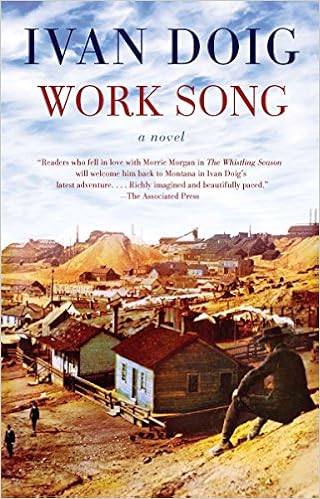
While this is the second novel to feature the charming, one-step-from-a rogue Morrie Morgan, it can be considered detailed enough to be a standalone. Morrie Morgan is a man hoping to hide from his past (and those who would like to see him in the past tense) and finds himself in Butte, Montana in a post WWI mining town. Trying to find fortune, not necessarily fame, in the mining town causes Morgan to have an enlivening stay. Going from a professional crier at Irish wakes to a library roustabout, he inadvertently finds himself involved with the mining union and becomes unexpectedly involved with his widowed landlady. For Patrick MacManus fans and for those who are looking for a historical read with a tickle up its book sleeve. Good Reads review

Amazon image

Sir Francis Drake? Was he a pirate or a defender of England? Albert Marrin provides an enlightening historical reference on Drake, who Elizabeth I referred to as “My deare pyrat.” The Spanish called him “The Dragon.”
Though aimed at younger readers, the information is thoroughly interesting and though it is slanted towards the English, it does illuminate the background of a brilliant seaman.

As an aside, although Drake is indeed an interesting historical figure, my interest in him was mainly for research purposes since my mother, once long ago, was a pirate on the Golden Hinde. True. Well, she served as a tour guide on the the replica of the Golden Hinde when it was making its West Coast tour in the late ’80s. One of the fifth graders had asked her if Drake was really pirate. His father had answered before my mother could: “Depends if you were from England or from Spain.” Good Reads review

From kite flying movie theater amnesiacs to runaway gamblers to seafaring kings (and a few books in between), August proved an adventuresome month.

Hope you found some Good Reads during summer. I welcome your suggestions and comments about what you have read.

See you next month at the next Round Up.

National Cherry Popsicle Day!


Bard Bits: A Man of Means


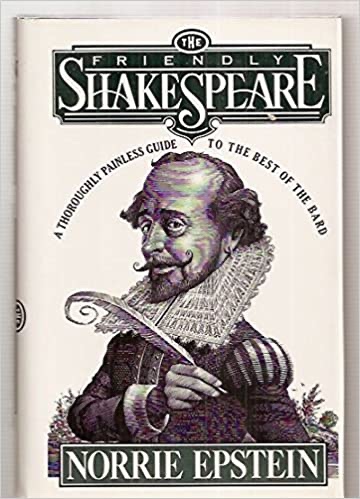
Bardinators-a great reference

With all the information not known about Shakespeare, it is known that Shakespeare joined The Lord Chamberlin’s Men in 1594 and for the next ten years the company of players becomes London’s foremost acting troupe. During this time Shakespeare is shown to be fully invested in the company as both an actor and the playwright. There are documents, tax assessments, court records and land titles that indicate Shakespeare wanted to establish himself as a gentleman.

Shakespeare Family Crest
The Right to Bear Arms

John Shakespeare, William’s father, received a coat-of-arms in 1596 which granted him the symbol of respectability, designating him as a gentleman. In Shakespeare’s hometown of Stratford-Upon-Avon there were around 45 “gentlemen between 1570 and 1630. While 28 had been born into the title; the other 17 were tradesmen who, like Shakespeare, had applied and purchased their status. Owning a coat-of-arms meant the Shakespeare family could display it at home, such as above the doorway, or setting it into the windows, or carve it into their furniture.

When John Shakespeare passed away in 1601, William continued to use the coat-of-arms and it is placed above his monument. The motto states ‘Non Sans Droict’ which is old French and translates to ‘Not without right.’

Considering Shakespeare started out as the son of a glovemaker whose reputation became tarnished, he became known as a respected citizen and well-known member of a prominent acting troupe. 

Why We Say: X-Y-Z


Photo by Tara Winstead on Pexels.com

It’s here. We’ve reached the end of the book, Dictionary of Word Origins: A History of the Words, Expressions, and Clichés We Use by Jordan Almond. Let’s finish this out.

X-Ray: It’s called an “X-Ray” because the scientist, by the name of Roentgen, preferred it. We could be calling it the “Roentgen ray” but he had the better idea. He used “X” because it symbolizes the unknown and Roentgen did not understand how his discovery worked.

Yankee: Can you imagine calling the New York Yankees the New York Cheeses? Who wants to root for a cheesy team? Yankee is a Dutch nickname “Jan Kass,” which means “John Cheese.” Besides tulips, Holland is known for its cheeses so calling someone a “Yankee” makes sense, right? Not yet? Let’s go further. Back in the time of pirates, English sailors called Dutch pirates “Yankees.” It wasn’t a compliment. They were probably called them cheeseheads–definitely insulting. When the Dutch settled in New York, for some reason, began calling the English settlers of Connecticut “Yankee.” It came to be a term referring to dislike, especially to those in colonies further North. What does this do with baseball teams? Not sure, but I’m open to suggestions.

Zany: A type of Italian play, Comedia dell’ arte, consisting of comic performance was referred to as zani. This transfers to clowning around or being “zany.”

Backyard Visitor


Word Nerd Confessions: Random Exploration


Instead of a theme-oriented post I thought I pull out at random what I have collected over the last couple of months. Hope you find a few you can use.

  1. furphy: a false report; rumor

2. mellifluous: flowing with honey; sweetened with or as if with honey

3. yare: quick; agile; lively

4. desideraturm: something wanted or needed

5. supercilious: haughtily disdainful or contemptuous, as a person or a facial expression

6. mal du pays: homesickness

7. perfervid: very fervent; extremely ardent; impassioned

8. garboil: confusion

9. lagniappe: a small gift given with a purchase to a customer, by way of compliment or for good measure; bonus

10. friable: easily crumbled or reduced to powder; crumbly

Ten words that can zip up the most mundane of conversations. Think of the possibilities.

“He seemed to enjoy the lagniappe he received for spending so much money in the store.”

Reader Round Up: July


July is my official summer vaycay month. June is tying up school and August starts it back up. July is my uninterrupted month of focusing on just relaxing in my hammock and reading. I do other activities besides immersing myself in books, but, yeah, I do read an enormous amount in July. This July I was fortunate enough to find a bevy of five star books.

Shakespeare After All by Marjorie Garber

While it might be easy to say, “Yet another Shakespeare reference?” This is THE reference book (and I have read more than a few) to keep handy. Garber’s book stands out among the crowd of reference books that examine Shakespeare’s plays. Her knowledge and insights are stunning. She is able to reveal plot details with subtlety and aplomb. She easily interjects historical allusions and intertextuality. Oh, to sit in on one of her lectures.

The Promise by Chaim Potok

Sequel to Potok’s stunning debut, The Chosen, the novel centers on Reuven Malter’s struggles with his religion and relationships as he strives towards completing his education. Can he bridge the two worlds he has chosen: philosophy and the study of the Talmud? His experiences and insights will help help him with a troubled young boy who is on the verge of isolating himself from the world.

The Leavenworth Case by Anna Katherine Green

Readers of Sherlock Holmes and Hercule Poirot be sure to check this possible inspiration for these famous sleuths. Written nearly a decade before Conan Doyle created his Baker Street detective, Anna Katherine Green penned into existence Detective Grace of the New York Police Department. He featured in many stories and his appeal boosted the author into being acclaimed one of the most popular authors of the 19th century. Many would say she led the way for detective stories as they are now known. I nudged Acorn to get this (and her other books) made into a series.

Eagle of the Ninth by Rosemary Sutcliff

Rosemary Sutcliff has stated in an interview that she writes not for children nor for adults—she writes to tell a story.
This story of Roman Centurion Marcus Flavius Aquila is one that combines adventure, history, and the theme of identity.
Well-researched and even better-paced, the story of redeeming family honor and discovering one’s identity inspired a movie. And this is an inspiring story. While most stories about Romans emphasize their brutality, Sutcliff provides a story that emphasizes the perspective that an individual does not have to conform to expectations of community credo, that a person can be trained and be an efficient member of a community, yet still hold individualistic ideals.
Recommended for ages 8 years and beyond, since a well-written story is always appreciated. Some of by favorite stories during this Reading Challenge have come off the juvie shelves. There is a movie with Channing Tatum and Jamie Bell; however, as always, the book is far better.

The Wind off the Small Isles by Mary Stewart

Under 100 pages this barely qualifies as a novella, and serves as a taste for what could have been as engaging as The Moonspinners. Stewart starts out the story with the beginnings of an old-fashioned historical romance which abruptly ends and leads readers into a modern setting of a children’s author and her assistant exploring an exotic setting for the author’s next book.
The short adventure is ripe with all of Stewart’s usual trademarks: expansive setting, lively dialogue, stock characters—including a damsel in distress saved by the likable hero, and a touch of the supernatural.
So fun, yet so short.

An Old Captivity by Nevil Shute


It’s hard to go wrong with a Nevil Shute. He is one of those rare writers that can interject technical details, like what it takes to fly three people on a photo expedition to Greenland, and not be boring. The details are such an integral part of the story they function like an added character.
In this story, Shute focuses on a professor, his daughter, and a pilot as they make their way to Iceland and Greenland. Doesn’t sound exciting, does it? Shute provides interest through his exacting detail, setting, and then adds a twist at the end that rings of a Du Maurier with realistic fantasy.
A satisfying and surprising read. And the title? Wait for it. The ending made me sit up and get that epiphany of “Oh, I get it now.”

Hope one of these, or maybe all of these titles, interest you. How about you? Any five star summer reads of note to pass on to the rest of us Book Boosters?

Post Navigation