Nouns are helpful identifiers, to be sure. Add an adjective and the noun goes from blah to ta-dah. This month’s list provides a host of dazzling adjectives to pair up with the nouns in your life.
December is not my best month. Yes, there is Christmas, but it is also the real start of winter. Unlike the false winter snows in November, December snow falls and stays around through March. The transition from outside activity to inside (not a skier) means LOTS of book time. A warm fire, cocoa, a comfy recliner—maybe there are a couple of positives to winter after all.
Top reads: ⭐️ ⭐️ ⭐️ ⭐️ ⭐️
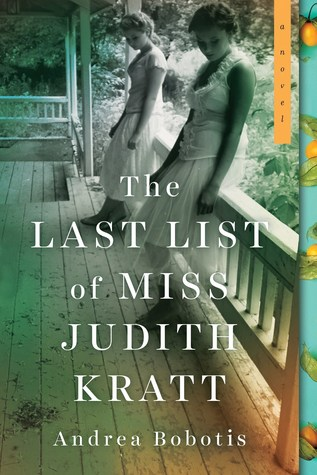
The Last List of Miss Judith Kratt by Andrea Bobotis
image: Goodreads
Set in South Carolina in two time periods, 1929 and 1989, the narrator is older woman who faces the reckoning of family secrets when her estranged sister finally returns home.
A family saga told with subtlety, The Last List of Miss Judith Kratt, reveals how secrets, no matter how deeply buried have the tendency to rise and change the landscape of life.
The Hiding Game by Gwen Strauss
image: Goodreads
The Hiding Game is a biographical picture book story of how Aube and her family, along with other refugees his from Nazis in occupied France. Based on the true story of her great uncle Danny, the author relates with the naïveté of a child the circumstances of the situation. While the hardships are present it is the moments of joy and community that comes across so deftly through the blend of text and illustrations.
Janey’s Girl by Gayle Friesen
image: Goodreads
Claire and her mother Jane are finally making the journey to Smallwood, where Jane grew up. A small town holds no secrets, and Jane could not live there easily as a teen with a child born out of wedlock.
This is an opposite coming of age story in that it is the mother who needs to grow up. Claire’s journey is discovering family connections her mother wouldn’t allow her to have as a means of protecting her daughter. Claire has tough decisions to make that change the dynamics with her mother and in the process her mother learns that letting go doesn’t have to involve loss.
The Man Who Died Twice (The Thursday Murder Club #2) by Richard Osman
image: Goodreads
Osman’s second foray into the cozy mystery genre is a double thumbs up. The Thursday Murder Club has upped its stakes and is now dealing with the Mafia, MI5 and MI6, with a dash of drug dealers. The usual side plots are installed for interest sake, such as Chris’s romance progress and whether Joyce with get a dog. The tangled plot of who shot who and where are the diamonds all comes together neatly in the last couple chapters. The journey there is quite delightful.
Osman thankfully spares readers of spinning out the previous plot and simply plunges it, making this a standalone but it is strongly suggested to start with the first book to relish the character growth, especially how Joyce comes into her own.
Written tongue in cheek concerning geriatrics being crime solvers, along the lines of Miss Marple, Mrs Pollifax, and Reds.
December proved to have its share of good reads and as winter continues I am looking forward to more good reads to pass the loonngg winter evenings. I am open to suggestions, so do, please do, suggest some titles for me to check out.
I’m ever so glad I found Goodreads. Not only does it help in discovering books to read, it more importantly keeps track of the books I have read. Lately I am reading books I have read previously. Goodreads confirms this. I’m contemplating the implications of this reading overlap.
Never mind deep contemplations on my reading habits. Here are the brass facts: according to Goodreads I read 155 books by December 30th. I don’t log books that are DNF (did not finish), which are more than I want to acknowledge this year. Apparently I am becoming more discerning in my book selections.
Instead of the usual how many pages, most popular, least popular factums I thought I would give 746 books activity a try. Using this year’s book list I answered posed suppositions:
In high school I was Here and Now and Then (Mike Chen)
People might be surprised by The Ethan I Was Before (Ali Standish)
I will never be Maisie Dobbs (Jacqueline Winspear)
My life post-lockdown was Little Broken Things (Nicole Baart)
My fantasy job is The Finder of Forgotten Things (Sarah Loudin Thomas)
At the end of a long day I need The Maid (Nita Prose)
I hate being The Accused (John Grisham)
Wish Ihad The Cat Who Saved Books (Sosuke Natsukawa)
My family reunions areTo Disguise the Truth (Jen Turano)
At a party you’d find me with Birds of a Feather (Jacqueline Winspear)
I’ve never been toThe Last Bookshop in London (Madeline Martin)
A happy day includes The Ingredients of Love (Nicolas Barresu)
Motto I live by: The Art of Holding On and Letting Go (Kristin Lenz)
On my bucket list is The Island (Gary Paulsen)
Next year I want to have What the Fireflies Knew (Kai Harris)
That was fun and enlightening. Maybe my book choices reveal more about myself than I am aware of. Hope your year of books was enjoyable and here is to next year!
As stated earlier, the travel bug has not bit us. We hunker down in winter and practice wishful thinking for warmer climates.
All in all, winter is for the birds. Really. That’s what we are doing for entertainment. We have enticed juncos, nuthatches, chickadees, sparrows, finches, a part time dove, and an infrequent flicker to our front yard with seed and such and sit back and enjoy the show.
Took Rocket J. Squirrel a few attempts to reach the feeder
We have a very basic feeder and try to keep it filled; however when it’s 19 degrees, with a brisky wind, finding alternative methods of feeding our feathered friends, like tossing food out the window for them onto the snow is the solution.
The seed buffet has garnered the attention of other critters: squirrels and deer. The squirrels are comical in how they try to avoid going through the snow to get to the food. They traverse on the branches above and tail twitch in frustration that they can’t quite reach the feeder. We spent a good hour observing how one squirrel finally took the plunge and dove into the snow, tunneling a track to feeder’s base to glean dropped seeds.
All you can eat seed buffet
The deer easily amble over to the feeder and lick seeds off the tray. They are not perturbed by our presence at the window.
We think this little guy looks like a burro so we have dubbed it Burrito
The most entertaining morning session was when the squirrel and deer arrived at the same time. The deer held their ground and would not acknowledge the squirrel’s attempts to mosey up to the seed feed. Old Rocket would inch up, tail twitching in anxiety and then Burrito would level a look that translated as “Excuse me?” and Rocket would hightail up the tree and pace the limb waiting, waiting, waiting for his turn.
Showdown at OK Feed and Seed
As for the birds—their territorial flutterings are reminiscent of playground squabbling. There is one white-crowned sparrow who is pro at fluffing up his feathers and chasing off the smaller birds from the seed buffet.
Like little kids playground squabbling
For most, the chosen winter sport is skiing, for us staying warm, while we watch from our chair side seats the front yard antics, suffices. Although, truthfully, after the third snow dump (and it’s still early December) I might just look into those Costco travel brochures that we pass by when we load up on birdseed. I imagine there are birds I can watch from a beachside balcony.
“Not on my immediate checklist.” This was the answer I gave when people started the conversation with “Are you going to travel?” when they learned I was retiring.
Nope. I’m a homebody to the point where I wonder if I need to seek counseling. I spent most of my working adult life away from home why would I want to leave it?
The top checklist item, besides sleeping in, was joining the Friends of the Library. I’m a frequent flyer as it is, visiting the library 2-3 times a week. I have shelved books, pulled holds, hosted story hour, and I have served on the library board. I was ready to wear an apron and sort books.
I don’t think I could have gotten away with not becoming a Friend of the Library. The president is a former school librarian and she said she was waiting for me to retire. There is nothing like being wanted. Especially being wanted by a group that adores books.
I paid my lifetime membership and arrived the last Tuesday of the month as instructed. Note: the privilege of paying to volunteer has a sense of irony to it).
No instructions except to unload books from their boxes and setting them on the designated genre shelves. Later they would get shelved in the rolling bookcases for the monthly book sale.
How can I possibly describe the elation of sifting through hundreds of donated books? The next best happy would be volunteering at Willy Wonka’s seconds sale.
Before I could finish my question of “What if we can’t resist —“ “Just bring them back when you’re done.”
I have become a triple bag lady at our monthly sortees. One bag for my English teacher friends who keep a classroom library for their students. Another bag for the Christian school where I once worked as their librarian (the book budget is never big enough). The last bag is for moi. My “to read” bookshelf is ever growing. To be without a book is almost as despairing as a being bereft of chocolate.
After sorting is the board meeting; all members are welcome but it’s mainly the board members who stay. I stayed because that’s where decisions are made. I was voted in as a Member At Large. I think that means I get to vote and might be called in to buy cookies when needed.
I have an apron now. I am official.
People who know me aren’t surprised I am a Friend of the Library. They think it’s because I love the library so much. It’s true, I do. But, here’s s secret—I joined up because of all the free books I have access to. Umm, all the free books that my membership fee is allowing me to have. There is that irony again.
November had its share of hits and misses. I usually start reading a new book just before going to bed. I’ll get about 25 pages in before I decide if it’s a go on or not. My husband tosses out a comment of “another miss, huh?” Yup. There are simply too many books I have yet to read to be willing to work with one that doesn’t work for me. Here are the hits. The misses are long gone.
by Ashley Ream
A riveting premise, one that mixes science with mythology with equal respect to both. Each character is well-developed and the separate plot threads are given full attention as well. The author’s flippant prose adds light, appropriate humor.
The driven selfishness of each character emphasizes the importance of finding balance in one’s pursuits. The ending was a bit rushed and somewhat ambiguous, yet had an appropriate finality to an engaging story.
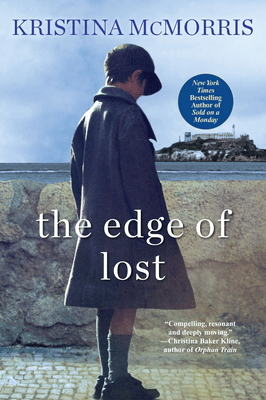
by Kristina McMorris
The ambiguity of the novel’s beginning absolutely pulls the reader in and the build up to that moment is well worth the progressive tale of Shan, a plucky boy who overcomes great odds to achieve a well-deserved happy ending.
Impressive historical detail involving immigrants, cultural traditions, and prison life make this an engaging read. Shan is a character the reader definitely roots for throughout the story.
by Monica Hesse
Hesse presents a different perspective of WWII by setting her story in Amsterdam. The Germans have established occupation and are beginning to round up the Jewish population. There are citizens who begin hiding Jews, but this is not the initial emphasis of the story. Instead, the author focuses on the independent Hanneke who supports her family as a receptionist and by delivering black market goods.
The story takes a turn when one of her clients asks her to find the girl she has been hiding, a Jewish girl who seemingly disappeared. From that point Hanneke becomes obsessed with finding the girl to the point of jeopardizing lives.
Well-written, carefully researched, the story illustrates the different ways people responded to the war effort. Although considered YA it could easily pass for an adult read.
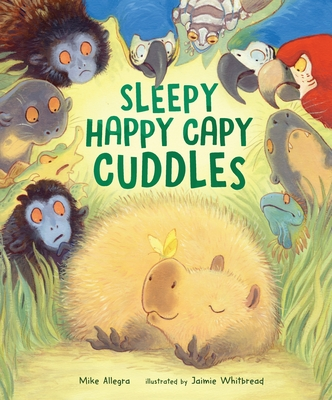
by Mike Allegra
Anyone needing a boost in the get happy department should seek out Mike Allegra’s story of how one delightful capybara interjected a welcome dose of floofy good cheer amidst the critters in his neighborhood. A smile is guaranteed with the uplifting text and winsome illustrations.
Getting lost in a good book. So satisfying. Anyone get lost recently?
The Society of Children’s Book Writers and Illustrators (SCBWI) is extending Bookstop until December 16th.
This means you can go to Bookstop and shop for some amazing children’s literature like:
Yes, this is blatant self-promotion
Of course you are encouraged to look beyond my picture book (although it is a dandy gift for those who look forward to being with loved ones again, like grandparents). There are lots of great authors and books to be found on Bookstop.
Speaking of picture books…
November was designated Picture Book Month, yet I just came across information that said December was Children’s Book Month. Okay. How about every month be celebrated as reading kid lit? I see that hand. Done deal.
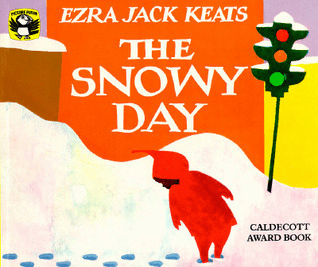
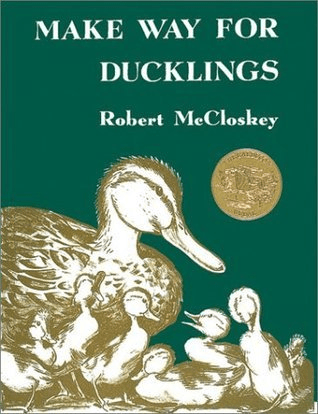
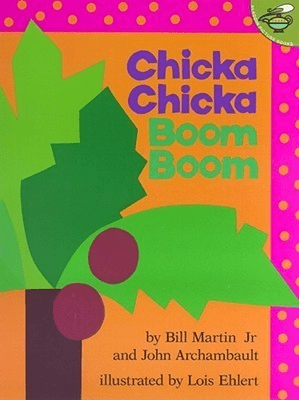
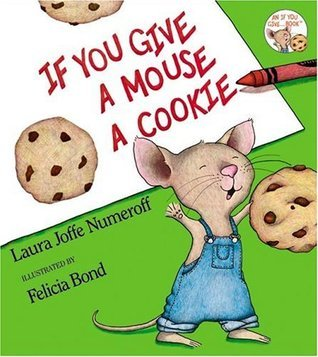
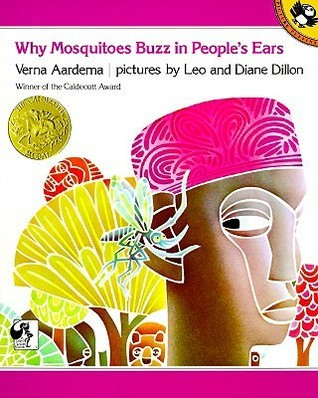
Here is a collection of PBs I have enjoyed as a child and as an adult:
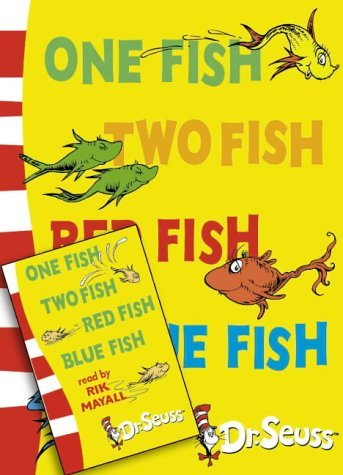
It’s tough to choose just one Dr. Seuss, but this one showcases the good doctor’s talent with rhythm and rhyme.
Peter’s innocence and wonder during his winter day exploration is timeless.How often is a book so endearing that statues are created honoring the book?I used to give this one to my college friends because college can definitely have its rough days.
This was a favorite with my kids
The expression is a part of my lexicon with the idea of one thing leads to another.This is how retellings are best retold.
I am a Boynton fan through and through.
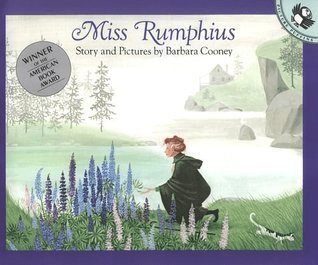
I want to become Miss Rumphius when I grow up.
A fan of Kevin Henkes also.
Subtle, yet hilarious.Inspired our family to endlessly play with big boxes which worked out well since we had no furniture for the living room when we first moved to our rural homestead.
And this is my latest read. Won this little gem through a drawing Mike Allegra offered. Such a floofy fun read.
So many more picture books I could mention. Now, it’s your turn. What are your favorites? Classics? Newly found?
One of the major challenges faced when introducing Shakespeare to my teen students was the language barrier. They saw Shakespearean language as foreign and resisted it. Some backing away so quickly and decisively it seemed they had suddenly encountered a foul smelling creature and a speedy exit they did desire.
Admittedly I encountered my difficulties with Shakespearean turn of phrase when I first began my teaching. Having no previous o knowledge of Shakespeare beyond a 1960 something film version of Romeo and Juliet from my junior high days I struggled. This meant I needed to learn more about what made Shakespeare so Shakespeare.
My first adult immersion was Kenneth Branagh’s Henry film. It was so brilliant that I fell asleep. The fatigue of deciphering what everyone was saying wore me out. I brought this to my teaching: Shakespeare can be tiring.
Why?
David Suchet, that accomplished actor of stage and screen puts it so well:
“Speaking in rhyme is not natural to us, but it was to the Elizabethans, so we have to understand what language meant to them, and what language does not mean to us today.”
Basically, contemporary speakers get to the point, an A to B decision. Elizabethan folk wandered on their path to convey their meaning, adding subtle nuances, providing an opportunity to savor the many perspectives and dimensions the English language provides.
“Wow. She’s pretty.” To the point.
“O, she doth teach the torches to burn bright! It seems she hangs upon the cheek of night Like a rich jewel in an Ethiop’s ear; Beauty too rich for use, for earth too dear! So shows a snowy dove trooping with crows, As yonder lady o’er her fellows shows.” Romeo takes a meaningful stroll, exploring the depth of his first impression of Juliet.
Of course we don’t speak like Romeo today, but you have to admit Romeo’s speech feeds our quest for romance and delight in beauty. Shakespeare dwelt in imagery. He provided a banquet in language; he lived in time where people were used to feasting on how words created a cadence of meaning. Today’s audience lives on a diet of abbreviations and emojis tapped out in thumb.
So—my first step in getting students to appreciate Shakespeare was to allay their concern about studying Old English, about encountering a foreign language. These were main points I began with:
Shakespeare is not a foreign language nor even is it Old English. It is the beginning of modern English spoken in an older England.
Many of the words Shakespeare used are words spoken today. And the fact he made known nearly 2,000 words that are in use today is impressive. I would drop how there would be no Assassin’s Creed if Shakespeare had not invented “assassin.”
The next step was to break down passages to literary terms because Shakespeare heavily played with imagery and components. I liked Danny Devito approach:
Finally, listening to trained actors speaking the rhythm of both iambic pentameter verse phrasing prose through film clips brough the passages alive. The cadence of Shakespeare’s speech is sizzling. Words jump up and get noticed. The front truth and back truth of the idea sits up and cannot be ignored. What is being said and what is really being said makes a difference.
In this scene Mel’s Hamlet is back truth to Ophelia: “You’re working for your dad. Women try to play men, but I am on to you.” Ophelia’s front truth is “You said you loved me, why so cruel now?” There are two conversations going on here: Hamlet’s agenda and Ophelia’s agenda. And Shakespeare let his audiences (and future English classes) figure out the real meaning of the scene.
How not to do a break up
Once students get immersed in the language they begin to see how Shakespeare is talking about issues they can relate to: parental control, unrequited love, betrayal—400 years hasn’t changed much in the emotional realm, language usage a bit more, granted.
Did I convince all my students that Shakespeare can be embraced and not reviled? Of course not. However, the intention was that they would be a bit more willing and able when they encountered the Bard next time.
It is indeed “sweet sorrow” I no longer teach Shakespeare.
No, that’s not a misspelling. I’m starting to realize as a writer that unless I get on board with reality my writing will be doomed to become phoney.
I’m not referring to fake, insincere, or even cheesy prose. The phoney I refer to the ubiquitous phone of the present. Writing a contemporary story means the phone automatically becomes a character because like the credit card ad of yesteryear once stated: we don’t leave home without it.
Thanks, Karl
Think about it. Phones today are part of us, attached by an invisible tether. They go everywhere we go. They are little companions traveling along with us every step of our life within reach and expected by others to be on hand when they want to reach us.
A comfort or a curse to be so readily able to communicate with others is a different pause for thought.
As a writer, I cannot ignore that a phone is part of a character if the setting is 21st century. Quick history check shows a portable phone being available in the ‘90s, but wasn’t readily in use. Then Apple came out with the iPhone in 2007 and the world has not been the same.
My kids dealt with flip phones in high school and not all students owned a phone. We only submitted to the need of instant communication when they began driving. My oldest son, being the effective salesman that he is, talked us into switching over to the iPhone on a fabulous family package with a leading carrier in the mid 2000’s and we haven’t looked back.
I’m glad my children had a phone free childhood. I did and I am living proof that I survived. Okay, a phone in my back pocket would have been handy more than a couple of times, but I managed. Do kids today even know what a phone booth is?
A real kid. Yet he is phoney.
So, here is the dilemma. When I write a story set in today’s time the phone has to be part of the story. Think about it. Do you know anyone who doesn’t own a smartphone? If you do then that would make for an interesting story.
Adults have phones. Fact. I don’t want to deal with phones in my story necessarily. Instant access. Texting. Voice mail. Low battery. Social media. Added work. Added complications.
That’s why I write mainly for children. Wait—kids have phones, not just teens. I’m seeing nine year olds walking around with devices that cost what used to be a down payment on my first car. Saw pre-teen at the library slip his sleek little smartphone out of his back pocket and called home. Spielberg’s E.T. could not have happened if the little space dude had landed a few years later in the world’s timeline. He would have had a phone with him or just borrowed a smartphone.
This is one reason I write picture books. Phones are still in the background as fuzzy actualities not needing to be in the story unless I absolutely, positively think it’s necessary. Middle read stories can be challenging because smart phones are beginning to be part of their world. Nope. They are part of their world. Definitely in YA.
This is disconcerting. I want to write sincere, character-driven stories, yet I can’t ignore the smartphone. Phones become characters with definite needs. They cannot be ignored. The dilemma of becoming a phoney writer is daunting.
I don’t think I am the only one pondering this issue. Has anyone else noticed the surge in historical fiction these days?
The phone is here to stay, but maybe I will have to dial into the more creative aspect of my world building and see if my characters can manage life without being phony or phoney.

























 Pam Webb