Pam Webb

a writer's journey as a reader

Archive for the category “Reading”

Reader Roundup: October/November


Somehow I lost track of my really good reads from October and I just about missed November’s reads. Here are my five star books from those months.

The Detective’s Assistant by Kate Hannigan

Hannigan presents an engaging embellishment of Kate Warne, a Pinkerton detective, and apparently America’s first woman agent.

While not much is known about Warne, the addition of her orphaned niece, Nell, is what drives the plot. Together they solves cases ranging from murder to preventing the assassination of president-elect Abraham Lincoln.

A coming of age story with a thread of history makes this a book middle readers will want to check out, then again this middle aged reader found it an engaging read as well.

Cloud Cuckoo Land by Anthony Doerr

Doerr presents an inventive, mesmerizing tale in the way of a tapestry. Throughout the book readers experience the backside of the tapestry, the chaos of threads intermingled, making it difficult to see the full rendering. The intermingling of characters and situations ranging from far future to distant past to present in Cloud Cuckoo Land is both amazing and puzzling at times, and then the understanding is revealed in the end chapters, just as the flip side of the tapestry reveals the completed picture.
Doerr is an artist of words and a storyteller of significance. His detail and pacing are admirable. His ingenuity as well. A very different story from his first novel, All the Light We Cannot See, yet CCL still showcases the talent of this writer.

The Library by Bella Osborne

The book had me at its title. Then there is the blurb: A book about how a library on the cusp of closure introduces an intergenerational friendship. The read was lovely and was difficult to set down.

The House of Unexpected Sisters by Alexander McCall Smith

At first the plot lumbers along with its usual disagreements between Precious and Grace about what is right (Grace can be tediously obstinate), it’s driving about in the tired white van, and it’s odd case or two that seemingly goes nowhere.

However, this story has an amazing twist near the middling end will impact future books. This twist definitely raised the rating by injecting some new spice into series.

An Old, Cold Grave (Lane Winslow #3) by Iona Whishaw

Having finished the Maisie Dobbs series by Winspear I was casting about for similar series and discovered Whishaw’s Lane Winslow books on the library’s new arrivals shelf.

Lane Winslow has settled into Kings Cove, Canada after her WWII service, and it is not turning out to be the idyllic place to escape the aspects of danger she experienced during the war.

The first two books were recent murders, this plot focuses on the mystery of a child’s skeleton found when a household of women were repairing their root cellar. Lane once again finds herself in the middle of the investigation and in harm’s way.

With a few more books to go in the Kings Cove series Lane is filling in for Maisie Dobbs quite nicely.

It Begins in Betrayal (#4) by Iona Whishaw

The fourth in the Lane Winslow series provides readers with a tightly-paced plot involving Lane’s friend InspectorDarling being framed in order to recruit Lane back into intelligence work.

A Sorrowful Sanctuary (#5) by Iona Whishaw

Whishaw ups her game in this fifth series entry with a fine balance of intrigue, murder, and interpersonal drama.

The opening scene of Lane and her friends discovering a mortally wounded man drifting in a boat sets up the story, one that is riveting in many ways, including the developing romance between Lane and Inspector Darling.

Going into December with 158 books read towards my annual goal of 101 I am now hoping to surpass my all-time best of 165 books from 2020. I had a bit of downtime that year, and reading was also a way of coping with the stay-at-home during that year. Retirement is proving to be boosting my reading rate, although staying at home is more choice than a mandate and that is perfectly fine with me.

A Falling Out Begins


One absolutely appreciated bonus of retirement is enjoying the mellow fall sunshine. I call September weather my Goldilock Days: not too hot, not too cold—just right.

Previous to retirement (this is my second September!) I would look out of my classroom window and long to be outside. That was one commonality I shared with my students. Although I would try to tie up loose ends and get home to enjoy the remaining afternoon, I usually arrived home only to enjoy a sliver of sun before it slipped behind the mountain. My Verilux light is a poor substitute for that warm, comforting kiss of sunlight.

And so, in these fall days, these post-summer days, these halcyon days of retirement I am found sunning like a marmot on my morning patio, napping on my hammock early afternoon, and lounging on my other hammock in the late afternoon.

Lest you think all I do is lounge around, I am landscaping, cleaning, writing, reading, and stacking wood throughout the day.

Unfortunately my Goldilocks time is ending. I used to go for my morning walk by 7 am. Lately it’s 49 degrees at that time and the sun is barely up. By 9 am it’s 60 degrees which is acceptable. Just as the perfect temps of mid-seventies arrive the cold nights appear. By 6 pm there is a chill that sends me inside.

Nothing says summer is ending more than the delivery of our winter wood supply. I feel the calendar days tick down when those wood chunks fill the bins.

Two cords strong

One aspect of full wood bins is knowing I will be cozy warm by the fire reading books and sipping cocoa. For now I’m still reveling in late summer before I fall into winter.

Book Signing!


Sunday, September 10th is Grandparents Day. Last year I booked a signing at Barnes and Noble at it was so successful I’m going back this year.

Mmm, I’m a bit younger

If you are in the Spokane Valley, Washington area this Saturday be sure to stop by the Barnes and Noble. After story time at 11 am I will be signing books until 3pm.

If you can’t make it you can purchase a book from your favorite online source and let me know and I will send you an autographed book plate.

Celebrating somedays!

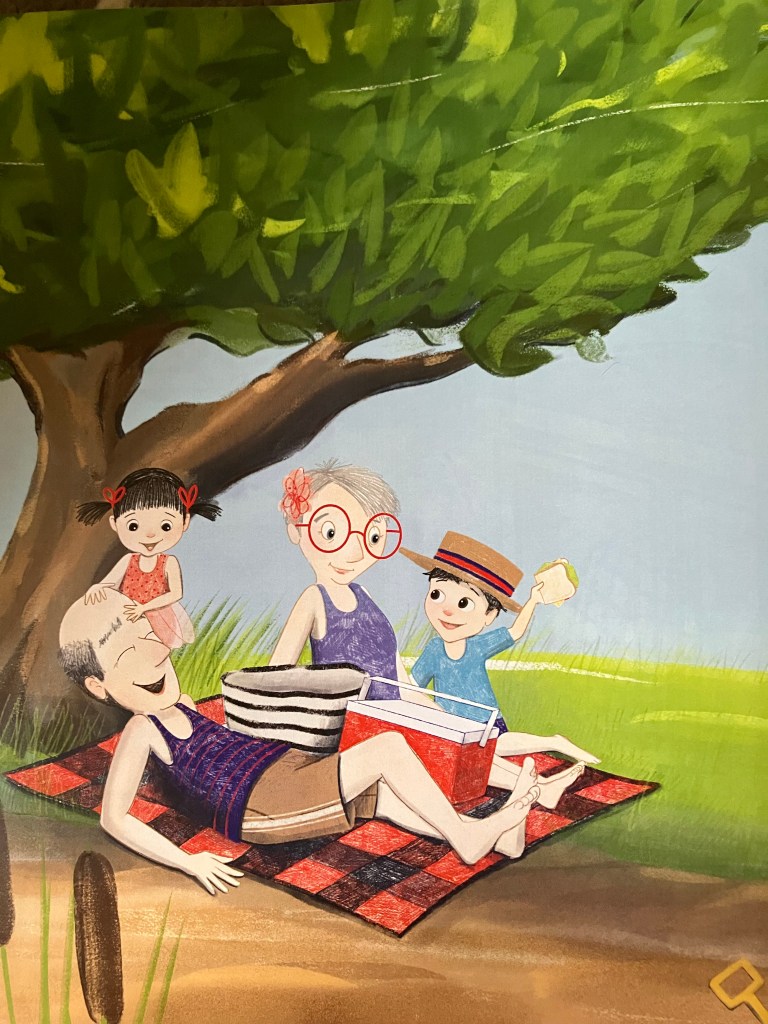
Someday We Will celebrates that special connection between grandparents and grandchildren. The book was inspired by my visits with my granddaughter. I couldn’t wait for all those special somedays we would share together.

My frames are red—but I don’t think the illustrator knew that!

And my second grandchild is due for her debut coming up the end of this month! I can’t wait to read my book with her.

Hoping you have a special day with your grands!

Surprise find on the internet!

Bard Bits: Oh, For Reading Out Loud


Today’s audiences talk about seeing a movie. And we are very much a visually oriented culture. Yet, in Shakespeare’s day audiences would say they were going to hear a play because language was such an integral aspect of their culture.

Shakespeare knew this, of course, which is why he wrote his plays with rhyme, rhythm, homonyms, laced with ambiguity. He wanted his audience to hear the auditory beauty of language.

Pen in hand the Bard does ponder

Modern audiences are more accustomed (or have grown more accustomed to) sound bites—quick bits of communication. No wonder eye rolls and twitches are commonalities when someone mentions Shakespeare—we are no longer used to the longer, more developed portents of language. We want quick and easy auditory digestion instead of the languid delight of a language banquet. ‘Tis a shame, yet supping upon a Shakespeare play is possible with a bit of effort.

Shakespearean plays are written to be heard and the Stratford-Upon-Avon wordsmith created the means to better enjoy his words by employing the following:

1. Read the lines with deliberation and emphasis. For example, Macbeth’s “Tomorrow and tomorrow and tomorrow” does better with a slow pronounced repetition to emulate the tedious monotony of life.

2. Use punctuation as a guide by reading to the end stop rather to the end of the line it gives more meaning to the lines. This is known as enjambment, where the line overflows into the next line, much like a waterfall cascades flow smoothly creating movement. For example, in Romeo and Juliet, Juliet pours out her emotions for Romeo in one rolling, passionate wave:

When he shall die,
Take him and cut him out in little stars,
And he will make the face of heaven so fine
That all the world will be in love with night
And pay no worship to the garish sun.

Reading this passage out loud, carrying one line over into the next enhances Juliet’s feelings for her Romeo.

3. Be aware of accented words, pronouncing them with an extra syllable. For example “perfume’d would be three syllables, not two. Shakespeare would have done this to enhance the meter or rhythm of the line. Plus, it has the bonus of sounding fancier.

4. Know that Shakespeare presented his words with intention to paint pictures (no access to CGI) with verbal cues to ignite his audience’s imagination. He needed his words to create imagery since scenery and props were minimal on the Elizabethan stage. For example, when Juliet says, “It was the nightingale, and not the lark,/ That pierced the fearful hollow of thine ear,” she is in her wedding bed with Romeo—she is no doubt as close to him as her heartbeat.

Reading Shakespeare can be an enriching, delightful experience when his words are read out loud with considerate digestion.

Author Spotlight: Gary Paulsen


Usually I highlight the five star reads from the previous month as a Reader Roundup.

No five star reads in September.

Yes, this is disappointing to report. I read fifteen books and several were okay, some were meh, and a couple came close being a really good read. Keeping to my standards though, and no five stars.

So–

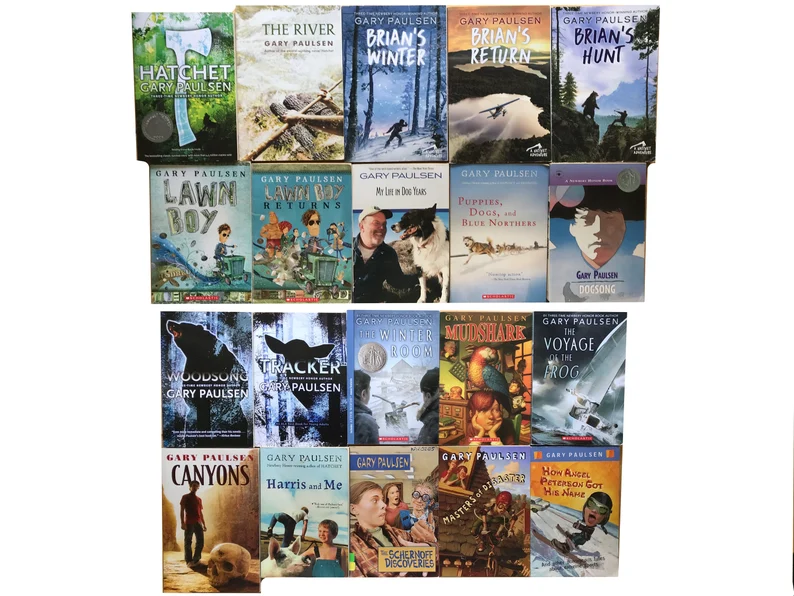
This post will instead feature a really good author: Gary Paulsen. Yeah, the guy who wrote Hatchet. Yes, that story of a boy whose private airplane pilot dies en route to see his father and they end up crash landing in the Canadian wilderness. He survives moose, mosquitoes, and choke berries with only a hatchet. It’s the book my sophomore boys usually picked to read for their book report even though I know they have read it (again and again). It is a good book, but Gary Paulsen wrote more than Hatchet. In fact, he wrote around 200 books, five being related to Brian of Hatchet.

image: sperrygoodemporium

A phenomenal author who wrote mostly about survival, be it in the wilderness or just making through a dysfunctional life, Paulsen also wrote humorous stories and historical stories. He wrote with insight and knowledge. He was the type of writer who lived his stories which is one reason they are so engaging. He knew what it was like to live in the wilderness. He hunted, fished, sailed—he even ran the Iditarod.

Looking at a photo of him it is difficult to get past his grizzled hermit-in-a-cabin appearance. Yet, he was a wordsmith and loved to read books along with respecting and rejoicing in the wilderness.

image: Wikipedia

Gary Paulsen passed from heart failure at 82 in 2021 and leaves a legacy of books that generations will discover and appreciate. His writing and his storytelling, especially his Brian stories are worthy reads at any age.

My husband, well past his middle school years, is absolutely enthralled with Paulsen’s books. His utterances of “whoa” and “wow” and guffaws of delight make me set aside my “grownup” books and reread Paulsen. I agree with all his observations, and we have great share sessions.

A really good read from a really good author is a treasure.

National Read a Book Day


It’s obvious I’m a Book Booster. Reading, reviewing, writing. Celebrating access to books. Promoting reading. A book in hand whenever possible. Today’s national recognition is an everyday celebration for me.

I couldn’t fathom not having a book handy to read.

How about you? Is this a special day or an everyday note of recognition?

December: Read a New Book


In case you missed it in September, you can also decide to read a new book in December.

Reading is next to breathing—it comes naturally

Then again, it doesn’t have to be a designated month for me to read a book. And if I haven’t read it yet it’s a new book to me.

Having librarian experience, both paid and volunteer, for over fifteen years, creates in me this urgency to promote reading. Now that I am in the classroom I promote reading to my students with having them read the first 10 minutes of class. Their reactions range from groans to smiles. There seems to be a firm indication that reading is either in terms of endearment or terms of endurement among teens I have encountered in the last few years.

Anyone have a study on how reading fares among our youth?

As for me—I began to seriously get into reading in fifth grade, prompted by my teacher (Hi, Mr. Cassidy) and have increased my passion for holding words upon pages (no thanks Kindle—gotta turn those pages, feel that paper).

In fact, I just hit my reading goal of 101 books for the year just the other day and I still have time and inclination to keep going.

How about you? Do you have a reading goal? Have you read any new books lately?

Storytime Highlights


Debut Appearance
A memorable debut storytime

April 7, 2020 my debut picture book, Someday We Will, arrived and then accessible venues shutdown. It’s definitely challenging trying to promote a book when libraries, schools, and bookstores are closed.

Even though creative promotional endeavors emerged, there is nothing quite like sharing the book with a live audience.

The local library reopened public events with its first storytime held in their new garden area June 19, 2021. Leading off the first storytime in over a year was an honor and an absolute delight.

Kimber, the youth services librarian and several library staff members, worked hard to create the event. Library storytime in a library garden is an ideal venue for a picture book that celebrates the joy of doing outdoor activities together.

After reading the book we blew bubbles, created sidewalk chalk art, jumped rope, and made Someday Jars. All accomplished in an hour!

I look forward to the next public event.

Reader Round Up: Good Night Mr. Tom


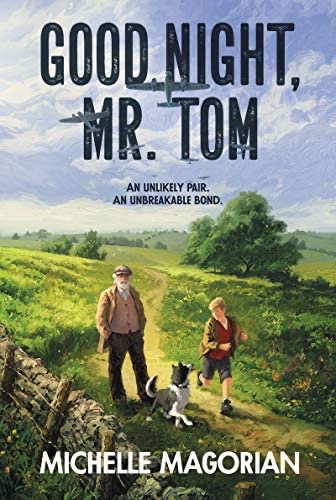
One book pops up as the June spotlight read: Good Night, Mr. Tom by Michelle Magorian.

Though it was published in 1986, it has an old-fashioned story cadence to it, being almost a Dickens novel in scope.

A captivating read

The story has so many deep issues that it is surprising it is considered a children’s novel. Child abuse and abandonment are two central issues. There is also the painful experiences of children evacuated from London to billet safely out in the country with strangers during WWII. Magorian weaves these and other issues in with her engaging story of matching a young malnourished boy, William, with a flinty widower, Tom.

Tom’s unhurried persistence to helping William settle in hastens the boy to heal both physically and emotionally, and as a result Tom also begins healing of the grief over losing his wife and child forty years earlier.

The joy of childhood, making friends, trying out new experiences, and the deep bond of friendship comes singing through the expressive prose. A thoughtful perspective of how the London evacuees fared as well as those who took them in during the war.
For those who enjoyed Carrie’s War, Goodnight, Mister Tom is recommended.

Story Time!


After a year of shutting down most public programs, our local library is opening up one of their most popular programs: Story time. The best part is I’m going to lead off a summer’s worth of local author reads. If you are in the neighborhood be sure to drop by!

Someday is here!

Post Navigation