Pam Webb

a writer's journey as a reader

Archive for the category “Reading”

Jane Austen: Smart Reading


If you are here it’s because the Jane Austen in the title tweaked your interest, right? Well, beyond being one of THE best writers in the literary canonical group of authors listed in the universal TBR list, she is actually a teacher. Actually, Stanford neurobiologists and English professor Natalie Phillips picked her book Mansfield Park to determine a connection between critical reading and brain activation patterns. (source: Luminosity)

Cover of "Mansfield Park (1999)"

Cover of Mansfield Park (1999)

The procedure went like this: an MRI scanned the brains of 18 participants as they read MP. These weren’t ordinary students, no struggling juniors or seniors assigned Janey as an honors read; no, these were PhD candidates. The reason being the researchers wanted to make sure close reading, the reading for analysis, was properly done. Going for a doctorate would probably ensure smarter reading practices. Participants read for “fun,” that is, casually read and then they were asked to close read.

Results: critical reading increased bloodflow throughout the brain, especially to the prefrontal cortex, which is considered to be the center of thoughts and actions and our social behavior.

Implications: close reading, the method of critically studying a text, indicates a connection between shaping and shifting cognition

My Understanding: Sheesh! I’ve been doing this for years. “Hey kids, read this and let’s figure out what it means.” Oh yea, this is what Common Core State Standards is all about–we give students higher level reading material and ask them to think about what they are reading. Like I said *I’ve been doing this for years*.

Okay, do I get my honorary PhD now?

Captives Review


Jill Williamson provides a  dystopian premise in her YA  novel Captives. The story takes place in the not too distant future of 2088 and reflects many of the same concerns facing our own world: a pandemic brought on by casual sex, increased government surveillance, technology replacing genuine relationships, and the emphasis of outer versus inner beauty.

The action takes place in the walled domain called Safe Lands, which is ironically a place where the citizens are far from being safe, due to their hedonistic lifestyles, which result in early deaths. With the inability to sustain their dwindling population, the Safe Lands government travels outside of its boundaries and kidnaps outlanders. As the new captives adapt to their new environment the story focuses on who will resist the temptations of Safe Lands and who will be overcome.

The mature topics within the story are handled well, with only a small tendency towards preachiness. The plot is divided into several viewpoints, which tends to give it a somewhat choppy flow. For those who are dystopian novel fans there are many recognizable tropes: hedonism, children martyrs, overbearing governmental control, and situational ethics.
At the end of the book there is a desire to know the rest of the story and the reader looks forward to the next installment of the Safe Lands series.

This book was provided by BookSneeze  in exchange for a fair review.

Biblio-profiled


Books

Gotta HaveBooks! (Photo credit: henry…)


Book Boosters. That’s my term for those of us that love books, love reading, love to promote reading and books.  Reading–rhymes with breathing.  Can’t go through life without either.  Actually, make that a day.  Something as wonderful as reading books tends to get knocked about: Bookworm, Get Outside, You’re Reading Another Book. You know the gamut.

Apparently we bibliophiles (very different from being a bibliomaniac) are profiled as being loners, hoarders, idolizers of authors, browsers–I shall not continue. An article in the Huffington Post entitled “These Stereotypes About Book Lovers Are Absolutely True, and That’s a Good Thing” lists 31 stereotypes. I’ve pulled the Top Ten I’ll admit to:

1. I never leave home without a book (I count the one I got going on my iPhone)

2. I don’t loan out books for fear of having them returned in a shabby condition (do not dog ear, please oh please)

3. I give books as presents (even if they would rather have a Red Robin gift card).

4. I would actually collect author trading cards (I’ll trade you my Vonnegut for your Whitman).

Various trading cards

Author trading cards available? (Photo credit: Wikipedia)

5. Yes, I do read about how famous authors became so well-loved because I do believe myself to be a page away from writing the Great American Novel (okay, I’ll amend that to Novel)

6. Bad movie adaptations can crease my day (perhaps not my whole summer, just a couple of weeks worth)

7. Finding a typo is irritating (though I live in a glass house, I’m afraid)

8. Yes, I do have strong, unwavering opinions about e-books (never mind what I said in #1)

9. Being located near a library is more important than other aspects of moving (Libraries rate over Starbucks proximity)

10. Audio books are marvelous road trip companions (Will it bother you if I plug in my book?)

Then in a December 2013 post, BookRiot blogger Dr.B  busted a move and dispelled some very important points: not caring about dog earing books *gasp* or cracking spines *be still my heart*; rarely giving books as gifts *but, but, they would like this one–I’m sure they would*; not caring about bad adaptations *oh, to have such strength*; typos? no big deal *again, to have such a cavalier attitude*.

Jester reading a book

Just another fool reading a book (Photo credit: Wikipedia)

What leanings do you have towards your profiling? Are you the Huffington style of traditional or more of the forgiving Dr. B?

Eyre of Distinction


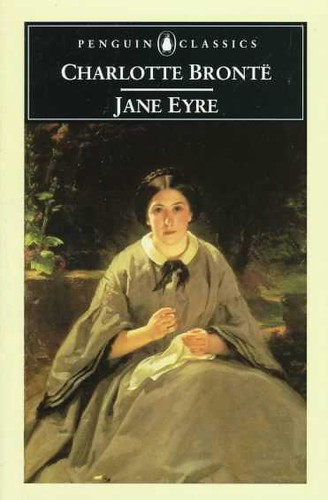
Soon we start our AP novel unit, Jane Eyre. Charlotte Bronte’s novel is one of my favorites, which means I will infuse as much of my appreciation for it as I do for my other favorite classics like Hamlet.  While many wax profoundly about Jane Austen, I think Miss Bronte gets overlooked. Jane Eyre has the distinction of being one of those novels that set things of literature memes, tropes, and motifs in motion by becoming a template for other stories. Consider:

  • she is plain in looks, but beautiful in spirit
  • her intelligence is valued by others, at a time when women were not widely educated
  • she values family over fortune
  • she easily speaks her mind
  • she is independent and finds a way to survive
  • outwardly she is calm, yet ripples with passion underneath her facade of restraint
  • she is perservering, sourceful, and a woman of strong morals
  • she stands up for herself–no doormat dame here

My opinion: Jane rocks. Over the years there have been several film adaptations of the novel.  I binged on JE films over the weekend and came up with my ratings:

1971: Starring George C. Scott and Susannah York
Verdict: skip.

George, too familiar with his Patton role, brought it to his interpretation of Rochester.  He railed and ranted in a very American accent and I gave up after he meets with Jane after their encounter on the road. Besides York’s Jane being too old and much too pretty I couldn’t sit through the poor film quality. The video transfer was so muddied I felt as if I were watching the movie through an unwashed glass.

image: eleganceof fashion. blogspot

1983: Timothy Dalton and Zelah Clarke
Verdict: one of the most faithful and watchable versions

Being a BBC production, I had initial trust it would be a quality adaptation, after all these are the folk who brought us Colin Firth as Mister Darcy. The sets, the important scenes, those inscrutable nuances of the original story are all contained in this mini-series. Timothy Dalton definitely understands the Byronic hero that Rochester embodies and has even said in interviews Rochester is one of his best roles. Clarke, while a bit older than the required 18 year old fresh from her Lowood imprisonment, captures the Quakerish passivity and ethereal nature of Jane Eyre.  The scenes between Dalton and Clarke are melt-in-the-mouth truffle satisfying.  Their version is what comes to mind most often when I return for a refresher novel read. I really did believe a heartstring developed between them. The agony of Dalton’s Rochester when he realized his Jane was leaving him forever kept the tissue box occupied.

1996: William Hurt and Charlotte Gainsbourg director: Franco Zefferilli
Verdict: passable, but strayed terribly from the novel

William Hurt seemed on the verge of understanding Rochester, but kept the bitterness too diminished, too washed out. Charlotte G as Jane got her part right. The plain, passionate young actress  imbued the paradoxical spirit of Jane Eyre. Sadly, there existed no believable passion, that needed kindred heart-string spark, between Gainsbourg’s Jane and Hurt’s Rochester. This spark is the very core of the novel. Without that essential core the movie floundered about like a fish hoping to get back into the water to have a proper swim. The director who brought us Romeo and JulietTaming of the Shrew, Hamlet, and other great stories of passion missed the mark with this adaptation by rushing the story and taking way too many liberties with the plot.

2006: Toby Stephens and Ruth Wilson
Verdict: enjoyable, even if a bit too contemporary in approach

image: writingbar.com

Admittedly, I had started watching this version years ago when it first came out, but found myself so disenchanted with the cutaway flashbacks, I couldn’t get past the Lowood scenes and it wasn’t until recently I returned to another viewing.  I did like the lead actors portrayals, and yes, there was a definite spark between them. I thought Toby Stephens got off easy with his fire wounds, unlike Hurt and Dalton. His rugged looks only appeared rather marred, instead of being ruined. The rolling around, ankle rubbing bit at the end seemed a bit too lenient for true Bronte style. Then again, there are leniences throughout this adaptation I willingly overlooked since the production quality proved so high.

2011: MiaWaikowska and Michael Fassbender Director: Cary Fukunaga
Verdict: Admirable

The first scene makes a diehard JE fan sit bolt upright and ask, “What? Wait–did the movie skip! because the opening scene is starting right off with Jane making her mad dash from Thornfield, which usually means the film is winding up to the grand finale.  Instead Fukunaga gets a bit artsy and dips in and out of Jane’s childhood days in flashbacks, with a quick glance at times at her more recent history.  Artfully done, but a bit disconcerting for those who prefer the linear progression.  Fassbender and Waikowska do provide a sumptuous Rochester and Jane.  Looks, mannerisms, nuances, smoldering passions–it’s all there.  That’s why it the ending is so absolutely frustrating.  I could not understand the need to transform Rochester into a Tom Hanks Castaway lookalike.  Maybe trading out the maimed hand for a beard was a contract compromise. Also, there should have been another 20 minutes of wrap up, yet we are whisked away much too soon.  It’s like being served the most savory dessert and having it taken away after a couple a bites–“Yo, I wasn’t finished.” Apparently Fukunaga thought the audience needed no more indulging and wanted us to move away from the table.

Overall: If a dedicated JE fan go to one of the series adaptations, such as the 1983 or the 2006.  It appears that only when given the proper amount of time (3-4 hours) can Jane’s story be told sufficiently. However, if thinking “book or movie first?” and movie wins out–get the 2011 version.

Further notation: I thought about finding the Ciarin Hinds version, especially after watching him in Austen’s Persuasion with Amanda Root.  Our library no longer has it and after reading the widely mixed reviews of loving it and hating it, I thought I will stick with my picks of 1983, 2011, and 2006 for classroom clips.

Any readers have their own picks of fave JE adaptations?

Life Long Loving of the Library of Congress


Main Library of Congress building at the start...

Main Library of Congress building at the start of the 20th century (Photo credit: Wikipedia)

And yet another reason I continue my praises of the Library of Congress. In recent Internet research sleuthing I stumbled across their Festival Author Booklist. Yippee! I love bookish gatherings, especially when I don’t have to do much traveling to enjoy it.  If you do want to travel, then get your arrangements made for Washington D.C. because that’s the happening spot. Last year the festival ran the weekend of September 21 and 22.  For more information: National Book Festival

Author and Reading Celebration

Since 2001,  authors, illustrators and poets make presentations on the National Mall in various pavilions. In 2013 over a 100 authors represented  Teens & Children, Fiction & Mystery, History & Biography, Contemporary Life, Poetry & Prose, Graphic Novels & Science Fiction and Special Programs.

Library of Congress Pavilion

If a person has longing to know all about the Library of Congress, then a visit to their LOC Pavilion is in order. There is so much moAt the Library of Congress Pavilion than books.

Wait!

There is more bookish good stuff from the LOC. Want handy access to classic reads? Then you need to click on the Read.gov link and start enjoying a range of reading from the John Carter series to Aesop Fables and what lies in between.

Contest!

Are you a teacher, a parent? If books are an important part of your education input, you will want to perk up and take time to read the guidelines about the LOC contest Letters About Literature.  Prizes too! I look forward to introducing this to my students.

Stay tuned for more love notes about the nation’s library.

YAy for Dystopian


Once upon time when writers wrote about the world going wrong and trying to make a go of it in the aftermath the novels usually found its way on the college reading list. Ruined landscapes, fragmented governments, odd creatures mucking about, abundance of shortages and the like just wasn’t fit for kiddos. Think about the titles: Brave New World, 1984, Time Machine, Fahrenheit 451, A Clockwork Orange. Right. Yes. Some of them do end up on high school lists, but not when they first came out. There is a reason for that.

Lately, the shelves are full of dystopian novels and those shelves are usually in the YA section.  There is a reason for that too.

Back in the once upon a time, the world wasn’t that scary, even with the Cold War, we still had a pretty good idea of feeling on top of the world, so we could poke a bit around the edges of the “what ifs.” Then the world did get scary. AIDS, a couple of wars in a few out-of-the-way places, recession, terrorists, weather disasters, recalls–dystopian became popular among YA because the future is not looking so bright anymore. I’m just saying.

In fact, the adults are now reading the YA list (even though some don’t admit it): The Giver, Hunger Games, Maze Runner, Divergent are some names that pop to the surface.

Is Dystopian bad for teens? I don’t think so.  I didn’t get ruined from reading Brave New World in college, although 1984 and Clockwork Orange had me thinking hard at times. 

What do you think? Is there a difference between YA dystopian fiction and adult dystopian? Or is a bad world after the fact good reading for both adults and teens?


Libraries All Over


Libraries. We think of them in terms of brick and glass with rows of shelves and some comfy chairs. Yet, they can appear in many places and in many forms.

A Works Progress Administration Bookmobile visits Bayou De Large, Louisiana. Photo from the New Deal Network.

Pack horse librarians pose in Hindman, Kentucky. From the University of Kentucky’s Goodman-Paxton Photographic Collection

A booketeria in a Nashville supermarket. Photo from the Nashville Public Library.

A vending machine library at a Bay Area school. Photo originally from Inside Bay Area.

A former Wal-Mart photo from the McAllen Public Library.

BiblioTreka transformed into the pop-up library.

Pop-Up Library known as the BiblioTreka (image: libraryasincubatorproject.com)

IKEA shelves. Bondi Beach. Books. Perfection. (image:PeaceandNoise.blogspot.com)

A true book is never phoney. (image: PeaceandNoise.blogspot.com)

This gives me hope books ae not on the wayse as technology encroaches on book-in-hand versus book on-screen. Any unusual libraries spottings?

Children’s Books for Forever


I don’t think I will ever outgrow my liking of children’s books. At one point I began collecting them as I came across them in yard sales, thrift stores, and the cast offs from the public library. I probably would have done better to start my collection after I had done my college moving days. Carting crates of books during a year of several moves created in me to appreciate children’s books in a different fashion. I no longer have my collection, and I don’t terribly regret the decision to dissemble it. I still am a confirmed reader, promoter, and writer of children’s stories. They remain my fave.  Here’s a hint–if you are feeling somewhat blue about the edges, go grab a kid’s book and read it. Better yet, grab a kid and a book and read the book to the kid. No more blues.

With all that being said it gives me great smiles to present the New York Public Libraries first ever 100 Top Children’s Books of the Last 100 Years. First posted on School Library Journal’s site September 30, 2013 (I am a bit behind in my inbox readings).


100YearsChildBks strip1 NYPL Unveils 100 Top Children’s Books of the Last 100 YearsIn alphabetical order by title, this list is as follows:

Alexander and the Terrible, Horrible, No Good, Very Bad Day. Judith Viorst. Illus. by Ray Cruz. (1972)
All-of-a-Kind Family. Sydney Taylor, illustrated by Helen John. (1951)
Amelia Bedelia. Peggy Parish, illustrated by Fritz Siebel. (1963)
The Arrival. Shaun Tan. (2007) Bark, George. Jules Feiffer. (1999)
Because of Winn-Dixie. Kate DiCamillo. (2000)
Ben’s Trumpet. Rachel Isadora. (1979)
Big Red Lollipop. Rukhsana Khan. Illus. by Sophie Blackall. (2010)
The Birchbark House. Louise Erdrich. (1999)
The Book of Three. Lloyd Alexander. (1964)
The Borrowers. Mary Norton. Illus. by Beth Krush and Joe Krush. (1953)
El Gallo De Bodas: A Traditional Cuban Folktale. Lucía M. González. Illus. by Lulu Delacre. (1994)
Bread and Jam for Frances.
Russell Hoban. illustrated by Lillian Hoban. (1964)
Bridge to Terabithia. Katherine Paterson. (1977)
Brown Bear, Brown Bear, What Do You See? Bill Martin, Jr. Illus. by Eric Carle. (1967)
Caps for Sale. Esphyr Slobodkina. (1938)
The Cat in the Hat. Dr. Seuss. (1957)
Chains. Laurie Halse Anderson. (2008)
A Chair For My Mother. Vera B. Williams. (1982)
Charlotte’s Web. E.B. White. Illus. by Garth Williams. (1952)
Chato’s Kitchen. Gary Soto. Illus. by Susan Guevara. (1995)
Chicka Chicka Boom Boom. Bill Martin, Jr. and John Archambault. Illus. by Lois Ehlert. (1989)
Corduroy. Don Freeman. (1976) Curious George. H.A. Rey. (1941)
D’Aulaires’ Book of Greek Myths. Ingri D’Aulaire and Edgar Parin D’Aulaire. (1962)
Don’t Let the Pigeon Drive the Bus! Mo Willems. (2003)
Esperanza Rising. Pam Muñoz Ryan. (2000)
Freight Train. Donald Crews. (1978)
Frog and Toad Are Friends. Arnold Lobel. (1970)
From the Mixed-Up Files of Mrs. Basil E. Frankweiler. E.L. Konigsburg. (1967)
George and Martha. James Marshall. (1972)
The Giver. Lois Lowry. (1993)
Go, Dog. Go! P.D. Eastman. (1961)
Goodnight Moon. Margaret Wise Brown. Illus. by Clement Hurd. (1947)
Grandfather’s Journey. Allen Say. (1993)
The Graveyard Book. Neil Gaiman. Illus. by Dave McKean. (2008)
Green Eggs and Ham. Dr. Seuss. (1960)
Harold and the Purple Crayon. Crockett Johnson. (1955)
Harriet the Spy. Louise Fitzhugh. (1964)
Harry Potter and the Sorcerer’s Stone. J.K. Rowling. (1998)
Hatchet. Gary Paulsen. (1989)
The Hobbit. J.R.R. Tolkien. (1937)
Holes. Louis Sachar. (1998)
The Invention of Hugo Cabret. Brian Selznick. (2007)
Joseph Had a Little Overcoat. Simms Taback. (1999)
Jumanji.
 Chris Van Allsburg. (1981)
Just a Minute: A Trickster Tale and Counting Book. Yuyi Morales. (2003)
Lilly’s Purple Plastic Purse. Kevin Henkes. (1996)
The Lion and the Mouse.
Jerry Pinkney. (2009)
The Lion, the Witch and the Wardrobe. C.S. Lewis. (1950)
The Little House. Virginia Lee Burton. (1942)
The Little Prince. Antoine de Saint-Exupéry. (1943)
Locomotion. Jacqueline Woodson. (2003)
Lon Po Po: A Red-Riding Hood Story From China. Ed Young. (1989) 100YearsChildBks strip2 NYPL Unveils 100 Top Children’s Books of the Last 100 YearsMadeline. Ludwig Bemelmans. (1939)
Make Way for Ducklings. Robert McCloskey. (1941)
Matilda. Roald Dahl. Illus. by Quentin Blake. (1988)
Meet Danitra Brown. Nikki Grimes. Illus. by Floyd Cooper. (1994)
Millions of Cats. Wanda Gág. (1928)
Miss Nelson is Missing!
Harry Allard. Illus. by James Marshall. (1977)
Mr. Popper’s Penguins.
Richard and Florence Atwater. Illus. by Robert Lawson. (1938)
Mrs. Frisby and the Rats of NIMH.
Robert C. O’Brien. (1971)
Mufaro’s Beautiful Daughters: An African Tale.
John Steptoe. (1987)
My Father’s Dragon.
 Ruth Stiles Gannett. Illus. by Ruth Chrisman Gannett (1948)
My Name is Yoon.
 Helen Recorvits. Illus. by Gabi Swiatkowska. (2003)
Olivia.
Ian Falconer. (2000)
One Crazy Summer
. Rita Williams-Garcia. (2010)
The People Could Fly: American Black Folktales.
Virginia Hamilton. Illus. by Leo/Diane Dillon. (1985)
The Phantom Tollbooth. Norton Juster. Illus. by Jules Feiffer. (1961)
Pierre: A Cautionary Tale in Five Chapters and a Prologue. Maurice Sendak. (1962)
Pink and Say. Patricia Polacco.  (1994)
Pippi Longstocking. Astrid Lindgren. (1950)
Ramona the Pest. Beverly Cleary. (1968)
Rickshaw Girl. Mitali Perkins. Illus. by Jamie Hogan. (2007)
Roll of Thunder, Hear My Cry. Mildred D. Taylor. (1976)
Rumpelstiltskin. Paul O. Zelinsky. (1986)
A Sick Day for Amos MCGee. Philip Stead. Illus. by Erin E. Stead. (2010)
The Snowy Day. Ezra Jack Keats. (1962)
Starry River of the Sky. Grace Lin. (2012)
The Stories Julian Tells. Ann Cameron. Illus. by Ann Strugnell. (1981)
The Story of Ferdinand. Munro Leaf. Illus. by Robert Lawson. (1936)
Strega Nona. Tomie dePaola. (1975)
Swimmy. Leo Lionni. (1963)
Sylvester and the Magic Pebble.
William Steig. (1969)
Tales of a Fourth Grade Nothing. Judy Blume. (1972)
The Tales of Uncle Remus: The Adventures of Brer Rabbit. Julius Lester. Illus. by Jerry Pinkney. (1987)
Tar Beach. Faith Ringgold. (1991)
Ten, Nine, Eight. Molly Bang. (1983)
Tomie dePaola’s Mother Goose. Tomie dePaola. (1985)
The True Story of the Three Little Pigs. Jon Scieszka. Illus. by Lane Smith. (1989)
Tuesday. David Wiesner. (1991)
The Very Hungry Caterpillar. Eric Carle. (1969)
The Watsons Go to Birmingham—1963. Christopher Paul Curtis. (1995)
The Westing Game. Ellen Raskin. (1978)
When You Reach Me. Rebecca Stead. (2009)
Where Is the Green Sheep? Mem Fox. Illus. by Judy Horacek. (2004)
Where the Wild Things Are. Maurice Sendak. (1963)
Why Mosquitoes Buzz in People’s Ears. Verna Aardema. Illus. by Leo/Diane Dillon. (1975)
Winnie-the-Pooh. A.A. Milne. Illus. by Ernest H. Shepard. (1926)
A Wrinkle in Time. Madeleine L’Engle. (1962)

So many wonderful friends. I love a great list filled with great books. I hope you found some good old friends as well.

Rating the Underrated


Thank you for tuning in for another round of lists. This one again comes from BookRiot, being posted by Rebecca Joines Schinsky. She shares the results of reader poll for underrated books from the 576 who decided to voice their opinion. Usually I find these findings rather dubious.  Stanford and Gallup were not involved so how do we really know how legit the findings are?  Since you are here take a look at the list.  Any surprises?  I am only familiar with a couple of the votes. Sigh, my illiteracy is showing again, I suppose.

       Posted by   Rebecca Joines Schinsky     

Are These the 13 Most Underrated Books?

<!—->
  1. I Capture the Castle by Dodie Smith (9 votes)
  2. The Shadow of the Wind by Carlos Ruiz Zafon (6)
  3. Shantaram by Gregory David Roberts (6)
  4. The Sparrow by Mary Doria Russell (5)
  5. Stoner by John Williams (5)
  6. The Fionavar Tapestry Trilogy by Guy Gavriel Kay (4)
  7. if on a winter’s night a traveler by Italo Calvino (4)
  8. Lamb by Christopher Moore (4)
  9. North and South by Elizabeth Gaskell (4)
  10. Pale Fire by Vladimir Nabokov (4)
  11. The Phantom Tollbooth by Norton Juster (4)
  12. The Princess Bride by William Goldman (4)
  13. The Neverending Story by Michael Ende (4)

I adored The Phantom Tollbooth in elementary school, grooved on The Princess Bride in college, and skipped The Neverending Story, both the book and the movie. Nothing else on the list rings a bell. I’m not seeing how Tollbooth or Princess Bride could be underrated since both became film adaptations.

Anyone read any of these? Are they underrated?

Check out other Riot polls:

The 25 Most-Hated Books (by Book Riot Readers)

19 Books You’ve Been Meaning to Read FOREVER

20 Books You Pretend to Have Read

Top 10 Books You’re Embarrassed to Admit You’ve Read

20 Most-Loved Literary Characters

_________________________

Quantcast

Publisher’s Weekly 2013 List


Cover of November 6, 2006.

Cover of November 6, 2006. (Photo credit: Wikipedia)


A bit behind in getting out the best of the year posties, but my procrastination has a purpose: now it’s a reminder instead of a glut of wrap up info. Good old fashioned method-in-my-madness stuff going on here.


I am always curious as to what is popular in book reads. The New York Times is one popular measuring tool, and another one is Publisher’s Weekly. These are excerpts from their yearly best 20 books of the year. I found some head-scratching “Really, that was popular?” selections to “Well, that’s no surprise” entries. Here are some pull outs with their summaries. One thing I noticed is that I haven’t heard any of these titles. I’ve not even seen them on the new book offerings shelves at the library.  Is this something I should be concerned about?  Also, most of these titles are not very cheery, interesting, yes–cheery no.  Somehow, I am not as concerned about that issue.  After all, people tend to flock towards the sad and mad instead of the glad. Or is that just my view?


The People in the Trees by Hanya Yanagihara (Doubleday)


Add Norton Perina to the pantheon of literature’s best unreliable narrators. Perina is a scientist who, after graduating Harvard medical school in the 1940s, travels to a remote Pacific island chain where he may or may not have stumbled upon the key to immortality. The book is composed of his memoirs, which he is writing from prison in the U.S. after being convicted of a heinous crime. The truth behind Perina’s story is both riveting and chilling.


Miss Anne in Harlem: The White Women of the Black Renaissance by
Carla Kaplan (Harper)


In this beautifully written, empathetic, and valuable addition to the history of the Harlem Renaissance, scholar Kaplan (Zora Neale Hurston: A Life in Letters) presents the untold story of six notable white women (including Fannie Hurst and Nancy Cunard, members of a larger group known collectively as “Miss Anne”) who embraced black culture—and life—in Harlem in the 1920s and ’30s, serving as hostesses, patrons, activists, comrades, lovers, writers, and editors.


Sea of Hooks by Lindsay Hill (McPherson & Co.)


On a small scale, Hill, a onetime banker and now a poet with six published books, has written a fragmented portrait of a man’s troubled childhood and lost adulthood—a spiritual biography that’s both tragic and comic, and provides moments of pure reading pleasure on every single page, not to mention a wallop of pathos. On a larger scale, it’s a moving and unforgettable novel.


DISCLAIMER: covers and summaries are from the Publisher Weekly site. For the entire tamale go to: 2013 Publisher’s Weekly List


Post Navigation