The junco is a common bird, true; however, it has plenty of personality. We learned about juncos this winter when we took to tossing out birdseed under the living room window to avoid trudging in the snow to fill the feeder. Daily a troop of birds ranging from sparrows to doves to juncos would pop by. The consistent crew was a group we referred to as the Jolly Juncos. They would merrily hop about foraging for food in their somber dark hoods and grey suits. They were determined and undeterred in their daily sweep for seed. They helped break the monotony of winter.
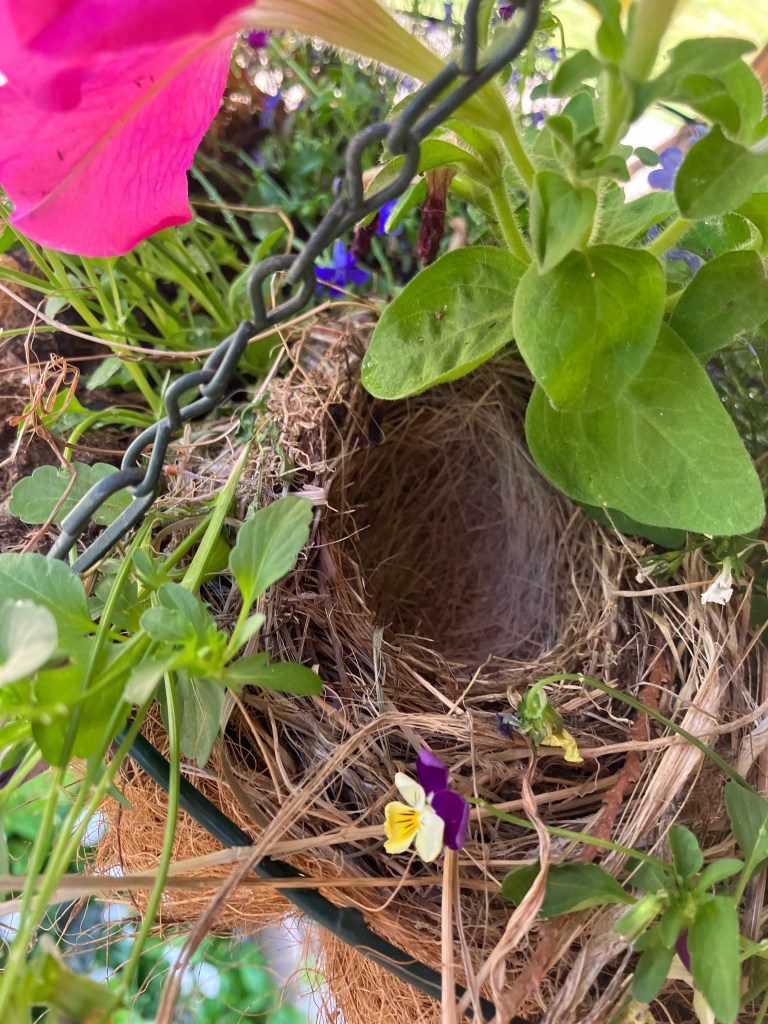
In spring we were delighted to find a junco had created a nest in one of my hanging flower baskets.
Leave for a long weekend and surprise!
Quite an artful rendering
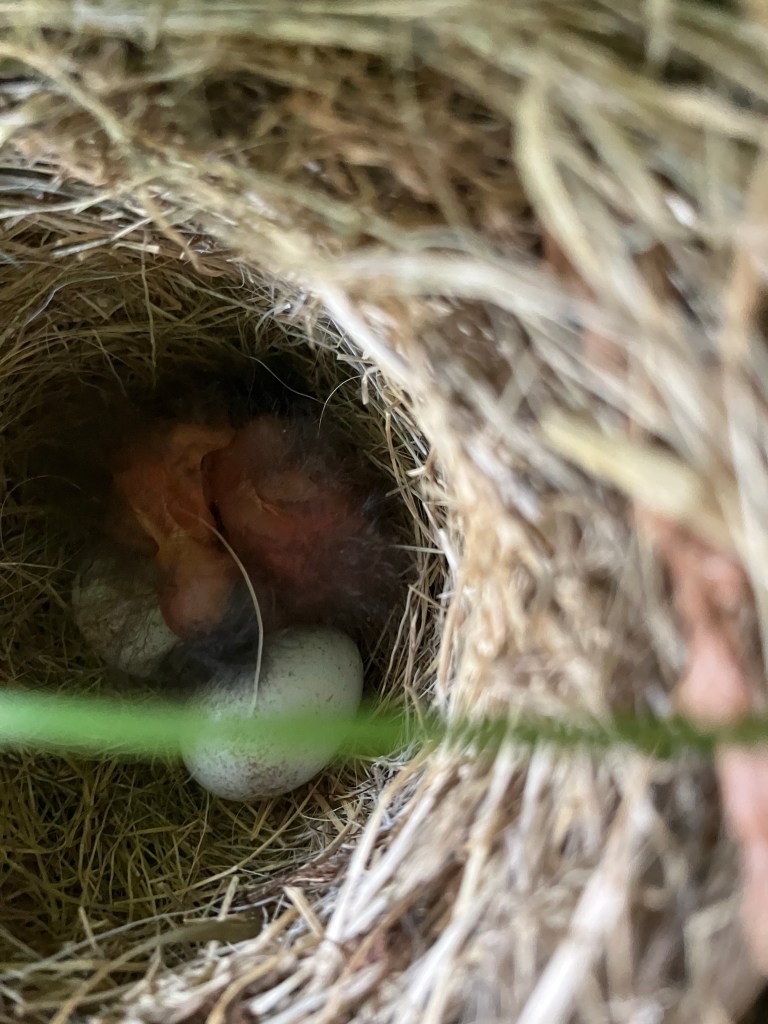
Yes, the eggs are tiny
Four eggs!
Mama bird settling in for sitting
Hatchling!
Feed me!
Feed me two!
Dad bird shows up with groceries
Mama bird takes a nest stretch
Unfortunately the birds flew the coop early, no doubt due to the fact that they nested in our patio area and we go through there multiple times a day. I felt terrible until I read about a ornithologist who runs into the same problem when studying juncos. The extra attention needed to band them for tracking can force fledglings to leave the nest early, but the good news is that the survival rate is high. This (I told myself) is what probably happened with our four little nestlings. Mama did return once or twice to the empty nest then disappeared.
I miss having our little junco family as neighbors and wonder if they will return next year.
The all important Cow Appreciation Day just about snuck past me but my handy National Day calendar alert informed I needed to pay attention. Cows are beyond special—they are bovine.
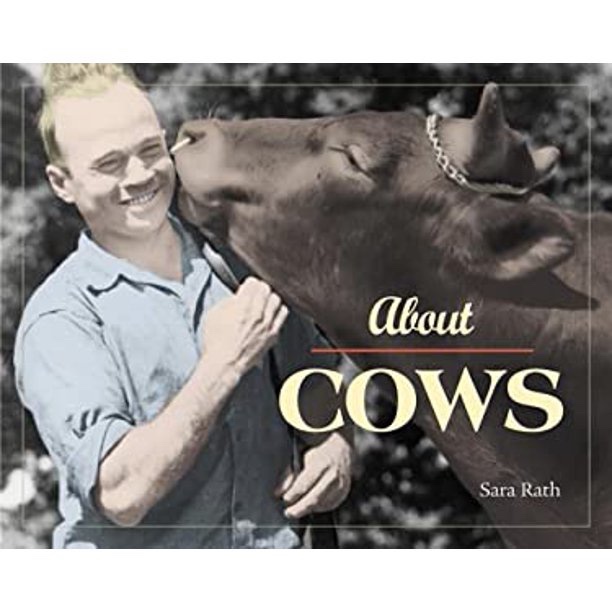
Having grown up around cows, and having lived across from a dairy farm for twelve years, I have an either an affection or a affectation for cows. I have gathered and created a plethora of cow jokes and cow facts and created a book that unfortunately no publisher is interested in at the moment. That doesn’t stop me from appreciating what Sandra Boynton has done for the cow with her winsome cowtoons and book. Gary Larson has also shown an affinity for cows. One of my other favorites is About Cows. There are scads of other books that regale cows from Dr. Seuss to meditative cows. Maybe the market isn’t ready for yet another tribute to cows.
Sandra Boynton knows her cows
Gary Larson goes to the Far Side about appreciating cowsEmbracing the love of cows
Then again, why not? I’m not giving in or giving up even because cows are cool and the world cud appreciate another udderly cow time.
Here are some of my favorite cow jokes I like to toss out to unsuspecting listeners:
Why are dairy farms so noisy? Too many cows have horns.
If good cows go to heaven where do bad cows go? The udder place.
Why did the farmer place bee hives in his pasture? He wanted to live in the land of milk and honey.
What goes “oom oom oom”? A cow walking backwards.
And my parting riddle—
What is the best way to make a milkshake? Have it jump on a pogo stick.
I would love to hear your thoughts on why cows are so cool or a really good cow joke—I have enough bad ones.
Of course I’m following the AI news. As a former English teacher I still have a vested interest in how students might tap into ChatGPT and all its marketplace cousins. I thought running herd on suspected cut and paste and plagiarism was challenging, now there is the matter if the assignments are student-produced or bot-generated. Did I mention I’m glad I’m retired?
Now that I am retired I am focusing on my own writing. I am beginning to notice publishers are posting their own AI cautionaries on their websites, about appreciating AI, but wanting original work. Yes, we’ll see how that turns out.
Then I read how someone created a picture book by plugging in prompt directives. This did not go over well in the comments. I have enough competition from humans, I don’t want any from machines.*
I decided to take ChatGPT for a test drive. I plugged in the prompt: Create an enthusiastic book review for Syria’s Secret Library.
I had just finished the book and was about to write up my Goodreads review and was curious what the ChatGPT approach would produce.
In less than a minute, more like 30 seconds, I was reading a seven paragraph review that was disconcertingly well-written. On first reading. Here is the first paragraph:
Prepare to be whisked away on a remarkable and inspiring journey as Mike Thomson takes us deep into the heart of Syria’s Secret Library. This is a truly exceptional work that not only sheds light on the power of literature but also showcases the indomitable human spirit in the face of adversity.
A decent introduction, a bit more enthusiastic in praise style than I would write, yet decent.
On second reading I noticed more glowing praise; however, it was what I refer to as “frosting” in that it looks good but has little substance. My AP students would write “frosting” essays when they weren’t fully knowledgeable about the topic prompt. They would write around the topic without truly addressing it. The AI result was much the same. It addressed the book in a very general way and the paragraphs became repetitive in its praise due to lack of detail. It’s as if it read the book jacket instead of the book:
The characters in this book are genuine heroes, ordinary people thrust into extraordinary circumstances, fighting to protect the essence of their culture and to safeguard the treasures of human knowledge. Their commitment and sacrifice are truly awe-inspiring, and their stories will stay with you long after you finish reading.
Which characters? What sacrifices? How were their actions awe-inspiring? These would be comments I would write on a student paper. Details. Give me the “so what?”—get me interested by providing specific details.
Then again, maybe it’s dependent on how well the prompt is formed. I revised my original prompt to read: Create a positive book review for Syria’s Secret Library including specific details from the book such as names, places, and events.
Here is a paragraph from the revised review:
The book eloquently captures the power of literacy and the profound impact it had on the people of Daraya. It was heartwarming to read about how children like Waleed and Reem found solace and inspiration in the pages of books, transcending the horrors of war. The author skillfully weaves their personal stories with historical and cultural references, painting a rich tapestry of the Syrian people’s resilience and unwavering thirst for knowledge.
It now mentions the place: Daraya, yet who are Reem and Waleed? And therein lies the problem with trusting bot research—it can get it wrong. There is no Reem and Waleed in the book. At least the the story I read.
I keep reading incidents where people, as in professionals such as lawyers, are getting into BIG trouble when it is revealed that their documents are flawed because they trusted what the AI produced. (Why they didn’t fact check is a question I had).
Overall, I am concerned where AI writing dependencies are taking us in both the creative and professional realm. From my brief forays though, I’m not too worried about my day job as a writer being threatened, especially after the results from my prompt concerning a young boy, a grandmother and feeding birds and squirrels in the park. AIiyiyi it was that bad.
*quick segue—my summer binge is “Person of Interest” which is an older series how a billionaire computer whiz invented a machine that watches the population for acts of terrorism, but he uses it to help prevent crime. I find this 2011-2016 series still relevant in how artificial intelligence becomes smarter than its programming.
Names can be a real stumper. Selecting the right name for a place, character, or in my current writing dilemma, a magazine.
Vogue is a hard act to follow
Names and places aren’t usually a problem when writing a story. I have dictionaries and other resources that inspire me. Yet, coming up with an invented name for a magazine is proving difficult. The frustrating part is that the magazine is only mentioned by the character a couple of times, yet it will set up more about the character if readers can associate the magazine with its connotative style. I’m a basic person when it comes to clothing (go Old Navy) so fashion magazines aren’t my usual read; however, my character, Carla, works for a fashion magazine in New York, and she is all about style. Coming up with a magazine about fashion without it actually being a real world magazine has taken far too much of my creative time.
Here are some titles I have come up with that got nixed after doing some fact checking:
Style–out there
In Style–out there
View–out there
Modus–out there
Mode--out there
Mirror–out there
Preview–out there
Clique–out there
Allure—out there
Then there is associated terms, like what The Devil Wears Prada did emulating Vogue by calling the magazine Runway. Maybe I could go there, although some terms have connotations:
Lipstick–nah
Blush–that’s leading somewhere I don’t want to go
Reflect or Reflects–sounds like a mindfulness posssibly
Today–TV show
Now–too demanding
I’m running out of ideas. Just need one word, maybe two, that both entices the reader to pick up the magazine and to understand what it is about. These are possibilities
Regard–-kind of like En garde, as in the directive when fencing (being on one’s toes, being ready)
Prev–a bit like “preview” as in getting in on new fashion before everyone else—possibility Preva?
Esteem-too much bragging
Sass and Saz--unbelievably are out there
Nouvo—a twist on nouveau, as in new
Maybe go with a single letter
M–oops, out there
Q–as in quest for fashion, yet too much like GQ
Z–too generational
W—yup, out there
So–I encourage you, I implore you–please help me out with possible magazine names. Think fashion. Think New York. Think chic. As incentive I will mention your contribution in the novel’s acknowledgements.
Today’s audiences talk about seeing a movie. And we are very much a visually oriented culture. Yet, in Shakespeare’s day audiences would say they were going to hear a play because language was such an integral aspect of their culture.
Shakespeare knew this, of course, which is why he wrote his plays with rhyme, rhythm, homonyms, laced with ambiguity. He wanted his audience to hear the auditory beauty of language.
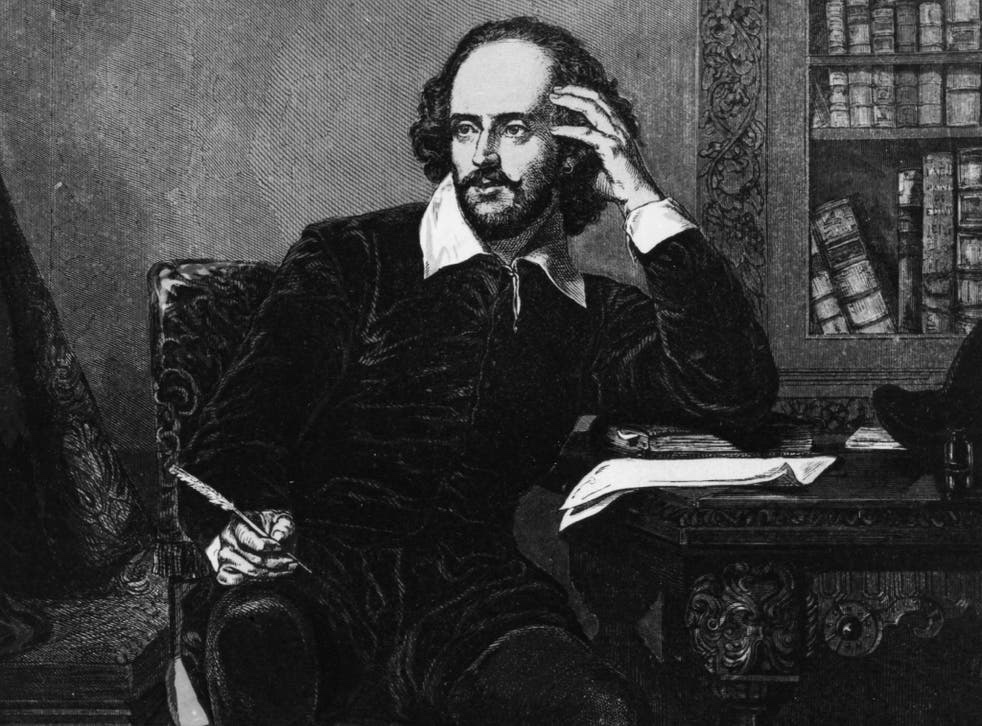
Pen in hand the Bard does ponder
Modern audiences are more accustomed (or have grown more accustomed to) sound bites—quick bits of communication. No wonder eye rolls and twitches are commonalities when someone mentions Shakespeare—we are no longer used to the longer, more developed portents of language. We want quick and easy auditory digestion instead of the languid delight of a language banquet. ‘Tis a shame, yet supping upon a Shakespeare play is possible with a bit of effort.
Shakespearean plays are written to be heard and the Stratford-Upon-Avon wordsmith created the means to better enjoy his words by employing the following:
1. Read the lines with deliberation and emphasis. For example, Macbeth’s “Tomorrow and tomorrow and tomorrow” does better with a slow pronounced repetition to emulate the tedious monotony of life.
2. Use punctuation as a guide by reading to the end stop rather to the end of the line it gives more meaning to the lines. This is known as enjambment, where the line overflows into the next line, much like a waterfall cascades flow smoothly creating movement. For example, in Romeo and Juliet, Juliet pours out her emotions for Romeo in one rolling, passionate wave:
When he shall die, Take him and cut him out in little stars, And he will make the face of heaven so fine That all the world will be in love with night And pay no worship to the garish sun.
Reading this passage out loud, carrying one line over into the next enhances Juliet’s feelings for her Romeo.
3. Be aware of accented words, pronouncing them with an extra syllable. For example “perfume’d would be three syllables, not two. Shakespeare would have done this to enhance the meter or rhythm of the line. Plus, it has the bonus of sounding fancier.
4. Know that Shakespeare presented his words with intention to paint pictures (no access to CGI) with verbal cues to ignite his audience’s imagination. He needed his words to create imagery since scenery and props were minimal on the Elizabethan stage. For example, when Juliet says, “It was the nightingale, and not the lark,/ That pierced the fearful hollow of thine ear,” she is in her wedding bed with Romeo—she is no doubt as close to him as her heartbeat.
Reading Shakespeare can be an enriching, delightful experience when his words are read out loud with considerate digestion.
As stated earlier, the travel bug has not bit us. We hunker down in winter and practice wishful thinking for warmer climates.
All in all, winter is for the birds. Really. That’s what we are doing for entertainment. We have enticed juncos, nuthatches, chickadees, sparrows, finches, a part time dove, and an infrequent flicker to our front yard with seed and such and sit back and enjoy the show.
Took Rocket J. Squirrel a few attempts to reach the feeder
We have a very basic feeder and try to keep it filled; however when it’s 19 degrees, with a brisky wind, finding alternative methods of feeding our feathered friends, like tossing food out the window for them onto the snow is the solution.
The seed buffet has garnered the attention of other critters: squirrels and deer. The squirrels are comical in how they try to avoid going through the snow to get to the food. They traverse on the branches above and tail twitch in frustration that they can’t quite reach the feeder. We spent a good hour observing how one squirrel finally took the plunge and dove into the snow, tunneling a track to feeder’s base to glean dropped seeds.
All you can eat seed buffet
The deer easily amble over to the feeder and lick seeds off the tray. They are not perturbed by our presence at the window.
We think this little guy looks like a burro so we have dubbed it Burrito
The most entertaining morning session was when the squirrel and deer arrived at the same time. The deer held their ground and would not acknowledge the squirrel’s attempts to mosey up to the seed feed. Old Rocket would inch up, tail twitching in anxiety and then Burrito would level a look that translated as “Excuse me?” and Rocket would hightail up the tree and pace the limb waiting, waiting, waiting for his turn.
Showdown at OK Feed and Seed
As for the birds—their territorial flutterings are reminiscent of playground squabbling. There is one white-crowned sparrow who is pro at fluffing up his feathers and chasing off the smaller birds from the seed buffet.
Like little kids playground squabbling
For most, the chosen winter sport is skiing, for us staying warm, while we watch from our chair side seats the front yard antics, suffices. Although, truthfully, after the third snow dump (and it’s still early December) I might just look into those Costco travel brochures that we pass by when we load up on birdseed. I imagine there are birds I can watch from a beachside balcony.
Usually I highlight the five star reads from the previous month as a Reader Roundup.
No five star reads in September.
Yes, this is disappointing to report. I read fifteen books and several were okay, some were meh, and a couple came close being a really good read. Keeping to my standards though, and no five stars.
So–
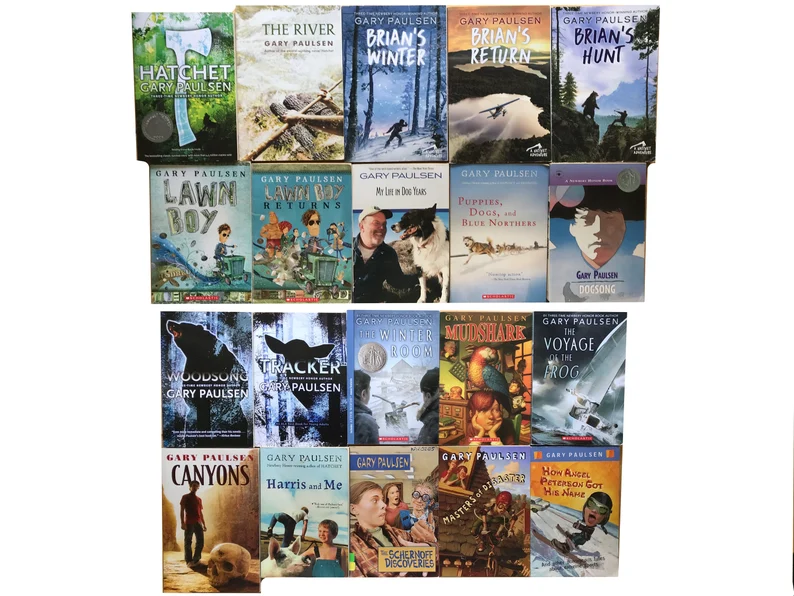
This post will instead feature a really good author: Gary Paulsen. Yeah, the guy who wrote Hatchet. Yes, that story of a boy whose private airplane pilot dies en route to see his father and they end up crash landing in the Canadian wilderness. He survives moose, mosquitoes, and choke berries with only a hatchet. It’s the book my sophomore boys usually picked to read for their book report even though I know they have read it (again and again). It is a good book, but Gary Paulsen wrote more than Hatchet. In fact, he wrote around 200 books, five being related to Brian of Hatchet.
image: sperrygoodemporium
A phenomenal author who wrote mostly about survival, be it in the wilderness or just making through a dysfunctional life, Paulsen also wrote humorous stories and historical stories. He wrote with insight and knowledge. He was the type of writer who lived his stories which is one reason they are so engaging. He knew what it was like to live in the wilderness. He hunted, fished, sailed—he even ran the Iditarod.
Looking at a photo of him it is difficult to get past his grizzled hermit-in-a-cabin appearance. Yet, he was a wordsmith and loved to read books along with respecting and rejoicing in the wilderness.
image: Wikipedia
Gary Paulsen passed from heart failure at 82 in 2021 and leaves a legacy of books that generations will discover and appreciate. His writing and his storytelling, especially his Brian stories are worthy reads at any age.
My husband, well past his middle school years, is absolutely enthralled with Paulsen’s books. His utterances of “whoa” and “wow” and guffaws of delight make me set aside my “grownup” books and reread Paulsen. I agree with all his observations, and we have great share sessions.
A really good read from a really good author is a treasure.
It’s obvious I’m a Book Booster. Reading, reviewing, writing. Celebrating access to books. Promoting reading. A book in hand whenever possible. Today’s national recognition is an everyday celebration for me.
I couldn’t fathom not having a book handy to read.
How about you? Is this a special day or an everyday note of recognition?
I admit to being a cow aficionado. I grew up mucking about on our neighbor’s farm. Later in life I lived across from a dairy farm for twelve years. I udderly came to appreciate the wonder of this animal. To chew green grass and deliver creamy milk is marvelous.
The close proximity of cows inspired me to create a book that celebrates the cow with over 100 cow jokes with some stuff and nonsense thrown in. No publishers yet are interested. I remain hopeful that they will eventually realize my book, while not Pulitzer Prize material, is outstanding in its field.
To celebrate the cow here are some riddles to help you appreciate the cow:
1.What’s green and black and white all over?
A field with cows.
What did Old MacDonald say when the cow stepped on his foot?
“Ee-ii-ee-ii-ouch.”
What did Old MacDonald say when the cows began to stampede?
“Aaugh, I’m having a herd attack!”
What did he say after the stampede?
“Cows should be seen and not herd.”
How did the farmer divide up his herd of cows?
He decided between the calves and the calve-nots.
What did the farmer say to the old cow?
“It’s time you retired. You’re pasture your prime.”
7. Why do you call a pregnant cow?
Calfenaited.
8. What do you call a cow that isn’t pregnant?
Decaf.
9. Why did the cow jump over the moon?
The farmer had cold hands.
10. Why did the farmer install bee hives in his pasture?
He wanted to live in the land of milk and honey.
Celebrate the cow today. If a hug isn’t possible, then an ice cream cone is acceptable.













 Pam Webb