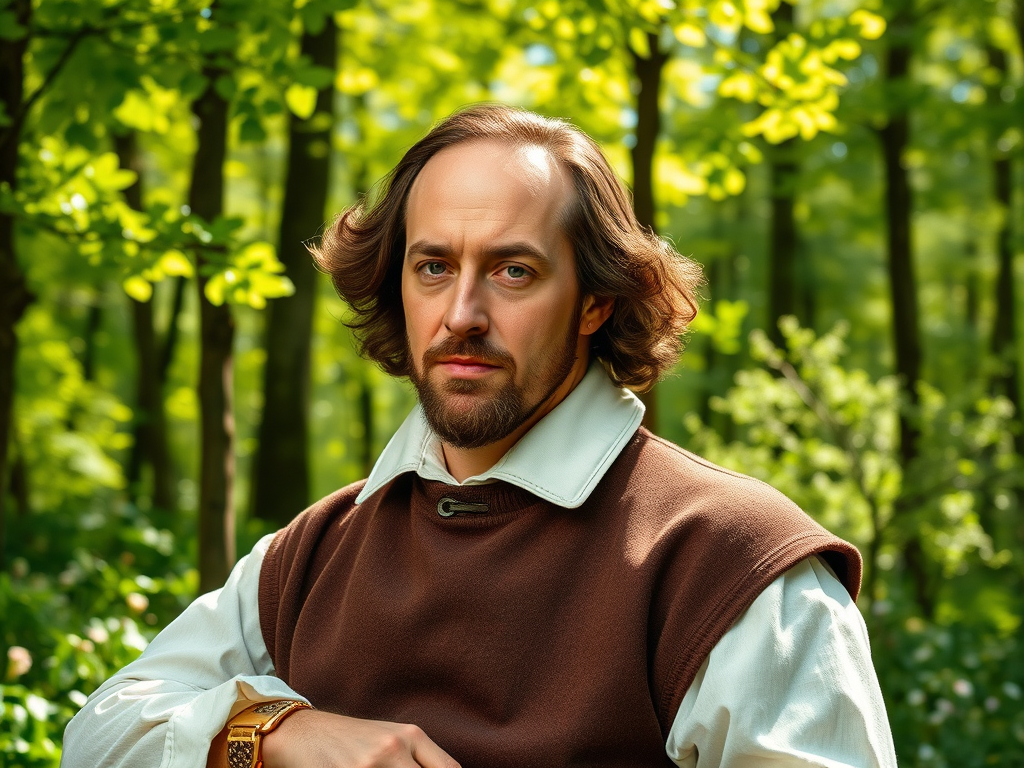
Having grown up in a town surrounded by the country, William Shakespeare was comfortable and familiar with the onset of spring. Since the 20th marks the beginning of spring, according to my Dollar Store calendar, here is WS’s tribute to spring in a poem appropriately titled “Spring.”
When daisies pied and violets blue
And lady-smocks all silver-white
And cuckoo-buds of yellow hue
Do paint the meadows with delight,
The cuckoo then, on every tree,
Mocks married men; for thus sings he,
Cuckoo;
Cuckoo, cuckoo:
Oh word of fear,
Unpleasing to a married ear!

When shepherds pipe on oaten straws,
And merry larks are plowmen’s clocks,
When turtles tread, and rooks, and daws,
And maidens bleach their summer smocks,
The cuckoo then, on every tree,
Mocks married men; for thus sings he,
Cuckoo;
Cuckoo, cuckoo:
Oh word of fear,
Unpleasing to a married ear!
For those interested in analyzing possible intent in his words, click “here.“
Being Shakespeare, it is par for the course that he would mix in references to country life, marriage, and the season. There are times I wonder if WS would have found a niche as a country western singer had he traveled in this era.
Recap: Part One addressed the situation of setting up a really boss BBQ area in the backyard only to have proximity issues with a new neighbor.
As Paul Harvey used to say: “Now for the rest of the story…”
Got the table-
Ready—-
Got the BBQ kettle-
Set
Got a lovely setting-
No go-
Yes-it was a No Go for the BBQ area because of the neighbors.
They had moved in right after we had arranged everything and set up their living space so close to ours it was going to be awkward to hang out in our backyard.
Plus, wanting to be good neighbors we accommodated their needs to raise a family so we moved the BBQ grill around to the other side of the yard and forwent using the cozy cafe corner so diligently decorated. The magnificent fern in the background (an annual volunteer) clinched the Feng Shui vibe and we were sad to forego the Feng Shui. We abandoned all of it for the sake of the neighbors.
Granted, we still used our backyard, and unfortunately we got into the habit of peeking over towards the neighbors before we utilized our yard. Just trying to be considerate but maybe our intentions were misunderstood.
I thought we were coexisting pretty well until we noticed it was pretty quiet on our neighbors side.
Then we realized overnight the neighbors had disappeared. Just like that. Barely a month in residence and vanished.
We wondered if it was something we did or said and then we realized that it really comes down to location, location, location.
And our new neighbors must have decided to raise their family in a more private area.
I have to say though they did overstep their sense of boundaries as I did catch them sometimes cutting through our yard.
“Don’t mind me-just passing through.”
Yes, our new neighbors were a pair of Pee Wees—no relationship to Herman. Delightfully cute little birds who decided to build their nest on top of a utility ledge just above our outdoor dining area.
Gone. No forwarding address.
Mama bird diligently stayed nest bound for a couple of weeks and though we tried to be courteous and reduce our backyard use our birdie neighbors abandoned their efforts to set up their family.
Now that they are gone we miss their presence. Isn’t that how it goes? Something that was once inconvenient becomes favorably reflected upon once absent? I haven’t seen them around in the neighborhood. I do hope their new place worked out for them.
Have you ever had to readjust your lifestyle to accommodate a bird nest?
A baker’s dozen read through July. Most were pretty good, a couple not so good, and a couple were really good reads.
Raising Hare by Chloe Dalton
This was my 100th read of the year!
An unexpected debut in that the author in all likelihood didn’t expect a book, a bestselling book at that, would be a result from her making the snap decision to rescue a leveret, a baby hare, seemingly abandoned in the February snows of the UK countryside.
By rescuing the leveret Dalton made a commitment to keeping it wild and not a pet, knowing that raising a hare in captivity is rarely successful. Hares haven’t been domesticated like rabbits, which Dalton acknowledged and respected. She changed her entire way of life to accommodate the leveret’s needs.
It’s a truly engaging story of how a wild animal can be nurtured by a human without becoming a Disney movie. Dalton writes with honesty and a poet’s eye as she describes her symbiotic life raising hare. She reflects on how it awakened her appreciation of nature, to take in the moment instead of pursuing her goals with blinders to the beauty surrounding her.
As for the hare? It lived an unusual life, benefitting from human companionship without obligation while keeping to its natural tendencies to raise a family and stretch its legs out about the countryside. Highly recommend for those who seek out positive reads involving nature.
The Cost of a Hostage by Iona Whishaw #12
Can’t Wait For the Next One
This twelfth entry of Lane Winslow and her adventures is a treat. The author places our plucky former SOE agent in Mexico with her inspector husband Frederick Darling. Kidnappings, bandits, nefarious war criminals are the main plot—meanwhile, in Nelson BC, Ames and Terrell man the police station, with the help of newly appointed April, and are caught up in their own crime situations of kidnapping and drug running. Both plots are well-paced. But what really stands out in this entry is the characterization,. Whishaw continues to develop and provide fully developed characters, each with their own distinctive personality.
It’s always difficult finishing one of these Lane Winslow books because it means having to wait at least another year for the next one.
I’m trying to par down my TBR list and yet so many tempting titles are out there! Anyone else have difficulty passing up a possible good read?
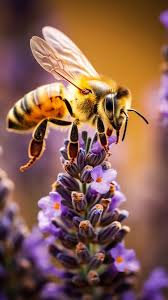
I’m an appreciator of bees. They are truly amazing in design and admirable in purpose. I keep bees in mind when landscaping my backyard by maintaining a dedicated mound of lavender, not only because I find lavender to be a fairly perfect plant, I know bees enjoy lavender as well.
Once spring arrives and the lavender starts flowering I watch for the bees to arrive. It’s a Capistrano moment for me.
image: Stockcake
Some years it’s the tiny golden bees that are dominant. Occasionally there is a variety of bee with a bit of red to them. My favorites are the big, black bumblebees. They remind me of teddy bears, yet I wisely refrain my urge to hold them and hug them.
image: Bumblebee Conservation Trust
My penchant for bees came forth when I realized I’m reading my third book, or is it my fourth, where bees are a main focus. I scampered to my Goodreads list to confirm this epiphany. Actually, make that seven books.
The Secret Life of Bees by Sue Monk Kidd Lily is introduced to the world of bees when she find refuge with three beekeepers and she learns about the power of not only bees but of women.
image: Amazon
The Bees by Laline Paul The Bees is a creative tale of one bee, Flora 717, who is almost put to death for her lack of physical conformity but is spared and readers follow her rise from humble hive janitor to respected forager.
image: Amazon
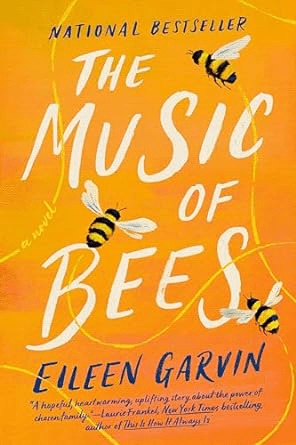
The Music of Bees by Eileen Graven Three people with deep hurts are brought together through the caring of bees.
image: Amazon
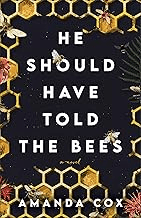
He Should of Told the Bees by Amanda Cox A daughter working with her beekeeper is devastated when he passes away since impacts their business, and the hurt is even more deep upon the discovery she has a half-sister who wants to sell her interest in the business.
image: Amazon
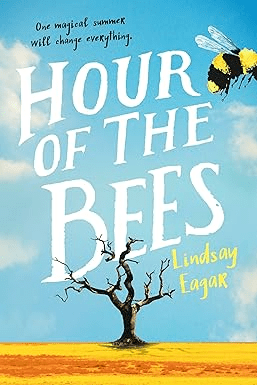
Hour of the Bees by Lindsay Eagar This middle grade novel features twelve year old Carol who unexpectedly finds herself helping her parents care for her grandfather who is slipping into dementia. A touch of magical realism as he believes the drought will end when the bees return.
image: Amazon
The Beekeeper’s Apprentice by Laurie King Sherlock Holmes has retired, passing his days with keeping bees. His interest in mystery is awakened upon the arrival of a young woman who rivals his intuition and maybe even his intellect.
image: Amazon
The Keeper of Bees by Gene Porter-Stratton A classic that is as beautiful in prose as it is rife with politically incorrect references; however, ignoring those or at least placing them in the context of the era it was written, a reader will delight in how a physically, emotionally, and spiritually wrecked WWI soldier is healed through the unexpected experience of caring for an ailing man’s bees.
image: Amazon
Are you a bee lover as well or have you read a book or two about bees? Please share the title, as I aim to keep on beeing a beeliver.
Since retiring from teaching (two years come June) I am writing more, since my excuse of not having time because of how much time teaching requires is no longer my safety net of non productivity.
I diligently try to write from 9 am to 2 pm and even though the hubs will pop in and say a brief “hi” as he does retired guy stuff around the house, I have to say writing is quite solitary.
However, I have discovered writing has become less solitary since I have set up a bird feeder, birdbath, and squirrel platform outside my office window. My bird buddies, an ever changing rotation of chickadees, nuthatches, and sparrows brighten my day. The squirrel adds hilarity as it plots to get more than its fair share of birdseed.
The other day a white-crowned sparrow discovered the feeding station as well as wayward seeds on the windowsill. He hung out all day.
A personable sparrow
At times it seemed as if he was peering in at me. Wanting to encourage his return I sprinkled more birdseed on the window ledge. The sparrow did not return, instead the resident squirrel crashed the party.
Yes, it is big for a squirrel
I do not get as much work done, unfortunately, with all this distraction, but I did manage a blog post.
Emily. Emily. How amazing is the ability to capture a moment for all of us to wonder and appreciate centuries later. And to think your poems lay hidden, languishing until a sister realized they needed freedom not a burial.
A lane of Yellow led the eye
Unto a Purple Wood
Whose soft inhabitants to be
Surpasses solitude
If Bird the silence contradict
Or flower presume to show
In that low summer of the West
Impossible to know—
Brook, Be still,—be still! Midnight’s arch is broken In thy ceaseless ripples. Dark and cold below them Runs the troubled water,— Only on its bosom, Shimmering and trembling, Doth the glinted star-shine Sparkle and cease.
Life, Be still,—be still! Boundless truth is shattered On thy hurrying current. Rest, with face uplifted, Calm, serenely quiet; Drink the deathless beauty— Thrills of love and wonder Sinking, shining, star-like; Till the mirrored heaven Hollow down within thee Holy deeps unfathomed, Where far thoughts go floating, And low voices wander Whispering peace.
Although I am drawn to the ocean, I think I favor the quiet charm of a brook ensconced in the cradle of the woods. What is it about archaic language that makes reflections so much more profound?
Are you a New Yorker? If so, then you know that William Bryant helped establish Central Park and the Metropolitan Museum of Art and that Bryant Park is named for him. He was also long time editor of the New York Evening Post. Of course you knew . More importantly, Bryant was part of the Romantics. While the Brits reveled in Wordsworth, Keats, and Shelley, America had its own Romanticist in the form of William Cullen Bryant.
William Cullen Bryant: November 3, 1794 – June 12, 1878 (Wikipedia image)
November by William Cullen Bryant
Yet one smile more, departing, distant sun! One mellow smile through the soft vapoury air, Ere, o’er the frozen earth, the loud winds ran, Or snows are sifted o’er the meadows bare. One smile on the brown hills and naked trees, And the dark rocks whose summer wreaths are cast, And the blue Gentian flower, that, in the breeze, Nods lonely, of her beauteous race the last. Yet a few sunny days, in which the bee Shall murmur by the hedge that skim the way, The cricket chirp upon the russet lea, And man delight to linger in thy ray. Yet one rich smile, and we will try to bear The piercing winter frost, and winds, and darkened air.
I do like fall. Each month has its own cadence. September has its drowsy warm days drifting into chilly nights, and then there is October with its brisk mornings rewarded with a gift of sun before rescinding into frost-quickened nights. Bryant has captured November with its bright, lingering colors mixed into the descending browns, graced with slights of snowfall. November is truly a mixture of seasons with its bits of summer mingling with the foreshadowing of winter. I added “gentian” to my imagery entries. Lovely word. Wonderful poem of images.
Better known as a novelist, and perhaps as a scholar, Robert Penn Warren did provide some formidable poetry to ponder. You might be more familiar with his All the King’s Men, which garnered him the Pulitzer Prize in 1947, then his Pulitzer Prize collection Now and Then: Poems, 1976-1978. In all, he was awarded three Pulitzer Prizes, two being for poetry. His southern background influenced his writing, particularly leaning towards the agrarian appreciation of the land. Receiving accolades and honors throughout his career, Warren left a rich legacy of both prose and poetry.
Image of U.S. Poet Laureate Robert Penn Warren (Photo credit: Wikipedia)
Vision by Robert Penn Warren
I shall build me a house shall build me a house where the larkspur blooms
In a narrow glade in an alder wood, Where the sunset shadows make violet glooms, And a whip-poor-will calls in eerie mood.
I shall lie on a bed of river sedge,
And listen to the glassy dark,
With a guttered light on my window ledge,
While an owl stares in at me white and stark.
I shall burn my house with the rising dawn,
And leave but the ashes and smoke behind,
And again give the glade to the owl and the fawn,
When the grey wood smoke drifts away with the wind.
Like Cather’s poetry about the prairie, Warren provides a strong connection to nature. His diction is amazing the way it influences the imagery: “violet glooms,” “guttered light,” “glassy dark”. I don’t even notice the rhyme, it’s so fluid. Whether they poem is taken for its metaphorical meaning or literal, it doesn’t matter to me–I simply want to savor it, rather than analyze it. Good writing is like a good sunset in that words aren’t always sufficient to explain why the beauty is so moving.














 Pam Webb