Pam Webb

a writer's journey as a reader

Archive for the tag “fiction”

Reader Roundup: August


August around my parts is a combination of 90+ heat and smoke saturation creating one to two weeks of limited outside adventures. Fortunately I had a stack of really good reads to pass the the time. These are ⭐️ ⭐️ ⭐️ ⭐️ ⭐️ reads.

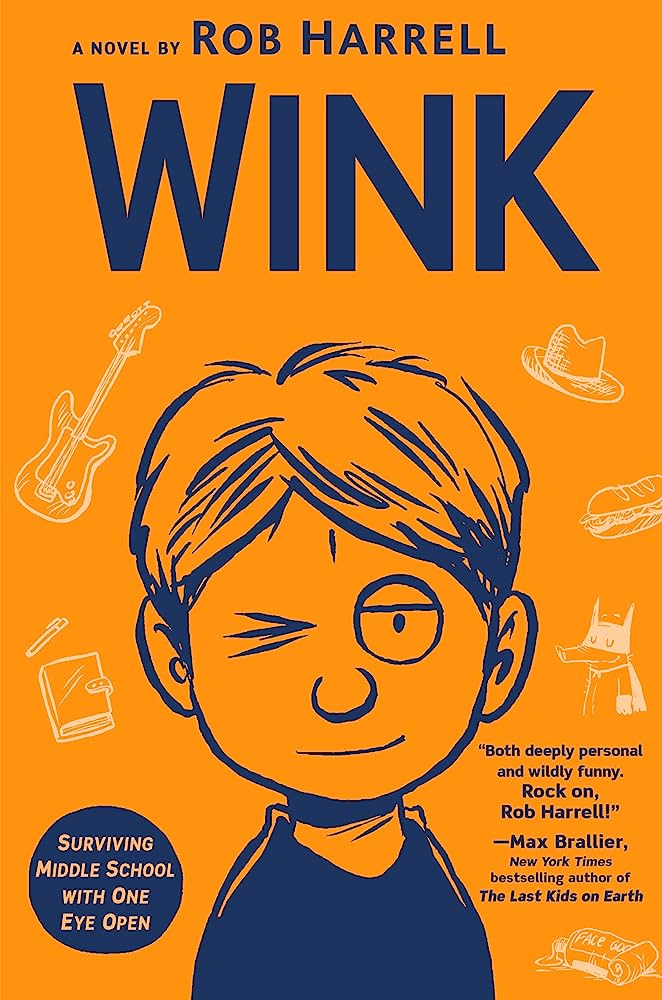
Wink by Rob Harrell

image: Amazon

Kid cancer stories. Usually maudlin, right? Not so with Wink. The author, basing Wink on his personal experience with eye cancer, creates an uplifting story of seventh grader Ross who must cope with not only dealing with all that goes with cancer treatments, but he also faces friendship schisms, bullying, crush disappointment, along with the usual angst of being a middle schooler.

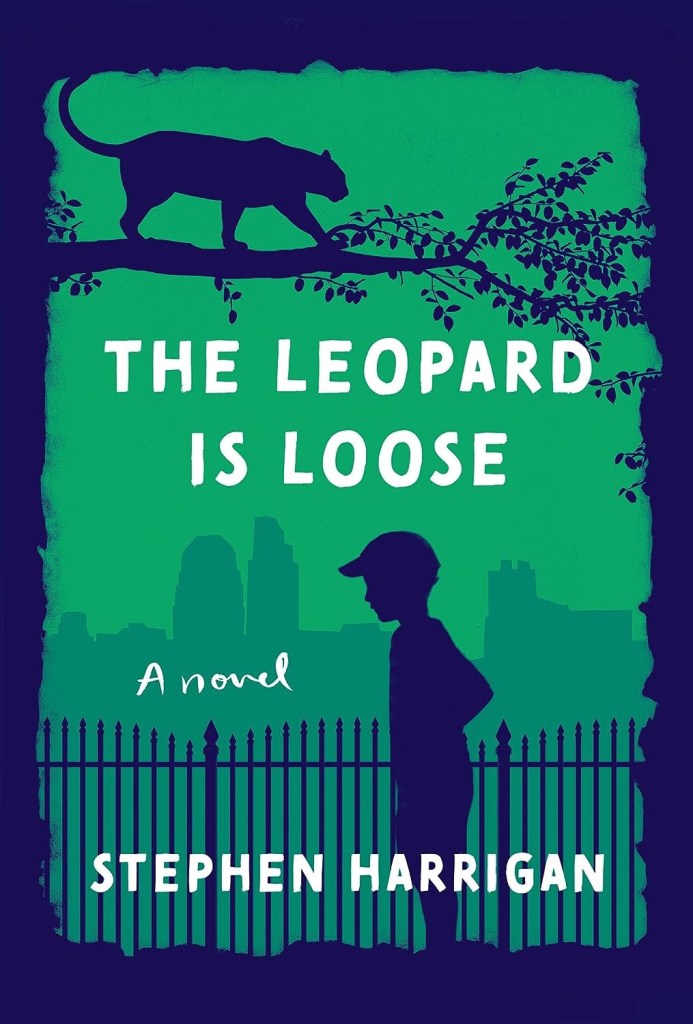
The Leopard is Loose by Stephen Harriman

image: Amazon

The Leopard Is Loose is a surprise read. The cover seems deceptively simple more suited to a juvenile read than a novel that reexamines a childhood trauma through the perception of an adult. The narrative is from a seventy year old man remembering the summer when as a five year old a leopard escaped from the town’s zoo. The loose leopard becomes a working metaphor as it represents a threat to the security to young Grady as does other aspects such as the volatile personality of his Uncle Frank who suffers from PTSD from his WWII experiences. Then there is the possibility of his widowed mother marrying which would mean moving away from all Grady has known. The author is deftly able to capture events and describe situations through the eyes of a five year old, yet embellish the unfolding with the perception of an adult looking back with gained knowledge and wisdom.

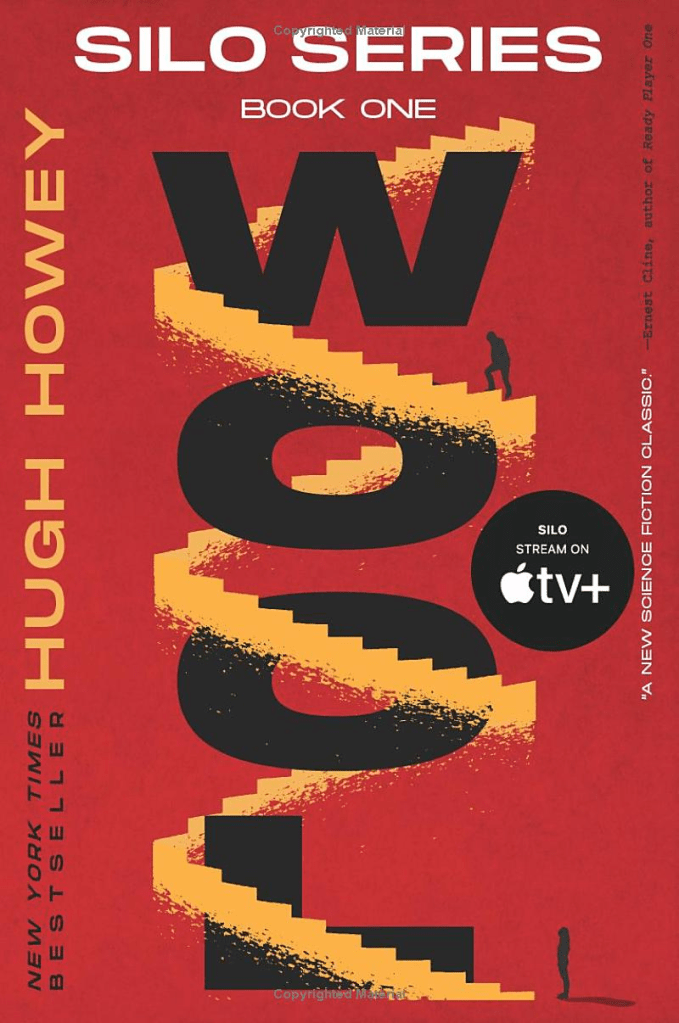
Wool by Hugh Howey

image: Amazon

A success story certainly deserves attention. Hugh Howey’s feat of shaking up the e-publish world with his short story and then the subsequent editions, proves ingenuity still survives. A unique dystopian idea where people live in underground silos as “seed” for better times definitely garners praise. While there are some plot holes as to how these people are able to successfully live from generation to generation as a self-functioning society, it’s the interpersonal connections that makes the long hike through the 500 page Omnibus so mesmerizing.

I read it eight years later after watching the Amazon series. After watching Rebecca Ferguson’s interpretation of Juliette I decided to reread the book. I wasn’t eager to revisit the story, remembering how it was difficult to fully get involved in the setting—a community living in a giant silo for how many generations? Yet, the story riveted me the second time because the series helped me visualize it this time around. Rebecca captured well Juliette’s plucky determination and most of the plot was covered.It’s a case of the book is the book and the movie is the movie.

I do suggest watching the series first and then reading the book. Shocking, I know. But it did change my rating from a four to a five.

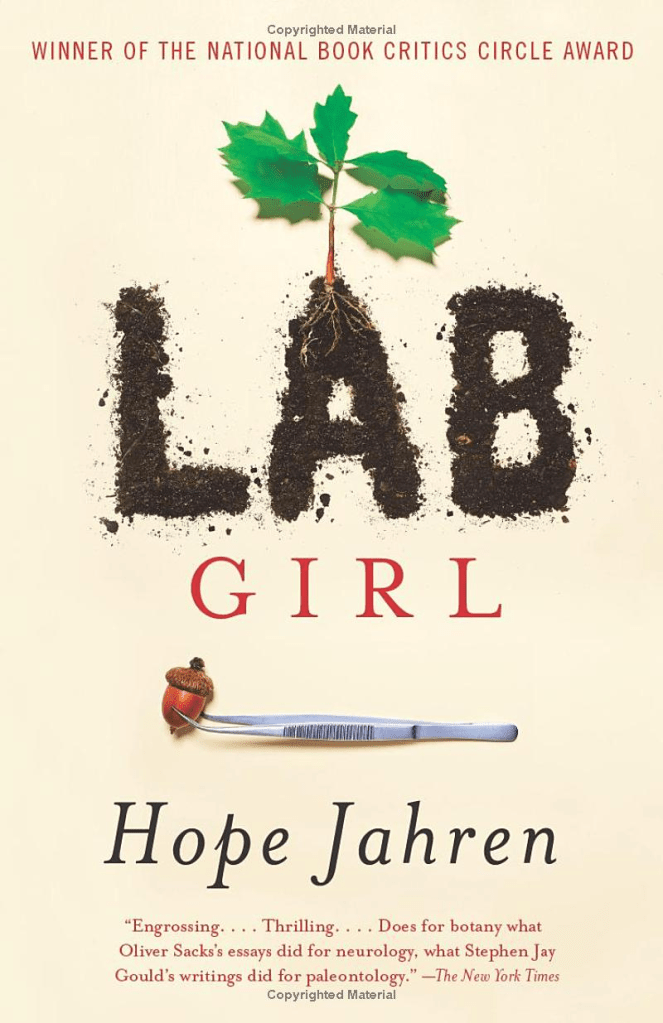
Lab Girl by Hope Jahren

image: Amazon

Lab Girl is a hybrid of a scientist’s insights about plant life and a revealing memoir that reveals the soul of poet who happens to be quite adept with the workings of a lab. She’s built three of them so it’s not surprising that Hope Jahren is recognized (by many, despite how she reckons women scientists don’t get all the credit due them) as a scientist of merit. Jahren’s intertwining vignettes, like the tree rings she fondly refers to, form her memoir, one that eloquently and at times is profoundly lyrical as she shares with her readers her unique perspective of seeing science through an English literature lens.

S by JJ Abrams and Doug Dorst

image: Amazon

With JJ Abrams listed as author I knew The Ship of Theseus would go where no book reader has gone before. Yes, his directorial credits of Star Trek and Lost are on full dial. However, Abrams is more of a show runner than author for this meta fiction wonderment. The writing credit goes to Doug Dorst, who may not be as well known yet proves he is a talented writer.

There are two novels. The first is The Ship of Theseus (SOT) which is an enigmatic tale of an amnesiac who sails kim with a gruesome crew and is tasked with ridding the world of a despotic autocrat. And our hero (antihero?) searches for the woman he deems as the key to his identity (as well as his heart).

The second novel consists of two college students. Jen has serious senioritis and Eric is an expunged grad student living in the shadows of the campus while he tries to complete research on VM Straka, the mysterious writer of SOT. These two tell their story through marginalia that first consists of their interactions and interpretations of SOT which leads to a friendship that blossoms into a relationship. As they trade ideas they reveal an undercurrent of espionage, intrigue, and conspiracy that is involved with Straka.

This not your usual read. While there is great effort to create a real book, library markings, aged pages, etc. it is all false. It is the illusion that there is a Straka, a conspiracy, two readers who literally get caught up in the book. It is very impressive and visually a treat. It is an experience and not merely another good read chalk mark on my Reading Challenge.

Oh, and the book contains over 20 inserts ranging from newspaper clippings to postcards to a decoder wheel. I enjoyed all the reviews, fan sites, and analysis about the book almost as much as reading it.

image: this book is full of surprises

Reading Round Up: October


The ability of freely reading after a long day of teaching and grading becomes an increasing struggle. Books are still a go to for defragmenting my brain, yet I find myself falling asleep way too soon as I relax while reading. It’s taking sooo much longer to get through my TBR stack. Sundays are becoming my reading days. And napping days. I do a bit of both.

Here are October’s highlights:

⭐️ ⭐️ ⭐️ ⭐️
Realistic slice of how one neighborhood copes with diversity.

⭐️ ⭐️ ⭐️ ⭐️ ⭐️
Overall, a thoughtful contemplation about what to do when the realization that life might be shorter than initially expected. While the foreign names and places were sometimes difficult to keep straight, the challenge of absorbing deep truths proved worthwhile.

NOTE: As much as I appreciate Jeremy Irons, I found the film adaptation so different from the novel I had to resort to my “the movie is the movie and the book is the book” philosophy. The book, of course, is so much better.

  • Reading Goal Update

Though my usual reading time is cut almost in half with my attention diverted to school again, I’ve managed to read past my yearly Goodreads goal of 101 books, and I am now at 121 titles for the year. Should I reach for 135 like I have previously? Ooh, that might be a challenge to consider…

The Morphing of the Omni Narrator


Right now we are toughing out poetry with my freshmen. *sigh* “We study poetry because oral storytelling came before the written language came into existence, plus many of the elements we study in poetry exist in fiction–you know, like imagery, diction, syntax, metaphors, analogies–so get to know poetry and you’ll understand and enjoy fiction that much more.”  And the question? (Jeopardy music, please)

Why do we study poetry?

Returning to the anticipated second quarter…(quick, quick, I’m losing them)

Once I get to short stories in the curriculum it’s pretty easy sailing, since my students are versed in plot, characters, setting, and such. Theme sometimes throws them; however, point-of-view gets them pondering. For instance, trying to explain the omniscient narrator is tricky these days. Back when, I used to say, “The Omniscient narrator is a lot like God–you know, everywhere and knowing everything about everybody.” I’m getting less comfortable about using that analogy in such a forthright manner.  I still believe it’s a valid analogy, yet don’t want to offend any of my students.  Let alone get the ACLU or other NSA types coming after me.

Cover of "The Long Winter"

Cover of The Long Winter

Another problem with trying to explain the omniscient narrator is that the old-fashioned version of the narrator filling into the details has changed into something quite different. For instance, I recently reread The Long Winter by Laura Ingalls Wilder (don’t snicker, it’s a great read, besides it’s for research–really) and Wilder includes in the story what’s happening to the town’s people and to Almanzo and Cap who are all caught up in a grueling blizzard, in an inclusive fluid manner.  I rarely come across this type of narrative style today. As Bob Dylan once said, “Times they are achanging.”

In the last few years I have noticed a trend where the omni narrative is now designated as separate chapters.  This at first proved quite annoying because the point-of-view kept changing. One chapter would be one character, the next a completely different one.  I felt like I was juggling characters to the point of wanting to run an Excel sheet to keep it all straight.

The last few novels I’ve read have run this narrative style, and every new book I’m pulling from my suggestion list and review newspapers seem to be pandering this new style. I keep checking them out though.  I’m either getting used to this new kaleidoscopic style of story-telling or I’m so starved to read I’m willing to put up with it.

Here are some examples of recent titles with the switch-hit character changing technique. Enjoyable reads all, but fret and nuisance, doesn’t anyone write in the old-time omni narrative style anymore?


Any thoughts, Book Boosters?

Paper Angels


Paper Angels by Billy Coffey

Not everyone who wishes on a star gets an angel.  Andy Sommerville does though.  Childhood tragedy has Andy wishing, praying underneath the stars for an angel to come and watch over him.  When the star winks, The Old Man appears, and stays with Andy throughout his life.  As Andy matures into adulthood he begins to view The Old Man as a blessing and a curse, since no one else can see him but Andy, and people, especially prospective girlfriends aren’t always receptive and open to men who talk to themselves.  The Old Man stays with Andy up until he needs him most.  A senseless crime puts Andy in the hospital and Andy struggles with the aftermath of the tragedy.  He can’t believe The Old Man is leaving him, yet he says God has sent Elizabeth to take his place.  Can Elizabeth help Andy sort out his life?  Will she have the answers to his questions?

Ambiguity.  There is something about a story that leaves us wondering, that makes it become a standout.  Think back to your high school English class and when I drop “The Most Dangerous Game,” “The Sound of Thunder,” “The Interlopers,” and of course, “The Lady or the Tiger,” into your memory chute, you know exactly what I am talking about.  Billy Coffey stretches out Andy’s story, and leaves the reader blinking and thinking a bit at the end, wondering if the ending is really what it is supposed to be.  As for me, I’m content to believe there are angels, aren’t you?

Post Navigation