There’s a guy I know, laid back, long hair, beard, comfy clothes, a man of few words—yeah, kind of that hippie vibe—and when you greet him he says, “You know it” with a smile. Yup, Charlie is pretty chill.
So with the vibe of relaxed, here are some chill “u” clichés”:
Under her/his thumb: subservient (beware of a boss who is considered all thumbs)
image:BBC Learning English
Under a microscope: close scrutiny (nothing like being pinned between glass slides with an eyeball staring at you)
Under the table:receiving payment without notifying the IRS as income (I don’t know what you are talking about)
Up for grabs: available (it is polite to ask first, I would think)
Ugly as a mud fence: very unattractive (can’t imagine such a fence making the pages of Better Homes and Gardens)
image: Citizen Times
Up in the air: no decision made (it’s up in the air whether it’s more popular to say up in the clouds instead)
Until the cows come home: waiting expectantly (cows are time conscious and will return to the barn when they are ready)
Up in arms: to become upset (referring to when soldiers when prepare for a fight by grabbing their weapons)
Up the ante: increase the odds or compensation
Up the creek without a paddle: to be in trouble or in possible peril
A number of familiar and unfamiliar expressions for this installment of words and phrases we use and might not have a clue why we say them.
Slick as a Whistle: This comes from whittling whistles from reeds. Once ready to go all a person has to do is blow through the empty, sleek tube and the sound easily comes out. With a little bit of work merry music is made–pretty slick.
Slush Fund: Back in tall ship sailing days, the ship’s cook produced a fair amount of fat waste, known as “slush,” which was used to grease the masts. However, if there was any slush left over, cook had the option to sell it, thus making a bit of profit. This profit did not have to be reported. This meant the ship’s cook could fatten up his private funds with the extra slush.
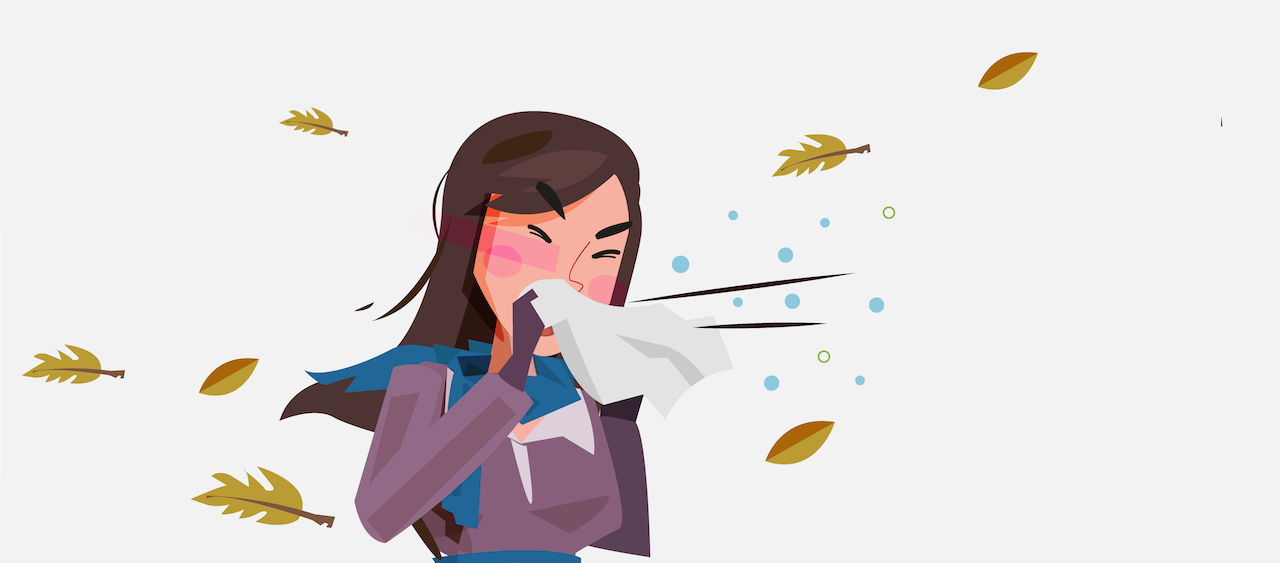
Sneeze At: The expression “sneeze at” comes in a variety of forms, usually stated as, “That’s nothing to sneeze at.” When someone sneezes they make a sound without words (okay, some people actually do utter “achoo.”). When something is noted, but not worth an actual stated reply, a person might make a noise of derision, surprise, or even agreement, depending on the situation. Next time someone sneezes it might be a question of whether or not they actually are holding back their stated opinion.
Snob: A bit of linguistic history for this small word that carries a heavy message. The Scottish word “snab” means “boy” or “servant.” At a point in history, English students attending university were of the nobility and referred to the townsfolk as “snabs.” In the 1600’s Cambridge University began admitting commoners. These “snabs” had to register as Sine Nobilitate, meaning “without nobility.” This became abbreviated to S. Nob, leading to “snob.” Snob signified being a “pretender to position.” So–attending a prestigious university like Cambridge doesn’t require nobility anymore–just smarts and funding? Education for all who can afford it? Oh, snab, how common.
Son-of-a-Gun: This stems from British sea slang. Improbable as it sounds, British Navy sailors were allowed to take their wives on long voyages. When the women gave birth they were relegated to the area beneath the guns to keep the decks clear. The term came to be a backhanded reference to being a soldier or sailor’s child. Today it’s often an expression of surprise, encouragement, or even an euphemism for stronger reference towards someone’s standing.
Southpaw: Left-handed folk are sometimes referred to as southpaws. Why? Major league baseball diamonds have an east facing layout so batters will have the afternoon sun at their back, making it easier to see the ball being pitched. This means when the pitcher faces the batter he faces west and his left arm faces south. If he pitches left-handed he pitches with his south hand or paw. Are right-handed folk north paws?
It’s been flung about how Shakespeare created around 1,700 words, some which we still use today, such as luggage, eyeball, and alligator. Unfortunately, many of the words used in Shakespeare’s time have changed meaning over time. And some of his words simply make no sense to our modern ears.
Moving from “G” to “H” in sayings gleaned from Dictionary of Word Origins by Jordan Almond, we explore the following:
Hair of the Dog: today this refers to taking a drink to combat the morning after over indulgence; however, it originally referred to taking a hair from the dog that inflicted the damage and placing into the wound. Connection? Both cures deal with the logic-deprived means of dealing with a bite.
sobur.co
Going off half-cocked alludes to pursuing a line of action and not being prepared, with the result being less than satisfactory, which is derived from the original meaning of hunters carrying their gun at half cock for safety reasons, yet not fully engaging back into lock and loaded when ready to shoot. Both instances are from not taking “ready, aim, fire” seriously.
Ham actors are known today as those who overact, not being of high caliber in their theatrical attempts. This terms stems from the long ago practice of applying ham fat to the face to more easily remove the burnt cork used to create blackface, a part of a stage comedian’s routine. A ham actor comes from “hamfatter”—not a compliment. Hogging the stage is another aspect.
Handwriting on the wall is a portent of doom and goes back to the rule of Belshazzar. In Daniel 5 the words “Mene, Mene, Tekel, Upharsin“ appeared on the wall announcing the end of Belshazzar’s kingdom.
Hangout usually refers to a place where people gather or getting together and it stems from the phrase “Where do you hang out your sign?” which was the question professionals, artisans, and tradesmen would ask one another when inquiring about their their business.
Hard up is a tough place to be since it means being broke and hanging in the wind and that makes sense since the nautically inclined know that to put the helm hard up is to turn the ship away from the wind. So if a person is “hard up” it’s doubtful they can handle the financial storms that come up now and then.
Harping on a subject, going over the same subject repetitively is much like playing one string on the harp—not pleasant and somewhat annoying.
finedictionary.com
If something is “haywire” it usually indicates it’s broken, and that’s from the logging camp days when loggers would take the wire from hay bales to mend equipment.
If you are known to wear your heart in your sleeve, you probably show your emotions easily. In the days of chivalric knights, a knight would tie a scarf from his lady love around his arm to indicate his favor—all would see where his heart lay.
If someone is on their “high horse” he or she is acting superior, and in those yesteryear days of transportation, someone riding high up on their horse was definitely superior to those having to walk.
There are many ways to categorize people. Dogs or cats? Soccer or football? Gelato or frozen yogurt? And the big one: glass up or glass down in the cabinet?
Housecleaning isn't what it used to be. Four hundred years ago it was even more of a problem. In fact, it was such a problem, especially dust issues, that glasses were designed with a pointed bottom so that when stored they would "tumble" over unless stored rim side down. Having a German mother, however, I do know about house cleaning, so this entry about tumblers took me to wondering just why we store our glassware in the manner of upside down. And yet, I'm wondering about how people actually used the glasses since they couldn't be set on the table. Were there catchers for these tumblers?
Turkey
The Ben Franklin story about wanting the turkey as our national bird is not this story. This story sounds like a bit of a fairytale though. Apparently tradesmen having discovered some birds, guinea hens, and sent them back to England by way of Turkey. Do you see what's going to happen here? When the birds arrived they were naturally named Turkey after the country they were thought to have originated from, which is why when settlers from England arrived to America and saw the natives with birds that looked like turkeys they were called turkeys.
I'm having a difficult time with this one too. Sometimes my little Why We Say… book has some really interesting explanations. Checking it out I found this information: maybe my little book isn't so wrong after all.
Taking a few turns…
Turning thumbs up or down
This one is so well known that you probably already know that a gladiator's fate was not always determined by whether he won the fight, but rather how well he fought. Thumbs up–he lived. A turn of the thumb, well, job security as a gladiator was a bit tenuous back then.
Turnpike
Originally, to prevent people from traveling down the road without paying for that privilege, a pike or bar was swung into place. And you thought those little gates were annoying.
Turn the Tables
Just like it sounds, during a certain card game a player could turn the table to replace his perceived poor hand with perhaps a better hand held by his opponent. Wait! That reminds me of a Bugs Bunny cartoon gag (around 3:35–the old carrot juice switcharoo).
As a teacher I must adhere to a couple of musts and one of those is taking attendance. I still find myself referring to it as “taking roll” which brings to mind me in a drill sergeant uniform and yelling out last names of my students as they stand at attention at their desks before sitting down to receive instruction. Now there’s a movie in the making, I know there is. Kind of a GI Jane meets Dead Poets Society. Wait a minute–I think Michelle Pfeiffer did it already. Never mind.
Seriously, taking attendance or taking roll, is a must-do within the first ten minutes of class. I have to scamper over to my desk computer and make sure all my darlings are in plus before dishing out my lesson du jour. So where did roll call come from?
Back in the day before books were bound, important documents were rolled up sheets of parchment, eventually become rolled paper. When a group assembled and the need to know who was present and who was not, the one taking attendance would unroll the paper and call out the names. Aah–so attendance and roll taking are in cahoots. I have a role in taking roll. I’ll take mine with cinnamon, thank you.
image: livestrong.com (I wouldn’t mind attending to these rolls…)
Teachers make judgments all the time. Sometimes I have time to make a quantitative decision based on fact and experience, no science involved at all, while other times I take a rule of thumb measurement and hope for the best. Seat of the pants decision making–but that term is somewhere in the S zone coming up.
Rule of thumb–an odd little expression that harkens back to the days when people measured not with accurate tools but with their body parts. Yes, the ark was built with elbow power (check out cubit sometime). In this case thumbs and fingers measured a given unit. It probably wasn’t as accurate as a measuring tape or a ruler, but if those are invented yet a person improvises. Yes, improvised decisions are called rule of thumb.
You know something–why we say these sayings do make more than sense. Although putting a crown on my thumb would be kind of weird.
As promised from last month we are delving into the somewhat unsavory sayings dealing with lowlife, or at least perceived lowlife. However, before traipsing across those tracks (and there are so many railroad tracks where I live, that nobody knows which side is which), let’s look at those high brows.
High Brows:
“No worries, I got your Bach, Delores.” image: morguefile.com/mensatic
“I don’t know, Delores, I would rather attend the Bieber concert. Bach is rather high brow for my taste.”
If only Delores could convince her nephew that high brow is so yesterday. Yes, scientists have determined that the idea of having a high forehead–I believe Sherlock has one, is not an indication of superior or even uppity tastes. No matter your forehead shape, you can have your Bach and beat it too.
Higher than a Kite: “Did you hear about Frank? Oh, man–he was higher than a kite. It was hilarious watching him trying to navigate down the hall after he ate two pieces of Aunt Stephanie’s rum cake.”
“Rum, anyone?” image: morguefile.com/maxstraeten
Well, indeed. Maybe Auntie Steph is a bit heavy handed on her rum, then again Frank would not want to be higher than a kite. No, that’s not the Mary Poppins stick and paper toy, nor is it the bird. It’s a shortening of the original phrase, “higher than Gilderoy’s kite.” Gilderoy, actually Patrick MacGregor, an infamous highwayman, known for deeds such as hanging a judge, picking Cardinal Richelieu’s pocket, and robbing Cromwell, met his end at the gallows. The height of the gallows indicated the height of crimes. Gilderoy swung fairly high, and the Gaelic word “kite” means “body” so, the expression “higher than Gilderoy’s body has nothing to do with Aunt Stephanie’s cake.
Hobos: I remember dressing up as a hobo for Halloween one year. It’s a cute photo. I’d share it with you if I could get my album off the shelf without braining myself in the head. Cleaning the hall closet is not on my BIG list (that’s right, Allegra–visting my messy closet does not even rate a mention on my list). So, talking about hobos has all kinds of connotations. I remember a William Powell movie My Man Godfrey that did a very nice spin on the hobo theme. Then again Mr. Powell probably didn’t know that “hoc boys” were the originals and they were actually hard workers who traveled from plantation to plantation working the cotton fields. They traveled around trying to find work and eventually their name was shortened to “hobos.” Those hoc boys would be no doubt bummed to be considered lazy-good-for nothings.
Hoodlums:
We’ve seen them in those noir films, those types who hang around the docks and buildings, just exuding trouble in the making. “Hoodlums” they may be, but actually they are “Muldoons” because that is where hoodlums gets its name. Apparently a West Coast reporter, whether to protect himself, it’s not known, wrote about a “Hoodlum” which turned out to be a backward spelling of sorts of a character named Muldoon, a gangster at that time. Perhaps a bad guy is a bad guy no matter how his name is spelled.
“Wait, a cotton-picking minute–we aren’t looking for work. We’re waiting for the bus. And there is no Muldoons amongst us.” image: morguefile.com/hotblack
What with National Poetry Month and school letting out, and getting ready for my Hamlet trip, I realize I’m remiss in getting out another edition of “Why We Say,” which is a look into the background of those words and phrases that are part of our everyday vernacular.
Today’s chapter is all about “getting”:
1. Getting the sack
I’m glad when I go to work everything is pretty much set up for me. I wouldn’t want to lug around desks, books, whiteboards, markers, paper, computers–wow, there’s a lot involved in being a teacher. Although being a trades mechanic around 300 years ago meant I came to work toting my own tools in a sack. If the boss didn’t like my work he’d tell me to get the sack, which meant “Hit the road, Jack.”
2. Getting the third degree
Note: I am getting this down low on the low down about police procedures from this quaint second hand book. Please don’t accuse me of sterotyping, perpetuating urban myths, or promoting wrong ideas. This is a Cyndi Lauper exercise of just wanting to have some fun.
So when someone says, “Did you get the third degree?” you’ll know that it comes from [supposed] police techniques of the first degree being arrested, the second degree getting confined, and then getting reaching the third degree of being roughly questioned. Puts this saying into a different perspective. I’ll be looking for it when watching my next detective show. It guess this goes right along with third degree burn. 3. Getting into a scrape
Who knew deer could be devious? During certain times of the season, deer are known to dig out indentations in the ground to rest in. If someone isn’t watching where he is going he could fall into one of these antler scraped pits. I wouldn’t think so dearly of them deeries after nearly breaking my ankle from the whole hole.
And in summary–a really bad day, back in the day would involve getting the third degree about getting the sack, after getting into a scrape.
Perhaps it’s because I’m basically an old-fashioned kind of girl that I tend to toss out old phrases like “don’t count your chickens,” “look before you leap,” along with one of my catch alls: “six of one, half dozen of another.” I tend to add that one in when there is a stalemate to a discussion. I can see there is more than one way to approach a matter so for argument’s sake I acknowledge we agree to disagree.
I then realized there truly is a different way to see and do a lot of things which can head up some fairly heated debates. For instance:
Storing glasses: rim down or rim up in the cupboard?
Shoes and socks: put socks on first and then shoes or one sock one shoe one at a time?
Chilled water: store water in the fridge or water and cubes as needed?
Bedsheets: pattern down or pattern up?
Swimming: dash in or bit by bit?
And the age old toilet paper controversy
Over or under: click here for the definitive debate
Can you add your own “see it two ways” to the list?






 Pam Webb