Pam Webb

a writer's journey as a reader

Archive for the category “word inventing”

How Cliché: Liking those “L” phrases


Lots of lovely “L” phrases coming your way…

Labor of love: to do something for the joy of doing so instead of doing so for personal gain. This phrase is found in the New Testament in Hebrews 6:10 and in Thessalonians 1:3. Both scriptures refer to those who labor in the name of God, doing so in love.

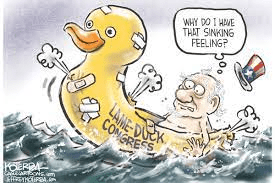
Lame duck: someone finishing out their term of office who will be replaced soon. Originally in 18th century Britain a broker who could not pay his debts were crossed off the membership and they would “waddle away” in shame. Moving to the USA in the 19th century the term was applied to congressmen who were not reelected yet had to serve out their term. perhaps causing them to “waddle away” in shame of losing their job.
Larger than life: appearing to be real. The original saying is from the Latin expression ad vivum, or “to the life.” In the 18th century the phrase appears, the 1799 Lame Jervas: “I see the puppets, the wheelbarrows, everything as large as life.” Other writers, such as Lewis Carroll and George Bernard Shaw began using the expression.

Last but not least: perhaps last but not not least in importance. It’s thought John Lyly originated the expression when he said, “Of these three but one can stand me in steede, the last, but not the least” in his 1580 Euphues and His England. It was also used by Shakespeare in his plays, including Julius Caesar and King Lear.

Last ditch effort: a desperate final attempt. In the 17th century the military term for last ditch applied to the last trench of defense. The 18th century saw the term used by Thomas Jefferson who said, “A government driven to the last ditch by the universal call for liberty.”

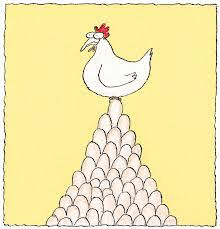
To lay an egg: to fail in an embarrassing manner. If a player or team does not score in the British game of cricket then a duck’s egg or zero is earned. Transfer this concept to America’s vaudeville and theater days when a performance failed to please the crowd or when a business fails the idea of laying an egg is applied, or in other words, an zero is achieved.
Left hand doesn’t know what the right hand is doing: taking an action that might indicate less than full knowledge. In Mathew 6:3 the passage indicates that a person should do good quietly instead of publicizing their action, basically keeping the action secret. Over time the secret aspect has taken to mean one department’s or organization’s action indicates a contrary action to another department’s or organization’s efforts, perhaps to the point of adding confusion or inefficiency to a situation.

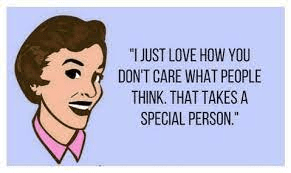
Left-handed compliment: a statement that seems like praise, but is actually a disguised insult. Marriages between royalty and a commoner is known as morganatic and the ceremony involved the groom (the royal) giving the bride (the commoner) his left hand instead of his right as was done in conventional marriages. *This brings up the issue of the left hand being considered the “lesser” of the hands, which harkens back to superstitions about being left-handed.
Let one’s hair down: to behave informally, without constraint. Back in the day when women wore their hair up, the idea of wearing their hair loose and down around their shoulders was considered a breach of societal protocol. A woman let her hair down only in the privacy of her bedroom. P.G. Wodehouse had fun with this in his 1933 Heavy Weather: “We can take our hair down and tell each other our right names.” *I’m wondering why this only applied to men…

Let the cat out of the bag: to reveal a secret. In old-time open air markets people would purchase their goods and carry them home in bags and baskets. There existed the shady practice of placing a cat in the bag instead of the purchased pig. When the person got home the truth was revealed when the cat was let out of the bag.

There are lots of “L” phrases left. The one that surprised me most was the cat in the bag. I will probably think of pigs whenever I hear a secret revealed from now on.

Word Nerd: Words I Want to Find in a Story


I see words come alive…

snollygoster: a clever, unscrupulous person. What a fabulous word! It reminds me of a villain lurking in the pages of a Lemony Snicket book.

banderole: a small flag or streamer fastened to a lance, masthead, etc. I imagine this will be a handy term for upcoming Fourth of July parades.

ferdutzt: confused; bewildered. It sounds like have a fuzzy brain.

skrik: a sudden fright or panic. Yes, that’s exactly the word when I’m startled.

quidnunc: a person who is eager to know the latest news and gossip. I am surprised I don’t come across this word in my English village novels. It so sounds like a person found in a Miss Marple story.

reboant: resounding or reverberating loudly. Definitely describes the train horns that barrage our area on a daily basis.

pluviophile: a person who enjoys rain and rainy days, and who is fascinated by the sights, sounds, etc., of rain. I grew up in the Pacific Northwest where you learn to live the rain or go bonkers in winter, spring, and fall.

farouche: sullenly unsociable or shy. Not just shy but shy with an attitude. That is inspiration for a character, for sure. Maybe this person meets up with the local quidnunc and sparks fly. Hmmm…

ferhoodle: to confuse or mix up. A companion of ferduzt.

bloviate: to speak pompously. You know, that part of the movie where the snollygoster monologues about how clever they are right before they are undone by the clever hero.

tawpie: a foolish or thoughtless young person. I see this being home in a Gaiman tale for some reason.

ceilidh: a party, gathering, or the like, at which dancing, singing, and storytelling are the usual forms of entertainment. Shakespeare’s A Midsummer Night’s Dream!

scintilla: a minute particle; spark; trace. It’s right companionable with “smidge”and “scootch.”

pwn: to totally defeat or dominate, especially in a video or computer game. Did the vowel get vanquished when this word came into being?

pervicacious: extremely willful; obstinate; stubborn. Oh dear, what if they are farouche as well?

proceleusmatic: inciting, animating, or inspiring. The problem is by the time the word is properly pronounced the moment has passed.

oppugn: to assail by criticism, argument, or action. This when the snollygoster shows their true colors.

lambent: running or moving lightly over a surface. Oddly, this is an adjective not a verb.

rubricate: to mark or color with red. So for equality purposes other colors should have their own verb—yellow would be “yubricate” and brown would be “bubricate”?

schmatte: an old ragged garment; tattered article of clothing. This sounds more like the state of my door mat after a hard winter of snow and ice abuse.

Challenge!

What word will you work into a conversation this week?

Writer Life: The Art of Name


Names can be a real stumper. Selecting the right name for a place, character, or in my current writing dilemma, a magazine.

Vogue is a hard act to follow

Names and places aren’t usually a problem when writing a story. I have dictionaries and other resources that inspire me. Yet, coming up with an invented name for a magazine is proving difficult. The frustrating part is that the magazine is only mentioned by the character a couple of times, yet it will set up more about the character if readers can associate the magazine with its connotative style. I’m a basic person when it comes to clothing (go Old Navy) so fashion magazines aren’t my usual read; however, my character, Carla, works for a fashion magazine in New York, and she is all about style. Coming up with a magazine about fashion without it actually being a real world magazine has taken far too much of my creative time.

Here are some titles I have come up with that got nixed after doing some fact checking:

Style–out there

In Style–out there

View–out there

Modus–out there

Mode--out there

Mirror–out there

Preview–out there

Clique–out there

Allure—out there

Then there is associated terms, like what The Devil Wears Prada did emulating Vogue by calling the magazine Runway. Maybe I could go there, although some terms have connotations:

Lipstick–nah

Blush–that’s leading somewhere I don’t want to go

Reflect or Reflects–sounds like a mindfulness posssibly

Today–TV show

Now–too demanding

I’m running out of ideas. Just need one word, maybe two, that both entices the reader to pick up the magazine and to understand what it is about. These are possibilities

Regard-kind of like En garde, as in the directive when fencing (being on one’s toes, being ready)

Prev–a bit like “preview” as in getting in on new fashion before everyone else—possibility Preva?

Esteem-too much bragging

Sass and Saz--unbelievably are out there

Nouvo—a twist on nouveau, as in new

Maybe go with a single letter

M–oops, out there

Q–as in quest for fashion, yet too much like GQ

Z–too generational

W—yup, out there

So–I encourage you, I implore you–please help me out with possible magazine names. Think fashion. Think New York. Think chic. As incentive I will mention your contribution in the novel’s acknowledgements.

How Cliché: The “B” List


The “B” section is booming with cliché phrases. All these are from Christine Ammer’s Have a Nice Day–No Problem: A Dictionary of Clichés.

The worst backseat drivers | Insurance.com
A backseat driver can be found anywhere

Backseat driver: unwanted advice.
In the 1920’s, those who could afford to do so, engaged a chauffer to drive them. The chauffer sat up front and the passenger or employer sat in the back and gave their driver instructions. Today the term applies to someone giving what they perceive as helpful advice, usually to the chagrin to the person doing the task. Other applicable phrases are Armchair General and Monday-Morning Quarterback.

Back to square one: back to the beginning
Though it sounds like a math problem, thoughts on this one are related to games where the start is a square, as in hopscotch or in a number of board games. Putting in hard work only to start over is frustrating and this term goes with back to the drawing board when the blueprints don’t pan out.

Salt mine Memes
And put some pepper in your efforts…

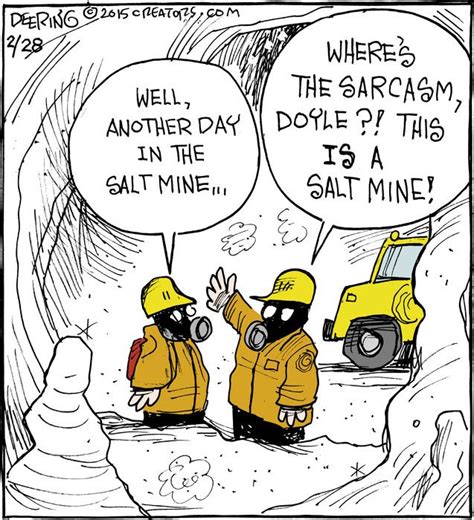
Back to the salt mines: returning to work
At one point in history, Russian prisoners during communist times were sent to work in the Siberian salt mines. While coming off of break can be tough, it probably is easier going that chipping away at rocks.

(The) ball is in your court: take your turn
A current expression from sports, which is attributed in the mid 20th century which is said when one person is a)being polite b)pushing the other person to take their turn c)a strategy to get the other person to reveal their intentions through action or words.

Bald face or barefaced liar/lie: an obvious, if not bold untruth.
Bare could be brazen, but it is likely is related to “beardless” which connects to only the young (not old enough to grow a beard yet) could so unashamedly tell such outrageous lies.

Idiom: Barking up the wrong tree (meaning & examples)
Categorically funny to Cocoa

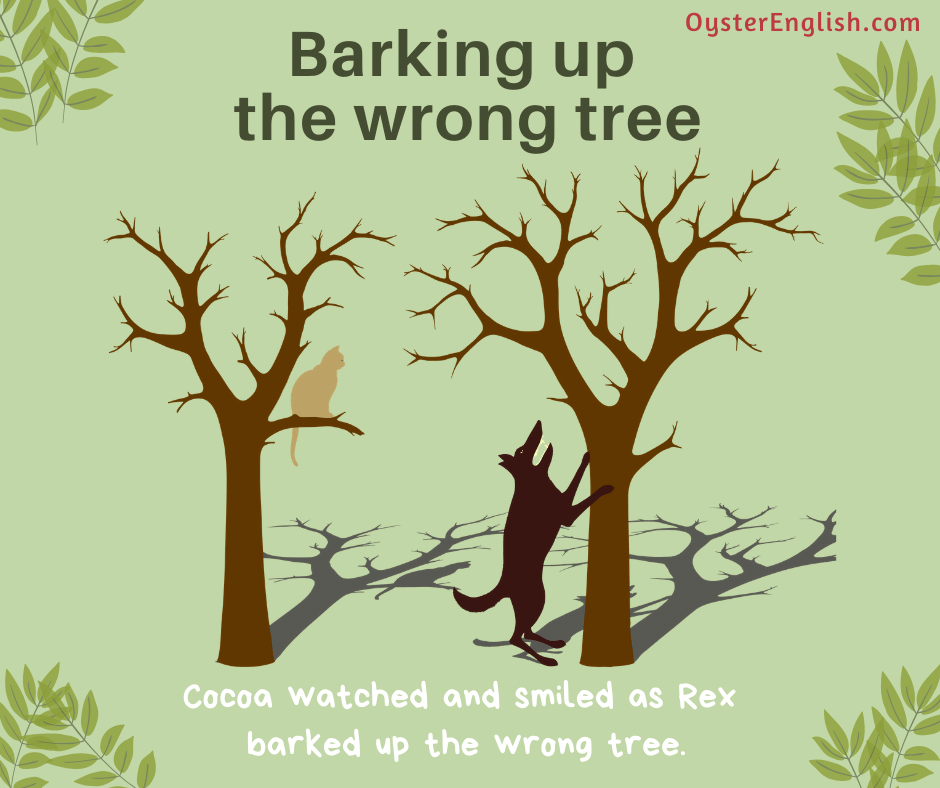
(To) bark up the wrong tree: waste time or effort going in the wrong direction
Once when hunting racoons with dogs was prevalent, sometimes dogs, so pleased with themselves, would bound up to a tree so sure they had caught the varmint, would bark to their owners their success. Raccoons, being the clever creatures that they are often led the dogs astray by jumping to another tree or applying some other witty escape strategy. For those out there thinking they have solved the problem through what seems to be a long and productive chase, they might find themselves baying at empty branches and must go back to square one.

(To have) bats in one’s belfry: deemed slightly crazy
Bats in flight fly in a more irregular than regular pattern. At one time people watching bat flight thought the irregular flight reflected how bats thought–erratically. Since then it has been proven bats have a sophisticated flying system that employs sonar which keeps them from bumping into obstacles. While belfrys are not much in current use, one might be considered batty if their thoughts or speaking seems random, which might at first seem like an insult, yet it’s actually a compliment since bats are considered sophisticated creatures.

(To) beard the lion: to take a risk
If you haven’t heard this term recently, that makes two of us. Considered cliché for over a century, this phrase has Biblical roots coming from when David related how by grabbing a lion by its beard he slew him. Facing danger and vanquishing it is one thing, grabbing lions is quite another. Granted, David showed his bravery. Look how this lion’s beard–that’s up close and personal.

Why do men have more facial hair than women? - Quora
Bearding the lion (looks more like a goatee)

Beat (scare) the living daylights out of: to punish or scare someone tremendously
A 19th century American colloquialism for a person’s internal organs was “daylights.” To punish or scare someone so severely that there innards would fall out is indeed severe.

Bed or roses: an implied place of comfort
Metaphorically, lying in a bed of roses sounds pleasant, being surrounded by the fragrant petals. However, there are thorns to consider. And a literal bed of roses demands constant care, so this phrase implies the opposite, as in the situation is not comfortable.


Word Nerd: November


Photo by Askar Abayev on Pexels.com

Thanksgiving comes around in November and getting together with friends and family can be emotional for some. Needing a few choice words to express feelings might be handy.

verklempt: overly emotional and unable to speak.

velleity: a mere wish, unaccompanied by an effort to obtain it.

stultify: to render absurdly or wholly futile or ineffectual, especially by degrading or frustrating means

thrawn: contrary; peevish; stubborn

longanimity: patient endurance of hardship, injuries, or offense; forbearance

foofaraw: a great fuss or disturbance about something very insignificant

megillah: a lengthy, detailed explanation or account

brabble: to argue stubbornly about trifles; wrangle

fustigate: to criticize harshly; castigate

gasconade: extravagant boasting; boastful talk

nescience: lack of knowledge; ignorance

frumious: very angry

snollygoster: a clever, unscrupulous person

beamish: bright, cheerful, and optimistic

Let’s hope if someone should start a megillah at the table no one will fustigate or brabble should it lead to gasconade. Instead, the gathering be one that is beamish.

UPDATE: Read about a picture book that features delightful words here: https://kathytemean.wordpress.com/2021/11/14/book-giveaway-hornswoggled-a-wacky-words-whodunit-by-josh-crute/

Why We Say: Hair of Dog to Ham Actors


Moving from “G” to “H” in sayings gleaned from Dictionary of Word Origins by Jordan Almond, we explore the following:

Hair of the Dog: today this refers to taking a drink to combat the morning after over indulgence; however, it originally referred to taking a hair from the dog that inflicted the damage and placing into the wound. Connection? Both cures deal with the logic-deprived means of dealing with a bite.

sobur.co

Going off half-cocked alludes to pursuing a line of action and not being prepared, with the result being less than satisfactory, which is derived from the original meaning of hunters carrying their gun at half cock for safety reasons, yet not fully engaging back into lock and loaded when ready to shoot. Both instances are from not taking “ready, aim, fire” seriously.

Ham actors are known today as those who overact, not being of high caliber in their theatrical attempts. This terms stems from the long ago practice of applying ham fat to the face to more easily remove the burnt cork used to create blackface, a part of a stage comedian’s routine. A ham actor comes from “hamfatter”—not a compliment. Hogging the stage is another aspect.

Handwriting on the wall is a portent of doom and goes back to the rule of Belshazzar. In Daniel 5 the words “Mene, Mene, Tekel, Upharsin“ appeared on the wall announcing the end of Belshazzar’s kingdom.

Hangout usually refers to a place where people gather or getting together and it stems from the phrase “Where do you hang out your sign?” which was the question professionals, artisans, and tradesmen would ask one another when inquiring about their their business.

Hard up is a tough place to be since it means being broke and hanging in the wind and that makes sense since the nautically inclined know that to put the helm hard up is to turn the ship away from the wind. So if a person is “hard up” it’s doubtful they can handle the financial storms that come up now and then.

Harping on a subject, going over the same subject repetitively is much like playing one string on the harp—not pleasant and somewhat annoying.

finedictionary.com

If something is “haywire” it usually indicates it’s broken, and that’s from the logging camp days when loggers would take the wire from hay bales to mend equipment.

If you are known to wear your heart in your sleeve, you probably show your emotions easily. In the days of chivalric knights, a knight would tie a scarf from his lady love around his arm to indicate his favor—all would see where his heart lay.

If someone is on their “high horse” he or she is acting superior, and in those yesteryear days of transportation, someone riding high up on their horse was definitely superior to those having to walk.

More “H” sayings next month…

Word Nerd Confessions: October


This image has an empty alt attribute; its file name is img_0576-3.jpg

I might have mentioned it before that my heritage harkens back to the Isle of Skye in Scotland. Since that discovery I have grown more aware of all that is Scottish. This month I favor words that have Scottish roots. I might have to dedicate a post to famous Scots. I do enjoy listening to David Tennant and his broguish wit.

Who has the knack for Scottish wit and bravado? The Doctor, of course.

grumphie: a pig

hooly: gently

sennachie: a storyteller

blellum: an indiscreet talker

atweel: surely

shavie: a trick or a prank

I’ve come across other Scottish words in my readings of authors such as D.E. Stevenson and Allan MacKinnon that leave me puzzled to the point of setting my book down and searching out its meaning.

One of the words that stumped me was “ken.” Sentences like, “I ken your meaning,” really threw me. Context sleuthing pointed me towards understanding, but I finally looked it up and got this from dictionary. com:

verb (used with object),  kenned or kent, ken·ning.

Chiefly Scot.

  1. to know, have knowledge of or about, or be acquainted with (a person or thing).
  2. to understand or perceive (an idea or situation).

Scots Law. to acknowledge as heir; recognize by a judicial act.Archaic. to see; descry; recognize.

To “ken” something means to have a deeper understanding that just a mere acknowledgement. It’s one of those words that doesn’t translate well out of its cultural context–I ken that some words do better in their home language.

What Scottish words have you come across? Better yet, which of the above is one you are adopting? I’m leaning towards grumphie, as I do enjoy Guinea pigs. Then again, tossing out hooly at the right instance could be satisfying.

Word Nerd Confessions: May


It is the month of Maying. Flowers blooming, warm weather, longer days, one month until summer break. Yes, there is much to like about May. Since May is full of color, warmth, and anticipatory of summer, I thought a smorgasbord of words would be appreciated for this month’s Word Nerd Confessions:

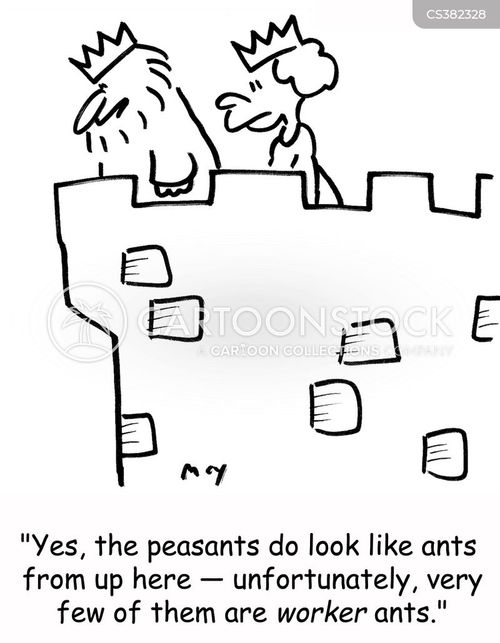
1. ergate: worker ant

2. dorp: village

3. paladin: defender of a noble cause

4. kibitzer: giver of unwanted advice

5. ululate: to complain loudly; to howl as a dog might

6. banausic: to serve a mechanical or practical purpose only

7. incogitant: thoughtless; inconsiderate

8. antinome: something that is contradictory

9.polyhistor: someone of great and varied learning

10. tittle: a small mark in punctuation as in the dot over the “i”

11. aggiornamento: bringing something up to date for current needs

12. thimblerig: the sleight of hand game to fool someone as in the pea under the cups

13. nocent: harmful; injurious

14. cruciverbalist: a designer or aficionado of crossword puzzles

15. hypogeal: underground; subterranean


What three words caught your fancy this month?
I’m partial to antinome. I’m gonna throw that one at Mike during a Debatable. Ssh, don’t tell him. Nocent and paladin could also be appropriate for a Debatable.

What two words did you not realize that there existed such a word of explanation?
Didn’t know a cruciverbalist is what you call people who create crossword puzzles. I just thought they had more time and talent than me. Worker ants are ergates–I had no idea.

Image result for worker ant

What word do you simply like because of the way it sounds?
Tittle, of course. It tickles the tongue and makes me want to laugh. That little dot is a tittle. Tee hee.

Shakespeare Celeb: William’s Words


Words Shakespeare Invented
(under the guise of April’s Word Nerd Confessions)

Getty Images/Edward Gooch

image: Mental Floss

While Shakespeare was a creative wordsmith–no doubt there, it should be noted that he tended to borrow from other sources and polish them so well that they became associated more with him than the original. I cite the sonnet form, Romeo and Juliet, and Julius Caesar as starter examples.

Another aspect of polishing came to words. It’s thought Shakespeare contributed at least 1,500 words to the common language, some sources say it’s closer to 1,700. He achieved this by changing nouns into verbs or verbs into adjectives or splicing together words. Shakespeare Online.com, a marvelous source of all matter Shakespeare, has compiled a short list of some of his contributions. For further elaboration on his wordly inventions please click here.

Note: clicking on the word will take you to the play where it was used.

academe accused addiction advertising amazement
arouse assassination backing bandit bedroom
beached besmirch birthplace blanket bloodstained
barefaced blushing bet bump buzzer
caked cater champion circumstantial cold-blooded
compromise courtship countless critic dauntless
dawn deafening discontent dishearten drugged
dwindle epileptic equivocal elbow excitement
exposure eyeball fashionable fixture flawed
frugal generous gloomy gossip green-eyed
gust hint hobnob hurried impede
impartial invulnerable jaded label lackluster
laughable lonely lower luggage lustrous
madcap majestic marketable metamorphize mimic
monumental moonbeam mountaineer negotiate noiseless
obscene obsequiously ode olympian outbreak
panders pedant premeditated puking radiance
rant remorseless savagery scuffle secure
skim milk submerge summit swagger torture
tranquil undress unreal varied vaulting
worthless zany gnarled grovel

Ready for a challenge? Create a sensible sentence with as many of the above words as possible. Here’s a starter…

So–next time you reach for the skim milk, hoping you won’t be disheartened  to discover it’s worthless and sour, initiating a rant of discontent, consider a generous thanks to the Bard for providing a varied list to select from so as not to impede  your outbreak towards those accused of leaving milk past its prime in the refrigerator, because a  tranquil   kitchen produces radiance. I know, this sentence is laughableif not zany.

DOWO: The “C” List


Onward we travel into the Dictionary of Word Origins, adventuring in the land of “C.”

What is the phrase “carte blanche” all about?

It once was the custom for officials, or personage of importance, to provide a trusted subordinate with blank paper with their signature. These signed documents could then be used as necessary. “White paper” doesn’t quite sound as impressive as the French translation carte blanche. “Just sign here,” takes on another meaning.


Why is the feline in Alice in Wonderland known as a Cheshire cat?

Alice probably didn’t realize that the cat she came to know in her dreamy adventure was sporting a grin that emulated the cheeses sold in the Irish Cheshire Country. These cheeses were molded to look like cats with very wide grins. Hmm, think there is a connection between Cheshire cats and why we say “cheese” tight before our picture is taken?

Image: pngmart.com

Why is something that is a hint called a “clue?”

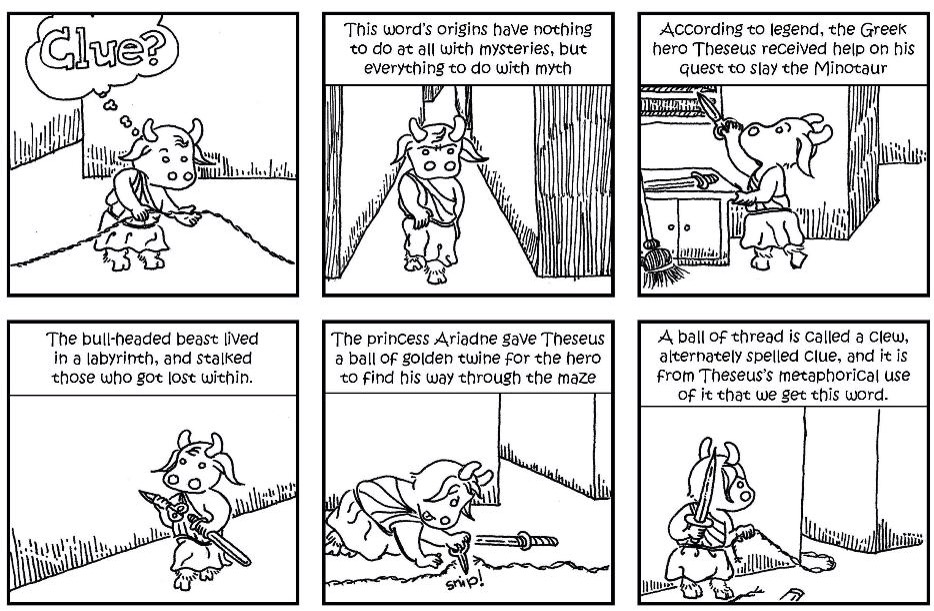
In middle English a ball of thread was known as a “clew” or “clue” and when applied to the story of Theseus, the way out of the maze was how he followed an unrolled ball of thread. Hint, hint the thread of logic is quite clear here in this story of how he unraveled his escape plan. Then again, what if the Minotaur was smarter?

babblecomics.blogspot.com

How is a disappointed person “crestfallen?”

Roosters carry into a fight their bright red coxcomb or crests upright, signaling their readiness and awareness The losing rooster runs from the fight with a drooping crest. Not having seen a rooster fight (or having a desire to do so) I remain a wee bit skeptical on this one.

wordsdontfailme.tumblr.com

What is meant to “curry favor?”

In Middle English “horse ” is  favel, and to “curry” a horse is to groom it with a special comb. The results are usually a sleek looking horse. The idea here is for someone who hopes to makes a impression will do something noticeable like a groom hoping to catch his master’s attention might curry the favel. Sometimes the attempt is quite obvious.

johnhartstudio.com

The Challenge: Can you create a sentence with the above sayings? Give it a try…Or at least one saying:

Post Navigation