Apparently one is supposed to say ‘Rabbit, Rabbit” first thing in the first day of the month. Not sure why but hints of good things happening are implied.
It was easy to rabbit trail on this first day of June since it is my favorite month. Why my favorite? Well, thank you for asking.
my inner feelings revealed
School ends in June—referring to most K-12 students. Knowing that summer break’s imminent arrival created an anticipatory exhilaration. And I suppose students felt that way too. I know as a teacher I did.
Flag Day! Not only is this a day to honor our nation’s flag it’s my birthday. Yes, not everyone can claim the truth that people hang the flag out for them on their birthday. That’s what I believed because that’s what my mother told me. Believed it. I still do, actually.
Family birthdays. Winter must have been long because we have a plethora of family birthdays in June.
Summer solstice. Shades of Shakespearean delight as summer officially begins with the solstice. Watch out for fairies and wayward thespians if walking in the forest.
wood you care for a walk?
5. Settling into summer mode. Even though May provides some bodaciously warm days there remains a sense of “just kidding!” since May still tosses in some rain and inclement weather. June seems more confident in providing consistent blue sky days.
6. Birds and blooms. Giving credit to April and May for nudging winter to pack up and leave for a while, June ushers in the season of winged friends and garden flurry. My backyard is a small slice of paradise as hummingbirds and assorted feathered friends cavort amid the feeders and bird baths while I appreciate the lavender, lilies, and other blooming details. And the busyness of bees is a bonus. 🐝
7. Then there is the celebration of the hammock. Reading, lounging, napping—aah, so nice.
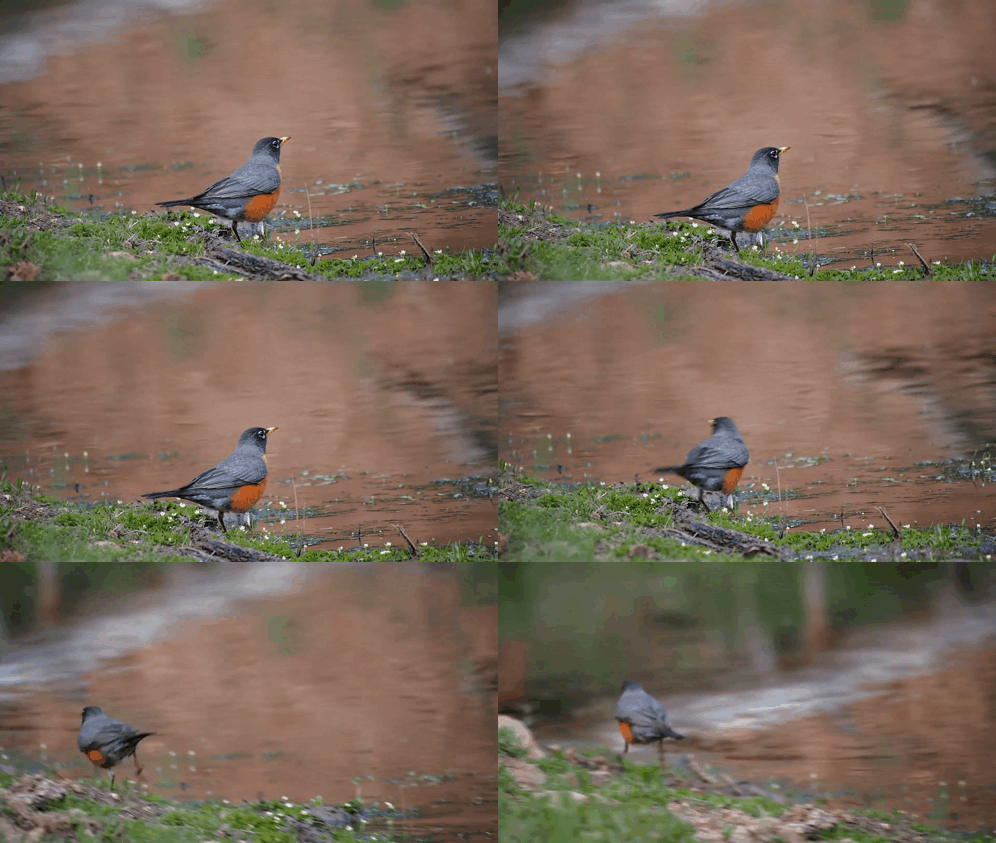
To prevent any misconceptions I will emphatically state that I do indeed like robins.
With that stated, I have say this: Robins have got to be one of the stupidest birds out there.
Why the vitriol?
Maybe I’m just fed up with this particular batch of red-breasted harbingers of spring.
I don’t mind how they try to nest in our patio rafters every year—at least not too much since when we do allow a nest it’s plenty entertaining watching them raise their noisy brood.
I’m irritated but understanding when they lob their droppings all over my outdoor furniture—when nature calls, and all that.
I must say I get tremendous enjoyment watching them splash around in the birdbath—they are exorbitant extroverts when it comes to bathing.
Getting ready to splash and dash
I do mind one distinct and inexcusable behavior: robin reflection bobbing. Or flap and slap. I’m sure there must be a scientific term for how robins (I have yet to see other birds do this behavior) go for their window reflection endlessly flapping up against it until I shoo them away.
This is is the first year in the thirty years at this address I’ve seen this behavior.
Right—I understand they think it’s another bird and are feeling territorial…
Yet this year they are taking on car windows, the neighbor’s shed window, the office window, the living room window. These aren’t isolated incidents but repeated violations no matter how many times they are chased away.
We even blocked a window so the reflection was covered and the robin still wanted to fight with the window.
I’m doing a call out here—has anyone else noticed their backyard robins being so crazily hostile this year?
My explanation is that this year’s robins are an off batch. They give meaning to the description of being bird-brained.
Maybe there should be a robin recall. Anyone know the number of the department of defective birds? Or did that one get shuttered as well?
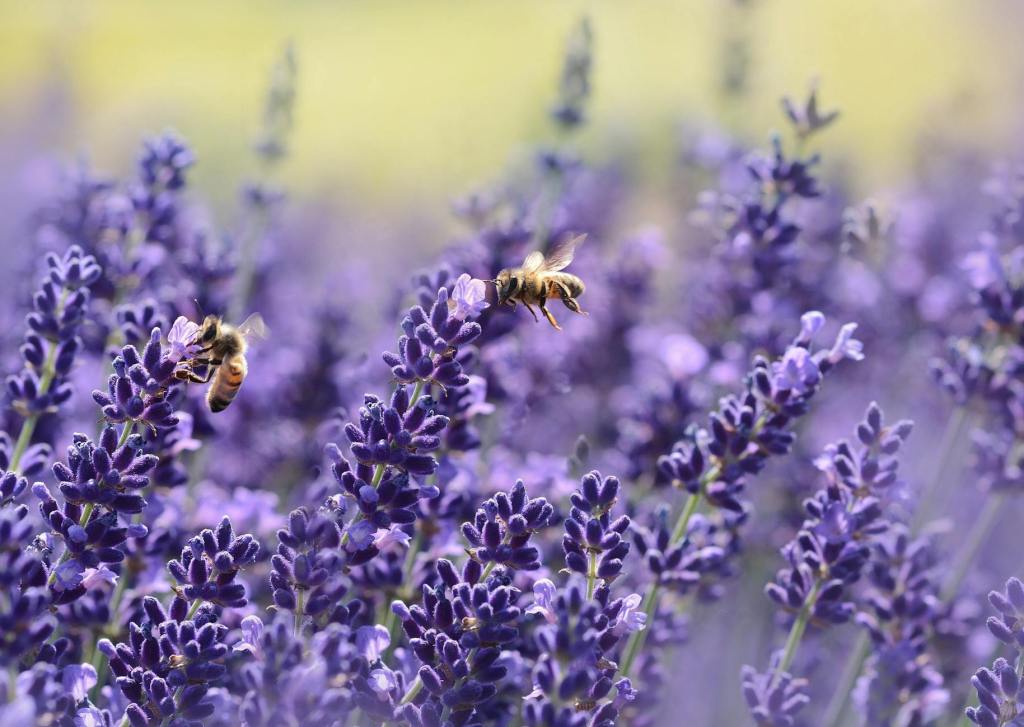
Then again I tend to celebrate bees everyday. We keep a bee-friendly yard by planting lots of flowers that bees favor, such as a huge mound of lavender.
I will often go out and search for bees once the lavender comes into bloom. My favorites are the big black bumblebees. They remind me of little bears as they flit around gathering pollen.
Reading about bees is also a favorite. Here are few recommendations:
The Secret Life of Bees by Sue Monk Kidd
The Bees by Laline Paull
The Music of Bees by Eileen Garvin
He Should Have Told the Bees by Amanda Cox
Hour of the Bees by Lindsay Eager
The Keeper of the Bees by Gene Porter-Stratton
And I definitely tune into nature shows about bees. One of my favorites is found on PBS’ Nature called “My Garden of a Thousand Bees.” A wildlife filmmaker is stuck at home in Bristol, England during the pandemic lockdown and decides to film the busy bees in his backyard. I’m on my third rewatch. Here is the preview.
What are your thought about bees?
P.S. Don’t forget to nudge your congressperson to support PBS. Public broadcasting benefits everybody!
Teacher Appreciation Day happened this week and I silently salute my former colleagues since I am now a teacher in the past tense.
A funny thing happened on the way to the classroom…
I started out my career with an AA in Early Childhood Education. The two year program held in a brand new interactive classroom was an amazing experience. I learned so incredibly much about little tykes and I also learned it would be difficult to make a sustainable living watching other people’s preschoolers since wages were barely above minimum wage. Hmm, that says something about how society values the care and feeding of our children. Let’s move on.
From there I enrolled in the university’s speech therapy program (having somehow been convinced by my dentist and mother to do so because he wanted to include a speech therapist in his practice and my mother probably liked the prestige of her daughter going into the medical field). I transferred out at the end of the year. Less said the better. Let’s move on.
Another university, another program. This time it’s Outdoor Education(officially dubbed Leisure Studies—I know. Outdoor Education is better for the resume). A BA later and an internship helped me understand this too was not a sustainable career since a camp director lives on site meaning time away from family and most camps are seasonal. Let’s move on.
I like to write. I like the outdoors. How about Environmental Writing? This university needed warm bodies for their new MA in the Teaching of Writing? Okay, I’ll switch. This one had possibilities providing I got hired on at a community college. One local CC with no openings. The library is hiring.
Twelve years later, a big move with a family now in tow I apply for the local high school library position. What? I need a teaching certificate to be a school librarian? More school. What? Budget cuts? The school district can’t afford a certified librarian? Options?
All those different paths helped me become an English teacher. An ECE degree definitely helped with classroom management (preschoolers and teenagers share distinct similarities), teaching outside the classroom when applicable thanks to Outdoor Education, and an MA in the Teaching of Writing absolutely came in handy. All that library time? What better place to apply literary knowledge than in AP English?
I didn’t intend on being a teacher because given my druthers I would have thoroughly relished being a long term librarian. I did appreciate my time in the classroom and do miss it (at times).
So happy Teacher Appreciation Day to those dedicated to educating our youth.
National Poetry Month is still among us for a few more days and I would be remiss not to mention Shakespeare and his sonnets. There–duly mentioned.
I am sorely tempted to give a brief lesson about the sonnet, something I miss teaching from my AP English Lit days. BUT (which is an indication of the turn in the sonnet mood or message known as the volta–see what I did there? Yes, I did squeeze in a brief lesson), I shall refrain and instead spotlight that other aspect of Shakespeare.
No–not him being a playwright. Did you know he started out writing sonnets and not plays? That he considered himself more poet that playwright and that he inserted many a sonnet into many of his plays? There are four sonnets in Romeo and Juliet alone. The prologue that introduces the play is a sonnet (watch for the volta–hint, hint “which” works as well as “but”):
Two households, both alike in dignity, In fair Verona, where we lay our scene, From ancient grudgeParenthesis break to new mutiny, Where civil blood makes civil hands unclean.
From forth the fatal loins of these two foes A pair of star-crossed lovers take their life
From forth the fatal loins of these two foes A pair of star-crossed lovers take their life; Whose misadventured piteous overthrows Doth with their death bury their parents’ strife. The fearful passage of their death-marked love, And the continuance of their parents’ rage, Which, but their children’s end, nought could remove, Is now the two hours’ traffic of our stage; The which if you with patient ears attend, What here shall miss, our toil shall strive to mend.
There I am talking about sonnets again. Well, it is National Poetry Month. And being such a famous, well-known poet it is difficult not to have spent at least a bit of time about how the Bard rocked sonnets.
Sonnets. Plays. He did write them supremely well. We still read them, watch them, recite them, discuss them and you know what? Just watch a master recite the master discussing April–very appropriate, wouldn’t you say?
The cat is a nice touch.
Here I meant to talk about the other aspect of Shakespeare, and sonnets distracted me. A worthy distraction, true that. Yet, (another word that works as a volta, since I am changing the direction of this focus), beyond the perfect prose and poetry Shakespeare is so admired for there is a darker, mmm, not quite the right word–ribald, yes, Shakespeare has a definite ribald side to him: his insults!
Throughout his plays his characters lob the cheekiest insults at one another. Keeping in mind the majority of those attending Shakespeare’s plays were of the down-to-earth crowd, known as “groundlings” because they pay a penny to watch the performance and stood for the entire time, often shouting out their commentary to the stage actors. Stands to reason then why Shakespeare inserted earthy lines into his plays. He knew how to play to the crowd.
Here are some examples. They start at mild and run the course from G to PG13.
“Neighbors, you are tedious. ” —Much Ado About Nothing, Act 3, Scene 5
“[You] peevish baggage.” —Pericles, Act 4, Scene 6
“[H]e has not so much brain as earwax.” —Troilus and Cressida, Act 5, Scene 1
“You are not worth another word; else I’d call you knave.” —All’s Well That Ends Well, Act 2, Scene 3
“Out of my sight! Thou dost infect mine eyes.” —Richard III, Act 1, Scene 2
Or you can create your own insults with this link. This is a classroom activity we used to do during our Shakespeare unit in English. It would culminate in an insult-off between a student and myself with the object of hurling such a created invective that the other person would cry–actually it usually ended up with everyone laughing.
So, a tribute to Shakespeare’s prowess with prose and poetry and a solid nod to his poison pen when it came to hurling insults.
In an effort to match the energy and joy of the season I’m springing into action in terms of my writing.
Book Signing If you live in or around Spokane Valley, Washington you can catch me at the Barnes and Noble store on Saturday, April 19th from 11 am to 3 pm.
Yes, I will be signing my picture book Someday We Will.
It’s been an amazing five years since it was published in 2020–right when COVID locked down schools, libraries, and bookstores, which kind of kiboshed that whirlwind in person book tour originally hoped for.
Celebrating Five Years!
Since then Barnes and Noble and my local library have provided lovely support. This will be my third signing with Barnes and Noble and I’ve done a few storytime sessions with the library.
And thanks for your support! Readers of this blog have purchased Someday We Will through online sources. I still offer the deal of sending you a personalized bookplate. Just provide some details: where and when you bought the book, your address, and the message and I will send out a bookplate to you.
Projects The winter months kept me inside writing new stories and revising others. I also discovered a knack for collage and began illustrating some of my picture book manuscripts. Here are a couple of samples:
I also decided to create a separate page that highlighted completed manuscripts–a menu, so to speak–in case agents, editors, or publishers decide to stop by for a visit. Feel free to browse at my new page link: Project Pitches.
Of course not all my time is spent writing. Spring is here which means I’m outside more than inside. Yardwork, walking, biking, reading, and just plain sitting in the sun dozing in the sunshine. Winter is way too long and I am so enraptured the days are longer and warmer AND sunnier!
I have been a library fan since elementary school. I think my high school year book proclaims I wanted to be a librarian when I grew up. Although my degree ended up as a writing teacher I was a librarian for the first half of my work career and when I switched into the classroom reading and library skills were part of the curriculum.
Now that I am retired I’m a Friends of the Library volunteer and I’m there two-three times a week working with donations.
When I go on vacation I always check out the library. Hawaii, Washington DC, Seattle, Okinawa—I visited all of them.
So, I’m combining National Library Week with National Poetry Month with a POM (Poem of the Month). Emily D recognizes how books are like a ship that sails us to different shores.
There is no Frigate like a Book To take us Lands away, Nor any Coursers like a Page Of prancing Poetry – This Traverse may the poorest take Without oppress of Toll – How frugal is the Chariot That bears a Human soul.
As retired empty nesters the hubs and I are on the low key retirement plan. No RV or exotic journeys are on the agenda. Doing jigsaw puzzles, reading books, talking walks, backyard birding, and watching a good mystery series are adventurous enough for us. Going Costco and lunch is a big outing for us.
I will confess we will get really crazy now and then and binge three episodes of Dr. Blake pushing our bedtime past 10:30 pm.
Now this might either sound like an extremely boring way to spend what is considered our twilight years or it might be an ideal of retirement life. To each their own, eh?
Three years into retirement and we are in a groove and spontaneity is perhaps not so much on our minds anymore. Staying at home is quite pleasant actually. Why spend money and have to deal with other people? I know—this mindset does limit date ideas when we do decide to go out.
So on the third rainy day when cabin fever was setting in my no-let’s-stay home husband got a glimmer in his eye and suggested going for a drive.
Yes, it was still raining out. But getting out was needed, plus maybe spontaneity has its place. I assented and off we drove.
Truthfully, driving around town in the rain is not that fun although parking the car overlooking the marina proved rather pleasant.
As we sat there gazing at the rain languidly connecting with the bay I laughed as the windows began steaming up, wondering if cars passing by were wondering what we were up to. It’s nice to know that after 40 years of marriage we still can generate heat in a parked car. Admittedly it was all talk and no action.
It is nice that we still have the capacity of great conversation after four plus decades of marriage. The topic at hand was why were there year round seagulls residing at an inland lake. In our thirty or so years living in a town that boasts having an impressively large freshwater lake that has always been on my mind.
So we asked Siri, which I have named Jarvis, after selecting a British voice for my iPhone AI.
Well, they aren’t seagulls. In fact there is no such thing as a seagull. There are only gulls. And some live by the sea.
Sea period. Gull period.
My goodness that stumped us. How do I possibly unlearn a lifetime of calling a bird by the wrong name?
The point of this post is that if we hadn’t veered from our comfortable lifestyle for a bit of spontaneous getaway time we would not have learned a most enlightening fact.
So—take a moment to do something a bit different than usual (a hearty recommendation is to stay safe and sane in your decision) because you just might have an opportunity to learn something worth knowing.
Yes, and the bonus of our outing is realizing that I am my husband’s best gull friend.
March had plenty of wind and rain marking the start of spring in a blustery way. Most books selected dwelt on mysteries ranging from classics like Josephine Tey to contemporary authors such as Robert Thorogood. Taking a break from solving murders I was delighted to have a longtime library hold arrive and spent a few days relishing a birder’s journal—but this wasn’t just anybody’s birding journal and proved to be my only five star read for the month.
The Backyard Bird Chronicles by Amy Tan
image: Amazon
Amy Tan applies her talents as a writer to keeping a six year journal of her backyard birds. Her observations are witty and insightful and provide a perspective that falls between enthusiast and expert.
Her detailed descriptions of bird behavior, accompanied by her impressive (and fun) illustrations create an informative and entertaining read.
April is also National Poetry Month and I’m providing an appropriate poem.
A combination of sayings involving those with P and Q.
Packed in like sardines:closely situated; crowded. Around the 19th century this phrase came into use, no doubt due to the crowded conditions found in city dwellings and public transportation. Spike Mulligan in his poem “Sardines” played with the idea: A baby sardine Saw her first submarine: She was scared and watched through a peephole.
“Oh come, come, come,” Said the sardine’s mum. “It’s only a tin full of people.”
image: Tudor
Par for the course: considered average. A golf derivative since “par” indicates the number of strokes expected for a certain hole. The term applied to other aspects around the 1920s with the added connotation of being slightly derogative, as in “Paul brought store bought muffins–which is par for the course. Other meanings attached to the phrase are “up to par” meaning to meet the standard and “below or sub par” expressing not meeting the standard. If Paul had stopped at that chic little bakery on the corner and brought in croissants he no doubt would have earned the accolade of “above par.”
Pay through the nose: being charged an exorbitant fee. The origin of this phrase is not readily found, although it appears to have been around since the 17th century. Some sources attribute it to the punishment of having one’s nose slit if late with tax payment. Thankfully today we can pay late fees without fear of such extremes, although some late fees do hurt.
Piece of cake: easily done. This is from the old tradition known as the cakewalk, in which whoever performed the most intricate dance steps upon the promenade received a cake as a prize. By the twentieth century the phrase became slang for something easily accomplished. For instance, after receiving so much ribbing from his co-workers about the sub par meeting treats, Paul decided to check out the new bakery near his apartment. It was a piece of cake to bring in a box of freshly baked cookies.
Pie in the sky: a false promise for a better life. This is a lyric taken from a song titled “The Preacher and the Slave (1911)” in which there is the promise of living in comfort, eating pie in the Glory Land. Joe Hill of the International Workers of the World or the Wobblies considered fair wages to be the “pie” in his version of the song. However, boxing champ Muhammad Ali is quoted in 1978 as saying, “You don’t want no pie in the sky when you die, you want something here on the ground while you’re still around.”
image: Gospel Coalition
Pride and joy: a prized aspect. Sir Walter Scott is attributed for this saying in his 1813 poem, “Rokeby.” In the poem he states children as a “mother’s pride, a father’s joy.” Today the term applies to anything from an accomplishment to a possession that evokes pride and joy. Back to Paul. That little bakery he began frequenting? He discovered their muffins were their pride and joy and he set up a running order for a baker’s dozen every Thursday.
Pull the wool over one’s eyes: to deceive someone. This saying does not involve sheep. Instead it involves wigs, the ones British judges and barristers wore (and wear). Apparently it refers to a clever barrister’s ability of momentarily blinding a judge with their argument, essentially slipping their wig (which were made from wool?) over their eyes. More figurative than literal. Today the reference applies to anyone who has been fooled by a person, whether knowingly or unknowingly.
Put one’s money where one’s mouth is: show intention with actions, not just by words. Thought to have started around 1930, around the time of WWII, being used in many English-speaking countries. In the 1970s the British government applied turned the phrase into an ad campaign to convince in the NSBAD (National Savings Bank Accounts Department. Another less polite associative phrase is “Put up or shut up.”
image: Peter Perlegas art
Put words into someone’s mouth: to credit someone saying something when they didn’t. This one is found in the Old Testament in 2 Samuel 14:3: “So Joab put the words in her mouth.” Paul again. “I did not say I made the muffins. I said I made a run to the bakery to get the muffins. Honestly, quit putting words in my mouth.”
Quantum leap: an notable advancement; a great improvement. Going with nuclear physics on this one, in which the abrupt transition from one energy state to another is considered a quantum leap (very simplified). That’s literal term. The figurative term refers to the size of the transition, usually an exaggeration, as in “Wow, Paul, two weeks in a row you’ve brought in freshly made muffins. That’s a quantum leap from the days of stale grocery rack cookies.”
image: LanGeek
Quick as a wink: instantly achieved. There are several analogies that are similar, such as “quick as bunny” or “quick as a bee” or “quick as lightning.” As early as 1546 these proverbs or maxims were found in sources. The expression is still in use.
Quid pro quo: something is received in exchange for something given. This one is also known as “tit for tat” which was used by Shakespeare in Henry VI Part 1 when Margaret tells the Earl of Suffolk, “I cry you mercy, ’tis but quid pro quo” (5:3).
Many, oh so many, cliches with P were left on the editing floor. So fill up the comments with the ones that didn’t make the post or check them out in Christine Ammer’s Have a Nice Day: A Dictionary of Clichés.