Everything going pretty well for a king and his village and then out of nowhere this monster reeks destruction (a smelly monster because it lives in a swamp) killing all the strongest and best warriors. For fourteen years!
The hero arrives.
Not just any hero. Not only is he an amazing hero–he is epic.
Briefly put, he not only fights the monster but does so naked of weapon (a bit of literary humor). AND he takes on and defeats the monster’s mama who is twice as monsterish.
The king and village are saved. Our hero is more epic than ever. He returns to his homeland and eventually becomes king. He rules for fifty years over a peaceful kingdom. Goes out fighting a dragon. His people love him so much they create a barrow (think–round grassy pyramid).
Our hero’s tale becomes one of the most popular hero tales out there. He’s right up there with ancient epic heroes like Odysseus and Achilles.
Yup–we’re talking Beowulf.
You’d think someone could make a decent film adaptation.
This is the woe of Beowulf. His story has yet to be told.
Adaptation: 2005
Image: pintrest
This has promise. Gerard Butler. Nordic ponies. A troll. Epic setting. Frightening kelta. Everyone looks sufficiently cold and miserable. Then it gets R-rated. Not classroom watchable.
Adaptation: 2007
image: Wikipedia
English teachers were so excited about this version that a field trip was arranged to the Imax. Bus loads of seniors traveled an hour riding in their preferred mode of cheeswagon to watch a cartoon that so strangely twisted the tale of Beowulf that it is not worth discussing. Most people went to see Angie dressed up as a golden dragon who wears high heels. Truth.
Adaptation : 2015
Image:tvspoiler.com
This is Beowulf in an alternate universe. That’s the only explanation I have. Not much is even close to the original story except they have named the main guy Beowulf and there are some monsters running around. A short-lived TV series. There’s a reason for that.
Beowulf is a really amazing story and no one can get it right. Maybe Marvel can get a greenlight and make it a go.
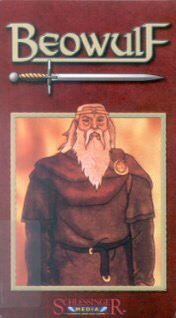
Oh–I do have one version worth showing. Kind of. It’s also animated but no famous actors were present unless you count the narrrator, Derek Jacobi, and other assorted worthwhile Brit actors lending their voice talents such as Joseph Fiennes.
Adaptation: 1998
This faithfully follows the story. The only strange part is the monster, Grendel, is rendered as a furry green Jello creature instead of a troll. There is also a trippy interlude of Beowulf fighting the dragon.
Film folk–open challenge:
Bring Beowulf to the screen so there is no more woe when watching Beowulf.
I’m closing in on my Good Reads goal of 101 books!
Here are my November highlights:
Empty Places by Kathy Cannon Wiechman
Adabel Cutler is wanting to remember her mother, yet there are empty places in her memory and she can’t quiet the need to find the answer to why her mama left the family seven years ago.
Set in the Kentucky mining area of Harlan County during the lean times of The Depression, author Kathy Cannon Wiechman provides a rich portrait of a young teenage girl and her family struggling against hard times and poverty.
Adabel’s voice and her persistence to find the truth is strong and aptly presented in the dialect of the area. The author’s research adds to the realism of the story and provides insights about the coal mining community that is beneficial to students studying The Great Depression.
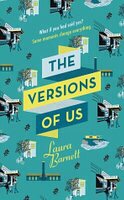
The Versions of Us by Laura Barnett
Boy meets girl. Once. Twice. Three times. The typical romance story takes a turn of shoulda, woulda, and coulda. A girl and a boy meet in their young twenties, and readers follow three possibilities of their romance into their seventies.
It’s a bit like a choose-your-own adventure book, yet reading this type of format is not for one looking for a leisurely read. Just as one gets involved in version one, it changes to version two, and then goes to version three. And so goes the tempo.
Personally, I gave up and followed version three and decided one read was enough, and did not go back and read the other two versions.
It’s a clever idea, and I have tried other books that try this multiple plot device. They don’t work for me. I want it to work, but I don’t want to work that hard when I settle down for my leisure reading sessions.
The Alchemist by Paul Coelho
I experienced The Alchemist as an audio read the first time on a long drive a few years ago. I think having Jeremy Irons read the book to me enhanced the magical of the read. I highly recommend the audio version.
The second time I read it in one sitting, appreciative of the full color illustrations which complemented the story. Overall? I preferred the audio version. Jeremy Irons knows how to tell a story.
For those who disliked the book, and some of the reader reactions were intense, I suggest listening to the book, for it truly is like a long endearing bedtime story. Set aside apathetic notions and listen to a story of a boy seeking his heart’s desire. There’s still a bit of the child in all of us ( I hope).
And I continue reading…
With only a couple of more weeks until my December deadline I am trying to squeeze reading time in when I can: at the gym while I pedal in my mile or walk off my 💯 calorie warm up; decompressing after a long day trying to interest sophomores in how to analyze a short story; a few minutes before going to bed (and getting smacked in the face as I succumb to sleep).
A stack of books taunts me on my side table. I shall find time to finish strong. I shall. I shall.
A while back I posted a list of things that irritated me. Wanting to balance that negativity, I found a positive for that irritant, turning a “grrumble” into a “grreat.” I hoped to change my attitude of complaint into a more joyful outlook.
Well–life does continue, and old habits are often difficult to break. A running account of grrumbles has been creeping into my thoughts, and today, a day of Thanksgiving, seemed an appropriate time to get the balance sheet out.
Grrumble:
People who don’t turn on their headlights, especially when they drive a dark car on a dark day.
Ggreat:
People who courteously flick their lights to remind me I have forgotten to turn my lights on.
Grrumble:
The books that I have marked to read from my review newsletters aren’t carried at my library.
Grreat:
When I request the title as an inter-library loan, often the library buys it for their collection.
Grrumble:
It takes three months to lose two pounds, but I can gain four pounds over one weekend.
Grreat:
I got a good deal at the local gym by paying in advance six months.
Grrumble:
Students who don’t care about their learning experience and create havoc with their grades and attitude.
Grreat:
Those students who give back to school with participation in academics and extra-curricular efforts.
Grrumble:
Commercial Christmas emphasis before Thanksgiving. Especially before Halloween.
Grreat:
Colossians 3:12-17
Grrumble:
Daylight Saving Time.
Grreat:
Still working on that one. Oh–Happy Lights!
Finding a bit of light when it’s gloomy is not always easy, yet I have to remind myself a rainbow is the result of rain mixed with sun and this reminds me to be thankful and find a way to have an attitude of gratitude no matter how grrumbly I might be feeling.
Simon and Garfunkel may have considered darkness their old friend, but I am daylight oriented. When we roll into Daylight Saving Time each year I get feeling a bit bruised– afternoons disappearing into instant inky black evenings leaves me blue.
This definitely affects my writerly creativity as I mainly want to curl up in my lounger with a cup of cocoa and a book, hibernating until spring returns with its fair portions of sunlight. Good thing I have lots of editing to do because new ideas are hibernating.
As I write this I’ve got my Happy Light on and my vitamin D waiting in the cupboard. I should play George Harrison’s ditty in the morning as my wake up time tune. The positive belief that the sun is soon to come along might pep me up. Winter is not my season.
No, I’m not a fan of snow either–that’s a whole nother post.
Anyone else having Daylight Saving Time Post Trauma?
Mary Stewart remains one of my go to authors when I’m caught short of good page-turning reading. Her plots usually crackle with suspense, interesting characters, and often have an unexpected plot twist. The biggest problem with this author choice is that I’ve run out of her books and there are no fresh titles forthcoming since she past away in 2014.
image:marystewartblogspot
Born in 1916 as Mary Florence Elinor Rainbow, she began writing stories at a the tender age of seven and published her first novel Madame, Will You Talk? in 1954. Critics received her efforts warmly, praising her capable, intelligent heroines and clever plots.
She met and married her husband, Frederick Stewart, three months after meeting him at a VE dance in 1945. They remained married till his death in 2001. He was knighted in 1974, yet she never referred to herself as Lady Stewart. She was a university lecturer in English Language and Literature, which explains her ease and ability with storytelling.
Her trademark style involves placing a young intelligent English woman in a foreign setting, such as Greece, Spain, or Austria. The heroine finds herself caught up in a mystery with mysterious men, who are suspect of their intentions. Her prose and attention to details and dialogue placed her novels beyond the usual fare of romantic suspense.
With the success of White’s novel about King Arthur, and taking advantage of the interest in the Kennedy Camelot years, Stewart produced her memorable five part Arthurian series, known as the Merlin Chronicles. This is actually how I first met her.
In college, I became smitten with science fantasy and King Arthur. I spent many pleasurable hours reading about Arthur through Merlin’s point of view. I later moved on to her other titles having hopes, I suppose, she would return to Arthur some day.
One of her novels, The Moon-Spinners became a Disney movie starring Hayley Mills. While it didn’t do well at the box office (due to a darker tone than most Disney movies because of violence) it is a crackerjack of a film because it captures the suspense of Stewart’s novel so well. Yes, some of the plot elrments were changed, but overall Stewart’s plot transferred well to screen.
Stewart’s popularity stayed strong during her writing years through the seventies and eighties, and she produced twenty novels, poetry, and a couple of children’s books.
She retired to Scotland and lived to a well-earned 97 years.
I hope to hunt down the titles I have yet to read through my library’s wonderful inter-library loan service.
As a confessed word nerd my thoughts on subscribing to a word-a-day service shouldn’t be too surprising. I know you all have been waiting patiently for my list of words of wonder, words I’ve just learned.
A little background first. As a teacher of Advanced Placement English I know how important finding just the right word can be, and how the essay readers do delight in the right diction.
With this in mind I polished up a vocabulary system for my students, both Language and Literature, and have enjoyed their weekly sentences. This means my word-a-day segment has slipped to the wayside in our routine. Yet, these words are so delightful I cannot allow them to languish. I have harvested an abundance of verbiage, and like those extra apples on the tree, I feel compelled to share my bounty with my neighbors.
SET ONE
1. quotidian: usual or customary; everyday: quotidian needs.
Sarah languished in her quotidian routine living on her family’s Kansas farm, and longed for the glamour of New York that she read about in her subscription magazines.
2. obdurate: stubbornly resistant to moral influence; persistently impenitent; unmoved by persuasion, pity, or tender feelings; stubborn; unyielding.
Franklin and Giselle valiantly attempted to persuade Uncle Max from wearing the garish lavender tie inset with tropical fishes to the awards banquet, and the more they pleaded with him, the more obdurate he remained in his refusal to wear the selected navy tie.
3. galimatias: confused or unintelligible talk.
Mrs Lignise sighed as she unfailingly attempted to tune out the loud, annoying galimatias surrounding her, chiding herself for her decision to chaperone the seventh graders on their bus trip to the museum.
Fave Pick of the Week: galimatias
It’s almost onomatopoeic: gal-uh-MEY-shee-uh s
It sounds all garbly and confused. A delicious word.
I’m hoping to interject a shortened version, thus creating a new word adoption.
I introduce “gali” as in:
She just went on and on about the importance of prepositions. Honestly, it was just gali after the first two minutes.
Hoping your day has been brightened through these wonderful words.
Remember: Avoid lapsing into becoming obdurate about including new words in your quotidian outings.
As a teacher I must adhere to a couple of musts and one of those is taking attendance. I still find myself referring to it as “taking roll” which brings to mind me in a drill sergeant uniform and yelling out last names of my students as they stand at attention at their desks before sitting down to receive instruction. Now there’s a movie in the making, I know there is. Kind of a GI Jane meets Dead Poets Society. Wait a minute–I think Michelle Pfeiffer did it already. Never mind.
Seriously, taking attendance or taking roll, is a must-do within the first ten minutes of class. I have to scamper over to my desk computer and make sure all my darlings are in plus before dishing out my lesson du jour. So where did roll call come from?
Back in the day before books were bound, important documents were rolled up sheets of parchment, eventually become rolled paper. When a group assembled and the need to know who was present and who was not, the one taking attendance would unroll the paper and call out the names. Aah–so attendance and roll taking are in cahoots. I have a role in taking roll. I’ll take mine with cinnamon, thank you.
image: livestrong.com (I wouldn’t mind attending to these rolls…)
Teachers make judgments all the time. Sometimes I have time to make a quantitative decision based on fact and experience, no science involved at all, while other times I take a rule of thumb measurement and hope for the best. Seat of the pants decision making–but that term is somewhere in the S zone coming up.
Rule of thumb–an odd little expression that harkens back to the days when people measured not with accurate tools but with their body parts. Yes, the ark was built with elbow power (check out cubit sometime). In this case thumbs and fingers measured a given unit. It probably wasn’t as accurate as a measuring tape or a ruler, but if those are invented yet a person improvises. Yes, improvised decisions are called rule of thumb.
You know something–why we say these sayings do make more than sense. Although putting a crown on my thumb would be kind of weird.
When I received my manuscript comments I was a bit taken by one particular sentence from the agent. She seemed to hesitate at reading about a family who had traditional roles: women in the kitchen, menfolk working outside. She didn’t think it would be readily accepted. Maybe I hadn’t emphasized in my pitch that the setting is 1860s gold rush era or maybe she missed that point. Back then, women and men did function in traditional roles. Yes, we like those Annie Oakley stories, where someone steps out and does some gender bending, yet history is chock full of regular people in regularly expected roles.
I shelf my manuscript comments, but then another historical noticeable comes up on my radar.
Instead of deleting the email, I decide to take up the offer of teaching a trial rhetorical analysis lesson with Taylor Swift’s “Wildest Dreams”–yes, it was indeed a hit with my students. What proved interesting was the backlash Swift received for marketing a perceived colonialism video since the cast and crew were about 99% white on location in Africa. And here I thought she was channeling Elizabeth Taylor ala 1950s.
Once again historically the setting details were correct in that whites dominated the fifties Hollywood scene and the video would not look quite right having a multi-ethnic set.
Another recent creative endeavor got me thinking that we are becoming either enlightened to the point of oversensitivity or we’re becoming very confused. I refer to Hamilton the musical. The cast is anything goes in terms of ethnicity. And I have no problem with casting for ability rather than color, yet I see this reluctance towards accepting history as it really was. Are we uncomfortable with defined roles as they were set down in the history books?
This loose interpretation of roles has even drifted into ballroom dancing, very traditionally gender coded: men lead, women follow. A recent TedTalk revealed this is changing into what is called “liquid lead,” which I can relate to since I never know what I’m doing when dancing and end up inadvertently leading. The most fascinating implications at stake as women now have the option of taking the lead when on the floor. Except–I don’t think scenes like this would be the same…
As a writer I am aware of trends and it’s worrisome that to write a story set in a time period where men were men and the women women, makes the publishing powers uncomfortable. Do I have to ignore history to radically shape it to fit modern audiences? Does a character have to chose an alternate path to deserve notice?
What are your thoughts, readers? Are we dissatisfied with history enough to change it to reflect our contemporary concerns in all artistic endeavors–from stories to musicals to even dancing?
“I would rather have a hard copy, if that’s okay.” This is from a new AP recruit wanting the summer reading text How to read Literature Like a Professor in book format rather than the PDF version I found on-line. Curious, I asked why. Her response? She had difficulty connecting with the on-screen type. Not what I expected from eyes way younger than mine. I, of course spout off about how much I prefer hard copies to e-copies as well because of my need to connect sensory-wise and as I’m talking, I’m flipping pages and smelling them and listening to them and when I finally notice my student nodding and edging toward the door, like she’d really like to leave because I’m a looney lady (more than one student has commented on me being a bit crazy), I hand over the book and wish her a great summer.
I am a looney lady when it comes to books–hence the Book Booster thing I do. Books aren’t just a pasttime or a channel of information, they are an introduction. Ahem, a new quote from moi:
A book in hand is a friendship in the making.
Beyond making a new friend, there is joy, a celebration of the senses holding a book in hand. I’m talking honest to goodness REAL paper-in-hand book. I do so enjoy paper, maybe that’s why I always answer “paper” instead of “plastic” at the store. Perhaps it’s because paper comes from trees and trees come from the earth and holding a book bound in paper produces more connection to the world around me. I have little or no sensory connection to my plastic e-reader even though it’s a book in hand. Oh oh–I feel the looney lady coming on and before I go on about trees, books and their connection to the world and mankind, here is my list of reasons for preferring a book of paper when reading:
1. Smell: that inky pungency stimulates my imagination to anticipation
2. Hearing: the flip-swish of pages signifies my involvement and commitment and helps me to further escape
3. Taste: no, I don’t lick the book, but reading a paper book whets my appetite for setting aside time to open up the pages to fall into another time, another place, another person’s story
4. Touch: there has got to be a study out there concerning the connection between the tactile aspect of reading and brain synapse when communing with a book–I am so much more involved when I am holding the book instead of just listening to it by audio or thumbing up a new screen. Think about this: glass does not conduct electricity, which means no synapse boost. Plus, when I see my book lying on the bed, table, chair it beckons me to pick it up, so there must be a some kind of magnetism involved.
5. Visual: perhaps the most notable because of the cover has all those colors and interesting bits to feed my eyes and mind, and then, of course, there all those illustrations and photographs and drawings sometimes waiting inside.
I’ve shown this video before, yet it definitely illustrates the visual appeal of books.
Reading is definitely a sensory experience for me. What about you? Paper or plastic?
Both my sophomores and seniors are in the midst of studying poetry. I like poetry. Lots.
image: zazzle
However, I understand the deeper truth in the popular saying:
Truth is like poetry..most people hate poetry.
I suppose this statement is saying truth is found in poetry, yet while most people desire the truth, they really don’t want to hear it. Connect this epiphany to poetry. If poetry represents truth, then people don’t want to hear or read poetry.
Welcome to my world.
(Most of) my students don’t want to hear, read, and most of all, study poetry. I make them anyway. Yes, I’m that kind of teacher.
I do try to make it a bit more fun, (after all I did dress up like Mary Poppins for homecoming week) by adding clips and such that discuss the importance of poetry or I present poetry in an paradigm shifting way.
Do you know that if you write poetry you could become a famous award winning writer?
Beyond analyzing and writing responses to poetry, I have students create their own poetry. Here is a mini-poetry workshop from my Creative Writing I files:
REPETITION POETRY 1.Pick a word or short phrase for the first line
2.Add a word or phrase to it for the second line
3.Take the ending line to create the consecutive lines, adding a new word or phrase each time until poem reaches a satisfactory conclusion.
In the garden there is a tree. And in that tree is thinking spot. And in that thinking spot are my daydreams. And in my daydreams are pathways. And on those pathways are choices to make. And from those choices to make I will decide. And from those decisions will become my destiny.
And from that destiny I will live my life.
And I will live my life always dreaming, always thinking. I am thankful for trees. pdw
I have I have a I have a nap I have a nap hiding I have a nap hiding in I have a nap hiding in my I have a nap hiding in my backpocket I have a nap hiding in my backpocket and It found me. pdw
DEFINITION POETRY Take any word or concept or topic and define through a mix or poetical flow and concrete definition to better understand what it is all about, especially on a personal level.
Grammar is the spine Of prose and all we know That is called language, Which can be spoken Or written down. And all those nouns And verbs And prepositions And modifiers that often dangle And nominative clauses that Sometimes tangle Up Our understanding Are the vertebrae.
And without our vertebrae There would be not enough spine To stand us up.
So it is with language.
pdw
SECRETS REVEALED POEM All of us carry secrets. Some should stay hidden and some can be released. Secrets Revealed poems help ease the burden of confession in a light-hearted manner. Secrets can be real (“I ate the last piece of cake and blamed it on my cousin Bobbie”) to creative (“I am Captain America’s favorite niece”)
Chocolate Cake Ache It’s said secrets nestle in our stomach like tasty morsels, yet, I don’t think that can be said for stolen chocolate cake.
For there it sat like a lump, like a great big chocolate bump of guilt.
Oh, it was tasty: fork-licking, hit-the-spot, lick-my-lips, glad-I-ate-it tasty, until the realization settled down on top of that confectionary indiscretion.
“The last piece?” “I don’t know.” “Maybe Bobbie.” “Yeah, I think she did.”
For undisclosed penance I passed on dessert that night. And I do like tapioca pudding.
“Sure, Bobbie—you can have mine.”
Unexpressed confession, even though it is rerouted through unexplained acts of sudden generosity, does not relieve the ache of stolen chocolate cake.
This I know. pdw
INSIDE, UNDERNEATH, AND BEYOND This is a poem of exploring matters contained within, or underneath, or beyond something everyday, or even unexplained. Choose something to explore and decide which direction of discovery to investigate: will it be to dive inside to see what makes it tick, or will it be a burrowing sense of exploration where layers are removed and examined, or does the exploration go beyond known boundaries?
Inside all poems Is a question And inside this question Is a quest
The poet rides out
on a journey to find the meaning or an answer– or maybe to hear an echo of reply from one who seeks an answer to the same question quest. pdw
Underneath is not a place I like to be places especially not chosen would be:
underneath our house– dank earth of spider habitat bug haven and perhaps where the neighbor’s cat did hide and done died.
No, not under the house.
Not under the sea either– All fishiness, and no way to breathe. Sharks and stingrays and eels—oh, my…
And thanks, but no for caves.
In fact, anywhere it’s dark. Dark is underneath and where the light Cannot be–
You’ll not find me.
pdw
SNAPSHOT POEMS The idea is to write with imagery and detail in a way that it places the reader in that particular moment of time. Actual photographs can be chosen for inspiration as can a reflective moment. Employing the senses, playing with figurative language such as alliteration, onomatopoeia, internal rhyme can help create a moment rich with remembrance.
AIRPORT The crowd swelled, receded, and swirled Around you
Yet you did not pay heed
To the push and jostle Of the nameless faces.
Anticipation’s scent lingered in the air.
Shuffle and adjustment of frustration, excitement Mingled and settled As the one face in a million became spotlighted As he traversed the passenger-smoothed steps