Pam Webb

a writer's journey as a reader

Archive for the category “reflections”

Bard 400: Shakespeare Club


The continuance of celebrating the 400 year passing of Shakespeare continues–I hope it just keeps continuing.

My mission this month is to convince high school students to join my Students for Shakespeare Club. I’m doing this not only because I want students to know the amazingness of Billy Bard, I’m also promoting the club because I don’t want to lose $400.

You see many years ago a batch of drama students formed the Students for Shakespeare Club so they could perform the Scottish play at the town’s local theatre. It was a success. Money was generated from tickets, the students graduated, and the club somewhat languished until it became the starting point for sponsoring the yearly Shakesperience drama production. Long story short: it’s well known on campus how much I like Shakespeare, so it wasn’t too difficult to convince me to take on the task of scheduling the annual play. So what’s with the $400?

Basically if a club does not use its funds it loses them–they get dispersed to other clubs. At least that’s what I understand. If I can get a few students dropping by my classroom now and then to learn Shakespeare stuff, like stage fighting, tossing out insults, arranging a flash mob, playing around with scenes, I think I’ll be safe.

Here’s my promo for the morning announcements. It was a hit.

https://drive.google.com/open?id=0B_-zu__fglN_dDRZSEhONGdvVkE

At the homecoming carnival I provided the game of “Thou Art” which involved selecting a slip from three available baskets in order to form a personal Shakespearean compliment.  Such as: THOU ART A…

MELTING    TIGER-BOOTED    GODDESS 

It was a hit. As a thanks for playing, participants got Smarties for becoming smarter about the Bard. Candy is always a hit.

I managed to sign up six students. I’m in business. Should I go for  stage fighting for the first meeting? Image result for stage fighting moves

Or a (maybe not so politically charged) flash mob scene?

POM: September


I thought it’s time for one of my own poems. Sky is extremely important to me. I need blue skies to function properly. Often summer begins with that blah gray overcast that has hints of promise, as if a blue sky day is hiding under its canvas.

A gesso sky

replaced the

forecast of partly 

cloudy.

The day remained 

blank with possibilities.

Yet, none pursued.

Restless,

even oppressed,

by the sky’s indecision,

I laze through the day.

A splash of blue sky

cautiously peeps out,

rendering the pale absence,

and then the wan is replaced …

Ah–

This artist captures well the aspect of gesso sky. 

Summer in, Summer Out


I began summer in the place I’m ending summer with a reverse visit switch–the same folk, different locale. 

Starting my break  with GiGi duty (grandma) proved an auspicious start to summer. After a week of reading Narnia, scoping out Portland’s playgrounds, tromping in summer rain, and frolicking in a water park I reloaded the car and headed for a self-imposed writer’s retreat, by borrowing my mom’s condo. I managed to get some solid work done on my authors and their cats manuscript.

Situated in my hometown, Mom’s condo is old (built in 1966) yet boasts amenities such as a pool and a large private balcony overlooking a tree lined creek. Veddy nice.

Quiet? Mostly, except for the occasional boomers who like to meet up in the community service parking lot next door after hours and their rap music bass rattles the sliding glass doors. Or the garbage truck on Tuesdsys at 5 a.m.

Peaceful is a better word. Most of the time it’s peaceful here. No constant interruptions of the trains, fairground events, traffic patterns, and ongoing construction behind our house, just a day’s drive away. The condo is perfect for decompressing.

I usually don’t need too much R&R after the school year ends. This year though… *sigh* It’d been one of those years where I wondered if it’s time I should retire. However, a rest up of two weeks in June and I was back planning lessons for the upcoming year. 

July spent at home with the Hubs,  I have the condo to myself after a visit my mom, who came up from Arizona to see the family, and to escape 114 degrees as well. She left, I stayed, thinking the peacefulness encountered at summer’s start would greet me once again.

I’m not quite finding it.

It must have something to do with the anticipation of school starting. Instead of reading books lounging at on the balcony in solitude, I’m polishing lesson plans. Instead of reveling in the quiet respite, I’m trying to persuade the Hubs to drop projects (even though I would really like the fact that the garage is being tidied, and the kitchen painted) and to pop in the truck and pop over. “Are you lonely?” he inquires. “Not at all,” I reply.

I believe I’m restless.

Well, dinner with my boyos and a weekend visit with my girlies and summer will be done.

It’s funny how different June can be from August in the same place.

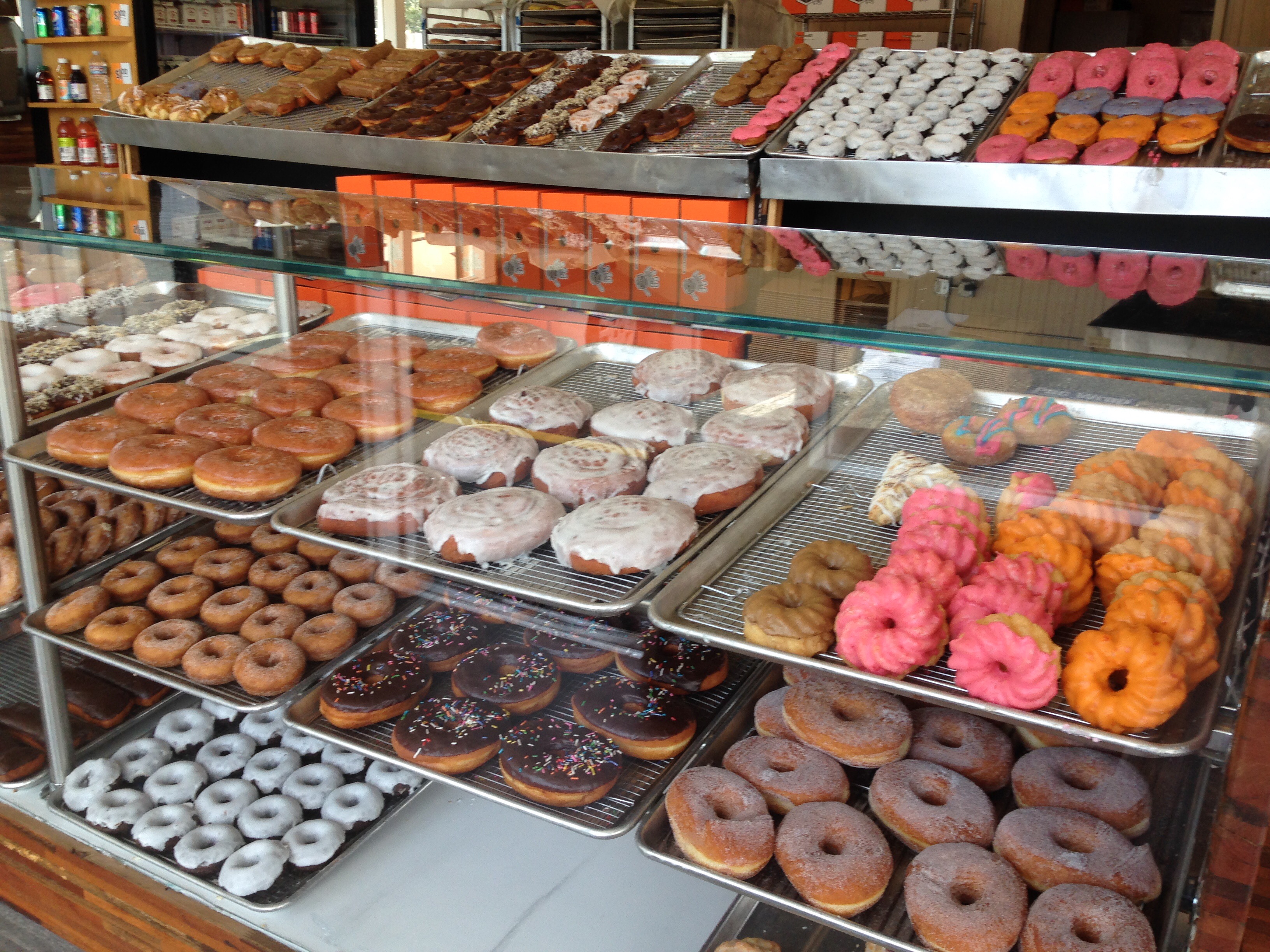
A June donut even tastes different than an August donut.


Poem of the Month: Moons


I do like moon poems.

image: Morguefile

To the Moon [fragment] by Percy Bysshe Shelley (1792-1822)

Art thou pale for weariness
Of climbing Heaven, and gazing on the earth,
Wandering companionless
Among the stars that have a different birth,—
And ever changing, like a joyless eye
That finds no object worth its constancy?

Why We Say #25: re(a)d


With school starting up again, red is an appropriate color for this month.

image: Twitter

Before delving into our feature, here is another word related to school:

Quiz

Have you ever wanted to be the originator of a word, to be the one Wikipedia can proclaim as the inventor, to be the one who is lauded as the first to start it all? It can be done, at least according to Why We Say…

Apparently, about a hundred or so years ago, a Dublin theatre manager proclaimed he could create a new word and make it popular enough that it would become part of everyday use, and he could accomplish this in 24 hours. He printed Q-U-I-Z on walls all over the city. The meaning of the word: practical joke. Its use then moved towards meaning a question or a series of questions. I think that explains why my students always say, “Is this a joke?” when they find out there is a pop quiz.

Read the Riot Act

More than one student has been read the riot act for bringing home bad grades–usually a result of not doing well on all those pop quizzes. While getting read the riot act today can involve an angry parent scolding a child, King George I of England in 1716 meant it to be something else. It seems King George did not want any disturbances to break out and one way to stop them was to let the people know of the consequences before they acted up. If the riot did occur the penalty would be servitude for life. Whether that was for the law enforcers or the law breakers is a bit hazy.

Red Cross

What would school be without the school nurse? Due to budget cuts, the school nurse is most likely a box attached to wall with medical supplies. That red cross on the box signifies the Red Cross organization. It’s the reverse of the Swiss flag design of a white cross on a red field. The original intent of the Red Cross was to relieve the suffering caused by wartime injuries, the idea being the inspiration of a Swiss man named Jean Henry Dunant in 1862.

Red Sea

Should this question pop up on a quiz you’ll now know the answer: The Red Sea is so named because the water is so clear that a person can see the beds of red coral, which gives the sea the appearance of being red.

Red Letter Day

Getting an “A” on a quiz (especially a tough one that hadn’t been studied for) might cause celebration as a Red Letter Day. Originally a red letter day signified a feast day for Christians marked on the 15th century calendar. A red letter day came to mean a special day or a special event.

Red Tape

When you think of a process that gets slowed down because it’s tied up in red tape, you aren’t too far from the true meaning. Way back in England, government documents were stored in envelopes secured with red tape because string might damage the contents. Why red? Unknown at this press release. If someone could not get access to a document they needed it was due to it being tied up in red tape. A case of the literal moving to the metaphorical.

Seeing Red

If you are seeing red, perhaps due to a bad quiz grade or getting paperwork work mired in red tape, that you are no doubt as mad as a bull being taunted by a matador waving a red cape. Actually, bulls are color blind, it’s the waving of the flag that annoys them. So next time you are really mad, get away from whatever is waving at your face. You’ll feel much better.

Hoping your back to school season is a red letter day that avoids red tape and pop quizzes so you can sea clearly and not see red enough to require Red Cross.


Rethinking Richard


My usual method of taking on a new Shakespeare play is through immersion by multitudinous pathway: reading it, watching it live and an adaptation, listening to an audio play, and for good measure, a simpler version such as a graphic novel. For some reason Richard III has fallen on my path and I keep tripping over him on my way to brighter choices like Twelfth Night or Much Ado.

I suppose it began with hints of Richard. After all, I wasn’t particularly attracted to this rotter of a king whose “bunched back toad” appearance served as a metaphor for his morals. Family get togethers must have been terribly strained when he showed up at the table, having offed brothers, and nephews and not even showing a drop of remorse. 

I think the interest began with Terry Jones’ superb Medieval history series when he mentioned Richard’s deformities probably weren’t true. Well, that’s the Bard for you, isn’t it? Making metaphors out of molehills, or just moles. I got your back took on a different once penned and crowned.

I came stumbled upon Ian Holm’s teledrama years ago, but it was so horribly dreary I didn’t think about Richard until recently. All of a sudden there a Richard factor emerged: skeletons, a steamy Philippa adaptation, Benedict’s Hollow Crown, Mark Rylance’s stand up comic version, with Sir Ian’s despotic 1930’s cinematic splash tossed into the mix.

And then I came upon Joshephine Tey’s The Daughter of Time in which the history of Richard becomes  a whodunnit or in this case, didhedoit?

The hubs pointed out that the Shakespeare in the Park production this year will be–who guessed it, Richard III.

I’m still not a fan of Richard, in fact, I’m not sure I’m richer with my wealth of Richard. I do appreciate the Bard all the more because he convinced people for hundreds of years that Richard was a “bottled spider” and with imagery like that, why believe anything else? 

Richard is right up there with King Lear for body count and tragical consequences of bad kingmanship.  I’m not quite ready to take on Lear. One dysfunctional king at a time, thanks. Here are a few Richards of contemplation. http://www.telegraph.co.uk/culture/theatre/9837887/Richard-III-15-actors-who-have-played-the-hunchback-king.html?image=14

What plays are on your TGTK (to get to know) list?

The Writing Mews 


As Hemingway once said: “One cat leads to another.”

This is exactly what happened to me. 

I wrote a story for Highlights magazine about Mark Twain’s affection for cats and decided to keep going with other writers and the cats in their life.

This has become a much bigger project than anticipated. 

One great thing about the Internet is that there is the ease of getting information. It’s only a click away. The truly terrible thing about the Internet is the ease of posting information. There is way too much traffic of absolutely wrong information out there. It’s a game of “telephone” in an exponential factor of believability because it’s so vastly repeated.

Their are no less than a bajillion sites devoted to writers who loved cats. They all say pretty much the same thing about the same set of writers. For instance, Sir Walter Scott, famous for Ivanhoe, as well as being credited for creating the historical adventure nivel, is down for being a wondrous cat lover.

Getting correct or first source information takes determination and endurance. 

I spent all day yesterday tracking down Sir Walter Scott’s supposed love of cats.

Where did people who have posted on their cat sites that SWS loved cats? He owned at least five dogs and owned ONE cat. They didn’t even spell the cat’s name right.

But I dug, and I dug. I reformatted my search inquiry again and again. I looked and looked in Google books. It’s a delightful accomplishment to find that grain of sand in that vast sea of information.

This process has been repeated pretty much for each of the writers selected.

Sigh…

I have a couple of more weeks to get my first draft in working order, because end of August is the beginning of school and once school starts my brain and writing time goes into teacher mode.

So while the muse is available I will focus on my mews.

BtW: if you know of any agents, editors, or publishers looking for an amazing book about authors and that special cat connection, send  them my way.

Here’s some fun cat/author facts:

1. Edgar Allan Poe really loved animals. Don’t let his story “The Black Cat” mislead you.

2. Macho man Ernest Hemingway was a total softie for cats. He kept over thirty of them at one point. 

3. Ray Bradbury was another cat collector. He and his wife owned around twenty felines during their marriage.

4. Louisa May Alcott connected cats with having a happy home. Check out Little Women sometime.

5. L.L. Montgomery, Anne of Green Gables fame, definitely depended on Luck, her cat, when it came to writing happily.

As for me? I’m felineless for now, but I married my husband because he owned four cats. Okay, that’s not the only reason why. His house had an ocean view. I’m also prone towards freckles.

And we did own quite a happy little clutch of cats when we lived out in the country. Seven. They did not sit on my desk or shoulder while I wrote. They had their house and we had ours.

See, old Poe did like cats.

Poem of the Month: of Roads, Readers, and such


A recent post discussed how David Orr points out how America has misread Frost’s “The Road Not Taken,” which I now have stuck in my brain as being titled “Two Roads.” Another discussion could be voting for which should be the real title.

As I add to my Poem of the Day PPT for my students, I came across a Carl Sandburg poem that resonated with Frost’s poem about experience. This led to an article about revisiting poems that have created the cringe factor due to overuse since being introduced to them in elementary school and this led to another poem about connecting with readers. I enjoy this particular poem’s title since it harkens to Bronte’s use of addressing her audience as “Dear Reader,” something we as writers unconsciously do as we include others as we write.

Enjoy this excerpt and follow the link for the entire poem…

Dear Reader by Amy Gerstler

Through what precinct of life’s forest are you hiking at this
moment?
Are you kicking up leaf litter or stabbed by brambles?
Of what stuff are you made? Gossamer or chain mail?
Are you, as reputed, marvelously empty? Or invisibly ever-
present,
even as this missive is typed? Have you been to Easter Island?
Yes?
Then I’m jealous. Do you use a tongue depressor as bookmark?

I wonder if Charlotte would have used a tongue depressor as a bookmark?

image: http://www.thefamouspeople.com

A Frosty Choice


Two roads diverged in a wood, and I

And I took the one less traveled by,

And that has made all the difference.

Ah, Frost’s famous lines that celebrate and embrace individualism. The encouragement to go against the grain, to strive beyond mediocrity, to go where few have bothered to travel. It’s the stuff of graduation speeches, self-help tomes, greeting cards, posters, coffee mugs, t-shirts, and it even helps to sell cars.
According to David Orr in his literary/biography/analysis, The Road Not Taken, we have got it all wrong. The subtitle clues us in: Finding America in the Poem Loves and Almost Everyone Gets Wrong. 

Surprise Reading*

In Orr’s introduction he asserts and emphasizes that the roads are equally traveled, that the two roads are interchangeable. The speaker admits the other road “just as fair” and “the passing there/Had worn them really about the same…” The speaker further notes: “And both that morning equally lay/In leaves no step had trodden black.”

To me it’s all saying: “Hey, which way should I go? I have no idea. They look both the same.”

David Orr would tell us this is perhaps right, then again maybe not. After all, poetry is a matter of perspective. He states that the poem “is a literary oddity and a philosophical puzzle, but more than anything else it’s a way of framing the paradoxical and massively influential culture in which it both begins and ends.”

Maybe Orr is the only one who does get it right because after reading his illuminating, worthwhile, and fascinating treatise on Frost’s poem, I still think it’s all about making choices and living out the decisions we’ve made–no regrets.

Then again, Frost might be having the last laugh. Apparently the poem is his gentle poke at how his good friend, Edward Thomas, a British poet, had considerable difficulties selecting which way to go when he and Frost would ramble around the English countryside together. Thomas would lament how the other direction had just as many lovely sights to see. In other words, they were both good choices, yet Thomas always felt a bit of regret for not having gone the other way. It seems Frost’s poem gently chides his friend to be happy with the choice made, to be satisfied.

Frost’s poem is perhaps not so much a celebration of marching boldly through the tangled bracken of life, tripping over logs of distraction and despair, rather it’s a quiet reflection of accepting the road that is taken, and not lamenting over the one that was not taken.

Overall, for such a slim volume (weighing in less than 200 pages), it is filled with solid bits of reflective insights:

  • Frost originally titled the poem “Two Roads”–that changes things, a bit.
  • He specifically used roads, not paths and emphatically noted the difference upon hearing someone begin a recitation replacing “paths” for “roads.”
  • This is very much an American poem, written by an American poet extolling the ponderation of choice, something Americans have historically and culturally embraced, yet the poem is based upon a time when Frost resided in England.
  • Frost admitted that he did not always consciously make  decisions: “I never know what is going to happen next because I don’t dare to let myself formulate a foolish hope.”
  • I learned about “confabulation”–the concept about artful lying (my interpretation).
  • The big question Orr asks is this: if we don’t know why we made the decision, is the choice made a meaningful one?
  • Frost liked being a bit of a mystery to his public and biographers, which is reflected in his poetry.
  • The poem might also have its foundation upon an actual incident where Frost was walking upon a road and met a man coming in the other diection. Frost felt this man to be his mirror image and should they converge and intersect he would grow stronger in his last part of his journey home.
  • The poem, its twenty or so lines, is considered one of the most popular pieces of literature written by an American–Google search stats tells us so.

It’s said that while William Wordsworth desired his poetry to be of a man speaking to men, wanting to speak lyrically from experience, from the heart, Robert Frost, asserts Orr, wanted to speak with men. Frost included the reader in his metered musings by having a conversation with us. I think Frost wanted to assert a warmth in poems by including us into his writing, which he achieved with his casual conversational tone and second person pronoun usage. His writings remain popular because they are so relatable. He includes us, wanting us to share in his experience.

If allowed, I would like to celebrate and propose this thought: combine two of Fost’s popular poems. Take  the individualism “The Road Not Taken” inspires and the idea of sharing the decision of choice with the reader, and add in the joy of  discovery found in “The Pasture,” so that the universality of realizing we are all on a journey together is made more readily apparent.

Two roads diverged in a wood, and I

And I took the one less traveled by,

And that has made all the difference–you come, too.


*BtW: am I the only one who realizes YouTube videos can’t be uploaded unless I upgrade my plan?  Huh? When did that happen?

Hold it, Hold it


My idea of vacation is a quiet condo equipped with a comfy couch and a sunlit balcony–and being within walking distance of a library.

Fortunately, I got all that at a great price–free! Yup, I’m staying at my mom’s place for a couple of weeks while she is traveling. Perfect set up. It’s my old neighborhood, just down from my high school and I’m here for about two weeks.

No yard to tend. No tv to distract. No tempting pantry beckoning me. So no weeding, channel zoning, or needless snacking. Just reading. And yeah, I’m here to focus on my writing too.

image: roanoke.com
Upon unpacking I immediately trotted next door to the library, the one I grew up with from fifth grade through part of college, and scoured the shelves and ordered books not readily available. I’m thinking they would come in a bit at a time, kind of staggered in their return to the shelves.

Nope.

They all popped in within two days and I am reading, reading, reading.

Life should be so complicated, right?

I am now at 53% towards my reading challenge of 101 books. Ooh, I do so like having a batch of books at my fingertips. *sigh*

So far I’ve read:

Anna and the Swallow Man

The Wednesday Wars

Reduced Shakespeare

Blackberry Wine

Courtyard of Dreams

After Hamelin

As well as having thumbed through a couple of fun books:

Amazing Cows

Romeo and/or Juliet: A Chooseable-Path Adventure

William Shakespeare: Scenes from the Life of the World’s Greatest Writer

Dante’s Divine Comedy: a graphic novel

How is your summer reading going?

Post Navigation