Pam Webb
a writer's journey as a reader

Archive for the category “Reflections”


Cow Appreciation Day!
For those who follow my postings, you know I appreciate cows. Today is their day. Yup, July 13 is National Cow Appreciation Day.

To celebrate the cow here are a few facts:
DID YOU KNOW?
- There are around 200,000 glasses of milk in a cow? That’s a lifetime estimate.
- A mature cow weighs about 1,400 lbs, and stands about 5 feet tall.
- A calf can walk within one hour of being born.
- A Holstein cow’s spots are unique. No two cows have the same pattern.
- Cows don’t sweat. They need to live in cool weather.
- By hand you can milk about six cows in an hour or you can milk sixty cows with one person and fourteen machines.
- Cows get really thirsty during the day. They drink close to thirty gallons worth of water, which is about a bathtub’s worth.
- Cows can eat a lot as well. On a typical day a single cow can eat nine pounds of hay and thirty-five pounds of mixed grasses and grains. They also consume over twenty pounds of mixed grains, salt, vitamins, and minerals throughout the day. No wonder they need so much water!
- Cows are boney. There are two hundred and seven bones in one cow. Humans have about the same amount of bones. Hmmm…

Bonus! Here are some cow jokes:
- What’s green and black and white all over?
A field with cows.
- What did Old MacDonald say when the cow stepped on his foot?
“Ee-ii-ee-ii-ouch.”
- What did Old MacDonald say when the cows began to stampede?
“Aaugh, I’m having a herd attack!”
- What did he say after the stampede?
“Cows should be seen and not herd.”
* How did the farmer divide up his herd of cows?
He decided between the calves and the calve-nots.
* What did the farmer say to the old cow?
“It’s time you retired. You’re pasture your prime.”
So today when you reach for that glass of milk or spoon up your yogurt or nibble a cheese slice or revel into your ice cream confectionery, salute the cow. The world would not be the same without this udderly marvelous animal.
Storytime Highlights

April 7, 2020 my debut picture book, Someday We Will, arrived and then accessible venues shutdown. It’s definitely challenging trying to promote a book when libraries, schools, and bookstores are closed.
Even though creative promotional endeavors emerged, there is nothing quite like sharing the book with a live audience.
The local library reopened public events with its first storytime held in their new garden area June 19, 2021. Leading off the first storytime in over a year was an honor and an absolute delight.
Kimber, the youth services librarian and several library staff members, worked hard to create the event. Library storytime in a library garden is an ideal venue for a picture book that celebrates the joy of doing outdoor activities together.
After reading the book we blew bubbles, created sidewalk chalk art, jumped rope, and made Someday Jars. All accomplished in an hour!
I look forward to the next public event.
Reader Round Up: Good Night Mr. Tom
One book pops up as the June spotlight read: Good Night, Mr. Tom by Michelle Magorian.
Though it was published in 1986, it has an old-fashioned story cadence to it, being almost a Dickens novel in scope.
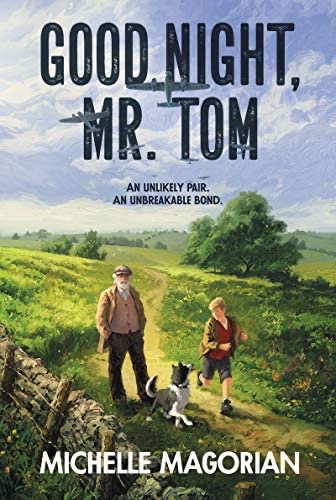
The story has so many deep issues that it is surprising it is considered a children’s novel. Child abuse and abandonment are two central issues. There is also the painful experiences of children evacuated from London to billet safely out in the country with strangers during WWII. Magorian weaves these and other issues in with her engaging story of matching a young malnourished boy, William, with a flinty widower, Tom.
Tom’s unhurried persistence to helping William settle in hastens the boy to heal both physically and emotionally, and as a result Tom also begins healing of the grief over losing his wife and child forty years earlier.
The joy of childhood, making friends, trying out new experiences, and the deep bond of friendship comes singing through the expressive prose. A thoughtful perspective of how the London evacuees fared as well as those who took them in during the war.
For those who enjoyed Carrie’s War, Goodnight, Mister Tom is recommended.
Word Nerd: Special Edition
Girandole: a spinning, rotating firework
Happy Fourth of July!

Oh for the love of July
When the Julius Caesar unit rolls around in sophomore English I ask what students know about the famous (or infamous) Roman. Their lack of knowledge is deplorable. Most think answering “salad creator” is going to win them points. It doesn’t. They are surprised, and some students think I’m joking when I trot out the fact the month of July is named or rather renamed for Julius Caesar.


Originally July was known as Quintilis, which was Caesar’s birth month. Quintilis means “fifth month” in Latin and in the Roman calendar that is where this month found.
Caesar was a man of action. Gaul is one example. When he wasn’t conquering countries and people he set about improving Roman life. The calendar is an example. It did need attention. The early Roman calendar had a glitch. Once every two years a month lasting 27 or 28 days would be added after February 23 to help even out accrued time. Caesar straightened this out and today’s calendar is pretty much the one he formalized 2000 years ago.
Whether July was renamed as a tribute to his leadership or as a nod to inventing the calendar requires further Googling.
Happy July. Stay cool. Watch out for stray sparkler flickers. Hydrate and wear sunscreen.

Bard Bits: Overcoming Shakespism
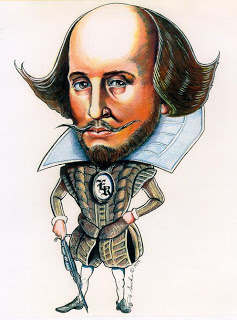
Up until teaching Shakespeare to my high school English students, my exposure and awareness of Stratford Upon Avon’s poet/playwright had been limited to the usual reference of Romeo and Juliet being a play about two teenagers who have a tragic romance. I saw it as a film in junior high. It was rated “M” for mature audiences (being a 13 year old counted as mature then). Certain scenes were embarrassing and I doubt we were mature enough to handle the morning after flesh flash of Leonard Whiting and Olivia Hussey. Plus, I had a really difficult time understanding what they were saying—were they speaking English?
That was then and this is now. At present I’m the resident Bardinator at school, being the advisor of the Students for Shakespeare Club and being known for my Shakespeare zeal. We’ve brought Shakesperience to the high school several times, I’ve helped with our own drama club’s version of Romeo and Juliet, designing sets and watching my son contribute his thespian skills, and I do my best to engage and interest students to embrace Shakespeare, nudging past groans when studying his works. My appreciation for Shakespeare has nudged me to leave my usual homebody mode to travel cross country to Washington DC to attend Folger’s week long Hamlet academy. I’ve gone beyond the usual Romeo and Juliet, Julius Caesar school curriculum offerings and have introduced students to Othello, Taming of the Shrew, Much Ado About Nothing, Merchant of Venice, Twelfth Night, and provided background Bard Bits.
How and why did I go from a Shakespeare illiterate to Shakespeare informed?
First of all, I had to overcome the language barrier. Reading Shakespeare wasn’t working so well. Watching well-produced film adaptations, such as Kenneth Branagh’s Henry IV helped tremendously. Shakespeare is meant to be performed, not read.
Secondly, the more I taught Shakespeare (teaching the same material year after year does have an upside), the more I understood what I was teaching. And if I understand what I’m teaching I can teach the material better to my students.
Beyond teaching the plays, I began reading about the man who wrote them. Since there is so little solid biographical information about Shakespeare, I began researching and became more and more intrigued. Who was this guy and did he really write all these plays and what was theatre like in Renaissance England led to other aspects such as learning more about Queen Elizabeth I and other aspects of that time period.
And I branched out to other plays, learning all about one play before committing to another. The benefit being that Shakespeare’s language was no longer puzzling to my ear, it had become a melody of written expression.
My dream curriculum is to teach a course that is all Shakespeare. We would of course study selected plays and sonnets, but also play Bard Bingo (it’s fun, really), create Flash Mob scenes for the community (field trip!), stage fight (sword fights and Hamlet are a natural), and put on a Shakespeare night for the school—best scenes talent show. I think I would call the course, “Shakespeare Then and Now” or maybe “Shakespeare—the Undiscovered Country.” At least a dozen students would need to sign up to make it a go, then again it could become so popular two sections (or more) would be required as Shakespism transforms into Shakesthusiasm.
I can hope.
Do you suffer from Shakespism or are you a Bardinator or maybe somewhere in between.
Story Time!
After a year of shutting down most public programs, our local library is opening up one of their most popular programs: Story time. The best part is I’m going to lead off a summer’s worth of local author reads. If you are in the neighborhood be sure to drop by!

Pam Webb aka Cricket Muse
A writer's journey as a reader
Recent Award

Children’s Insider

Society for Children’s Writers and Illustrators


 Pam Webb