As I remind my students, a noun is a person, place, thing, or idea. Here is a list of distinctive nouns.
haphephobia: an extreme fear or dislike of touching or being touched.
skerrick: a small piece or quantity; a bit.
tohubohu: chaos; disorder; confusion.
hugger-mugger: secrecy; reticence.
chiaroscuro: the treatment of light and shade in drawing and painting.
manavelins: miscellaneous scraps or small items, especially of food or gear.
exonumia: items, as tokens or medals, that resemble money but are not intended to circulate as money.
sumpsimus: adherence to or persistence in using a strictly correct term, holding to a precise practice, etc., as a rejection of an erroneous but more common form.
hydra: a persistent or many-sided problem that presents new obstacles as soon as one aspect is solved.
propinquity: nearness in place; proximity.
vibrissa: one of the stiff, bristly hairs growing about the mouth of certain animals, as a whisker of a cat.
concatenation: a series of interconnected or interdependent things or events.
foible: a minor weakness or failing of character; slight flaw or defect.
darg: a day’s work. Interesting that darg and darg share the same letters.
lustrum: a period of five years.
I need to find a way to wendle my appreciation for these fantabulous nouns in my sentences. It might become a foible in my darg to do so, give or take a lustrum.
To understand Shakespeare means it’s important to understand the historical period. Shakespeare wrote his plays knowing well the historical and cultural temperature of the day. He understood that the English people knew their history and traced it through the monarchy. Shakespeare’s plays included in his repertoire what are known as the Historicals: the Henrys, the Richards, along with Julius Caesar, King Lear, and company. Shakespeare based his plays on the history known, but of course, being a writer, he no doubt embellished the history–he had to sell tickets, after all. Funny thing, often what he wrote became better known than actual history. Take Julius Caesar, for instance. The famous line, “Et tu, Brute?” is a Shakespeare addition. No one actually knows what Caesar said when he was being stabbed by the toga team, but he sold tickets with that line and still does today.
Shakespeare knew his kingly characters had already made history, plus they were trapped by it. He couldn’t change their deeds too much. The Elizabethans were aware of their past and Shakespeare’s history plays helped them understand where they came from and where they were headed. All the pageantry was both entertainment and a lesson.
That’s what makes Shakespeare last through the years. Teachers tend to have a lasting impression.
The word bank is beginning to burst forth once again with the many marvelous lexiconical delights gathered. Time to set a few free to frolic unfettered and perhaps adopted by word discerners, like you.
yakka: work, especially hard work. Teaching these days is yakka, yakka, yakka.
gnomon: the raised part of a sundial that casts the shadow. It’s nice knowing about the gnomon.
ataraxia: a state of freedom from emotional disturbance and anxiety; tranquility. The last couple of years of covid controversy leads to the need of some ataraxia.
whigmaleerie: a whimsical or fanciful ornament or contrivance; gimmick. Is a whirligig kin to a whigmaleerie?
skookum: large; powerful; impressive. A snookumcould be a skookum.
tchotchke: an inexpensive souvenir, trinket. Perhaps a whigmaleerie can be a tchotchke.
wintle: to tumble over; capsize. I would appreciate an Austen heroine to wintle in an appropriate moment.
mussitation: silent movement of the lips in simulation of the movements made in audible speech. It’s more than just talking to one’s self.
armscye: the armhole opening in a garment through which the hand, and then the arm, passes, and to which a sleeve may be attached. So that’s what’s it’s called.
zugzwang: in chess, a situation in which a player is limited to moves that cost pieces or have a damaging positional effect. Does checkers possess such a term?
Definitely an eclectic assortment that deserve finding their way into your personal dictionary. Which words will you wangle into your next conversation?
Call Someone’s Bluff:to uncover a deception. A poker term in which a player bets on his or best hand and to “bluff” is bet on a hand, even it might be the best. To “call someone’s bluff” is to match the bet and when the cards are revealed it is evident who had the best hand. American in origin, around 1800s, the term has moved on to mean confronting someone who might be believed to be less than forthright or might be less than honest in their endeavor.
A tangle of problems
Can of Worms (like opening): introducing a set of problems. Those who fish know when opening a can of worms they will find them tangled and squirming with one another. And so it is with some problems they way they can twist up upon one another, becoming entangled up into another problem. This term is from mid-twentieth century America.
Can’t See the Forest for the Trees: focusing on small details instead of looking at the greater picture. A 1546 proverb by John Heywood says “Ye cannot see the wood for the trees.” C.S. Lewis put a twist on the proverb when he said in a critique, “All those little details you only notice in real life if you’ve got a high temperature. You couldn’t see the word for the leaves.”
Cast One’s Bread Upon the Waters: to invest one’s efforts in expectation of a return. From the Book of Ecclesiastes (11:1): “Cast thy bread upon the waters: for thou shalt find it after many days,” which is thought to mean, according to Elbert Hubbard in his 1911 Book of Epigrams, “Cast your bread upon the waters and it will come back to you–buttered.”
Good point…
Catch More Flies with Honey Than Vinegar: more can be gained by being nice than being unpleasant Miguel de Cervantes states in his Don Quixote: “Make yourself into honey and the flies will devour you.” A hundred years later Thomas Fuller mentions in Gnomologia: “More Flies are taken with a Drop of Honey than a Tun of Vinegar.” The proverb can be found in many languages.
Cat Got Your Tongue:being silent when expected to answer. An expression found in both in America and in England that addressed how a child would go silent when asked a question to avoid getting in trouble. As to why the cat would have his or her tongue that might be derived from the French saying: “I give up, give my tongue to the cat.”
Change of Heart: revising one’s opinion or intentions The nineteenth century cliché appeared in the 1933 movie Duck Soup. Groucho Marx replied to a character comment of “He’s had a change of heart” by saying “A lot of good that’ll do him. He’s till got the same face.”
Charmed Life (leading a):to be fortunate; to escape harm or danger Shakespeare might be credited with this expression. In Macbeth the titular character claims he is protected against death: “I bear a charmed life, which must not yield to one of woman born.” That may be what he thought, but Macduff proved Macbeth’s belief quite wrong.
Chip Off the Old Block:resembling a parent This expression refers to a chip being from the same block of wood, just as a child comes from his or her parent. Dating back to ancient Greece the expression originally was “a chip of the old flint.” The expression traveled on through the times with writers such as John Milton borrowing it for use.
Clip Someone’s Wings: to deflate a person who thinks highly of themselves Although it sounds somewhat militaristic, the sayings refers to trimming out a bird’s wings so it cannot fly; however, the ancient Romans had a saying that went “Away to prison with him, I’ll clippe his winges.” Sounds a bit military after all, doesn’t it?
January. The start of a new year and the start of another Reading Challenge. For the past few years I have managed to hit my Goodreads goal of 101 books and then some. This last year I barely squeaked over the finish line with 107, while the year before a glorious 165 books were read. The difference? Both numbers are a result of the pandemic. Due to lockdown, both voluntary and requested, I dove into books as an escape. I would order them from the library and pick them up curbside and isolate, finding respite in pages turned. Yet in 2021 Covid weariness, a certain lassitude formed, and my attention span wandered when reading. I found myself hooked on Angry Birds Bubble Pop for a time. Non-fattening escapism. I did manage to go cold turkey, but now and then I am tempted to pull up the game from app cold storage.
Bubble Popping is not the same as page turning
January started off with a mixture of books. Some new discoveries and some long anticipated hold titles. Unfortunately, there were no true standouts. Or perhaps I am becoming much more discerning.
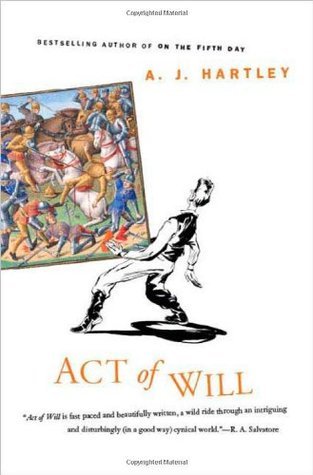
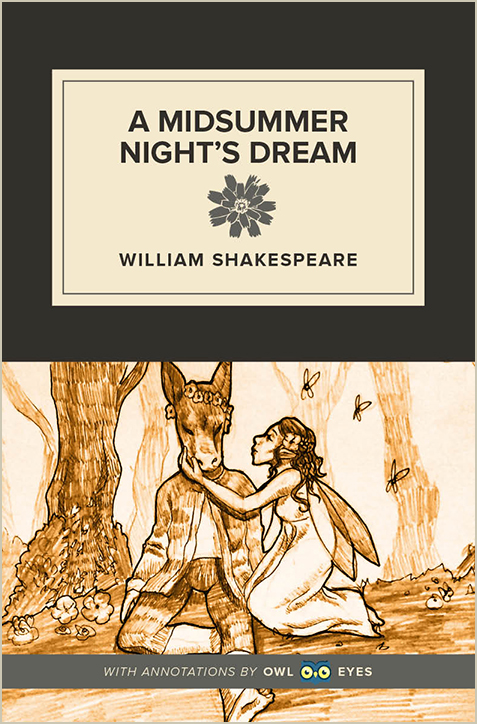
One book did catch my eye and it was discovered on the library free shelf. The cover alone prompted me to adopt it.
An unexpected surprise
Rollicking. Yes, that would be a fitting description of this “translated” manuscript that conveys the adventures of eighteen year old William Hawthorne who becomes a fugitive from the Empire for his seditious acts of writing plays and acting them out with a company of deplorable actors and through circumstances is adopted by a band of assassins. Imagine a young Will Ferrell running with a group of noble mercenaries. The book’s Will is an admitted coward who can’t shoot an arrow straight or ride a horse without falling off. He also has no luck with his attempts to woo the striking Rennette who would rather strike him than talk to him. This merry band, plus Will the homeless actor on the run, are hired to take on an army of mysterious raiders destroying the land. Will comically narrates his attempts to achieve heroism and along the way there are some awesome battle scenes. For those who relish Monty Python humor or like medieval adventures that have a mix of humor and action, then Will and his crew are suggested for your reading pleasure.
Not what I expected
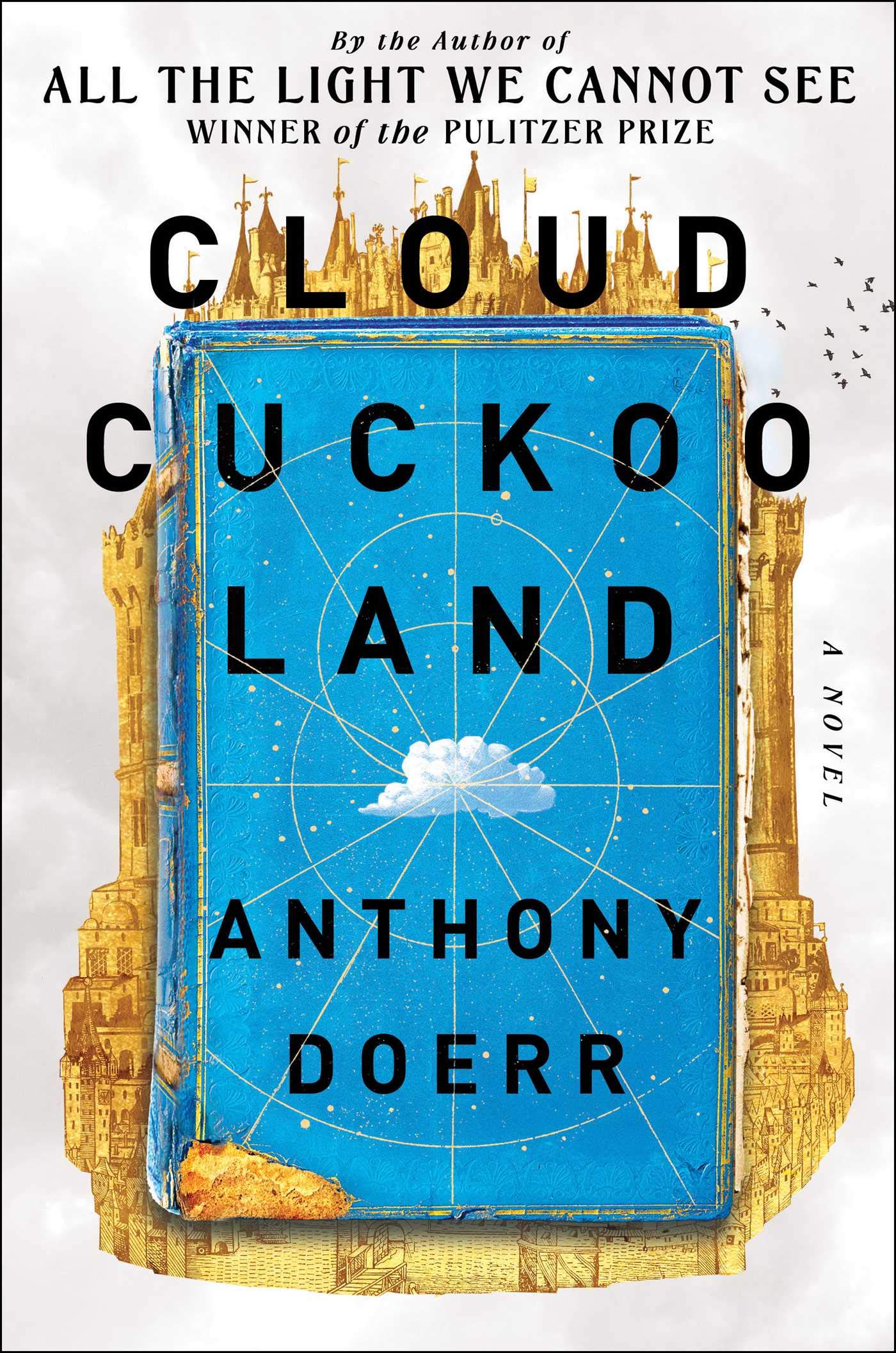
I had placed my request for Anthony Doerr’s Cloud Cuckoo Land when it first became available and patiently waited. All the Light We Cannot See being a stunner of a novel, my anticipation for his newest was high. The writing is as memorable, yet like another anticipated novel, Ishiguro’s Klara and the Sun, the plot became muddled and the ending was a letdown.
Fairly charming in approach
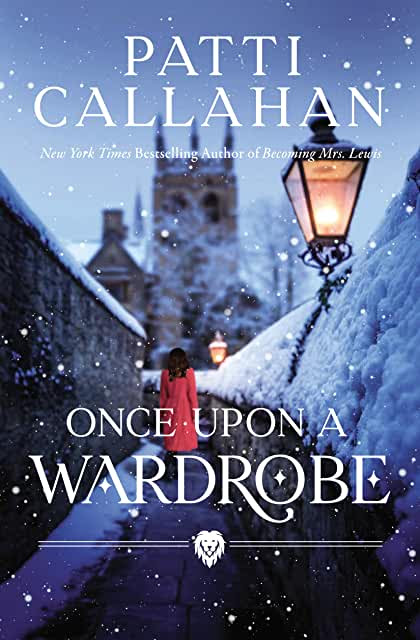
As a C.S. Lewis/Narnia fan, I patiently waited for my requested copy of Once Upon a Wardrobe. A blend of biography and enchanting tale of a sister devoted to her terminally ill brother, it wavered between a narrative point of view and third person, which impacted true reader investment, not knowing whose story to follow, the sister and brother’s or a recap of Lewis’s life.
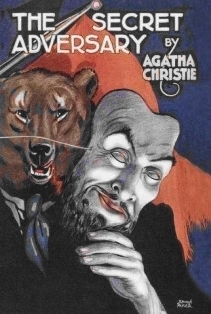
The story is much better than this cover indicates
I tried the first of Agatha Christie’s Tommy and Tuppence series, having watched the adaptation. One problem is that the story’s snappy British slang became a bit wearisome after a time. My edition had footnotes explaining the terms which proved both enlightening and irritating.
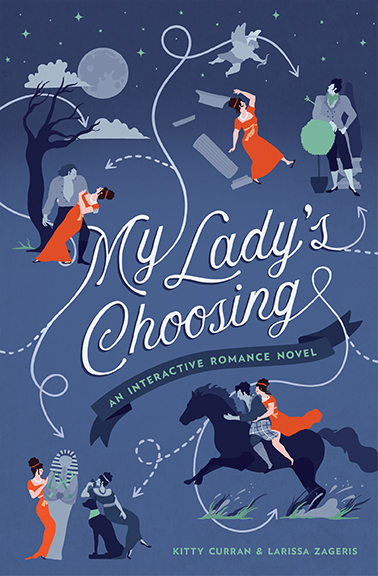
I think I blushed a couple of times
One book I requested as an inter-library loan and I was gratified that the library ordered: My Lady’s Choosing: An Interactive Romance. This is a choose your own adventure for adults but the romance adventures were a bit more focused on steamier interludes than anticipated.
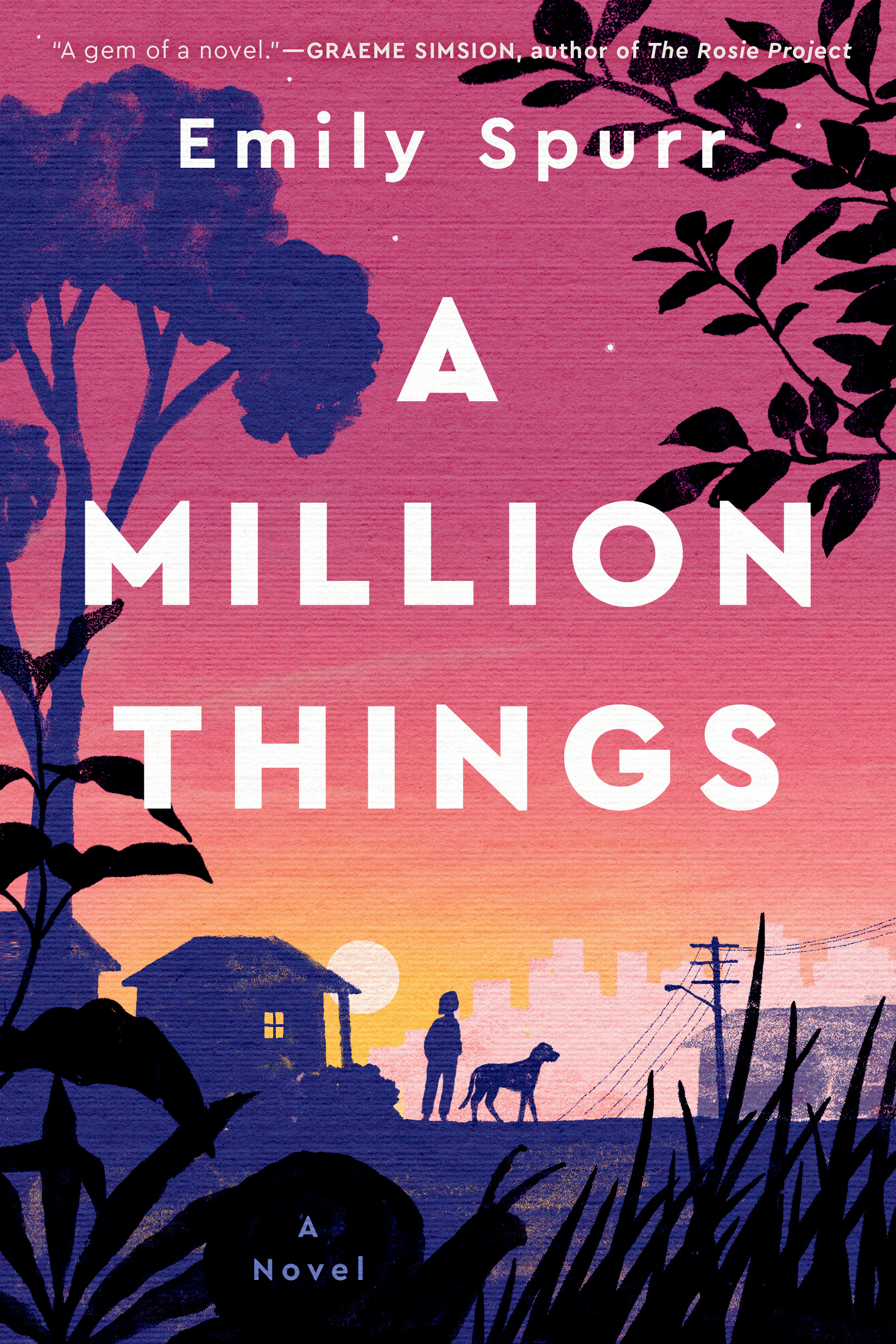
A stirring debut
Another requested and purchased title was A Million Things by Emily Spurr. An engaging debut about a ten year old girl who must cope with her mother’s extended absence. Some suspension of disbelief as this plucky, capable little girl tried to manage life on her own for a time, even though her elderly neighbor next door befriended her. The interaction and eventual friendship between the orphaned girl and her neighbor who has her own issues is the center of the story.
Several interesting reads, yet none really stood out as earning a place on my “You’ve-Got-To-Read-This-Next” list I give my hubs.
Hoping for February to deliver some good great reads.
Wasn’t it Albert Finney who started the trend of yelling out loud when oh so tired of it all? Seems like it was the movie Network. An outright yell he did—good old-fashioned stress relief. He was mad about non-Covid stuff, but a good yelling out loud seemed to work in that movie.
Well, Albert didn’t inspire me. Uncle Walt did. Walt. As in Walt Whitman from The Dead Poets Society featuring Robin Williams as a prep school English teacher. He introduces the word and concept of *YAWP*
YAWP yawp/yôp/noun: a harsh or hoarse cry or yelp.
Robin helped Todd to not only find his YAWP, he also helped him find his muse.
I’m fine with my muse, but the stress of Covid Coping has me finding my own stress relief: I YAWP in my car. Windows rolled up and I wait until no other cars are about before committing. There is a dandy stretch of back road that has become my YAWP zone.
The key to a proper YAWP is to take a deep breath, filling up the diaphragm, and then releasing that oh so satisfying belly yell. Screaming from the belly releases tension. Screaming from the throat releases neighborly calls to the sheriff.
So this belly yell, this need to scream because it just can’t be taken anymore, this Covid Coping strategy of just letting it go is a thing in Boston where a group of mothers scream, with some prompting and organization (traffic wands as cues, no less). I call them The Boston Yawps; however, their screaming is not very melodious. It is rather disturbing, actually. They need a coach prompting them to belly yell not a Jamie Curtis Scream Queen throat ripper.
No matter. They feel better. Maybe Yawping will catch on. I will continue to YAWP in the privacy of my car. I’m not ready for Friday Night Lights organized yelling.
Have you tried a YAWP lately? Or perhaps you have a better form of Covid Coping. Yes? Do share.
Shakespeare didn’t make the IMDb “goofs” in his day, since IMDb wasn’t up and running during the Elizabethan era, but he certainly has his share of them scattered throughout his plays. Norrie Epstein routs out some of his gaff’s in her book The Friendly Shakespeare as does Mental Floss in one of their posts.
Julius Caesar Set in 45 BC, Act 2, Scene 1 states:
Brutus Peace! Count the clock.
Cassius The clock hath stricken three.
According to Mental Floss the first mechanical clock was was found in England in 1283, more than 1300 years after Caesar’s death.
Ding dong, the Bard got it wrong.
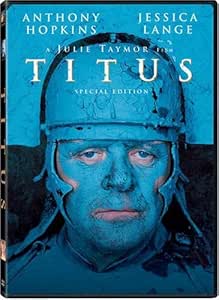
Titus Andronicus The Roman conqueror Titus Andronicus offers up the greeting of “bonjour”–or maybe Titus was multi-lingual.
Merci, let’s get our greeting right
King Lear Although the play supposedly takes place during the eighth century, Shakespeare adds in more modern bits by having Lear call for his tailor and Gloucester requesting his spectacles in order to read Edmund’s letter.
I can see clearly now, I need new clothes
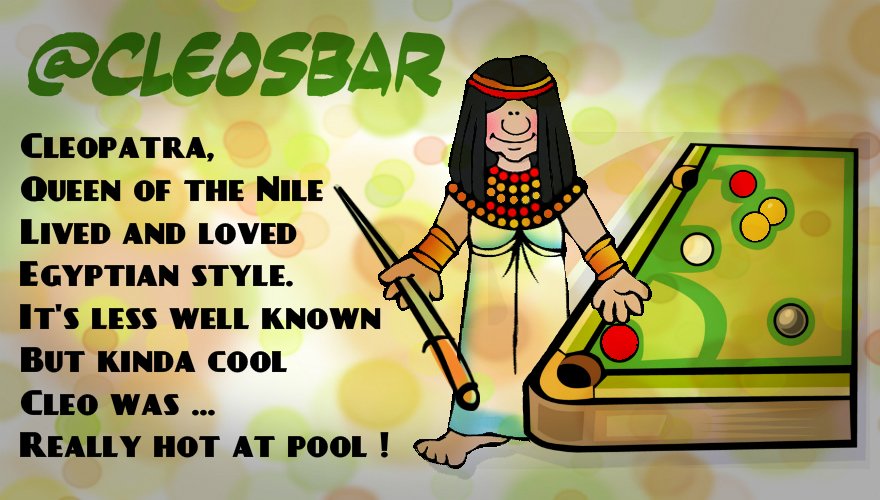
Antony and Cleopatra In Act 2, Scene 5, Charmain is invited by Cleopatra to play billiards. Yes, billiards. The earliest recording of the game is around 15th century Europe. The game is postponed due to lack of interest and a sore arm, when in likelihood neither knew how to play the game since it hadn’t been invented yet. Their solution is go fishing, a pastime that goes way back into the past.
Cleo was a pool shark or not
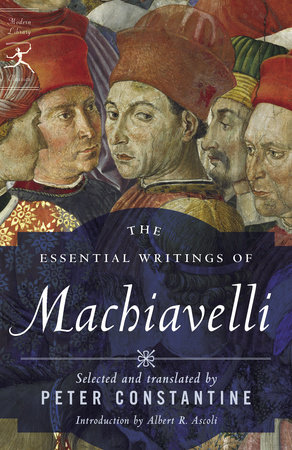
Henry VI Henry VI was King of England from 1422 to 1461 and again from 1470 to 1471, so when Shakespeare mentions Niccolo Machiavelli who wrote The Prince in the 16th century, the obvious mention is showcasing Machiavelli’s influence or it could have been Shakespeare liked to drop the name of a popular author of the time.
Such a nice guy deserves a mention in the play
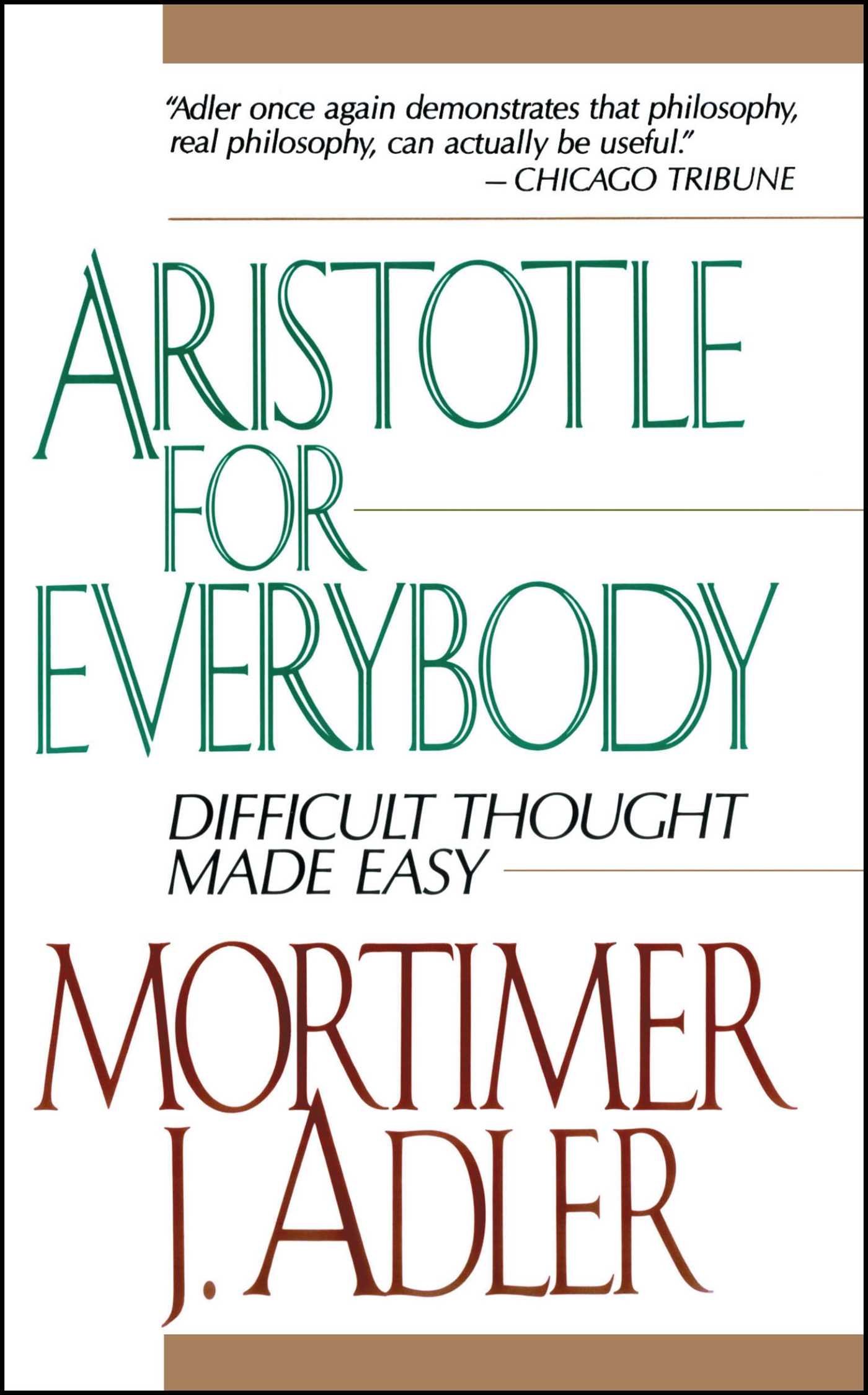
Troilus and Cressida Shakespeare’s love story during the Trojan War is at odds with the mention of Aristotle, born in 384 BC. In Act 2, Scene 2, Hector compares Paris and Troilus to the young men “whom Aristotle thought unfit to hear moral philosophy.” Unless there was an Aristotle available during Hector’s time, he had decent handle on wisdom from another time.
Hector is a philosopher as well as a warrior
A Midsummer Night’s Dream The Chinese are accredited with inventing gunpowder around 850 AD, which is ancient. However, Shakespeare set A Midsummer Night’s Dream in ancient Greece. In Act 3, Scene 2, Puck states how Bottom’s friends will run and flee, much like wild geese hearing “the gun’s report.” In other words, Bottom’s crew will vacate the area as if a gun had been fired. The Greeks were certainly talented, but no guns were about at that time.
Boom! Bottom gets his crew’s attention
Shakespeare’s “goofs” may or may not have been intentional. For all we know he decided to have a bit of fun and drop in contemporary aspects to spice up the play. In any case these anachronisms provide a “spot the oops” moment in the play.
I need to borrow the TARDIS during January. The resident Doctor could zip me somewhere sunny, pleasant, safe, with an ocean view and an access path to the beach. Blue skies being a requisite. I could pass through the wintery muck of snow and ice and grey ideas and be back in time to grade semester exams. Maybe a Zygon could be my substitute.
Seriously, where is a TARDIS when you need one?
Just a fanciful thought, I know. Living in a land of beauteous surroundings one must deal with the woes of winter to appreciate the joys of spring, summer, and fall. That’s right, I don’t ski. I wouldn’t complain about winter (so much) if I did ski. Used to. I do not want to be that teacher hobbling about on one of those knee scooters.
No thanks
Besides the mounds of snow, slick sidewalks, freezing days and even colder nights, there is the lack of sunlight to contend with. It’s dark at 7 am when I leave the house and dark when I return at 4 pm. I’m thinking of carrying a canary to work.
Teaching in winter is a bit like working in the coal mines
It’s not that I get depressed during our long winter (November, December, January, February, March, sometimes April—heck, it’s been known to snow in May), it’s just that most days I feel like I’m living in a bowl of oatmeal, all that gray and white. Someone suggested I have SAD—seasonal affective disorder. Maybe I do. I bought those special lights, and they help–some. What I really miss is COlOR!! Two exclamations. I miss blue sky, flowers, green lawns—spectrum variety. Winter is shades of gray. January snow is worn out and looking like a white t-shirt washed too many with a load of dark clothes. Not inspiring.
This year I decided to be proactive about winter. I spent my Biden Bucks on a Mom Cave. Smart TV, sound bar, reclining love seat, fake ficus tree with twinkle lights, lava lamp (glitter instead of jelly blobs). When the sun goes down I cozy in and watch PBS, nature documentaries, and DVD binge with library finds. I can safely say I am adding to the natural average of watching almost as much TV as I put in working.
I also read and do puzzles, yet escaping with David Tennant and going around the world is fun (would be faster in the Tardis, Doctor) and visiting with the Skeldale House crew from All Creatures Great and Small helps pass a dark evening. I’m currently hosting my own Sidney Poitier film fest.
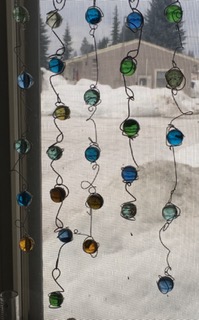
Not wanting to be accused of losing my marbles (I have sometimes issued a barbaric YAWP when winter blahs strike), I hung them up in my kitchen window. Instead of viewing mounds of snow I now gaze on droplets of colored glass. It has made a difference.
I know exactly where my marbles are, thank you…
Once January passes I do manage to endure winter a bit better. Spring doesn’t seem to be quite so far away once Valentine’s Day arrives.
I can do this.
Anyone else deal with the Winter Blahs? What are your survival tactics?
While some revel in the Christmas season I am all for the New Year. New digits on the paystub, closer to spring, which means closer to June, which means summer break!
Celebrating the joy of the new year requires presenting a menu of festive, inspiring words that ring out the gladness of a new, and it’s hoped, better year.
proceleusmatic: inciting, animating, or inspiring
sweven: a vision; dream
pandiculation: the act of stretching oneself especially on waking
pulchritudinous: physically beautiful
perorate: to speak at length; make a long usually grandiloquent speech
Fletcherize: to chew (food) slowly and thoroughly
celerity: swiftness; speed
irrefragable: not to be disputed or contested
chuffle: to make a low snuffling sound analogous to the purring of smaller cat species, often as a greeting
heigira: any flight or journey to a more desirable or congenial place
mickle: great; large; much
prelapsarian: characteristic of or pertaining to any innocent or carefree period
rapprochement: an establishment or reestablishment of harmonious relations
yclept: called; named
azure: of or having a light, purplish shade of blue, like that of a clear and unclouded day
evanesce: to disappear gradually; vanish; fade away
hiemal: of or relating to winter; wintry
cavort: to behave in a high-spirited, festive manner; make merry
A broad range of words, ’tis true. Yet January can be a month of variance. There is the hiemal aspect, the evanesce of snow, it’s hoped, unless a new snowfall creates a mickle of the white muck, which generates a heigira urge for sunnier locale. Once January’s snows lessen, the landscape becomes more pulchritudinous as azure skies beckon overhead leading to prelapsarian attitude, although some would state the new year still holds over the old winter. Aye, that fact is irrefragable; however, a proceleusmaticsweven inspires the need towards pandiculation of outlook. Spring is closer in January than it was in November and I shall indeed cavort when the last snowflake falls. I might even chuffle once January’s page is turned aside to welcome February. Longer days and Valentines to anticipate create the need to Fletcherize in preparation to perorate upon the celerity of winter’s passing.
May your January and the meeting of the new year be one of rapprochement since the first month of the year was named for Janus, the Roman god of beginnings. A fitting yclept month as January is the doorway to the rest of the year.
WordPress has informed me I have blogging for ten years. Ten years! A decade of posts. My oh my how the time did fly on by.
Happy Anniversary to me…
No cake, presents, or hoopla, although a quiet reflection is perhaps agreeable.
The decision to create a blog derived from the admonition of a presenter from a writer’s conference who said social media presence is important in creating a personal brand.
Cricket Muse was launched as a blog about my writer’s journey as a reader. I remained incognito until recently. I had determined to blog behind my nom de plume until the publishing of my first book.
In 2020 Someday We Will, my debut picture book about anticipating visits from loved ones, particularly the grandparent/grandchild connection, was published by Beaming Books and I unveiled my true identity as Pam Webb. Cricket Muse is still around and provides reviews at Goodreads.
Ten Year Reflection:
People seemed chattier ten years ago. Looking back at early posts there is a noticeable difference between replies then and now in length and depth. Perhaps we are busier, more distracted. I know my responses are less than they used to be when I reply these days.
Blogs simply disappear, which is sad, since friendships, of sorts, are made whilst blogging.
Really good stuff is learned along the course of blogging: new words, reading titles, perspectives, and stories. There is so much available to learn and absorb through the blogging world.
In order to plump my social media presence I opened an Instagram account. Truthfully, I much prefer reading blog posts to reading Instagram posts. The difference is akin to enjoying a baked potato with all the substantive trimmings rather than snacking on chips from a bag. But guess what I end up doing more often than I should? Yup, snacking. So easy to swipe through those Instagram posts—it is addictive. Gotta love those cat reels.
I am not that concerned about follower or post stats. It is a boost, of course, to be noticed, yet I blog because I like to share my thoughts, and as an ambivert it’s a way to converse with others without the stress of in-person dialog.
The biggest benefit from blogging is the people met along the way:
Mike Allegra: probably the longest-running blog acquaintance at present, at least seven years. We have wrangled over literary tastes in our short-lived Debatable posts. A fellow writer and a funny guy.
Mitch Teemley: Mitch is amazingly talented and well-versed in all kinds of stuff. Prolific in postings and entertaining to boot.
Tish Farrell: her photos get me traveling without having to leave home.
Pete Springer: a most recent discovery, fellow writer, and Humboldter (Humboldtian?), and knows all about the wins and woes of being a classroom teacher.
This is just a smattering of blog folks I exchange with and as some leave for other pastures of creativity there are more who come along.




/king-lear-mad-56a85eaa3df78cf7729dcc35.jpg)







 Pam Webb