Pam Webb

a writer's journey as a reader

Archive for the category “Reflections”

Reader Roundup: February


A false spring led to dashed hopes of winter’s end. Another round of snow, icy winds, and days to stay inside hit our area resulting in a dash to the library and stockpiling books. I blend my own special recipe of cocoa and so February was a month of mostly consisting of reading books and sipping cocoa in the easy chair.

Catherine’s War by Julia Billet ⭐️ ⭐️ ⭐️ ⭐️ ⭐️

Image: Amazon

Based on the novel of her mother’s experience in occupied France, the author presents readers with an award winning graphic novel that tells the story of a young Jewish French girl who must constantly move to avoid the Nazi round ups. Through expressed thoughts and photographs Rachel/Catherine’s story is told simply, yet elegantly.

The Wings of a Falcon by Cynthia Voigt ⭐️ ⭐️ ⭐️ ⭐️ ⭐️

Image: Amazon

This title can read as a standalone, even though it is the third book in Voigt’s Kingdom series. The adventures of Oriel and Griff are thrilling as they escape their imprisonment of the Damall’s rule to make their way to the eventual destination of The Kingdom. Voigt is an accomplished storyteller and this story rings of medieval times without resorting to fantasy. A memorable tale of devoted friendship.

The House on the Gulf by Margaret Peterson Haddix ⭐️ ⭐️ ⭐️ ⭐️ ⭐️

Image: Goodreads

Haddix weaves a mystery within a mystery and throws in a plot twist on top of a plot twist in this standalone coming of age story.
Britt and her brother Bran are being raised by their single mother and are a tight little family facing hard times. Bran manages to get a house sitting job for the summer so his mother can attend college classes. It seems like a great situation, yet Britt notices he is acting strange, furtive even. When the truth comes out about who they are housesitting for, it is a shock and the outcome could have dire consequences for the family.

Silence in the Library by Katharine Schellman ⭐️ ⭐️ ⭐️ ⭐️ ⭐️

Image: Amazon

The second book in the Lily Adler series in which the recently widowed Mrs. Adler assists in solving a murder. Set in the Regency period the author captures the hierarchy of social class and the intricacies of class conversations. Her attention to historical research adds to the overall story and understated theme of class consciousness. The murder mystery has sufficient twists to make it an engaging read and with the added tensions of the various interpersonal relationships the series is well set up to keep readers interested. This title can read as a standalone. For fans of Miss Scarlett and the Duke PBS series.

Over Sea, Under Stone by Susan Cooper ⭐️ ⭐️ ⭐️ ⭐️ ⭐️
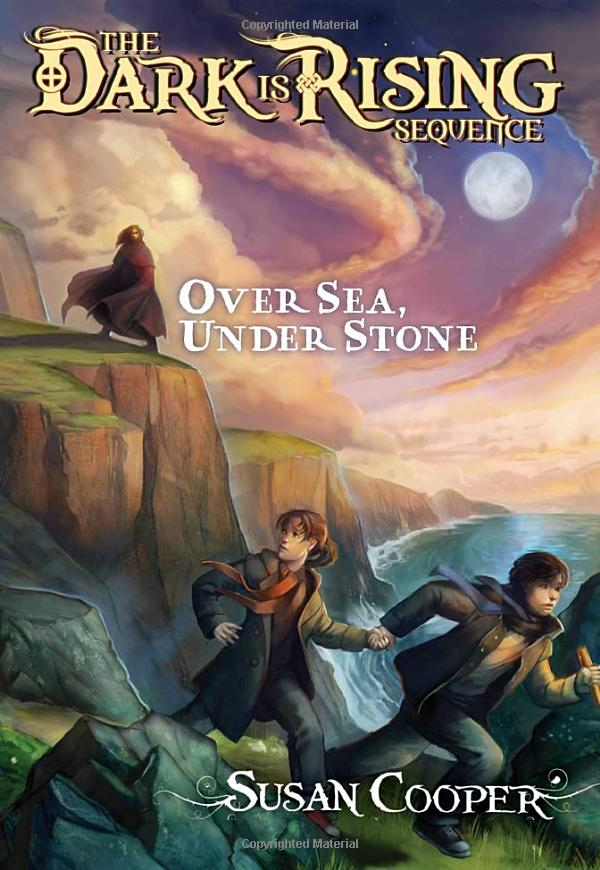
Image: Amazon

Fans of Narnia will appreciate Cooper’s introduction to her Dark Is Rising series: Over Sea, Under Stone. Set in England, probably in the 1950s, the three Drew children are up for a splendid family holiday with their eccentric great-uncle Merry Lyon (which does sound like Merlin, doesn’t it?). Bored one rainy day, they explore the house and discover a map which leads them on quite an adventure. Beyond Cooper’s impressive wordsmithing, she presents children who on one hand act like siblings, calling each other names, being worried about getting in trouble with their mum and dad, and plunging into situations, and on the other end she also has these children imbued with reasonable rational thinking skills, able to accomplish much while realizing they can’t do everything on their own and do need adults to help them at times. An exciting story with hints of Arthurian adventure.

Murder is a Must by Marty Wingate ⭐️ ⭐️ ⭐️ ⭐️ ⭐️
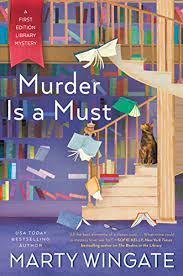
Image: Amazon

In this second book in the series Hayley Burke is finally establishing herself as curator of Lady Fowling’s First Edition Library of Golden Age Mystery Writers. Her literary salons are a hit and now it’s on to something with more public fanfare: an exhibition paying homage to Lady Fowling. Plans go seriously awry when the events manager is found dead at the bottom of the stairs, mimicking the death of a character in one of Dorothy Sayer’s valuable first edition mystery novels—which happens to be missing. While still a lively read, this plot focused more on character actions. Not much sleuthing and the murderer was a fairly easy guess. Still a fun read and a pleasant way to spend an afternoon when the snow won’t stop falling.

My reading habits seem to be switching between mysteries and fantasy. Escapism at its best, I suppose. And I do want to escape winter’s kidnapping of spring. I’m feeling like I’m stuck in the Narnia chapter of continual winter. Where is a Pevensie child when needed to break winter’s spell?

Worm Moon Musings


Look up! It’s a full moon! It’s the Worm Moon! Worm Moon? Yes. It’s the Worm Moon.

As over the moon I am about full moons I am not familiar with tonight’s Worm Moon. I’m not squeamish about worms but naming a full moon after these little earth burrowers simply goes against logic and romantic notions. The moon is the silver lady in the sky or the beaming gentleman among the stars (no bias). Attaching “worm” to the full moon status is perplexing.

Good old Farmer’s Almanac helped me out on this one. The March 7th full moon is the Worm Moon because (ready for the drumroll…) winter has passed and the ground is warming up signaling spring is near and the worms are waking up to surface to feed the incoming birds.

Replay that. Winter has passed? Spring is near? Robins and etc are landing to snack on the worms?

Winter has not passed. Spring? HAHAHA This guy is not a worm snacker. Haven’t seen a robin for a long, long time.

I’m looking forward to the rest of the year’s moons. Join me wherever you are and we will gaze up at the night sky in shared appreciation. Worm Moon, indeed…

  • April 6: Pink moon 
  • May 5: Flower moon 
  • June 3: Strawberry moon 
  • July 3: Buck moon 
  • August 1: Sturgeon moon 
  • August 30: Blue moon 
  • September 29: Harvest moon 
  • October 28: Hunter’s moon 
  • November 27: Beaver moon 
  • December 26: Cold moon

Writer Life: The Office


Sorry, this isn’t a post about Steve Carrell and his team. This post is a rumination about desks and what is expected when sitting behind one in the pose as a working writer. I like the sound of saying “I’ll be in my office if you need me.”

I would call this an office. Yet, she doesn’t look happy.

I will say this about having an office—I don’t actually have one but I do have a room that I attempt working in. It also functions as a guest bedroom and the movie den. It’s nickname is Mom Cave.

When I am in my office, i.e. the Mom Cave, my office is actually an Ikea chair and a footstool with a side table. Conventional is not my forte.

Once upon a time I did have a desk but didn’t have an office. This desk was built by my resident MacGyver and housed my enormous Tandy computer (remember Radio Shack?) and printer and two small filing cabinets, plus the TV. Some great stories were written there, but being in the central room, not a lot of quiet was had.

The next office was again not an office but a desk. It was set up in our bedroom. A bit more privacy; however, with three children in the household, privacy was at a premium. I did learn not to let my son and his friend play games on my computer unless I wanted the frustration of corrupted memory and glitches. It was time for my own computer. Enter laptops.

Think deep purple and this is my temporary office.

A laptop meant the filing cabinets could go. Same with the desk, which was actually a door on top of the cabinets (we’ve all done that type of economy desk, right?). I still needed a place to work so why not a small loveseat? Eggplant plush moved into my bedroom. Some really great stories were written there. Plus, I could sneak into my room and watch a movie on my laptop and say I was working.

Once the kids started to empty the nest I was able to claim a bedroom. A real office was on the horizon. Children do return now and then for visits so a bed is needed. Not a real office, although close enough.

Long winters and a stimulus check turned the pseudo office into a den aka the Mom Cave. Got my smart TV, sound bar booster, a sweet recliner loveseat. Oh yeah, my Ikea chair for when I do decide to write. Lots of great stories written there.

Wait, I only watch TV after a day at the office. Honest.

This past week, with the Artic Express chugging into town, I have relocated to the living room recliner as the Mom Cave is too cold for comfort. I’m finding I am getting a lot of work done out here. Surprisingly. When typing tedium takes over I look out the window and watch the birds forage and frolic at the feeder. I stay longer and work. I might be on to something.

Oh deer, he chased the birds away.

Over time I have decided the office is a mindset, not so much a place. I still like saying I have an office though.

Bard Bits: Quotable Quotes, Words, and Phrases (and some not)


Shakespeare was a dramatist of note:
He lived by writing things to quote.
H. C. Brunner

“The course of true love never did run smooth.”
A Midsummer Night’s Dream

Friends, Romans, countrymen, lend me your ears.
Julius Caesar

Life’s but a walking shadow…
Macbeth

All the world’s a stage,
And all the men and women merely players.

As You Like It

What’s in a name? That which we call a rose
By any other word would smell as sweet.

Romeo and Juliet

We are such stuff
As dreams are made on, and our little life
Is rounded with a sleep.

The Tempest

“To be, or not to be, that is the question.”
Hamlet

The above are just a smatch of quotes that are Shakespeare derived. Below is a mere sampling of the 1,700 words Shakespeare is credited for either inventing, introducing, or making common. Some words attributed to Shakespeare are contested by word source experts like Merriam Webster and Mental Floss, but we’ll let them work it out, so note the *.

accommodation
aerial
amazement
apostrophe
*assassination
auspicious
baseless
bloody
bump
castigate
changeful
clangor
control (noun)
countless
courtship
critic
critical
dexterously
*dishearten
dislocate
dwindle
eventful
exposure
fitful
frugal
generous
gloomy
gnarled
hurry
impartial
inauspicious
indistinguishable
invulnerable
lapse
laughable
lonely
majestic
*manager
misplaced
monumental
multitudinous
obscene
palmy
perusal
pious
premeditated
radiance
reliance
road
sanctimonious
seamy
sportive
submerge
suspicious

Moving on now to some familiar phrases:

Green-Eyed Monster

In a Pickle

Love Is Blind

Salad Days

Wear My Heart on My Sleeve

There’s the Rub

Cruel to Be Kind

Wild Goose Chase

Dogs of War

Strange Bedfellows

According to the Folger Shakespeare website (and these folk know their Bard Bits and Facts), the following are not Shakespeare quotes:

1. “Expectation is the root of all heartache.”

2. “When I saw you, I fell in love, and you smiled because you knew.”

3. “All glory comes from daring to begin.” from Eugene Ware

4. “But for those who love, time is eternal.”

5. “Love me or hate me, both are in my favor…If you love me, I’ll always be in your heart…If you hate me, I’ll always be in your mind.” I really thought this was from Shakespeare—apparently Some EE Cards thought so too.

Any “aha” (not a Shakespeare word as far as I know) moments from the list?

FIVE STAR READS (really, I’m not a finicky reader)


Photo by Jess Bailey Designs on Pexels.com

If you have been traveling with me on my writer’s journey as a reader you know how much I like to read. I usually try to read 101 books during the year, and that was with my teaching schedule. Retiring has definitely created an uptick in how much more I read.

Since I started keeping track of my reading with Goodreads through their Reading Challenge I have hit my goal for the past six years. I definitely have eclectic tastes. I read picture books to middle reads to YA and adult. Not too much of a nonfiction fan as it reminds me of doing schoolwork.

Now that I am retired I have ever so much more time for reading. I read 155 books in 2022! One year I hit 165 books–2020. Lots of downtime.

I look for books through all sorts of sources: Costco’s Book Connection; reader recommendations from various social media outlets; finds from my monthly stint as a library book sale book sorter. My Reader Roundup posts are my shares with readers what I have found to be worthwhile reads. I used to post more of a variety of ratings, but lately I find myself posting only the really good reads–those five star rates.

What makes a five star read for me might be different for another reader. It’s more art than science because when I am done with a really good read I have this sense of “oooh.” Not very scientific, I know. So, here’s in a nutshell the basic hierarchy of needs for a book to be rated a five star read.

  1. READABILITY
    This is the fundamental one. How enjoyable is the book to read? Does the prose/plot/theme/idea flow well? If I have to go back and reread for clarity or if I find myself skip reading (admission–I don’t read everysingleword–especially when it involves boring bits like unneeded description about clothes, calculations, or backstory I already know). If skip reading occurs I begin to lose that loving feeling and move on to:
  2. LOSTability
    I do enjoy getting so involved in a book that I have to remind myself to get up and unlock my muscles at least once during my reading time. The book is so amazing that I read for hours, although I rarely read through the night anymore, yet a really good book gets me past my bedtime of 10 pm. The story, characters, style–everything is so, so captivating that I get lost in a good book (Thanks, Jasper Fforde–which reminds me to mention:
  3. ORIGINALITY
    What a joy to find a unique read, discovering an unconventional format, appreciating an atypical character or premise. Jasper Fforde fit this need with his Thursday Next books (and most of his other books). A secret agent who literally can pop in an out of books? I was so sad when I reached the end of the series. I’m still waiting for BBC to realize Thursday Next is the next Dr. Who *hint hint* and that leads me to dwell on:
  4. PROFUNDability
    Is there a resonance once the last word is read? Do I sit and sigh and reflect once turning the cover upon the last page? Do I think about certain passages? Do I carry with me quotes to pop in my own dialogues and soliloquies down the road? Yes? Than the book has had a profound impact on me.
  5. DELIVERability
    So many times a book starts out strong, only to fizzle in the middle, or go flat at the end. This is the big one. Does the story hold all the way through the book? Yes? Then add this last point to the previous and a five star read makes the list.

Does a book have to have all of these points to become a five star read? It doesn’t happen too often that all points are earned equally. I am fairly forgiving. For instance, Lorna Doone is a longish read and the narrator does go on sometimes, yet the writing isn’t overly verbose for its 800 pages. I did skip read at times, but other times I fell into the book and got lost in the story of this Romeo/Juliet model of love and feuding. The book did resonate with me and reminds me a bit of another favorite read, The Princess Bride. So a book like Lorna Doone was slim on some points and big on others averaging out to be more a five than not a five.

Next time you come across my five star reads on my Reader Round Up I hope you have a better idea of what makes for a really good read.

What needs do you have when rating a book? Or do you rate books at all?

How Cliché: “H” phrases


Hair of the dog: a bit of what made a person ill to be used as a remedy. Traced to John Heywood’s 1546 Proverbs: “I pray thee let me and my fellow have a haire of the dog that bit us last night.” Heywood might have been referring to the old folk remedy of placing the burnt hair of a dog into a dog bite to cure the wound. The phrase is now mostly referring to having a drink of alcohol to countermand the affect of having too much alcohol to drink. Does this mean I should have another chocolate bar when I celebrated too enthusiastically on National Dark Chocolate Day?

Handsome is as handsome does: actions, not necessarily appearances, are what matter. Before Anthony Munday in his 1580 Sunday Examples, used the phrase it was already in use, although the phrase was more commonly known as “goodly is he that goodly dooth.”

Throwing one’s hat in the ring: entering a contest or an election. This phrase stems from nineteenth century boxing days when someone would throw their hat into the ring to indicate their challenge. The term eventually moved into politics with Theodore Roosevelt announcing “My hat’s in the ring,” in 1912.

Have a nice day: a pleasant farewell. This ubiquitous, if not irritating, phrase has been around since the 1920s. It became more common in the 1950s when truckers used it as a sign-off on their radios. The phrase took off in the 1960s and by the 1980s it became irritating enough that the expression began being dropped by agencies, such as police departments when “Have a nice day” after delivering a traffic ticket didn’t necessarily sit well with people. Other versions are “Have a nice one,” or “Have a good day.”

I had this t-shirt in the 1970s. A collector’s item, you think?

To have one’s heart in one’s mouth: to be excessively frightened. Homer used “My heart leaps to my mouth,” in the Iliad in 850 B.C. Move up to 1874 and Mark Twain states in Life on the Mississippi: “My heart flew into my mouth so suddenly that if I hadn’t clapped my teeth together I should have lost it.”

Heart phrases are popular, there are at least eight more: To have one’s heart in the right place; A heart of gold; A heart of stone; To one’s heart’s content; A heart-to-heart talk; A heavy heart.

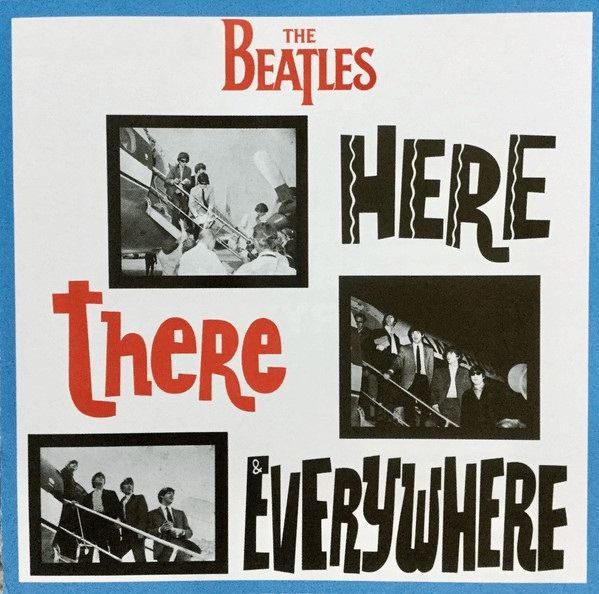
Here, there, and everywhere: all over the place. In the thirteenth century the expression was more commonly known as “Here and there.” Christopher Marlowe included this line in his 1588 Doctor Faustus: “If you turne me into any thing, let it be in the likeness of a little pretie frisking flea, that I may be her and there and euery where.” Not to be confused with the Beatles:

Hitch one’s wagon to a star: to set a high goal. Ralph Waldo Emerson is credited with creating the phrase in 1862 with the line, “Hitch your wagon to a star” in an essay entitled “American Civilization.” Ogden Nash wrote about the line in his 1940 poem “Kindly Unhitch That Star.” While Emerson was encouraging people to set a lofty goal and work towards achieving said goal, more modern interpretations lean towards people achieving their goal by attaching themselves to someone famous or successful and allowing them to pull the goal setter along to reach their goal.

image: Etsy

To hit the jackpot: a substantial win. A form of draw poker involves opening with a pair of jacks or higher pair. It takes several rounds before a person has a hand good enough to open and players are required to put money in the pot, or jackpot. As the pot grows, round after round, the winner walks away with a healthy amount of money.

Hoist with one’s own petard: caught or destroyed by one’s own device. A “petard” an older word, is essentially a bomb. “Hoist” means to “blow up” not to pull up, like using a rope. Shakespeare uses the idea in Hamlet when Hamlet refers to Rosencrantz and Guildenstern’s treachery: “Let it work; for ’tis sport to have the engineer hoist with his own petar.” In other words, he is suggesting that his former buddies can blow themselves up with their own plan (bomb).

Hope against hope: desiring something although it seems impossible. In the Bible, Paul writes in Roman 4:18: “Who against, hope believed in hope, that he [Abraham] might become the father of many nations.” Another version of the phrase is “hope springs eternal.” Aragorn in The Two Towers by J. R. R. Tolkien uses the expression referring to the conflict with Orcs: “Well, now, if they still live, our friends are weaponless. I will take these things, hoping against hope, to give them back.”

image: Erik Engheim wonders if humans would have any hope of winning a fight with Orcs

Hue and cry: an loud outcry or protest. In old England neighbors, bystanders, and others would raise a “hue” or a shout if they saw a suspect being pursued to help authorities apprehend him or her. The term moved on to include referring to the public’s vocal concerns about an issue. A shout and cry can also include tweets and other social media ballyhoo.

Old time hue and cry
Today’s hue and cry

Okay–which of these “H” phrases most surprised you? Did I miss one or two that you are curious about?

Word Nerds: Precise Language


Sometimes we blunder through trying to find that exact word to describe what we are talking about. This list of words provide the exact word for a particular situation.

image: Vermilion Art

dorveille: a dreamlike semi-conscious state like when falling asleep or waking up.

foehn: a warm, dry wind coming off a mountain

hyponopedia: learning while asleep through listening to taped recordings

image: mpora

abseil: descending by moving down a steep incline or overhang by using a secured double rope placed around the body

ailurophile: a person who likes cats

cognoscenti: people who possess superior knowledge and understanding of a particular field, especially in the area of fine arts, literature, and fashion.

juku: a school that is attended in addition to regular school as a means of preparing for college entrance examinations

image: Herald Weekly

xocolatophobia: an irrational fear of chocolate

dwy: a brief storm accompanied by rain

leveret: a young hare

What word can you now precisely insert into your conversation?

Reader Roundup: January


I like how January ushers in a new year and kicks off the countdown to spring. The snow is slowly starting to melt, but days are still short and the skies mostly gray. Books are still the main diversion to get through gloomy afternoons and dark evenings. Lately I start more books than finish them, but I did manage to find a couple of five star reads:

image: Amazon

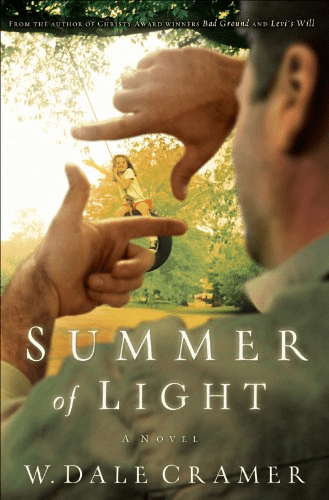
Summer of Light by W. Dale Cramer ⭐️ ⭐️ ⭐️ ⭐️ ⭐️

A refreshing entry into the Christian fiction category in how the author presents church and faith. By placing a self-admitted redneck construction worker into the sudden situation of being the prime caretaker of their three children, readers see how faith takes on different meanings.

The story has no single great conflict. Instead, like life, there are many little fires that need to be put out: Mick learning to have one eye at all times on their sensory-sensitive son, managing the animals, learning how to be with his children instead of just taking care of them, and not washing his wife’s laundry.

If there is one main issue it’s Mick realizing that while he may not be a stay-at-home mother he does pretty well as a father. The smaller issues of importance are his acceptance that he has talent as an amateur photographer.

The author’s viewpoint of church is a thoughtful point of reference as he shows the importance of the family attending together, yet shows how service to others is also an aspect of consideration.

image: Barnes and Noble

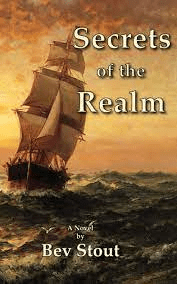
Secrets of the Realm by Bev Stout ⭐️ ⭐️ ⭐️ ⭐️ ⭐️

Annie, an orphan girl mistreated by her aunt, runs off to London and disguises herself as a boy. She is taken on as a cabin boy upon the merchant ship The Realm. As Andre she has more than a few adventures as a young sailor, but when her secret is discovered by her shipmates she must make the hard decision of going to live on land once again.

Though recently written, the author has captured the essence of an old-fashioned tale similar to Stevenson or Dickens.

image: Amazon

The Bodies in the Library by Marty Wingate ⭐️ ⭐️ ⭐️ ⭐️ ⭐️

It’s difficult to resist the cheery cover, especially with the title being a nod to Agatha Christie’s well-known mystery story. And there is a cat of distinction.

The set up is fun. Hayley is hired to be a curator of Mrs. Fowling’s collection of first edition mystery writer books and she is having difficulty finding her way, especially since she is lacking in mystery book knowledge. Then there is the kerfuffle with the Wednesday night writing group being deemed as interlopers by the ever faithful Mrs. Woolgar, secretary and keeper of Mrs. Fowling’s reputation.

The dead body that is found in the library one morning does not help matters at all, but the murder does help Hayley prove she can become a curator of note and channel her developing Miss Marple skills to solve the crime.

A fairly engaging story that sometimes focuses more on Hayley’s personal life than on solving the murder; however, Wingate has a knack for keeping the plot interesting.

For readers who like amateur sleuthing stories enfolded in light human drama such as The Thursday Murder Club series.

Looking for more fives and more blue skies in February. Any fives from your January reads?

Bard Bits: Oh, For Reading Out Loud


Today’s audiences talk about seeing a movie. And we are very much a visually oriented culture. Yet, in Shakespeare’s day audiences would say they were going to hear a play because language was such an integral aspect of their culture.

Shakespeare knew this, of course, which is why he wrote his plays with rhyme, rhythm, homonyms, laced with ambiguity. He wanted his audience to hear the auditory beauty of language.

Pen in hand the Bard does ponder

Modern audiences are more accustomed (or have grown more accustomed to) sound bites—quick bits of communication. No wonder eye rolls and twitches are commonalities when someone mentions Shakespeare—we are no longer used to the longer, more developed portents of language. We want quick and easy auditory digestion instead of the languid delight of a language banquet. ‘Tis a shame, yet supping upon a Shakespeare play is possible with a bit of effort.

Shakespearean plays are written to be heard and the Stratford-Upon-Avon wordsmith created the means to better enjoy his words by employing the following:

1. Read the lines with deliberation and emphasis. For example, Macbeth’s “Tomorrow and tomorrow and tomorrow” does better with a slow pronounced repetition to emulate the tedious monotony of life.

2. Use punctuation as a guide by reading to the end stop rather to the end of the line it gives more meaning to the lines. This is known as enjambment, where the line overflows into the next line, much like a waterfall cascades flow smoothly creating movement. For example, in Romeo and Juliet, Juliet pours out her emotions for Romeo in one rolling, passionate wave:

When he shall die,
Take him and cut him out in little stars,
And he will make the face of heaven so fine
That all the world will be in love with night
And pay no worship to the garish sun.

Reading this passage out loud, carrying one line over into the next enhances Juliet’s feelings for her Romeo.

3. Be aware of accented words, pronouncing them with an extra syllable. For example “perfume’d would be three syllables, not two. Shakespeare would have done this to enhance the meter or rhythm of the line. Plus, it has the bonus of sounding fancier.

4. Know that Shakespeare presented his words with intention to paint pictures (no access to CGI) with verbal cues to ignite his audience’s imagination. He needed his words to create imagery since scenery and props were minimal on the Elizabethan stage. For example, when Juliet says, “It was the nightingale, and not the lark,/ That pierced the fearful hollow of thine ear,” she is in her wedding bed with Romeo—she is no doubt as close to him as her heartbeat.

Reading Shakespeare can be an enriching, delightful experience when his words are read out loud with considerate digestion.

How Cliché: Oh, “G”


On to some clichés that may have you saying “Oh, Gee!”

To get a handle on something: to succeed in dealing with a difficult problem or situation. Handle can also mean the name or title of something or someone. The current use is figure out a solution.

To get a kick out of something: getting pleasure from. A twentieth century expression made popular in Cole Porter’s 1934 song “I Get a Kick Out of You.”

To get into hot water: to get into trouble. The reference is to be in water hot enough to burn or cause harm. In 1840 Richard Dana wrote in his Two Years Before the Mast “He was always getting in hot water.”

To get under one’s skin: to annoy someone. This probably refers to insects that bite and cause irritation. However, Cole Porter’s 1936 song “I’ve Got You Under My Skin” which describes a romantic inclination that could become irritating.

Gift of the gab: ability to speak well. the Gaelic word for mouth is gob. The word changed to gab by 1794.

Glutton for punishment: someone who takes on more than needed, as in unpleasant tasks. Rudyard Kipling used the expression in his 1895 story, “A Day’s Work” when he wrote “He’s honest, and a glutton for work.”

To go hog wild: to go crazy. An American expression thought to refer to how animals go crazy when thought to be in danger or is construed for excessive enthusiasm. As for the attachment to hogs? Hogs tend to make a lot of noise whether in pain or being happy.

The gory details: unpleasant aspects. Old English and German words have “gore” meaning related to “blood.” Gory details can refer to “bloody details.” Although blood is violent enough it can also extend to other unpleasant aspects such as extra emotional details.

To got scot-free: let go without penalty. The phrase has nothing to do with Scotland but with the meaning of “scot” as pertaining to tax assessment. To go scott-free to to go without having to pay tax, with a later meaning having to avoid any type of payment.

Got up on the wrong side of the bed: being grumpy. In ancient times using the left hand or foot was considered unlucky, so if someone got out of their bed using their left foot they were starting out the day badly. Caesar was known for this superstition.

To grasp at straws: making a hopeless effort to save oneself. A drowning person is said to grab at anything available to avoid going down, such as reeds. Reeds are also referred to as straws, but neither do much in giving support in keeping a person from going under.

Green around the gills: looking sick. Since the 1300s a green complexion signifies being ill while being rosy cheeked meant good health. “White” and “yellow” were also used to indicate illness, but green won out as the the designated sick color.

To grit one’s teeth: bearing up under pain. This comes from the ancient Greeks and Romans where setting one’s teeth to endure came from 300 B.C. Later, Thomas Jefferson wrote about Adams as “gritting his teeth.”

Which phrase surprised you the most? Any “Oh, G” phrases to contribute?

Post Navigation