Pam Webb

a writer's journey as a reader

Archive for the category “Movies”

A Murdered Austin


As a confessed Jane Austin fan, I find myself searching for more of her books. Yes, I know that isn’t happening. I doubt Cassandra had a “lost” manuscript squirreled away in the family bank vault like sister Alice did for Nelle.

But one does hope for finding at least a satisfying pastiche.

I have tried a few, and quite frankly, I find them annoying. There are liberties taken with the characters that simply aren’t at all Janish, in either style or intent. If one doesn’t live in the time period, trying to write it and pull it off successfully is about as satisfying as a diet Dove bar. Exactly. They don’t exist because what would be the point?

Sigh. I do keep trying though.

I’d heard PD James had tried her hand at Austin with the Death Comes to Pemberley. Not having read any of her mysteries, I still decided to add the title to my TBR list, because James is a respected author and who can resist a mystery attached to the P&P gang?

I should have resisted.

But it looked so promising… image: BBC


Spying the DVD adaptation on the new release shelf I snagged it quickly. I don’t know why I sequestered it away under my arm. Perhaps I envisioned some maddened JA fan descending upon me screeching “I saw it first!” Decorum before drama. This became the byword as I settled down for an evening of what I hoped to be a lost in Austen evening, for drama versus decorum permeated Pemberley. Yes, death indeed came to Pemberley, but it wasn’t the murder in the woods that was so terrible. So much more damage had been rendered.

I had a prepared list of all that I found oh so wrong with this BBC rendering. Taking the a Thumper path of reviewing practice instead, I will say this one nice thing: At least they used the Pemberley estate from the Kiera Knightley version.

I now need to read James’ novel and see how badly they adapted it, because surely a respected author couldn’t have committed so many travesties to Elizabeth and crew, especially if she is the devotee she is supposed to be. The Amazon reviews aren’t promising. Any thoughts on James and her pastiche of Pemberley? Are there any decent Austin homages out there at all?

Why We Say: #15


Watercooler chatter: “That new CEO doesn’t do much, does he?”
“Yeah, bit of figurehead, I figure.”

Today’s lesson involves some sailing knowledge. First, it’s important to know the front, the bow, from the back, the stern. The bow would be decorated with some sort of figure which actually is fairly interesting (go on–have a peek). They didn’t serve any real purpose, but they sure made the ships look imposing, important, regal, at times intimidating. There is also the thought that a figurehead, as in politics and business, can be controlled by other forces, much like the figurehead on the ship is controlled by the sails or other power. Hmm, is there a connection between these two figures in terms of being figureheads?

KONICA MINOLTA DIGITAL CAMERA  Elizabeth II greets NASA GSFC employees, May 8, 2007 edit.jpg (I think highly of the Queen, BtW)

Any Laurel and Hardy fans out there? You might recognize this saying, “This is a fine kettle of fish you’ve gotten us into.” If you recall, this was flustered out by Oliver Hardy to Stan Laurel after some frustrating incident. But why a kettle of fish? Maybe Ollie had some Scottishishness about him and was recalling how fishermen thought they could coax the best flavor out of the fish by cooking them right on the spot in a large kettle. They must have known the secret of cooking up a fine kettle of fish, since no one else could replicate it. Hence, from then on “a fine kettle of fish” is actually referring to a mess instead of success.


Singing in the Rain is a personal favorite, especially all those great song and dance numbers by Gene Kelly and Donald O’Connor. How about this one:

Why “fit as a fiddle?” Kelly and O’Connor might not have realized they were referring to boxers, the fighters (not the dogs) in their ditty. Apparently the original expression was “fit as a fiddler” because boxers had to be in top condition in order to go a few rounds in the ring. Wait, a minute, Gene and Donald must have known that to be “fit as a fiddle and ready for love” they would have to be ready to fight for their love. Makes sense…


(images from Morguefiles and Wikipedia)


Author Snapshot: Daphne du Mariuer


Last night I dreamt I went to Manderley again…


One of the more famous opening lines for a novel is Daphne Du Mariuer’s first sentence of the eponymous character recalling her days at Manderley. Rebecca, a gothic romance, if there ever was one. No wonder Hitchcock snapped it up. I’m not sure which is the bigger hit: the novel or the film. They are both memorable, eerie, and suspenseful. Whenever I reread the book, I immediately want to view the film again. The novel leaves a legacy found in a variety of mediums:

Literature

  • Stephen King alludes to Mrs. Danvers, the troubled housekeeper, several times in Bag of Bones, and again refers to her in “Father’s Day.”
  • Jasper Fforde creates an army of Mrs. Danvers clones in his  Thursday Next series.
  • Danielle Steel nods to the novel in her Vanished, since the plot is similar to Rebecca.

Film

  • The Man with Two Brains, a Steve Martin comedy, acknowledges the novel as his character consults the portrait of his deceased wife, Rebecca.

Television

  • Dark Shadows, the original 70s Gothic soap opera (not the Johnny Depp film) relied on Rebecca’s sinister setting to create its creepy plotline.
  • Carol Burnett lampooned the novel with her “Rebecky” skit.

And if Rebecca‘s Gothic romance plot line isn’t your cup of tea, perhaps you remember The Birds? It was a short story before Hitchcock got ahold of it and produced a movie that still freaks me out. I found her short story in an anthology of animal uprising stories including Animal Farm. Watch out for pigs and birds–they pack a punch when they take over the world.

While Daphne Du Mariuer might not be in vogue as much as she once was, she definitely left on impact on the literary world with her contributions of novels, plays, and non-fiction. She often wrote ahead of her time, as evidenced in her House on the Strand, which alluded to the mind-altering drugs used in the sixties. There is some controversy about plagiarism, which I choose not to dwell upon. And some aspersions about her personal life, which I won’t delve into either. What fascinates me is her diversity as a writer. Though labeled as a romantic novelist (a label she disliked), she proved she could write beyond what critics’ and the publics’ labels. She wrote historical biographies, chilling mysteries, science fantasy, and wrote them well.

Some trivia which isn’t trivial:

  • awarded the Dame Commander of the Order of the British Empire.
  • daughter of actor parents: Sir Gerald du Maurier and Muriel Beaumont; granddaughter of George du Maurier, Punch cartoonist.
  • cousin to the Llewelyn Davies boys, who were the inspiration for J.M.Barrie’s Peter Pan.

    Daphne du Maurier in her later years image: BBC news

Button, Button


My usual adage of “The original source is always better” went out the window after watching The Curious Case of Benjamin Button.
When the movie came out in 2008, I promptly avoided it. I thought the premise strange, that a baby would experience life backwards–going from old and decrepit to incapacitated infant. It especially seemed odd, even a bit creepy, since a romance was part of the plot.

Aging backwards. Not a new concept, apparently backwards aging is not a truly new trope. After all, Shakespeare hinted at our returning to our infancy state in his “Seven Ages” poem.

I also was a bit leery of Brad Pitt at the time. Fight Club isn’t exactly my type of genre. The male progeny tried to interest me (who can resist bonding with their sons via a movie?) but after a few minutes of gruesome artsy cinema, I deferred. However, since Fight Club Pitt has appeared in movies I do like, such as the Oceans triple, and Mr and Mrs Smith. Into the library basket went Benjamin Button as I gathered movies for the week. I didn’t realize I was committing to two and a half hours.

A sick day, and no energy for reading and in popped the movie. I sat spellbound. I even cried at the end. And was a bit indignant that Brad Pitt got passed over for an Academy Award. This trailer captures the heart of the movie well:

The most interesting part for me is that the movie is based on a F. Scott Fitzgerald short story. The fantasy genre intrigued me because I didn’t peg FSF for writing anything but brooding rebellious characters from the Roaring Twenties. The story’s biting satirical tone is very much Twain, and I learned that Fitz was indeed influenced by MT, who had made a comment about what a shame we don’t experience the best years, our older years, first. Interestingly enough, the only thing the movie and short story have in common is the title and premise. Here is the story link:


Any of you been surprised by the film being actually better than the written work?

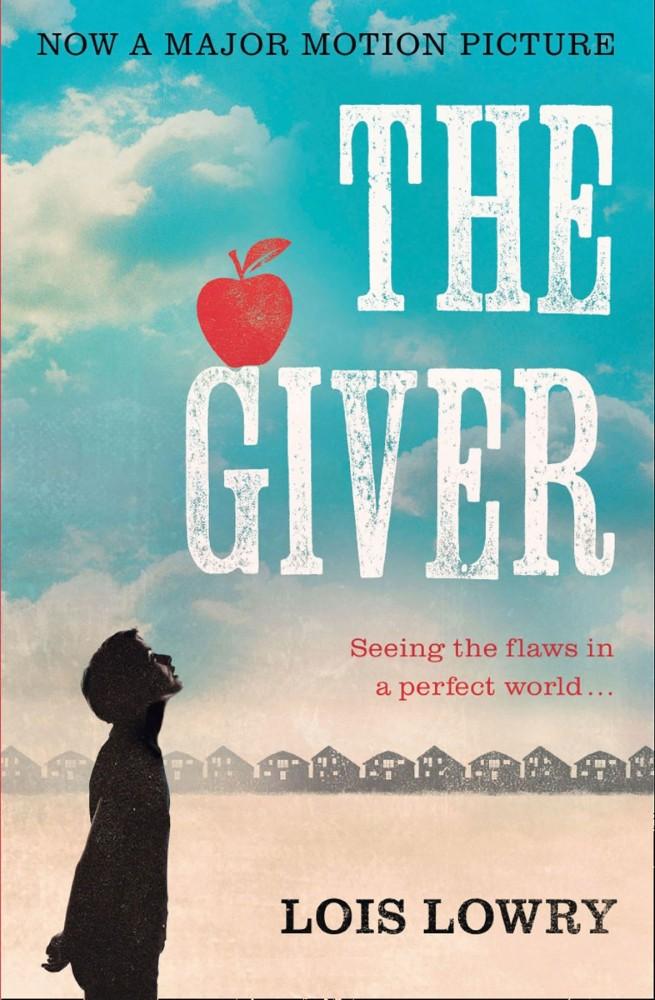
The Giver et al


I have rediscovered The Giver. 

the-giver

sometimes the movie reminds the reader the greatness of the book image: bookopia.com.au

When it arrived on the scene in 1993 I was not an impressionable YA reader. No, I was a thirtysomething wife/mom/librarian and read books no matter what age they were intended for. Hmm. the only thing that’s changed is my age and the fact that I’m a librarian at heart while teaching English.

Like most readers, I felt a bit cheated at the ending. It was not neatly wrapped up and presented as a conclusion of satisfaction. Ambiguity can be quite frustrating, yet that’s one reason why The Giver is so memorable. We all want to know what happened to Jonas. Having rediscovered The Giver through watching the 2014 film led me to discover the other books in the series: Gathering Blue, Messenger, and Son. And here I thought all these years that the story ended with that famous sled ride.

Apparently it took twenty years for the book to become adapted to the screen. Jeff Bridges bought the rights and had originally wanted his father Lloyd to play the part of Giver. It didn’t happen, but viewers can watch a family reading of The Giver as one of the special features selections on the released DVD. Having finished reading the entire quartet I am smitten with the entire story. I hope there is a continuation of the series since each adds to the overall understanding of Jonas’s world.

An added bonus to rediscovering The Giver was reading the latest edition which contains author Lois Lowry’s twenty year reflection of The Giver’s impact.

A goal for this year: revisiting novels, particularly juvenile and YA novels, to gain a different perspective and insight.

Anyone interested in doing the same?


Author Snapshot: Thomas Hardy


image: Wikipedia


Thomas Hardy is not being featured because he’s a fave found on my author list. Actually, I’m doing so because I recently finished reading Far From the Madding Crowd and I surprisingly liked it. I had tried his other novels: Jude the Obscure, Tess of the d’Urbervilles and they simply didn’t grab me. FFMC did. The funny thing is while reading the book I kept imagining Julie Christie as Bathsheba Everdene and Alan Bates as the faithful Gabrial Oakes. These are not current box office top notes of today. Click. Click. I watched the movie version years ago, and guess who were the stars of that gem? Yup, Julie and Alan.

image: lecinemadreams.blogspot.com


Book Cover:  Far from the Madding Crowd

image: Penguin Books


Hardy’s tale of a headstrong, independent young woman who is courted by three men is set in Hardy’s fictional Wessex county, which in reality was a composite of different counties found in southwest and central England. The story is of rural England in 1874 and of love found in its many forms: unrequited, endearing, faithless, adoring, and feckless. A complicated love story of multiple levels, Hardy exposes readers to his real love, which is the pastoral side of England. His details of running a farm, the harsh cruelties of nature, and the enduring spirit of the hard-working people is what makes this novel so memorable. It’s considered the novel that moved his career into the front spot of literary fame. Although he did write novels, Hardy also wrote poetry and considered himself more of a poet than a novelist. In fact, FFMC’s title is inspired from a bit of poetry from another Thomas (Gray). From PublisherWeekly.com:

Far from the Madding Crowd by Thomas Hardy comes from “Elegy Written in a Country Churchyard” by Thomas Gray

Far from the madding crowd’s ignoble strife
Their sober wishes never learn’d to stray;
Along the cool sequester’d vale of life
They kept the noiseless tenor of their way.

Hardy Bits:

  • His heart is buried at Stinsford with Emma (first wife) and his ashes are in the Poets’ Corner
  • He disdained much of Victorian principles, just like Dickens
  • Hardy’s second wife, his secretary, was *ahem* forty years older
  • A remake of Far From the Madding Crowd is due out March 2015http://www.youtube.com/watch?v=VEXGL-Y5D2A

I’m looking forward to comparing the two versions. And we all know the book is always better.

Here is a bonus for you Hunger Games fans: an interview from Entertainment Weekly with Suzanne Collins. See, there is too a reason for reading classics.

Which classic have you never read — but pretended you did?
I sort of half read Thomas Hardy’s The Mayor of Casterbridge. It was assigned in 10th grade, and I just couldn’t get into it. About seven years later I rediscovered Hardy, and consumed four of his novels in a row. Katniss Everdeen owes her last name to Bathsheba Everdene, the lead character in Far From the Madding Crowd. The two are very different, but both struggle with knowing their hearts.

Oh the Wonderful World of Disney Classics


Writing about Reading Rainbow made me think how fortunate I am to have grown up with the real Disney. The one where Walt would step out from his desk and spin a little introduction relating to the feature presentation. Tom Hanks in Saving Mr. Banksgot it down pretty well.

Wwod open.jpg

image: wikipedia.org What a wonderful world

Sundays nights I would look forward to whatever presentation Uncle Walt had for us to watch.  There was always a variety ranging from live action movies with top actors of the day to mesmerizing and delightful animated shows (my favorite).

With the advent of packaged programming I was able to introduce my own kiddos to the Disney treasures through the thoughtful purchasing practices of our local library. Presented as Walt Disney Treasures, these are samples of Disney’s live action best. Even though the kiddos are grown up and gone, the MEPA and I don’t mind checking out one of the treasures for our nightly movie watch.  Disney didn’t cut corners on production. The acting and scripts were always prime and still hold up well after all these years.

Do you remember Disney? Better yet, anyone come across the re-released treasures?

A couple of Treasure favorites so far:

images: amazon.com


Let’s Stop With The Cloning Around


STOP: SPOILER ALERTS for the following
Never Let Me Go
The Island
Moon
I, Robot
Oblivion
Frankenstein
Robocop

“Four legs real, fake legs baaaad.” image: nature.com

What is this fascination with the humanity aspect of clones or artificial intelligence? Why do we want to inject a soul into something man has created? Or a more defined question is: why do we explore whether man-made creations have a soul?

Is it guilt? Afterall, creation is best handled by the Creator, the One who has the Master Plan. That statement could incite a whole firestorm of commentary in itself, which is fine, but I’m really after the literary and even film aspect of cloning/artificial intelligence.
For instance, having just finished Never Let Me Go by Ishiguro, I began thinking about other cloning works: The Island,Moon, Oblivion, and while there are other aspects attached to these films, the main takeaway: “cheated.” The clones are cheated because even though they look human, act human, they are not, which becomes a matter of concern because there is an investment of empathy for these characters, yet part of me says “Wait! They aren’t real.” I feel cheated because I am tricked (seemingly) into believing and caring about something I inherently don’t subscribe to: cloning.
Have you ever tasted imitation crab? Once–thank you very much. Looks like (mostly), tastes like it (kind of), smells like (a bit), same texture (not really). After being duped into eating it I came away with the same feeling: cheated.
Duplicating sheep, crab, humans–it’s not the same, and can never be. I believe in science; I do not subscribe to Luddite philosophies, but there are moral boundaries and these boundaries keep reappearing in novels and films as guilt and even revulsion. Why?
I think we try to justify the curiosity to recreate human life through the compassion for the Creature, as in the case of Frankenstein. The Wretch had initial goodness until it met up with repeated rejection. However, Shelley pointed out the disastrous results of man attempting to recreate man.
We root for Tom Cruise (Oblivion) and Sam Rockwell (Moon) as clones, only because we thought they were human. Upon realization they were clones I immediately reneged my emotional investment–I had been cheated, someone had switched in that imitation crab.
I have no problem with robots though. The A.I. component works for me. I liked R2D2, who didn’t? And Sonny, from I, Robot? A charmer. They were machines with heart; they did not have a soul. Machines are machines. On the other hand, that fuzzy line is not so warm and fuzzy when it comes to cloning: Humans with no soul? Are these simply sophisticated machines with feelings?
Which brings me to my latest Ishiguro read, Never Let Me Go. Having heard raves about it, and having read two other of his novels, I looked forward to this particular one. Ishiguro’s style of unreliable first person narrative and undercurrent, deceptively complex plot is very much evident. It wasn’t until about halfway through I realized I’d been cheated. Here I thought Ruth, Kathy, and Tommy were victims of a cruel government experiment, only to discover (oh so subtly) they are clones. Dissapointment. I finished the novel, although I felt a detached flatness. No joy in that one. I did feel a resonance with Robocop, but then has man trapped in a machine. And even though he was mostly machine I rooted for him because people I can relate to–fake crab, not.
Anyone else have thoughts on cloning in literature in regards to character empathy?

Remaining the Orphaned Narrator


It is always exciting to discover a new-to-me author. In this case it’s Kazuo Ishiguro. I know, I know. I’m a bit late in my discovering; however, better late than never in finding an author of mesmerizing style.

http://www.youtube.com/watch?v=0nlyIvHY1Xw
I knew the movie Remains of the Day, before finding the novel and didn’t realize the movie was the adaptation.
How could I possibly pass up a film starring Anthony Hopkins and Emma Thompson?
Flash forward five years later and I’m perusing the AP Literature list (“read that one, will never read this one, not reading this one again”), when I recognized the title Remains of the Day and connected it to the movie. Then I read the author’s name and I must admit I expected something like Adrian Smythe or Winston Greene, not Kazuo Ishiguro. After all, the novel is about a very proper English butler and his reflections of what it takes to become the best of English butlers. Wouldn’t one need to be English to understand that sort of nationalistic pride? I’m not getting points here for narrow-minded thinking, am I?

It turns out Ishiguro is quite well-suited to the task of writing about the English since he moved to England when he was around six years old. This gives him the ability to have an insider’s view with a somewhat detached perspective. The result is  basically a stream-of-consciousness narrative concerning the tunnel vision of a man’s quest for the unattainable. Trying to live a life that is beyond reproach, to achieve a status of perfection, requires sacrifice. Can sacrifice be made without regret? This is the hidden truth Stevens, the butler is searching for, except he does not realize it.
A quest novel of notice did not go unnoticed, for Ishiguro’s debut garnered him the Man Booker Prize and set a bar. Would he be a one shot wonder or would this be the first work of a noteworthy word smith?

image: goodreads.com This cover indicates the layers found within the story.

My literary taste buds curious for more, I trotted down to the library. Grabbing any title of his that caught my eye on the  shelf, I opened up his fifth novel When We Were Orphans. I immersed myself in reading it to the point the MEPA queried, “Still a good book?” Yes, thank you. Prognosis? After reading two novels, indications are Ishiguro is wordsmithing wonder.

Here are some bio facts and  stats:

  • Two novels have been adapted to the screen, Remains of the Day, and the more recent Never Let Me Go. Both have been received well, considering Ishiguro’s stories are mainly first person narratives, making them difficult to translate into a cinematic plot.
  • His novels are historical in nature, with attention to detail.
  • The stylistic viewpoint is that of the unreliable first-person narrator, one who is flawed in outlook.
  • Although born in Japan, he did not return until thirty years later.
  • He has received four Man Booker Prize nominations
  • The Times ranked him 32 on the list of the 50 most influential British writers since 1945.

As for an actual review of When We Were Orphans, I leave it to the more qualified:
New York Times
 review:

I plan on continuing my course of exploring Ishiguro’s work and look forward to introducing a contemporary author to my APters, who, I’m sure, would like a break from dead white folk now and then.

Any thoughts on Ishiguro’s writing? Any suggestions for the next title I should read of his?

Way Too Cool Library(ians)


I am a bona fide bibliophile. I not only love (phile) books (biblio) I adore all that  is connected to them: writing, reading, bookstores, and libraries. If we go on vacation I seek out the library. Some seek out shopping, eating, beaching, hiking, or cycling–I seek out reading. My idea of the perfect vacation tour would be to visit libraries all around the world.  The cool part about libraries is the librarians. There are plenty of movies about super heroes as well as super agents, along with super smart folk who solve crime, save the world, etc.–but rarely is the librarian given credit where credit is due. Being a librarian at heart, I had a fair amount of fun watching The Librarian series–all that knowledge put to good use saving the world. Yeah, librarians do have skills.

image: pinterest.com

Libraries around the world preview:

  • clementinum int 10 of the world's most spectacular libraries

    This is in Prague. Oh, yes, I do want to go. I do. I do.

Post Navigation