Pam Webb

a writer's journey as a reader

Archive for the category “Books”

Cat in Hats and in Books


I like dogs.  I like cats.  Right now I own a guinea pig.  When it comes to reading about animals, though, I will reach for a book with cat in it far more quickly than a dog.  Like I said, I like dogs; however, in terms of characterization, cats are far more interesting.  Why?  They are so unpredictable and independent that they are a free agent, and that is what makes them  so interesting as book characters.

I didn’t realize how much I preferred cats as my literary animal of choice until I looked over my Good Reads list and read the titles. Definitely cats, especially this last year.  Below are a few of the cat books I’ve encountered, relished, and experienced.

Image Detail I must admit I am not a Cat in the Hat fan.  He made me nervous and tense as a child with his edging towards the naughty side of spicing up a boring day, and as a grownup–he still makes me nervous. Nevertheless, how can I fault a cat that has championed the cause of reading?

Tom Kitten and his companions are adorable in their little suits.  What little girl doesn’t dream of having her kittens all dressed up and talking?

Who can resist kittens?   Image Detail

As I got older I turned to books like The Incredible Journey and It’s Like This, Cat.Image Detail  Both impacted me differently.  I think I cried when I read about the hardships of the animals as their love drove them on to find their owners.  Any book that makes me cry is going to be notable.  Truthfully, I don’t remember anything about Neville’s book except the title.  It seemed odd to me that a teenage guy would turn to a cat for solace.  Actually, that’s not too hard to believe since I dated a guy who owned four cats.  I figured a man who owned four cats possessed understanding and compassion. (“Reader, I married him.”)

Another unforgettable literary cat is the Cheshire found in Alice in Wonderland.

   Image Detail The Cheshire represents to me that cunning, sphinx-like knowing, but not telling aspect of cats.  They blink and stare at you with their little paws tucked under them.  They have secrets they aren’t sharing, that’s for sure.  I imagine if they started talking to us they would be a little bit maddening in their logic, and perhaps a bit condenscending in tone.  Last year I began a short story that’s growing into something larger, which is about a modern girl getting caught up into an Alice type world.  I know, it’s been done.  Remember, I love to write and now that I’m caught up into the story I have to keep going.  I’m at the part where Alyce (yes, different spelling) has caught up with Chessy, a Cockney-speaking cat.  We’ll see what happens.

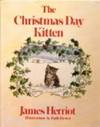
I can’t leave out James Herriot.  I cried sometimes after reading his stories.  I read the entire series and became a devoted fan of the televsion series.  When the picture books came out spotlighting the various animal stories I read them as well.

     Image Detail               Image Detail

Last year I discovered two cat books that left me with that satisfied afterglow of a really good read.  These cats impacted many lives and though they have departed, their stories live on.  If you haven’t read them I encourage you to do so.  Be ye cat fancier or not–they are reads of longlasting impact.

Image DetailImage Detail  

I think every public library should have a cat, especially if they could be as personable as Dewey.  Found in the library’s book drop as a nearly frozen lump of golden fur, he was nursed back to health by the staff. Head librarian Vicki Myron became his mother, and she writes lovingly of his impact on the library and on the town.  There is also a series of picture books featuring Dewey.

They say cats can sense sadness and will lend their furry compassion when needed. Oscar, one of the resident cats in a nursing home, had an uncanny sense of which patients were terminal and he would visit them in their last hours, giving comfor to both the patient and the family members.  His feline ESP caught the attention of staff doctor, Dr. David Dosa, and he learned how to add that Oscar touch to his rounds with his patients.

And then there is Homer.  Born blind, he learned to not only cope with life but through the devotion of his owner, Gwen Cooper, he embraced life, and became an inspiration to all who came in contact with him.  One aspect of the story is Gwen’s and Homer’s experience with being separated in 9/11.  A touching tribute to the bond between pet and owner.

I thought if I were going to read about cats I should delve into the famous The Cat Who… series.  I read the first one the other night: The Cat Who Read Backwards, which came out in 1966.

  There are thirty books in the series (actually the publisher cancelled the last one upon Braun’s death in 2011).  I have my work cut out for me if I intend to get caught up.  The last came out in 2007.  Koko, the star of the series, must have been well taken care of to make a sojourn of that length.

From cats in hats to cats who solve murders, there is something for everyone’s interest.

Readers are Leaders–of course you knew that


Another post in the celebration of books.  You are a Book Booster, right?  Add your “like” and join the list.  My goal is to have 500 Book Boosters by June.

Happy Pages,

CricketMuse

Are you a Book Booster?


Do you love books too?

Do you have favorites you read, recommend, and even re-read?

Are you a frequent flyer at the local library?

Are you an on-line regular of book sites, be they promoting to buy, review, or boast books?

Perchance you operate on a need to read basis–you have to have a book in hand, by the bed, stashed in the car, or have one nestled in the backpack.

You then, my friend, are a Book Booster.  And you are in good company.  Add your name to the list and welcome to the shelf of those who appreciate and advance the cause of books.

Click “like” and happy page turning!

Of Pioneers


Image DetailImage Detail


I don’t know when I first became interested in pioneer stories.  No doubt Laura Ingalls Wilder and her Little House on the Prairie books had some influence.  There is something about establishing one’s mark upon the landscape, the taming of the wilderness, the making of a home and creating a legacy that is so very appealing.  As a child I have fond memories of my family’s little cabin in the woods, the weekend getaway we built together. Helping my father hack down sticker bushes to clear the building site, learning how to shingle the roof, chopping wood, digging up clams for chowder, all those getting-my-hands-dirty-and-blistered chores created in me the sense of being able to accomplish something–being able to be self-sufficient and capable. Although I have no hankering to travel back to those days of the pioneers, I do admire them and recently read Bound for Idaho:The 1864 Trail Journal of Julius Merrill.

Researching for my own pioneer novel I am always on the lookout for new material.  I thought this would be yet another boring account along the lines of “Walked today.  Another long day” type of journals, Merrill’s writing and accounts were fascinating.  Really, they were.  While it may not be like reading a novel, it did manage to transport me a bit.  At least it disspelled some of those John Wayne wagon train movie images instilled by the Saturday television matinees my dad and I were so fond of watching.  Merrill’s writing proved there were humorous moments among the hardships of traveling the endless miles.

Bound for Idaho: The 1864 Trail Journal of Julius Merrillpage 44: June 14th (Fort Kearny toFort Laramie)

We saw nothing having animal life except a skunk.  He was saluted with a shot from Carey’s rifle (an old Irish blunderbuss), whereupon he looked around to Carey with an inquistive glance as if to know where the noise came, evidently caring but little for half an ounce of lead.  Revolvers in hand, we gave chase and succeeded in getting another shot but not the skunk.

Running after, and shooting at skunks, may not seem funny, yet the dignified, stiff language combined with my mental play-by-play brought a smile to my reading.  Merrill’s descriptive writing shows it wasn’t all circling up in wagons and shooting it out with hostiles.  I’ll be able to liven up my own writing by remembering to insert the fun moments along with the adventures and stress-filled daily life of living the pioneer life.

From Embers to Sparks–from movies to books


Image Detail I love kid movies, well, most of them.  I enjoy being able to whisk off to a land of fantasy where good triumphs over evil without the awkward uncomfortable scenes of gratitutious violence and sex.  I like to practice safe plot.  I am a squeamish movie watcher. It’s true, I will admit it.  Real life is tension-filled, and so after a tough day at work when I settle down to escape into a movie, I don’t want to experience even more tension–hence, I kick back with a good ol’ kids flick now and then.  This is how I came upon The City of Ember.

The movie definitely wasn’t going for an Oscar ride, yet I embraced its quirkiness, and celebrated its ingenuity.  Plus, it had Bill Murray as a villainous mayor.  Good stuff.  Liking the movie piqued my interest in reading it as a book.  Of course the book is better than its movie counterpart; however, the movie had a visual quality than surpassed the book in many ways.

What I really embraced was that this is  author Jeanne DuPrau’s first novel.  Writing a book, having it published by a major publisher, and then getting a movie made from it.  Yeah. That’s what I’m talking about, folks.  My little hope-to-get-my-book-published-goal goes pitter pat with hopefulness at this kind of success story.

Curious as to what happened to the folks from Ember, I returned to the library for the sequel, The People of Sparks.  I had to wait for the book!  Hold requests equal popularity, and increased the anticipation factor, especially considering the sequel came out in 2004.

The sequel takes up right after The City of Ember.  While the first book shows its strength in originality, the sequel proves up the ability to take an old theme, xenophobia, or the old “us vs them” idea, and puts a different spin on it.  DuPrau presents an allegory, in a way, with her sequel.  The idea of how history can repeat itself if we aren’t careful is woven throughout her story.  This theme is prevalent in the following passage: pages 75-76 Image Detail

“You don’t know about the Four Wars?”

“No. War–what’s that?

“A war is when one bunch of people fights with another bunch, when both of them want the same thing.  Like for instance if there’s some good land, and two groups of people want to live there.”

“Why can’t they both live there?”

“They don’t want to live there together,”  he said, as if this were a stupid question.  “Also, you could have a war because of revenge.  Say one group of people does something bad to another group, like steal their chickens.  Then the first group does something bad back in revenge.  That could start a war.  The two groups would try to kill each other, and the ones who killed the most would win.”

“They’d kill each other over chickens?”

War, in all its complications, is brought down to the question of killing over chickens.  Isn’t it amazing how kid lit can teach lessons that all adults could benefit from?


Evans What a Great Cozy Series


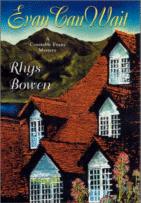
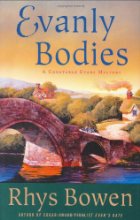
Image Detail Image Detail  Image Detail If you are a cozy mystery fan and you haven’t discovered this series yet, oh my, are you in for a delightful time!  Award winning writing and deservedly so with its setting, characters, and twists and turns in the plots.  What is especially lovely is how each book carries on the underlying main storyline, yet keeps going with another tangler of a mystery murder.  It all takes place in contemporary sleepy South Wales, which means it has an air of the English to it, but being Wales it is distinctively not English.

Bowen is adept at juxtaposing a sleepy remote Wales village with the nuances of the modern world.  Readers look forward to how Constable Evans moves along in life while relishing yet another well-done murder mystery.  Iechyd da!Image Detail

Paper Angels


Paper Angels by Billy Coffey

Not everyone who wishes on a star gets an angel.  Andy Sommerville does though.  Childhood tragedy has Andy wishing, praying underneath the stars for an angel to come and watch over him.  When the star winks, The Old Man appears, and stays with Andy throughout his life.  As Andy matures into adulthood he begins to view The Old Man as a blessing and a curse, since no one else can see him but Andy, and people, especially prospective girlfriends aren’t always receptive and open to men who talk to themselves.  The Old Man stays with Andy up until he needs him most.  A senseless crime puts Andy in the hospital and Andy struggles with the aftermath of the tragedy.  He can’t believe The Old Man is leaving him, yet he says God has sent Elizabeth to take his place.  Can Elizabeth help Andy sort out his life?  Will she have the answers to his questions?

Ambiguity.  There is something about a story that leaves us wondering, that makes it become a standout.  Think back to your high school English class and when I drop “The Most Dangerous Game,” “The Sound of Thunder,” “The Interlopers,” and of course, “The Lady or the Tiger,” into your memory chute, you know exactly what I am talking about.  Billy Coffey stretches out Andy’s story, and leaves the reader blinking and thinking a bit at the end, wondering if the ending is really what it is supposed to be.  As for me, I’m content to believe there are angels, aren’t you?

The Joy of Books


I know e-readers are a great new way to read books, but I admit to being old-fashioned and love the feel, smell, sound of books in hand when I read.  For those of you who share the same feelings, you will no doubt enjoy this video.

Spring Came on Forever


Spring Came on Forever by Bess Streeter Aldrich

From the book:

This is the story of two midwestern families and the starnge way in which their paths crossed. It begins in Illinois in the year 1866, and end in Nebraska in the present one [1935], severed from all that went before and all that will continue beyond a thing of incompleteness.

Aldrich blends together a portrait of the harshness of prairie pioneer life and that of an unconventional love story.  Amalia Holmsdorfer, a sweet young girl of seventeen, finds herself attracted to twenty-one year Matthias Meier, the young clerk who sold her stern German father the soap-making kettle.  Matthias also finds himself attracted to Amalia and begins secretly courting her–even though she has been pledged in marriage to a man of her father’s choosing.  Amalia and Matthias plan to run away together, yet their plans meet up with the fury of flooded roads and even though Matthias attempts to meet her in Nebraska before she marries, he again meets up with one of nature’s blockades.  Matthias and Amalia miss each other by mere hours and she marries the wrong man.

So goes the begins a love story that will span three and four generations.  Aldrich, writing in the style prevalent of her time, reveals the story in an omniscient narrator fashion.  It’s as if we are sitting in a cozy living room and listening to a tale of long ago.  While the “tell” style of yesteryear may not got over well with the current “show” method of today, I have to admit I became so involved in the plot that by the last chapter I clutched the book and actually cried.  And I am not a crier when it comes to literature.  Movies, on occasion can induce some sniffling, but rarely can a book get me to sob.

The story is mainly about Amalia; her hopes and dreams of romance are forever changed when she is forced to leave with the rest of her family and the other members of her German community to build a new settlement in Nebraska. Though she appears complacent on the outside, she keeps her inner thoughts and desires to herself.  Aldrich captures this wonderfully:

pp. 9 & 10

But thoughts are acrobats, agile and quite often untrustworthy.  So now, with impish disregard of the command, they hopped about quite easily.  They asked Amalia innocently why the nice young man wanted to know where she lived.  They suggested with subtle art the possibility that he would try to find out.  And then when the gruff person at her side questioned their activities they urged her quickly to answer, “Nein.”

My interest in pioneer started long ago with the Laura Ingalls Wilder’s Little House on the Prairie books. There is a fascination in reading about how people created homes and towns out of the rough lands of prairie and wilderness, and through all this tremendous effort they had their own personal stories.   For the last five years I have labored on a novel about a family who follows the Oregon trail to turn off and make their claim in Idaho.  Historical novels require plenty of research to make the time period, setting, and characters come alive.  Aldrich’s Spring Came on Forever reminded me how moving pioneer stories can be.   I am also encouraged to someday write something that induces tears.

Sufficient Grace


Sufficient Grace by Darnell Arnoult

Listening to the voices in her head Gracie Hollman takes off her wedding ring, snips her credit cards, jumps in her car, and leaves everything behind.  Her husband Ed, a solid, everyday kind of guy who owns a tire shop, is at first concerned about her absence, thinking foul play at first, but the abandoned credit cards and wedding ring make him think she’s left him for another man.  He didn’t see that one coming, especially after thirty years of marriage

The story centers on Gracie and how her decision to leave everything behind causes a ripple through several families.  Each family, and each person will find that things have a way of working out because grace truly is sufficient.

Darnell Arnout has created a mesmerizing work which explores grief and healing with sensitivity, insight, and humor. Arnoult masterfully mixes together a variety of characters, who at first have separate stories, yet by the end of the book they are all connected.

One of Arnoult most distinguishable style attributes is taking the everyday and spotlighting it into something  of phenomenal clarity.    For instance, Mattie is becoming increasingly handicapped by her inability to get past her husband’s death. At her family’s insistence she begins to clean out his closet. During the process Mattie tries on her husband’s shoes, reminicsing about much she misses how their feet would lightly rest together at night when they slept.

p. 162:

Mattie will give up the clothes.  She can do that.  She’ll let Sammy put them in some bin and let some other needy soul have them.  but she needs to walk in Arty’s shoes for a while.  Feel her skin slide over the place where his feet have been.  Just for a while longer. She’s got to keep those feet.

This book gave me encouragement to take a batch of people and tumble them together to get a kaleidoscope of character mixing.  I also gained an insight on how levity lightens serious topics.  And food. Writing about food somehow makes painful stiuations like grief, discord, and mental duressl seem so much more palatable.

Post Navigation