Pam Webb

a writer's journey as a reader

Archive for the category “Americans”

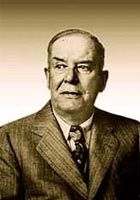
Poet Appreciation #9: Wallace Stevens


World War I affected the world in a way that changed forever our outlook on life. Losing 50,000 young men in one day alone, is a travesty of waste. Lost lives, lost dreams, lost generations have a profound impact. One section of the world culture which was touched was that of the artist in all forms. In poetry, the Modernist movement began with its focus on looking at how this brave new world affects us. T.S. Eliot is most frequented with modernist poetry with his offerings such as The Wasteland and The Lovesong ofJ. AlfredPrufrock.

Wallace Stevens

Another poet of that time, Wallace Stevens, is as important as Eliot in his contributions to Modernist poetry, although Eliot seems to pop up first in Modernist contribution conversations. Bio facts of note for Wallace:

  • didn’t get published until he 44
  • attended Harvard, but had to leave due to lack of funds
  • Editor for both of Harvard’s publications
  • His wife the model for the Liberty dime and half-dollar
  • Career primarily as an insurance lawyer
  • Won the Pulitzer Prize and National Book Award
  • His poetry collection, Harmonium, ignored by critics when first published, is now highly regarded
  • His home town of Hartford, Connecticut has a walk devoted to his blackbird poem with signs of each section along the way
  • Connoisseur of Asian art

Disillusionment of Ten O’Clock

The houses are haunted
By white night-gowns.
None are green,
Or purple with green rings,
Or green with yellow rings,
Or yellow with blue rings.
None of them are strange,
With socks of lace
And beaded ceintures.
People are not going
To dream of baboons and periwinkles.
Only, here and there, an old sailor,
Drunk and asleep in his boots,
Catches Tigers
In red weather.

Poet Appreciation #7: William Cullen Bryant


Are you a New Yorker? If so, then you know that William Bryant helped establish Central Park and the Metropolitan Museum of Art and that Bryant Park is named for him. He was also long time editor of the New York Evening Post. Of course you knew . More importantly, Bryant was part of the Romantics. While the Brits reveled in Wordsworth, Keats, and Shelley, America had its own Romanticist in the form of William Cullen Bryant.

William Cullen Bryant Cabinet Card by Mora-crop.jpg William Cullen Bryant: November 3, 1794 – June 12, 1878 (Wikipedia image)

November
by William Cullen Bryant

Yet one smile more, departing, distant sun!
One mellow smile through the soft vapoury air,
Ere, o’er the frozen earth, the loud winds ran,
Or snows are sifted o’er the meadows bare.
One smile on the brown hills and naked trees,
And the dark rocks whose summer wreaths are cast,
And the blue Gentian flower, that, in the breeze,
Nods lonely, of her beauteous race the last.
Yet a few sunny days, in which the bee
Shall murmur by the hedge that skim the way,
The cricket chirp upon the russet lea,
And man delight to linger in thy ray.
Yet one rich smile, and we will try to bear
The piercing winter frost, and winds, and darkened air.    

I do like fall. Each month has its own cadence. September has its drowsy warm days drifting into chilly nights, and then there is October with its brisk mornings rewarded with a gift of sun before rescinding into frost-quickened nights. Bryant has captured November with its bright, lingering colors mixed into the descending browns, graced with slights of snowfall. November is truly a mixture of seasons with its bits of summer mingling with the foreshadowing of winter. I added “gentian” to my imagery entries. Lovely word. Wonderful poem of images.

Poet Appreciation #6: Eliza Lee Follen


While it’s grand to dig away at meaning, symbolism, and theme, it can refreshing to simply enjoy a poem for its bouncy rhythm and rhyme and wit.  This is the case for Eliza Lee Follen’s “Lines on Nonsense.”

Edward Lear renders an appropriate complement for today’s poem.

Lines on Nonsense

Yes, nonsense is a treasure!
I love it from my heart;
The only earthly pleasure
That never will depart.

But, as for stupid reason,
That stalking, ten-foot rule,
She’s always out of season,
A tedious, testy fool.

She’s like a walking steeple,
With a clock for face and eyes,
Still bawling to all people,
Time bids us to be wise.

While nonsense on the spire
A weathercock you’ll find,
Than reason soaring higher,
And changing with the wind.

The clock too oft deceives,
Says what it cannot prove;
While every one believes
The vane that turns above.

Reason oft speaks unbidden,
And chides us to our face;
For which she should be chidden,
And taught to know her place.

While nonsense smiles and chatters,
And says such charming things,
Like youthful hope she flatters;
And like a syren sings.

Her charm’s from fancy borrowed,
For she is fancy’s pet;
Her name is on her forehead,
In rainbow colors set.

Then, nonsense let us cherish,
Far, far from reason’s light;
Lest in her light she perish,
And vanish from our sight.

Eliza Lee Follen (1787-1860), was ten in a family of thirteen children. Born into an affluent Boston family she became a poet, children’s author, editor, and abolitionist. Her children’s verse offerings posed light and nonsensical images in contrast to the more serious ones of her time. She and her husband, Charles Follen had one son.

Poet Appreciation: #5 Guest Poet


How do I love thee? Let me count the ways.
I love thee to the depth and breadth and height
My soul can reach, when feeling out of sight
For the ends of Being and ideal Grace.
I love thee to the level of everyday’s
Most quiet need, by sun and candle-light.
I love thee freely, as men strive for Right;
I love thee purely, as they turn from Praise.
I love thee with the passion put to use
In my old griefs, and with my childhood’s faith.
I love thee with a love I seemed to lose
With my lost saints – I love thee with the breath,
Smiles, tears, of all my life! – and, if God choose,
I shall but love thee better after death.

Three guess on today’s most appropriate poem:

  • Nope, not Shakespeare–although it is Sonnet 43, it’s not his.
  • Nada–Dickinson has dashes, but not so much mush
  • Yup, Elizabeth Barrett Browning. And I know it’s almost cliché to have her famous Sonnet 43 as today’s poem (yes, though February was a couple of months ago, the 14th can still be a factor in choice), her love story is soooo romantic that it bears repeating–especially if you don’t know it.

ONCE upon a time, long ago, a young girl by the name of Elizabeth Barrett grew up with a very possessive and controlling father who had strange ideas about his children going off and getting married–like in “Not by the hair of my chinny chin chin!” Even though the young Elizabeth was pretty much imprisoned in her house by her father (shades of princess needing a prince) she became a famous poet.

One day a dashing younger man by the name of Robert Browning read one of Miss Barrett’s books of poetry and wrote her a letter. She wrote back. He wrote back. Well, before you know it they became pen pals with a serious romance brewing.

Big, bad, Dad Barrett would not let Elizabeth and Robert marry, at least he did not give his consent. So, of course Robert, a prince of a fellow, rescues the lovely princess of poetry, and they elope off to Italy. And yes, they DID live happily ever after. Big, bad, Dad Barrett never forgave them, but the Brownings remained blissfully happy in their famous marriage of pen and passion.

Now, that’s a great literary romance tale. So let’s celebrate with some good old Peanuts:

Poet Appreciation: #4 George Santayana


Quick–what teacher did Conrad Aiken, T.S. Eliot, Robert Frost, and Wallace Stevens have in common? *Jeopardy muzak plays softly* If you answered George Santayana you either are a verse warrior or you clued in on the post title.

Santayana, a Spanish-born American, was a philosopher, essayist, novelist, teacher, and poet. Receiving his PhD from Harvard he joined the faculty in 1889. In 1912 he moved to Europe and must have liked it because he never returned to the states. Santayana, thought to be an important influences of critical realism, became part of what is known as the Classical American Philosophy. He died in 1952.

 
 There may be chaos still around the world
by George Santayana
 
There may be chaos still around the world,
This little world that in my thinking lies;
For mine own bosom is the paradise
Where all my life’s fair visions are unfurled.
Within my nature’s shell I slumber curled,
Unmindful of the changing outer skies,
Where now, perchance, some new-born Eros flies,
Or some old Cronos from his throne is hurled.
I heed them not; or if the subtle night
Haunt me with deities I never saw,
I soon mine eyelid’s drowsy curtain draw
To hide their myriad faces from my sight.
They threat in vain; the whirlwind cannot awe
A happy snow-flake dancing in the flaw.
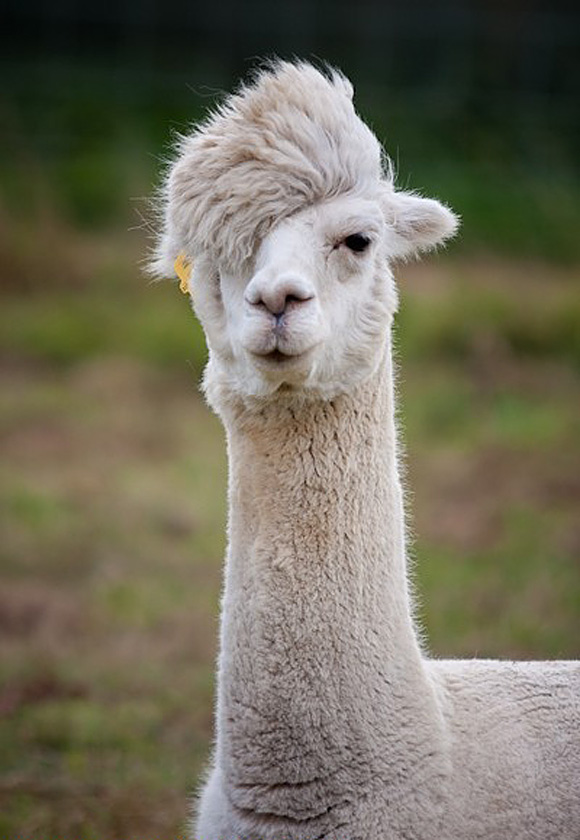
Unless I am way off base, I think this is the complex version of Bobby McFerrin’s hit ditty “Don’t Worry. Be Happy.” I hear in this poem how the world can be swirling and whirling about us, yet we can cocoon within ourselves and remain blissfully at peace.  I prefer the happy llama mode: humming along in life.

Poet Appreciate #1: Willa Cather


English: grass at , located on west side of ju...

Nebraska-Kansas prairie (Photo credit: Wikipedia)

Most recognize Willa Cather as a writer of prairie prose; however, before O Pioneers! came out in 1913, she had published a book of poems entitled April Twilights in 1903. The following poem from that book of poetry served as the prologue to O Pioneers!

Prairie Spring
by Willa Cather

Evening and the flat land,
Rich and sombre and always silent;
The miles of fresh-plowed soil,
Heavy and black, full of strength and harshness;
The growing wheat, the growing weeds,
The toiling horses, the tired men;
The long empty roads,
Sullen fires of sunset, fading,
The eternal, unresponsive sky.
Against all this, Youth,
Flaming like the wild roses,
Singing like the larks over the plowed fields,
Flashing like a star out of the twilight;
Youth with its insupportable sweetness,
Its fierce necessity,
Its sharp desire,
Singing and singing,
Out of the lips of silence,
Out of the earthy dusk.

Cather announces the coming of spring through abounding sensory imagery and metaphors. This poem encapsulates her mastery of description and exemplifies her love of the prairie. Where she found poetry in a land, many only found hardship and heartaches as they tried to subdue tangled, tawny grasses under their plow.

Portrait of Willa Cather

Portrait of Willa Cather (Photo credit: Wikipedia)

Eyre of Distinction


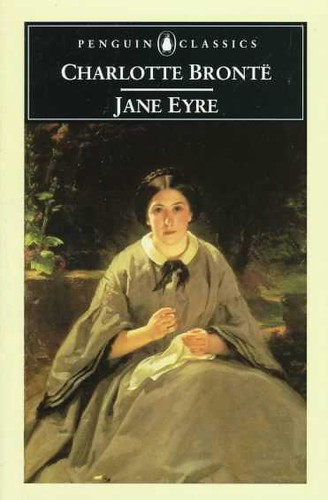
Soon we start our AP novel unit, Jane Eyre. Charlotte Bronte’s novel is one of my favorites, which means I will infuse as much of my appreciation for it as I do for my other favorite classics like Hamlet.  While many wax profoundly about Jane Austen, I think Miss Bronte gets overlooked. Jane Eyre has the distinction of being one of those novels that set things of literature memes, tropes, and motifs in motion by becoming a template for other stories. Consider:

  • she is plain in looks, but beautiful in spirit
  • her intelligence is valued by others, at a time when women were not widely educated
  • she values family over fortune
  • she easily speaks her mind
  • she is independent and finds a way to survive
  • outwardly she is calm, yet ripples with passion underneath her facade of restraint
  • she is perservering, sourceful, and a woman of strong morals
  • she stands up for herself–no doormat dame here

My opinion: Jane rocks. Over the years there have been several film adaptations of the novel.  I binged on JE films over the weekend and came up with my ratings:

1971: Starring George C. Scott and Susannah York
Verdict: skip.

George, too familiar with his Patton role, brought it to his interpretation of Rochester.  He railed and ranted in a very American accent and I gave up after he meets with Jane after their encounter on the road. Besides York’s Jane being too old and much too pretty I couldn’t sit through the poor film quality. The video transfer was so muddied I felt as if I were watching the movie through an unwashed glass.

image: eleganceof fashion. blogspot

1983: Timothy Dalton and Zelah Clarke
Verdict: one of the most faithful and watchable versions

Being a BBC production, I had initial trust it would be a quality adaptation, after all these are the folk who brought us Colin Firth as Mister Darcy. The sets, the important scenes, those inscrutable nuances of the original story are all contained in this mini-series. Timothy Dalton definitely understands the Byronic hero that Rochester embodies and has even said in interviews Rochester is one of his best roles. Clarke, while a bit older than the required 18 year old fresh from her Lowood imprisonment, captures the Quakerish passivity and ethereal nature of Jane Eyre.  The scenes between Dalton and Clarke are melt-in-the-mouth truffle satisfying.  Their version is what comes to mind most often when I return for a refresher novel read. I really did believe a heartstring developed between them. The agony of Dalton’s Rochester when he realized his Jane was leaving him forever kept the tissue box occupied.

1996: William Hurt and Charlotte Gainsbourg director: Franco Zefferilli
Verdict: passable, but strayed terribly from the novel

William Hurt seemed on the verge of understanding Rochester, but kept the bitterness too diminished, too washed out. Charlotte G as Jane got her part right. The plain, passionate young actress  imbued the paradoxical spirit of Jane Eyre. Sadly, there existed no believable passion, that needed kindred heart-string spark, between Gainsbourg’s Jane and Hurt’s Rochester. This spark is the very core of the novel. Without that essential core the movie floundered about like a fish hoping to get back into the water to have a proper swim. The director who brought us Romeo and JulietTaming of the Shrew, Hamlet, and other great stories of passion missed the mark with this adaptation by rushing the story and taking way too many liberties with the plot.

2006: Toby Stephens and Ruth Wilson
Verdict: enjoyable, even if a bit too contemporary in approach

image: writingbar.com

Admittedly, I had started watching this version years ago when it first came out, but found myself so disenchanted with the cutaway flashbacks, I couldn’t get past the Lowood scenes and it wasn’t until recently I returned to another viewing.  I did like the lead actors portrayals, and yes, there was a definite spark between them. I thought Toby Stephens got off easy with his fire wounds, unlike Hurt and Dalton. His rugged looks only appeared rather marred, instead of being ruined. The rolling around, ankle rubbing bit at the end seemed a bit too lenient for true Bronte style. Then again, there are leniences throughout this adaptation I willingly overlooked since the production quality proved so high.

2011: MiaWaikowska and Michael Fassbender Director: Cary Fukunaga
Verdict: Admirable

The first scene makes a diehard JE fan sit bolt upright and ask, “What? Wait–did the movie skip! because the opening scene is starting right off with Jane making her mad dash from Thornfield, which usually means the film is winding up to the grand finale.  Instead Fukunaga gets a bit artsy and dips in and out of Jane’s childhood days in flashbacks, with a quick glance at times at her more recent history.  Artfully done, but a bit disconcerting for those who prefer the linear progression.  Fassbender and Waikowska do provide a sumptuous Rochester and Jane.  Looks, mannerisms, nuances, smoldering passions–it’s all there.  That’s why it the ending is so absolutely frustrating.  I could not understand the need to transform Rochester into a Tom Hanks Castaway lookalike.  Maybe trading out the maimed hand for a beard was a contract compromise. Also, there should have been another 20 minutes of wrap up, yet we are whisked away much too soon.  It’s like being served the most savory dessert and having it taken away after a couple a bites–“Yo, I wasn’t finished.” Apparently Fukunaga thought the audience needed no more indulging and wanted us to move away from the table.

Overall: If a dedicated JE fan go to one of the series adaptations, such as the 1983 or the 2006.  It appears that only when given the proper amount of time (3-4 hours) can Jane’s story be told sufficiently. However, if thinking “book or movie first?” and movie wins out–get the 2011 version.

Further notation: I thought about finding the Ciarin Hinds version, especially after watching him in Austen’s Persuasion with Amanda Root.  Our library no longer has it and after reading the widely mixed reviews of loving it and hating it, I thought I will stick with my picks of 1983, 2011, and 2006 for classroom clips.

Any readers have their own picks of fave JE adaptations?

Monkeying Around


I usually don’t follow the trend, yet those monkeys got me smiling with their extra effort this year. Plus I wanted to do some shout outs to the main commenters throughout the year: LazyCoffees, Literary Tiger, Stehothej, Letizia, and Eagle-Eyed Editor. Thanks guys!
A couple of reflections–I had no idea concrete poetry was such a popular search item! Perhaps it’s time to boost ratings with another round. Also, Sparky Sweets continues to get hits. Hmmm, respark another post?
So, the tts are a bit of a report card. I’m not much for checking my stats, although I do get a kick from how those little monkeys put together the end of the year prez.
Off to another year–gee it would be grand to get Freshly Pressed this year (wee hint).
Happy New Year, One and All!
m

The WordPress.com stats helper monkeys prepared a 2013 annual report for this blog.

Here’s an excerpt:

The concert hall at the Sydney Opera House holds 2,700 people. This blog was viewed about 8,200 times in 2013. If it were a concert at Sydney Opera House, it would take about 3 sold-out performances for that many people to see it.

Click here to see the complete report.

Updating a Classic


Recently a coworker sent this updated version and even if you’ve received it already, you have to admit the update is going to reach classic stage…

Written by Tom King
(c) 2004, 2009 Flint, TX

If Bud Abbott and Lou Costello were alive today, their infamous sketch, ‘Who’s on First?’ might have turned out something like this:

ABBOTT: Super Duper computer store. Can I help you?

COSTELLO:
Thanks I’m setting up an office in my den and I’m thinking about buying a computer.

ABBOTT:
Mac?

COSTELLO:
No, the name’s Lou.

ABBOTT:
Your computer?

COSTELLO
: I don’t own a computer. I want to buy one.

ABBOTT:
Mac?

COSTELLO:
I told you, my name’s Lou.

ABBOTT:
What about Windows?

COSTELLO:
Why? Will it get stuffy in here?

ABBOTT:
Do you want a computer with Windows?

COSTELLO:
I don’t know. What will I see when I look at the windows?

ABBOTT:
Wallpaper.

COSTELLO:
Never mind the windows. I need a computer and software.

ABBOTT:
Software for Windows?

COSTELLO:
No. On the computer! I need something I can use to write proposals,track expenses and run my business. What do you have?

ABBOTT:
Office.

COSTELLO:
Yeah, for my office. Can you recommend anything?

ABBOTT:
I just did.

COSTELLO:
You just did what?

ABBOTT:
Recommend something.

COSTELLO:
You recommended something?

ABBOTT:
Yes.

COSTELLO:
For my office?

ABBOTT:
Yes.

COSTELLO:
OK, what did you recommend for my office?

ABBOTT:
Office.

COSTELLO:
Yes, for my office!

ABBOTT:
I recommend Office with Windows.

COSTELLO:
I already have an office with windows! OK, let’s just say I’m sitting at my computer and I want to type a proposal. What do I need?

ABBOTT:
Word.

COSTELLO:
What word?

ABBOTT:
Word in Office.

COSTELLO:
The only word in office is office.

ABBOTT:
The Word in Office for Windows.

COSTELLO:
Which word in office for windows?

ABBOTT:
The Word you get when you click the blue ‘W’.

COSTELLO:
I’m going to click your blue ‘W’ if you don’t start with some straight answers.What about financial bookkeeping? Do you have anything I can track my money with?

ABBOTT:
Money.

COSTELLO:
That’s right. What do you have?

ABBOTT:
Money.

COSTELLO:
I need money to track my money?

ABBOTT:
It comes bundled with your computer.

COSTELLO:
What’s bundled with my computer?

ABBOTT:
Money.

COSTELLO:
Money comes with my computer?

ABBOTT:
Yes. At no extra charge.

COSTELLO:
I get a bundle of money with my computer? How much?

ABBOTT:
One copy.

COSTELLO:
Isn’t it illegal to copy money?

ABBOTT:
Microsoft gave us a license to copy Money.

COSTELLO:
They can give you a license to copy money?

ABBOTT:
Why not? THEY OWN IT!

(A few days later)


ABBOTT:
Super Duper computer store. Can I help you?
COSTELLO: How do I turn my computer off?
ABBOTT:
Click on ‘START.’

Or

Watch this video version

Trying the Tryptophan Diet


www.snopes.com

http://www.snopes.com (Photo credit: biggraham)

Post turkey day and after storing the leftovers in the fridg no one better better say, “Is there anything to eat?” I am learning that less is more as we get older.  By making less to eat at Thanksgiving there is more satisfaction and much more contentment.  It’s tradition to make my apple-custard pie and pumpkin pie. Who is the one eating it? Moi. The scale is snickering at how much weight I have regained since Wednesday.  Phooey.  The tryptophan diet isn’t for me, after all.

You see turkey contains tryptophan, which is what makes us sleepy after the big T-Day meal.  However, according to www.snopes.com that isn’t entirely true.  I was hoping if I ate enough turkey I would fall into a long, deep sleep and when I woke up the pie, mashed potato casserole, stuffing and all the other holiday caloric wonderments would be consumed so I wouldn’t eat them. However, I have learned that pumpkin pie is healthy for you.  Good.  Now, I don’t feel so guilty for having it for breakfast.  Wait–doesn’t healthy mean low calorie?

On a more positive note of gain is my NaNo novel.  I am now at 44,000 words with a week to go.  I think I’m going to make it.  Vera needs to get serious and start her own NaNo novel instead of procrastinating and watching movies with Simone.

I so enjoyed having Friday off; it’s like having a double Saturday.  Instead of Black Friday shopping I picked up two more books at the library and a stack of movies.  No lesson planning tonight.  Just my tryptophan hangover and a relaxing evening ahead.

Pumpkin pie, from http://en.wikipedia.org/wiki...

Pumpkin pie, from http://en.wikipedia.org/wiki/Image:Pumpkin_Pie.jpg Scrumptious and good for you! Pumpkin pie is loaded with a healthful phytonutrient called beta-carotene. (Photo credit: Wikipedia)

Post Navigation